Economy

By Olaitan Oye-Adeitan

His may not have been a name that rings a bell in the Nation though he had held and occupied high ranking positions, making indelible impacts.

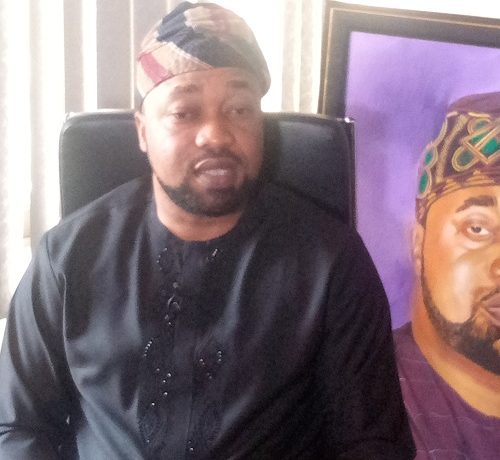
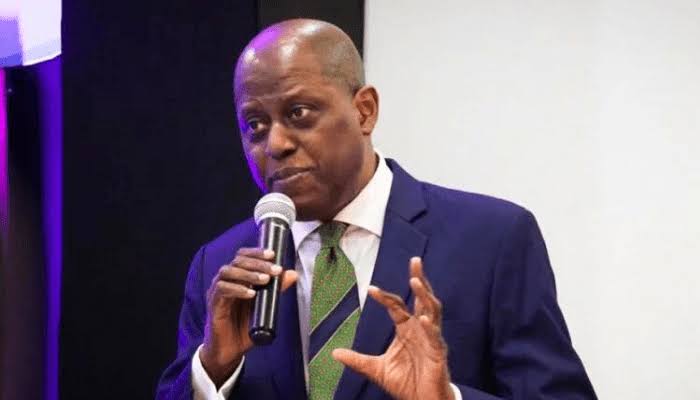
But on Friday, 15th September, 2023, he came into lime light, upon his nomination by President Bola Ahmed-Tinubu as Governor of the  Central Bank of Nigeria, CBN, the nation’s monetary regulator.

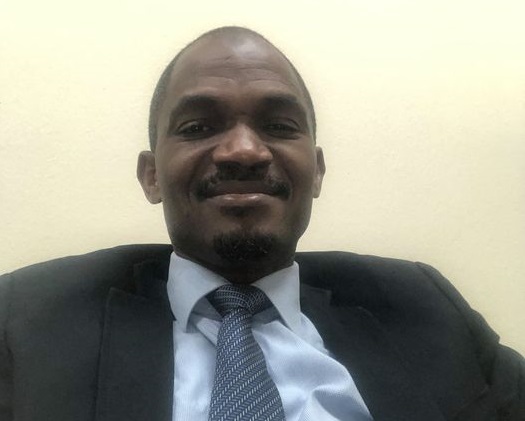
He is none other than Olayemi Michael Cardoso. 
Interestingly, his father, Felix Bankole Cardoso made history fifty years ago when he became the Nigeria’s first indigenous Accountant General of the Federation precisely in 1963.

What is Cardoso pedigree?

Olayemi Cardoso earned his Bachelor’s degree (B.Sc.) in Managerial and Administrative Studies from Aston University in 1980.

He furthered his education at the Harvard Kennedy School of Government (HKS) and graduated as a Mason Fellow with a Master’s degree in Public Administration in 2005.

In recognition of his exceptional contributions to both the private and public sectors, Aston University honoured Cardoso with an honorary Doctorate in Business Administration (DBA) in 2017.
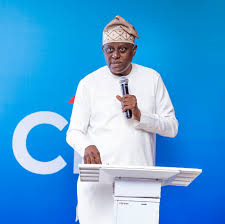
He is also distinguished as a Fellow of the Chartered Institute of Stockbrokers.

Prior to his nomination, Dr Cardoso was the former chairman of Citibank Nigeria. 

He is a distinguished leader in the financial and development sectors with over  thirty years’ experience in the private, public and not-for-profit organisations.

With diverse corporate governance experience, Dr Cardoso had also sat on the boards of Nigerian subsidiaries of Texaco and Chevron and chaired the board of EFInA, a financial sector development organisation supported by the Bill and Melinda Gates foundation.

Cardoso equally served in government as the Commissioner for Economic Planning and Budget for Lagos State, where he championed the financial reform process which led to the state’s development of independent tax revenue.

In his capacity as a consultant and policy expert, Dr Cardoso has advised and collaborated with major international development organisations including the World Bank, Ford Foundation, UN Habitat, World Health Organisation and the Swedish Development Foundation.


He is the recipient of several awards including an honorary Doctorate Degree in Business Administration from Aston University, his alma mater, and the Global Distinguished Alumni Award from Citi.

Achievement

His commitment to lifelong learning has been acknowledged by various educational institutions, including:

  • Trustee of the Harvard Club of Nigeria from 2022 to the present.
  • Trustee of the Harvard Kennedy School Nigeria Alumni from 2020 to the present.
  • Board advisor at the Lagos Business School since 2019.
  • Trustee of St. Augustine University since 2018.
  • Global Alumni-elected Board member of Harvard Kennedy School from 2006 to 2010.
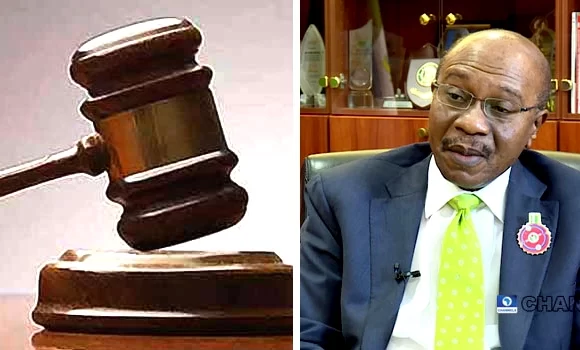
Crime

The suspended Governor of the Central Bank of Nigeria (CBN), Mr. Godwin Emefiele is expected to be formally arraigned on Tuesday, July 25, 2023 for alleged possession of gun and ammunition.

Emefiele will appear before the Federal High Court, Lagos on a on a two-count charge of unlawful possession of a pump action rifle and 123 rounds of live cartridges with Justice Nicholas Oweibo presiding.

Count one of the charges against the suspended CBN governor who has been in the custody of the Department of State Services (DSS) since June 10 reads: “That you, Godwin Emefiele, Male, of No. 8 Colorado Street Maitama Abuja, on or about the 15th of June 2023, at No. 3b Iru Close, Ikoyi, Eti Osa Local Government, Lagos State, within the jurisdiction of this Honourable Court, had in your possession one (1) Single Barrel shotgun (JOJEFF MAGNUM 8371) without a licence. You thereby committed an offence contrary to Section 4 of the Firearms Act, Cap. F28 Laws of the Federation 2004, and punishable under Section 27 (1b) of the same Act.”

Count two: “That you, Godwin Emefiele, Male, of No. 8 Colorado Street Maitama Abuja, on or about June 15, 2023, at No. 3b Iru Close, Ikoyi, Eti Osa Local Government, Lagos State, within the jurisdiction of this Honourable Court, had in your possession One Hundred and Twenty-Three (123) Rounds of live ammunition (Cartridges) without a licence You thereby committed an offence contrary to Section 8 of the Firearms Act Cap F28 Laws of the Federation 2004 and punishable under Section 27 (1)(b)(il) of the same Act.”

Nation/ Titilayo Kupoliyi

Subscribe to our Telegram and YouTube Channels also join our Whatsapp Update Group

Economy

By Olaitan Oye-Adeitan

There appears to be no end in sight yet to the daily struggle for naira notes by Nigerians who spend almost the whole day in Banks.

It’s almost two months now that Nigerians have been grappling to withdraw cash from their bank accounts but encountering different tales and disappointments on a daily basis.

Online money transfers which had been an option to salvage the situation whenever transactions were made by individuals have also not been without tales of debit errors and transfers not received of which victims have to besiege affected banks to lodge complaints and struggle to gain entrance into the banking hall in most cases.

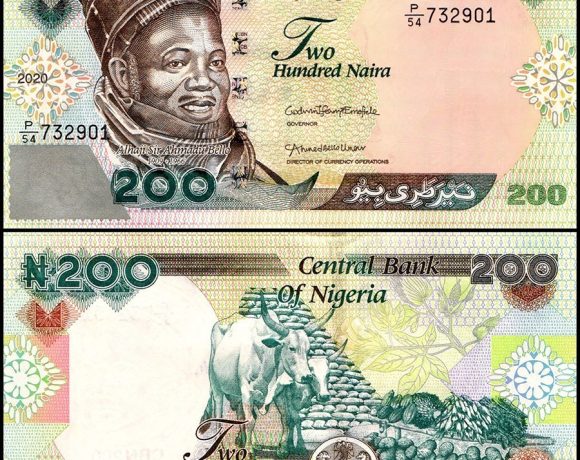
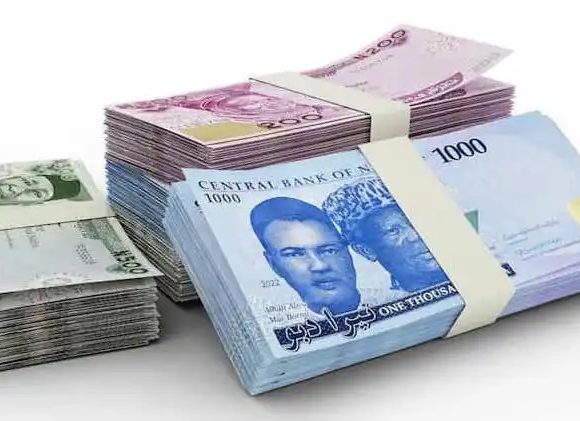
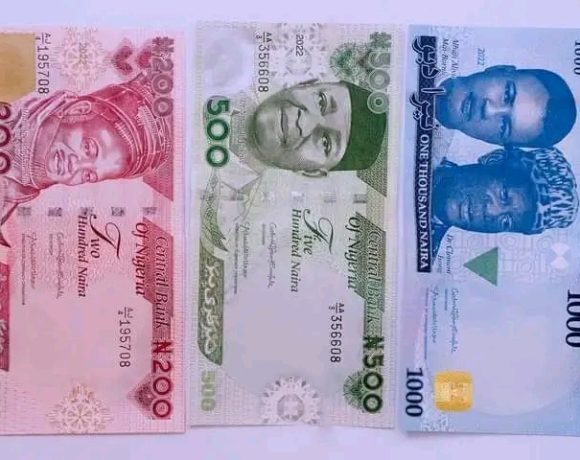
Many people had thought the situation would have been normalized after the Central Bank Of Nigeria, CBN, obeyed the supreme court order which says the old N200, N500 and N1000 notes remain legal tender until December 31, 2023.

It was also the belief of many that with the just concluded Governorship and House of Assembly in elections in most parts of the country, the issue of naira scarcity would have become a forgone matter since part of the reasons for the naira crunch was to check vote buying.

But many bank customers now spend up to five hours in banks and waiting on long queues under the scorching sun just to get cash.

While some succeeded others returned disappointed.

“For how long will this continue”? is the question on the lips of Nigerians.

Subscribe to our Telegram and YouTube Channels also join our Whatsapp Update Group 


Economy

Some residents of Akure, the Ondo State capital want the Federal Government and the Central Bank of Nigeria to comply totally with the Supreme Court order rather than dance around it.

Reacting to President Muhammadu Buhari’s national broadcast, the residents, who spoke with Radio at FUTA North gate area, insisted that returning only the old #200 note was not sufficient to clear the scarcity already created.

A taxi driver, Francis Ojo, who claimed he still had a lot of the old notes, enjoined the government to reason with the court verdict and restore order to the monetary sector

Another respondent, a civil servant, Mr Wale Ayeoribe said the Federal Government should lay a good example by obeying the highest court in the land.

Some banks in the state capital metropolis shut their doors today against customers while the queue at the CBN Akure office was massive.

Bank officials, who did not want their names mentioned, told Radio Nigeria this was probably due to yesterday’s pockets of protest at Alagbaka area of the town where many of the banks were located and other reported protests across the country during which banks’ properties were damaged.

Also in Idanre town, residents were unhappy with the return of only old N200 notes in circulation as directed by President Muhammadu Buhari.

Many of the respondents, who spoke with Radio Nigeria, believed the directive would not address the problem created.

 Community Reporter, Ganiyu Agbelusi reports that no bank opened in Idanre and ATMs did not dispense except for other transactions.

One of the bank managers, who spoke in confidence, revealed that the banks did not have the cash to give out, hence the closure in order not to get their customers angry.

In Akoko area of the state, residents expressed divergent views to President Muhammadu Buhari’s national broadcast this morning.

A woman leader from Arigidi Akoko, Chief Mrs Ajayi Ogidi welcomed the circulation of 200 naira old currency in addition to the new 500 and 1000 naira till April, saying this would douse tension in the country.

 Mrs Ogidi said no good policy thrives without some sacrifices as Nigerians were experiencing now.

On his part, an Islamic leader, Chief Saliu Awesu said the president’s pronouncements had not solved the problem because even the old N200 notes were not available in circulation.

 A retired Anglican Bishop, Right Revd Ezekiel Dahunsi, however, maintained that the Federal Government and the apex bank meant well for the country in an effort to stabilize the economy, block funds to bandits, votes buying and selling coupled with other corrupt practices in the country.

In Ikare Akoko, all banks remained closed with their ATMs not dispensing, with the exception of one ATM at a bank having hundreds of customers.

At Oba market in Ikare, Radio Nigeria observed a large crowd of people buying rice from two traders from the northern part of the country who were accepting all the old notes with the claim they would exchange them for new notes in the north.

Meanwhile, there were still short queues around some filling stations selling petrol between N250 and N290 per litre while there were no queues at those selling at N300 and above per litre.

There were no queues at petrol stations but prices still hovered between N350 and N450. 

Dupe Isename , Ganiyu Agbelusi and Ibrahim Kilani

Subscribe to our Telegram and YouTubeChannels also join our Whatsapp Update Group

Economy

The Chief Whip of the Osun State House of Assembly, Hon Tunde Olatunji has called for caution in the implementation of the naira redesign policy by the Central Bank of Nigeria, CBN, in order not to crash the economy.

Hon Olatunji, who is a financial expert, stressed that the apex bank could not sterilize currency in its vault without making available enough currency to run the daily activities required nationally and not expect consequences, especially stifling economic growth.  

Addressing newsmen in Osogbo, Hon Olatunji said the redesign policy was a good move but its implementation must be done carefully to avoid the hardship Nigerians are currently experiencing.

“The current naira redesign policy is a good one but how the Central Bank of Nigeria is going about its implementation will stifle the economy and result in negative economic consequences.

“Money is the blood that runs economic activities and once you drain the blood, the economy will suffer and Nigerians would bear most of the brunt, hence, you are walking back into the reason you talk about the policy in the first instance.

“Presently, mopping over two trillion naira out of the economy and injecting about N500 billion into the system without transparency will stifle the economy and create an unnecessary bottleneck for people that want to access money to run their daily activities.

“Presently, people that ought to be at their various places of work, to be actively productive are now in queues for 5 to 8 hours at banks to get N2000. This amounts to wasting valuable time doing nothing. At this rate, the nation’s productivity will crumble as it happened in India in 2016 when the economy lost over one million jobs due to the demonetization of their currency.

“The CBN ought to have learnt from the Indian experience. It has all the necessary statistics available to study and curb the present conundrum the masses are stacked in. In my view, the implementation needs serious review, it is either the Central Bank makes available enough currency for Nigerians’ daily needs or allow the old currency continue to be a legal tender till it is able to resolve the present crisis”, he added.

The legislator commended President Muhammadu Buhari for addressing the nation on the policy but however added that the president should have shown more magnanimity by extending the circulation to five hundred naira too, saying extending two hundred naira alone might not be enough to caution the effect of the policy.

Adenitan Akinola

Subscribe to our Telegram and YouTube Channels also join our Whatsapp Update Group

Economy

The Chartered Institute of Bankers of Nigeria has reiterated the statement of the Central Bank of Nigeria reassuring Nigerians that the banking sector in the country remains very sound and safe.

The institute spoke through its President, Ken Okpara.

CIBN disclosed the soundness of the banking industry has been reaffirmed severally by the Central Bank of Nigeria as the only body best suited to assess the strength of the financial industry in Nigeria.

“We equally like to allay the fears around the shortage of materials for printing the new naira notes, which the CBN has also discredited. This has also been debunked in a widely circulated press release by the Nigeria Security Printing and Minting Company, which described the story as false, baseless and misleading,” it said.

Mr Okpara said implored the Nigerians to disregard any contrary information as the entire banking community remains focused, committed, and working round the clock to address all the contending issues with a view to restoring normalcy.

Culled / Titilayo Kupoliyi

Subscribe to our Telegram and YouTube Channels also join our Whatsapp Update Group

Economy

As the uncertainties over the old naira notes linger, top officials of the apex bank, the Central Bank of Nigeria, CBN are to meet on Monday to review the crisis that the naira redesign programme has generated and come up with solutions to the acute cash crunch that has nearly paralysed the country.

Sources say the meeting would also consider the advice given by the National Council of State that the apex bank should print more redesigned N1,000, N500 and N200 notes or re-circulate the old ones withdrawn from circulation in order to ease the current cash crunch.

It was learnt that the meeting, which will hold at CBN headquarters in Abuja, would involve the top echelon of the apex bank, and a fresh directive might be issued to Deposit Money Banks on whether to keep accepting deposits of the old notes or not.

An official of the CBN told newsmen that a decision would likely be made on the continuous circulation of the old notes at the meeting. He, however, said the advice to print more money would not be straightforward due to logistic reasons and the fact that the Nigerian Security Printing and Minting Plc had capacity issues as regards the printing of the new notes.

Report says that the CBN was considering contracting foreign firms to print the redesigned naira notes as the Mint was unable to meet the demand for the currency, thus leading to the current nationwide scarcity.

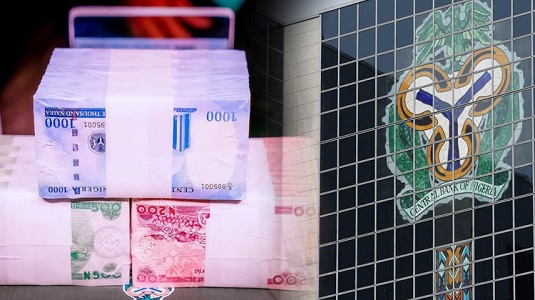
It was reported that the Mint had succeeded in printing N500bn worth of the new N1,000, N500 and N200 notes and might not have the capacity to do more than that at the moment, whereas the CBN had withdrawn about N2.1tn of the old notes from circulation.

The apex bank official had said that the advice given by the Council of State would be weighed carefully vis-à-vis the security implications of the continued scarcity of the notes, the cost of printing more notes and re-circulating the old ones, and the implementation of the Supreme Court interim order that the old notes should be allowed to circulate alongside the new ones.

Meanwhile, confusion reigns over the acceptability or otherwise of the old notes as legal tender, going by the conflicting signals from the Federal Government, as the Attorney-General of the Federation and Minister of Justice, Abubakar Malami (SAN), had indicated that the Supreme Court order would be complied with, but also said it would be appealed.

Culled/Simeon Ugbodovon

Subscribe to our Telegram and YouTubeChannels also join our Whatsapp Update Group

Economy

By Adenitan Akinola

The Central Bank of Nigeria, CBN, is to impose a one million naira fine on commercial banks per day for each box of new naira notes they refused to pick and disburse to their customers ahead of Tuesday next week’s deadline. 

The CBN Deputy Director in charge of Research, Mr Adeleke Adelokun made this known at the Ayegbaju Market, Osogbo during a sensitisation programme organized for Osun market women on the new naira notes of N200, N500 and N1000 denominations. 

Mr Adelokun noted that the apex bank had printed enough new naira notes, but the commercial banks had refused to pick them up. 

According to him, “CBN has printed enough new naira notes but we discovered that most of the banks have not collected the money. When we discovered that they refused to collect the new naira notes we put sanctions on the bank with a fine of 1 million per box per day depending on the number of days”.

“We also mandated the banks to put new naira notes in the ATM machines all over Nigeria so that Nigerians will have access to the new notes.” 

Also speaking, the Branch Controller of CBN, Osogbo Branch, Mr Madojemu Daphne who was represented by Mrs Adebayo Omosolape alleged that Nigerians hoarded the old naira notes to the tune of two point seven trillion naira.

He noted that 84.71 per cent of the country’s currencies in circulation were outside the vaults of commercial banks across the country.

“Statistics shows that N2.72 trillion out of the N3.26 trillion currency in circulation as of June 2022 was outside the vaults of commercial banks across the country, and supposedly held by members of the public.” Mr Daphne added.

Adenitan Akinola

Subscribe to our Telegram and YouTubeChannels also join our Whatsapp Update Group

Economy

By Oluwatoyin Adegoke

Ahead of the deadline announced by the Central Bank of Nigeria, CBN, for the mopping up of old naira notes, mixed reactions have continued to trail the process.

A number of people who spoke with Radio Nigeria in Ogun State expressed concern about the time-frame as the an end of old notes as legal tender was too short while others maintained that the compliance level among the stakeholders would reach the peak before the deadline. 

The situation was viewed differently by the people, depending on their area of engagement. 

To a group of youths encountered by Radio Nigeria at one of the popular ATM galleries in Abeokuta, the approaching deadline was an avenue to catch fun as they took turns in trying out the cash machines to check if they dispensed the old or the new notes.

The youths who referred to their action as “catching cruise” disclosed that they had gone round the city to find out that most banks only partially complied with the directive of the CBN as the ATMs were loaded with a mixture of old and new notes.

Another resident, Mrs Tinuola Akinola was full of excitement about the new currency which according to her, was colourful and beautiful to behold, stating that touching the new money always gave her the feeling of holding international bills.

In separate reactions, traders who spoke with Radio Nigeria at some markets in Abeokuta, Ilaro, Sagamu, Ota and Ijebu-Ode complained that the new notes were scarce but expressed the hope that the relevant authorities would ensure the availability of the newly introduced notes before the CBN deadline. 

Similarly, Mr Aminu Ibrahim and Mr Samuel Olanipekun who said they were yet to set eyes on the new money, 10 days to the CBN’s deadline appealed to the apex bank to shift the set date for the mop up of the old notes. 

In a contribution, a communication consultant, Mr Bolaji Adeniji, urged the stakeholders to cooperate with the CBN to ensure that the redesigned naira notes achieved the purpose of bridging the inflation gap in the nation’s economy. 

Responding to the people’s reactions, the Abeokuta Branch Controller of the CBN, Mr Wahab Oseni advised customers to report any bank whose ATMs failed to dispense new notes at the office of the Central Bank in Abeokuta.

Mr. Oseni who explained that the bank had embarked on sensitisation campaigns among the market men and women across the state about the new cash policy, advised the people not to reject the old currency for their business transactions until the last day, on the 31st of this month.

Oluwatoyin Adegoke

Subscribe to our Telegram and YouTube Channels also join our Whatsapp Update Group

Economy

Eight days to the January 31 deadline set by the Central Bank of Nigeria, CBN, to stop the old N1,000, N500, and N200 notes from being legal tender, banks’  Automated Teller Machines in Ibadan and its environment are still dispensing the old notes, findings by Radio Nigeria have revealed.

Despite the apex bank and depositing banks’ assurances that Nigerians would begin to receive the new naira notes from ATMs across different platforms, findings as of Sunday and Monday showed that many ATMs belonging to the financial institutions were dispensing the old notes.

Although some of the ATMs visited First Bank and Polaris among others, dispensed the new notes, Radio Nigeria observed that banks were still loading a significant number of their ATMs with the old naira notes which are due to be phased out by the CBN in about a week’s time while some are not dispensing at all.

Titilayo Kupoliyi

Subscribe to our Telegram and YouTube Channels also join our Whatsapp Update Group

Economy

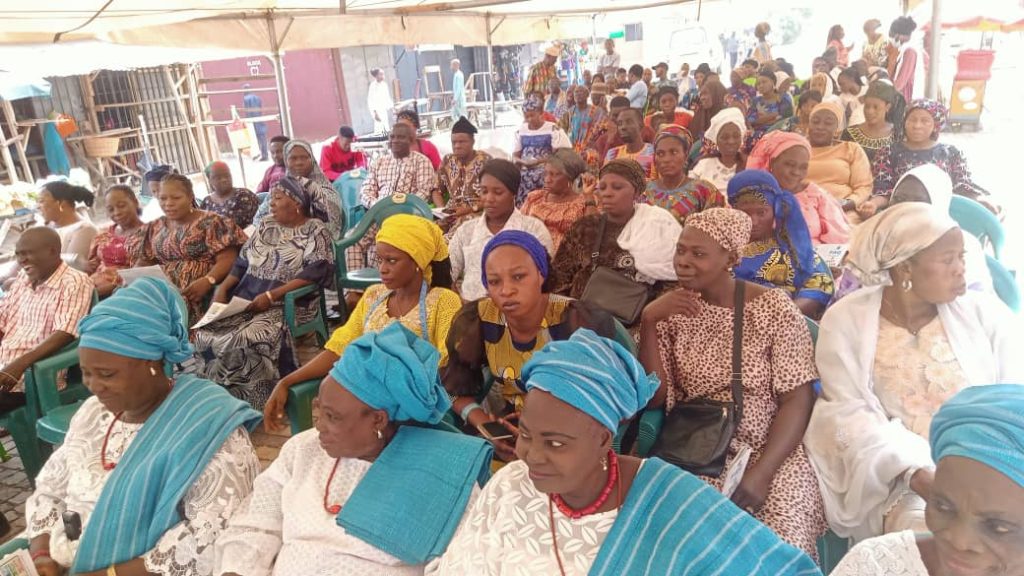
The Central Bank of Nigeria, CBN, has commenced sensitization of market women and traders in Akure on the new naira notes.

The acting Branch Controller of CBN in Ondo State, Mr Giwa Ademola enjoined traders not to reject the new naira notes following reports that some traders were insisting on old notes in a bid to avoid fakes of the new notes.

He said the notes had become legal tender and it was now an offense to reject them.

Mr Ademola also told the traders to ensure they learn to differentiate between original and fake notes.

He reiterated that the old naira notes would cease to be legal tender on the 31st of January, 2023.

Two traders, Mrs Banke Omotosho and Oluwatosin Adesida applauded the CBN for the sensitization, noting that they were now better informed.

A resident of Akure, Mrs Blessing Gold, however, called for extension of the deadline to enable more people access the new naira notes.

Abiodun Akinluwa

Subscribe to our Telegram and YouTubeChannels also join our Whatsapp Update Group

Economy

Reactions have continued to trail the new monetary policy of the Central Bank of Nigeria limiting over-the-counter cash withdrawals to 100 thousand naira per week. 

The policy according to CBN takes effect nationwide on January 9, 2023.

The issue has generated divergent opinions as some residents of Ibadan expressed their concerns.

A POS operator, Miss Tobi Adebogun said, “the order is going to serve as a restriction to my business but there’s nothing the public can do since it is a government decision”.

A trader at Dugbe market, Mrs Adeola Abass explained that “the decision will have a negative effect on citizens especially people at the grassroots that do not even know how to make an online transaction.”

Another businessman, Abdulrasheed Latinwo was of the opinion that it is a welcome development to curb crime and “we have to support the government”.

On his part, Mr Ifeoluwa Ayodele noted that the new policy will make “banks more crowded without considering the time wastage of the customers”.

They appealed to the apex bank to give more publicity on the issue to reach those in the rural areas about the new policy.

Commenting on the policy, an economist, Mr Michael Abegunde enumerated the prospects in the cash withdrawals limit policy by the CBN. 

“That decision will help to reduce the level of inflation, help government to have control on the money in circulation, it will also help to reduce crime and people will no more going about with the big money”.

Mr Abegunde said the apex bank’s decision would increase the unemployment level, as it would lead to a reduction in the volume of daily financial transactions for POS operators. 

“That will reduce the patronage of POS machines and it will make the POS machine become a less-profit business and as a result of that many people will go out of the business.” He said

While commending the apex bank, Mr Abegunde appealed to Nigerians to be mindful of fraudsters who might want to utilise the opportunity to defraud them, urging people to be cautious when undertaking financial transactions.

Olukemi Akintunde

Subscribe to our Telegram and YouTubeChannels also join our Whatsapp Update Group

Agriculture

Key players in the agricultural sector have identified the need for more Nigerians, especially the youths to tap into the lucrative prospect of the sector’s value chain in their bid to boost wealth creation.

They made the submission as discussants at an Agro-allied exhibition, organized in Abeokuta by the Ogun State Ministry of Agriculture as part of activities to commemorate the 17th anniversary of Oba Aremu Gbadebo as the Alake and paramount ruler of Egbaland. 

An investor in the Cassava Value Chain, Mr Goke  Adeyemi while speaking on Agro-processing and Agro-Cultural space, said the available natural resources in the country were enough to grow sector all sectors of the economy and urged the youths to explore the values of cassava processing. 

Also, the Ogun State Secretary of the Poultry Association of Nigeria, Mr Oludare Kuforiji called on the government to invest more in agriculture to better the lot of Nigerians.

A representative of the Central Bank of Nigeria, CBN, Dr Yemisi Olukoya said the federal government through the bank had initiated the Agricultural Credit Guarantee Scheme among other interventions to enable farmers to access loans from commercial banks.

Dr Olukoya tasked the Ogun State government, private investors and other development partners to key into the various agricultural programmes of the federal government to enhance the nation’s food production capacity.

Addressing the people, the Alake of Egbaland, Oba Aremu Gbadebo called on the CBN to sustain the tempo of interventions in the agricultural sector and urged beneficiaries of government’s loans to pay back promptly in the interest of others. 

Ogun State Commissioner for Agriculture, Dr Adeola Odedina who took the dignitaries at the event on an inspection of the agricultural exhibition, said the event was part of efforts aimed at repositioning the sector. 

Oluwatoyin Adegoke

Subscribe to our Telegram and YouTube Channels also join our Whatsapp Update Group

Economy

The Central Bank of Nigeria has sensitized the public on the effective and transparent implementation of monetary and exchange rate policy.

The sensitization programme was carried out continuously in Akure, Ondo State and Ibadan, Oyo State, capital via zoom meeting.

Stakeholders at the sensitization programme included market men and women, farmers, and corps members.

Speaking during the programme, CBN Governor Dr Goodwin Emefiele, represented by Deputy Director, Corporate Communication Department, CBN Mr Osita Nwanisobi stated said it was imperative for people to know various schemes of CBN in order to harness them for the progress of the nation.

Dr Emefiele said the customers had many rights such as the right to be informed, to choose, to safety, to privacy and confidentiality, redress, good service, equality and a free monthly statement of account.

Commenting on the new cashless policy, Dr Emefiele explained that the policy established a change in the payments systems in Nigeria and it would help the Central Bank and commercial banks to manage the economy better to ensure that the monetary policy works.

On its part, the Controller CBN, Ibadan branch, Mr Ismail Oyebola highlighted various ways CBN was contributing to the economy and urged the people to tap the potential.

Papers on consumers’ rights, currency operations, payment system management and e-Naira were presented during the programme.

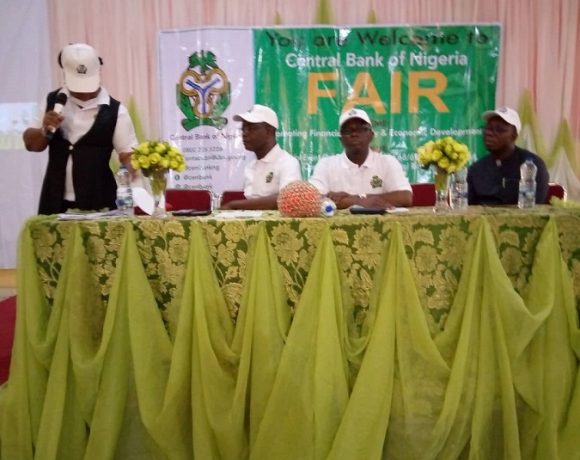
The sensitization programme, which is a 2-day event tagged CBN Fair would provide an opportunity for participants to ask relevant questions on the policies of CBN and their rights as consumers.

Funmi Obagbayegun

Lifestyle

The death has been announced of Mr Kazeem Olatunde Akintunde of the Central Bank of Nigeria, CBN, Abeokuta.

Mr Akintunde died during a brief illness.

According to a family source, he would be buried on Wednesday 26th of May, 2021 by 2pm in line with Islamic rites at No 10 Mobolaji Quarters, Irepodun Estate, Ajanla, off Akala Express, Oluyole, Ibadan.

He is survived by wife, Mrs Olukemi Akintunde of the Federal Radio Corporation of Nigeria, FRCN, Ibadan and children.

Adenrele Ajisefini

Politics

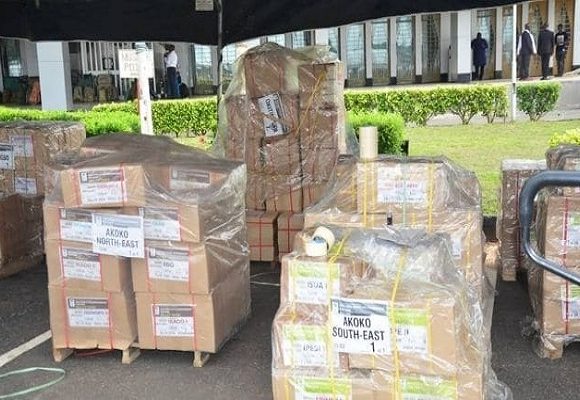
Sensitive materials for tomorrow’s governorship election in Ondo state have been distributed to the eighteen local government areas in readiness for the election.

The distribution was done at the Central Bank of Nigeria Office in Akure, the state capital under strict surveillance of security personnel, INEC officials and party agents

The Director, electoral operations, INEC headquarters Mr Abdulrazak Tukur-Yusuf told Radio Nigeria that INEC had improved on the system of voting and made available replacement for some election materials for efficiency.

Speaking on the readiness of observers the co-convener Nigeria civil society situation room, Mrs Esther Uzooma applauded the transparency in the distribution of the election materials saying that the observer groups expected a more coordinated exercise come Saturday.

One of the party agents, Mr Alaye Adeshina commended the timeliness, and presence of security personnel.

Our Correspondent reports that the consignments to the eighteen local government areas were all signed on by the resident electoral commissioner Ambassador Rufus Akeju as witnessed by party agents, observers and security personnel.

Isaac Afolabi

News

Seeking the support of Ondo State traditional rulers towards the maintenance of peace by the relevant authorities has become imperative particularly now that the state is set for governorship election comes October 10th, 2020.

 Chairman, Independence National Electoral Commission, INEC, Professor Mammud Yakubu made the remark while addressing Ondo State obas during an interactive session with the traditional rulers in Akure.

 The INEC head, who harped on the need for the obas to prevail on their subjects towards the conduct of a peaceful governorship election in the sunshine state, implored the traditional rulers not to relent in their prayers for peace before, during and after the gubernatorial election in the state.

Professor Mammud Yakubu informed the gathering that the commission would do everything possible to promptly deploy materials to every part of the state, including the remote areas so as to avoid unnecessary delay of the vote processing.

Earlier, Chairman, Ondo State Council of Traditional Rulers, Oba Fredrick Akinruntan, the Olugbo of Ugboland lauded the commission’s efforts in the just concluded Edo State governorship election, noting that  such efforts should be replicated in Ondo State election come  October 10th, 2020.

 Oba Akinruntan, on behalf of other traditional rulers in the state, promised INEC of the needed support from the kings for the conduct of the state’s gubernatorial election.

In a related development, all sensitive materials for the conduct of Ondo State governorship election have been delivered to Central Bank of Nigeria by the Independent National Electoral Commission, INEC for onward transmission to Ondo State comes October 5th, 2020.

 INEC Chairman, Professor Mammud Yakubu made the declaration while addressing journalists in Akure.

Professor Yakubu, who submitted that INEC had put necessary machinery in place for seamless delivery of all election materials in the state, hinted that more than five thousand card reader machines from Oyo would be deployed for the governorship election in Ondo State.

The INEC chairman while informing the gathering about the need for peace before, during and after the election, informed the gathering that the National Peace Committee under the leadership of the former head of state, General Abdulsam Abubakar had made necessary arrangement for all candidates in the election to sign peace treaty by next week Tuesday.

Professor Yakubu, who implored all journalists billed to cover the election to increase the flow of voters’ education, also charged the media personnel to enlighten people more on the need to give attention to COVID-19 ameliorating measures.

Oguntoye/Abudu

News Analysis

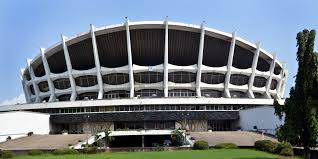
President Muhammadu Buhari has formally handed over the National Theatre Complex, Iganmu Lagos, to the Central Bank of Nigeria, CBN, and the bankers committee for restoration and redevelopment.

According to the governor of CBN, Mr. Godwin Emefiele, the scope of the intended project, which will be completed within eighteen months, is capable of generating over twenty billion dollars which is about eight trillion naira annually, this is more than what oil will ever contribute to the post-COVID-19 economy.

This is commendable as a means of diversification of the economy aside crude oil which is capable of producing massive employment and shared wealth.

According to Mr. Emefiele, National Art Theatre would create over one million jobs in the next 18 months after the renovation is completed.

Mr Emefiele said this at the official handing over of the edifice to the CBN and the bankers committee by the federal government of Nigeria last month.

While delivering his address at the event, the Minister of Information and Culture, Alhaji Lai Muhammed, said the project was in two phases, phase one will cost seven billion naira, while phase two would cost eighteen billion naira.

Altogether the project is estimated to cost twenty five billion naira.

The minister, who noted that the iconic edifice had not been renovated in forty years added that government cannot fund the renovation work, hence it was ceded to the private sector with a win-win agreement

The National Theatre will be one of the three legs of the project which will also have hubs in Kano and Port-Harcourt.

It will directly benefit sub-sectors such as information and communication technology, music, fashion and film.

These are areas that Nigerian youths have shown innovative capacity as Nigeria is already a leading force in world music and film.

It is believed that this programme will fare better than earlier efforts to revive the national theatre and the creative industry as a whole.

The CBN boss had on December 14, 2019 disclosed that the bankers’ committee would spend not less than n20 billion on the project, which he added would help to create economic activities around the national theatre and create job opportunities for people, especially the youth.

It is imperative that the CBN and bankers’ committee will mobilize the needed resources and ensure that massive investments in the creative industry on a business and profitable succeed to the benefit of all concerned.

All stakeholders should put necessary machinery in motion to revive the national theatre for effectiveness.

The move is indeed a right step in the right direction but care must be taken in order not to lead to a repeat of the failure associated with the two hundred billion naira which former President Goodluck Jonathan had granted the creative industry in 2014.

Titilayo Kupoliyi.

News Analysis

Recently, President Muhammadu Buhari approved the establishment of the Nigeria Youth Investment Fund, NYIF.

The fund in tune of seventy five billion naira for three years is for innovative ideas, skills and talent of Nigerian youth to provide a special window for accessing funds, finances, business management skills and other inputs critical for sustainable enterprise.

Establishment of the fund followed the approval of a memo by the Minister of Youth and Sports Development, Mr. Sunday Dare.

Mr. Dare had noted that investing in youth through the establishment of a specialized fund was capable of increasing the country’s gross domestic products, G.D.P.

To this end, the Ministry of Youths and Sports Development has been directed to put necessary machinery in motion for the implementation and legislation of the NYIF in collaboration with relevant MDAs.

Also, Ministry of Finance, Budget and National Planning as well as the Central Bank of Nigeria are to source for the required funds to kick start the programme.

The programme, first of its kind by any Nigerian government, is to serve as a youth bank that will fund and support the innovative ideas, skills, talents and enterprise of the Nigerian youth, a loan and credit pathway dedicated to assessing credit and soft loans.

The funds will be distributed through micro-credit banks to beneficiaries within the age bracket of eighteen and thirty five years.

Youths and sports minister pointed out that President Buhari through the establishment of NYIF had demonstrated his unflinching support for the Nigerian youth and his implicit confidence in their innovative talents and potential industry.

He explained that once the youths present their ideas, the funds could be assessed directly.

 Mr. Dare however emphasised that it required collective effort at providing adequate resources to meet the basic needs of the teeming youth.

The minister explained that the funds would not just be randomly distributed among youths, but would be used to assist most qualified ones with genuine business ideas.

He maintained that youths who fall within the stipulated age bracket with genuine business ideas could approach any of the one hundred and twenty five micro-credit banks across the country to access the fund.

The youth and sports minister assured that the scheme would be closely supervised by the ministry and would not be hijacked by politicians.

This is no doubt a commendable venture, being one of the latest schemes of the federal government since the declaration of a nationwide lockdown to ease the effects of the lockdown on Nigerians and stimulate the economy.   

A report by the Nigeria Employers’ Consultative Association, NECA, shows that rate of unemployment in Nigeria may rise to thirty three point five percent this year from the current rate pegged at twenty three point one percent.

NECA attributed lack of employment opportunities and the shutdown of several companies as reasons for the renewed fears.

It is imperative that necessary machinery be put in place to implement the youth investment fund to reduce the effects of unemployment among this category of people.

Titilayo Kupoliyi

Politics

The Oyo State House of Assembly has approved the request of Governor Seyi Makinde to access N20 billion contractor financing loan facility from the First Bank of Nigeria Plc.

The House also okayed the request of the governor to access another N2.5bn Central Bank of Nigeria credit support intervention fund for the health sector in the state.

The approval followed two separate letters, forwarded to the Assembly by the governor and read at the plenary by the Speaker, Mr Adebo Ogundoyin

According to the request, if accessed, the twenty billion naira money would be used to fund and support priority projects to boost economic activities in the state.

On the N2.5bn CBN credit support intervention fund, the governor said the money would be used to revamp the health care facilities, manage the Covid-19 pandemic and to promote other health initiatives of his administration.

The Speaker said the House approved the requests of the Governor in view of the importance the present administration attached to infrastructural development especially the construction and rehabilitation of roads and other social amenities as well as the need to upgrade health facilities to combat Coronavirus and other health challenges. 

The Deputy Speaker, Hon Muhammad Fadeyi while reacting to the requests commended the Oyo State Government for managing the affairs of the state in spite of the myriads of the economic, social, security and health challenges confronting the nation, adding that the loan would help the government in achieving its set goals.

The Majority Leader, Mr Sanjo Adedoyin and the Minority Leader, Mr Asimiyu Alarape, who moved and seconded the motions respectively explained that the requests could not have come at a more appropriate time than now to enable the state government to finance some infrastructural development projects as well as address Covid-19 pandemic.

Mosope Kehinde

News Analysis

Casualisation is the practice of employing temporary staff for short periods rather than making them permanent staff.

Under the arrangement, the worker is not entitled to any entitlements such as transportation, leave, medical allowances or any special benefits package.

Besides, the worker’s take-home pay is so miserable that it can hardly take him home.

According to the president, Nigeria Labour Congress, NLC, Ayuba Wabba, about forty-five per cent of workers in the country are operating as casual workers with employers in the banking as well as oil and gas sector.

Experts believed that casualization is thriving as a result of the high rate of unemployment, even though it contravenes section seven subsection one of the Labour Act, cap 198, laws of the Federal Republic of Nigeria, 1990.

The act provides that, “not later than three months after the beginning of a worker’s period of employment with an employer, the employer shall give to the worker a written statement specifying the terms and conditions of employment, which include the nature of the employment and if the contract is for a fixed term, the date when the contract expires.”

To boost the Labour Act, section seventeen (a) of the 1999 constitution condemns casualisation because it is at variance with its provisions, which guarantees equal pay for equal work.

Furthermore, convention one hundred and fifty-three of the International Labour Organisation (ILO), to which Nigeria is a signatory, does not support any form of discrimination in the workplace.

Report shows that companies engage casual workers in Nigeria for permanent positions as a practical option as well as a socio-economic necessity to cut costs and remain competitive in an environment of increasing competition, cost minimisation and flexibility.

In most scenarios, these casual workers have the same work hours as permanent staff but are entitled to less salary, with no pension and insurance coverage as well as other severance packages for full-employed staff.

According to the sponsor of the bill, the lawmaker representing Epe Federal Constituency, Mr. Olawale Raji, the proposal would protect workers in the country.

Therefore, the move by the House of Representatives to criminalise employing workers on casual contracts beyond six months is commendable.

The bill will also prohibit outsourcing to third parties, while any casual worker sacked by an employer after six months will be entitled to the benefits of full-time workers for six months.

Also, the house called on the Central Bank of Nigeria, CBN, to sanction commercial banks using casual workers to run their critical operations.

The House of Representatives should not rest on its oars until the bill becomes law.

The government should as a matter of urgency ensures that employers of labour conform to internationally accepted standards at all times.

The federal government should develop the political will to enforce compliance with the decent and acceptable work environment by organisations.

Titilayo Kupoliyi

Economy

The Central Bank of Nigeria, CBN, says the Apex bank will not lend money to any individual or organization without a proper book keeping method to reflect financial records.

The Director, Corporate Affairs of the CBN, Mr. Isaac Okorafor, stated this at a fair held in Asaba the Delta State capital with the theme: Promoting Financial Sustainability and Economic Development.

Radio Nigeria correspondent, Oghenero Eghweree completes the report.

Oghenero Eghweree

Crime

The Economic and Financial Crimes Commission, EFCC, has declared a former staff of a commercial Bank, Mayowa Onabanjo wanted for his involvement in the over twelve-billion-Naira scam at the Ibadan Branch of Central Bank of Nigeria, CBN.

A statement from Director of Public Affairs, EFCC Ibadan Zone Mr. Jide Jegede says the suspect who had been charged to court along others from CBN since 2015 jumped bail.

Mr. Jegede also debunked the rumour that about nine hundred million naira of mutilated naira notes, being the subject of prosecution at the Federal High Court, Ibadan, and kept in several boxes in EFCC’s custody had turned to paper.

He explained that the boxes of the mutilated naira noted were not in the custody of EFCC, saying there was no way the commission would tamper with the boxes.

It would be recalled that about thirty bankers were arrested in 2014 over the allegation of tampering with boxes containing various mutilated naira notes at the Ibadan branch of the CBN.

He said “In the course of investigations, EFCC operatives visited the CBN office in Ibadan to inspect the said boxes and discovered that the monies had been tampered with. This discovery was what informed the EFCC’s involvement in the case, resulting in interrogation of suspects and subsequent prosecution”.

“At no point were the boxes of the mutilated naira notes taken to the office of the EFCC”.

“At the last hearing, the court mandated the EFCC to present the boxes at the next hearing as evidence. This is a clear departure from the mischievous accounts of naysayers who erroneously misinterpreted the position of the court to claim that the boxes were tampered with by the EFCC!”

Mr. Jegede therefore urged members of the public to ignore such disinformation, saying it is only being spread to cause harm, unnecessary sensationalism and create doubt in the minds of citizens.  

The media is hereby advised to always seek clarifications on information before spreading fake news.

Sunday Ogunyemi