Education

Some candidates sitting for this year’s Unified Tertiary Matriculation Examination, UTME conducted by the Joint Admissions and Matriculation Board, JAMB in Ekiti State have lamented over the malfunctioning of the machines using for accreditation and computer set meant for the examination.

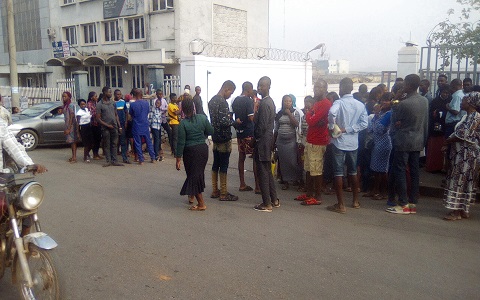
Radio Nigeria correspondent who monitored the exercise in Ekiti State University Ado Ekiti, EKSU reports that, as at eleven o‘clock in the morning the candidates were yet to commence the examination.

In an interview, some of the candidates expressed dissatisfaction over the development and called on JAMB management to proffer solution to such, as the examination continues.

Also, parents of some of the candidates at the EKSU centre including Prince Kunle Adeniyi and Mrs Rose Ogundele described the development as uncalled for.

Meanwhile, at the Ekiti Anglican Diocesan High School, Ile Abiye CBT centre and Phoenix CBT centre Ajilosun, Ado-Ekiti, the examination went smoothly as there was no case of computer system malfunctioning as confirmed by some of the candidates.

The examination started as scheduled in other centres visited in Ado and outside the state capital, as the first and second batches students have sat for the examination.

Radio Nigeria observed the presence of security operatives, particularly officers of the Nigeria Security and Civil Defence Corps, NSCDC, at the centres visited.

Ekiti State has twelve CBT centres located in Ado , Oye, Ijero, Ikere, Igede and ikole Ekiti.

JAMB UTME which started today is expected to end on the sixteenth of this month with about two million candidates registered for the Examination nationwide.

Niyi Alade

News

The Federal Ministry of water resources has identified an increased demand for water due to population growth as problems confronting the development and management of the nation’s water resources

Permanent secretary, federal ministry of water resources, Mrs Didi Walson-Jack made this known in Ibadan at a southwest stakeholders engagement on the 2013 national water resources master plan implementation.

Mrs Walson-Jack who also highlighted climate change and uneven distribution of rainfall across the country however explained that the Federal government was sensitizing relevant stakeholders to implement the 2013 water Master plan.

She said the first water resources master plan for the country in 1995 recorded setbacks due to lack of political will and weak implementation structure, hence the need for the stakeholder’s sensitization workshop on the new plan.

Mrs Walson-Jack explained that the new plan focuses to achieve management and monitoring of water resources for agricultural production, food security and adequate provision of safe water.

While noting that the ministry had earlier organized similar sensitizations in Kano and Sokoto states, Mrs Walson-Jack explained that the stakeholders would be intimated on the need for Nigeria to consent to the United Nation’s water Convention.

She appealed to states, local governments, development partners and end-users to collaborate with the Federal government to ensure successful accession to the UN water convention.

Reacting to two of the participants, Mr Michael Ale and chairman, Oyo state rural water supply, Mr Najeem Omirinde advised the Federal Government to include in the plan, measures to check the indiscriminate drilling of Borehole.

The participants also called for the need to review the 2013 water plan to allow it to meet the current reality on the ground.

Mosope Kehinde

News

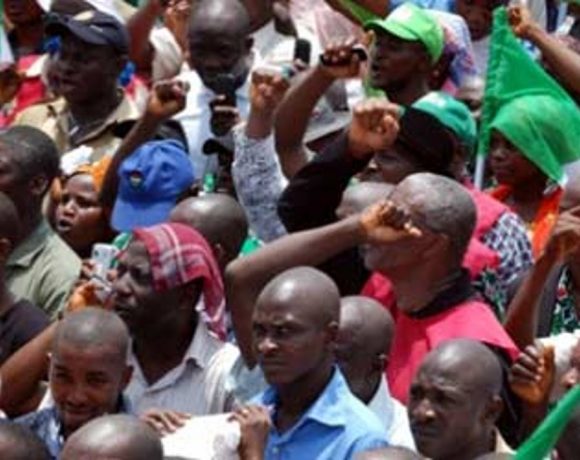
Labour leaders and federal civil servants have expressed worry over challenges posed by the integrated payroll and personnel Information System, IPPIS initiated by the federal government to centralize payment of salaries of public servants.

 Our correspondent Oriola Afolabi takes a look at factors responsible for the dissatisfaction and plights of workers on issues of IPPIS and other related matters.

Integrated Payroll and Personnel Information System IPPIS was introduced in 2007 by the federal government to cover 506 Agencies, commissioners, parastatals and all ministries with the mandate of ensuring a centralized payment of salaries’ case, staff remuneration, promote accountability and prevent corrupt practices in the system.

Some of those who spoke with Radio Nigeria on the scheme, listed challenges posed by the IPPIS to workers to include challenge of under payment, none payment of salaries arrears from 2 to 15 months and none recognition of labour law by the managers of the scheme.

In his own submission, the Chairman, Academic Staff Union of Universities, ASUU, Obafemi Awolowo university, OAU, Dr Adeola Egbetokun said that the introduction of IPPIS was good at the beginning but the reverse was the case, as the system had dropped in quality while workers now faced untold hardship before they could be paid.

Dr. Egbetokun maintained that the efforts by the ASUU to address the problem did not yield positive result.

The chairman, Non Academic Staff Union of Universities, NASU, Federal University Oye Ekiti, FUOYE, Mr Ayodele Ojumo-Ola who lamented the suffering some of their workers were going through due to ineffectiveness of the IPPIS, said federal government needed to take urgent steps to correct problems  that the scheme posed on federal workers nationwide.

Mr Ojumo-Ola maintained that the system created to fight corruption and ease remuneration had turned to hardship.

Vice President, Trade Union Congress TUC, Dr Tom Etimmy who commended the initiative and initiator of IPPIS for a job weldone towards eliminating corruption in the system however blamed most of the problems recorded so far in the system on management of various institutions by not showing interest in the system.

Dr Etimmy called on federal government to decentralise IPPIS and make it more effective, by ensuring proper monitoring and allocation of enough funds to settle the backlogs of salary arrears.

The Vice President ‘B” zone  of the Nigeria Union of Journalists Mrs Ronke Samo advised federal government to as a matter of urgency look into some of the grey areas associated with the scheme for possible remedy.

Mrs Samo suggested that those who were not skillful enough should not be allowed to work with the scheme to guard against errors and other forms of miscalculation.

Oriola Afolabi

Religion

Pastor Tom Temisan of the Christ  Embassy Ministry Centre, Abeokuta has urged Nigerians irrespective of their faiths to intensify prayers for the leaders at various levels in their efforts to address challenges affecting the country.
Pastor Temisan said this during a sermon entitled ” divine intervention” at Edwin’s Hall, Olorombo, Abeokuta.
The religious leader who noted that God is ready to intervene in all situations of the country encouraged the faithful to be specific in their requests before God.
Pastor Temisan expressed optimism that with persistent prayers of the righteous, the nation’s challenges would be a thing of the past.
He stressed the need for Nigerians to be united and shun all forms of secessionist comments.

Segun Folarin