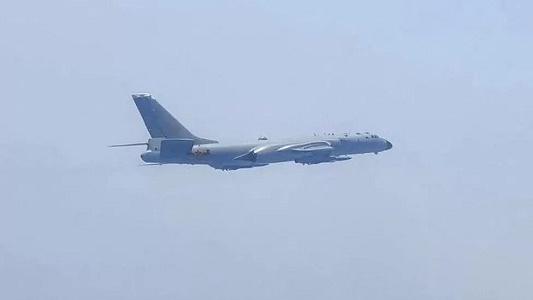
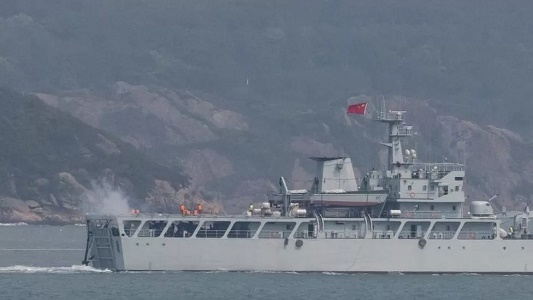
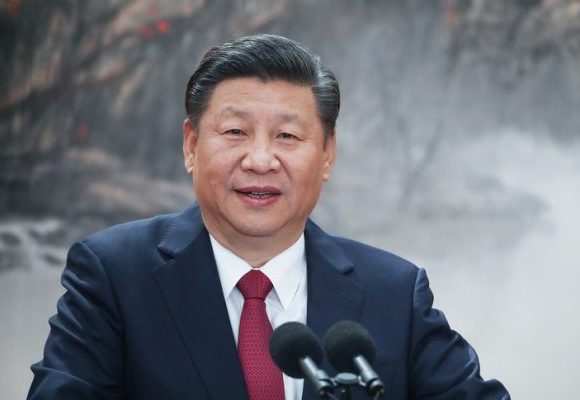
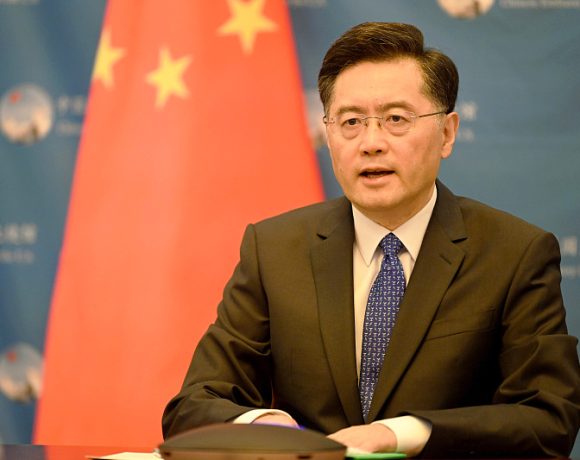
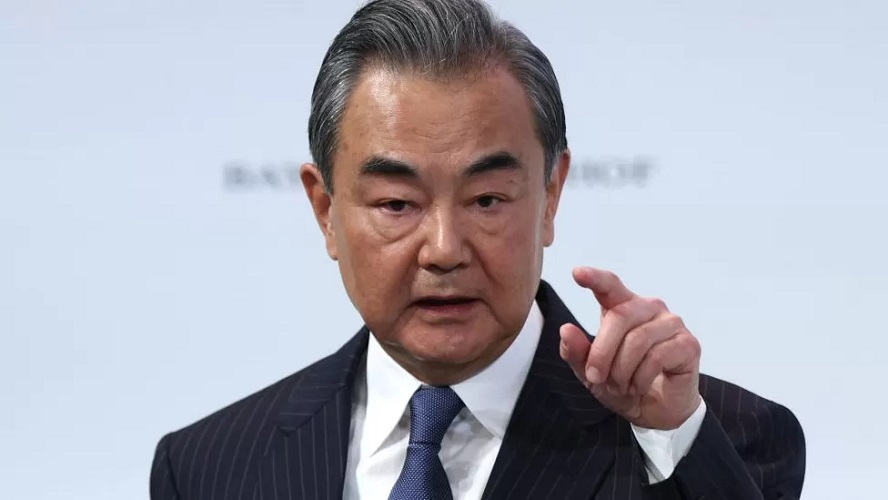
China has removed three retired military generals, including a former commander of the People’s Liberation Army, PLA, ground forces, from a key political advisory body just days before its largest annual political gathering.
According to State media on Monday, the Chinese People’s Political Consultative Conference, CPPCC, voted to expel Han Weiguo, Gao Jin and Liu Lei. No official explanation was provided, but the move came amid an intensified purge of senior military officials in recent weeks.
President Xi Jinping has launched recurring anti-corruption campaigns since taking office in 2012. While framed as efforts to clean up the party and armed forces, critics argue the campaigns are also used to sideline political rivals.
About 3,000 delegates from the CPPCC — an advisory body without legislative power — and China’s legislature, the National People’s Congress, NPC, were due to convene in Beijing the week for the annual “Two Sessions.” The meetings begin in some hours’ time, and will run for about a week.
CPPCC and NPC delegates typically serve five-year terms, with the current term set to end in March 2028. Mid-term removals are therefore unusual.
Han, 70, served as commander of the PLA Army from August 2017 until his retirement in June 2021. His two successors, Liu Zhenli and Li Qiaoming, have also been removed from their respective posts in recent months.
Liu Lei, also 70, was political commissar of the PLA Army from December 2015 to January 2022, overlapping with Han’s tenure.
Gao, 67, was the inaugural commander of the now-dissolved Strategic Support Force when it was established in 2015. He most recently headed the Central Military Commission’s Logistic Support Department before retiring in January 2022.
Alongside the three generals, several other CPPCC members were dismissed, including Zhang Kejian, a senior defence industry official who is under investigation for corruption.
Monday’s action follows a string of high-profile removals. Last Thursday, authorities announced the dismissal of 19 officials, nine of them from the military.
In January, senior military figures including Zhang Youxia and Liu Zhenli were removed from their posts and placed under investigation for “serious violations of discipline and law,” according to China’s defence ministry.
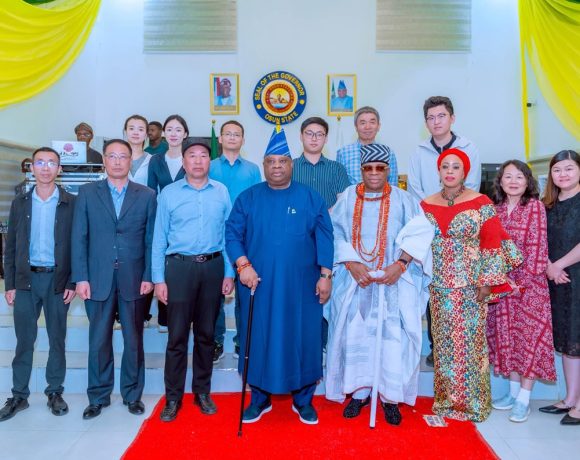
A delegation of Chinese investors from mainland China and Hong Kong has commended the Osun State Government for rapid and impressive infrastructural development across the state, which has positioned Osun as an emerging hub for industrialisation and economic growth.
The investors, which cut across sectors, including food and water processing, mining, electric vehicles and agro-equipment manufacturing, gave the commendation during a dinner hosted in their honour at the Government House, Osogbo.
Speaking on behalf of the delegation, the team leader and Chief Executive Officer of Yuanfar International, Ms. Nancy Chi, said the scale of ongoing road and urban infrastructure projects in Osun was already changing the perception of the state among Chinese business communities.
Ms. Chi noted that while Chinese investors traditionally favoured Lagos, Ogun and Abuja, Osun was fast gaining prominence as a viable investment destination due to improved infrastructure, peace and deliberate government support for investors.
She disclosed that members of the delegation were interested in establishing operations within the Osun Free Trade Zone and other parts of the state, adding that the Hong Kong government, through its investment agency, would soon invite Governor Ademola Adeleke for an official visit, with a reciprocal visit to Osun planned for 2026.
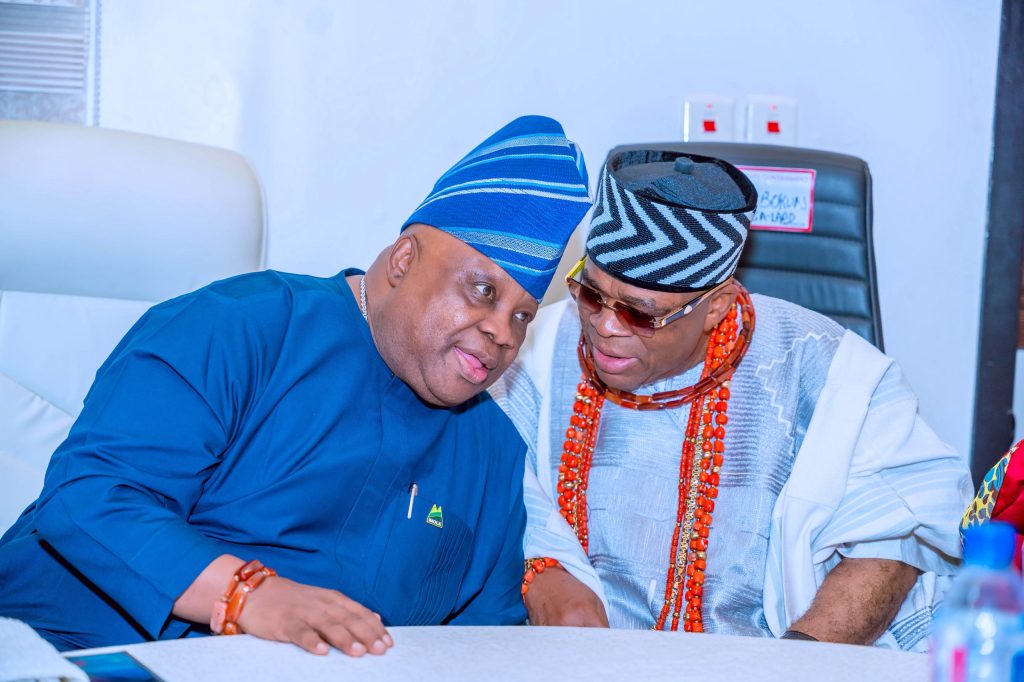
Also addressing the gathering, the Owa Obokun of Ijeshaland, His Imperial Majesty, Oba Adesuyi Haastrup, revealed that the investors were considering Ilesa and other parts of Osun for the establishment of industrial plants, including proposals for a China Town, a computer village and solar-powered tricycle manufacturing facilities.
In his remarks, Governor Adeleke thanked the Chinese delegation for their positive appraisal of his administration, reiterating his government’s resolve to close Osun’s long-standing infrastructure gap and create a business-friendly environment.
The Governor further announced that accreditation had been secured for the study of the Chinese language at the University of Ilesa, describing the move as part of deliberate efforts to deepen economic ties with Asia.
China’s most advanced aircraft carrier, the Fujian, has entered service days after a grand commissioning ceremony overseen by Chinese leader Xi Jinping, state media said.
The Fujian, the country’s third warship, is equipped with electromagnetic catapults which will allow planes to be launched at higher speeds.
Its launch marked a significant step forward for Beijing, which now has the world’s largest navy in terms of sheer number of ships.
China has been expanding its navy at breakneck speed under Xi, putting pressure on the United States and its allies to keep up.
The Fujian can launch three different types of aircraft with its electromagnetic catapult and flat flight deck, according to state media.
The domestically-built vessel can carry planes with heavier weapons and fuel loads so they can strike enemy targets from a greater distance, making it more powerful than China’s first two carriers, the Liaoning and the Shandong both built by the Russians.
State media hailed the Fujian as a “major milestone” in the development of China’s navy.
The US is the only other country in the world to have an aircraft carrier with the same electromagnetic catapult system as Fujian.
The Fujian’s commissioning ceremony was held in southern Hainan province on Wednesday, during which Xi toured the ship’s deck to hear more details about its performance at sea.
State media claimed Xi had personally made the decision to adopt electromagnetic catapult technology.
The reports also said Xi spoke to sailors who lined up along the flight deck and dock, saluting and shouting in unison: “Follow the party’s command, fight to win, and uphold fine conduct!”
China will begin easing an export ban on automotive computer chips vital to production of cars across the world as part of a trade deal struck between the US and China, the White House has said.
The White House confirmed details of the deal in a new fact sheet after Xi Jinping and Donald Trump met in South Korea this week.
The nations also reached agreements on US soybean exports, the supply of rare earth minerals, and the materials used in production of the drug fentanyl.
The deal de-escalates a trade war between the world’s two largest economies after Trump hit China with tariffs after he entered office this year, leading to rounds of retaliatory tariffs and global business uncertainty.
A spokesman for the Chinese Embassy in Washington told the BBC that details of the agreements reached had been shared by “competent authorities”.
“China-US economic and trade relations are mutually beneficial in nature,” he said.
“As President Xi Jinping noted, the business relationship should continue to serve as the anchor and driving force for China-US relations, not a stumbling block or a point of friction.”
Speaking on Sunday following the release of the deal details, Treasury Secretary Scott Bessent told CNN: “We don’t want to decouple from China… (But) they’ve shown themselves to be an unreliable partner.”
Much of what is in Saturday’s fact sheet was announced by Trump and other officials following the meeting between the two leaders.
Trump had described the talks, held in South Korea, as “amazing”, while Beijing had said they had reached a consensus to resolve “major trade issues”.
One of the issues addressed in the deal was the export of automotive computer chips. There had been concern that a lack of chips from Nexperia, which has production facilities in China, could create global supply chain issues.
Nexperia is a Chinese-owned company, but is based in the Netherlands. About 70% of Nexperia chips made in Europe are sent to China to be completed and re-exported to other countries.
The fact sheet states that China will “take appropriate measures to ensure the resumption of trade from Nexperia’s facilities in China, allowing production of critical legacy chips to flow to the rest of the world”.
It follows Beijing saying on Saturday that it was considering exempting some firms from the ban.
Firms are still scrambling to find out what it means for them, said Sigrid De Vries, director general of the European Automobile Manufacturers’ Association.
“The Chinese authorities have said they would start exporting eligible chips again, that they’re investigating and making lists of companies …but the scope and the conditions are as yet unclear,” she told the BBC’s Today programme.
She added that China easing the automotive chip ban was positive news because “supply shortages were imminent”.
But she warns “they are still looming” because of the interruption so far, adding that it’s hard to tell if vehicle prices will be affected.
Last month, the likes of Volvo Cars and Volkswagen warned a chip shortage could lead to temporary shutdowns at their plants, and Jaguar Land Rover said the lack of chips posed a threat to their business.
On other key issues, Beijing will now pause export controls it brought in last month on rare earth minerals – vital in the production of cars, planes and weapons – for a year.
The White House also said it would lower tariffs brought in to curb the import of fentanyl into the US, with China agreeing to take “significant measures” to deal with the issue.
Fentanyl is a synthetic drug manufactured from a combination of chemicals, and while it is approved for medical use in the US, the powerful and highly-addictive substance has since become the main drug responsible for opioid overdose deaths in the US.
The chemicals used in its manufacturing, some of which have legitimate uses, are mostly sourced from China.
On soybeans, China has committed to buying 12 million tonnes of US soybeans in the last two months of 2025, and 25 million metric tonnes in each of the following three years – which is roughly the level they were previously at.
China’s decision to stop purchasing soybeans from the US earlier this year denied American farmers access to their largest export market.
In response, Trump revived a bailout for farmers which was in place during his first term in office.
China and the United States resumed trade talks on Monday in Madrid, seeking to narrow differences on trade and technology that have strained relations between the world’s two largest economies.
Talks restarted at Spain’s foreign ministry, a day after delegations led by US Treasury Secretary Scott Bessent and Chinese Vice Premier He Lifeng opened the latest round of discussions. The meetings are expected to continue through Wednesday.
Officials from the two nations were seen entering the headquarters of the ministry on Monday morning, according to an AFP reporter at the scene.
The agenda includes two of the thorniest issues in the bilateral relationship: President Donald Trump’s threat of steep tariffs on Chinese imports and Washington’s demand that TikTok be sold to a non-Chinese owner or face a US ban by September 17.
Trade tensions escalated sharply earlier this year, with tit-for-tat tariffs reaching triple digits and snarling supply chains.
Both governments later agreed to roll back duties to 30 percent on US goods and 10 percent on Chinese exports, but the temporary truce expires in November.
Beijing urged Washington last week to resolve disputes “based on mutual respect and equal consultations.”
Over the weekend, China launched investigations into the US semiconductor sector, signalling frictions remain high despite the Madrid talks.
The meetings could lay the groundwork for a possible summit between Trump and Chinese leader Xi Jinping later this year.
Until then, negotiators face the challenge of stabilizing an uneasy truce while addressing disputes over technology access, tariffs, and rare earth exports.
Rare earth metals have recently become a popular discussion and even a common headline in recent times.
Rare earth metals are an indispensable part of modern technology, serving as critical components in a vast range of industries, including consumer electronics, renewable energy, medical devices, and national defense.
These elements are key to the production of smartphones, electric vehicles (EVs), wind turbines, and military applications such as precision-guided missiles and stealth technology.
Their strategic importance has triggered intense competition among nations, leading to efforts to diversify supply chains and reduce dependence on dominant producers like China.
What Are Rare Earth Metals?
Rare earth elements (REEs) consist of 17 chemically similar elements: the 15 lanthanides, along with scandium and yttrium.
While these elements are relatively abundant in the Earth’s crust, they are rarely found in concentrated, economically extractable deposits.
This dispersion makes their mining and refining complex, energy-intensive, and environmentally challenging.
REEs are categorized into light and heavy rare earth elements.
Heavy Rare Earth Elements (HREEs)
Heavy rare earth elements (HREEs) are a subset of the 17 rare earth elements (REEs) and generally include elements from gadolinium to lutetium, along with yttrium.
Heavy rare earth elements, HREEs are less abundant and are mainly found in specialized mineral deposits such as xenotime and ion-adsorption clays.
These elements are crucial in high-tech applications, particularly in clean energy and defense industries.
Heavy REEs are scarcer and more valuable due to their unique properties in high-tech applications.
Extracting and processing these elements require specialized technology and infrastructure, further adding to their strategic significance in the global economy.
HREEs are essential for cutting-edge technologies, including renewable energy, defense systems, medical imaging, and aerospace engineering.
Their scarcity and complex extraction processes make them highly valuable and often subject to geopolitical tensions.
China dominates HREE production, but efforts are underway to diversify the supply chain and explore new mining sites worldwide.
List of Heavy Rare Earth Elements (HREEs) and their uses
Gadolinium (Gd) – Used in MRI contrast agents, neutron shielding in nuclear reactors, and specialized alloys.
Terbium (Tb) – Critical for green phosphors in lighting and displays, as well as in high-temperature magnets.
Dysprosium (Dy) – Enhances the heat resistance of neodymium-based magnets, making it vital for electric vehicles and wind turbines.
Holmium (Ho) – Used in nuclear control rods, lasers, and some high-powered magnets.
Erbium (Er) – Found in fiber optic communication systems and laser medical applications.
Thulium (Tm) – A key component in portable X-ray machines and laser devices.
Ytterbium (Yb) – Used in stress gauges, fiber optics, and as a doping agent for high-powered lasers.
Lutetium (Lu) – Utilized in PET scan detectors, catalysts in petroleum refining, and advanced optics.
Yttrium (Y) – A critical element in superconductors, ceramic materials, and LED displays.
Light Rare Earth Elements (LREEs)
Light rare earth elements (LREEs) are a subset of the 17 rare earth elements (REEs) and include the first half of the lanthanide series, from lanthanum to samarium, along with scandium.
These elements are more abundant in the Earth’s crust compared to heavy rare earth elements (HREEs), making them relatively easier to extract and process.
However, they are still considered strategically important due to their widespread applications in modern technology.
Significance and Applications
LREEs are integral to modern industries such as renewable energy, telecommunications, and defense.
Their role in high-performance magnets makes them essential for electric vehicles (EVs) and wind turbines, supporting global efforts for sustainable energy.
Additionally, they contribute to advanced optics, aerospace technology, and medical imaging, making them indispensable in high-tech manufacturing.
Despite their relative abundance, refining LREEs requires complex chemical separation processes, often leading to environmental and geopolitical challenges in their supply chain.
List of Light Rare Earth Elements (LREEs)
Lanthanum (La) – Used in hybrid car batteries, catalysts for petroleum refining, and optical lenses.
Cerium (Ce) – Plays a major role in catalytic converters, glass polishing, and self-cleaning ovens.
Praseodymium (Pr) – Essential for making high-strength permanent magnets in wind turbines and electric vehicles.
Neodymium (Nd) – A key component in neodymium-iron-boron (NdFeB) magnets, which are used in motors, headphones, and speakers.
Promethium (Pm) – A radioactive element used in nuclear batteries and specialized luminous paints.
Samarium (Sm) – Used in samarium-cobalt (SmCo) magnets, which are critical for aerospace and defense applications.
Where Are They Found?
A newly developed geological map has highlighted key global deposits of rare earth metals.
China remains the dominant player, controlling approximately 60% of global mine production and about 90% of rare earth processing and permanent magnet output.
Other major sources include:
Africa: Countries like Morocco and South Africa hold significant reserves, particularly of zinc, lithium, and cobalt, which are critical for renewable energy and battery technology.
South America: Chile and Brazil boast vast lithium reserves, a crucial component of electric vehicle (EV) batteries.
Ukraine: Recently identified as an emerging rare earth hub, Ukraine holds around 5% of the world’s reserves, adding a geopolitical dimension to the global supply chain.
Nigeria: Research indicates that Nigeria has deposits of rare earth metals, particularly in regions such as Kogi, Nasarawa, and Plateau states. While the extent of these reserves is still under study, they could play a role in the country’s mineral resource development in the future.
Challenges and Environmental Concerns
The extraction and processing of rare earth metals pose significant environmental and health risks due to the intensive mining and refining processes involved.
Open-pit mining, the most common extraction method, results in large-scale deforestation, habitat destruction, and soil erosion.
Additionally, the chemical processes used to separate rare earth elements (REEs) from ores often involve toxic solvents, acids, and large quantities of water, leading to hazardous waste by-products.
If not properly managed, these wastes can contaminate groundwater, rivers, and agricultural lands, posing long-term health risks to nearby communities.
Many rare earth ores contain radioactive elements such as thorium and uranium, which create additional hazards.
When improperly handled, these radioactive materials can accumulate in mining waste, leading to long-term radiation exposure and potential contamination of ecosystems.
Furthermore, rare earth mining generates fine dust particles containing heavy metals, which can be inhaled by workers and local populations, increasing the risk of respiratory diseases and other health complications.
Although research into more sustainable extraction methods is ongoing, including bio-leaching and ion-adsorption techniques, these alternatives have yet to be widely implemented due to high costs and technical challenges.
Governments and industries are under increasing pressure to adopt environmentally responsible sourcing and recycling practices to mitigate these impacts.
The Global Race for Rare Earths
As demand for rare earth elements (REEs) continues to soar, governments and industries worldwide are scrambling to secure stable and diversified supply chains.
China has long dominated rare earth production, accounting for over 60% of global mining and nearly 90% of processing capacity, giving it significant geopolitical leverage over these critical materials.
In response, the U.S. and European nations have ramped up investments in domestic mining projects and refining facilities, aiming to reduce dependence on Chinese exports.
Africa is emerging as a key player in the global rare earth market, with countries like Madagascar, Burundi, and South Africa developing their reserves.
Latin American nations are also being explored for their untapped mineral potential.
Meanwhile, Ukraine, despite ongoing geopolitical challenges, holds approximately 5% of the world’s rare earth reserves, making it an important future supplier.
Efforts are also underway to recycle rare earth elements from electronic waste and develop alternative materials for high-tech applications.
As nations compete for access to these essential resources, the global rare earth market is becoming increasingly strategic, shaping the future of clean energy, defense, and advanced technology industries.
Diversifying rare earth supply chains will not only stabilize global markets but also make these essential materials more affordable and widely available.
Governments and corporations are working to diversify rare earth supply chains.
The U.S., EU, and Japan are investing in mining, recycling, and alternative sources while implementing sustainability policies.
Private companies are funding new mines, developing recycling programs, and using blockchain for transparent sourcing.
Conclusion
Rare earth metals are indispensable to modern technology and industrial applications, making them a focal point in the global economy.
With China leading production and other nations racing to secure their own sources, the geopolitical and environmental implications of rare earth mining will continue to shape the future.
For African nations, particularly Nigeria and other resource-rich countries, this is a defining moment.
As demand surges due to the global push for green energy and technological advancements, governments and corporations are heavily investing in both known and newly discovered rare earth deposits to secure long-term supply stability.
For African nations, this presents both an opportunity and a warning.
While countries like China, the United States, and Australia have long exploited rare earth resources for economic and strategic advantages, Africa—with its untapped reserves—risks being left behind if proactive steps are not taken.
Nations like Nigeria, Tanzania, and South Africa possess significant mineral wealth, yet they remain underutilized.
Now is the time for African governments to recognize the value of these critical elements, invest in local mining and refining capabilities, and position themselves as key players in the global rare earth market.
Failure to act could result in the continued reliance on foreign supply chains, leaving Africa at the mercy of global power struggles over these invaluable resources.
The global shift toward clean energy and advanced technology provides an unprecedented chance to harness these critical minerals for economic growth.
However, if proactive steps are not taken—such as investing in mining, refining, and responsible extraction—the continent will remain a passive player, dependent on imported materials instead of leveraging its own wealth.
The time to act is now.
African leaders must prioritize rare earth metals as part of their economic and industrial strategy, ensuring that the continent benefits from its natural resources rather than being exploited for them.
With proper investment, regulation, and collaboration, Africa can emerge as a powerful force in the rare earth supply chain, driving innovation and self-sufficiency in the decades to come.
Acknowledgements: This feature is informed by research from Reuters, The Daily Galaxy, and additional sources on global rare earth metal distribution.
Four Canadians were executed in China on drug-related charges earlier this year, Canadian authorities have confirmed.
All of them were dual citizens and their identities have been withheld, Canada’s foreign minister Mélanie Joly said.
A spokesperson for the Chinese embassy in Canada reportedly urged Ottawa to “stop making irresponsible remarks”, as pundits feared a further downturn in relations between the countries after years of strain.
China’s foreign ministry said on Thursday that it had acted “in accordance with the law”, while the embassy said there was “solid and sufficient” evidence for their crimes.
Beijing had “fully guaranteed the rights and interests of the Canadian nationals concerned”, the embassy said, urging Canada to respect “China’s judicial sovereignty”.
China does not recognise dual citizenship and takes a tough stance on drug crimes. However, it’s rare for the death penalty to be carried out on foreigners.
Joly said she had been following the cases “very closely” for months and had tried with other officials, including former prime minister Justin Trudeau, to stop the executions.
In a statement to Canadian media, Global Affairs Canada spokesperson Charlotte MacLeod said Canada had “repeatedly called for clemency for these individuals at the senior-most levels and remains steadfast in its opposition to the use of the death penalty in all cases, everywhere”.
China imposes the death penalty on serious crimes including those related to drugs, corruption and espionage. While the number of executions are kept secret, human rights groups believe China has one of the highest execution rates in the world.
“These shocking and inhumane executions of Canadian citizens by Chinese authorities should be a wake-up call for Canada,” said Ketty Nivyabandi from Amnesty International Canada. “We are devastated for the families of the victims, and we hold them in our hearts as they try to process the unimaginable.”
“Our thoughts also go to the loved ones of Canadian citizens whom China is holding on death row or whose whereabouts in the Chinese prison system are unknown.”
In 2019, Canadian national Robert Lloyd Schellenberg was sentenced to death in China for drug smuggling, in a high-profile case condemned by the Canadian government. He was not among the Canadians that were executed.
“We’ll continue to not only strongly condemn but also ask for leniency for other Canadians that are facing similar situations,” Joly said on Wednesday.
Relations between Canada and China have been icy since 2018 after Canada detained a Chinese telecom executive, Meng Wanzhou, on a US extradition request. China arrested two Canadians shortly afterwards, both of whom have now been released.
In 2023, Canadian media released reports, many based on leaked intelligence, about detailed claims of Chinese meddling in the country’s federal elections. China denied the reports, calling them “baseless and defamatory”.
More recently, China imposed retaliatory tariffs on some Canadian farm and food imports after Ottawa levied Chinese electric vehicles, steel and aluminium.
More than 14,000 rescue workers have arrived in Tibet to continue the search for survivors after a strong earthquake killed at least 126 people in a remote part of western China.
More than 400 people have been rescued, Chinese state media says, since the quake struck on Tuesday, some 50 miles from the base of Mount Everest, destroying thousands of homes.
Vice-Premier Zhang Guoqing arrived on Wednesday to oversee the operation, which is being hampered by winter temperatures that dropped to -16C overnight.
Earthquakes are common in the region, which lies on a major geological fault line, but Tuesday’s was one of China’s deadliest in recent years.
The magnitude 7.1 quake, which struck at a depth of 10 km (six miles), according to data from the US Geological Survey, was also felt in Nepal and parts of India, which neighbour Tibet.
Internet access is restricted in Tibet, which is tightly controlled by Beijing, and reporters cannot travel there without government permission. So much of what we know about the quake and its aftermath is from Chinese state media.
The air force has been deployed and drones dispatched to help rescuers, as President Xi Jinping called for all-out efforts to minimise casualties and resettle affected residents.
State-owned People’s Daily says more than 30,000 people have been relocated in the region. Electricity and mobile phone service in Tingri county, near the epicentre, were restored by Wednesday morning, according to state media.
Officials estimate that more than 3,600 buildings had collapsed, potentially leaving thousands without shelter.
Videos published by China’s state broadcaster CCTV showed houses destroyed and and buildings brought down in Tibet’s holy Shigatse city, with rescue workers wading through debris and handing out thick blankets to locals.
Sangji Dangzhi – whose supermarket was damaged in the earthquake – told news agency AFP by phone that the destruction of homes had been extensive.
“Here the houses are made from dirt so when the earthquake came… lots of houses collapsed,” the 34-year-old said, adding that ambulances had been taking people to hospital throughout the day.
A hotel resident in Shigatse told Chinese media outlet Fengmian News he had been jolted awake by a wave of shaking. He said he had grabbed his socks and rushed out on to the street, where he saw helicopters circling above.
“It felt like even the bed was being lifted,” he said, adding that he immediately knew it was an earthquake because Tibet recently experienced multiple smaller quakes.
There were more than 40 aftershocks in the first few hours following the quake.
Jiang Haikun, a researcher at the China Earthquake Networks Center, told CCTV that while another earthquake of around magnitude 5 might still occur, “the likelihood of a larger earthquake is low”.
Sitting at the foot of Mount Everest, which separates Nepal and China, Tingri county is a popular base for climbers preparing to ascend the world’s tallest peak.
Everest sightseeing tours in the area have been cancelled, a tourism staff member told local media, adding that the area had been closed. There were three visitors who had all been moved to an outdoor area for safety, they said.
Shigatse region, home to 800,000 people, is the traditional seat of the Panchen Lama, a key figure of Tibetan Buddhism whose spiritual authority is second only to the Dalai Lama.
Tibetan Gedhun Choekyi Niyima who was identified as the reincarnated Panchen Lama was disappeared by China in 1995 when he was six years old. China then chose its own Panchen Lama.
“I offer my prayers for those who have lost their lives and extend my wishes for a swift recovery to all who have been injured,” the current Dalai Lama said in a statement.
He fled Tibet to India in 1959 after China annexed the region, and has since been seen as an alternative source of power for Tibetans who resent Beijing’s control – which extends to local media and internet access.
While strong tremors were felt in Nepal, no major damage or casualties were reported, an official from the National Emergency Operations Centre told BBC Newsday – only “minor damages and cracks on houses”.
The tremors on Tuesday morning, which sent many Kathmandu residents running out of their houses, brought back memories of the deadly 2015 quake. The magnitude 7.8 earthquake hit near Kathmandu, the capital of Nepal, killing nearly 9,000 people and injuring more than 20,000.
“In 2015, when the earthquake hit, I could not even move,” Manju Neupane, a shop owner in Kathmandu, told BBC Nepali. “Today the situation was not scary like that. But, I am scared that another major earthquake may hit us and we will be trapped between tall buildings.”
A Chinese court has issued a suspended death sentence to a man who rammed his car into crowds outside a primary school in southern China last month, injuring more than two dozen people in one of several violent attacks that has recently rattled the country and prompted officials to ramp up security measures.
The driver, named as Huang Wen, was sentenced to death with a two-year reprieve by a court in Changde city in Hunan province, state news agency Xinhua reported Monday.
Under Chinese law, the reprieve means Huang’s penalty can be commuted to life imprisonment, subject to his conduct during the two-year period.
Huang was arrested on site after injuring 30 people, including 18 students, on the morning of November 19, according to the court.
The court said Huang launched the attack to vent his frustration after suffering investment losses and conflicts with family members.
Huang got out of his vehicle after crashing it into people and attacked bystanders with a weapon before being apprehended, according to the court.
Video circulating on social media and geolocated by CNN showed dozens of panicked schoolchildren screaming and running into the schoolyard, with a man’s voice heard yelling “quickly, quickly,” in the background.
Another video showed multiple people, including adults, lying on the road, apparently injured. Police could be seen handcuffing a man in front of a vehicle.
Images circulating online of the incident were quickly wiped from social media platforms, while comment sections on posts related to the incidents were disabled.
“Huang Wen chose an unspecified large number of innocent primary school students as his main targets, demonstrating a despicable motive and extreme malice,” the court said in a statement.
Spate of attacks
The incident in Changde came just over a week after China saw its deadliest known attack in a decade, when 35 people were killed after a man plowed his car into crowds exercising at an outdoor sports center in the southern city of Zhuhai.
The suspect, a 62-year-old man, was apprehended while trying to flee the scene. An initial investigation suggested he was unhappy with the outcome of a divorce settlement, according to police.
Eight people were also killed and 17 others injured in a mass stabbing on a college campus in eastern China on November 16.
Sudden episodes of violence targeting random members of the public – including children – have surged across China in recent months as economic growth stutters, unnerving a public long accustomed to low violent crime rates and ubiquitous surveillance.
Some social media users have taken to warning each other to be cautious of people becoming more desperate and unstable, calling the recent attacks an act of “revenge against society.”
Public discontent has been mounting in China over the country’s flailing economy, which is grappling with numerous woes from an ailing property sector to low consumer confidence and high youth unemployment.
Authorities have rolled out some stimulus measures, but many experts say they are not enough to boost much-needed domestic demand and revive the economy.
The recent outbursts of violence have unnerved China’s top officials.
In response to the Zhuhai attack, Chinese leader Xi Jinping urged officials to “prevent risks at the source” and “promptly resolve conflicts and disputes” to prevent such incidents from happening again.
Last month, China’s top judge called on court officials to hand out swift and severe punishment for violent attacks on the public.
The country’s top prosecutor also pledged last month to “resolve conflicts, manage risks and maintain social stability” and maintain “zero tolerance” on crimes that endanger the safety of students.
Eight people died after suffocating in a refrigerated truck in central China’s Henan province, investigators said.
In a statement released on Sunday, a local investigative team said that the eight had been “illegally” transported in the cold-chain vehicle to the town of Hongzhuangyang.
“The driver found eight people suffocating and unconscious in the car,” investigators said, adding that they were later declared dead.
The driver and other “responsible persons” are being held by police, the statement said.
The case is under investigation, it added.
It was not immediately clear if the eight were Chinese nationals or foreigners.
Mongolia is a landlocked country in East Asia, bordered by Russia to the north and China to the south.
With a population of 3.17 million people and more than 80 million livestock animals, Mongolia is the world’s second-largest producer of cashmere wool.
Surprisingly, despite the country’s sparse population, Mongolia Produces 50 percent of the world’s cashmere.
The report states that Mongolia has 30 million goats and because of the cold weather and spacious nature, the goats grow the best hair in the world.
The fur from the goats is taken to the factory to be transformed into cashmere, the fur is cleaned, dried, and knitted and the final product is cashmere.
Cashmere is one of the softest, smother warmest, most breathable, and long-lasting fabrics in the world.
This ancient fiber has long been associated with luxury, with earliest documented usage dating back to the 18th century, when Cashmere shawls were being exported to the Western world, particularly France and Britain.
In the 13th century, several caves were discovered in Mongolia, with representations of wild goats domesticated by man. It is very likely that even in earlier centuries, cashmere goats were raised by herders not only for their meat but also for their warm wool.
Today, the global demand for cashmere has been growing steadily across all sectors of the market, especially in Europe, where Italy and the UK are the main importers from China and Mongolia.
The cashmere sector is contributing to 5% of the Mongolian GDP and about 100 textile industries (95 Micro, Small, and Medium Enterprises) are providing more than 20,000 jobs to people, mostly in the capital city.
The increase in consumers’ spending on luxury goods has, however, brought significant negative social, environmental, and economic impacts on the environment, herders, producers, and buyers.
Still, in the transition towards a free market, Mongolian herders face difficulties in adjusting their productive systems to create value, preserve their natural resources, and altogether secure their livelihoods and resilience.
Loss of traditional know-how on collective rangeland management, collapsing extension services, lack of market opportunities, and dysfunctional value chains have contributed to an under-performing livestock sector.
To cope with economic uncertainties, herders have adopted a quantitative strategy, increasing their herds’ size as a safety net for food and livelihoods.
As of 2020, herd size is estimated at 80+ million while carrying capacity is estimated at 45 million.
China has sharply criticised the US for vetoing a UN Security Council resolution demanding an immediate ceasefire in Gaza.
Beijing said the move sent the “wrong message” and effectively gave a “green light to the continued slaughter”.
The White House said the Algerian-proposed resolution would “jeopardise” talks to end the war.
The US has proposed its own temporary ceasefire resolution, which also warned Israel not to invade the city of Rafah.
There has been widespread condemnation of the US decision to block Algeria’s resolution as fighting continued in Gaza. It was backed by 13 of the 15 members of the UN Security Council – with the UK abstaining.
In response to the veto, China’s UN ambassador Zhang Jun said the claim the motion would interfere with ongoing diplomatic negotiations was “totally untenable”.
“Given the situation on the ground, the continued passive avoidance on an immediate ceasefire is nothing different from giving a green light to the continued slaughter,” he said.
“The spill-over of the conflict is destabilising the entire Middle East region leading to rising risk of a wider war,” he added.
“Only by extinguishing the flames of war in Gaza can we prevent the fires of hell from engulfing the entire region.”
Algeria’s top UN diplomat declared that “unfortunately the Security Council failed once again”. “Examine your conscience, how will history judge you,” Amar Bendjama added.
US allies were also critical of the move. France’s UN envoy Nicolas de Rivière expressed regret that the resolution had not been adopted “given the disastrous situation on the ground”.
Linda Thomas-Greenfield, Washington’s ambassador to the UN, said it was not the right time to call for an immediate ceasefire while negotiations between Hamas and Israel were continuing.
Her UK counterpart, Barbara Woodward, said the plan could “actually make a ceasefire less likely” by endangering talks.
Israel launched its operations in Gaza following an attack by Hamas on southern Israel on 7 October, during which about 1,200 people were killed and more than 240 others taken hostage.
The Israeli military campaign has left more than 29,000 people dead in Gaza, according to the Palestinian territory’s Hamas-run health ministry.
The draft resolution proposed by the US calls for a temporary ceasefire “as soon as practicable” and on the condition that all hostages are released, as well as urging barriers on aid reaching Gaza to be lifted.
The White House has previously avoided the word “ceasefire” during UN votes on the war, but it is unclear if or when the Security Council will vote on the proposal.
It also states a major ground offensive in Rafah would result in more harm to civilians and their further displacement, including potentially into neighbouring countries – a reference to Egypt.
But Israel’s Prime Minister Benjamin Netanyahu said on Tuesday he was “committed to continuing the war until we achieve all of its goals” and no pressure could change it.
Just last year, Messi received a rock star welcome in Beijing when he played for his country in a friendly against Australia. Some 68,000 fans paid up to $680 for the chance to see him in action. He is also a spokesperson for big Chinese brands such as Huawei, Chery, Tencent, Mengniu, Chishui River Wine and J&T Express.
Kevin Yeung, Hong Kong’s secretary for culture, sports and tourism, said government officials were repeatedly told that Messi would play. But with 10 minutes left in the match, they were informed that a hamstring adductor injury would prevent him from playing.
“We immediately requested them to explore other remedies, such as Messi appearing on the field to interact with his fans and receiving the trophy,” Yeung said.
“Unfortunately, as you all see, this did not work out.”
The territory’s chief executive John Lee said he was extremely disappointed by Messi’s absence and called for an explanation from match organisers.
Other officials like Hong Kong lawmaker Regina Ip also reacted with fury, claiming that “Hong Kong people hate Messi, Inter-Miami, and the black hand behind them” for the “deliberate and calculated snub”.
“Messi should never be allowed to return to Hong Kong. His lies and hypocrisy are disgusting,” she added.
Match organiser Tatler Asia said in a statement that Messi had been contracted to play, unless injured. It added that it was withdrawing its application for a HK$16m government grant. The match had been designated as a major sporting event, which enabled the organisers to tap government funding.
The post has attracted some 142,000 comments. While some were supportive, many reacted angrily, with some calling the Argentine a “conman” and “garbage”. Others accused the Argentine of only wanting to make money off Chinese fans while pandering to the Japanese.
“No need to apologise, just don’t come to China again. Just because you play football well does not mean you are a good person,” one netizen said.
At least two people have died while dozens of others are missing after a landslide struck China’s southwestern province of Yunnan.
The landslide in Zhaotong City happened at 05:51 local time (21:51 GMT) on Monday, trapping 47 people.
President Xi Jinping has ordered an “all-out” rescue in the area which is experiencing sub-zero temperatures.
State broadcaster CCTV has reported that two “unresponsive” bodies have so far been pulled from the rubble.
A resident of Liangshui village told Jimu News that the landslide happened while they were sleeping.
“It was very loud, and there was also a shake, it felt like a big earthquake,” she said.
Video clips shared on social media showed rescuers walking on piles of rubble against a backdrop of snow-covered mountains. Personal belongings are seen scattered among the collapsed masonry.
The cause of the landslide was unclear, but the remote mountainous region is prone to them, due its location. Floods are also common.
The area also has many coal mines.
News China quoted another villager as saying that most of the residents there were elderly and children.
Chinese Vice Premier Zhang Guoqing is leading a workgroup to the site to guide rescue operations.
In January 2013, at least 18 people were killed in a landslide in the same county of Zhenxiong.
Chinese authorities are investigating a hospital over an incident where a surgeon allegedly punched the patient he was operating on at the time.
It was captured in a clip that went viral on Chinese social media this week, sparking outrage online.
The hospital’s parent group, Aier China, has suspended the surgeon and dismissed the CEO of the hospital where the incident took place in 2019.
The BBC has contacted Aier China for comment.
The video appears to show the surgeon punching a patient in the head at least three times while operating on their eyes.
Aier China, which operates a chain of eye hospitals, said the incident took place during an operation in its hospital in Guigang, a southwestern Chinese city.
The patient was an 82-year-old woman and “during the surgery, due to local anaesthesia, the patient had intolerance”. She moved her head and eyeballs multiple times, according to their statement.
As the patient could only speak a local dialect and did not appear to respond to the doctor’s warnings in Mandarin, the surgeon “treated the patient roughly in an emergency situation”. Local authorities say the patient sustained bruises on her forehead.
After the surgery, the hospital’s management apologised and paid 500 yuan ($70, £55) as compensation, according to the patient’s son who spoke to local media outlets. He also said his mother is now blind in her left eye, though it is not clear whether it was due to the incident.
Aier China said the hospital failed to report the incident to headquarters. On Thursday it announced the dismissal of the Guiyang Hospital CEO and the suspension of the surgeon – who is also the hospital dean – over “serious violations of the group’s regulations”, which included other unspecified offences.
Though the incident took place in December 2019, it only came to the public’s attention this week after a prominent Chinese doctor, Ai Fen, shared CCTV footage of the surgery.
Dr Ai, who was among a group of doctors who alerted the public to the initial Wuhan Covid outbreak, had posted the clip on her Weibo account where she has more than two million followers.
Dr Ai has been embroiled in legal disputes with Aier China since 2021 when she went for an operation at one of their hospitals . She has claimed she nearly became blind in one eye due to that operation, but Aier China has denied the allegation.
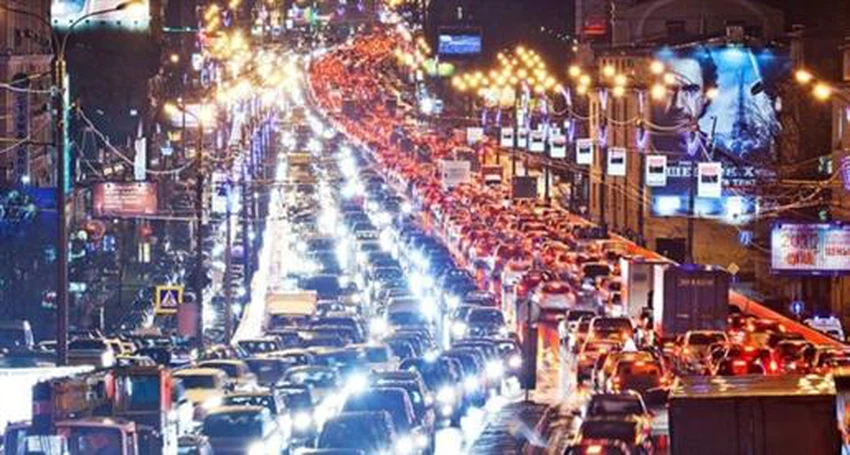
Traffic congestion can be caused by factors such as accidents, traffic overload, construction and even pedestrians crossing the road incorrectly or holding up vehicles.
In Tier 2 and Tier 3 cities, traffic congestion becomes worse due to bad roads, and poor connectivity among other factors.
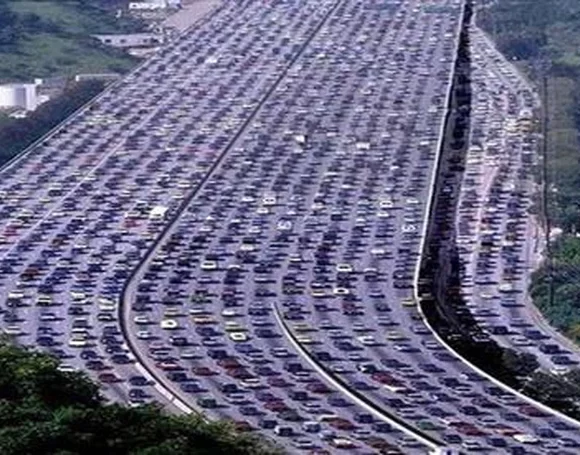
If you think that what you go through every day while going to and from work is a suffocating traffic jam, then you have not yet heard of the longest traffic jam in history, which lasted 12 days in China in 2010.
On August 14, 2010, something unthinkable happened in China. Beijing witnessed the longest traffic jam in history, extending more than 100 kilometers and lasting 12 days. China was then called “the undisputed queen of traffic jams.”
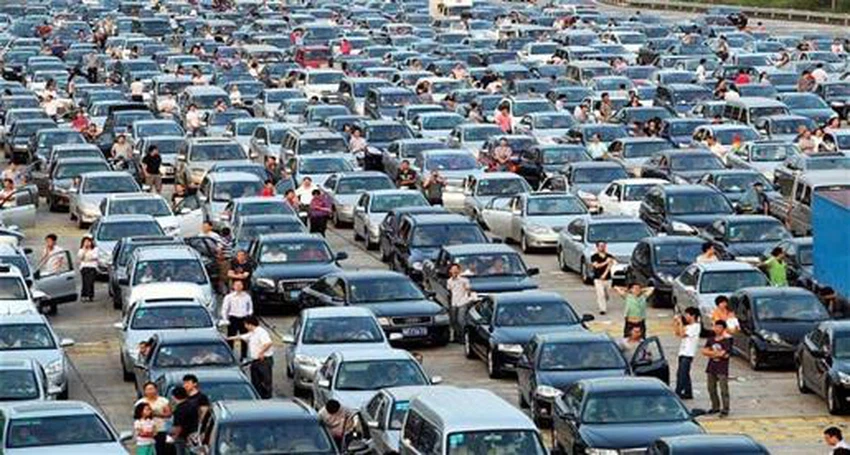
The congestion began to slow down the movement of thousands of cars, which extended over a length of more than 100 km and continued for 12 days.
Drivers were barely able to move their cars a distance of 1 km each day, and some drivers remained stuck in this traffic jam for more than 5 and 6 consecutive days.
The main reason behind the traffic congestion was some work and maintenance that was taking place on the highway linking Beijing and Tibet near the capital, Beijing, in conjunction with a surge of heavy trucks on the road, which reduced the highway’s capacity by 50% and some accidents exacerbated the problem.
Another important reason for this stifling crisis was the increase in the number of trucks transporting coal from Mongolia to the capital, Beijing, where in 2009 it transported 602 million tons of coal, which rose in 2010 to 730 million tons.
The Chinese authorities tried to find a solution to this problem and asked coal companies to postpone transportation operations and tried to bring more trucks into the capital at night until the situation was eliminated, which the authorities succeeded in doing, as they completely eliminated traffic congestion by the end of August 2010.
Some local residents near the site of the crowding took advantage of the opportunity and began selling food and water to the stranded drivers at double prices. Some drivers even preferred hunger rather than buying these expensive goods.
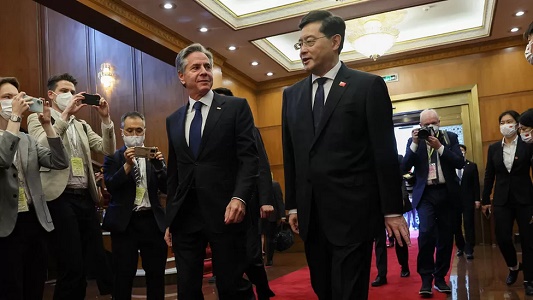
US Secretary of State Antony Blinken is meeting with China’s Foreign Minister Qin Gang in Beijing at the start of two days of talks with Chinese officials.
The visit is the first by an American diplomat to China in almost five years.
US officials say the main goal of the talks is to stabilise a relationship that has become extremely tense.
It comes nearly five months after an earlier Blinken visit was postponed, following the flight of a suspected Chinese spy balloon in US airspace.
The US has been lowering expectations for the trip and both sides have made clear they do not expect any major breakthrough.
The goal, US officials say, is to reopen lines of high-level communication and stabilise relations that have become strained since the balloon incident.
China has staged military exercises near Taiwan, which Beijing views as an integral part of China. The US maintains close ties with Taiwan’s democratically-elected government.
There is a full agenda, including meetings with Qin Gang and senior Chinese foreign policy official Wang Yi.
The war in Ukraine, trade disputes over advanced computer technologies, the fentanyl drug epidemic in the US and Chinese human rights conduct are all topics the Americans expect to be discussed.
Chinese officials have reacted coolly to Mr Blinken’s visit, questioning whether the US is sincere in its efforts to mend relations.
It is not clear whether he will meet Chinese President Xi Jinping.
Mr Blinken is the highest-ranking US government official to visit China since President Joe Biden took office in January 2021.
“If we want to make sure, as we do, that the competition that we have with China doesn’t veer into conflict, the place you start is with communicating,” Mr Blinken told reporters on Friday.
Later he said he hoped to meet President Xi in the next few months.
A meeting between President Biden and Xi Jinping in Bali in November briefly eased fears of a new Cold War, but since the balloon incident high-level communication between the two leaders has been rare.
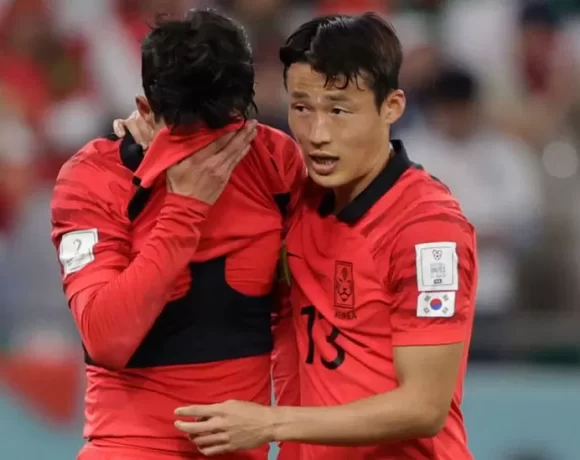
A South Korean footballer has been detained by Chinese police in relation to a bribery case.
According to Korean media, Son Jun-Ho, 31, who plays in the national side and in the Chinese Super League, was detained at a Shanghai airport on Friday, but, neither South Korean or Chinese officials have commented on the case.
Though, Yonhap News Agency citing sources, has said Seoul’s diplomats are seeking contact with Mr Son and further details on his case, as South Korean diplomats will meet with Mr Son “to figure out exactly what kind of charges” he is being investigated for.
He is under police custody in Liaoning province in the northeast, reported Reuters, citing an unnamed diplomatic source.
When asked for details on Mr Son’s case at a regular press conference on Monday, Chinese foreign ministry spokesperson Wang Wenbin said he was not aware of the case.
But reports of Mr Son’s detention come amid a concerted push by Chinese authorities to crackdown on corruption and match-fixing in Chinese football.
China has arrested at least four football officials in the past three months for alleged wrongdoing.
Mr Son moved to China’s Shandong province in 2021 where he played as midfielder for Shandong Taishan. The club won the Chinese Football League – the highest tier of professional football in China – that year.
He also plays for South Korea’s national team and has played 20 international matches for his home country, including in the Fifa World Cup last year.
Chinese football has long been engulfed in allegations of bribery and match-fixing. Recent detentions of major football figures have dealt another setback to the country’s football ambitions.
In February, just as stadiums started to reopen from Covid lockdowns, the president of the Chinese Football Association Chen Xuyuan was detained for suspected “serious violations of discipline and the law”.
Mr Chen’s arrest was the fourth known example of a senior football official to be investigated in less than three months.
Match fixing has also sparked controversy in South Korean football recently. Last month, the entire executive board of Korea’s Football Association resigned after attempting to pardon some 100 people who were banned from the sport due to match-fixing and other offences.
China has simulated precision strikes against key targets on Taiwan and its surrounding waters during a second day of military drills.
The drills – which Beijing has called a “stern warning” to the self-governing island – are a response to Taiwan’s president visiting the US last week.
As the Chinese military simulated an encirclement of the island, the US urged China to show restraint.
Taiwan said at least 71 Chinese jets flew around the island on Saturday.
Taiwan also said 45 warplanes either crossed the Taiwan Strait median line – the unofficial dividing line between Taiwanese and Chinese territory – or flew into the southwestern part of Taiwan’s air defence identification zone.
Nine Chinese ships were also spotted. The operation, dubbed “Joint Sword” by Beijing, will continue until Monday. Taiwanese officials have been enraged by the operation.
On Saturday defence officials in Taipei accused Beijing of using President Tsai’s US visit as an “excuse to conduct military exercises, which has seriously undermined peace, stability and security in the region”.
On day one of the drills, one of China’s ships fired a round as it sailed near Pingtan island, China’s closest point to Taiwan.
Taiwan’s Ocean Affairs Council, which runs the Coast Guard, issued video footage showing one of its ships shadowing a Chinese warship, though did not provide a location.
In the footage a sailor can be heard telling the Chinese ship through a radio: “You are seriously harming regional peace, stability and security. Please immediately turn around and leave. If you continue to proceed we will take expulsion measures.”
Other footage showed a Taiwanese warship, the Di Hua, accompanying the Coast Guard ship in what the Coast Guard officer calls a “standoff” with the Chinese vessel.
While the Chinese exercises ended by sundown on Saturday evening, defence officials in Taipei said fighter jet sorties started again early on Sunday morning.
US state department officials have urged China not to President Tsai’s US visit, and have called for “restraint and no change to the status quo”.
A state department spokesperson said the US was “monitoring Beijing’s actions closely” and insisted the US had “sufficient resources and capabilities in the region to ensure peace and stability and to meet our national security commitments”.
The US severed diplomatic ties with Taipei in favour of Beijing in 1979, but it is bound by law to provide Taiwan with the means to defend itself.
At Wednesday’s meeting in California, Ms Tsai thanked US House Speaker Kevin McCarthy for America’s “unwavering support”, saying it helped “reassure the people of Taiwan that we are not isolated and we are not alone”.
Mr McCarthy had originally planned to go to Taiwan himself, but opted instead to hold the meeting in California to avoid inflaming tensions with China.
Chinese state media said the military drills, which are due to run until Monday, would “simultaneously organise patrols and advances around Taiwan island, shaping an all-round encirclement and deterrence posture”.
It added that “long-range rocket artillery, naval destroyers, missile boats, air force fighters, bombers, jammers and refuellers” had all been deployed by China’s military.
But in Taiwan’s capital Taipei, residents seemed unperturbed by China’s latest manoeuvres.
“I think many Taiwanese have gotten used to it by now, the feeling is like, here we go again!” Jim Tsai said on Saturday.
Meanwhile, Michael Chuang said: “They [China] seems to like doing it, circling Taiwan like it’s theirs. I am used to it now.
“If they invade we can’t escape anyway. We’ll see what the future holds and go from there.”
Taiwan’s status has been ambiguous since 1949, when the Chinese Civil War turned in favour of the Chinese Communist Party and the country’s old ruling government retreated to the island.
Taiwan has since considered itself a sovereign state, with its own constitution and leaders. China sees it as a breakaway province that will eventually be brought under Beijing’s control – by force if necessary.
China’s President Xi Jinping has said “reunification” with Taiwan “must be fulfilled”.
China’s military has begun rehearsing the encirclement of Taiwan during three days of military drills.
Beijing – which views Taiwan as a breakaway province of China – called the operation a “stern warning” to the island’s government.
The exercises began hours after President Tsai Ing-wen returned from a trip to the United States.
The Taiwanese Defence Ministry said 42 Chinese military planes and eight ships crossed the Taiwan Strait median line.
The line is an unofficial dividing line between Chinese and Taiwanese territory.
Chinese state media said the military drills would “simultaneously organise patrols and advances around Taiwan island, shaping an all-round encirclement and deterrence posture”.
It added that “long-range rocket artillery, naval destroyers, missile boats, air force fighters, bombers, jammers and refuellers” had all been deployed by China’s military.
Taiwan considers itself a sovereign state, with its own constitution and leaders.
But China sees the island as a breakaway province that will eventually be brought under Beijing’s control – by force if necessary.
China’s President Xi Jinping has said “reunification” with Taiwan “must be fulfilled”.
Although China often holds drills around Taiwan, the “encirclement” is being seen as a response to Taiwan’s President Tsai meeting US House Speaker Kevin McCarthy on Wednesday.
President Tsai said on Saturday that her government would continue working with the US and other democracies as the island faces “continued authoritarian expansionism” from China.
She made the comments in a meeting with a US congressional delegation in Taipei led by House foreign affairs committee chairman Michael McCaul.
Mr McCaul said Washington was working to supply weapons to Taiwan, “not for war, but for peace”.
China’s three-day operation around Taiwan – dubbed “United Sharp Sword” – will run until Monday, the People’s Liberation Army’s (PLA) Eastern Theatre Command said.
Taiwan’s defence ministry said it would respond to China’s exercises “with a calm, rational, and serious attitude” based on the principle of “not escalating conflicts, nor causing disputes to defend our national sovereignty and security”.
Last August, Beijing carried out almost a week of drills around Taiwan after Kevin McCarthy’s predecessor, Nancy Pelosi, visited Taipei.
The exercises, China’s largest show of force in years, included the deployment of fighter jets and warships, and the firing of ballistic missiles.
China is to resume issuing visas to foreign tourists for the first time since the Covid pandemic broke out three years ago.
The major easing of restrictions comes after Beijing declared victory over the virus and retreated from a zero-Covid strategy that has hurt its economy.
Valid visas issued before China closed to the world on 28th of March 2020 will be honoured starting on 15 March.
Visa-free entry will resume in Hainan Island and Shanghai for cruise ships.
Tour groups from Hong Kong and Macau will be allowed visa-free entry while Chinese consular offices abroad will also resume processing visa applications.
The removal of the last cross-border restrictions imposed to tackle Covid marks a major step towards the resumption of normal life in post-pandemic China. All changes take effect on the 15th of March.
Tens of millions of international visitors came to China each year prior to the pandemic, and its tourism industry has been hard hit by strict anti-Covid measures.
For the current year, Beijing has set a 5% target with new Premier Li Qiang saying that the world’s second-largest economy is stabilizing and picking up again.
The zero-Covid policy that was lifted in December sparked rare protests against China’s leader, Xi Jinping.
Xi Jinping was handed a third term as Chinese president on Friday, capping a rise that has seen him become the country’s most powerful leader in generations.
His appointment by China’s rubber-stamp parliament comes after Xi locked in another five years as head of the Chinese Communist Party (CCP) in October.
Since then, the 69-year-old has weathered widespread protests over his zero-Covid policy and the deaths of countless people after its abandonment.
But those issues have been avoided at this week’s National People’s Congress (NPC), a carefully choreographed event that is also set to appoint Xi ally Li Qiang as the new premier.
On Friday, delegates handed Xi a third term as president and re-appointed him head of the country’s Central Military Commission in a unanimous vote.
Beijing’s Great Hall of the People, a cavernous state building on the edge of Tiananmen Square, was adorned with crimson carpets and banners for the landmark vote, with a military band providing background music.
A digital monitor on the edge of the stage proclaimed the final tally — all 2,952 votes had been cast in favour of giving Xi another term in office.
The announcement was followed by delegates’ fervent declarations of allegiance to the Chinese constitution, in a demonstration of loyalty and unanimity.
Xi held up his right fist and placed his left hand on a red, leather-bound copy of China’s constitution.
In an oath beamed live on state television, he vowed to “build a prosperous, strong, democratic, civilised, harmonious and great modern socialist country.”
China’s close ally Russia swiftly offered Xi its “sincere congratulations” on his re-election.
“Russia highly values your personal contribution toward the strengthening of ties… and strategic cooperation between our nations,” President Vladimir Putin said in a letter to his “dear friend” Xi.
Punch / Titilayo Kupoliyi Subscribe to our Telegram and YouTube Channels also join our Whatsapp Update Group
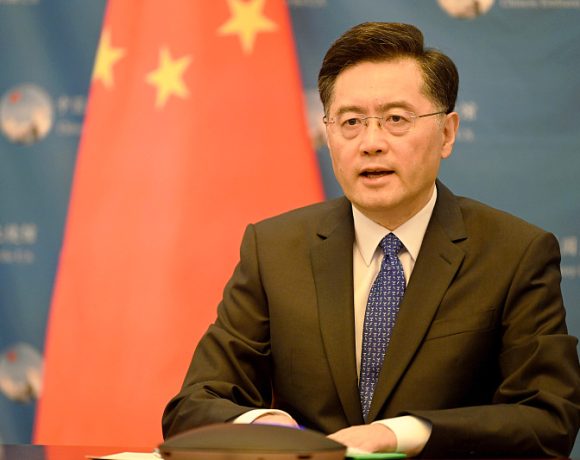
China’s Foreign Minister Qin Gang has called for peace talks on the war in Ukraine to be promptly resumed, as he blamed an “invisible hand” for the protraction and escalation of the year-old conflict.
Qin said the process of peace talks should begin as soon as possible and the legitimate security concerns of all parties should be respected.
He described the conflict in Ukraine, which began with a Russian invasion on February 24, 2022, as “an eruption of the problems built up in the security governance of Europe.”
The Foreign minister said efforts for peace talks have been repeatedly undermined.
“There seems to be an invisible hand, pushing for the protraction and escalation of the conflict and using the Ukraine crisis to serve a certain geopolitical agenda.
“The crisis in Ukraine has come to a critical juncture. Either hostility stops and peace is restored, and the process of political settlement begins, or more fuel is added to the flames and the crisis further expands and spirals out of control,” he said.
China recently presented a so-called position paper about its stance on the war, but the paper was largely met with disappointment and scepticism.
Experts said the paper did not propose any new initiatives for a peace settlement.
Qin disclosed China did not provide weapons to Russia amid the conflict, adding that Beijing did not create nor was party to the crisis.
“Why on earth blame sanctions and threats against China?
“This is absolutely unacceptable,” he said responding to information cited by Washington last month suggesting that Beijing could provide “lethal support” to Moscow a claim Beijing had already rejected and warnings from the U.S. and Europe to China not to send weapons to Russia.
China is considering giving Russia weapons and ammunition for the Ukraine war, US Secretary of State Anthony Blinken has said.
Mr Blinken told CBS News that Chinese companies were already providing “non-lethal support” to Russia – and new information suggested Beijing could provide “lethal support”.
This escalation would mean “serious consequences” for China, he warned.
China has denied reports that Moscow has requested military equipment.
Chinese President Xi Jinping is an ally of Russian President Vladimir Putin and is yet to condemn Russia’s invasion – but he has sought to remain neutral in the conflict and has called for peace.
Mr Blinken was speaking to CBS after he met China’s top diplomat, Wang Yi, on Saturday at the Munich Security Conference.
He said that during the meeting he expressed “deep concerns” about the “possibility that China will provide lethal material support to Russia”.
“To date, we have seen Chinese companies… provide non-lethal support to Russia for use in Ukraine. The concern that we have now is based on information we have that they’re considering providing lethal support,” he said.
He did not elaborate on what information the US had received about China’s potential plans. When pressed on what the US believed China might give to Russia, he said it would be primarily weapons as well as ammunition.
The US has sanctioned a Chinese company for allegedly providing satellite imagery of Ukraine to the mercenary Wagner Group, which supplies Russia with thousands of fighters.
Mr Blinken told CBS that “of course, in China, there’s really no distinction between private companies and the state”.
If China provided Russia with weapons, that would cause a “serious problem for us and in our relationship”, he added.
Relations between Washington and Beijing were already poor after the US shot down an alleged Chinese spy balloon in early February. Both sides exchanged angry words, but equally both sides appeared embarrassed by the incident and seemed ready to move on.
But if China were to deliver weapons to help Russian forces in Ukraine, then US-Chinese relations would deteriorate much more severely.
Mr Blinken’s warning seems to be clearly designed to deter China from doing that.
Mr Blinken also said the US was worried about China helping Russia evade Western sanctions designed to cripple Russia’s economy. China’s trade with Russia has been growing, and it is one of the biggest markets for Russian oil, gas, and coal.
Nato members, including the US, are sending a variety of weapons, ammunition and equipment to Ukraine, including tanks. They have stopped short of sending fighter jets, and Mr Blinken would not be drawn on whether the US would help other countries supply jets.
“We’ve been very clear that we shouldn’t fixate or focus on any particular weapons system,” he said.
He did, however, say that the West must ensure Ukraine had what it needed for a potential counter-offensive against Russia “in the months ahead”. Russia is currently trying to advance in eastern regions of Ukraine, where some of the fiercest fightings of the war has taken place.
Mr Wang said in Munich yesterday that China had “neither stood by idly nor thrown fuel on the fire” for the Ukraine war, Reuters reported.
China would publish a document that laid out its position on settling the conflict, Mr Wang said. The document would state that the territorial integrity of all countries must be respected, he said.
“I suggest that everybody starts to think calmly, especially friends in Europe, about what kind of efforts we can make to stop this war,” Mr Wang said.
He added that there were “some forces that seemingly don’t want negotiations to succeed, or for the war to end soon”, but did not say who he meant.
The Chinese President, Mr Xi, is scheduled to deliver a “peace speech” on the anniversary of Russia’s invasion of Ukraine on Friday, 24 February, according to Italy’s foreign minister Antonio Tajani.
Mr Tajani told Italian radio that Mr Xi’s speech would call for peace without condemning Russia, Reuters reported.
During their meeting, Mr Blinken and Mr Wang also exchanged strong words on the deepening row over an alleged Chinese spy balloon that was shot down over the US.
Mr Blinken said during the meeting that the US would not “stand for any violation of our sovereignty” and said, “this irresponsible act must never again occur”.
Mr Blinken told CBS that other nations were concerned about what he called China’s “surveillance balloon program” across five continents.
Mr Wang, meanwhile, called the episode a “political farce manufactured by the US” and accused them of “using all means to block and suppress China”. China has denied sending a spy balloon.
And on Sunday morning, Beijing warned that the US would “bear all the consequences” if it escalated the argument over the balloon. China would “follow through to the end” in the event “the US insists on taking advantage of the issue”, it said in a foreign ministry statement reported by Reuters.