Politics

Olaitan Oye-Adeitan

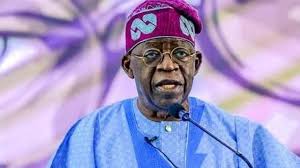
President Bola Ahmed -Tinubu has said he would soon send to the National Assembly, an executive bill on the new minimum wage agreed upon the by Federal government and organized labour.

The president made this known in a national broadcast marking the 25th anniversary of democracy in Nigeria

He explained that government had negotiated with the organized labour on a new national minimum wage.

“As we continue to reform the economy, I shall always listen to the people and will never turn my back on you.In this spirit, we have negotiated in good faith and with open arms with organized labour on a new national minimum wage.

We shall soon send an executive bill to the National Assembly to enshrine what has been agreed upon as part of our law for the next five years or less.

In the face of labour’s call for a national strike, we did not seek to oppress or crack down on the workers as a dictatorial government would have done. We chose the path of cooperation over conflict”, the president explained.

The nation’s number citizen however noted that though the economic reforms the nation was currently undergoing were not without attendant pains, they were needed to fix the economy to create a stronger, better foundation for future growth. “There is no doubt the reforms have occasioned hardship. Yet, they are necessary repairs required to fix the economy over the long run so that everyone has access to economic opportunity, fair pay and compensation for his endeavour and labour”.

See President’s Full Text

TEXT OF PRESIDENT BOLA TINUBU’S NATIONAL BROADCAST ON THE 25TH ANNIVERSARY OF UNBROKEN DEMOCRACY IN NIGERIA, DEMOCRACY DAY 12TH JUNE 2024 ABUJA

“My fellow Nigerians, let me begin by congratulating all of us for witnessing the celebration of another Democracy Day today, the 12th day of June 2024. This year also marks our nation’s 25 years of uninterrupted democratic governance.

On this day, 31 years ago, we entered our rites of passage to becoming a true and enduring democratic society.

Going through this passage was hard and dangerous. During the fateful six years that followed, we fought and struggled for our natural rights as human beings put on this earth by the divine hand of our Creator.

We lost great heroes and heroines along the way. In this struggle, the winner of the June 12, 1993 presidential election, Chief MKO Abiola, the most significant symbol of our democratic struggle, his wife, Kudirat, General Shehu Musa Yar’Adua and Pa Alfred Rewane, among others sacrificed their very lives.

They bravely surrendered their futures, so that our nation might have a better one.

Let us honour the memories of Chief Anthony Enahoro, Chief Abraham Adesanya, Commodore Dan Suleiman, Chief Arthur Nwankwo, Chief Chukwuemeka Ezeife, Admiral Ndubuisi Kanu, Chief Frank Kokori, Chief Bola Ige, Chief Adekunle Ajasin, Chief Ganiyu Dawodu, Chief Ayo Fasanmi, Chief Gani Fawehinmi, Chief Olabiyi Durojaiye, Dr. Beko Ransome-Kuti, Chima Ubani, and others who have transited to the higher realm.

The sacrifices of General Alani Akinrinade, Professor Bolaji Akinyemi, Professor Wole Soyinka, Chief Ralph Obioha, Chief Cornelius Adebayo, among many others, should never be forgotten. For at least six years, they bore the pains and difficulties of life in exile.

While the exiled pro-democracy activists kept the fire burning, their comrades at home sustained the pressure on the military brass hats. Among the latter are Olisa Agbakoba, Femi Falana, Abdul Oroh, Senator Shehu Sani, Governor Uba Sani, Chief Olu Falae, and other National Democratic Coalition leaders such as Chief Ayo Adebanjo and Chief Ayo Opadokun.

The sacrifices they made, and the precious gift brought about by their selfless devotion can never be repaid. Neither shall it be forgotten.

We could not have won the battle against military dictatorship without the irrepressible Nigerian journalists who mounted the barricades along with the pro-democracy activists. We celebrate them today, along with their media establishments such as The Punch, Guardian, National Concord, Tribune, The News/Tempo, and TELL Magazines. Military authorities proscribed these media establishments and jailed their journalists for standing for free speech and civil liberties

Despite the lethal might of the military government, what appeared to be high and unyielding walls of dictatorship came tumbling down. The dismal fortress exists no longer.

The power of an idea, the power of the people proved more potent than all the guns and munitions, than all the guns, the munitions and the threats of the strongmen.

The nation exited the yoke of military rule in 1999 to become the most populous democracy on African soil, the beacon of democratic self-determination for the black race and one of the largest democracies in the world.

This change stands as a pivotal moment in human history. From this change, we shall never turn, nor shall the annals of mankind’s progress forget the sublime meaning of this great moment.

Today, 25 years later, we celebrate the silver anniversary of our journey in democracy. We have steadied the course.

Democracy is neither a foreign nor abstract concept devoid of real-life meaning for us. Neither can we afford to reduce or minimalise it to being nothing but the mere holding of periodic elections where one candidate and party outdo another.

While elections attract dramatic attention, they are but one aspect of democracy. Democracy is a way of life that encompasses a broad outlook of which elections are but a part. As such, a nation can have elections without being democratic. But a nation cannot be truly democratic without holding elections.

That we have established a tradition of holding transparent, open, and fair elections gives credence to our democratic bearing. That we have experienced peaceful transitions of government affirms our democratic temperament.

Fellow Nigerians, true democracy shines its light into the daily lives of the people who live under its nurturing wings. It affords us the freedom and liberty to think as we want, live where we want and pursue whatever legitimate endeavour that suits us.

Democracy does not assume some false or forced unity of opinion. In fact, democracy assumes that conflicting ideas and differing opinions shall be the order of the day. Given the diversity and variety of the human experience, there must be diverse perspectives and viewpoints.

What democracy demands is that we do not resolve differences through force and repression. But we make allowance for the legitimacy of views that differ from our own.

Where other forms of government impose against the will of the people, democracy aims to make leaders sufficiently humble that they conduct themselves as servants of the common good, not as viceroys of the narrow interests of the mighty.

My dear compatriots, Nigeria faced a decision of untold gravity twenty-five years ago: Whether to veer toward a better destination or continue aimlessly in the fog of dictatorship.

We made the right choice then. We must continue with that choice now.

As Nigerians, we must remind ourselves that no matter how complicated democracy may be, it is the best form of governance in the long run. We must also be aware that there are those among us who will try to exploit current challenges to undermine, if not destroy, this democracy for which so much has already been given.

These people do this not to make things better but to subject all other people and things to their control and dominance until the point that, if you are not counted among their elite, then your life will be small and no longer owned by you.

This is the great battle of our day and the major reason we specially celebrate this Democracy day.

Fellow Nigerians, our Democracy is more than a historic fact. It is a living, breathing reality.

The true meaning of this day is not to focus solely on the great deeds of the past that have brought us to this point.

Yes, we pay eternal honour to those who laid down their lives, sacrificing everything to pave the way for the nation.

I stand uniquely placed in this regard. I was among those who took the risk to midwife the birth of our democracy. I am now a direct and obvious beneficiary of the fruits of those historic efforts.

As president of this nation, I am morally and constitutionally bound to preserve this precious form of governance. I vow to do my utmost best to protect your rights, freedoms, and liberties as citizens of Nigeria.

Even more than that, I pledge to do whatever is necessary to cement democracy as our way of life.

Although the challenges are steep and multiple, I am grateful to lead Nigeria at this moment in her history and point in her democratic journey.

I come before you also to declare that our most important work remains before us. This real test has never been whether we would rise to challenge the slings of misfortune and grievous pain of dictatorship.

The real test is whether we shall lower our guards as the shadow of despotism and its evident physical danger fade.

I say to you here and now that as we celebrate the enshrinement of our political democracy, let us commit ourselves to the fulfilment of its equally important counterpart, the realisation of our economic democracy.

I understand the economic difficulties we face as a nation.

Our economy has been in desperate need of reform for decades. It has been unbalanced because it was built on the flawed foundation of over-reliance on revenues from the exploitation of oil.

The reforms we have initiated are intended to create a stronger, better foundation for future growth. There is no doubt the reforms have occasioned hardship. Yet, they are necessary repairs required to fix the economy over the long run so that everyone has access to economic opportunity, fair pay and compensation for his endeavour and labour.

As we continue to reform the economy, I shall always listen to the people and will never turn my back on you.

In this spirit, we have negotiated in good faith and with open arms with organized labour on a new national minimum wage. We shall soon send an executive bill to the National Assembly to enshrine what has been agreed upon as part of our law for the next five years or less.

In the face of labour’s call for a national strike, we did not seek to oppress or crack down on the workers as a dictatorial government would have done. We chose the path of cooperation over conflict.

No one was arrested or threatened. Instead, the labour leadership was invited to break bread and negotiate toward a good-faith resolution.

Reasoned discussion and principled compromise are hallmarks of democracy. These themes shall continue to animate my policies and interaction with the constituent parts of our political economy.

I take on this vital task without fear or favour and I commit myself to this work until we have built a Nigeria where no man is oppressed.

In the end, our national greatness will not be achieved by travelling the easy road. It can only be achieved by taking the right one.

The words of the American President Franklin Roosevelt certainly ring true:

” There are many ways of going forward. But only one way of standing still”!

We dare not slumber lest the good things awaiting our immediate future pass us by. We dare not plant our feet in idle standstill in the middle of the intersection of hope and despair.

We know the proper way forward and we shall take it!

The initial rays of a brighter tomorrow now appear on the early horizon. An abundant future and our capacity to achieve that future lie within our reach. Democracy and the institutions it begets offer to take us to our profound destination.

Let us board this progressive train together. Together, let us move Nigeria forward.

Let’s continue to keep the fire of democracy burning. Let’s keep the torch lit for generations to come.

May God continue to bless the Federal Republic of Nigeria and preserve our democracy”.

I wish us all a Happy Democracy Day.

PRESIDENT BOLA AHMED TINUBU

Politics

By Khadijah Aliyu (Kano)

Ensuring free fair and transparent elections has been described as a major catalyst to the development of democracy and ensuring good governance in Nigeria.

Kano State Commissioner of Police, Mr Muhammad Usaini Gumel made the assertion during a one-day citizens’ town hall meeting on electoral reform, held in Kano. 

According to him, all Nigerians must uphold the rule of law by adhering to the electoral act and desisting from election malpractice to move the nation forward. 

He pointed out that, civil societies are critical stakeholders in the election process that play a vital role in advocacy, sensitization, fact-checking, observation and all other important elements to achieve the desired objectives.

The Executive Director of the Peering Advocacy and Advancement Centre in Africa (PAACA), Mr Ezenwa Nwagwu, explained that the core objective of the town hall meeting was to foster inclusive dialogue among citizens from varied backgrounds concerning electoral reform and constitutional amendment.

Mr Nwagwu noted that other objectives were enhancing public understanding and awareness regarding electoral reform as well as compiling and presenting citizen-derived recommendations to the National Assembly and the Independent National Electoral Commission, INEC, for consideration.

Others who spoke include the Deputy Commandant of Nigeria Security and Civil Defence Corps, NSCDC in Kano State, Mr John and the Assistant Director of the National Orientation Agency, NOA, Kano State Office, Maijidda Dalha Inuwa. 

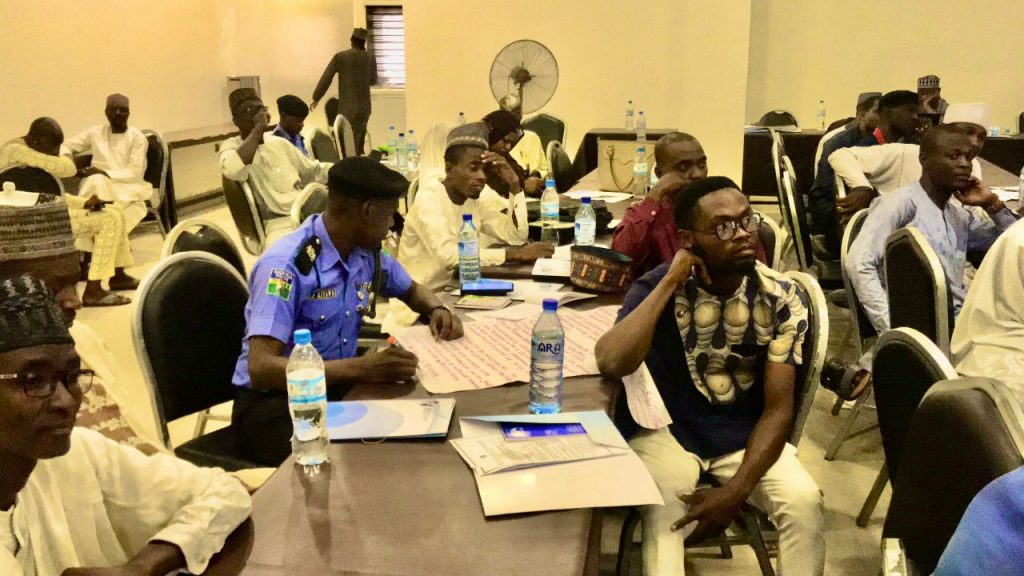
The event was marked by panel sessions and breakout sessions where participants were divided into four groups on electoral integrity and transparency, voter education and participation, electoral system reform as well as electoral legal framework and institutional reform.

The event witnessed a large turnout of civil society organizations CSOs, traditional institutions, media and all relevant stakeholders in the electoral process.

Subscribe to our Telegram and YouTube Channels and also join our Whatsapp Update Group

Politics

By Olaitan Oye-Adeitan

What are the barriers to the full inclusion of women, youths and people with disabilities in the political sphere of life?

Are Women ready to pick up the challenge?

Is the not-too-young-to-rule law realistic in practicality?

Any help for people with disabilities?

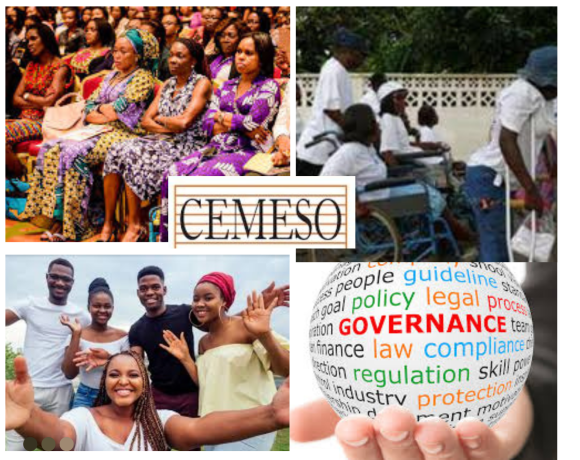
These among other questions were issues addressed by the Centre for Media and Society, CEMESO during a-day National virtual conference for stakeholders and participants in Nigeria.

The conference with the theme, “Promoting The Inclusion of All;  A Searchlight on Policy and Practice”, was the 2nd in the annual series of conferences and will run through 2027.

The aim was to achieve a synthesis of best practices and approaches to ensuring better inclusion in the electoral process and politics through the Media.

 Executive Director,  Centre for Media and Society, CEMESO, Dr Akin Akingbulu explained that the conference was an effort to strengthen the electoral process in Nigeria with emphasis on the inclusion of women, youths and people with disabilities as one of the components of the European Union Support to Democratic Governance in Nigeria, EU- SDGN.

“Everyone is moving in the direction of let no one be left behind but some citizens are still unable to participate actively in electoral process. Three important segments in this regard are women, youths and people with disabilities”.Dr Akingbulu said.

To address the challenge, Dr Akingbulu listed the implementation strategy of CEMESO to include; Monitoring of Media outlets for performance evaluation in this regard, organising capacity-building activities for media personnel and developing as well as disseminating resource materials that would aid the functions of the media for effective service delivery, among others.

CEMESO Programme Manager, Mr Timothy Bamidele, said, the conference had been running for four years and anchored on six thematic areas including; Providing support to electoral management bodies, Providing support to the National Assembly, Providing Support to political parties, Providing support to the Media, Providing support towards the participation of women, youths and people with disabilities.

“The goal is to strengthen the media to facilitate a fair, credible and ethical coverage of elections and the National Broadcasting Organization of Nigeria BON, to perform its mandate”.

While taking participants through CEMESO’s Media Monitoring Report, a writer and analyst, Rotimi  Akinola revealed that the media was not doing well enough in its coverage of women, youths and people with disabilities during elections, though with a little fluctuation at certain times in some parts of the country.

In a paper entitled “Achieving Enabling Frame Work for Women Inclusion in Governance and Leadership in Nigeria, Executive Director, Women Information Network, Enugu, Miriam Menkiti, called for the implementation of national policy on gender to achieve inclusion of women, the establishment of a framework at the federal, state and local governments for women inclusion. “There is also a need for political parties to begin to consider more women for elective positions and appointments”.

Another facilitator, Dr Patricia Taiwo of the Department of Sociology, University of Ibadan, spoke on Women’s Full Participation in Nigeria’s Democratic Processes: The Barriers that remain.

Dr Taiwo observed that women were being sidelined due to cultural and religious biases and lack of integrity on the part of some women who had been privileged to have occupied leadership positions. 

According to her, “Economic empowerment of women to make them less dependent on men, a proper mentoring programme to correct negative stereotypes against women and encourage their participation in politics,

promotion of more women participation through civil society organisations and 

enforcement of the law on violence against women is necessary to change the narrative”.

In her paper, ” Disability inclusion updates on government policies and practices, Zainab Saidu Abdulnaseer from The Nigerian Television Authority, NTA, Sokoto, noted with concern that there was no significant improvement on issues affecting people with disabilities, especially in terms of accessibility.

Dr Abdulnaseer therefore suggested the commission of the rights of People with disabilities to be able to live up to expectations and the need for enhanced support of civil societies and faith-based organisations for people with disabilities to be able to utilize their full potential.

Some of the participants raised concerns over the readiness of women to support one another to occupy leadership positions.

Another issue was that of lack of provision of supporting facilities for people with disabilities at the polling centres during the 2023 election contrary to the stipulations of the electoral law was a major factor responsible for the low turnout of voters for the general elections.

In a goodwill message,  the Executive Director, the International Press Centre, Mr Lanre Arogundade, thought that the inclusion of women, youths and people with disabilities in governance would enable the tapping of diverse skills and talents inherent in these groups of people for the overall development of the nation.

He however cautioned the media to be mindful in handling issues affecting women, youths and people with disabilities.

The Executive Secretary, Broadcasting Organization of Nigeria, BON, Dr Yemisi Bamgbose observed that media ownership was affecting the coverage and reportage of elections in Nigeria and called for a change to the narrative, especially in the mode of operations of state owned media.

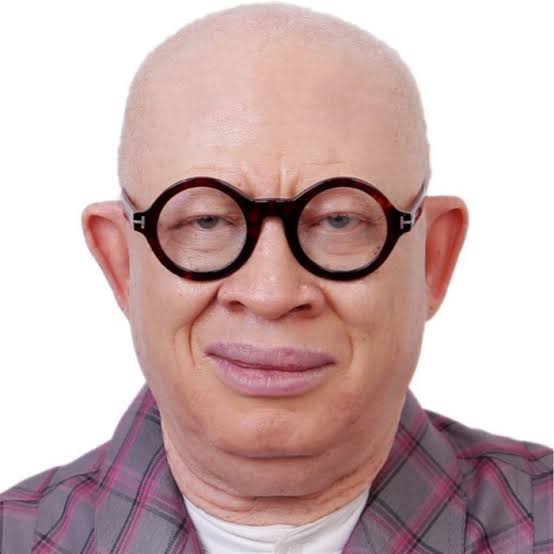
Founder and CEO ,The Albino Foundation, Africa, Mr Jake Epelle underscored the need for electoral media guidelines to be inclusive of people with disabilities while stories must be credible and evidence-driven.

Participants were drawn from the Academia, Association of People With Disabilities and the media among whom was Mrs Olutola Daramola of the Federal Radio Corporation of Nigeria,Ibadan Zonal Station.

Governance

By Funmi Ojo

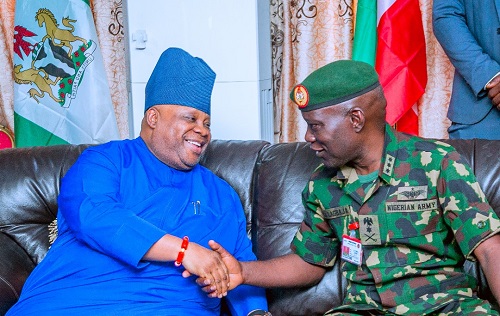
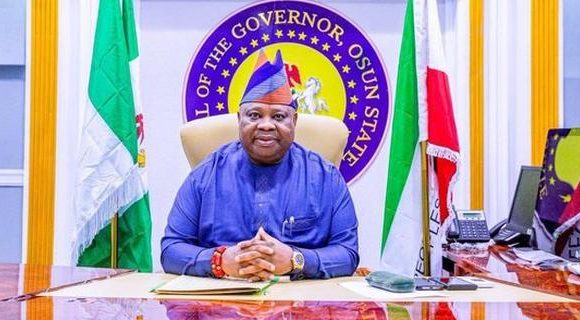
Osun State Governor, Senator Ademola Adeleke has commended the Nigerian Army for shunning acts that can truncate the nation’s democracy.

Governor Adeleke stated this while receiving the Chief of Army Staff, General Taoheed Lagbaja at his country home in Ede, and condemned military coups in some parts of Africa.

The Osun State helmsman described the recent spate of military incursion into governance as setback to democratic development.

He described the Nigerian Army as thorough bred professionals upholding respect for the constitution while defending democracy as well as national stability.

The Governor while inaugurating some projects by military at Local Authority Primary School, Alusekere, Ede, said the Nigerian Army is a critical pillar of the country and deserved accolades and commendation for securing and protecting the nation.

He lauded the military for reaching out to the civil population through the project, saying it was a giant step to further unite the nation.

Governor Adeleke advised the pupils, staff and the community to imbibe good maintenance culture to keep the classroom in good shape for many years to come.

In his remark, the Chief of Army Staff, General Taoheed Lagbaja said he was in the state in continuation of his nationwide visit to army formations in the country, noting that he was at the Governor’s residence to pay homage.

He said the Nigeria Army was collaborating with other security agencies to ensure the safety of lives.

General Lagbaja pointed out that Nigeria Army is not out to competing with any government but exists to complement the government and community efforts towards enhancing the quality of life of the people.

He maintained that the project would go a long way in enhancing education in Alusekere and other neighbouring communities.

The project donated by Chief of Defence, Account and Budget, Major-General Kamal Yusuf included a block of 3 classrooms with Teacher’s office, renovated 2 blocks of 3 classrooms, borehole, and distribution of 2,400 exercise books for the pupils.

Subscribe to our Telegram and YouTube Channels also join our Whatsapp Update Group

Politics

By Funmi Adekoya

Despite significant progress in achieving gender equality in many aspects of society, the representation of women in government remains a critical issue worldwide.

Women continue to be underrepresented in political decision-making bodies, including national parliaments, cabinets, and local governments. This lack of equal representation has profound implications for governance, policy-making, and the overall well-being of societies.

According to a United Nations Women’s report on women’s representation in Nigeria’s National and State Assemblies, only 75 women make up the National Assembly representing 5% of the 1459 total seats. In the State Houses of Assembly, out of 990 seats, women occupy only 55 representing 6 per cent.

Out of 36 states of the Federation, 14 State Houses of Assembly do not have women as representatives, including the Osun State House of Assembly with 26 constituencies. The implication of this in Osun State is that only men are taking the policy-making decisions.

According to the gender advocate and Executive Director, the Women Advocates Research and Documentation Centre, Dr. Abiola Akiyode-Afolabi, this low representation of women in political positions could be linked to the challenges encountered by women while venturing into politics.

Akiyode-Afolabi noted, “There’s a lot of violence around politics in Nigeria. When you are a woman, you are labelled a prostitute in politics; there are also cultural inhibitions that women should not participate in politics. The male hegemony within the political parties will tell women to step down for the men.”

Having a very low representation of women in the Legislative arm of government is unhealthy for Nigeria’s democratic system. “Given the record that we have now, if you look at the National Assembly, we don’t have up to 7% of women. There are some Houses of Assembly in Nigeria where we have just one or in some places where we don’t even have any woman at all in the parliament, and if you look at that in terms of representation that is quite embarrassing, especially in a democratic society where participation is critical”, Akiyode-Afolabi added.

To another gender advocate, Mr. Bukola Idowu, the Team Lead, Kimpact Development Initiative (KDI) promoting women’s representation in governance, particularly at the legislative level must be a deliberate programme of political parties by conceding at least 30% to 35% per cent of their candidacy to women.

Osun State, one of the states with no women representation in the 2023 election, has 3 Senators, 9 members of the House of Representatives and 26 members of the state House of Assembly, plus the Governor and Deputy Governor, all being male.

As if that is not enough, some of the appointments made so far are still in favour of the male gender. The SSG, the Chief of Staff, the Governor’s Spokesperson as well as the media Aides and others to the Governor are all men.

To crown it all, the Speaker of the Osun State House of Assembly, Hon. Adewale Egbedun composition of staff were all men. It will not be a surprise if all the Senators and members of the House of Representatives do not also appoint male assistants.

One of the primary consequences of low women representation in government is the inadequate consideration of women’s perspectives and experiences in policymaking. Women’s unique concerns, such as reproductive rights, gender-based violence, and economic empowerment, may not receive sufficient attention or priority in legislation and policy development. Without diverse representation, governments risk overlooking issues that disproportionately affect women, perpetuating gender inequalities, and hampering social progress.

Diverse perspectives are crucial for effective decision-making and governance. When women are underrepresented, the perspectives of half the population are not adequately reflected in policy discussions. This lack of inclusivity can result in policies that do not address the needs and aspirations of women, leading to suboptimal outcomes for society as a whole. Increased women’s representation in government facilitates inclusive decision-making, enabling a broader range of voices to shape policies and contribute to more equitable outcomes.

The underrepresentation of women in government undermines the principles of democracy and legitimacy. Democracy relies on the fair and equal representation of all citizens, regardless of gender. When women are not proportionally represented, it raises questions about the legitimacy of the political system and the extent to which it truly represents the will and interests of the entire population. By ensuring equal representation, governments can enhance democratic values, build trust among citizens, and foster a more inclusive political environment.

The presence of women in government is vital for inspiring future generations of female leaders. When young girls see women occupying positions of power and influence, it expands their aspirations and empowers them to pursue leadership roles themselves. Greater women’s representation in government sends a powerful message that women can contribute to decision-making processes at the highest levels and encourages more women to actively participate in politics, ultimately creating a more diverse and inclusive political landscape.

Low women representation in government perpetuates and reinforces gender inequalities present in society. By excluding women from positions of power, governments inadvertently maintain structural barriers that limit women’s access to resources, opportunities, and decision-making roles. Achieving gender equality in political leadership is a crucial step toward dismantling these barriers and promoting a more equitable society. Women’s participation in government can lead to policies that address gender disparities, support women’s rights, and advance social progress.

One thing that could not be denied is that women play a key role in the election of those elected considering the fact that more women participated during the election.

Looking at the composition of the Executive and Legislative arm of government in Osun state, which favoured the male gender, it is therefore, imperative for Osun state State Governor, Senator Ademola Adeleke to consider appointing more women as Commissioners, Special Advisers and other positions to make for non-representation of women in elective posts.

The implications of low women representation in government are far-reaching and multifaceted. Achieving gender equality in political leadership is not only a matter of fairness and justice but also essential for effective governance and inclusive decision-making.

Governments, civil society organizations, and citizens must work together to break down barriers, promote equal opportunities, and empower women to take on leadership roles. Only by creating a truly representative and inclusive political system can we foster sustainable development, address gender inequalities, and shape a brighter future for all.

Subscribe to our Telegram and YouTube Channels also join our Whatsapp Update Group

Economy

By Funmi Adekoya

Osun State Governor, Senator Ademola Adeleke has identified resolving national economic challenges as a condition for strengthening democratic culture and enhancing productive participation of the citizenry.

Speaking at the 2023 Democracy Day Lecture organised by Coalition of Civil Society Coalition in the State, Governor Adeleke posited that an economically satisfied citizenry is a strong insurance for thriving democracy and good governance.

The Governor, represented by the Secretary to the State Government, Alhaji Teslim Igbalaye, said a foundation that cannot be left out in a society practicing democracy is the economic platform noting that an hungry citizenry is likely to pose a serious threat to a credible electoral and democratic process.

He also identifies other issues as important for strengthening democratic culture to include a fair electoral umpire and security agencies committed to rule of law.

Governor Adeleke said Nigeria must uphold certain basic democratic norms for citizens’ participation to yield needed results, stressing that the democratic culture grows and flourishes when all the electoral and governance sub-sectors play their parts within the context of due process and rule of law.

The Governor however cautioned Nigerians on any expectation of perfection in democratic practice, adding that no democracy is perfect. From Europe to North America, democracy is still a work in progress.

Subscribe to our Telegram and YouTube Channels also join our Whatsapp Update Group

Politics

By Iyabo Adebisi

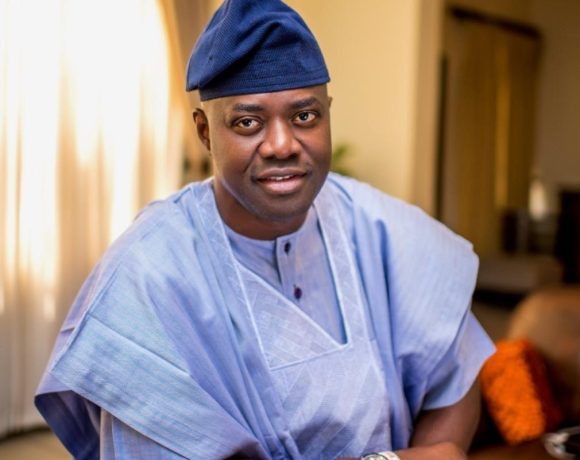
Governor Seyi Makinde of Oyo has assured people of the state of more dividends of democracy as he begins second term in Office on 29th May

He stated this while addressing the congregation at a special Jumat prayer held at Oja Oba Central Mosque to usher in the new administration. 

Governor Makinde, who spoke through the Deputy Governor, Chief Bayo Lawal, thanked the people of the state for their support during the first term in office. 

He solicited prayers from religious leaders to make Omituntun 2.0 a successful one. 

The Chief Imam of Ibadan, Alhaji Abdul Ganiyy Agbotomoke later led special prayers for a successful tenure of Governor Makinde and the progress of the state. 

Subscribe to our Telegram and YouTube Channels also join our Whatsapp

Politics

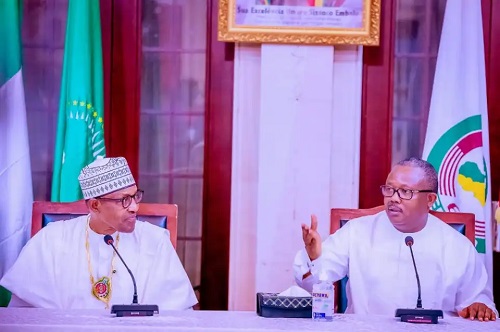
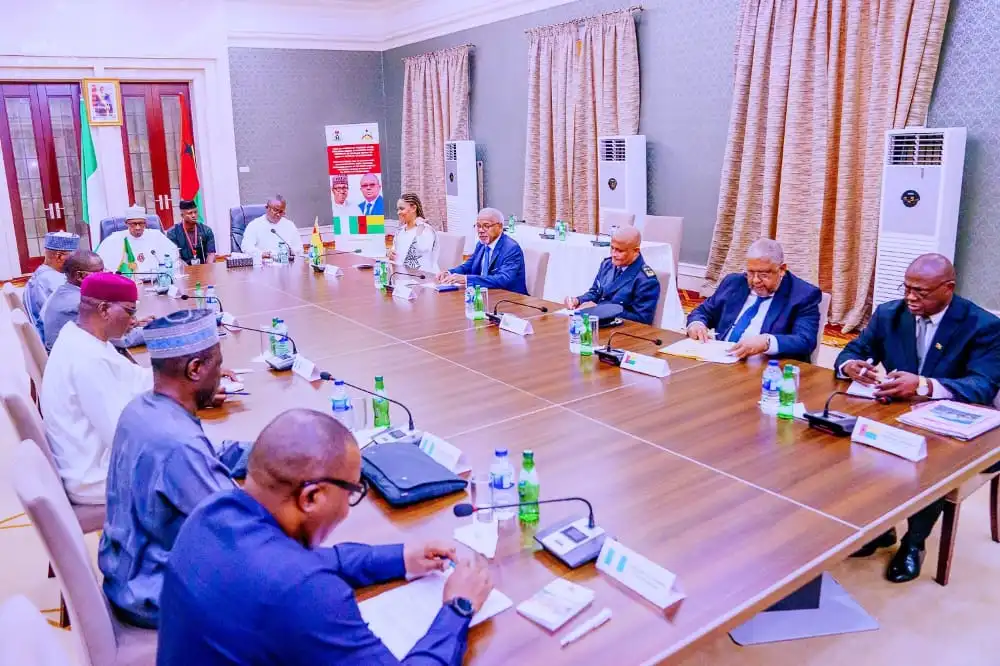
President Muhammadu Buhari has reaffirmed the commitment of Nigeria to work with Guinea Bissau and other countries towards sustaining and strengthening democracy and good governance in the sub-region and the larger African continent.

President Buhari gave the assurance during a one-day state visit to Guinea Bissau, where he gave words of encouragement to the people of the country for standing with the democratically-chosen administration of President Umaro Sissoco Embaló against threats by undemocratic forces.

The President appreciated the conferment of the country’s highest national honour, the Amilcar Cabral Award, on him as well as the naming of a major street in Bissau, the capital city, after him.

President Buhari said: “In the course of this one-day official visit to Bissau today, we had an opportunity to review the state of our bilateral relations, and to share concerns on the challenges facing us in the region. I very much appreciate the naming of two roads in my honour, as well as being conferred with the highest honour of Guinea Bissau.

“I am personally grateful to you, your government and the people of this fine country. I believe all of these were possible because of the persevering stand of Nigeria in ensuring that Guinea Bissau remains on the side of democratic governance.

“Nigeria’s strong stand through the ECOWAS, in insisting and pushing for the full implementation of the Conakry Peace Agreement by imposing sanctions on 19 individuals who impeded the implementation of the Conakry Agreement helped to restore the peace that now prevails in Guinea Bissau.

“Guinea Bissau and Nigeria have come a long way. Our cordial relations date back to Guinea Bissau’s liberation struggle from Portugal when Nigeria supported the African Party for the Independence of Guinea and Cape Verde.

“Nigeria has on its own, as well as through ECOWAS, intervened at critical periods in the life of this country, making immense direct contributions as well as, by supporting international efforts on the peace process in Guinea Bissau. This fact has further reinforced our relations, enhanced understanding and trust between our two countries.”

The President congratulated the people of Guinea Bissau for rallying around Abhay, a name he fondly calls President Embalo.

He encouraged the people of Bissau-Guineans to support the entrenchment of democratic values in their country, saying: “You should always ensure that the electoral process is conducted in free and fair conditions.”

Continued cooperation

President Buhari concluded his address by assuring President Embalo of the continued disposition of Nigeria towards reinforcing cooperation with Guinea Bissau, both at bilateral and multilateral levels.

The President of Guinea Bissau had praised Nigeria for always standing with them in their 20 years of instability.

“You have assisted us with our elections. You have assisted in stabilising Guinea Bissau. I assure you that your support for democracy in this country and the entire subregion is much appreciated by the people, who as you have seen, trooped to greet you,” President Embalo said.

The Guinea-Bissau leader also assured President Buhari that he would follow in his footsteps in ensuring free and fair elections in his country and leaving at the end of his tenure.

He thanked the Nigerian leader for assisting his country with 70 doctors, who perform the dual duties of training the Guineans and carrying out surgeries in the country without ordinary citizens having to travel to Portugal for medical attention.

On the “Amilcar Cabral Award” conferred on the President and the major street named Muhammadu Buhari Boulevard, President Embalo said the two events reflected the most solemn moment of the country and a recognition of the stabilising role President Buhari has been playing in the life of his country, as well as his defence of democracy and its values throughout the subregion.

New Presidential Villa

President Embalo promised to re-invite President Buhari to commission the new Presidential Villa, now under construction even after leaving office, saying that the edifice will be named Muhammadu Buhari Villa.

Nigerian officials that received the Guinean merit award are: Minister of Foreign Affairs, Geoffrey Onyeama; National Security Adviser, Babagana Monguno; Chief of Staff to the President, Ambassador Ibrahim Gambari; and the Director-General of the National Intelligence Agency, Ambassador Rufai Abubakar.

Others are the Special Assistant to the President on Domestic Matters, Alhaji Sarki Abba, and the State Chief of Protocol, Ambassador Lawal Kazaure.

President Buhari later landed in Katsina en route Daura, his hometown.

Abdullah Bello/Simeon Ugbodovon

Subscribe to our Telegram and YouTubeChannels also join our Whatsapp Update Group

Politics

As Nigeria clocks 60 years of independence, a cross-section of citizens in Ondo state has described the country as special and capable of overcoming her various challenges, hence all citizens must work hard to sustain its corporate existence.

In this report, Radio Nigeria’s correspondent Leke Adegbite examines Nigeria at 60, the gains, challenges and way forward.

His report.

Leke Adegbite

Crime

Twenty-two years after the demise of the winner of June 12, 1993, Presidential Election, Chief Moshood Kashimawo Olawale Abiola, one of his daughters, Derinsola, wants Nigerians to regard sustainable democracy as a collective responsibility. 

Miss Derinsola Abiola while speaking in a telephone interview with our correspondent Wale Oluokun said her father death was not in vain and commended the federal government for the immortalization of the nationalist. 

She maintained that President Muhammadu Buhari had put smiles on the faces of the family and well-wishers of the late MKO Abiola through the conferment of national honour and the various facilities named after him.

Miss. Abiola expressed happiness that twenty-two years after the demise of her father, the country had continued to enjoy the democracy their father fought to achieve.

Wale Oluokun