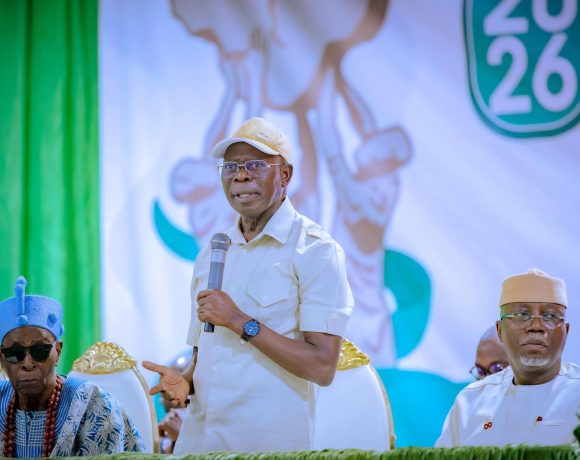
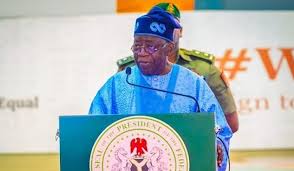
Former Edo State Governor and Senator representing Edo North Senatorial District, Adams Oshiomhole has praised President Bola Tinubu for being at the forefront of facilitating the establishment of state police in the country.
Senator Oshiomhole spoke in Akure the Ondo State capital as a guest lecturer at the 2026 Democracy Day Celebration organized by the state government.
Speaking on “Reflecting on the Progress of Democracy and Security,” Oshiomhole noted that, the creation of state police would significantly help in tackling crimes such as kidnapping and other security challenges confronting Nigeria.
The former labour leader commended members of the nation’s security agencies for their sacrifices including paying the ultimate price in line of duty to safeguard lives and property.
He also paid tribute to pro-democracy heroes, particularly the late Chief MKO Abiola, for their contributions to the nation’s democratic journey.
Senator Oshiomhole who appreciated the recognition accorded to democracy urged Nigerians to continue protecting and strengthening democratic institutions.
According to the former Edo State governor, despite the challenges facing the country, democracy remained the best form of government and must be sustained.
Speaking on the nation’s economic challenges, Comrade Oshiomhole lamented the high level of corruption, wasteful spending, and mismanagement inherited by the present administration, stressing that such issues would not be swept under the carpet.
The Chairman of the occasion and the Olu-Abo of Ilu-Abo, Oba Olu Falae, reflected on Nigeria’s democratic journey and highlighted the gains recorded since the return to democratic rule.
In a remark, Governor Lucky Aiyedatiwa, described insecurity as a major threat to democracy, noting that it hinders citizens from fully participating in civic responsibilities, especially as the country approaches the 2027 general elections.
Governor Aiyedatiwa also described the June 12, 1993 presidential election, believed to have been won by the late Chief MKO Abiola, as a true reflection of democratic ideals and the will of the people.
The Democracy Day Celebration attracted prominent personalities, including religious and traditional leaders, heads of security agencies, civil society organisations, students, and top government officials.
Today, we celebrate democracy and the enduring Nigerian spirit. For 27 unbroken years, since May 29, 1999, Nigerians have chosen their leaders through the ballot, witnessed peaceful transitions of power, and resolved disagreements in courtrooms and legislative chambers—not through violence. We have experienced the longest stretch of civilian rule in our history. Our democracy is not perfect, but it is ours, and we must continue to defend and strengthen it.
In the coming days, Ekiti and Osun States will hold elections. I urge INEC, security agencies, and all parties to ensure these polls are peaceful and credible. Democracy fails when citizens doubt the process. To our National Assembly, Judiciary, the Press, and Civil Society: you are the guardrails of our republic. Criticise me, disagree with me, but never stop believing in Nigeria.
To our young people: Nigeria is your home and your future. Build here, code here, work here, and vote here. Every great nation was built by those who stayed to solve problems, not by those who abandoned ship.
To our armed forces, police, and intelligence services: Nigeria salutes your sacrifice. To our traditional rulers, faith leaders, and community heads: thank you for your support of peace and reconciliation. The government cannot do it alone.
Today, we honour the resilience of Nigerians who refused to surrender their faith in freedom, and the courage of those who stood firm against intimidation. We pay tribute to patriots who endured persecution, imprisonment, exile, and even death so that future generations could enjoy democracy. I salute labour leaders, journalists, activists, students, women, professionals, political leaders, and soldiers—both those who have passed and those still with us—for their patriotic contributions.
Though this year’s mood is dampened by the abduction of our children in Oyo and Borno, we remain hopeful for their safe return. Democracy without security is not solid enough. That is why this administration declared a security emergency and approved the recruitment of more than 50,000 new police officers and thousands of military recruits. Our 2026 budget commits N5.41 trillion—our largest ever—to defence and security. Our administration is ever ready to do much more to secure our people.
We have moved from training with our allies, the United States, France and other European countries, to precision targeting. In Arege, Borno State, we degraded ISWAP’s command centre. Terror-related deaths are down by 81% since 2015. Over 13,000 terrorists have been neutralised in the past year. But we also keep the door of surrender open. Over 124,000 fighters and dependents have laid down their arms since 2023 through Operation Safe Corridor.
To bandits, kidnappers, and sponsors of terror: Surrender or face the full force of the Nigerian State. These windows of surrender will not remain open forever. No mercy will be shown to those who trade in the blood of Nigerians.
At a time like this, let us not assign blame or point fingers. Crime has no ethnicity. We must stand united and be assured that the enemies of our nation shall soon be history. We will triumph over terror and continue to build a more prosperous nation.
June 12 occupies a sacred place in our national memory. It represents more than an election; it is a defining chapter in our story. We remember Chief M.K.O. Abiola, who won a pan-Nigerian mandate transcending ethnicity and religion. We remember Alhaja Kudirat Abiola.
We also remember Chief Gani Fawehinmi, Chief Bola Ige, Chief Alfred Rewane, Pa Abraham Adesanya, Chief Anthony Enahoro, Alhaji Balarabe Musa, Commodore Dan Suleiman, Dr Beko Ransome-Kuti, Frank Kokori, Arthur Nwankwo, Chima Ubani, Shehu Musa Yar’Adua, and the many other heroes and heroines of democracy whose sacrifices helped secure the freedoms we enjoy today.
As beneficiaries of their struggle, we have a duty to strengthen and deepen the democratic institutions for which they fought. The greatest tribute we can pay is to build a Nigeria where freedom is protected, justice is upheld, opportunity is expanded, and government is accountable.
June 12, 1993, revealed the possibility of a true Nigerian nation. The heroes of June 12 secured political freedom. Our challenge is to secure economic freedom. Democracy must be felt in the quality of people’s lives—in opportunities for youth, in prosperous farmers, successful entrepreneurs, and the dignity of our workers.
The reforms we are undertaking were not chosen for ease, but for necessity. Three years ago, our public finances were under severe strain, investment was discouraged, and economic uncertainty threatened our future. We chose to act, embracing reforms to advance Nigeria’s economic freedom.
Since 2023, our reforms have restored stability and credibility to economic management. Federation revenues have risen, providing states and local governments with more resources for infrastructure, education, healthcare, and security. Fiscal transparency has improved, leakage has been reduced, and public funds are better directed to national priorities. Investor confidence has returned, with investments in agriculture, energy, manufacturing, technology, mining, transportation, and the creative industries growing.
Domestic refining capacity has increased, strengthening energy security and reducing our reliance on imported petroleum products.
By 2023, when we came on board, the electricity sector was characterised by chronic generation shortfalls, an unreliable gas supply, and transmission infrastructure so fragile that it could not evacuate available power. Distribution companies were burdened by massive losses and a metering deficit of over four million. Worst of all, the value chain was drowning in legacy debt. The result was a sector that generated less than the 13,500 Megawatts installed capacity, a sector that transmitted less than it generated, distributed less than it transmitted and collected revenue far below what it needed to sustain itself.
To address the problems besetting the sector, I signed the Electricity Act, which grants states authority to generate, transmit, and distribute power. The Presidential Power Sector Task Force is working hard to reduce the metering deficit. It has also been authorised to raise N4 trillion bond to settle verified legacy debts. The Rural Electrification Agency, supported by the World Bank and the African Development Bank, has deployed off-grid and mini-grid power to underserved communities, universities, markets, and hospitals. Electricity is a democratic dividend we owe every Nigerian. We intend to deliver it.
Across the country, infrastructure projects are connecting producers to markets and creating opportunities for enterprise and employment. The National Agricultural Development Fund is deploying 10,000 tractors over five years. Over 1,000 SMEs have been certified for export. Non-oil exports grew by 21% last year.
Yet, many Nigerians still face economic hardship. We remain focused on reducing inflation, expanding food production, creating jobs, improving living standards, rebuilding confidence in our economy, and creating conditions for sustainable prosperity.
We are moving from uncertainty to stability. The next phase is about accelerating growth and ensuring the benefits are felt in every home, every community, and every region. We believe that Democracy must be felt in the pocket.
Recognising that democracy is undermined when people do not feel its impact, my administration has sought financial autonomy for our 774 local councils. A fundamental challenge to our nation’s advancement has been ineffective local government administration. The insecurity we are addressing is partly due to the collapse of grassroots governance. The Renewed Hope Agenda is about ensuring that all Nigerians benefit from governance.
Every generation has a defining responsibility. The generation of our founding fathers secured independence—the generation of June 12 secured democracy. Our generation must secure prosperity.
Let us move forward together—rejecting division, cynicism, and despair; embracing unity, hope, and confidence. Let us build a Nigeria united by a common purpose, strengthened by diversity, where justice is accessible, liberty is secure, and opportunity is abundant.
Among the architects of modern democratic Nigeria, we honour General Shehu Musa Yar’Adua for his vision of national partnership. In recognition of his contributions, the Federal Government has approved the revitalisation and renaming of the completed Institute of Petroleum Studies, Kaduna, as the General Shehu Musa Yar’Adua University of Geological Sciences and Engineering Technology.
I am also pleased to announce national awards to the following Nigerians, who suffered persecution, endured indignities, exile, incarceration, and, at times, solitary confinement, so that we have democracy today.
Barrister Ayoka Lawani Tunde Fagbenle Oladele Alake Olatunji Bello Louis Odion Segun Babatope Sam Omatseye Sir Ademola Osinubi Bola Bolawole Lade Bonuola Femi Kusa Debo Adeniran Chief Ayo Opadokun Chief Ralph Obiora Ose Osayande Barrister Osa Director Prof. Sylvester Odion-Akhaine Dr Arthur Nwankwo (Posthumous) Dr Osagie Obayuwana Dr Joe Okei-Odumakin Barrister Titus Mann Joe Igbokwe Richard Akinnola Ben Charles-Obi (Posthumous) George Mbah Dr Niran Malaolu Major-General Ishola Williams (rtd) Femi Aborisade Jenkins Alumona Gbemiga Ogunleye Muyiwa Adekeye Babajide Kolade-Otitoju Ike Okonta
We also recognise the soldier-democrats of the June 12 struggle: Major General MA Garba Brigadier General Lawal Jaafaru Isa Col Umar Farouk Ahmed; Col Sambo Dasuki; Col Lawan Gwadabe; Brigadier Jonathan Ndam Temlong Col Musa Shehu; Major General Chris Eze; Major General Harris Dzarma; Col Isa Jibrin; Maj. General Joseph Oshanupin; Col Olusegun Oloruntoba, Olugbede of Gbede Kingdom) Lieutenant Colonel Happy Kefas Bulus Col J Okai; Col Emmanuel Ndubueze; Lt Col Yakubu Muazu Brigadier Yahaya Abubakar, the Current Etsu Nupe, who is already the holder of the CFR title.
The honours list will be released in the next few days.
Fellow Nigerians, 27 years ago, many doubted democracy would survive here because of our diversity. Today, our diversity sustains our democracy. The road ahead is steep. But June 12 reminds us: Nigerians do not break. We bend, we bleed, but we do not break.
Let us renew our covenant: That the labours of our heroes past shall never be in vain, and that government of the people, by the people, for the people, shall not perish from this land.
May God bless the heroes of our democracy. May God bless the Federal Republic of Nigeria. May God continue to bless us all.
Happy Democracy Day.
BOLA AHMED TINUBU, GCFR President and Commander-in-Chief of the Armed Forces Federal Republic of Nigeria
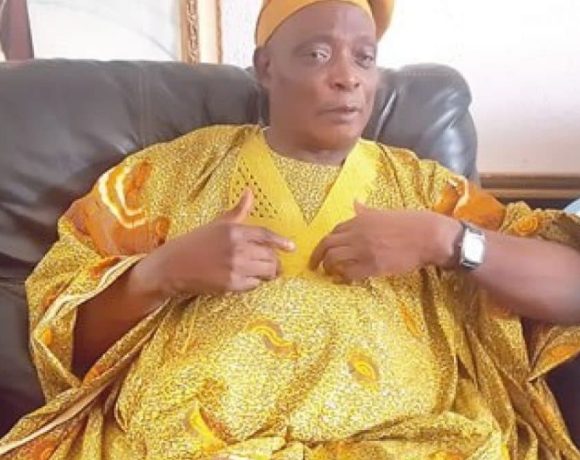
Olubadan of Ibadanland, Oba Rashidi Ladoja, has refuted claims that he is planning to unseat the Governor of Oyo State, Engineer Seyi Makinde, describing the allegation as false and misleading.
The dismissal is contained in a statement signed by his Media Aide, Chief Adeola Oloko, where the monarch cautioned against dragging the throne of Olubadan into what he termed “dirty politics.”
Oba Ladoja said, it was illogical to suggest that a traditional ruler could have the constitutional authority to remove a sitting governor, stressing that even a local government chairman cannot be impeached by any monarch.
The 44th Olubadan of Ibadanland reiterated his commitment to the traditional institution, urging political actors in the State to refrain from involving the revered throne in partisan controversies.
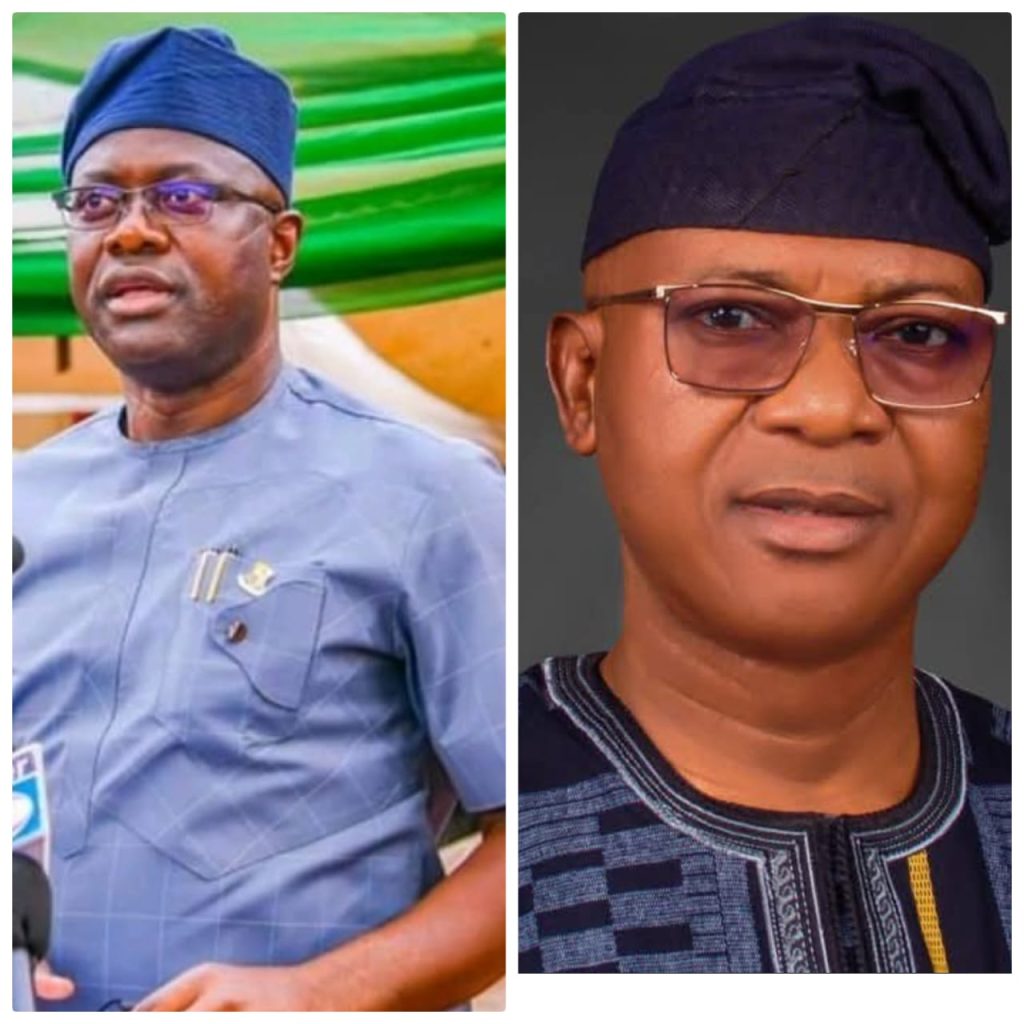
In the same vein, the lawmaker representing Ibadan North Federal Constituency in the House of Representatives, Mr Folajimi Oyekunle, has strongly condemned the alleged move to impeach Oyo State Governor, Seyi Makinde, describing it as a desperate attempt by enemies of the state to destabilize the prevailing peace and progress.
In a statement, Mr Oyekunle said that those behind the purported impeachment plot would not succeed in causing mayhem or disrupting the stability that Oyo State has enjoyed over the past seven years.
The federal lawmaker noted that the Makinde-led administration has consistently delivered people-oriented policies and programmes, which have brought visible relief and development to residents across the state.
According to him, the impact of the administration is evident and widely acknowledged by the populace.
Reaffirming his unwavering loyalty, Mr Oyekunle reiterated his full support for Governor Makinde stressing that the government remains focused on sustaining growth and development across all sectors.
Similarly, the Lawmaker representing Atiba Constituency in the Oyo State House of Assembly, Mr Gbenga Oyekola, said that, he was not part of any arrangement or activity that has the potential to disrupt the peace of Oyo State, saying he was never invited, nor consulted, and was not part of any meeting or arrangement.
Mr Oyekola alleged that, certain individuals were planning to work against the harmonious relationship between the Executive and the lawmakers.
Mr Oyekola, who is also the Chief Whip of the House described Governor Makinde as a Boss he would remain loyal to, considering his giants strides in the state.
Oyo State Governor, Mr ‘Seyi Makinde has sworn-in newly appointed Permanent Secretaries in the state’s Civil/Public Service, charging them to demonstrate loyalty and commitment to the state and to discharge their duties effectively.
Speaking at the ceremony held at the Executive Council Chamber of the Governor’s Office, Agodi, Secretariat, Ibadan, Governor Makinde charged the seventeen new Permanent Secretaries, to run their offices with probity and transparency.
He noted that their appointment followed due process, where competence and merit, rather than undue interference, took centre stage.
The new Permanent Secretaries include eight for the mainstream; four from the Education sector, comprising an Inspector-General of Education and three Tutors-General; three from the local government sector; one from the House of Assembly Service Commission and the Auditor-General for the state.
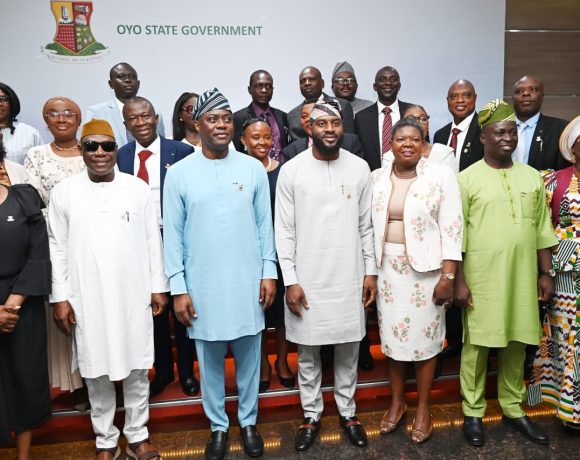
Osun State House of Assembly says it will not tolerate the diversion of public funds meant to cater for the salaries, healthcare delivery, education, and community development of the State.
The Speaker of the House, Prince Adewale Egbedun stated this while addressing newsmen at the Assembly Complex, Osogbo.
He was reacting to the continuous unlawful stay of some politicians in the local government secretariats and alleged illegal disbursement of Local Government Funds for personal uses.
Prince Egbedun emphasized that the House would not fold its arms and watch, while actions that could undermine the rule of law, democratic governance, and the welfare of the people at the grassroots continue unabated.
The Speaker on behalf of other lawmakers expressed dismay that individuals whose elections were nullified by courts of competent jurisdiction, and whose self-awarded tenure has since expired on 22nd October, 2025, still, unlawfully occupy local government secretariats and interfere with public funds.
“The House notes with grave concern that individuals whose elections were nullified by courts of competent jurisdiction, and whose self-awarded tenure has since expired by effluxion of time on 22nd October, 2025, continue to unlawfully occupy Local Government secretariats and interfere with Local Government finances.”
Prince Egbedun who noted that such individuals have no legal mandate and are not recognised by the law, by the courts, or by the constitution, stressed that their continued presence in the helms of affairs of local councils is illegal and must be checked.
He said based on credible information, huge sums of Local Government Funds have been reportedly paid to the sacked local government chairmen.
“The Osun State House of Assembly formally places on record that it has written repeatedly to banks, including the United Bank for Africa Plc, UBA, clearly educating them on the law. Under extant Osun State laws and regulations governing Local Government administration, only career officers duly appointed under the Local Government Service Commission, including Directors of Finance and Directors of Administration and General Services, are lawful signatories to Local Government accounts.”
He added that any bank that releases Local Government Funds on the instructions of unauthorised persons, acts unlawfully and exposes itself and its officers to criminal liability.
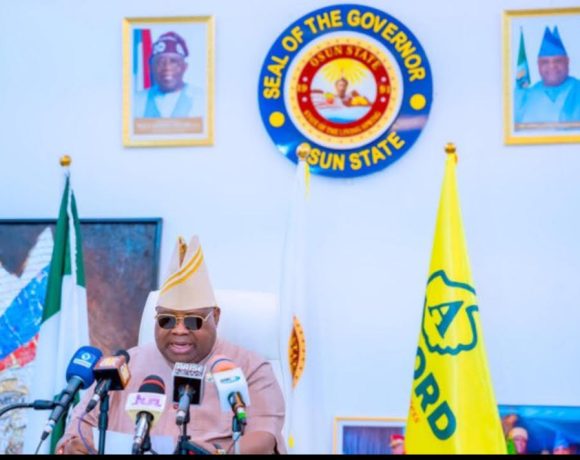
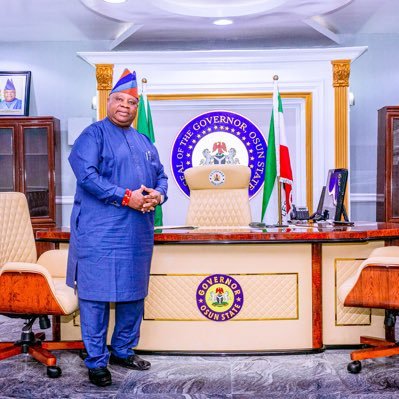
Osun State Governor, Senator Ademola Adeleke, has called for the immediate release of over ₦130 billion in statutory allocations allegedly withheld from the state’s local governments, describing the situation as a major threat to grassroots governance and the welfare of workers and residents.
The governor, who made the demand in a state broadcast, condemned the illegal occupation of local government secretariats across the state by court-sacked chairmen and councillors of the All Progressives Congress, APC.
Governor Adeleke said the occupation has persisted for almost a year despite a clear judgment of the Federal High Court, Osogbo, delivered in November 2022, and subsequent affirmations by the Court of Appeal in February and June 2025, which nullified the elections that produced the officials.
He accused the former governor of the state, Mr Gboyega Oyetola, of allegedly backing the continued occupation of the council secretariats with the support of the police, warning that such actions undermine democracy and the rule of law.
The governor further alleged that local government workers attempting to resume duty had been harassed and intimidated by armed police officers and political thugs, creating an atmosphere of fear and disruption at the grassroots level. He pointed out that the withheld funds are critical for the payment of salaries and entitlements of primary school teachers, nurses, health workers in the state’s 332 primary health care centres, local government staff, traditional councils, and retirees. The governor said the state government has had to make painful sacrifices to sustain salary payments for almost 12 months, a situation he described as unsustainable. Appealing for federal intervention, he called on President Bola Tinubu to ensure the immediate release of the withheld funds and to protect democratic institutions at the local government level. He maintained that the president was not involved in the alleged illegality and urged him to intervene in the interest of constitutional order. While calling on Nigerians and pro-democracy groups to speak out against the continued occupation of local government secretariats and to demand the release of council funds, Governor Adeleke urged residents of the state to remain peaceful and law-abiding, assuring them of his administration’s commitment to upholding the constitution and safeguarding the welfare of the people.
Osun state Governor, Senator Ademola Adeleke has welcomed the call by Sally Tibbot Limited on the anti-corruption agencies to review the controversial Osun State Staff Audit Report. In a statement by his Spokesperson, Mallam Olawale Rasheed, the Governor said both the Economic and Financial Crime Commission, EFCC and the Independent Corrupt Practices and Other Related Offences Commission, ICPC, are free to review the audit report. Governor Adeleke noted that what anti-corruption agencies will be checking and reviewing was the inherited payroll and personnel list from the former governor Oyetola’s administration. “Our administration did not and has not expanded the personnel and payroll structures inherited from the last administration. Moreover, what was audited was the payroll and personnel structure under Oyetola’s administration. The Governor said he should be commended for not accepting the recommendations of the consultant to lay off legitimate workers for the consultant’s personal gain. He pointed out that his administration stopped likely fraud even while pushing to clean up the system.
Osun State Governor, Senator Ademola Adeleke, has commended the Osun State chapter of the Nigeria Union of Local Government Employees, NULGE, for its decision to resume duties on January 5, 2026, describing the move as patriotic and people-oriented. Governor Adeleke in a statement by his Spokesperson, Mallam Olawale Rasheed, said the decision by local government workers represents a positive development for grassroots governance and service delivery across the state. He noted that the resumption of work would reinvigorate activities at the local government level and enhance social services for residents.
The Governor maintained that the resolve of the workers underscores the labour movement’s sensitivity to the yearnings and aspirations of the people, expressing optimism that the January 5 resumption would mark a new beginning for effective governance at the grassroots.
He emphasized that local government administration remained the most direct means of reaching citizens, adding that the decision by NULGE leadership reflects confidence in responsible and lawful leadership, also commended the Nigeria Police Force for its proactive steps in maintaining law and order at council secretariats across the state. Governor Adeleke reiterated his administration’s support for local government autonomy, describing the presidential decision on the matter as well-intentioned and aimed at deepening governance at the grassroots. He concluded by reaffirming his administration’s commitment to peace, unity, and democratic principles, noting that only in a harmonious environment can the dividends of democracy be fully delivered to the people of Osun State.
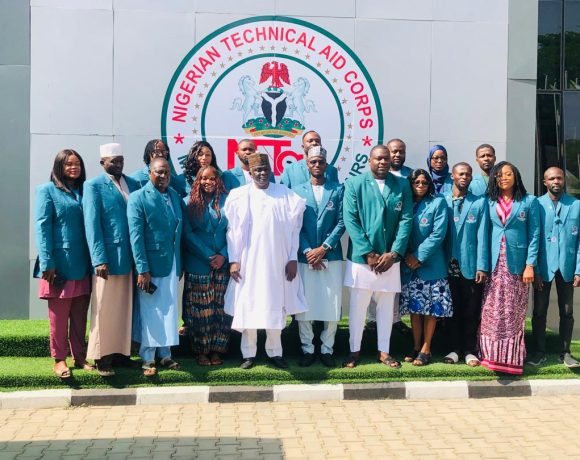
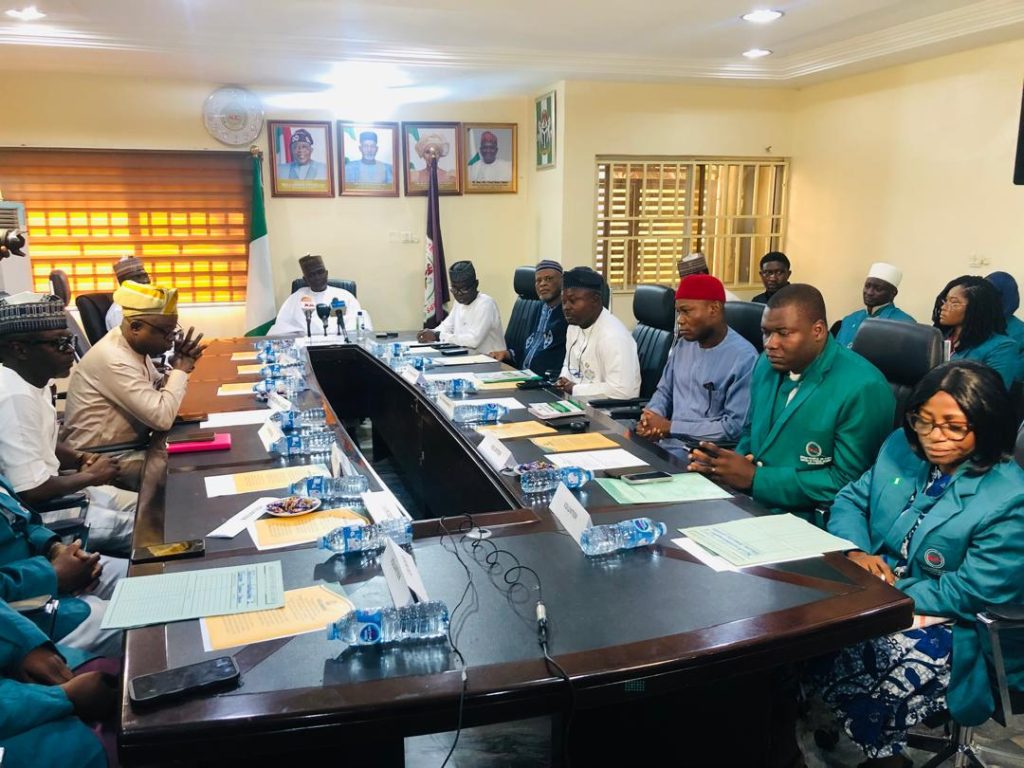
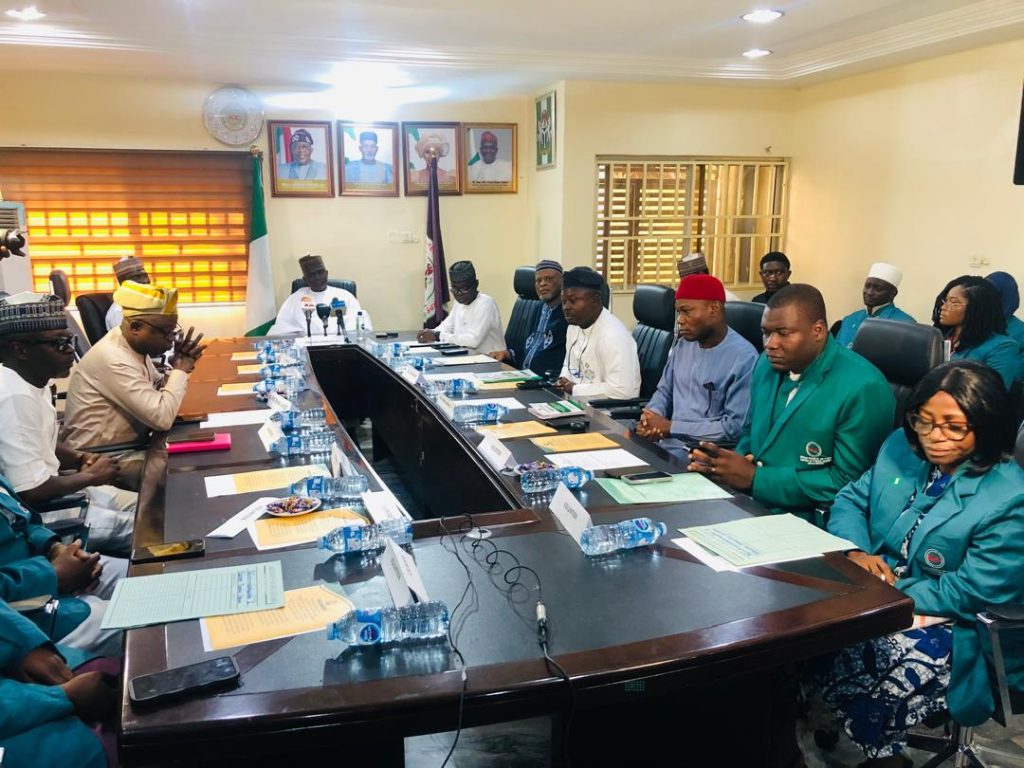
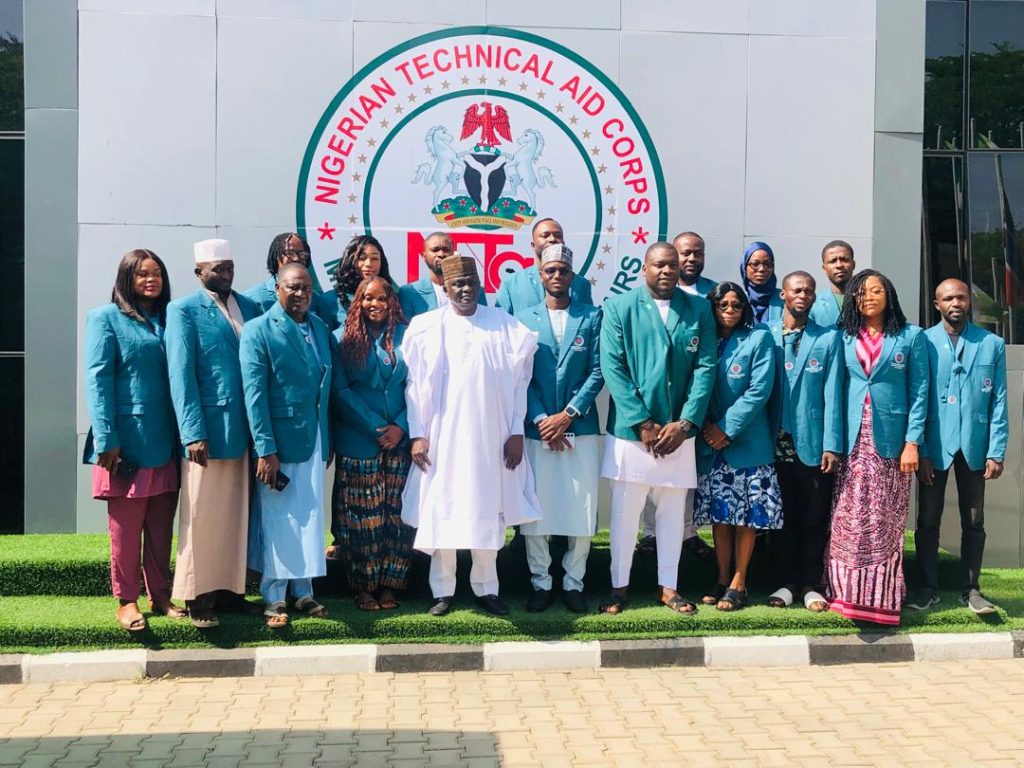
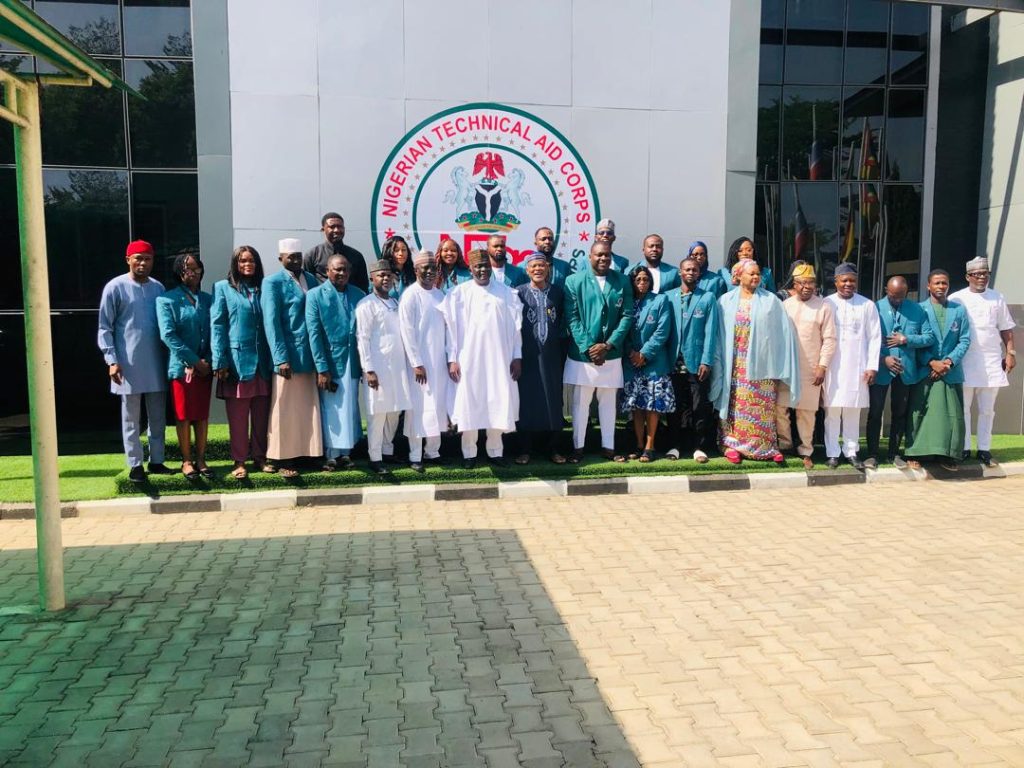
The Nigerian Technical Aid Corps, NTAC, has concluded plans to deploy hundreds of Nigerian professionals abroad to strengthen foreign engagement and generate revenue through technical assistance.
The plan was made known in Abuja at the deployment ceremony of 17 Nigerian professionals to St. Kitts and Nevis.
The Director-General, Nigerian Technical Aid Corps, Dr. Yusuf Buba Yakubu, described the move as a strategic expansion of Nigeria’s technical diplomacy.
Dr. Yakubu said arrangements have been completed to deploy over 400 Nigerian professionals to Jamaica.
He added that six Eastern Caribbean countries are expected to receive Nigerian experts in the first quarter of 2026.
According to him, the deployment followed a directive by President Bola Ahmed Tinubu after engagements with leaders of Eastern Caribbean states.
He said Nigeria committed to filling critical manpower gaps in the region as part of its leadership role within the Global South.
Dr. Yakubu said the deployment to St. Kitts and Nevis forms a key pillar of Nigeria’s growing engagement with the Caribbean.
He noted that the Technical Aid Corps was established 38 years ago to promote South–South cooperation among developing countries.
The NTAC Director-General said Nigeria has already deployed volunteers to Grenada and Jamaica, with St. Kitts and Nevis becoming the latest beneficiary.
He announced that the volunteers would travel on Air Peace’s maiden direct flight from Nigeria to the Caribbean.
Dr. Yakubu said the development would reduce travel time, strengthen Nigeria’s aviation sector and project the country’s global presence.
He urged the volunteers to act as worthy ambassadors of Nigeria, stressing professionalism and discipline.
Dr. Yakubu explained that while the Nigerian government will pay the volunteers’ salaries, the government of St. Kitts and Nevis will provide accommodation and logistics.
Earlier, the Director of Programmes, Nigerian Technical Aid Corps, Ambassador Zachary Ousmane, commended the agency’s leadership for sustaining Nigeria’s technical assistance diplomacy.
The volunteers expressed appreciation to NTAC management and pledged commitment to excellence and service.
The professionals, drawn from medical, education and other sectors, will serve in St. Kitts and Nevis for an initial two-year period under the Technical Aid Corps scheme.
President Bola Tinubu has transmitted a list of 65 ambassadorial nominees to the Senate for confirmation.
Senate President Godswill Akpabio read the President’s letter at plenary, requesting the Senate to screen and confirm the nominees.
The list comprises 34 career ambassadors and high commissioners, and 31 non-career nominees.
Among the career nominees are Sulu-Gambari Olatunde from Kwara State and Segun Ige from Edo State, while the non-career list includes Senator Folasade Grace Bent (Adamawa), Senator Solomon Ita Enang (Akwa Ibom), and Senator Jimoh Ibrahim (Ondo).
The Senate referred all 65 names to the Senate Committee on Foreign Affairs, which is expected to complete the screening within one week.
President Bola Tinubu has sent the names of 32 ambassadorial nominees to the Senate for confirmation, days after he sent the first batch of three names.
Among them are former chairman of the Independent National Electoral Commission, Mahmud Yakubu, an aide to former President Goodluck Jonathan, Reno Omokri (Delta), and former Enugu State Governor, Ifeanyi Ugwuanyi.
“In two separate letters to the Senate President, Godswill Akpabio, President Tinubu asked the Senate to consider and confirm expeditiously 15 nominees as career ambassadors and 17 nominees as non-career ambassadors,” read a statement on Saturday by the Special Adviser to the President on Information and Strategy, Bayo Onanuga.
In the statement titled, ‘Tinubu nominates 32 additional ambassadors,’ Onanuga noted, “There are four women on the career ambassadors’ list and six women on the non-career ambassadors’ list.”
“Among the non-career ambassador designates are Ogbonnaya Kalu from Abia, a former presidential aide, Reno Omokri (Delta), former chairman of the Independent National Electoral Commission (INEC), Mahmud Yakubu, former Ekiti first lady, Erelu Adebayo, and former Enugu governor, Ifeanyi Ugwuanyi.
“Others are Tasiu Musa Maigari, the former speaker of the Katsina House of Assembly, Yakubu N. Gambo, a former Commissioner in Plateau State and former Deputy Executive Secretary of the Universal Basic Education Commission.
“Professor Nora Ladi Daduut, a former senator from Plateau; Otunba Femi Pedro, a former Deputy Governor of Lagos State; Femi Fani-Kayode, a former aviation minister from Osun State; and Nkechi Ufochukwu from Anambra State are on the nomination list,” the statement read.
Also on the list are former First Lady of Oyo, Fatima Florence Ajimobi, former Lagos Commissioner, Lola Akande, former Adamawa Senator, Grace Bent, former governor of Abia, Victor Okezie Ikpeazu, Senator Jimoh Ibrahim, businessman, lawyer and Senator from Ondo State, and the former ambassador of Nigeria to the Holy See, Ambassador Paul Oga Adikwu from Benue State.
Among the nominees for career ambassador and high commissioner-designates are: Enebechi Monica Okwuchukwu (Abia), Yakubu Nyaku Danladi (Taraba), Miamuna Ibrahim Besto (Adamawa), Musa Musay Abubakar (Kebbi), Syndoph Paebi Endoni (Bayelsa), Chima Geoffrey Lioma David (Ebonyi) and Mopelola Adeola-Ibrahim (Ogun).
The other nominees are Abimbola Samuel Reuben (Ondo), Yvonne Ehinosen Odumah(Edo), Hamza Mohammed Salau (Niger), Ambassador Shehu Barde (Katsina), Ambassador Ahmed Mohammed Monguno (Borno), Ambassador Muhammad Saidu Dahiru (Kaduna), Ambassador Olatunji Ahmed Sulu Gambari (Kwara) and Ambassador Wahab Adekola Akande (Osun).
“The new nominees are expected to be posted to countries with which Nigeria maintains excellent and strategic bilateral relations, such as China, India, South Korea, Canada, Mexico, the United Arab Emirates, Qatar, South Africa, Kenya, and to Permanent Missions such as the United Nations, UNESCO, and the African Union.
“All the nominees will know their diplomatic assignments after their confirmation by the Senate,” it read.
Last week, Tinubu sent three ambassadorial nominees for screening and confirmation.
The nominees were Ambassador Ayodele Oke (Oyo), Ambassador Amin Mohammed Dalhatu (Jigawa), and Retired Colonel Lateef Kayode Are (Ogun).
Osun State Governor, Senator Ademola Adeleke, has reassured residents of their safety amid rising banditry in neighbouring states, commending security agencies for their proactive measures.
In a statement by his spokesperson, Mallam Olawale Rasheed, Governor Adeleke said strategic security meetings have been ongoing over the past three weeks to prevent infiltration by criminal elements.
He praised the Commissioner of Police, the Director of the State Security Service (DSS), the Army Commander, the Commandant of the Nigeria Security and Civil Defence Corps (NSCDC), and other agencies for vigilance and preparedness.
The governor noted that national security leaders, including the Inspector General of Police, the DSS Director-General, the Chief of Defence Staff, and the NSCDC Commandant-General, have given special attention to Osun State.
He directed the Amotekun Security Service to collaborate closely with the police and other agencies, while urging residents to remain security-conscious and report suspicious activities.
“Security deployment is ongoing in strategic areas, and intelligence agencies maintain comprehensive oversight. We commend the DSS for arresting high-profile terrorists and dismantling their cells in Osun,” he added.
On local governance, Governor Adeleke said stakeholders await the Supreme Court’s ruling on the local government matter and insisted on remaining law-abiding.
Regarding judiciary challenges, he expressed optimism that internal matters will soon be resolved and stressed he will not interfere in judicial affairs.
Governor Adeleke reassured citizens that good governance continues uninterrupted, citing achievements in digital economy, economic empowerment, workers’ welfare, and infrastructure upgrades across the state.
President Bola Tinubu has postponed his scheduled trip to Johannesburg, South Africa, and Luanda, Angola, as he awaits further security briefings on the kidnapped Kebbi schoolgirls and the attack on Christ Apostolic Church worshippers in Eruku, Kwara State.
In response to the request by the governor of Kwara State, President Tinubu has ordered the deployment of more security men to Eruku and the entire Ekiti Local Government Area of the state and directed the police to go after the bandits who attacked worshippers.
President Tinubu was scheduled to leave Abuja today to attend the 20th G20 Summit of leaders in South Africa and thereafter proceed to Luanda to attend the 7th AU-EU Summit.
Disturbed by the security breaches in Kebbi State and Monday’s attack by bandits against worshippers at Christ Apostolic Church, Eruku, President Tinubu decided to suspend his departure.
A statement by presidential spokesman Bayo Onanuga: the President awaits reports from Vice President Kashim Shettima, who paid a sympathy visit to Kebbi on his behalf, as well as reports from the police and the Department of State Services regarding the attack in Kwara.
President Tinubu reiterated his directive to the security agencies to do everything possible to rescue the 24 schoolgirls abducted by the bandits and bring the girls back home safe.
Recall that the President had, in his reaction to the recent terrorist attacks and abduction of schoolgirls, said:
“As the Commander-in-Chief of the Armed Forces, I am depressed with the tragic death of our soldiers and officers on active duty. May God comfort the families of Brigadier General Musa Uba and other fallen heroes.
“I am also depressed that heartless terrorists have disrupted the education of innocent schoolgirls. I have directed the security agencies to act swiftly and bring the girls back to Kebbi State.”
Tinubu Jets to S’Africa, Angola for G20, AU Summits
President Bola Tinubu will on Wednesday embark on a two-nation visit to Johannesburg, South Africa and Luanda, Angola.
“President Tinubu’s first stop is Johannesburg, where he will attend the 20th summit of the G20 Leaders. After the summit, he will proceed to Angola for the AU-EU summit,” the Special Adviser to the President on Information and Strategy, Bayo Onanuga, revealed in a statement Tuesday evening.
The G20 meeting holds at the Johannesburg Expo Centre from Saturday, November 22, to Sunday, November 23, followed by the AU–EU summit in Luanda from November 24–25.
Invited by South Africa’s President, Cyril Ramaphosa, Chairperson for this year’s G20, Tinubu will join leaders under the theme, “Solidarity, Equality, Sustainability,” the first G20 hosted on African soil.
The summit will consider inclusive and sustainable growth, debt and development finance, disaster-risk reduction, climate action and just energy transitions, food systems, critical minerals, decent work and artificial intelligence.
The Presidency said the Nigerian leader will also hold bilateral meetings on the margins of the G20 “in furtherance of the Renewed Hope Agenda,” and to discuss regional peace, security and development.
The African Union, now a full member of the G20 alongside the EU, is expected to participate in Johannesburg.
After the G20 in Johannesburg, Tinubu will join other Heads of State and Government for the AU–EU summit in Luanda, which brings leaders, innovators and civil society together on climate, inclusive development, infrastructure, digital economy, the creative sector, manufacturing and agribusiness.
He will be accompanied by senior officials, including the Ministers of Foreign Affairs, Finance and the Economy, Solid Minerals, and Trade and Investment, as well as the Director-General of the National Intelligence Agency.
The President is due back in Nigeria at the end of both meetings, Onanuga stated.
While the G20 summit makes it Tinubu’s third trip to South Africa since assuming office, he is visiting Luanda, Angola for the first time as Head of State.
Osun State House of Assembly has commenced plans towards the passage of the State 2026 Appropriation estimate as the bill scales through the Second Reading.
The 2026 Budget estimate scaled the second reading after the presentation of the policy thrust by the Majority Leader of the Assembly, Mr. Kofoworola Adewunmi , during plenary held at the Assembly Complex, Osogbo.
Mr. Adewunmi called for the speedy consideration the 2026 Budget estimate and emphasized that the proposed budget size is aimed towards completing all ongoing projects and initiating new projects where it is essential.
The lawmaker who stressed that, the executive had consulted with the assembly during the budget compilation noted that it is evidently clear that the full implementation of the budget is visible and achievable.
He stated that the 2026 Budget would be revenue driven, hence the need for Ministries, Departments, Agencies ,MDAs to brace up to attain an improved Internally Generated Revenue, IGR.
In his remarks, The Chairman of the House Committee on Finance and Appropriation, Mr. Olumide Fatunmise, expressed confidence in the governor’s financial stewardship, noting that previous budgets under the current administration have been successfully implemented.
In separate Contributions on the Appropriate Bill estimate , Mr Kanmi Ajibola, Prince Adewunmi Adeyemi, Prince Adekunle Oladimeji, Mr. Abiola Awoyeye and Mr. Afeez Abiodun assured residents that the budget would improve their standard of living.
In his remarks, The Speaker, Prince Adewale Egbedun directed House Committee on Rules and Business and House Committee on Finance and Appropriation to set the motion in place for the budget defence exercise, scheduled to commence from 24th November, 2025 to 4th December, 2025.
Recall that, The state governor , Senator Ademola Adeleke, on Wednesday laid before the Assembly a proposed budget of over ₦705 billion for the 2026 fiscal year Christened “The Budget of Economic Transformation”.
The Oyo State Government has begun the pilot phase of using Multidimensional Poverty Indicators to expand the state’s Social Register under the EU-funded SUSI Project implemented with the International Labour Organization (ILO) and UNICEF.
Commissioner for Budget and Economic Planning, Professor Musbau Babatunde, announced this while opening a State Technical Consultation Meeting with Ministries, Departments and Agencies and the Social Protection Technical Working Group.
Professor Babatunde said the meeting aims to strengthen coordination and improve the delivery of social protection programmes targeted at poor and vulnerable households.
He stressed that social protection is multidimensional and requires strong collaboration among all MDAs to ensure inclusiveness and sustainability.
He added that poverty-measurement criteria, budget allocation for the poor, and equitable resource distribution must be clearly defined and applied across all sectors.
The commissioner said Oyo State’s inclusion in the EU-SUSI Project represents another milestone in Governor Seyi Makinde’s commitment to sustainable development and human capital growth.
He reaffirmed the administration’s commitment to data-driven, transparent social protection initiatives that “leave no one behind.”
Earlier, Permanent Secretary of the Ministry of Budget and Economic Planning, Mr Tunde Ayanleke, thanked UNICEF for its continuous support and commended Governor Makinde for approving a household survey that will strengthen data-driven planning and policy implementation.
State Coordinator of the Oyo State Operation Coordinating Unit (OYOSOCU), Mr Ismail Salami, said poverty in Nigeria should not be measured solely by monetary indicators.
He explained that the meeting was convened to agree on additional indicators that will make poverty measurement in Oyo State more accurate and inclusive.
Mr Salami said the programme aims to create a shock-responsive register that improves preparedness for future social and economic challenges.
He noted that the pilot phase is being implemented in four states — Oyo, Abia, Benue, and Sokoto — with ten local government areas selected in Oyo State.
Social Policy and Programme Manager at UNICEF Lagos Office, Mr Muhammad Okorie, said the European Union is the main sponsor of the Sustainable Social Protection Programme implemented through UNICEF in the four states.
He added that Oyo State is pioneering a new approach to social protection using Multidimensional Poverty Indicators for more targeted interventions.
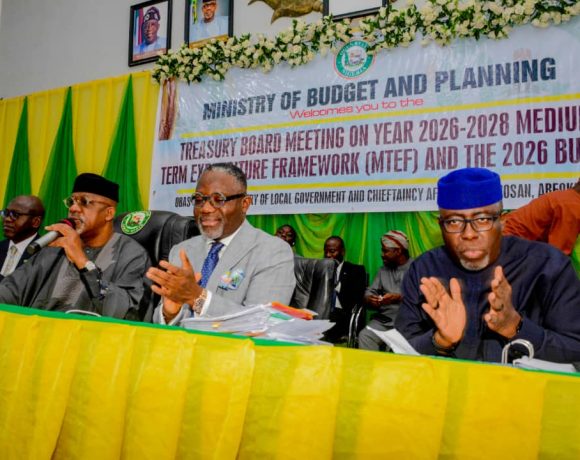
Ogun State Governor, Prince Dapo Abiodun, has set a target of five hundred billion naira as Internally Generated Revenue for Ministries, Departments, and Agencies in the 2026 fiscal year.
Governor Abiodun announced the 2026–2028 Medium Term Expenditure Framework and the 2026 budget during the Treasury Board meeting, held at the Obas Complex, Oke-Mosan, Abeokuta.
The governor expressed dissatisfaction with the level of internally generated revenue recorded in the 2025 budget, describing it as unimpressive.
He directed the State Internal Revenue Service, OGIRS, to generate two hundred and fifty billion naira, while other revenue-yielding ministries such as Urban and Regional Planning, Education, Science and Technology, and Lands are expected to realise the remaining two hundred and fifty billion naira.
Governor Abiodun said the state government had provided the necessary infrastructure such as good road network and enhanced security to boost revenue generation, adding that these efforts had already attracted more industries to the state.
He charged heads of MDAs to take advantage of the enabling environment to improve their budget performance in the coming year.
While commending the ministries for their efforts in the outgoing year, the governor urged the State Property Investment Corporation, OPIC, and the Ministry of Housing to collaborate in increasing the number of affordable housing units to 10,000, a feat he described as unprecedented in the state’s history.
Governor Abiodun also noted that the ongoing urban renewal and regeneration projects across the three senatorial districts are part of efforts to further reposition the state.
On education, the governor announced plans to set up a committee of experts from the building sector to oversee the rehabilitation of public schools due for repairs, assuring that his administration remains committed to providing a conducive learning environment for students across the state.
As the Osun State House of Assembly resumes after its recess, four bills have scaled through its third passage.
The bills included Osun State Sports Commission Establishment Bill, Osun State Communal Crisis Management and Peace Building Bill, Osun State Compulsory Treatment and Care for Victims of Gunshot Bill and Osun State Startup Bill.
The Speaker of the House, Prince Adewale Egbedun during the Plenary, said the clean and final copy of the Bills would be sent to the State Governor, Senator Ademola Adeleke for his Assent.
In his welcome remarks, Prince Egbedun who lauded colleague’s promptness and responsiveness to various states’ issues during the recess stressed that, it was a testament to their commitments for the state.
He also appreciated the unwavering commitment of the lawmakers in their respective constituencies.
The Speaker urged colleagues to uphold high standard Legislative function and noted that there were outstanding bills awaiting the Attention of the Legislators.
He directed the House Committee on Judiciary, Human Rights, Public Petitions and Legal Matters and House Committee on Home Affairs, Culture and Tourism to work on The Osun Multi door bill and submit within one week.
Meanwhile, Osun State Water Users Association and Irrigation Bill 2025 scaled first reading.
The House also dissolved into a committee of the whole for further consideration and amendments on Osun State Emergency Management Agency Amendment No. 1 Bill 2025.
The Special Adviser to the President on Media and Public Communications, Mr. Sunday Dare, has appealed to Nigerians to be patient with the ongoing reforms of President Bola Tinubu, noting that much has been achieved in the past two years.
Mr. Dare made the appeal while delivering a keynote address at the Media Transformative Group Summit held at the American Corner, Jericho, Ibadan.
He stated that the President’s reforms had begun to yield the desired results through the restoration of accountability, discipline, and the retooling of the nation’s anti-corruption architecture.
Speaking on the theme “NIGERIA @65, Rule of Law, Systemic Problem: The Way Forward,” Mr. Dare reaffirmed that President Tinubu remains committed to judicial independence and access to justice.
The former Minister of Youth and Sports noted that the Federal Ministry of Justice and the Nigerian Law Reform Commission were working hard to review obsolete laws, many of which dated back to the colonial era.
Also speaking, the Deputy Director, News and Current Affairs department , FRCN Ibadan, Mr. Adewumi Faniran, stressed that the law must always prevail irrespective of an individual’s status or position.
The Sabiganna of Iganna, Oba Saliu Oyemonla, emphasized the need for positive attitudinal change, noting that government efforts can only succeed with citizens’ support.
During a panel discussion, the Chief Press Secretary to Oyo State Governor, Dr. Sulaimon Olanrewaju, alongside human rights activists Dr. Oluwakemi Aremu and Mr. Jide Olowoyo, stressed that laws should not be applied selectively but enforced firmly on anyone who contravenes them.
A journalist, Mr. Olufemi Olukunle, noted that members of the pen profession should be adequately remunerated to motivate them to effectively serve as watchdogs of society.
In his address, the Convener of the Media Transformative Group and General Manager of Pensioners FM, Ibadan, Dr. Babatunde Tiamiyu, said the group was established to promote healthy competition and professionalism among broadcast organizations in Ibadan.
The event was attended by a representative of the National Orientation Agency, Mrs Ajolayo Akande, a former Deputy Director News and Current Affairs Department , FRCN, Ibadan, Mr. Samson Tunde Abiodun and media experts.
As Nigerians across the world mark 65th anniversary after independence from the British colonial rule, President Bola Ahmed Tinubu has congratulated the country, describing the anniversary as a day of reflection on the significance of this day and our journey of nationhood since October 1, 1960.
According to him, profound social, economic, and political challenges have tested Nigeria’s independence for decades, but the country has survived with tremendous progress across sector, especially the country’s economy which he said “has experienced significant growth since 1960.”
NATIONAL BROADCAST BY HIS EXCELLENCY BOLA AHNED TINUBU, GCFR, PRESIDENT OF THE FEDERAL REPUBLIC OF NIGERIA ON THE 65TH INDEPENDENCE ANNIVERSARY OF NIGERIA, OCTOBER 1, 2025
Fellow Nigerians,
Today marks the 65th anniversary of our great nation’s Independence. As we reflect on the significance of this day and our journey of nationhood since October 1, 1960, when our founding fathers accepted the instruments of self-government from colonial rule, let us remember their sacrifice, devotion, and grand dream of a strong, prosperous, and united Nigeria that will lead Africa and be the beacon of light to the rest of the world.
Our founding heroes and heroines—Herbert Macaulay, Dr Nnamdi Azikiwe, Sir Abubakar Tafawa Balewa, Chief Obafemi Awolowo, Sir Ahmadu Bello, Margaret Ekpo, Anthony Enahoro, Ladoke Akintola, Michael Okpara, Aminu Kano, Funmilayo Ransome-Kuti, and other nationalists—believed it was Nigeria’s manifest destiny to lead the entire black race as the largest black nation on earth.
For decades, the promise of our Independence has been tested by profound social, economic, and political challenges, and we have survived. While we may not have achieved all the lofty dreams of our forebearers, we have not strayed too far from them. In 65 years since our Independence, we have made tremendous progress in economic growth, social cohesion, and physical development. Our economy has experienced significant growth since 1960.
Although, it is much easier for those whose vocation is to focus solely on what ought to be, we must recognise and celebrate our significant progress. Nigerians today have access to better education and healthcare than in 1960. At Independence, Nigeria had 120 secondary schools with a student population of about 130,000. Available data indicate that, as of year 2024, there were more than 23,000 secondary schools in our country. At Independence, we had only the University of Ibadan and Yaba College of Technology as the two tertiary institutions in Nigeria. By the end of last year, there were 274 universities, 183 Polytechnics, and 236 Colleges of Education in Nigeria, comprising Federal, State, and private institutions. We have experienced a significant surge in growth across every sector of our national life since Independence – in healthcare, infrastructure, financial services, manufacturing, telecommunications, information technology, aviation and defence, among others.
Our country has experienced both the good and the bad times in its 65 years of nationhood, as is normal for every nation and its people. We fought a bitter and avoidable civil war, experienced military dictatorships, and lived through major political crises. In all these, we weathered every storm and overcame every challenge with courage, grit, and uncommon determination. While our system and ties that bind us are sometimes stretched by insidious forces opposed to our values and ways of life, we continue to strive to build a more perfect union where every Nigerian can find better accommodation and find purpose and fulfilment.
Fellow Compatriots, this is the third time I will address you on our independence anniversary since I assumed office as your President on May 29, 2023. In the last 28 months of my administration, like our founding fathers and leaders who came before me, I have committed myself irrevocably to the unfinished nation-building business.
Upon assuming office, our administration inherited a near-collapsed economy caused by decades of fiscal policy distortions and misalignment that had impaired real growth. As a new administration, we faced a simple choice: continue business as usual and watch our nation drift, or embark on a courageous, fundamental reform path. We chose the path of reform. We chose the path of tomorrow over the comfort of today. Less than three years later, the seeds of those difficult but necessary decisions are bearing fruit.
In resetting our country for sustainable growth, we ended the corrupt fuel subsidies and multiple foreign exchange rates that created massive incentives for a rentier economy, benefiting only a tiny minority. At the same time, the masses received little or nothing from our Commonwealth. Our administration has redirected the economy towards a more inclusive path, channelling money to fund education, healthcare, national security, agriculture, and critical economic infrastructure, such as roads, power, broadband, and social investment programmes. These initiatives will generally improve Nigerians’ quality of life. As a result of the tough decisions we made, the Federal and State governments, including Local Governments, now have more resources to take care of the people at the lower level of the ladder, to address our development challenges.
Fellow Nigerians, we are racing against time. We must build the roads we need, repair the ones that have become decrepit, and construct the schools our children will attend and the hospitals that will care for our people. We have to plan for the generations that will come after us. We do not have enough electricity to power our industries and homes today, or the resources to repair our deteriorating roads, build seaports, railroads, and international airports comparable to the best in the world, because we failed to make the necessary investments decades ago. Our administration is setting things right.
I am pleased to report that we have finally turned the corner. The worst is over, I say. Yesterday’s pains are giving way to relief. I salute your endurance, support, and understanding. I will continue to work for you and justify the confidence you reposed in me to steer the ship of our nation to a safe harbour.
Under our leadership, our economy is recovering fast, and the reforms we started over two years ago are delivering tangible results. The second quarter 2025 Gross Domestic Product grew by 4.23%—Nigeria’s fastest pace in four years—and outpaced the 3.4 per cent projected by the International Monetary Fund. Inflation declined to 20.12% in August 2025, the lowest level in three years. The administration is working diligently to boost agricultural production and ensure food security, reducing food costs.
In the last two years of our administration, we have achieved 12 remarkable economic milestones as a result of the implementation of our sound fiscal and monetary policies:
We have attained a record-breaking increase in non-oil revenue, achieving the 2025 target by August with over N20 trillion. In September 2025 alone, we raised N3.65 trillion, 411% higher than the amount raised in May 2023.
We have restored Fiscal Health: Our debt service-to-revenue ratio has been significantly reduced from 97% to below 50%. We have paid down the infamous “Ways and Means” advances that threatened our economic stability and triggered inflation. Following the removal of the corrupt petroleum subsidy, we have freed up trillions of Naira for targeted investment in the real economy and social programmes for the most vulnerable, as well as all tiers of government.
We have a stronger foreign Reserve position than three years ago. Our external reserves increased to $42.03 billion this September—the highest since 2019.
Our tax-to-GDP ratio has risen to 13.5 per cent from less than 10 per cent. The ratio is expected to increase further when the new tax law takes effect in January. The tax law is not about increasing the burden on existing taxpayers but about expanding the base to build the Nigeria we deserve and providing tax relief to low-income earners.
We are now a Net Exporter: Nigeria has recorded a trade surplus for five consecutive quarters. We are now selling more to the world than we are buying, a fundamental shift that strengthens our currency and creates jobs at home. Nigeria’s trade surplus increased by 44.3% in Q2 2025 to ₦7.46 trillion ($4.74 billion), the largest in about three years. Goods manufactured in Nigeria and exported jumped by 173%. Non-oil exports, as a component of our export trade, now represent 48 per cent, compared to oil exports, which account for 52 per cent. This signals that we are diversifying our economy and foreign exchange sources outside oil and gas.
Oil production rebounded to 1.68 million barrels per day from barely one million in May 2023. The increase occurred due to improved security, new investments, and better stakeholder management in the Niger Delta. Furthermore, the country has made notable advancements by refining PMS domestically for the first time in four decades. It has also established itself as the continent’s leading exporter of aviation fuel.
The Naira has stabilised from the turbulence and volatility witnessed in 2023 and 2024. The gap between the official rate and the unofficial market has reduced substantially, following FX reforms and fresh capital and remittance inflows. The multiple exchange rates, which fostered corruption and arbitrage, are now part of history. Additionally, our currency rate against the dollar is no longer determined by fluctuations in crude oil prices.
Under the social investment programme to support poor households and vulnerable Nigerians, N330 billion has been disbursed to eight million households, many of whom have received either one or two out of the three tranches of the N25,000 each.
Coal mining recovered dramatically from a 22% decline in Q1 to 57.5% growth in Q2, becoming one of Nigeria’s fastest-growing sectors. The solid mineral sector is now pivotal in our economy, encouraging value-added production of minerals extracted from our soil.
The administration is expanding transport infrastructure across the country, covering rail, roads, airports, and seaports. Rail and water transport grew by over 40% and 27%, respectively. The 284-kilometre Kano-Kastina-Maradi Standard Gauge rail project and the Kaduna-Kano rail line are nearing completion. Work is progressing well on the legacy Lagos-Calabar Coastal Highway and Sokoto-Badagry Highway. The Federal Executive Council recently approved $3 billion to complete the Eastern Rail Project.
The world is taking notice of our efforts. Sovereign credit rating agencies have upgraded their outlook for Nigeria, recognising our improved economic fundamentals. Our stock market is experiencing an unprecedented boom, rising from an all-share index of 55,000 points in May 2003 to 142,000 points as of September 26, 2025.
At its last MPC meeting, the Central Bank slashed interest rates for the first time in five years, expressing confidence in our country’s macroeconomic stability.
SECURITY:
We are working diligently to enhance national security, ensuring our economy experiences improved growth and performance. The officers and men of our armed forces and other security agencies are working tirelessly and making significant sacrifices to keep us safe. They are winning the war against terrorism, banditry and other violent crimes. We see their victories in their blood and sweat to stamp out Boko Haram Terror in North-East, IPOB/ESN terror in South East and banditry and kidnapping. We must continue to celebrate their gallantry and salute their courage on behalf of a grateful nation. Peace has returned to hundreds of our liberated communities in North-West and North-East, and thousands of our people have returned safely to their homes.
YOUTH:
I have a message for our young people. You are the future and the greatest assets of this blessed country. You must continue to dream big, innovate, and conquer more territories in your various fields of science, technology, sports, and the art and creative sector. Our administration, through policies and funding, will continue to give you wings to fly sky-high. We created NELFUND to support students with loans for their educational pursuits. Approximately 510,000 students across 36 states and the FCT have benefited from this initiative, covering 228 higher institutions. As of September 10, the total loan disbursed was N99.5 billion, while the upkeep allowance stood at N44.7 billion.
Credicorp, another initiative of our administration, has granted 153,000 Nigerians N30 billion affordable loans for vehicles, solar energy, home upgrades, digital devices, and more.
YouthCred, which I promised last June, is a reality, with tens of thousands of NYSC members now active beneficiaries of consumer credit for resettlement.
Under our Renewed Hope Agenda, we promised to build a Nigeria where every young person, regardless of background, has an equitable opportunity to access a better future—thus, the Investment in Digital and Creative Enterprises (iDICE) programme. The Bank of Industry is driving the programme, in collaboration with the African Development Bank, the French Development Agency, and the Islamic Development Bank. This initiative is at the cusp of implementation. Over the last two years, we have collaborated with our partners to launch the programme, supporting our young builders and dreamers in the technology and creative sectors.
A MESSAGE OF HOPE
Fellow Nigerians, I have always candidly acknowledged that these reforms have come with some temporary pains. The biting effects of inflation and the rising cost of living remain a significant concern to our government. However, the alternative of allowing our country to descend into economic chaos or bankruptcy was not an option. Our macro-economic progress has proven that our sacrifices have not been in vain. Together, we are laying a new foundation cast in concrete, not on quicksand.
The accurate measure of our success will not be limited to economic statistics alone, but rather in the food on our families’ tables, the quality of education our children receive, the electricity in our homes, and the security in our communities. Let me assure you of our administration’s determination to ensure that the resources we have saved and the stability we have built are channelled into these critical areas. Today, the governors at the state level, and the local government autonomy are yielding more developments.
Therefore, on this 65th Anniversary of Our Independence, my message is hope and a call to action. The federal government will continue to do its part to fix the plumbing in our economy. Now, we must all turn on the taps of productivity, innovation, and enterprise, just like the Ministry of Interior has done with our travel passports, by quickening the processing. In this regard, I urge the sub-national entities to join us in nation-building. Let us be a nation of producers, not just consumers. Let us farm our land and build factories to process our produce. Let us patronise ‘Made-in-Nigeria’ goods. I say Nigeria first. Let us pay our taxes.
Finally, let all hands be on deck. Let us believe, once more, in the boundless potential of our great nation.
With Almighty God on our side, I can assure you that the dawn of a new, prosperous, self-reliant Nigeria is here.
23. Happy 65th Independence Anniversary, and may God continue to bless the Federal Republic of Nigeria.
Amen.
Bola Ahmed Tinubu, GCFR
President and Commander-In-Chief of the Armed Forces of the Federal Republic of Nigeria,
President Bola Tinubu on Wednesday assured Nigerians that the country’s “worst days are over.”
He declared that his economic reforms are beginning to deliver results and that hope is rising for a more prosperous nation.
Delivering his national broadcast to mark the country’s 65th Independence anniversary, Tinubu said his administration had chosen “the path of tomorrow over the comfort of today” since coming into office in May 2023, and that Nigerians are now beginning to see tangible results.
“I am pleased to report that we have finally turned the corner. The worst is over, I say.
“Yesterday’s pains are giving way to relief. I salute your endurance, support, and understanding.
“I will continue to work for you and justify the confidence you reposed in me to steer the ship of our nation to a safe harbour,” the President said.
Tinubu hailed the resilience of Nigerians, saying the country had survived a civil war, military rule and political crises, and is still striving to build “a more perfect union.”
He described the 65th anniversary as a moment for reflection on the sacrifices of the nation’s founding fathers and the progress achieved since Independence in 1960.
The President highlighted achievements in education and healthcare, noting that Nigeria has grown from just two tertiary institutions at Independence to 274 universities, 183 polytechnics and 236 colleges of education by 2024.
Tinubu defended his economic reforms, including the removal of fuel subsidies and the unification of foreign exchange rates, which he said ended decades of distortions and rent-seeking.
According to him, these difficult decisions freed resources for investment in infrastructure, education, healthcare and social programmes.
He argued, “In resetting our country for sustainable growth, we ended the corrupt fuel subsidies and multiple foreign exchange rates that created massive incentives for a rentier economy, benefiting only a tiny minority.
“Our administration has redirected the economy towards a more inclusive path, channelling money to fund education, healthcare, national security, agriculture, and critical economic infrastructure.”
The President reeled out a list of 12 economic milestones achieved in the last two years and four months in office.
He said Nigeria’s GDP grew by 4.23 per cent in the second quarter of 2025, the fastest in four years, while inflation had declined to 20.12 per cent, the lowest level in three years.
The President added that non-oil revenue had risen sharply, debt service costs had reduced, foreign reserves had increased to $42.03bn, and the tax-to-GDP ratio had grown to 13.5 per cent.
He also noted that Nigeria had posted trade surpluses for five consecutive quarters, with manufactured exports up by 173 per cent and non-oil exports now representing 48 per cent of total trade.
Oil production, he said, had recovered to 1.68 million barrels per day, while local refining had restarted for the first time in four decades, alongside the export of aviation fuel.
Tinubu argued that the naira had grown more stable. He also boasted of improvements in credit ratings, a booming stock market, and the Central Bank’s first interest rate cut in five years as evidence of renewed investor confidence.
The President said his government was investing heavily in security to consolidate economic gains.
“They are winning the war against terrorism, banditry and other violent crimes. We see their victories in their blood and sweat to stamp out Boko Haram terror in the North-East, IPOB/ESN terror in the South-East and banditry and kidnapping,” he said, adding that peace had returned to hundreds of communities and thousands of displaced persons had gone back home.
He also promised to prioritise food security and agricultural production to lower food costs.
“We must build the roads we need, repair the ones that have become decrepit, and construct the schools our children will attend and the hospitals that will care for our people. We have to plan for the generations that will come after us,” Tinubu said.
Addressing young Nigerians, the President described them as the “greatest assets of this blessed country,” highlighting initiatives such as the Nigeria Education Loan Fund, which has already benefited over 500,000 students, and credit schemes like Credicorp and YouthCred that provide loans for housing, devices and resettlement.
He added that the government was pushing ahead with the $600m iDICE programme, backed by international development partners, to support the digital and creative sectors.
Under the social investment programme, Tinubu said N330bn had been disbursed to eight million households.
He also cited significant progress in transport infrastructure, including rail, roads, airports, and seaports, with major projects such as the Lagos-Calabar Coastal Highway and the Eastern Rail Project underway.
Tinubu acknowledged the pain of reforms but urged Nigerians to remain patient.
“I have always candidly acknowledged that these reforms have come with some temporary pains.
“The biting effects of inflation and the rising cost of living remain a significant concern to our government.
“However, the alternative of allowing our country to descend into economic chaos or bankruptcy was not an option,” he said.
The president concluded his third Independence Day address with a call for productivity and national unity, saying, “Let us be a nation of producers, not just consumers. Let us farm our land and build factories to process our produce.
“Let us patronise ‘Made-in-Nigeria’ goods. I say Nigeria first. Let us pay our taxes. Finally, let all hands be on deck.
“With Almighty God on our side, I can assure you that the dawn of a new, prosperous, self-reliant Nigeria is here.”
Service to humanity is the true measure of freedom.
The Governor made this assertion at an interdenominational church service held at the Cathedral Church of St.Peter, Ake, Abeokuta, to commemorate the 65 th anniversary of Nigeria’s independence.
Represented by his Deputy, Mrs Noimot Salako-Oyedele, Governor Abiodun said the celebration should rekindle hope and faith in the nation’s future, adding that the founding fathers envisioned a country where opportunities abound and no one is oppressed.
He commended President Bola Ahmed Tinubu for his bold economic reforms under the Renewed Hope Agenda, describing them as measures that are stabilizing the currency, attracting investors, and laying the foundation for inclusive prosperity.
Governor Abiodun also highlighted his administration’s strides in infrastructure, health, education and youth empowerment, noting that unity has been the cornerstone of governance in the state in line with the President’s vision.
In his sermon entitled A New Nigeria is Possible, the time is Now, “the Diocesan Bishop of Awori Anglican Diocese, Reverend Johnson Akintomide, urged Nigerians not to dwell on the past but to embrace national transformation through prayers, godly leadership, and rejection of corruption and tribalism.
Reverend Akintomide congratulated President Tinubu and Governor Abiodun on the Independence milestone.
He prayed for God’s intervention over hardship, insecurity and injustice, and also led special prayers for Nigeria, Ogun state, political leaders, traditional rulers and spiritual institutions.
The Chairman, Conference of Speakers of State Legislatures of Nigeria and Speaker of the Oyo State House of Assembly, Mr Adebo Ogundoyin, has reiterated the urgent need for predictable funding mechanisms and modern tools to enhance the capacity and performance of State Houses of Assembly across the country.
The Chairman, Conference of Speakers of State Legislatures of Nigeria and Speaker of the Oyo State House of Assembly, Mr Adebo Ogundoyin, has reiterated the urgent need for predictable funding mechanisms and modern tools to enhance the capacity and performance of State Houses of Assembly across the country.
Mr Ogundoyin made this call in Abuja during his goodwill message at the Consultative/Validation Meeting on the Needs Assessment of State Houses of Assembly in Nigeria.
According to him, the institutional, operational, and structural challenges faced by State Legislatures can only be addressed through deliberate reform, capacity building, and improved access to modern legislative tools.
The Speaker said, for democracy to thrive and for legislatures to deliver on their constitutional mandates, they must be equipped with adequate resources, supported by robust frameworks, and shielded from financial uncertainties.
The conference chairman emphasized that state assemblies should not be treated as appendages of the Executive but as co-equal arms of government.
Vice President Kashim Shettima has arrived in New York to attend the 80th session of the United Nations General Assembly, which begins on Monday and runs until Sept. 28.
Shettima, who is representing President Bola Tinubu, will deliver Nigeria’s national statement during the high-level general debates, announce the country’s new Nationally Determined Contributions under the Paris Agreement, and participate in a series of side events, bilateral meetings, and round tables.
According to reports, Tinubu was scheduled to address the 80th Session of the high-level General Debate of the United Nations General Assembly at the UN headquarters in New York.
A revised provisional list of speakers showed that Tinubu was to speak on the second day of the event. He was scheduled to deliver his address during the afternoon session, around 8:30 p.m. local time (approximately 2:30 p.m. Nigerian time), and would have been the 17th world leader to speak on day two of the general debate.
On arrival at John F. Kennedy International Airport, the Vice President was received by the Minister of Foreign Affairs, Amb. Yusuf Tuggar, Minister of Defence, Badaru Abubakar, and Nigeria’s Chargé d’Affaires at the Permanent Mission to the UN, Amb. Samson Itegboje.
Others on hand to welcome him included the Minister of Innovation, Science and Technology, Uche Nnaji; Nigeria’s Defence Attaché in New York, Brig.-Gen. Edward Koleoso, and Defence Attaché in Washington, Group Capt. Sani Kalgo.
Highlighting Nigeria’s priorities for UNGA 80, Tuggar said the country would continue to push for the adoption of a United Nations Global Convention on Taxation and for Africa’s representation on the UN Security Council.
“This is something that has put Nigeria in the position of leadership,” he said. “We also promote Nigeria’s push to become a permanent member of the Security Council, because Africa has a common position, the Ezulwini Consensus and the Sirte Declaration, that calls for at least two permanent seats.”
He added that Nigeria would also reiterate its stance on peacekeeping contributions and global conflicts, including the crises in Gaza, Eastern Congo, and Sudan.
Governor Uba Sani of Kaduna State said Nigeria’s presence at the UNGA would further strengthen its image as a leading African economy and investment hub.
“We are looking at areas of strength such as solid minerals, agriculture, and skills-based education,” the governor said. “The Vice President’s presentation on Wednesday will further reposition Nigeria as Africa’s leading economy.”
Minister of Industry, Trade and Investment, Dr Olajumoke Oduwole, noted that Nigeria would also use the platform to promote investment opportunities and the Renewed Hope Agenda.
“On Monday, we are hosting Nigeria Investment Day, highlighting solid minerals, telecommunications, and technology,” she said. “It is to show the reforms the Nigerian economy has undergone in the last two years and to engage our partners on where we are headed.”
Shettima will also participate in the African Union Peace and Security Council meeting and meet with the Prime Minister of Sudan, among other high-level engagements.
The Acting Governor of Oyo State, Barr. Adebayo Lawal has launched the Sustainable Social Protection Programme in Nigeria (SUSI), calling it a bold step to entrench social inclusion and sustainable development across the state and beyond.
The initiative, launched at Executive Council Chambers of the Governor’s Office, was designed to promote social inclusion, strengthen human capital and advance sustainable development, both within the state and across the country.
The Acting Governor stated that the state had made social protection a cornerstone of its development agenda, especially during the COVID-19 pandemic, through robust programmes which enabled the state to cushion the impact of the crisis by expanding healthcare coverage and registering over 24,000 households under the State Operation Coordinating Unit (SOCU).
He noted that measures have been put in place to fight poverty and support livelihoods, which include the distribution of food packages to more than 200,000 vulnerable households, loans worth ₦500 million to small businesses, ₦1 billion grants to boost food security, and the introduction of 46 subsidized buses to reduce transportation costs.
Barrister lawal further stressed the need for a comprehensive legal framework to strengthen and sustain social protection efforts in the state.
He emphasized that with the support from partners such as the European Union, UNICEF and the International Labour Organization, the state government plans to institutionalize these policies, enhance coordination among ministries,Oyo agencies and deepen social inclusion.
In a remark, the UNICEF Chief, Lagos Office, Celine Lafoucriere, described social protection as a lifeline rather than a luxury.
He commended the state government for the remarkable steps taken so far, saying the Social Protection Policies represent hope and a pathway for ensuring that children and other vulnerable populations in the state are cared for and protected.
The launch also featured a field trip to Oke-suna, Odo-Oba in Ibadan South East local government area of the state, where some vulnerable people already captured in the social protection register had interactions with the UNICEF team, the media and government officials.
A new chapter has opened for Oluwatosin Adejumo, a puff-puff seller in Osogbo, as Governor Ademola Adeleke presented her with an appointment letter as a staff of the Government House.
The gesture fulfilled a promise made by the Governor earlier after a roadside encounter, when he patronized Miss Adejumo during a public engagement at the state secretariat, where he had supported her with cash and pledged further assistance.
Miss Adejumo, who holds a National Certificate in Education, NCE, had taken to hawking puff-puff to support her family.
During the brief presentation ceremony, attended by her father, Mr. Kayode Adejumo, and Mrs. Funmilayo Ajakaye, who had supported her trade, Governor Adeleke also announced a scholarship for Oluwatosin at the Adeleke University, giving her the opportunity to pursue further studies.
The governor praised her as a symbol of the “new Osun spirit,” noting that she demonstrated dignity in labour and the value of hard work.
He stressed that his administration would continue to encourage industrious youths, with policies focused on empowerment, education, and job creation.
In her response, Miss Adejumo expressed gratitude to the governor, her family, and her benefactor, describing the opportunity as divine favour and a call to greater responsibility.
She urged youths to embrace skill acquisition and diligence, insisting that “no effort is ever wasted.”