Health

By Ifeoma Nwovu

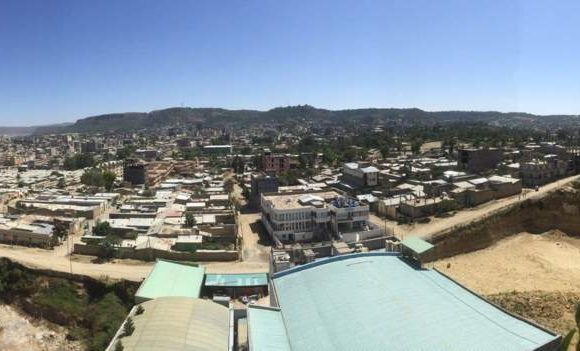
Ethiopia’s Ministry of Health has confirmed the country’s first outbreak of Marburg virus disease in the South Ethiopia Region.

The announcement followed laboratory tests that detected the virus in samples from a cluster of suspected viral haemorrhagic fever cases.

The World Health Organization (WHO) said genetic analysis from the Ethiopian Public Health Institute shows the virus strain matches those seen in earlier East African outbreaks.

Marburg virus disease is a severe and often fatal illness spread through direct contact with infected bodily fluids or contaminated materials and it originates in fruit bats.

Early symptoms include high fever, intense headache, muscle pain and fatigue, with many patients developing severe bleeding within a week.

There are no licensed treatments or vaccines, though several are in clinical trials.

WHO noted that early supportive care, including oral or IV rehydration and symptom management, improves survival.

Previous cases in Africa have been recorded in Angola, the Democratic Republic of the Congo, Ghana, Kenya, Equatorial Guinea, Rwanda, South Africa, Tanzania and Uganda.

WHO reported nine identified cases in the current outbreak, which is centred in Jinka town.

Ethiopian health authorities have launched community screening, isolation and treatment of confirmed cases, contact tracing and public awareness campaigns.

Marburg belongs to the same virus family as Ebola, making swift containment critical.

WHO and partners have deployed experts and supplied medical equipment to support Ethiopia’s response.

Follow us on Telegram and YouTube, and join our WhatsApp Update Group for more news updates.

Crime

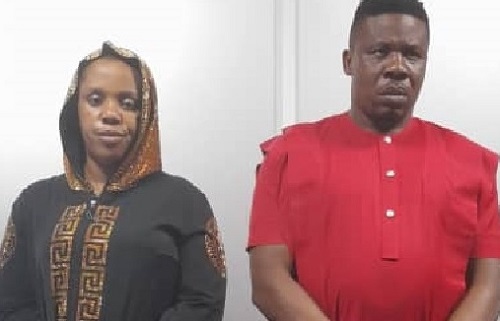
Operatives of the National Drug Law Enforcement Agency have arrested a fake couple Mr Onyebuchi Ilonzeh and his partner in crime, who identified as Mrs Nonyelum Ilonzeh, purportedly going for medical treatment in India, for ingesting 184 wraps of cocaine weighing 3.322 kilograms with 100grams of the drug also concealed in the woman’s vagina.

The two suspects were intercepted at Screening Point 1, Terminal 1 of the international wing of the Lagos airport on Tuesday, August 1, 2023, while attempting to board an Ethiopian airline flight to India.

“Though their travel documents show consistency in their names and depict them as a couple, an NDLEA officer, however, decided to subject them to a body scan. The scan confirmed they both ingested drugs as a result of which they were later placed on excretion observation at the Agency’s facility.

“While their travel documents identify the man as Onyebuchi Ilonzeh and the lady to be Nonyelum Ilonzeh, preliminary investigation revealed that the intending passengers were not a couple but obtained the travel documents in the same surname to beat security checks at the airport. The lady later gave her real name as Nkechi Ngogbike,” the spokesperson for the NDLEA, Femi Babafemi revealed in an official correspondence on Sunday.

Babafemi further noted that during her interview, Ngogbike confessed that she was recruited in her church in Aba, Abia state where she lives.

The suspect, Ngogbike Nkechi aka Nonyelum Ilonzeh stated further that she is a divorcee, and that Mr Ilonzeh with whom she was travelling is not her husband but connected only for the purpose of the illicit drug business trip.

She revealed that her arranged husband, Kingsley brought the pellets of cocaine to her in her room to ingest in the hotel where they were both lodged in separate rooms the previous day Monday, July 31.

After their arrest, a thorough search conducted on her led to the discovery of a big size wrap of cocaine that weighed 100 grams she inserted into her private part. She confessed that she was promised $5,000 upon successful delivery of the drug in India.

The spokesperson for the NDLEA further noted that Mr Ilonzeh, who was into the clothing business in Onitsha, Anambra state, in his own statement, claimed that he was promised $2,000 after a successful delivery of the drug in India.

“A further search of the agency’s crime database revealed that Kingsley also obtained his travel documents with a fake identity for the trip. Indeed, it was established that he was arrested by NDLEA operatives at the Nnamdi Azikiwe International Airport Abuja on March 19, 2022, for ingesting 100 wraps of cocaine weighing 2.243kgs upon his arrival from Addis Ababa, Ethiopia on board an Ethiopian airline flight.

“His travel documents then contained his real name Ikenna Uwaezuoke. After his arrest at the Abuja airport on March 19, 2022, along with another suspect, Iro Uche who also ingested 65 wraps of cocaine with a gross weight of 1.376kgs, Uwaezuoke was subsequently arraigned before Justice Zainab Abubakar of the Federal High Court Abuja with charge number: FHC/ABJ/CR/438/2022.

“He was eventually granted bail by the court pending the conclusion of his trial. He is still on court bail when he was arrested at the Lagos airport for a similar offence on Tuesday, August 1,” Babafemi added.

While Ikenna Uwaezuoke aka Onyebuchi Ilonzeh excreted a total of 82 wraps of cocaine with a gross weight of 1.822kgs in five excretions, Ngogbike Nkechi aka Nonyelum Ilonzeh egested 101 wraps in four excretions with a big size wrap of the substance recovered from her vagina, all weighing 1.50kgs.

Punch/Simeon Ugbodovon

Subscribe to our Telegram and YouTube Channels also join our Whatsapp Update Group

Foreign

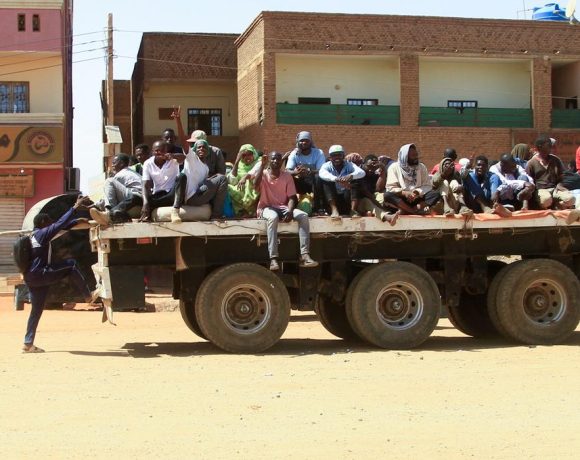
The Federal Government, on Monday, confirmed that some Nigerian students fleeing the conflict in Sudan were denied entry into Ethiopia, but stated that the situation was being handled.

The Federal Government said Nigerian authorities in Ethiopia were addressing the issue, as they had sought clearance for the fleeing students, stressing that it was, however, risky for the students to have embarked on such a journey.

This was as the United States Secretary of State, Antony Blinken, said on Tuesday that Sudan’s warring generals had agreed to a three-day ceasefire starting Tuesday (2200 GMT Monday), after previous bids to pause the conflict quickly disintegrated.

Following intense negotiation over the past 48 hours, the Sudanese Armed Forces and the Rapid Support Forces have agreed to implement a nationwide ceasefire starting at midnight on April 24, to last for 72 hours,” Blinken said in a statement two hours before the truce was to go into effect.

Blinken said the United States was also working with partners to set up a committee that would negotiate a permanent ceasefire in Sudan, where the conflict between rival generals descended into deadly violence 10 days ago.

Foreign countries rushed to evacuate their nationals from Sudan as deadly fighting raged into a second week between forces loyal to two rival generals.

More than 420 people have been killed and thousands wounded, according to UN figures, amid fears of wider turmoil and a humanitarian disaster in one of the world’s poorest nations.

The Director, Special Duties, National Emergency Management Agency, who doubles as the Chairman, NEMA’s Committee for the Evacuation of the Stranded Nigerians from Sudan, Dr Onimode Bandele, told newsmen that the students’ case was receiving the required attention.

 “The Nigerian Ambassador in Egypt, Nura Rimi, confirmed to me that the ambassador in Ethiopia is working on that, and hopefully they should be able to get a passage,” Bandele stated.

He, however, explained that “In our own humanitarian assignment, self-evacuation is at the risk of the person that is involved. If you decide to self-evacuate, whatever you meet is your headache, because you did not listen to the authorities that are supposed to cater for you.

“We empathise with them; we understand their situation; some of them are doing that out of panic or running to safety. But at the same time, self-evacuation has its own disadvantages.

“So, our appeal to Nigerians is that wherever they are, they should please wait for further instruction from the Federal Government, especially the ambassador that is with them in Sudan. He is there with his family too. It is not that he has run out and left them,” Bandele stated.

The NEMA official also said the Federal Government had considered using the services of the United Nations in evacuating Nigerians stranded in Sudan.

But this, according to him, did not work, because the UN said it could not support anyone now, due to the loss of five UN staff in Sudan.

Punch /Oluwayemisi Owonikoko

Subscribe to our Telegram and YouTube Channels also join our Whatsapp Update Group

Foreign

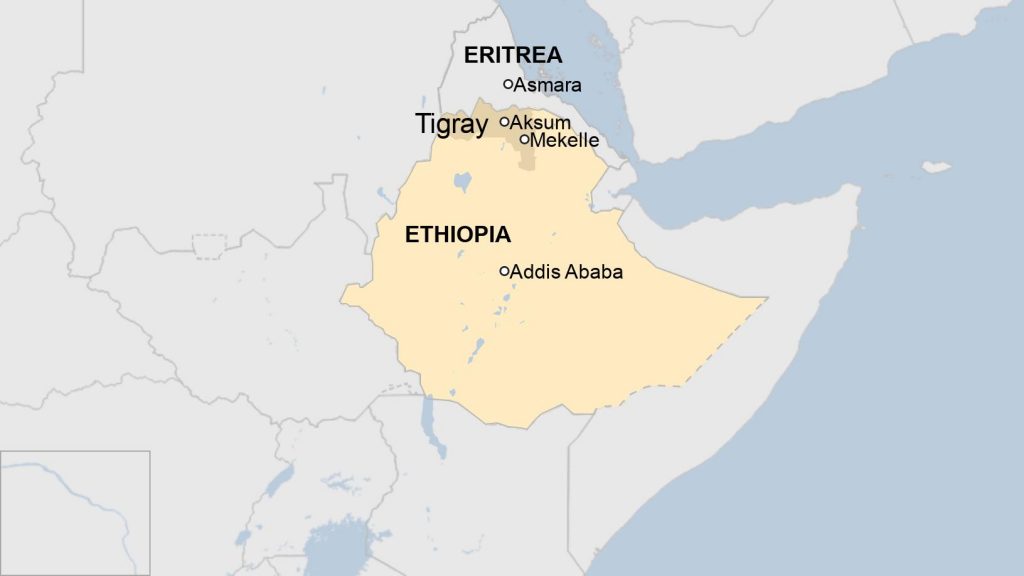
The European Union has said drone strikes in a major city in Tigray, northern Ethiopia, endanger “a very fragile hope” for peace.

The Tigray’s People Liberation Front blamed the Ethiopian government for the attack.

According to doctors in the city of Mekelle, at least 10 people were killed and 18 were left injured by drone strikes on Wednesday.

In a statement, the EU urged warring parties to waste no time to end the violence and find a negotiated permanent ceasefire but it also said that the role of Ethiopia’s northern neighbour, Eritrea, continues to impede peace efforts.

Tigrayan forces accuse Eritrea of supporting Ethiopian government troops in the recent fighting.

A top Tigrayan general said Eritrean and Ethiopian soldiers have controlled a Tigrayan border town – despite his fighters scoring battlefield victories on multiple other fronts.

Neither the Ethiopian nor Eritrean governments have commented on the claims.

BBC/Maxwell Oyekunle

Subscribe to our Telegram channel

Foreign

The Ethiopian government has appointed Dr Abraham Belay as chief executive of the interim administration of the northern Tigray regional state.

Dr Abraham is the current president of the ruling Prosperity Party (PP) and also serves as minister of innovation and technology.

He replaces Dr Mulu Nega, who took up the post on 15 November 2020 shortly after a military operation in the Tigray region to oust officials from the former ruling Tigray People’s Liberation Front (TPLF).

The TPLF has since been designated a terrorist organisation. Some of its key leaders and forces have been arrested, while others are said to be on the run as an insurgency persists in remote parts of Tigray.

Dr Abraham’s appointment comes as the federal government plans to launch an inclusive national dialogue to end the political and humanitarian crisis in the troubled region.

The authorities have also pledged to increase security and humanitarian access as allegations of attacks linked to federal and Eritrean forces continue to be reported.

News

Eritrea will withdraw troops from its border with Ethiopia almost five months after a conflict started in the Tigray region, Ethiopia’s prime minister has said.

The soldiers are there to back Ethiopia’s government as it fought a group that challenged the central government’s rule.

Thousands have died in the conflict, human rights groups say.

Eritrea has not confirmed the troop withdrawal.

The presence of Eritrean troops in Ethiopia was especially controversial because the two countries had fought a bitter border war, which was only officially ended after Abiy Ahmed became prime minister in 2018 – a move which earned him the Nobel Peace prize the following year.

The conflict began in November after the Tigray People’s Liberation Front (TPLF) captured military bases in the northern Ethiopian region.

The TPLF had been the ruling party in the area, but had a massive fall-out with Prime Minister Abiy over the future of Ethiopia’s ethnically based federal system and their role in government.

Following a trip to the Eritrea capital, Asmara, Mr Abiy wrote in a statement posed on Twitter: “Eritrea has agreed to withdraw its forces out of the Ethiopian border.” No date has been set.

It comes after he admitted this week for the first time that Eritrean troops were in the region, saying they feared they would be attacked by Tigray’s fighters.

The soldiers are accused of committing atrocities and Ethiopia is under growing international pressure including from the United Nations to end the conflict.

But the troop withdrawal is unlikely to end the fighting as the political dispute between Mr Abiy and the TPLF remains unresolved.

What has happened in Tigray?

Hundreds of thousands of people have fled their homes in Tigray over the last five months.

Despite the TPLF being ousted from power in Tigray at the end of November and Mr Abiy declaring that the conflict was over, fighting is continuing in parts of the region.

Rights groups allege Eritrean soldiers have committed atrocities in towns like Aksum, which include killing unarmed civilians, raping women and the widespread looting of public and private properties.

Eritrea has dismissed accusations of abuses – in particular those detailed in Aksum – as “preposterous” and “fabricated”.

Tigrayan forces also face accusations of human rights abuses

BBC


Lifestyle News

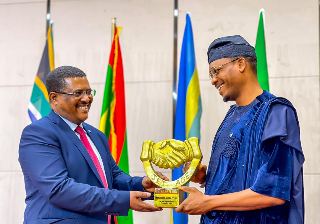
A member of the House of Representatives from Iseyin/Itesiwaju/Kajola/Iwajowa federal constituency, Oyo State, Shina Peller, was on Wednesday honoured in Ethiopia with Distinguished Personality Award by the Jet Age Nation Builders.
Peller, who was honoured in Addis-Ababa alongside other prominent African personalities like Dr. Akinwunmi A. Adesina, President of the African Development Bank, H.E Kiwutha Kibwana, Governor Makieni County (Kenya), Dr. Abdul B. Kamara (Ethiopia), Country Manager, African Development Bank, Ms. Aya Chebbi, African Union Special Convoy on Youth (Tunisia) and others, also delivered a paper on a topic – Defining Africa’s Future.
Whilst delivering his paper, Peller emphasized on the pivotal roles of the youth in building and consolidating on sustainable and transformational legacies for African continent, and added that in achieving this, African youths must be ready to deviate from all manners of entitlement to meaningful engagement.
The Iseyin-born federal legislator stated that youths are very vital to the survival and progress of Africa in all aspects and urged them to get involved in political processes by joining political parties to enable them have largest stake in governance.
“We are all familiar with the indices showing Africa’s enormous natural and human resources, though it presents a promise that is yet to be fulfilled. Regardless of these endowments, there are numerous challenges to positioning Africa in its rightful place, some of which include leadership, racism, xenophobia, institutional corruption etc.
“These socio-cultural elements have contributed to the slow turn of the African wheel of progress within and across her regions, requiring a rethink in our approach to governance and the outcomes which cascade from it. Due to this critical nature of government to nationhood and nation building, we must then guide and guard principles of leadership at all levels, as well as the dynamics of politics and politicking. This is because the effects of these activities have real and sometimes unexpected results. This underscores the importance of viable political participation and engagement by society’s most dominant groups.
“Youth therefore, holding the greater percentage of our population, are critical to the survival and progress of the African continent in all respects. Even the seeming “inexperience” of the youth provides an opportunity to free oneself from the boundaries of previous thinking in the pursuit of the future, charted by those with imagination, courage and relevant knowledge.
“This pivotal position requires a focus on the strategic importance of our “youth constituency” to build and consolidate on legacies that are sustainable and transformational. It then means that African Youths must deviate from all manners of entitlement to meaningful engagement.
“If you do not take anything away from what has been said here today, please note this down: As young Africans, joining a political party should be your top priority. And I will advise that you join the big political parties. I say this because power is not served a la carte. Yes, we are young people but that in itself is not a criterion to become a leader. We have to get involved in political processes. With our numbers, we should have the largest stake in governance.
“According to the African Leadership Institute report, we possess an abundance of Young African Leaders but no Seat at the Table. Approximately 700,000 young Africans have already been exposed to some form of selective leadership initiative. What we should focus on is how we can tap into this pool of creative young leaders.
“I say all this to make a simple but critical point: Whenever young people assume the position of influence, we should focus on building strong institutions for accountability, sustainability and educate people about the importance of broad engagements for success.”

Oluwakayode Banjo

News Analysis

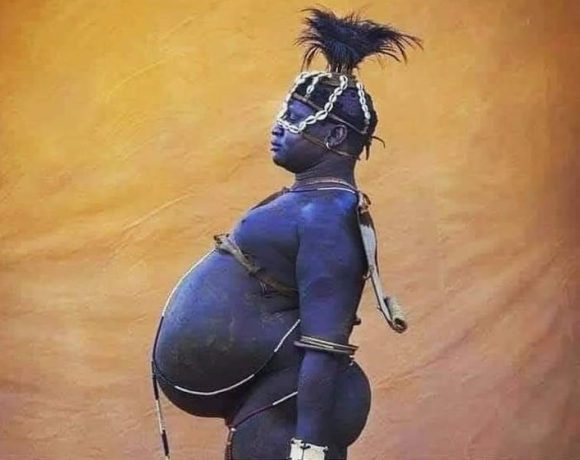
Ethiopian men compete to be the fattest in the village by drinking a gruesome mixture of blood and milk while living in isolation for six months

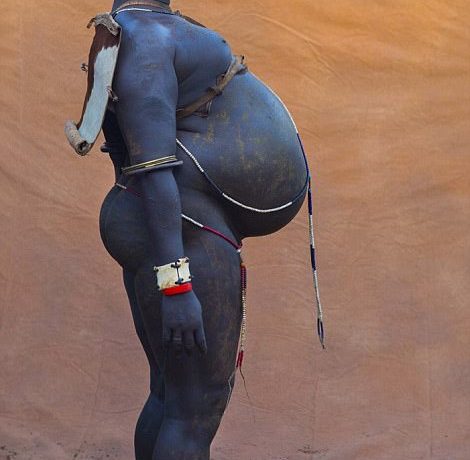
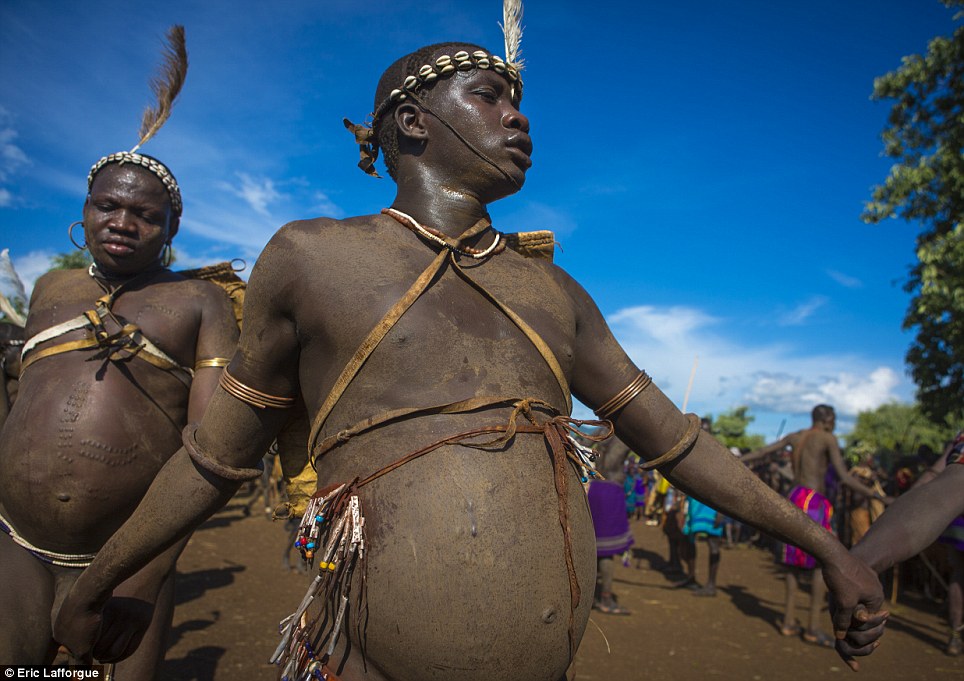
The tribe, which lives in a remote corner of Ethiopia’s Omo Valley, is home to an unusual ritual which sees young men gorge on cow’s blood and milk in a bid to be crowned the fattest man.

Six months after starting the regime, the men emerge to show off their newly engorged physiques and for a winner to be chosen. The champion fat man is then feted as a hero for the rest of his life.

The Winner is picked during a traditional rite called Bodi New Year or Ka’el Ceremony.

The contest begins six months before the ceremony.

Every family is allowed to present an unmarried man for the challenge, who, after being chosen, retires to his hut and must not move or have sex for the duration.

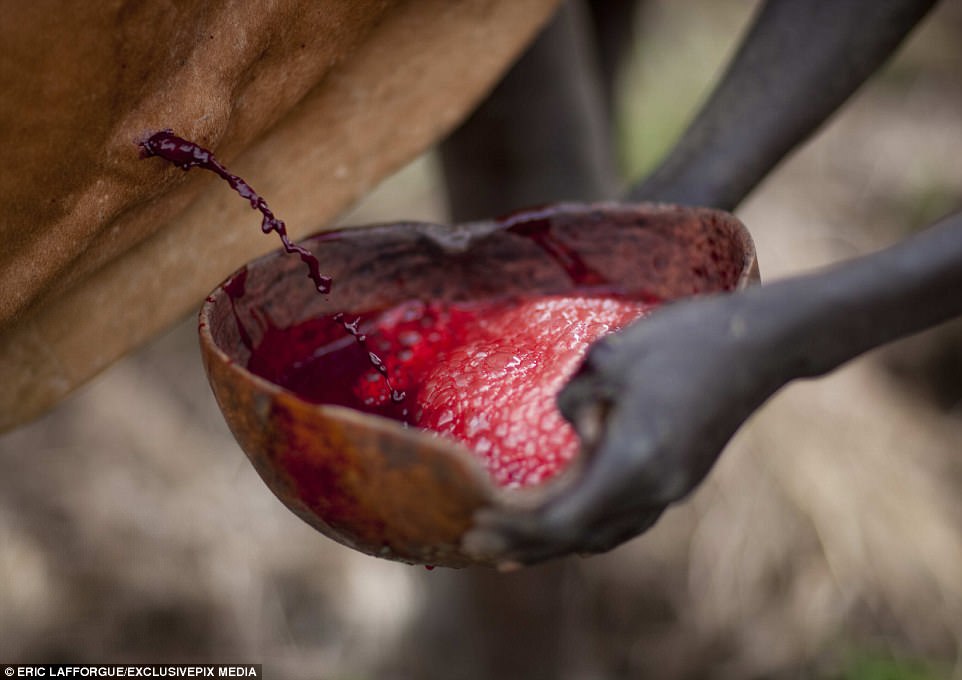
Food comes in the form of a cow’s blood and milk mixture, served regularly to the men by women from the village. ‘The cows are sacred to the Bodi tribe so they are not killed.

The blood is taken by making a hole in a vein with a spear or an axe, and after that, they close it with clay.’

Because of the scorching temperatures, the men have to drink the two-litre bowl of blood and milk quickly before it coagulates.

According to report the first bowl of blood is drunk at sunrise.

On the day itself, the men cover their bodies with clay and ashes before emerging from their huts for the walk to the spot where the ceremony will take place.

The ceremony itself involves spending hours walking in a circle around a sacred tree, watched by the other men and helped by the women who ply them with alcohol and wipe away the sweat.

Once the fattest man has been chosen, the ceremony ends with the slaughter of a cow using a huge sacred stone. Village elders will then inspect the stomach and the blood to see whether the future will be a bright one or not.

After the ceremony, the men’s lives return to normal and most lose their enormous bellies after a few weeks of eating sparingly. But a few weeks later, the next generation of competitively fat Bodi men will be chosen and another cycle will begin.

Report says becoming a fat man is the dream of every Bodi kid.

Few weeks after the ceremony he will recover a normal stomach but he will remain a hero for life.’

Sadly, the Ka’el ritual and the Bodi’s traditional way of life is under threat from the Ethiopian government who plan to resettle 300,000 people from all over the country on their lands.

For now, the tribe continue as they always have, and still celebrate Ka’el every June.

Titilayo Kupoliyi

Lifestyle

The People of Surma tribe are found in Southern Sudan as well as Southwestern Ethiopia.

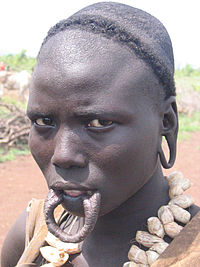
During teenage years, females undergo the lip stretching procedure which involves removing their lower teeth to accommodate a lip plate; the lip plate is increased in size yearly until it is an astounding size.

Some of the men do this similar exercise with their ears. They also indoctrinate their warriors known as ‘stick fighters’ by inflicting scars on them, the belief is that the more scars they have, the more attractive they are to female members of the tribe

Girl’s lower lip is cut (sometimes by her mother) when she reaches 15 or 16, and held open by a sodden plug until it heals. It’s up to the girls how far they want the lip to be stretched. The very painful process often takes over several months.

Lip plates are more frequently worn by unmarried girls and newlywed women than by older married women with children. They are generally worn on occasions such as serving men food, milking cows, and important rituals like weddings.

Single girls, especially those with large labrets, might wear them whenever they are in public. It’s expected that a boyfriend or husband will not sleep with his girlfriend or his bride until her lip has fully healed.

However, modern men are increasingly sleeping with their love interests even before they have pierced their lips.

The lip plate carries a number of meanings.

Firstly, it’s a symbol of great beauty.

Secondly, it marks a commitment to the husband because it is worn with great pride when serving him food.

If the husband dies, the lip plate is removed since a woman’s external beauty is said to fade after his death. Lastly, the plate is a powerful visual marker of Mursi identity.

Without it, they run the risk of being mistaken for a member of another tribe.

Titilayo Kupoliyi