Foreign

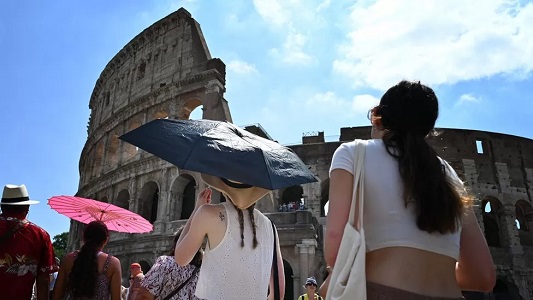
Southern Europe will continue to swelter next week as an intense heatwave shows no sign of abating.

Italy, Spain and Greece have been experiencing high temperatures for several days already.

The Italian health ministry issued a red alert for 16 cities including Rome, Bologna and Florence for the weekend.

The heatwave is expected to continue well into next week, with 48C (118.4F) possible in Sardinia, according to Italian media.

Such a temperature would, however, fall short of the European record high of 48.8C (119.8F) – which was recorded in Sicily in August 2021.

The Italian weather service said Sardinia would be at the “epicentre” of next week’s heatwave – which weather forecasters have dubbed Charon, after the ferryman who delivered souls into the underworld in Greek mythology.

“Temperatures will reach a peak between 19 and 23 July – not only in Italy but also in Greece, Turkey and the Balkans. Several local heat records within these areas may well be broken during those days,” Italian meteorologist and climate expert Giulio Betti told the BBC.

Italy’s government has advised anyone in the areas covered by Saturday’s red alerts to avoid direct sunlight between 11:00 and 18:00, and to take particular care of the elderly or vulnerable.

In Rome, tour guide Felicity Hinton, 59, told the BBC the soaring temperatures combined with overcrowding has made it “nightmarish” to navigate the city.

“It’s always hot in Rome but this has just been consistently hot for a lot longer than normal,” she said.

“My tour guide friends and I are extremely stressed out. People have been fainting on tours and there are ambulances outside everywhere.”

Rome resident Elena, 62 told the BBC that she has noticed a “marked change” in summer temperatures since around 2003, and that they have been growing exponentially since.

Meanwhile, Greece has hit temperatures of 40C (104F) or more in recent days. The Acropolis in Athens – the country’s most popular tourist attraction – was closed during the hottest hours of Friday and Saturday to protect visitors.

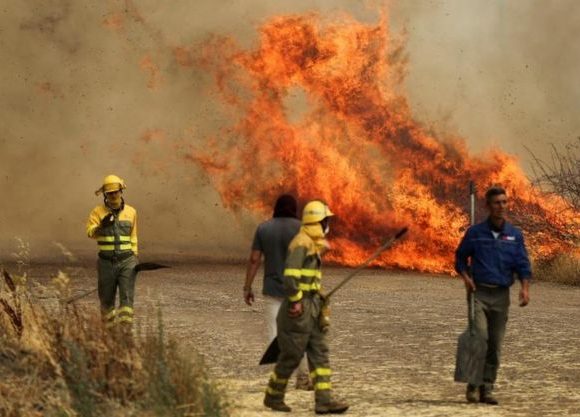
In Spain’s Canary Islands, a forest fire that broke out on La Palma on Saturday morning forced the evacuation of at least 4,000 people and has so far destroyed 4,500 hectares (11,000 acres) of land.

Fernando Clavijo, president of the Canary Islands regional government, said at least 12 houses had been destroyed and attributed the quick spread of the fire to “the wind, the climate conditions as well as the heatwave that we are living through”.

Periods of intense heat occur within natural weather patterns, but globally they are becoming more frequent, more intense and are lasting longer due to global warming.

“Heatwaves increase every year in number and intensity… and they are among the most tangible, evident, documented and clearly observable signs of climate change,” Mr Betti said.

“European summers have gotten much, much hotter in recent years… What should worry us is that summers without intense and prolonged heatwaves simply don’t exist anymore. ‘Normal’ summers have become a rarity.”

Last month was the hottest June on record, according to the EU’s climate monitoring service Copernicus.

BBC/Simeon Ugbodovon

Subscribe to our Telegram and YouTube Channels also join our Whatsapp Update Group

Foreign

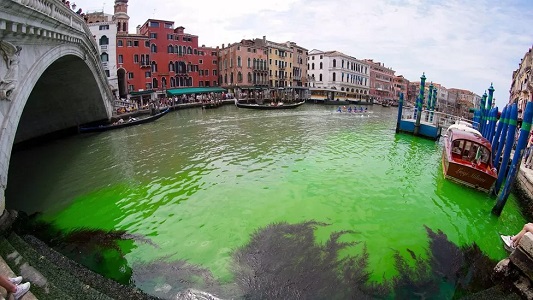
Venetians woke up on Sunday morning to an unusual sight as water in the city’s central waterway appeared to have turned fluorescent green.

Local authorities have collected water samples and opened an urgent investigation.

Speculation is rife as to what might have caused the water around the famous Rialto Bridge to change colour.

Theories range from the release of dye to a protest by environmental activists.

Italian media reported that local police were examining CCTV to determine whether the release might have been a stunt to coincide with the Volgalonga regatta taking place this weekend.

Many social media users said the images coming out of Venice were remindful of the 1968 stunt by Argentine artist Nicolás García Uriburu, who dyed the waters of the Grand Canal green in order to raise awareness of ecological issues.

BBC/Simeon Ugbodovon

Subscribe to our Telegram and YouTube Channels also join our Whatsapp

Health

Western Europe faces more sweltering temperatures on Tuesday as a ferocious heatwave heads north.

Report says, in France, and the UK, extreme heat warnings were issued while northern Spain recorded temperatures of 43C on Monday.

Wildfires in France, Portugal, Spain and Greece have forced thousands of people to evacuate their homes.

The UK is expected to see its hottest day ever and experts say parts of France face a “heat apocalypse”.

Several parts of France saw their hottest-ever days with the western city of Nantes recording 42C, the national weather office said.
Wildfires in recent days have forced more than 24,000 people to flee, with emergency shelters set up for evacuees.

Gironde, a popular tourist region in the southwest, has been hit particularly badly, with firefighters battling to control blazes which have destroyed over 15,000 hectares (37,066 acres) of land since last Tuesday.

“The idea that comes into my head is, it’s a monster,” Jean-Luc Gleyze, the president of the Gironde region said of the fires.

“It’s a monster like an octopus, and it’s growing and growing and growing in the front, in the back, on both sides. Because of the temperature, because of the wind, because of the lack of water in the air… it’s a monster and it’s very difficult to fight against it.”

The UK had one of its hottest days on record on Monday, with a high of 38.1C recorded in Suffolk, in eastern England. Forecasters say Tuesday could see a top of 40C, which would be the highest temperature ever recorded in the country.

There were severe travel disruptions with trains cancelled and flights at London’s Luton Airport suspended when part of the runway buckled under the searing heat.

On Monday, the Netherlands recorded its hottest day of the year so far. In the south-western town of Westdorpe, temperatures reached 33.6C.

And it is expected to be hotter on Tuesday, with temperatures forecast to top 39C in southern and central regions of the Netherlands.

Forecasters say the heatwave is heading north, with Belgium, Germany and Italy expected to see temperatures around 40C in the coming days.
In Spain and Portugal, more than 1,000 deaths have been attributed to the heat in recent days.

Temperatures in Portugal hit 47C on Thursday – a record for July. Most of the country has been placed under high fire danger by the national meteorological office IPMA.

Local media reports that 300 people from the northern Murça municipality have been evacuated due to the fire danger – authorities are anxious to avoid a repeat 2017, when 66 people were killed in wildfires.

BBC /Taiwo Akinola

Sport

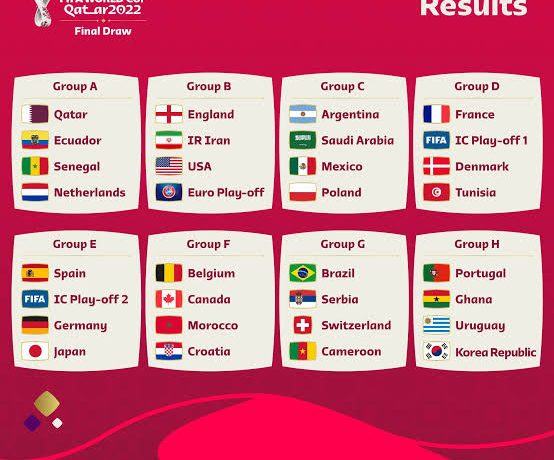
The 2022 World Cup will feature 32 teams in eight groups of four.

Four matches will be played each day during the group stage, which will run over a 12-day period and see winners and runners-up progress to the round of 16.

Matches will only be assigned to particular venues after the finals draw, so organisers can choose optimal kick-off times to suit television audiences in different countries, as well as supporters out in Qatar.

Unlike at Euro 2020, there will be a third-place play-off game on December 17.

Group stage: November 21 – December 2
Round of 16: December 3-6
Quarter-finals: December 9/10
Semi-finals: December 13/14
Final: December 18

Oluwakayode Banjo/Olaolu Fawole

Foreign

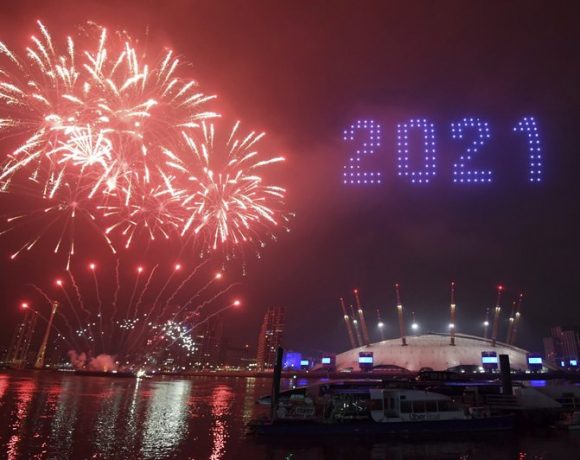
This New Year’s Eve is being celebrated like no other in most of the world, with many bidding farewell to a year they’d prefer to forget.

From the South Pacific to New York City, pandemic restrictions on open air gatherings saw people turning to made-for-TV fireworks displays or packing it in early since they could not toast the end of 2020 in the presence of friends or carousing strangers.

As midnight rolled from Asia to the Middle East, Europe, Africa and the Americas, the New Year’s experience mirrored national responses to the virus itself. Some countries and cities canceled or scaled back their festivities, while others without active outbreaks carried on like any other year.

Australia was among the first to ring in 2021. In past years, 1 million people crowded Sydney’s harbor to watch fireworks. This time, most watched on television as authorities urged residents to stay home to see the seven minutes of pyrotechnics that lit up the Sydney Harbor Bridge and its surroundings.

In New York’s Times Square, the ball dropped like always, but police fenced off the site synonymous with New Year’s Eve to prevent crowds of any size from gathering.

Another of the world’s most popular places to be on December 31, Dubai in the United Arab Emirates, pressed ahead with its revelry despite a surge of infections. Images of masked health care workers briefly lit up Burj Khalifa, the world’s tallest tower, before fireworks exploded in the sky over the building. Tens of thousands of people flooded the streets and squares marked out for social distancing were largely ignored.

Still, the pandemic robbed the night of its freewheeling spirit. Authorities implemented a raft of anti-virus measures to control rowdy crowds in downtown Dubai. At luxury bars and restaurants, music blared and people drank, but dancing was strictly prohibited.

The gleam of Las Vegas brought a similar crowd, with tens of thousands of people walking on the Strip by early evening despite a plea from the governor to avoid gatherings.

South Africans were also urged to cancel parties. Many instead lit candles as a way to honor health workers and people who have died in the COVID-19 pandemic.

In many European countries, authorities warned they were ready to clamp down on revelers breaching public health rules, including nightly curfews in France, Italy, Turkey, Latvia, the Czech Republic, and Greece.

“No one will be on the streets after 10 p.m. (Athens) will be a dead city to make sure no more restrictions are imposed,” said Greece’s public order minister, Michalis Chrisohoidis.

France’s government flooded the streets with 100,000 law enforcement officers to enforce the nationwide curfew.

A few families gathered in Madrid’s sunny central Puerta de Sol square to listen to the rehearsal of the traditional ringing of the bells that is held at midnight. They followed the Spanish custom of eating 12 grapes with each stroke of the bells before police cleared the area that normally hosts thousands of revelers.

“That’s it, life goes on. Despite what happened we have to celebrate,” said Cesar Pulido, 32, who celebrated in Madrid. “We have to eat the 12 grapes in order to ask 12 wishes like health, love, money, everything and good vibes.”

As the clock struck midnight, fireworks erupted over Moscow’s Red Square and the Acropolis in Athens, but the explosions echoed across largely empty streets as people obeyed orders to stay home.

From Berlin to Brussels, normally raucous celebrations were muted by the pandemic.

Even the British government, keen to celebrate the U.K.’s definitive split from the EU, ran ads imploring the public to “see in the New Year safely at home” amid a record number of newly confirmed cases. London’s annual New Year’s Eve fireworks display was canceled, but an unannounced display was broadcast before midnight, with tributes to health care workers, a reference to the Black Lives Matter movement and even a voice saying “you’re on mute” in reference to a bugbear of virtual work meetings.

In Scotland, residents normally mark the new year with parties and “first footing,” where a home’s first visitor of the year comes bearing gifts. The tradition is among the list of activities the government warned against.

“No gatherings, no house parties, no first-footing. Instead, we should bring in 2021 in our own homes with just our own households,” Scotland’s First Minister Nicola Sturgeon said.

Many around the world looked toward 2021 with hope, partly due to the arrival of vaccines that offer a chance of beating the pandemic.

“Although this was a very difficult year, a year of many losses, I’m grateful to be safe, to follow the rules, to do my part,” said Marilia Rafael, 33, who celebrated in Portugal, “and would like to ask that the next year may be better for all of us, may it be a year of hope, peace and love.”

More than 1.8 million deaths worldwide have been linked to the coronavirus since the start of the pandemic.

Some leaders, such as German Chancellor Angela Merkel, used their New Year’s address to thank citizens for enduring hardship during the lockdown and criticize those who defied the rules. Others, like Italy’s President Sergio Mattarella, flew the flag for science, urging citizens to discard their fears about getting immunized against COVID-19.

“Faced with an illness so highly contagious, which causes so many deaths, it’s necessary to protect one’s own health and it’s dutiful to protect those of the others – family members, friends, colleagues,”’ said Mattarella, 79.

In Brazil’s Rio de Janeiro, where official fireworks and celebrations also were canceled to limit the rapid spread of the virus, police officers braced for what promised to be a long night.

Rio officials decided to seal off Copacabana, where millions of people dressed in white usually gather on the beach to marvel at fireworks and attend large concerts. This year, between 8 p.m. and 6 a.m. on Jan. 1, only local residents will be able to access the city’s iconic shore, authorities said.

In South Korea, Seoul’s city government canceled its annual New Year’s Eve bell-ringing ceremony in the Jongno neighborhood for the first time since the event was first held in 1953, months after the end of the Korean War.

New Zealand, which is two hours ahead of Sydney, and several of its South Pacific island neighbors that also have no active COVID-19 cases held their usual New Year’s activities.

In Chinese societies, the virus ensured more muted celebrations of the solar New Year, which is less widely observed than the Lunar New Year that in 2021 will fall in February. Initial reports about a mystery respiratory illness sickening people in the Chinese city of Wuhan emerged exactly a year ago.

Associated Press