Foreign

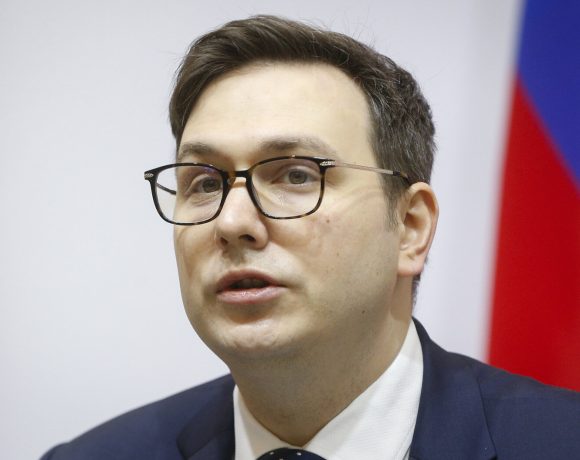
The European Union presidency has called for an international tribunal over Russia’s invasion of Ukraine.

The call, from the Czech Republic which currently holds the rotating presidency of the bloc, came after the discovery of hundreds of graves in Izyum, a town recently liberated by Ukrainian troops.

Many are said to be civilians, women and children among them.

We stand for the punishment of all war criminals,” Czech Foreign Minister Jan Lipavsky said.

Ukraine says it believes war crimes have been committed in Izyum, where 59 bodies have been exhumed so far – with more expected from the graves in a forest at the edge of the city.

In the 21st Century, such attacks against the civilian population are unthinkable and abhorrent,” Mr Lipavsky said.

“We must not overlook it. We stand for the punishment of all war criminals,” he said.

I call for the speedy establishment of a special international tribunal that will prosecute the crime of aggression.”

The discovery of the burial sites came as Ukrainian troops continue their counter-offensive in the country’s north-east, after successfully recapturing territory from Russia in recent days.

Russian President Vladimir Putin said on Friday that Ukrainian counter-offensives would not change Russia’s military plans in the east of Ukraine.

BBC/Maxwell Oyekunle

Subscribe to our Telegram channel
Foreign

The European Union is to release hundreds of millions of euros in aid to the Palestinians.

Months of delays had contributed to what the Palestinian Authority said was its worst financial crisis.

The hold-up was caused by concerns that Palestinian textbooks glorified violence and promoted anti-Semitism.

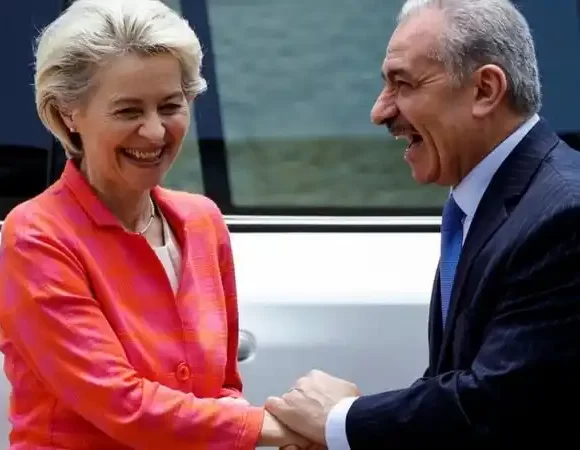
European Commission President Ursula von der Leyen announced that 2021 funds could be “disbursed rapidly” after she met Palestinian Authority officials.

“All the difficulties are gone,” she told a news conference in Ramallah, in the occupied West Bank, without mentioning whether she had asked for any changes to the textbooks

Palestinian Prime Minister Mohammed Shtayyeh thanked Europe for resuming the funding, which he said came “without conditions”.

The Palestinian Authority, which governs parts of the West Bank, is propped up by donor money.

The EU, along with European states and other institutions, have together been its biggest backer, giving about €600m ($627m; £519m) a year.

But since 2020 a large portion of the EU’s funding – valued at about €215m – has not been handed over because of officials’ concerns over Palestinian textbooks.

The European Commissioner for Neighbourhood and Enlargement, Olivér Várhelyi, said last July that the assistance should be conditional on the PA ensuring that all educational materials adhered fully to Unesco standards of peace, tolerance, coexistence and non-violence.

The funding crisis has left the PA unable to pay full salaries for teachers, firefighters and doctors, and has prevented some Palestinians from getting essential medical care.

Ms von der Leyen said the EU was working to support the Palestinian people, especially the most vulnerable, and that it would mobilise €25m to improve food security in the Palestinian territories, which are heavily dependent on imports of cereals from war-torn Ukraine.

Earlier on Tuesday, she promised in a speech at a university in southern Israel to put “the fight against anti-Semitism and fostering Jewish life in Europe at the core of the European Commission’s agenda”.

“Anti-Semitism has not disappeared. It still poisons our societies. And anti-Semitic attacks happen today in Europe. It is a new threat, but it is the same old evil. Every new generation must take responsibility so that the past does not return,” she said.

She also said the EU wanted to step up energy co-operation with Israel in response to Russia’s use of fossil fuels to “blackmail us” over Ukraine.

BBC/Simeon Ugbodovon

Education

The Federal Government in collaboration with the European Union has introduced an Accelerated Basic Education Programme to allow disadvantaged children between 10 and 18 years have access to basic education, thus reducing the number of out of school children.

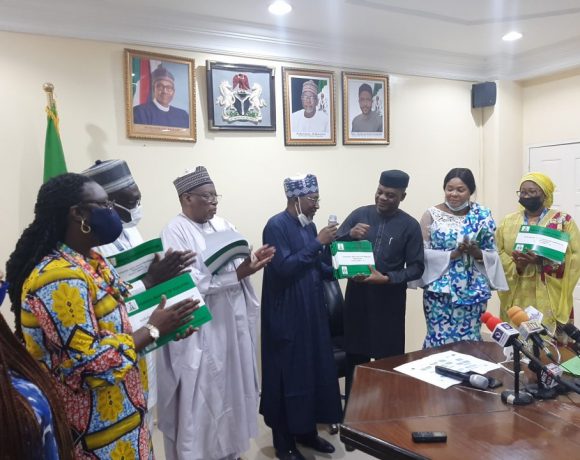
The Executive Secretary, Nigerian Educational Research and Development Council (NERDC), Professor Ismail Junaidu, at the presentation of the curriculum to the minister of Education, Mallam Adamu Adamu in Abuja in said the initiative was flexible and free for enrolment

He explained that it would also provide recipients with equivalent, certified competences for basic education using effective teaching and learning approaches that match cognitive maturity

He affirmed that It has pathways to mainstreaming learners into various levels of schooling based on proper profiling and effective instruction.

According to professor Junaidu, “Piloting of the programme began immediately in 54 centres in Borno State with over 8,000 learners enrolled, Preliminary result from the piloting shows that the programme is indeed a way out from the menace of out-of-school children and youth in Nigeria’’

The Interim Country Director, Plan International Nigeria, Mr Robert Komakech said the goal of the European Union was to increase access, to safe, quality and inclusive education opportunities both formal and non-formal for conflict-affected children, adolescent and youth.

He said the Plan-lead consortium signed a Memorandum of Understanding for the development of a National Curriculum to carter for the educational needs of school dropouts.

The Minister of Education, represented by the Permanent Secretary, Mr Sonny Echono said all stakeholders would be carried along to ensure successful implementation of the Accelerated Basic Education Programme

The Executive secretary of the Universal Basic Education Commission, Dr Dr Hamid Bobboyi noted that they would work with states SUBEBS to implement the programme in states.

FRCN Abuja

Economy

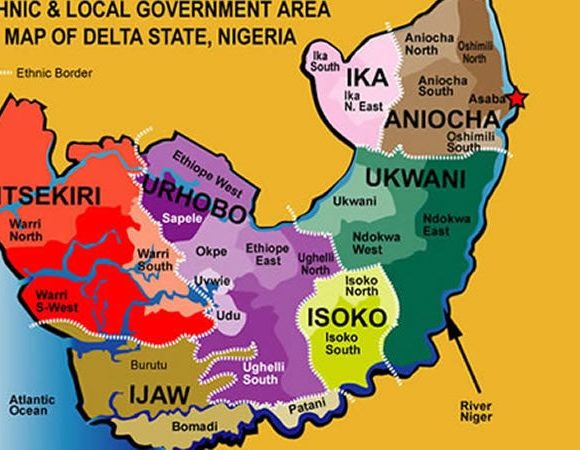
The beneficiaries of European Union and the World Bank assisted State Expenditure and Employment for Results Project SEEFOR in Delta State say, the interventionist programs has led to a boost in admission in schools and other developmental initiatives in the area.

They made this known during a media tour of community based projects embarked upon by SEEFOR in collaboration with various community unions across Delta Central Senatorial district of the state.

Oghenero Eghweree completes the report.

Environment

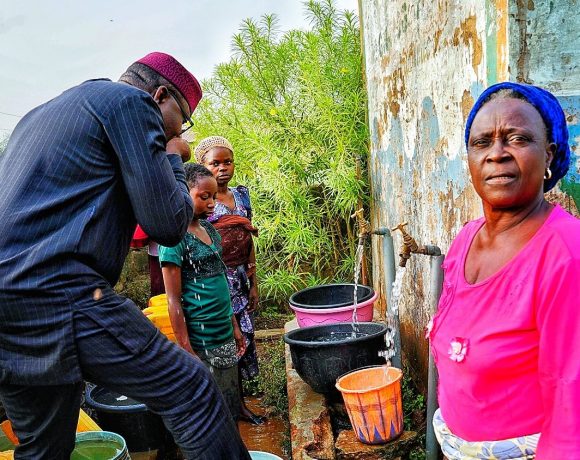
The European Union has concluded arrangement to partner Ekiti State government to improve citizens’ access to potable water with affordable and sustainable commercialisation policy in the Water Sanitation and Hygiene Sector.

Policy Expert of European Union in Ekiti State, Mr. Alaba Ogunsajo, stated this at a forum for stakeholders in the Water, Sanitation, and Hygiene (WASH) sector on commercialization and regularization of water services in the state.

Radio Nigeria’s Tope Bamidele has the rest of the story.

Tope Bamidele

Foreign

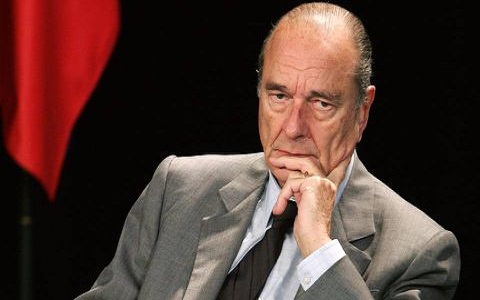
Former French president, who championed the country’s decision to join the European Union, Jacques Chirac, has died aged 86.

His son in law told newsmen that “President Jacques Chirac died peacefully this morning (Thursday) surrounded by his family”.

Chirac served two terms as president, one as prime minister, and took France into the single European currency but his later years were blighted by corruption scandals.

The French National Assembly observed a minute’s silence in his memory.

In a statement, president of the European Commission and former Luxembourg prime minister, Jean-Claude Juncker, said he was “moved and devastated” to learn the news.

Mr. Juncker said further that “Europe is not only losing a great statesman, but the president is losing a great friend”.

President Emmanuel Macron was expected to speak on television later today to pay tribute to his late predecessor.

Former French President François Hollande also paid homage to Mr Chirac: “I know that today, the French people, whatever their convictions, have just lost a friend,” he said in a statement.

French television stations are playing wall-to-wall tributes, and it is moving to be taken back once again to that long epoch in French history when Jacques Chirac was at the centre of it all.

Chirac was born in 1932, the son of a bank manager.

He served as head of state from 1995 to 2007 – making him France’s second longest serving post-war president after his Socialist predecessor Francois Mitterrand but his health steadily deteriorated after he stepped down until his death on Thursday.

Chirac also served as the French prime minister, but he was beset by a series of corruption scandals.

In 2011, he was convicted of diverting public funds while serving as the mayor of Paris.

Despite his failings, he won widespread support for his fierce opposition to French involvement in the Iraq War, and for being the first leader to recognise France’s role in the war-time deportation of Jews.

Among his major domestic political reforms was a reduction of the presidential term of office from seven to five years, and the abolition of compulsory military service.

In 2005, he suffered a stroke, and in 2014, his wife Bernadette said he would no longer speak in public, noting he had memory trouble.

BBC