Education

By Patience Olumati (Abuja)

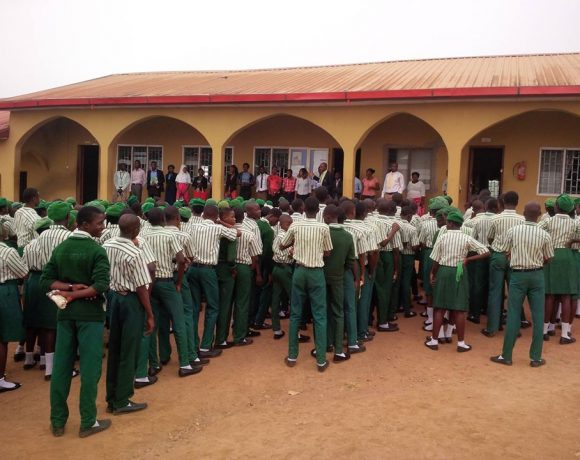
The Federal Government has prohibited the admission and transfer of students into Senior Secondary School Three (SS3) in all public and private secondary schools across the country.

The directive follows concerns over the rising incidence of examination malpractice, including the use of so-called special centres during external examinations, which authorities say undermine the credibility of Nigeria’s education system.

According to a statement issued by Director of Press and Public Relations at the Federal Ministry of Education Mrs. Folasade Boriowo, the policy will take effect from the 2026/2027 academic session.

Under the new directive, student admissions and transfers will be restricted strictly to Senior Secondary School One (SS1) and Senior Secondary School Two (SS2).

The ministry stated that admission or transfer into SS3 will no longer be permitted under any circumstance.

It explained that the policy aims to curb last-minute movement of students for examination advantages, ensure effective academic monitoring, and promote continuity in teaching and learning.

The Federal Ministry of Education directed school proprietors, principals and administrators nationwide to comply fully with the policy, warning that violations will attract sanctions in line with existing education regulations.

The ministry reaffirmed the Federal Government’s commitment to upholding academic standards, promoting fairness and restoring integrity to public examinations across the country.

Edited by Taiwo Akinola

Follow us on Telegram and YouTube, and join our WhatsApp Update Group for more news updates.
Education

The Federal Ministry of Education says it has not issued any directive for schools across the country to shut down on November 24, 2025.

In a statement on Saturday, the ministry described a report circulating on social media alleging a nationwide shutdown as false and misleading.

It noted that it did not originate from the Federal Government, the Federal Ministry of Education, any State Ministry of Education, or any recognised security agency.

The disclaimer, signed by the ministry’s spokesperson, Folasade Boriowo, urged members of the public to rely strictly on verified information from official channels.

“Any announcement, advisory, or notice coming from unofficial or unverified sources should be ignored and not shared. Members of the public are urged to always verify the authenticity of information before circulating it in order to curb the spread of misinformation,” the statement read.

The ministry stated that only communications from the Federal Government, the Federal Ministry of Education, State Governments, and recognised security agencies should be considered authentic.

The clarification follows the Federal Government’s announcement on Friday ordering the closure of 41 federal secondary schools in high-risk areas following a spate of abductions in Niger and Kebbi States.

According to reports some states, including Kwara, Plateau, Katsina, and Niger, shut down schools amid rising insecurity, while Taraba State Governor, Agbu Kefas, also directed all public and private schools to deboard their students with immediate effect.

Punch/Adebukola Aluko

Education

The National Commission for Colleges of Education, NCCE, has uncovered and shut down 22 illegal Colleges of Education.

The discovery was made during a crackdown on illegal colleges of education in the country.

“The NCCE identified and shut down 22 illegal Colleges of Education operating across the country.

“The NCCE conducted personnel audit, financial monitoring in all the 21 federal colleges of education,” the commission said.

President Bola Tinubu had recently urged the National Universities Commission, the National Board for Technical Education and the National Commission for Colleges of Education to weed out illegal higher institutions of learning in the country.

Speaking at the 14th convocation of the National Open University of Nigeria in Abuja, the president ordered the NUC, the NBTE, and other relevant agencies to take decisive action against what he described as “certificate millers” who undermine the credibility of the education sector.

Tinubu, who was represented by the Director of University Education at the Federal Ministry of Education, Rakiya Ilyasu, warned that the integrity of the academic system must not be compromised.

At this juncture, it has become imperative to reiterate that this administration remains committed to strengthening the integration of all agencies involved in the administration of education to enhance efficiency and quality,” the President said.

He added, “The National Youth Service Corps, the Joint Admissions and Matriculation Board, the National Universities Commission, the National Board for Technical Education and the National Commission for Colleges of Education  are working in alignment to improve the quality of education and ensure that cases of forgery and unrecognised institutions both within and outside the country have no place in our education ecosystem.”

Punch/Oluwayemisi Owonikoko

Subscribe to our Telegram and YouTube Channels, and also join our WhatsApp Update Group.

Education

For Nigerian universities to compete with their counterparts in the world, there is the need for the universities to have academic, administrative and financial autonomy.

The pro-chancellor and chairman of council, Osun State University, Professor Yusuf Ali stated this while delivering a lecture marking the 80th birthday anniversary of Emeritus Professor Michael Omolewa held in Ibadan.

Professor Ali, who is also a Senior Advocate of Nigeria, SAN, explained that the advancement of the Nigerian universities was being constrained by inherent weaknesses in appointment, the nature of Nigerian laws, tribalism and ethnicity, multiplicity of regulators, professionalization of unionism, and lack of academic culture among others.

Representatives of the Federal Ministry of Education, Professor Abba Abubakar, Head of Department of Adult Education, University of Ibadan, Professor Kester Ojokheta and former Executive Secretary, National Commission for Nomadic Education, Professor Rashid Aderinoye described Professor Micheal Omolewa as a seasoned lecturer who had impacted many adult education and literacy experts in Nigeria.

 In an interview, the celebrant, Professor Micheal Omolewa who was a former permanent delegate and ambassador of Nigeria to UNESCO from January 2000 to August 2009, expressed gratitude to God for his achievement attaining 80 years.

Professor Omolewa was a pioneer of adult education and literacy not only in the University of Ibadan but also in Africa.

He was also a deputy chair of the governing board of the Commonwealth of Learning in Vancouver, British Columbia, Canada.

Rotimi Famakin

Education

Secondary schools in the country are to reopen as from the 4th of August, 2020 for exit classes only.

Students will have two weeks within which to prepare for the West African Examinations Council, WAEC, due to start on the 17th of August, 2020. 

These were the unanimous decisions reached today at a virtual consultative meeting between the Federal Ministry of Education, Commissioners of Education of the 36 states, the Nigerian Union of Teachers, (NUT), the proprietors of private schools, and Chief Executives of examination bodies. 

A statement by the Director, Press and Public Relations of the Federal Ministry of Education, Mr Ben Bem Goong says meeting agreed that the exit classes should resume immediately after the Sallah break, from the 4th of August, 2020 to enable them to prepare for the WAEC examinations scheduled to commence from the 17th of August, 2020. 

According to the statement, the meeting also resolved that a passionate appeal be made to the Federal Government through the Presidential Task Force on Covid-19 and public-spirited Nigerians for assistance to schools across the country to enable them fast-track the preparations safe reopening, as agreed. 

The statement notes that another meeting is to be convened on Tuesday between the Federal Ministry of Education and Chief Executives of examination bodies namely, NECO, NABTEB and NBAIS to harmonise their examination dates, which will be conveyed to stakeholders expeditiously by the Federal Ministry of Education.

Daniel

News Analysis

As schools resume for another academic session, it is important for them to put in place necessary safety measures as stipulated by the Federal Ministry of Education.

The federal government last week approved what it called “Safe reopening of schools nationwide” as part of the next phase of the gradual easing of lockdown ordered to curtail further spread of Covid-19.

Though, only graduating students in primary 6, junior secondary school 3 and senior secondary school 3 will resume, higher institutions, daycare centres and other classes in primary and secondary schools, apart from final classes, will remain closed until further evaluation.

Chairman of the Presidential Task Force on Covid-19, Mr. Boss Mustapha, disclosed these at the daily briefing of the task force in Abuja.

Mr Mustapha said the reopening of schools was meant to allow pupils in graduating classes resume preparation for examinations.

However, the Federal Ministry of Education had issued guidelines for reopening which include use of distant learning centres and temporary shelters, disinfection and fumigation of facilities including hostel accommodation, with particular attention on those used as temporary isolation and treatment centres as well as use of infrared thermometers for temperature check.

It also wants schools to sensitise, train and build the capacity of teachers, administrators, and other education personnel to effectively use and comply with the school Covid-19 referral system and protocols for safe distancing and hygiene in schools.

The government has also lifted the ban placed on interstate travels with effect from July 1, provided such journeys are made outside curfew hours.

Chairman of the Presidential Task Force, P.T.F, on Covid-19 said President Muhammadu Buhari approved the extension of the Phase II of the lockdown by another four weeks with effect from Tuesday, June 30, 2020 through midnight of Monday, 27 July, 2020.

Similarly, Presidential Task Force Coordinator, Dr Sani Aliyu pointed out that the government had approved the safe resumption of domestic flights in the country and domestic aviation services while restrictions on mass gatherings and sporting activities remains.

While stressing that transporters must adhere to guidelines that will be released by the Federal Ministry of Transportation, passengers must maintain physical distancing, as well as temperature checks.

Dr. Aliyu added that state governments would inspect facilities and confirm compliance as a pre-condition for resumption of interstate operations by transporters.

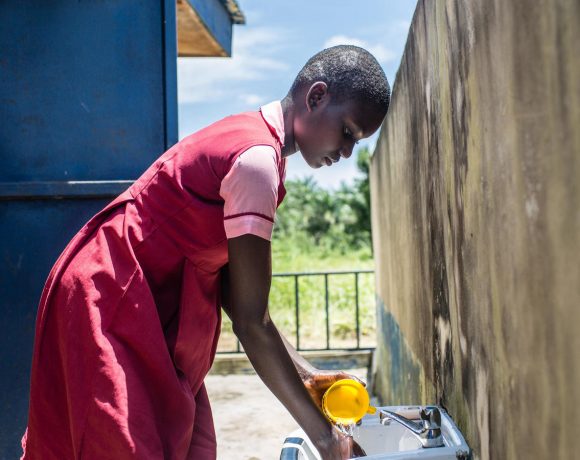
As some students resume, it is of utmost importance that schools adhere strictly to the Covid-19 protocols of providing running water with soap, hand sanitizers, physical distancing and regular nose covering.

Parents should ensure they pay attention to the health of their children while at home by providing them with nose masks, hand sanitizers and regular hand-washing under running water.

Titilayo Kupoliyi