Foreign

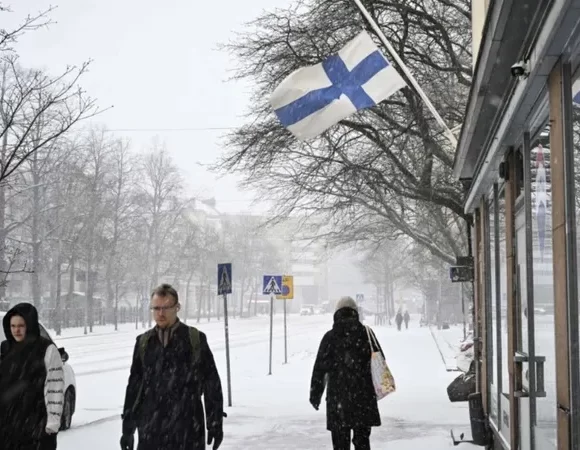
Flags have been flying at half-mast across Finland after a boy was killed and two girls seriously wounded in a shooting at a school on Tuesday.

The shooting took place in a classroom at Viertola school in Vantaa, to the north of the capital, Helsinki.

According to Police said all three victims were 12 and that a suspect, also aged 12, had fled after the shooting but was later detained.

One of the wounded girls has dual Finnish-Kosovan nationality.

All public buildings lowered their flags from 08:00 to 5:00 GMT, on Wednesday to mark a day of mourning, the interior ministry said.

According to Finnish TV channel MTV Uutiset, the boy wore a mask and noise-cancelling headphones while carrying out the shooting.

He ran off as soon as police arrived and was eventually detained “in a calm manner” in the northern Siltamaki district of Helsinki.

Police have opened a murder investigation and attempted murder. In a statement, they said both wounded girls were still in hospital but gave no details of their condition.

They said they were looking into a possible motive but would not yet be releasing details. Public broadcaster YLE reported that the boy had been the victim of bullying.

“There is a lot of different, and partly incorrect, information about what happened in the different channels of social media. The police still want to remind you that spreading incorrect information on social media is a crime,” the police statement said.

Viertola school has 800 students aged seven to 16 of both primary and middle school age on two separate sites, with some 90 staff.

The school was open on Wednesday, but Katri Kalske, the deputy mayor of Vantaa, said that it would close earlier than usual.

She told the AFP news agency that, extensive support has been offered to pupils and staff, and that the shooting would be discussed in all schools in the city in an “age-appropriate manner”.

BBC/Taiwo Akinola

Foreign

Swedish authorities say people who got trapped in 1,000 vehicles in heavy snow for more than 24 hours have been evacuated.

Rescuers worked through the night to free people stuck on the main E22 road in the Skane Area of southern Sweden.

Many of those trapped were evacuated by rescue teams and told to return to their cars later.

The travel chaos occurred amid plummeting winter temperatures across the Nordic countries.

Extreme cold weather has hit parts of Sweden, Finland and Norway, and snow storms in Denmark have left drivers trapped on a motorway near Aarhus since Wednesday.

The Kvikkjokk-Arrenjarka weather station in northern Sweden recorded its coldest night for 25 years on Tuesday night, with temperatures dropping to -43.6C.

Rescuers said all people travelling by car had been evacuated and only lorry drivers remained in their vehicles by Thursday morning.

Rescue teams began clearing cars from the snowbound E22 but many of the lorries were expected to remain on the road until Friday.

Buses and trains were cancelled in the Skane region on Thursday morning and authorities urged people to avoid unessential travel.

BBC/Maxwell Oyekunle

Subscribe to our Telegram and YouTube Channels and also join our Whatsapp Update Group

Foreign

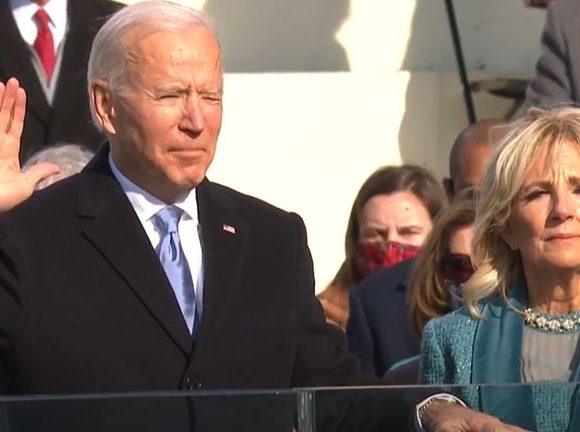
The US President, Joe Biden, says, Sweden and Finland have the full total backing of the country in their decision to apply for Nato membership.

Report says, both countries submitted their applications to be part of the Western defence alliance this week, marking a major shift in European geopolitics.

To join the alliance, the two nations need the support of all 30 Nato member states.

But the move by the Nordic nations has been opposed by Turkey.

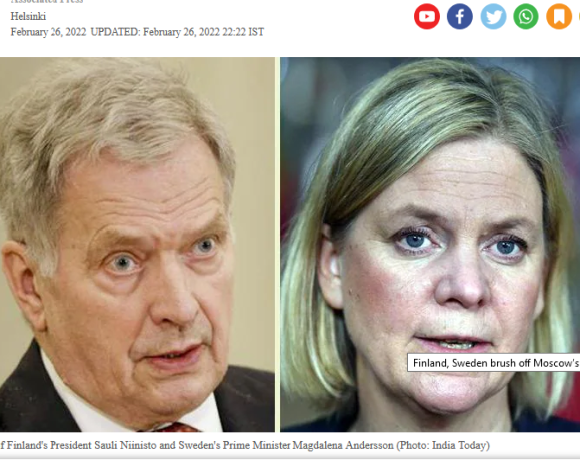
Speaking alongside Swedish Prime Minister Magdalena Andersson and Finnish Prime Minister Sauli Niinisto at the White House on Thursday, Mr Biden called Sweden and Finland’s applications “a watershed moment in European security”.

New members joining Nato is not a threat to any nation,” he said. The president added that having two new members in the “high north” would “enhance the security of our allies and deepen our security co-operation across the board”.

Russia has repeatedly said it sees Nato as a threat and has warned of “consequences” if the block proceeds with its expansion plans.

Turkey has accused both Sweden and Finland of hosting suspected militants from the Kurdistan Workers’ Party, a group it views as a terrorist organisation.

However, both Nato Secretary-General Jens Stoltenberg and British Defence Minister Ben Wallace have expressed confidence that these concerns will eventually be addressed.

Mr Biden’s comments came as the US Senate voted to approve a new $40bn (£32bn) bill to provide military and humanitarian aid to Ukraine. It is the biggest emergency aid package so far for Ukraine.

The bill – which was passed by the House of Representatives with broad bipartisan support on 10 May – was expected to be passed earlier this week, but was blocked by Kentucky Republican Rand Paul over a dispute about spending oversight.

But the Republican’s Senate leader Mitch McConnell dismissed these concerns and told reporters that Congress had a “moral responsibility” to support “a sovereign democracy’s self-defence”.

“Anyone concerned about the cost of supporting a Ukrainian victory should consider the much larger cost should Ukraine lose,” Mr McConnell said

It would be recalled that, Defence Secretary Lloyd Austin and Secretary of State Antony Blinken urged Congress to approve the package and warned that the US military only had enough funds to send weapons to Kyiv until 19 May.

Ukraine’s President Volodymyr Zelensky praised the aid package as “a significant US contribution to the restoration of peace and security in Ukraine, Europe and the world”.

The package brings the total US aid delivered to Ukraine to more than $50bn, including $6bn for security assistance such as training, equipment, weapons and support.

Another $8.7bn will be allocated to replenish stocks of US equipment already sent to Ukraine.

BBC /Taiwo Akinola

News Analysis

After four years, the staccato of guns and booms of cannon ceased giving the world relief from a brutal war, World War 1 between 1914 and 1918, which left some 8.5 million soldiers dead as a result of battle wounds or disease.

 The world would be swarmed by another apocalypse twenty-one years later, World War 2 with far more casualties – 70–85 million or about 3% of the 2.3 billion world figure in 1940.

As usual, Europe was the epicentre of the six years bloodbath, which echoed beyond the continent between 1939 and 1945, sucking in soldiers from colonies under the United Kingdom, France, Italy and Germany.

Of a total of 8,586,000 raised for the war, more than 5 million came from the British Isles: 1,440,500 from India, 629,000 from Canada, 413,000 from Australia, 136,000 from South Africa, 128,500 from New Zealand and more than 134,000 from other colonies.

France, Italy and Belgium also drafted in hands from their colonies to combat the Axis Power.

And when the pestilence abated, East-West poles surfaced in 1947 on ideological divides for a lengthy Cold War, with countries strung to aprons of the major powers, the United States and the Soviet Union, streaking down to 1991 after the collapse of the latter.

Thirty-one years on, the glacier is back with ECHOES of its bergs reverberating again across the world – war again springs up in Europe: Vladimir Putin has invaded Ukraine in angst at the expansion of NATO close to Russia’s borders.

Stephen King, a renowned novelist once said in relation to the horrors of 9/11 “After the 9/11 apocalypse happened in New York City, people, particularly New Yorkers, who breathed in the ash, or saw the results of that, have a tendency to keep seeing ECHOES and having flashbacks to it.”

The current blitz on Ukraine by Putin’s war machines has ECHOED a rethink in Finland and Sweden, countries which erstwhile had neutral posture to the East-West power blocks.

CNN, citing NATO sources, said discussions about Sweden and Finland membership had gotten extremely serious since Russia’s invasion, and US Senior State Department officials said the matter came up at NATO foreign ministerial attended by the foreign ministers from Stockholm and Helsinki.

The move by Stockholm and Helsinki ECHOES the concern of their citizens: one former Finnish Prime Minister in a chat with CNN said the move to join NATO “was pretty much a done deal on the 24th of February when Russia invaded.”

According to the Financial Times, a poll for Finland’s state broadcaster, Yle, showed 53 per cent of Finns supported joining NATO, 28 per cent were against and 19 per cent did not know. The last time Yle conducted such a poll in 2017, only 19 per cent were in favour of joining while 53 per cent were against it.

A poll in Sweden also revealed that six of ten Swedes backed joining NATO if Finland does, The Local reports.

Moscow has threatened retaliatory measures should Washington and some of its allies “drag” Finland and Sweden into the North Atlantic Treaty Organization.

The development in Finland and Sweden is an example of how respect for public opinion play a role in how leaders steer the ship of state, indicating that the voices of the people matter.

Unfortunately, this is not often the case in most African countries and others in Asia where policies do not reflect the pulse of citizens.

Dissension is also considered criminal with the apparatus of the state set loose to hound ‘recalcitrant’ critics.

Former US president, Barrack Obama, once said “Nothing can stand in the way of the power of millions of voices calling for change.”

There is a need for a change in the status quo in parts of the world where public opinion continued to be stifled, while the public should never allow itself to be cowered into silence.

“Never be afraid to raise your voice for honesty and truth and compassion against injustice and lying and greed. If people all over the world…would do this, it would change the earth,” said William Faulkner, a novelist and poet.

Simeon Ugbodovon
Foreign

Finland’s new government has announced plans to give all parents the same parental leave, in a push to get fathers to spend more time with their children.

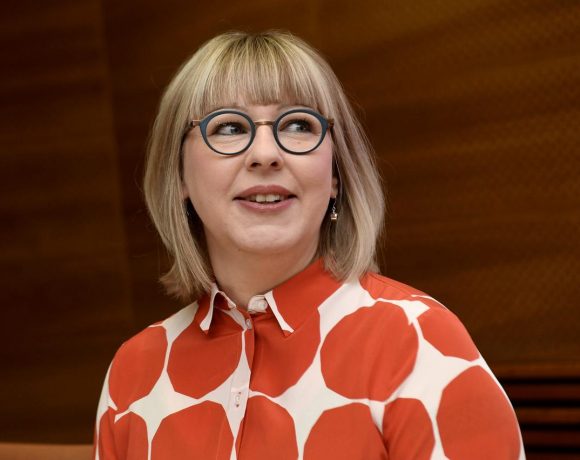
The country’s Health and social affairs minister Aino-Kaisa Pekonen told reporters that “a radical reform of family benefits” had begun, with the aim of strengthening the relationship of parents from the start.

Ms. Pekonen said Finland wants to “promote well-being and gender equality”.

Paid allowance will increase to a combined 14 months, which works out as 164 days per parent.

Neighbouring Sweden has Europe’s most generous system of parental leave with 240 days each after a baby’s birth.

Under the current system in Finland, maternity leave is 4.2 months, while fathers are given 2.2 months until the child turns two. On top of that, another six months’ parental leave can be shared.

However, on average only one in four fathers take what they are given. The current plans now talk only of parental leave.

Each parent would receive 6.6 months’ leave (164 days under Finland’s six-day-week benefit system) and pregnant women would get an additional month’s allowance.

Parents would be allowed to transfer 69 days of their quota. Single parents would be allowed to use both allowances.

Finnish Prime Minister Sanna Marin said last month that her country still had some way to go to achieve gender equality, and complained that too few fathers were spending time with their children when they were young.

Culled from BBC.com