Foreign

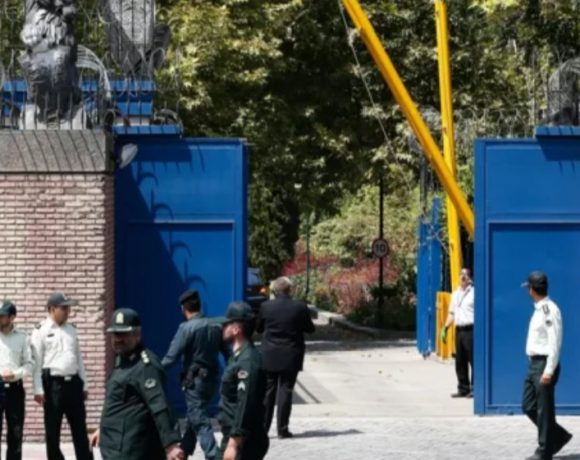
The United Kingdom has temporarily withdrawn staff from its embassy in Tehran amid rising tensions over the prospect of US military strikes against Iran, prompting several countries to warn their citizens in the Middle East.


The UK Foreign Office described the move as a “precautionary measure,” adding that the embassy in Iran’s capital would continue to operate remotely. It also updated its travel advisory, urging against “all but essential travel” to Israel.


Meanwhile, the United States Embassy in Israel told some non-emergency staff and their families on Friday that they could leave the country.


The developments come a day after officials from United States and Iran held talks widely seen as a last-ditch effort to avert conflict over Tehran’s nuclear programme.


Several other countries, including China, India and Canada, have advised their citizens to leave Iran as soon as possible due to the risk of hostilities.


President Donald Trump has threatened military action if Tehran fails to reach an agreement on its nuclear ambitions. He has ordered what officials describe as the largest US military build-up in the region since the US-led invasion of Iraq in 2003, while Iran has vowed to respond forcefully to any attack.


On Friday, US Ambassador to Israel Mike Huckabee advised embassy staff who wished to leave Israel to “do so as soon as possible.”


In an email, he reportedly said there was “no need to panic,” but stressed that those intending to depart should make arrangements “sooner rather than later.” A statement on the embassy’s website added that staff “may wish to consider leaving Israel while commercial flights are available.”


The move followed a recent decision by the US government to order all non-essential staff to leave its embassy in Beirut after a security review.


Meanwhile, the United States Department of State announced that Secretary of State Marco Rubio will travel to Israel on Monday for talks with Prime Minister Benjamin Netanyahu.
According to a department spokesperson, Rubio was expected to discuss “a range of regional priorities,” including Iran.

BBC/Taiwo Akinola

Foreign


UK says, Israeli government delegation will be invited to a global defence exhibition in London next month due to the Gaza war.

According to report, Israel’s defence ministry called the move a “deliberate and regrettable act of discrimination” and said it would be withdrawing and not setting up a national pavilion, as UK leaders have become more outspoken against Israel’s conduct in Gaza, including a recent plan to expand the war and take over Gaza City.

“There must be a diplomatic solution to end this war now, with an immediate ceasefire, the return of the hostages and a surge in humanitarian aid to the people of Gaza,” the UK government spokesperson said in a statement on Friday.

The defence expo, which is set to take place at Excel London from 9 to 12 September, is organised and run by a private company with backing from the government.

Israel launched its offensive in Gaza in October 2023 in response to the Hamas-led attack on Israel that killed around 1,200 people and took 251 hostage back to Gaza. Fifty hostages are still held there, 20 of whom are believed to be alive.

Israeli military actions in Gaza have since killed 62,966 people, including at least 18,592 children, the Hamas-run health ministry has said.

The UN has said Israel has restricted aid, and UN-backed experts have confirmed famine in Gaza City and its surrounding areas, with more than half a million people across Gaza facing conditions including starvation.

Israel, which controls entry of goods into the territory, has denied this report and defended its military operation as a fight against Hamas.

UK leaders have become increasingly critical of Israel’s conduct in Gaza.

In March, the UK suspended talks on a trade deal with Israel, summoned the country’s ambassador and imposed fresh sanctions on West Bank settlers, as Foreign Secretary David Lammy called the military escalation in Gaza “morally unjustifiable”.

In recent months, Lammy said he was appalled and sickened by the plight of civilians in Gaza and called on Israel to allow in more aid.

This week, Prime Minister Sir Keir Starmer said Israeli strikes on a hospital that killed at least 20 people, including five journalists, “completely indefensible”.

After the Labour Party came to power last year, it suspended 30 out of 350 arms export licences to Israel, but did not include parts for the F-35 jet, which the government said it could not prevent Israel from obtaining as they are sent to manufacturers worldwide.

These jets have been used extensively in Gaza.

BBC/Taiwo Akinola

Subscribe to our Telegram and YouTube Channels, and also join our WhatsApp Update Group.

Foreign

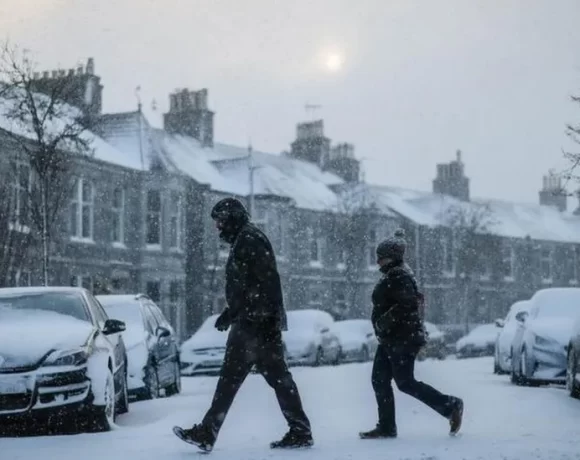
Temperatures fell to -13C, 8.6F, overnight, making it the coldest night of the winter, as waves of Arctic air continue to move across the UK.

The report says that forecasters had said Tuesday night could be the coldest January night for 14 years.

Bitter conditions and significant snowfall have already forced schools to shut in Scotland and northern England and sparked travel disruption.

Yellow warnings for ice and snow are in force in all four UK nations.

The unbearable weather is expected to ease at the end of the week, before possible stormy weather this weekend.

By the end of Friday, more than 40cm of snow may be seen on high ground in north-west Scotland, as wintry weather continues, the Met Office has forecast.

Snow, sleet and rain are expected to continue blanketing northern parts of the UK, though there will be some sunshine.

Heavy frosts and freezing conditions are likely across virtually the entire country, with experts warning of treacherous pavements and roads.

The low of -13C was seen in provisional recordings by the Met Office in the region of Glen Ogle, central Scotland.

The forecaster said on Tuesday that overnight temperatures in snow-covered parts of Scotland could fall as low as -15C (5F), which would make it the coldest January night since 2010.

The lowest temperature so far this winter was -12.5C, 9.5F, in Altnaharra, in early December. In January 2010, -22.3C, -8.14F, was recorded in the same Scottish Highlands hamlet.

Temperatures in most of Scotland are forecast to remain at freezing or lower throughout the day on Wednesday.

The UK Health Security Agency issued an amber cold weather warning for England this week, meaning the NHS is expected to come under extra pressure and elderly people may be more at risk.

Icy winds blowing in from the Arctic this week have seen temperatures fall 5C to 6C below the average for this time of year.

On Thursday, two more yellow snow and ice warnings cover much of the same regions, excluding some eastern areas of England and Scotland and southern parts of Northern Ireland.

The UK is braced for sub-zero temperatures until the weekend, with Tuesday seeing more than 100 school closures in Scotland and dozens in Merseyside.

All schools in Shetland were closed, with more than 50 shut in the Highlands and some sites in Aberdeenshire also affected, though some schools there have reopened.

Northern and eastern parts of Scotland saw the “bulk of the snow” on Monday, with 15cm on the ground at Aberdeen Airport.

Met Office Chief Meteorologist Andy Page has warned of drifting or blizzard conditions.

South of the border, Liverpool Council said conditions had a “widespread impact” on Tuesday, with staff deployed to clear snow around schools, hospitals and transport hubs.

On the trains, National Rail has warned there could be disruption across the network throughout the week.

Subscribe to our Telegram and YouTube Channels and also join our Whatsapp Update Group 

BBC/Taiwo Akinola

Foreign

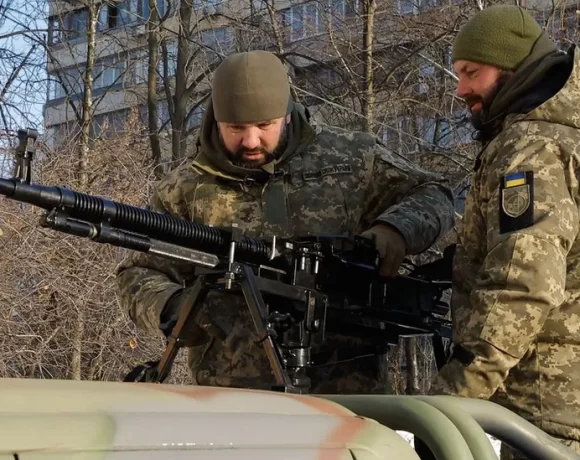
Ukraine’s parliament has refused to consider a conscription bill that proposes a crackdown on draft dodgers.

Members of Parliament have criticized certain punishment measures included in the bill as unconstitutional.

Some have also suggested reducing the length of military service proposed in the bill from 36 to 18 months.

The bill was drafted in a bid to conscript more people, as Kyiv faces problems on the battlefield after nearly two years of war with Russia.

According to the report, it also included plans to lower the age at which men can be conscripted into the armed forces from 27 to 25.

Last month, Ukrainian President Volodymyr Zelensky said 450,000-500,000 extra soldiers were needed to fight Russia’s invasion.

But some clauses in the bill have caused outrage, such as limiting draft dodgers’ rights to own property and freely use their personal money.

The bill would also allow Ukrainians to be summoned electronically to join the armed forces. At the start of the war, tens of thousands of men volunteered to fight but almost two years on it is getting harder to convince anyone to join up.

In December, Ukrainians living abroad were told they could be asked to report for military service. Defence Minister Rustem Umerov described this as an invitation and the ministry later clarified that it did not imply any sanctions against those who refused to come back.

Mr Zelensky said achieving the increased number of troops was a “sensitive” and costly issue.

This all comes as Kyiv’s recent counter-offensive seems to have stalled and provisions of military aid have also taken a knock in recent months. US Republicans blocked a $61bn (€55bn; £48bn) military package and Hungary stopped an EU financial deal worth €50bn ($55bn; £43bn).

White House national security spokesman John Kirby said on Thursday that negotiations over further US assistance had “ground to a halt” as the government continues to negotiate its budget.

Mr Zelensky is currently on a tour of the Baltic states – and is currently in Latvia – to bolster further support including urging Western allies to provide more air defence weapons.

Speaking earlier in Tallinn, Estonia, he warned about the dangers of Western hesitation. He said: “Sometimes the insecurity of partners regarding financial and military aid to Ukraine only increases Russia’s courage and strength.”

His remarks came as a new US report warned that more than $1bn, £785m, worth of US military aid given to Ukraine since February 2022 was not properly tracked.

The findings by the Pentagon’s inspector general said US officials in Washington DC and Europe had failed to properly account for thousands of weapons, including stringer launchers and air defence missiles. It raises concerns that some of the $1.69bn in military aid supplied to Ukraine could have been misappropriated.

But in a letter responding to the report, Col Garrett W Trott of the US military’s European Command, emphasised that the report found “no evidence of unauthorised or illicit transfer of EEUM, Enhanced End Use Monitoring, defence articles provided to Ukraine”.

And the report itself conceded that it was “beyond the scope” of its inquiry to determine whether any arms had been misappropriated.

Subscribe to our Telegram and YouTube Channels and also join our Whatsapp Update Group

BBC/Taiwo Akinola

Foreign

Israeli Defence Minister Yoav Gallant has outlined proposals for the future governance of Gaza once the war between Israel and Hamas is over.

According to him, there would be limited Palestinian rule in the territory.

Hamas would no longer control Gaza and Israel would retain overall security control, he added.

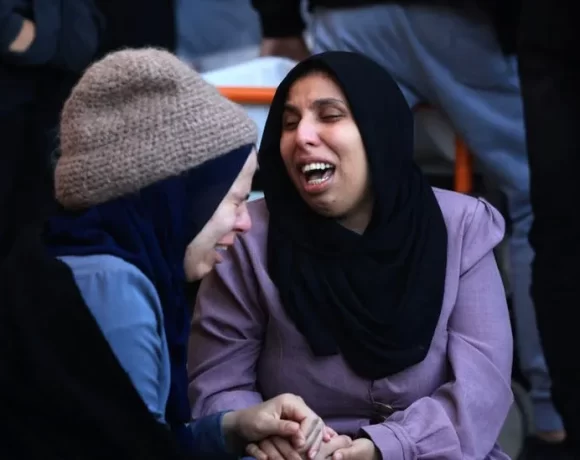
The Hamas-run health ministry says, fighting in Gaza continued alongside the plan’s publication, with dozens of people killed in the past 24 hours.

US Secretary of State Antony Blinken is due back in the region this week. He is expected to hold talks with Palestinian officials in the occupied West Bank and Israeli leaders.

His visit comes amid heigh tensions in the region following the assassination of top Hamas leader Saleh al-Arouri on Tuesday in Lebanon’s capital Beirut. His killing has widely been blamed on Israel. Israel has neither confirmed nor denied involvement.

Under Mr Gallant’s now “four corner” plan, Israel would retain overall security control of Gaza.

A multi-national force would take charge of rebuilding the territory after the widespread destruction caused by Israeli bombing.

Neighbouring Egypt would also have an unspecified role to play under the plan.

But the document adds that Palestinians would be responsible for running the territory.

“Gaza residents are Palestinian, therefore Palestinian bodies will be in charge, with the condition that there will be no hostile actions or threats against the State of Israel,” Mr Gallant said.

Talk of the “day after” in Gaza has led to deep disagreement in Israel.

Some far right-wing members of Israeli Prime Minister Benjamin Netanyahu’s government have said that Palestinian citizens should be encouraged to leave Gaza for exile, with the re-establishment of Jewish settlements in the territory – controversial proposals that have been rejected as “extremist” and “unworkable” by other countries in the region and by some of Israel’s allies.

While Mr Gallant’s proposals may be regarded as more practical than those suggested by some of his cabinet colleagues, they are likely to be rejected by Palestinian leaders who say that Gazans themselves must be allowed to take full control of running the territory once this devastating war is over.

Mr Netanyahu has not publicly talked in any detail about how he thinks Gaza should be governed.

He has suggested that the war in Gaza may yet last several months, with the avowed goal being to completely crush Hamas.

Mr Gallant’s plan also outlined how the Israeli military aims to proceed in the next phase of the war in Gaza.

He said the Israel Defense Forces, IDF, would take a more targeted approach in the north of the Gaza Strip, where operations will include raids, demolishing tunnels and air and ground strikes.

He said in the south, the Israeli military would continue to try to track down Hamas leaders and rescue Israeli hostages.

On Thursday, the IDF said it had hit areas in Gaza’s north and south, including Gaza City and Khan Younis.

It said it had conducted strikes on “terrorist infrastructure” and had killed people who it described as militants, who it said had tried to detonate an explosive next to soldiers.

It also announced that it had killed a senior Palestinian Islamic Jihad operative, Mamdouh Lolo, in an air strike.

The Hamas-run health ministry in Gaza said 125 people had been killed in the past 24 hours across the Strip.

A health ministry official said 14 people – including nine children – were killed by Israeli air strikes in al-Mawasi, to the west of Khan Younis.

The small town has been designated a “safe space” by Israeli forces for displaced Palestinians. The IDF has not commented on the claims made by Hamas.

“We were sleeping at midnight when a strike hit the camp on the tents, 4×2 tents where people were sleeping, most of them children,” eyewitness Jamal Hamad Salah told Reuters news agency. “We found one body there that flew 40 metres away.”

“There is nowhere safe in Gaza,” aid agency Save the Children’s country director for the occupied Palestinian territory, Jason Lee, said. “Camps, shelters, schools, hospitals, homes and so-called ‘safe zones’ should not be battlegrounds.”

The total number of people killed in Gaza since the start

The Hamas-run health ministry said the total number of people killed in Gaza since the start of Israel’s retaliatory campaign had reached more than 22,400 by Thursday – comprising almost 1% of the enclave’s 2.3 million population, Israel’s offensive started after Hamas gunmen launched a surprise attack on southern Israel on 7 October, killing 1,200 people, most of them civilians, and taking about 240 people hostage.

BBC/TAIWO AKINOLA
Foreign

Russian missiles have hit Ukraine’s biggest cities, leaving four dead and dozens hurt, after Vladimir Putin vowed to intensify attacks.

Reports say, a woman was killed and 44 others were hurt in the north-eastern city of Kharkiv.

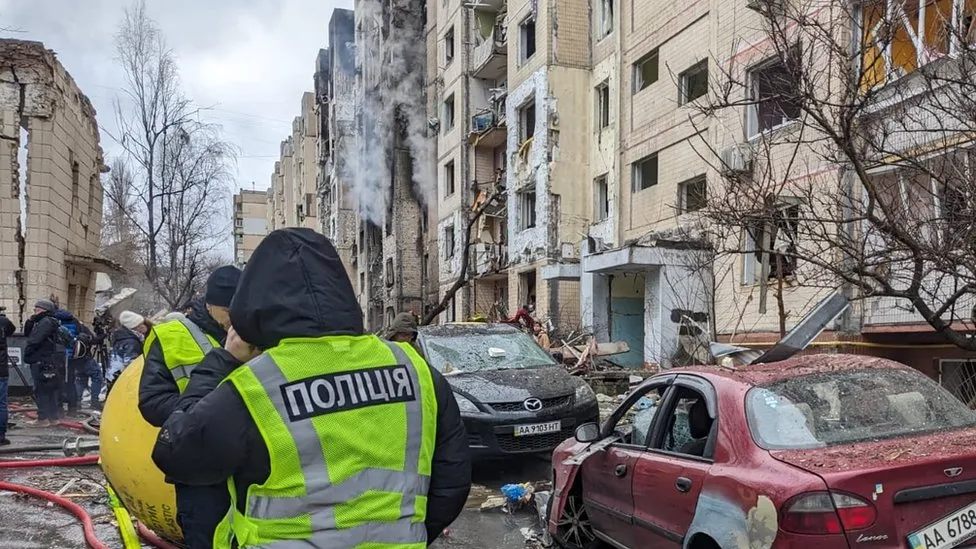
Kyiv Mayor Vitaliy Klitschko said at least one person died and 27 were wounded as several blocks of flats were hit as a result of the Russian strikes.

Two more deaths were reported in the broader Kyiv region.

There have been major aerial assaults by both sides in recent days.

Russia launched its biggest aerial bombardment of the war late last week, killing 39 people. Ukrainian forces responded with an attack on the Russian border city of Belgorod on Saturday, which killed at least 25 people and injured more than 100.

Russia’s Vladimir Putin vowed that attack would not go unpunished and Ukraine’s President Volodymyr Zelensky said since Sunday alone, Moscow had fired 170 drones and dozens of missiles.

According to Ukraine’s air force, on Tuesday, it had downed 35 drones launched by Russia on Monday night. Russian strategic bombers then followed up the drone strikes with further attacks.

Ukraine’s armed forces said after the drone strikes 99 missiles of various kinds had been fired in a repeat of last Friday’s onslaught, from sea and air. They said 72 cruise and supersonic missiles had been destroyed.

Poland said it had deployed four F-16 fighter jets to secure its airspace in light of Russia’s “long-range aviation activity”. Last Friday Poland said an unidentified object, probably a Russian missile, had entered Polish airspace for several minutes before turning back towards Ukraine.

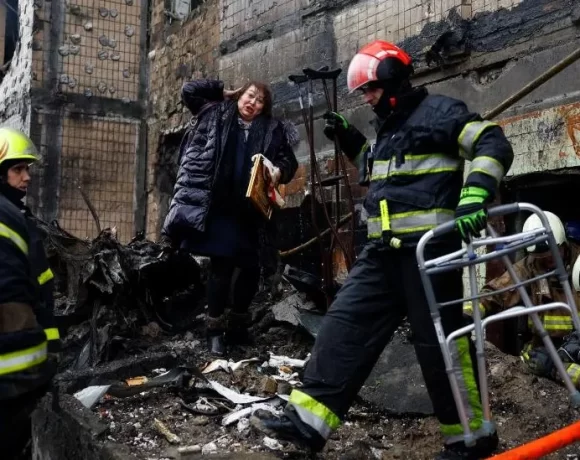
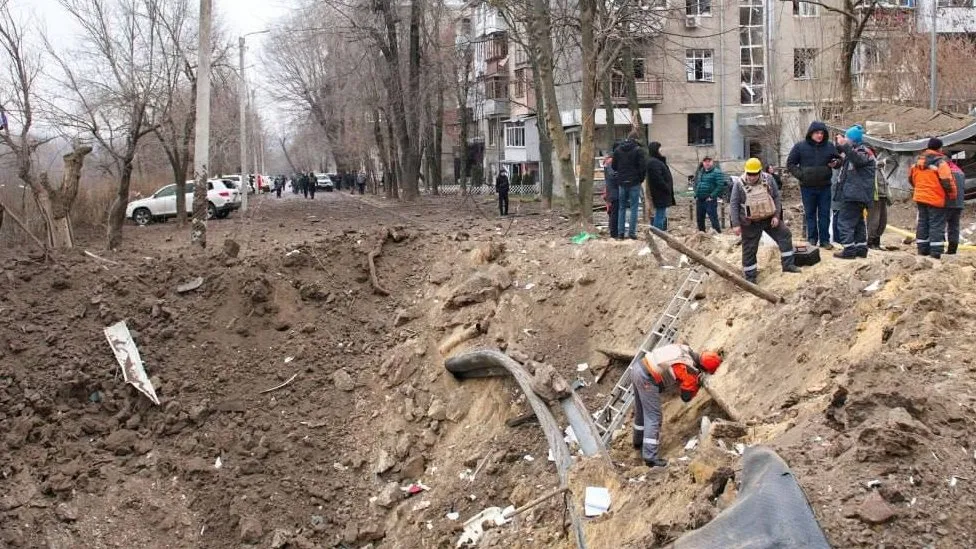
Kyiv officials said debris from Russia’s attacks had hit high-rise flats, warehouses and supermarkets, and that an elderly woman had died of her wounds. Power and water supplies were cut to several areas of the capital and gas pipelines were damaged in one district.

Kharkiv regional governor Oleh Syniehubov said the centre of the city was hit and the air force said it was prepared for further attacks.

The mayor of Mykolaiv, in southern Ukraine, said air defences had brought down drones in the city, with debris causing a fire.

On New Year’s Day, six civilians were killed by Russian strikes in various Ukrainian cities.

In a separate development, Russian-installed officials in the occupied city of Donetsk said four people were killed and 13 wounded by Ukrainian shelling on Sunday.

Mr Putin suggested that Western rhetoric towards the war was beginning to change as they started to realise they could not “destroy” Russia.

Ukrainian President Volodymyr Zelensky countered these claims in an interview with The Economist, saying Mr Putin’s suggestion that Russia was winning the war was only a “feeling”. He highlighted Russia’s casualty figures in Ukraine, and said the opposing forces had been unable to take a single large city in 2023.

Mr Zelensky also expressed frustration with Kyiv’s Western allies, saying they had lost a sense of urgency.

BBC/Taiwo Akinola

Sport

A South Korean footballer has been detained by Chinese police in relation to a bribery case.

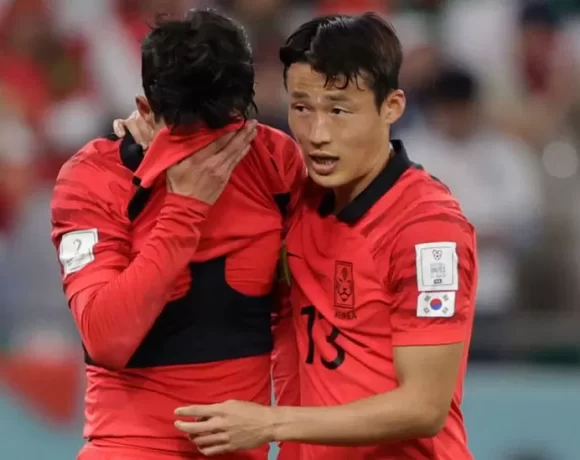
According to Korean media, Son Jun-Ho, 31, who plays in the national side and in the Chinese Super League, was detained at a Shanghai airport on Friday, but, neither South Korean or Chinese officials have commented on the case.

Though, Yonhap News Agency citing sources, has said Seoul’s diplomats are seeking contact with Mr Son and further details on his case, as South Korean diplomats will meet with Mr Son “to figure out exactly what kind of charges” he is being investigated for.

He is under police custody in Liaoning province in the northeast, reported Reuters, citing an unnamed diplomatic source.

When asked for details on Mr Son’s case at a regular press conference on Monday, Chinese foreign ministry spokesperson Wang Wenbin said he was not aware of the case.

But reports of Mr Son’s detention come amid a concerted push by Chinese authorities to crackdown on corruption and match-fixing in Chinese football.

China has arrested at least four football officials in the past three months for alleged wrongdoing.

Mr Son moved to China’s Shandong province in 2021 where he played as midfielder for Shandong Taishan. The club won the Chinese Football League – the highest tier of professional football in China – that year.

He also plays for South Korea’s national team and has played 20 international matches for his home country, including in the Fifa World Cup last year.

Chinese football has long been engulfed in allegations of bribery and match-fixing. Recent detentions of major football figures have dealt another setback to the country’s football ambitions.

In February, just as stadiums started to reopen from Covid lockdowns, the president of the Chinese Football Association Chen Xuyuan was detained for suspected “serious violations of discipline and the law”.

Mr Chen’s arrest was the fourth known example of a senior football official to be investigated in less than three months.

Match fixing has also sparked controversy in South Korean football recently. Last month, the entire executive board of Korea’s Football Association resigned after attempting to pardon some 100 people who were banned from the sport due to match-fixing and other offences.

BBC/Taiwo Akinola

Subscribe to our Telegram and YouTube Channels also join our Whatsapp

Foreign

At least 28 people have been killed in an explosion at a mosque in the Pakistani city of Peshawar.

According to report, the blast happened when the mosque was packed with worshippers and more than 150 people were injured, and a section of the building was destroyed, as officials say people are buried under the rubble. Several others are being taken to local hospitals.

Meanwhile, the cause of the explosion is unclear. Prime Minister Shebaz Sharif has strongly condemned the attack.

In a statement, Mr Sharif said those behind the incident “have nothing to do with Islam”.

He added: “The entire nation is standing united against the menace of terrorism”.

The blast took place during afternoon prayers in the north-western city, near the country’s border with Afghanistan.

Mohammad Asim, a spokesman for the Lady Reading Hospital, said that some of those injured were in critical condition.

“It’s an emergency situation,” Mr Asim added.

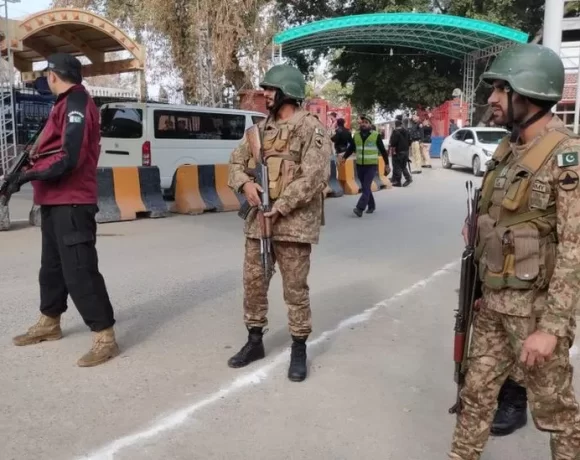
Local media report that police, army and bomb disposal squads are at the scene.

In the capital, Islamabad Police issued a security high alert and said security at all entry and exit points to the city had been increased.

BBC/Taiwo Akinola

Subscribe to our Telegram and YouTubeChannels also join our Whatsapp Update Group

Foreign

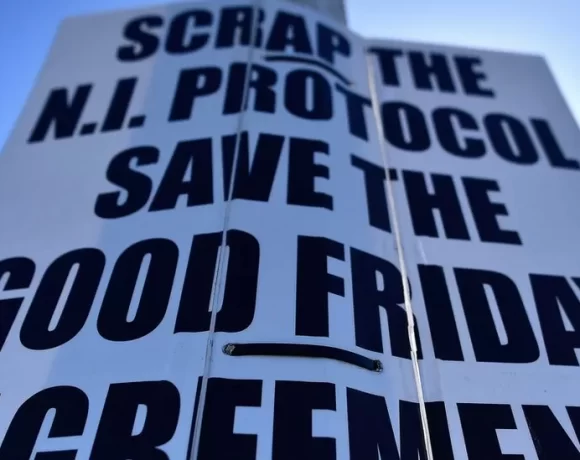
The UK says, the EU it will continue delaying customs checks on goods moving from Great Britain to Northern Ireland, despite legal action from Brussels over the Northern Ireland Protocol.

The EU is considering its next steps.

The protocol keeps Northern Ireland in the EU’s single market for goods, avoiding the need for a hard border with the Irish Republic after Brexit.

The prime minister is expected to meet European Commission president Ursula von der Leyen for talks next week.

It is thought they will speak when they both attend the United Nations General Assembly in New York.

Despite normal politics being paused after the Queen’s death last week, the UK responded to the Commission’s legal action ahead of the EU’s deadline of the end of Thursday.

The EU has launched a series of lawsuits over what it sees as the UK’s failure to comply with checks on the movement of farm produce from Great Britain to Northern Ireland.

It has also started legal action over legislation that would allow the UK to alter the protocol, introduced by Liz Truss when she was foreign secretary.

However, the UK government argues that “grace periods” delaying full customs checks should remain in place.

European Commission spokesman Daniel Ferrie said: “I can confirm we have received a reply from the UK. We will now analyse the reply before deciding on the next steps.”

The Commission could refer the case to the European Court of Justice, but its initial reaction is expected to be muted following the death of Queen Elizabeth II.

Brussels has been making plenty of overtures about restarting negotiations, previously stalled, on how to reform the post-Brexit treaty.

The new government’s desires are less obvious, although Prime Minister Liz Truss is very familiar with the row.

As foreign secretary, she set in train a bill that could see Britain override parts of the protocol; something the EU sees as a clear and blatant breach of a mutually agreed treaty.

EU diplomats believe Ms Truss’s approach to the protocol was, at least in part, designed to woo the right wing of her party when a leadership contest loomed.

Now that she’s prime minister, what will she decide to do?

With talk of a phone call or meeting between EU chief, Ursula von der Leyen and Ms Truss, maybe that question will be answered before long.

Both will attend Queen Elizabeth II’s funeral, but a more likely opportunity for a political discussion could be next week’s UN General Assembly in New York.

The protocol was part of the Brexit withdrawal agreement, agreed upon between the UK and the EU in December 2019.

Special trading arrangements were required for Northern Ireland because it has a land border with the Republic of Ireland, which is in the EU.

The EU has strict food regulations and demands border checks when certain goods – such as milk and eggs – arrive from non-EU countries.

The UK and the EU also agreed that protecting the Northern Ireland peace deal, the 1998 Good Friday Agreement, was essential.

From 2021, the protocol has meant some new checks on goods moving from Great Britain to Northern Ireland.

Unionist politicians have condemned what they regard as the imposition of a trade border in the Irish Sea.

Northern Ireland’s devolved executive has been suspended since February, and the largest unionist party, the DUP, has refused to resume sharing power with nationalists until the protocol is significantly reformed.

Polls have suggested overall opinion in Northern Ireland on the protocol is fairly evenly split.

The Northern Ireland Protocol Bill would allow the UK government to override the arrangements for Northern Ireland it signed up to.

It cleared the House of Commons in July but is expected to face stern opposition when it begins its passage through the House of Lords next month.

Subscribe to our Telegram channel

BBC/Taiwo Akinola

Foreign

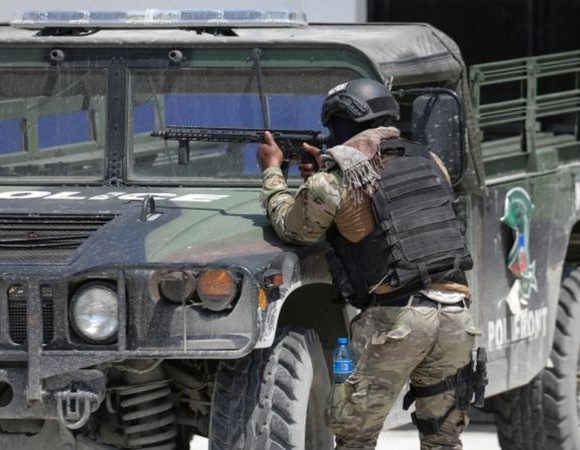
One of the leaders of Haiti’s most powerful gang, 400 Mawozo, has been extradited to the US for smuggling weapons and kidnapping US citizens.

Haitian authorities said, Germine Joly, known as Yonyon, was taken on an FBI plane to Washington on Tuesday.

He had been in jail in Haiti for several years before his extradition.

Joly’s gang was responsible for last year’s kidnapping of 17 Christian missionaries, who were held hostage for two months.

Last week, 400 Mawozo also kidnapped a diplomat from the Dominican Republic.

Carlos Guillén, the trade attaché at the Dominican embassy in Haiti’s capital Port-au-Prince, was seized by gang members while he was travelling to his home country, which is located on the same island as Haiti.

BBC/Taiwo Akinola

Foreign

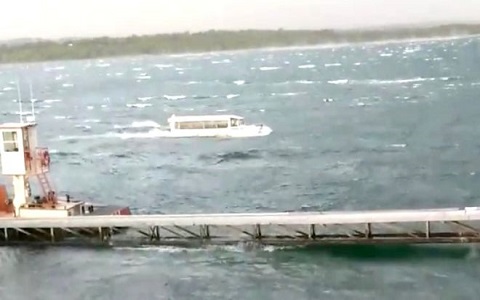
A Japanese tourist coast guard says, a tourist boat is missing off the northern part island of Hokkaido.

Report says, authorities lost contact with the vessel, which had 26 people on board, after it sent a distress signal saying it was taking on water at 13:15 local time on Saturday, as four people have since been found and have been taken for medical attention.

The boat, Kazu 1, is believed to have been on a three-hour sightseeing voyage around the Shiretoko Peninsula.

The area is a designated UNESCO world heritage site, and boat trips are popular with tourists hoping to spot whales and sea lions as well as brown bears on the rocky beaches.

Coast guard says it has dispatched patrol boats, police and military aircraft to find the vessel,as well as local fishing boats to join others for the search.

According to Japanese media, Kazu 1 was last heard from at around 15:00 local time when the crew said it was tipping at a 30-degree angle and starting to sink.

Waves in the area had been high and local fishing boats had apparently decided to return to port by mid-morning.

The crew reportedly said that out of 26 on board, there were two crew, and two children on board as they all were wearing life jackets.

But temperatures in the area could dip as low as 0C, 32F, when night falls.
BBC/Taiwo Akinola