Foreign

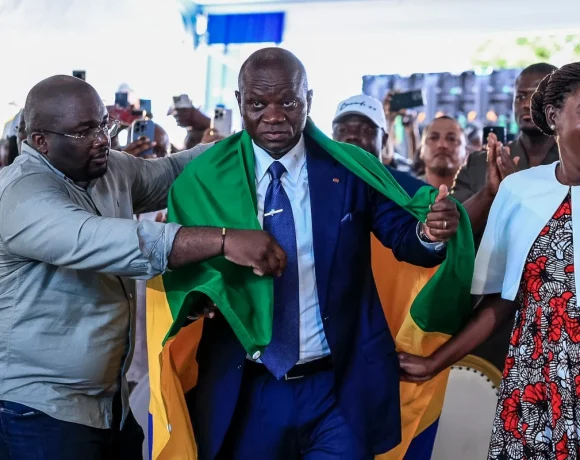
Gabon on Wednesday has placed ban on Facebook and TikTok, hours after the media regulator announced their suspension due to the risk of “conflict-inducing ” posts.

According to report, Gabon’s media regulator on Tuesday announced the suspension of social media platforms “until further notice”, blaming content posted online for stoking conflict and division in society.

The High Authority for Communication imposed “the immediate suspension of social media platforms in Gabon”, its spokesman Jean-Claude Mendome said in a televised statement.

He said “inappropriate, defamatory, hateful, and insulting content” was undermining “human dignity, public morality, the honour of citizens, social cohesion, the stability of the Republic’s institutions, and national security”.

The communications body spokesman also cited the “spread of false information”, “cyberbullying” and “unauthorised disclosure of personal data” as reasons for the decision.

“These actions are likely, in the case of Gabon, to generate social conflict, destabilise the institutions of the Republic, and seriously jeopardise national unity, democratic progress, and achievements,” he added.

The regulator did not specify any social media platforms that would be included in the ban.

However, the regulator said “freedom of expression, including freedom of comment and criticism,” remained “a fundamental right enshrined in Gabon”.

Less than a year after being elected, Gabonese President Brice Oligui Nguema has faced his first wave of social unrest, with teachers on strike and other civil servants threatening to down tools.

School teachers began striking over pay and conditions in December, and protests over similar demands had since spread to other public sectors — health, higher education and broadcasting.

Punch/Edited by Taiwo Akinola
Politics

By Dayo Adu

The Christian Association of Nigeria, CAN, has advised political office holders to rule with human face so as not to give the military the impetus to stage a coup.

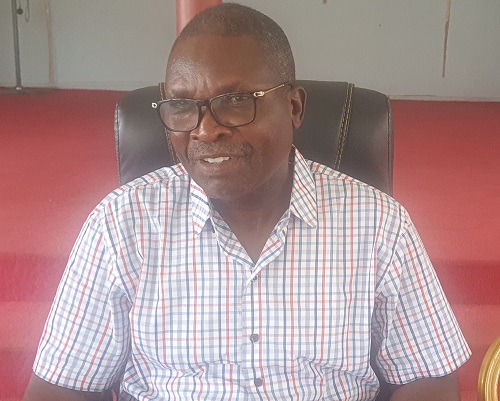
The Oyo State Chairman of CAN, Apostle Joshua Akinyemiju, gave the advice while reacting to the Military take over of power in Gabon.

Apostle Akinyemiju explained that the military enjoy robust welfare and emoluments under the civilian administration compared to when they’re in power.

He noted that when the commonwealth of the citizens is embezzled by the politicians thereby creating hardship situations for the the people, call for Military intervention becomes the song on the lips of the masses and it could propel the armed forces to forcefully take over.

The CAN Chairman, enjoined the ECOWAS under the Leadership of President Bola Tinubu to train it’s members on the importance of delivering dividend of democracy in their respective countries so as to forestall the spate of coup detat ravaging the African continent

Subscribe to our Telegram and YouTube Channels also join our Whatsapp Update Group

Foreign

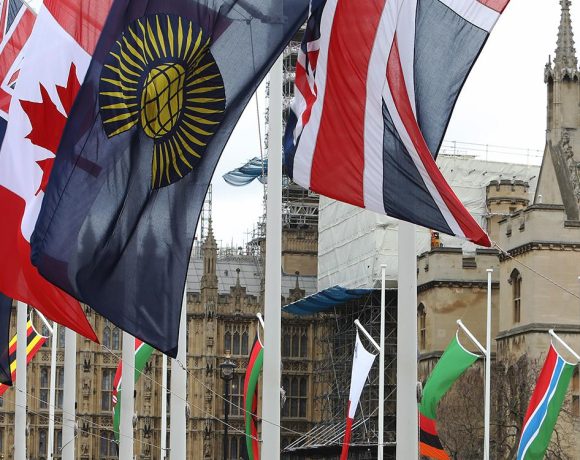
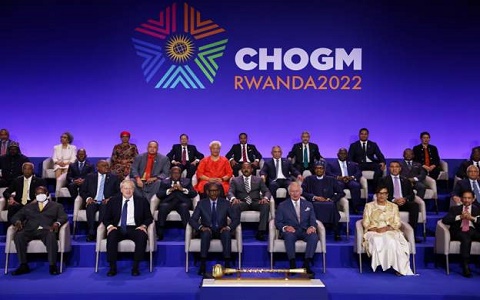
Gabon and Togo joined the Commonwealth on Saturday, becoming the latest nations with no historic ties to Britain to enter the English-speaking club headed by Queen Elizabeth II.

The 54-nation group of mostly former British colonies accepted Togo and Gabon’s application for membership on the final day of its leadership summit in Rwanda.

While speaking at the closing press conference of the summit, Rwandan President Paul Kagame said, “We have admitted Gabon and Togo as new members, and we all welcome them to the Commonwealth family”.

The French-speaking West African states are the first new members to join the Commonwealth since Rwanda in 2009.

Togo’s Foreign Minister Robert Dussey said membership opened the door to 2.5 billion consumers in the Commonwealth realm and offered new education opportunities for his countrymen.

Togo’s membership is motivated by the desire to expand its diplomatic, political, and economic network… as well as to get closer to the English-speaking world,” he told newsmen.

Mr Dussey added that this move also allowed the small and developing nation of 8.5 million to redefine bilateral relations with the UK outside the European Union in the aftermath of Brexit.

Togolese political scientist Mohamed Madi Djabakate said the move would prove popular as French influence in Togo was often blamed for its economic woes.

Gabonese President Ali Bongo said his country was “making history” by joining the group.

Sixty-two years after its Independence, our country is getting ready to breakthrough with a new chapter,” Bongo said in a statement on Twitter.

Their admission is a boon for the Commonwealth at a time of renewed discussion over its relevance and purpose.

British Prime Minister Boris Johnson said the interest from new members proved the organisation was alive and well.

But it could also raise questions about the Commonwealth’s espoused commitment to good governance and democracy as fundamental values of its charter.

Oil-rich Gabon, a former French colony, has been ruled by the Bongo family for 55 years.

Togo, a former German then French colony, has also been under dynastic rule for more than half a century.

Born out of the British Empire, the Commonwealth represents one-third of humanity and spans nations across Africa, Asia, Europe and the Americas.

It would be recalled that Mozambique — a former Portuguese colony — became the first Commonwealth member without historic links to Britain when it joined in 1995.

Punch/Maxwell Oyekunle

Foreign

Former French colonies Gabon and Togo are set to become the latest countries to join the Commonwealth, which is made up of 54 nations most of which were once part of the British Empire.

They will be the first new members in more than a decade – the last one being Rwanda, which joined in 2009.

Rwanda is currently hosting the biennial meeting of heads of Commonwealth states.

Mozambique, which also did not have links to the British Empire, joined in 1995.

Togo’s Foreign Minister Robert Dussey said French-speaking Togo’s inclusion into the Commonwealth would “help it develop closer ties with English-speaking countries, opening up new horizons outside of France’s sphere of influence in West Africa.”

Since joining in 2009, Rwanda has praised the Commonwealth for helping the country with election support, combatting corruption and creating a stronger judicial system.

Togo and Gabon are expected to be admitted later on Friday.

BBC/Simeon Ugbodovon