Carved from the former Ogbomoso Local Government on May 11, 1989, Surulere Local Government boasts of an area of about 23km2 of arable landmass which conveniently houses about 142,000 people, at the 2006 census.
Home to commercial towns such as Iresa-Adu, Oko-Irese, Iresa-Apa, Onikeke, Asangbomole, Ilajue, Alegbede and Igbon, to mention but a few, Surulere Local Government is a haven for successful farmers.
With over half of the population being either subsistent or commercial farmers, the local government is a veritable source of staple agricultural produce such as groundnut, cashew, tomatoes and more.
Commercial activities in Surulere Local Government come with glitz and glamour.
Quite unlike many other Local Government Areas in Oyo State, most of the towns in Surulere Local Government have specific market days, a fact which attracts business magnates from far and near.
In fact, the impact of a market day in any town in Surulere Local Government is always stamped on the whole Local Government Area as other activities, including education, are often grounded.
Perhaps, the most affected by this commercial peculiarity of Surulere Local Government is the average girl-child who is often forced to forsake school for business on market days.
Thus, the much venerated arability of the Surulere land has become a subtle clog in the educational wheel of the average school girl in the Local Government Area.
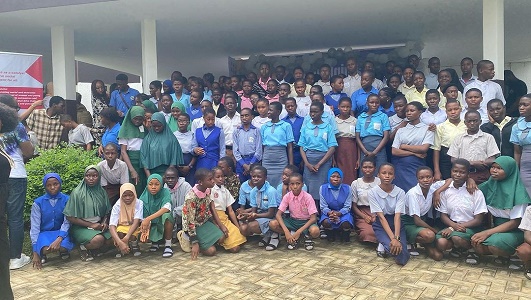
A secondary school principal at Muslim Comprehensive High School, Oko, Surulere Local Government, who preferred anonymity, reiterated that farming and commercial activities had become a source of worry to stakeholders in the education sector.
He further stressed that students’ attendance during the cashew season and popular market day is particularly low.
“Concerning the farming activities, during cashew harvesting, we do have a small number of students coming to school due to the fact that some of them will want to go with their parents to go and harvest cashew nuts apart from that the students normally come to school as they suppose to come but the percentage normally reduced when it comes to farming period especially when they are harvesting cashew nut
On market days, I discovered that students normally reduce in population during marketing time, so we invited the parents, we talked to them and gave them much about the value of education as far as the students are concerned”The principal said.
The story of Clara: A survivor
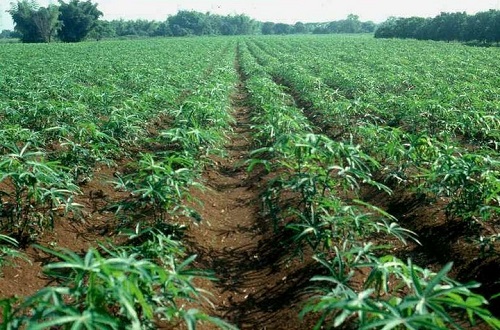
Trained and bred by her grandmother who is a peasant farmer, Clara (pseudonym) started farm work at a conspicuously tender age. In addition to being saddled with the responsibility of cultivating, harvesting, and processing cassava into gari, Clara, a 17-year-old Jss3 student of Alegbede Grammar School, was also laden with the task of hawking gari, a fact which later proved costly.
According to Clara, a pedophilic client of hers in the gari-hawking business, after having his advances repelled on a number of occasions, took advantage of her vulnerability, in one of her many hawking episodes, to have unlawful carnal knowledge of her.
Sometime in April, 2021, I in the company of a little boy hawked gari to Onikeke and its environs. That day sales were fast as I sold all my gari in record time.
On my way home, when most people had already retired after the day’s activities, I stumbled on four men, two of them in my front and the other two at my back.
The two in front stopped me and asked me to follow them but I refused, before I knew it, they bundled me front and back and took off the footpath and took me into the known bricklayer suitor who was already in the bush.
He told me he was to fulfil his desire for me. I attempted to resist but they overpowered me. I realized there was no way out,I gave in to at least save my life. So the bricklayer had his way with the other three pinning me down for him.
When he was done, I picked my little brother who had wept profusely watching the scene. Although could not understand what was actually happening, except that his sister was being beaten by the men.
On our way home, I told him not to tell grandma what he saw.
Getting home, I pretended as if nothing happened but grandma called my attention to the blood stain on my skirt, I burst into tears and opened up to her. She felt bad and told me to be calm.
Months later, the first term of my Jss3, was pregnant and it was obvious with signs. The school authority told me to stop coming to school so I stopped schooling.
Our principal came to our house to encourage me that pregnancy should not be the end of my academic career and promised to support me.
Though I had stopped attending schools, I was invited at intervals for data capturing ahead of our examination.
It was never my choice to get pregnant at that time, and neither was it my choice to be suspended from school. During the trying time, I regretted ever going to the farm or hawking our farm produce. I wished in an urban city where I wouldn’t have to hawk in the bush.
In March 2021, I ran into labour for weeks, I was taken to local maternity where I had my baby. Interestingly, our examination was still months.
Although I was not privileged to attend Jss3,I was allowed to write the exam because I was no longer pregnant. Now, I am back in school, I am a survivor of educational challenges prompted by farming activities.
Faisat Kareem wishes to stop hawking for her education
Faisat Kareem is a seventeen years old SS2 class student at Muslim Comprehensive High School, Oko Surulere Local Government who hawks boiled groundnuts in the town.
In an interaction with her, while hawking in the market, Faisat said the business sustains her family, the reason he gets involved.
She said sometimes when the family is broke, she would not go to school or sometimes she may have to hawk in the early hours before going to school.
“Sometimes I don’t go to school. I however meet classmates to share with me what they learnt in school. Often times I collect their notes home to copy into mine. I don’t have a choice at all. But if I have the opportunity, I won’t hawk again” She wished
It happens, already a norm
A cross-section of female secondary school students in Surulere Local Government including Rodiat Yusuf, Fatia Salaudeen and Boluwatife Adegoke affirmed that farming activities including hawking of farm produce were major factors contributing to the girl-child truancy.
They submitted that while some parents mandate their girl-child to support them in farming activities at the expense of their education, some of the girls of their free volition choose either not to come to school or to come late during market days or Cashew nut season.
Parents with Divergent views
Messers. Yinusa Alabi and Wale Osuolale cultivate cassava, cashew, yam, and tomatoes among others. They expressed the belief that mandatorily, their children regardless of gender must actively support their endeavours.
While they submitted that occasionally the children should be prepared to assist on market days, they noted that the joy of every farmer is to sell the produce at the best time to avoid loss.
They hinted that produce like tomatoes must be sold as and when due.
The duo also said sometimes when the children had done all the necessary support on pre-market days, they may not have to come to market the following day.
But for Mrs Esther Adelaja, it is barbaric and retrogressive to deny any child, especially the girl-child the right to go to school for any reason.
She vowed to have never indulged in such practice and pledged never to venture into it.
Mrs Adelaja, however, appealed to parents who were in such a habit to stop in the interest of the future of their children and wards.
Lense of the Market Leader
Justifying the reason for the girl child to either be in the market or hawk even during school hours, Iya Loja, Oko land, Mrs Sidiquat Alabi explained that it was a norm for the child to assist the parents in the market before going to school on market days because that is where parents get their school fees.
She also noted that during cashew season, parents mandate their children to pick the nuts for them, maintaining that the girls on their part were always eager as well because they make personal gains from it.
Iyaloja expressed the belief that going to the farm or hawking did not pose any danger to any child except the ones who are naturally wayward.
Adedayo Adelowo
Subscribe to our Telegram Channel and join our Whatsapp Update Group