Health

By Bolanle Adesida

Residents of a community in Abeokuta, the Ogun State capital have solicited the federal government’s intervention to activate an abandoned primary healthcare centre which has become a subject of controversy between the contractor and local government authorities. 

The residents who spoke with Radio Nigeria lamented that the contractor handling the project had abandoned the site for the past 11 years, only to show up recently with a consignment of supply to the facility and asking the council authorities to take responsibility for the delivery. 
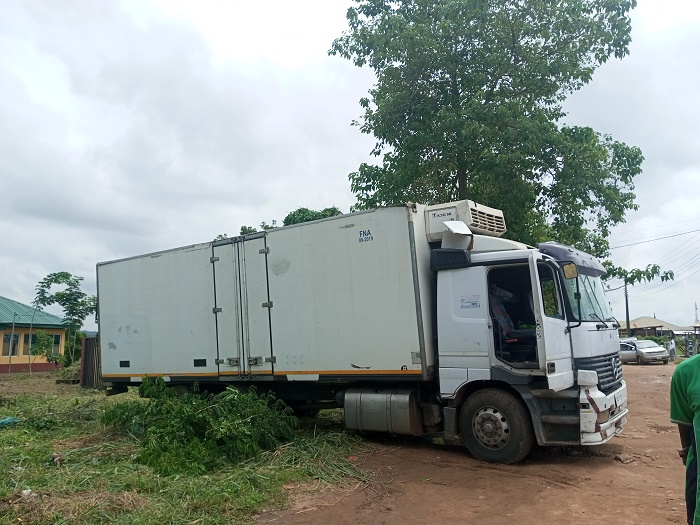
The recent delivery of medical equipment which ought to elicit joy among the residents turned out to be a source of concern to the people due to the circumstances surrounding the project. 

The abandoned multimillion naira primary health care centre, located at the Olomore Federal Housing Estate in Abeokuta North local government area of Ogun State was said to have been abandoned since 2012. 
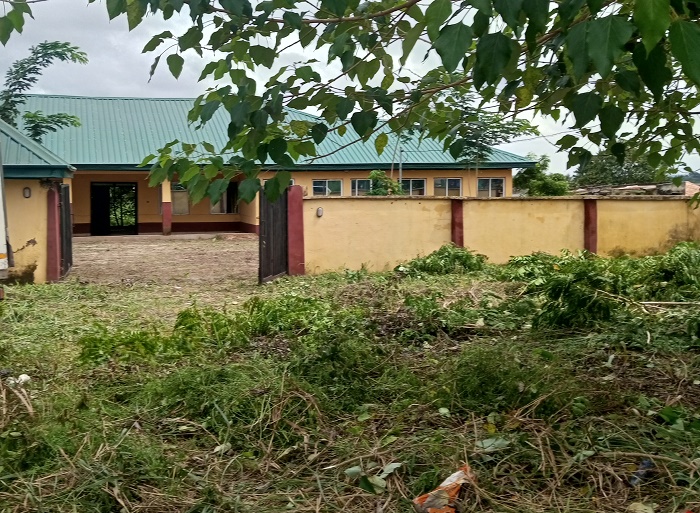
Some of the residents who spoke with Radio Nigeria said it was a sheer waste of public resources that the facility, attractively structured with hospital wards, offices and quarters for resident doctors had been neglected for so long at the detriment of the residents. 

They complained that the project which was overtaken by thick bushes was renovated in 2021 but was abandoned again before the sudden arrival of the truck conveying a consignment of medical equipment to be deposited at the abandoned site. 

In a reaction, the Public Relations Officer, of Abeokuta North Community Development Council, Mr Kabir Ayoola who said the abandoned structure was discovered to have been vandalized several times while the contractor was nowhere to be found also complained that much of the equipment being supplied was obsolete. 

Also, a community leader, Mr Ademola Oladosu said people of the area were in great need of a functional hospital, hence the need for the relevant authorities to rise to the challenge of ensuring prompt completion of the project. 

Representative of the contractor handling the project Mr Ayodele Adeyinka, who lamented that some fittings, including the cables earlier installed at the health centre, had gone missing called for measures to keep the new batch of equipment safe. 

Responding, the Chairman Abeokuta North Local government, Prince Samson Ayorinde who accused the contractor of handling the project with levity, said the local government had made arrangements with the state-owned security outfits, the So Safe Corps and Amotekun to deploy their personnel to the centre. 

The Stakeholders later took the inventory of the items supplied to the abandoned health centre, including an industrial generator, hospital beds, stretchers, wheelchairs, furniture and other medical essentials.

Subscribe to our Telegram and YouTube Channels also join our Whatsapp Update Group
News Analysis

By Titilayo Kupoliyi

 Drugs are inestimable components in healthcare system worldwide; underscoring the vital role Pharmacy continues to play in keeping people fit or speeding up recovery.

 The ancient art of Pharmacy probably began when someone somewhere first thought of applying the juice from leaves to heal a wound. 

 Greek legends written centuries ago spoke of gods being apothecaries or pharmacists. 

 The Greek god of healing, Asclepius, delegated the compounding of his remedies to Hygieia, his apothecary or pharmacist.

 For the longest time, healing and pharmacy went hand-in-hand and were often thought of as the same practice. 

 The line between Pharmacy and Medicine began to be defined by the eighth century and was firmly established by the time the 17th century rolled along. 

 Now, physicians could no longer prepare medications for their patients themselves. 

 The field transformed yet again with the onslaught of World War II. New drugs were constantly introduced into the market, and the role of the pharmacist became more defined than ever.

 Beyond doubt, pharmacy is essential for access to health, a safe supply chain and the responsible use of medicines. 

 COVID-19 also presented undeniable evidence of the capabilities of the pharmacy profession to support health systems.

 According to FIP, member organisation, the American Pharmacists Association, for example, during the pandemic pharmacy teams in the USA provided over 350 million clinical interventions in the form of COVID testing, vaccination, treatment and in-patient care.

 Statistics by The International Pharmaceutical Federation, FIP, shows that there are Four million people engaged in the profession globally.

 Today’s pharmacist performs multiple vital duties. Their tasks include identifying and providing people with the right medication, overseeing stocking and restocking of medicines, and staying ahead of medicine expiry dates. 

 This perhaps prompted the International Pharmaceutical Federation (FIP) to set aside every 25th September which coincided with the establishment of the organisation to honour all pharmacists. 

 At a time when health systems around the world are recovering from the COVID-19 crisis and general consensus is that urgent action is needed for health services to meet future needs, this year’s World Pharmacists Day campaign presents opportunities to increase awareness of pharmacists as an intelligent solution.

It is stating the obvious that role of Pharmacists in healthcare has changed significantly over the previous half-century, from dispensing to providing direct patient-oriented services unrelated to dispensing.

 The Pharmacist Council of Nigeria, PCN, has estimated the number of qualified pharmacists in the country to be 20,000.

 PCN offers unique expertise to members of the profession with a distinct set of abilities that enable them to play a variety of roles in developing the Nigerian health system. 

 Pharmacy and community pharmacists play an important role in the public health system by providing prescription and over-the-counter (OTC) medication with professional counseling, participating in health care programs, and maintaining contact with other healthcare professionals in the health care system. 

 In addition to being open to the public, pharmacists are responsible for the safe and effective administration of pharmaceuticals, participate in health screening and monitoring programs, and are responsive to the requirements and preferences of patients.

 Unfortunately, there are fewer studies on the roles that pharmacists play in improving the Nigerian health system. 

 Sadly, the brain drain in the health sector has not left out the pharmacists. 

 This is attributed to the mass exodus of pharmacists overseas for greener pastures.

  Reports show that over 5,208 pharmacists left the country in the last five years.

They migrated to countries like the United Kingdom (UK), United States of America (USA), Australia, Canada and Saudi Arabia.

 According to the Pharmaceutical Society of Nigeria, currently, there is a ratio 1 Pharmacist to 14,000 Nigerians.

 According to World Health Organisation, WHO, the acceptable and recommended ratio of pharmacists to the population is one pharmacist to 2,000 of the population.

 Pharmaceutical Society of Nigeria (PSN) has charged the federal government to stem the tide of mass exodus of pharmacists overseas for greener pastures.

 At this juncture, there is urgent need for the government to look into measures that will encourage pharmacists to desist from moving out of the country enmasse.

 It would not be out of place for the government to enhance the welfare of pharmacists by making the working environment more conducive, providing sophisticated work tools and good pay packages.


Health

The Nigerian Medical Association, NMA, has warned that the country stands to witness the flight of more health workers abroad if the government does not address factors fueling the brain drain.

The Chairman, NMA Lagos Branch, Dr. Benjamin Olowojebutu gave the warning at a stakeholders engagement with political party leadership and gubernatorial candidate in Lagos organized by the Global Health Advocacy Incubator in partnership with Legislative Initiative For Sustainable Development.

 Dr. Benjamin Olowojebutu explained that brain drain syndrome continues to deplete the health workforce, revealing that in December of 2022, more than 1,800 healthcare workers left the country for greener pastures.

According to Olowojebutu, Medicine as a profession “might go into extinction” in the country if the problem persisted.

“There is a very big challenge about brain drain. I have said several times that we have to be very deliberate about how we tackle this. There is a pull and push syndrome that is affecting doctors leaving Lagos State,” he declared.

“During COVID-19 in 2020, 81 doctors moved from Lagos to the UK. They had a special plane that came to carry them from the UK. Between March 2020 and October 2022, we lost 507 doctors from Lagos state to the UK.

“In December 2022 alone, we lost over 1,800 doctors and other healthcare workers to brain drain. We need to think of how to make healthcare attractive and sustainable.

“Before, we used to have young doctors travelling abroad for greener pastures, but now, even the consultants that are supposed to be training the young doctors are leaving the country.

“There is a dearth of doctors in Nigeria, especially in Lagos State. Some places don’t have specialities anymore because the specialists have left the country at this time”.

Dr Olowojebutu stressed the imperative for government to “critically treat the issue as an emergency” and to solve the problem.

Culled/Simeon Ugbodovon

Subscribe to our Telegram and YouTube Channels also join our Whatsapp Update Group

Health

The journey of a thousand miles begins with a step and Nigeria took that step with independence on October 1, 1960.

How has the country fared in terms of Health Care delivery over the years?

Correspondent, Anthonia Akanji spoke with some residents of Ibadan, Oyo State and stakeholders in the health sector.

Anthonia Akanji

Health Lifestyle

Oyo state Governor, Engineer Seyi Makinde has expressed the readiness of his administration to turn Adeoyo Hospital, Ibadan into a world class establishment in order to deliver qualitative healthcare services.

Engineer Makinde stated this during an on-the-spot assessment of the Adeoyo Hospital, Yemetu, Ibadan.

Governor Makinde who explained that the visit was to have first-hand information about the condition of the hospital noted that other government hospitals across the state would be assessed for improvement.

While reiterating that health is one of the cardinal programmes of his government, the governor promised to improve the facilities in the hospital so as to make people have easy access to basic medical care.

The governor therefore, requested for the shopping list of Adeoyo Hospital to enhance its effectiveness.

 He equally promised to improve the staff welfare and make the hospital environment conducive for both workers and patients.

Conducting the governor round the hospital, the Chief Consultant, Dr Soji Adeyanju applauded the governor for the visit, with a pledge to support the government in its bid to take Oyo state health sector to greater heights. Iyabo Adebisi