Education

By Iyabo Adebisi

Oyo State Governor, Engineer Seyi Makinde has reaffirmed his administration’s commitment to the improvement of the education sector in the state.

He expressed the readiness of the state to provide necessary support in the areas of education infrastructure and the recruitment of more teachers in order to improve the quality of education.
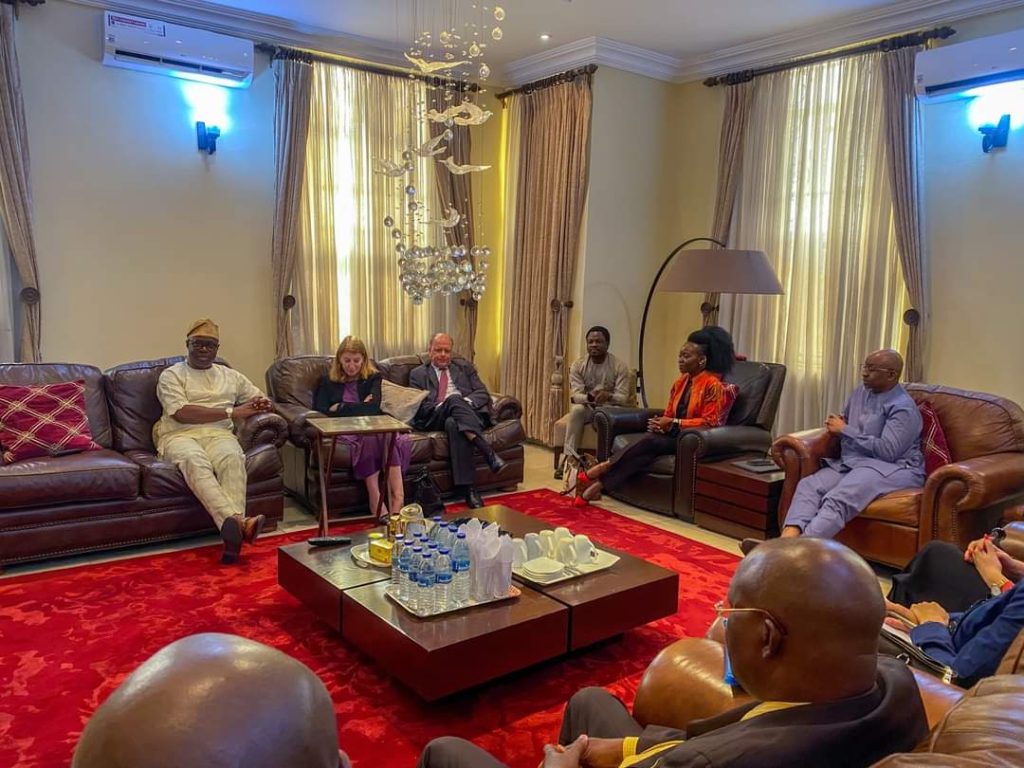
Governor Makinde made this known while receiving a Sweden delegation led by the Ambassador of Sweden to Nigeria, Ghana, Cameroon and ECOWAS, Her Excellency Ms Annika Hahn-England, at his Ikolaba residence in Ibadan.

While welcoming the team, the governor said that his administration has recruited about six thousand active teachers and that more will still be recruited to improve the quality of education.
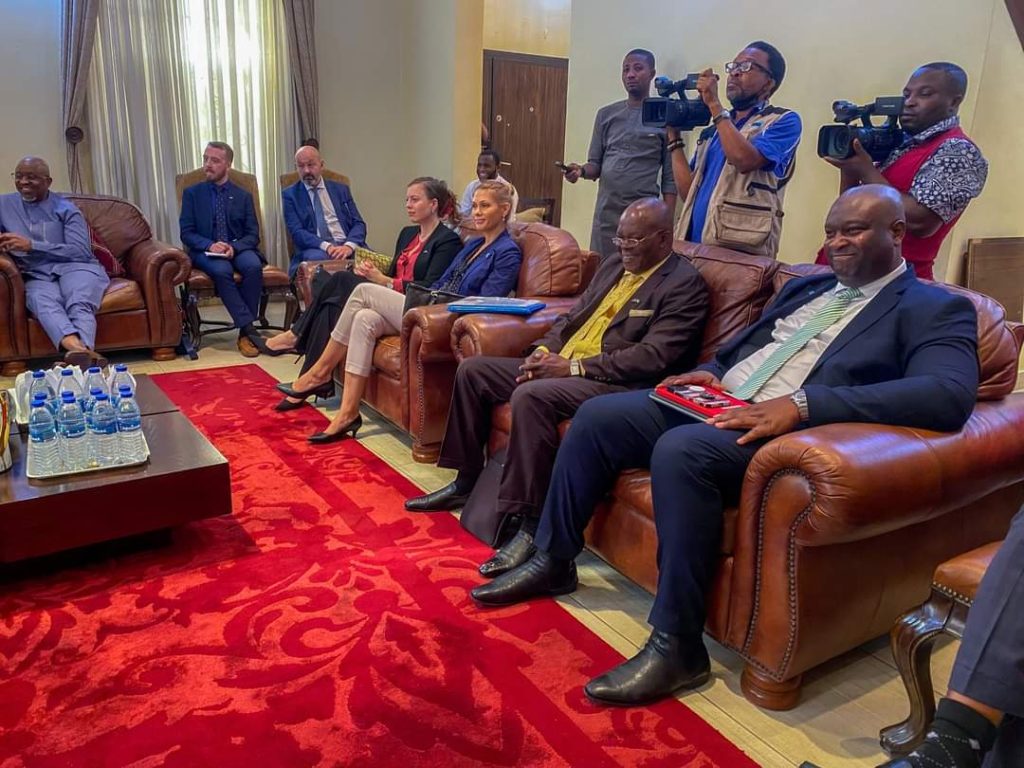
He added that education should not be centralised, as local and state governments should be able to contribute their quotas to the education system.

He said: “I believe that education should not be centralised, because we have certain parts of the country that are far ahead in terms of their infrastructure.

“I believe that as a country, we need to do certain things so that we can free up states and even local government areas to handle most of their things. So, we are happy to look at the solutions that you want to present.

“Actually, as an administration, when I was coming in, we put together a roadmap for accelerated development of Oyo State and focused on four major pillars – Health, education, security, and expansion of our economy through agribusiness and development of our infrastructure.

“And my first budget was to ensure that we met the UNESCO recommended standard on budgetary allocation to the education sector. Since then, we have tried to improve on that.

“When I came in, we recruited about six thousand teachers and, this year, we are recruiting more.

“Also, it will interest you to know that those six thousand teachers have now become the most active and the ones that are now carrying the burden of our education system. This is because we insisted that rather than follow the old ways of recruitment, we did them on merit.”

Earlier, the Ambassador of Sweden to Nigeria, Ghana, Cameroon and ECOWAS,  Ms Hahn-England, said the Swedish Government is interested in partnering and complementing the efforts of Governor Makinde in developing the state’s education sector.

She added that the interest also extends to other focused sectors of valuable economic investments, noting that Sweden is also ready to learn from Oyo State on ways to better improve the economy.
Education

The Minister of Communications and Digital Economy, Professor Musa Pantani has said the Development and Adoption of the Digital Nigeria Center, DNC in secondary schools is one of the initiatives for articulating the implementation of Digital Literary Skills.

This he identified as the pillar two of the eight pillars National Digital Economy policy and strategy, a ten-year blueprint for actualizing Federal government Digital Economy agenda unveiled in 2019.

Professor Pantani stated this at Ijesa Muslims Grammar School, Ilesa Osun State during the inauguration of the Digital Nigeria Center, DNC, a school-based ICT centre.

Represented by Chairman, Board of Commissioners,  NCC, Professor Adeolu Akande, the Minister of Communications and Digital Economy said “Indeed, the overarching objective of this project executed by the NCC’s companion-department, the Universal Service Provision Fund, USPF, is to facilitate the adoption of digital lifestyle in the schools as well as in the school communities”

Professor Pantani argued that by the reckoning of scholars aggregated in a 2018 UNESCO Report, the basic functional skills required to make basic use of digital devices and online applications, are widely considered a critical component of a new set of literacy skills in the digital era, complemented by traditional reading, writing, and numeracy skills.

Also speaking, the Executive Vice Chairman of the Nigeria Communications Commission, NCC, Professor Umar Danbatta explained that the Federal Government’s desire to ensure Nigerians harness all derivable benefits of the emergent digital culture made it imperative to rejig the governance process in the communications and digital economy sector.

Represented by the Director Project Department, Mrs Iyabode Solanke, the NCC Vice Chairman listed the components of the Digital Nigeria Centre, DNC, project to involve four (4) major components namely: ICT Tools component, Power component, Connectivity component, Non-ICT Tools component.

“At this Centre, the ICT Tools component is made up of 40 desktop computers with embedded operating systems, server, printer, projector with remote control, high-resolution scanner, and e-learning software. The Power components consist of an inverter that comes with its charger, solar panels, batteries and automatic changeover.”

He appreciated the Minister of Interior, Ogbeni Rauf Aregbesola, ‘the son of the soil’, for ensuring that the project was located in Ilesa for the benefit of the students, staff and the community.

In a remark, the Minister of Interior, Ogbeni Rauf Aregbesola described the project as a laudable initiative aimed at developing digital skills and literacy of youths in the Ilesa community and environs.

Ogbeni Aregbesola said the project was a testament to the commitment of the current administration of President Muhammadu Buhari, to deploying technology to better the citizens’ quality of life and experience.

The Governor of Osun State, Mr Adegboyega Oyetola who was represented by the Commissioner for Innovation, Science and Technology, Dr Babatunde Olawale also commended the federal government for its commitment to digitalizing the nation’s economy.

Mr Oyetola noted that his administration had done tremendously well in incorporating ICT into governance, schools and other sectors.

Adenitan Akinola