A fire at a popular nightclub in India’s coastal region of Goa has killed 25 people, local officials say.
Police believe a gas cylinder exploded in the kitchen of the Birch nightclub, located near a popular beach. The venue was packed with revellers who had come to hear a Bollywood DJ.
Four people from the same Delhi family and 21 staff were among the victims, Goa police said, adding that most had died of suffocation.
The nightclub’s manager has been arrested and an arrest warrant for the owner has been issued.
Goa is a former Portuguese colony on the Arabian Sea. Its nightlife, sandy beaches, and resorts attract millions of tourists annually.
Eyewitnesses told the BBC of scenes of panic in the bustling nightlife area. Another eyewitness said that it was a usual Saturday night and holidaymakers were enjoying themselves.
He said: “I was outside the club when I heard screams, I didn’t initially understand what was going on.
“In a bit, it became clear that a massive fire had broken out. The scenes were just horrific.”
Though the main entrance is wide, the crossing on the small lake leading to the main structure is narrow and that made it difficult for firefighters to reach the spot.
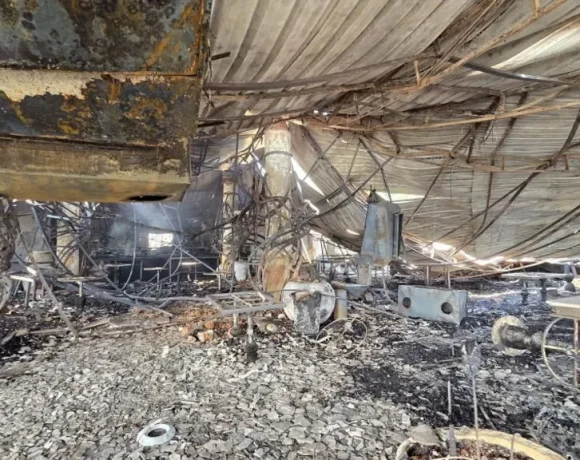
The BBC saw what appeared to be melted remains of chairs, tables and plants in one corner of the club.
Local police chief Alok Kumar said the fire had been concentrated in the kitchen area on the ground floor.
Goa’s Chief Minister Pramod Sawant told journalists three people had died from burn injuries, while others died of suffocation. Six people are in a stable condition in hospital.
A chef who works at a nearby venue told the BBC he knew some of the workers at the Birch club.
“People from all over the country and also from Nepal work in different clubs in Goa,” he said.”I am really worried for some people who I knew at the club. Their phones are off.”
On Sunday emergency teams were combing through the charred wreckage. An inquiry into the cause of the fire has been launched, the chief minister said.
“Those found responsible will face most stringent action under the law – any negligence will be dealt with firmly,” Dr Sawant said.
Prime Minister Narendra Modi called the Goa fire “deeply saddening” in a post on social media.
Six critically ill patients have been killed in a fire that broke out at an intensive care unit (ICU) of a hospital in the western Indian city of Jaipur.
The fire, suspected to be caused by a short circuit, started late on Sunday night in the storage area of the ICU of the Sawai Man Singh Hospital. Eleven patients were in the ICU at the time.
The victims include two women and four men. Relatives of the victims have accused staff of negligence, which hospital authorities have denied.
The government of Rajasthan state, of which Jaipur is the capital, has announced an investigation into the incident.
The state’s Chief Minister Bhajanlal Sharma said on Sunday. “Every possible step is being taken to ensure patient safety, treatment, and care for those affected, and the situation is being continuously monitored,”
The Sawai Man Singh hospital, run by the state government, is one of the largest in Rajasthan, where thousands of patients are treated every day.
The fire broke out just before midnight in the trauma centre of the hospital and soon spread through the building.
Fourteen patients were evacuated from a nearby ICU ward as thick plumes of smoke engulfed the room.
Firefighters broke open windows and battled the blaze for nearly two hours before bringing it under control, news agency PTI reported.
“We noticed smoke and immediately informed the staff, but they did not pay any heed. When the fire broke out, they were the first to run,” one of them told PTI.
Another relative, who lost his mum in the accident, alleged the hospital also did not have any emergency equipment. “There were no fire extinguishers, cylinders or even water to douse the fire,” he told ANI news agency.
The deputy superintendent of the hospital,Jagdish Modi, has dismissed the allegations.
“I can understand people’s sentiments in such a situation, but the allegations are untrue. Several hospital staff members risked their own lives to protect the patients and evacuated ICUs and wards,” he told the BBC.
Meanwhile, Prime Minister Narendra Modi expressed his sadness over the incident. “Condolences to those who have lost their loved ones. May the injured recover soon,” he wrote on X.
At least 39 people have died, including children, in a crush at a political rally in the southern Indian state of Tamil Nadu, officials say.
Tens of thousands of people had gathered on Saturday at a campaign event for actor-turned-politician Vijay, in the southern Karur district.
Local Media reported that It was delayed by several hours, Images broadcast on television showed people fainting in the packed crowds.
Tamil Nadu Chief Minister MK Stalin told reporters in Karur that the death toll included at least 17 women, 13 men and nine children. A further 51 people were receiving treatment, he said.
Compensation of one million rupees ($11,300; £8,400) will be provided to the families of the deceased, Stalin added, and there will be an inquiry into the incident.
One man told Indian news agency INA, from outside a hospital that his brother’s two sons had been at the event.
“The elder one passed away, the younger one is missing. My relatives, my sister-in-law, is in the ICU. What should I do?” he said.
Vijay wrote in an online statement that his heart was “broken” and that he was in “unbearable, indescribable pain and sorrow”.
He sent his “deepest sympathies and condolences” to the families of those who had died, and prayers for a “speedy recovery” to those in hospital.
India’s Prime Minister Narendra Modi said the incident was “unfortunate” and “deeply saddening” in a post on X.
A paramilitary soldier stands guard on the bank of Srinagar’s Dal lake on 10 May in Indian-administered Kashmir.
Both India and Pakistan have ceased hostilities since they announced the ceasefire but say they remain vigilant.
Top military officials from India and Pakistan are due to speak on Monday to discuss final details of the ceasefire agreed between them over the weekend.
The US-brokered ceasefire between the nuclear-armed neighbours appears to have held overnight after nearly four days of intense shelling and aerial incursions from both sides.
On Saturday, President Donald Trump announced the ceasefire between India and Pakistan, saying “it was time to stop the current aggression that could have led to the death and destruction of so many, and so much”.
India announced on Monday that it was reopening 32 airports for civilians that it had earlier said would remain closed until Thursday due to safety concerns.
The tensions were the latest in the decades-long rivalry between the neighbours who have fought two wars over Kashmir, a Himayalan region which they claim in full but administer in part.
The recent hostilities threatened to turn into a full-fledged war as both countries appeared unwilling to back down for days.
Both countries have said that dozens of people from both sides died over the four days of fighting last week, partly due to heavy shelling near the de facto border.
After the ceasefire, however, both the rivals have declared military victory.
On 7 May, India reported striking nine targets inside Pakistan and Pakistan-administered Kashmir this was in response to a deadly militant attack in Indian-administered Kashmir that killed 26 people.
The attack took place in a meadow in the picturesque Pahalgam valley on 22 April.
India blamed a Pakistan-based group for the attack but Islamabad denies any involvement.
In the days since the first strike, India and Pakistan accused each other of cross-border shelling and claimed to have shot down rival drones and aircraft in their airspace.
As the conflict escalated, both nations said they struck the rival’s military bases.
Indian officials reported striking 11 Pakistan Air Force bases, including one in Rawalpindi, near the capital Islamabad. India also claimed Pakistan lost 35-40 men at the Line of Control – the de facto border – during the conflict and that its air force lost a few aircraft.
Pakistan has accepted that some Indian projectiles landed at its air force bases.
Indian defence forces have also said that they struck nine armed group training facilities in Pakistan and Pakistan-administered Kashmir, killing more than 100 militants.
The Pakistan military, in turn, claims it targeted about 26 military facilities in India and that its drones hovered over capital Delhi.
India has confirmed that some Pakistani projectiles landed up at its air force bases, though it did not comment on the claim about Delhi.
Pakistan also claims to have shot down five Indian aircraft, including three French Rafales – India has not acknowledged this or commented on the number, though it said on Sunday that that “losses are a part of combat”.
Pakistan denied the claims that an Indian pilot was in its custody after she ejected following an aircraft crash. India has also said that “all our pilots are back home”.
At least 13 people have died and about 50 are injured after two passenger trains collided in India’s southern Andhra Pradesh state on Sunday.
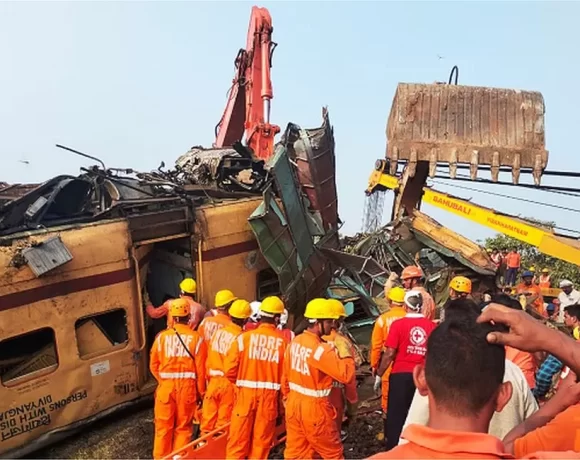
A rescue operation was launched and hundreds of emergency workers were at the site to clear the wreckage.
Officials said a preliminary investigation has found that a “human error” had led to the collision.
Prime Minister Narendra Modi expressed his condolences and said he was in touch with the railways minister.
The crash took place in the Vizianagaram district on Sunday evening.
Officials said three carriages of a passenger train, travelling between Visakhapatnam and Palasa, derailed around19:00 (13:30 GMT), after it was hit by another train.
The train had stopped on the tracks “due to a break in an overhead cable”, when a second incoming passenger train travelling between Visakhapatnam and Rayagada rammed into it from behind, a railway official told Reuters news agency.
Hundreds of ambulances, doctors, nurses and rescue personnel were sent to the scene to rescue passengers and pull out bodies.
Biswajit Sahu, Chief Public Relations Officer of East Coast Railway, said that a “human error” had led to the collision, caused by “overshooting of signal” by the second train.
He added that 33 trains have been cancelled and 22 others have been diverted following the accident. Railway officials expect the affected track to be cleared for traffic to resume by Monday evening.
Andhra Pradesh’s Chief Minister YS Jagan Mohan Reddy’s office said he would visit the site of accident on Monday. The minister has also announced financial compensation for the victims.
India has one of the largest train networks in the world with millions of passengers using it daily, but a lot of the railway infrastructure needs improving.
Sunday’s accident comes just months after a devastating crash involving three trains killed 292 people and injured thousands more in the eastern state of Odisha.
The country’s top detective agency arrested three railway employees in connection with the railway accident, which was the worst in 20 years.
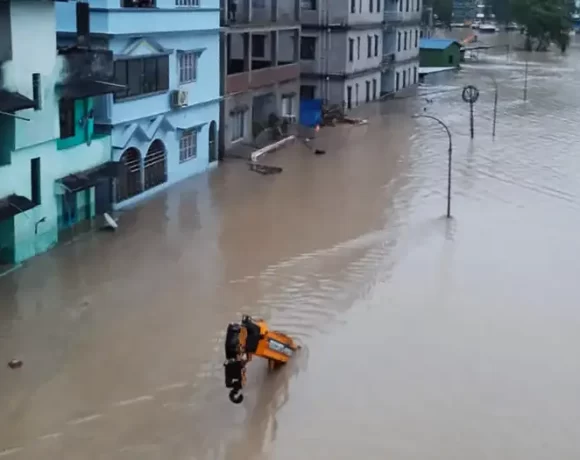
A powerful flash flood in India has led to the disappearance of 23 soldiers, following heavy rainfall in the northeastern State of Sikkim, the Indian army said on Wednesday.
“Due to sudden cloudburst over Lhonak Lake in North Sikkim, a flash flood occurred in the Teesta River… 23 personnel have been reported missingand some vehicles are reported submerged under the slush,” the army said in a statement, adding that search operations were underway.
Lhonak Lake lies at the base of a glacier in the snowy mountains that surround Kangchenjunga — the world’s third highest mountain.
“Some army establishments along the valley have been affected and efforts are on to confirm details,” said defense spokesperson.
Around 15,000 people in the region were likely affected and at least eight major bridges were washed away by gushing torrents, Reuters attributed a top official of the state as saying.
The head of Sikkim State, Prem Singh Tamang, urged calm and said he had visited some of the affected areas.
“I humbly urge all our citizens to remain vigilant and refrain from unnecessary travel during this critical time,” he said on X, the platform formerly known as Twitter.
India’s Meteorological Department warned of landslides and disruption to flights amid predictions of rainfall in some parts of Sikkim in the coming days.
The department said that a low-pressure system moving eastward across several states was responsible for the cloudburst in Sikkim.
Rainfall over the lake caused the flooding in the Lachen valley, about 150 kilometers (93 miles) north of Gangtok, Sikkim’s capital.
The main highway linking Sikkim to West Bengal State was damaged and road access to Sikkim capital, Gangtok, was entirely cut off, according to army spokesperson Anjan Basumatary.
Besides Sikkim, several other States like Bihar, Jharkhand and West Bengal were also likely to see rainfall over the next few days.
India has suspended visa services for Canadian citizens amid an escalating row over the killing of a Sikh separatist on Canadian soil.
Visa service provider BLS posted a message from India’s mission blaming “operational reasons” for the decision.
Tensions flared this week after Canada said it was investigating “credible allegations” linking India with the murder of the separatist leader.
India angrily rejected the allegation calling it “absurd”.
Analysts say relations between the countries, which have been strained for months, are now at an all-time low.
The message about the suspension of visas was first posted on the BLS website on Thursday.
“Important notice from Indian Mission: Due to operational reasons, with effect from 21 September 2023, Indian visa services have been suspended till further notice,” it read.
India’s foreign ministry refused to comment on the matter and asked the BBC to refer to the BLS website.
The move comes a day after India issued an advisory urging its citizens travelling to or living in Canada to “exercise utmost caution” in view of the “growing anti-India activities and politically-condoned hate crimes and criminal violence in Canada”.
Delhi said that some recent threats were directed at its diplomats and some Indians “who oppose the anti-India agenda”.
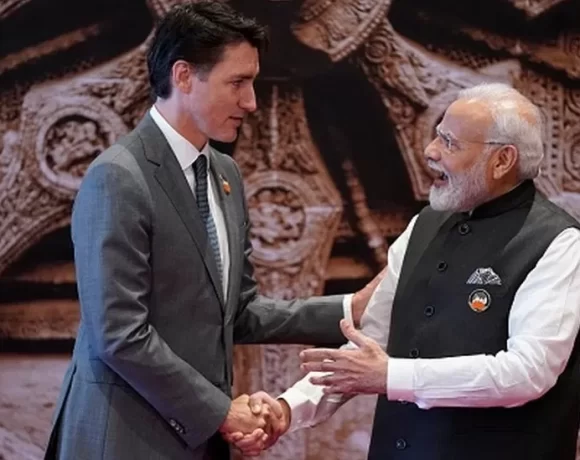
Canadian Prime Minister, Justin Trudeau said on Monday that intelligence agencies were investigating whether “agents of the government of India” were involved in the killing of Hardeep Singh Nijjar, a Canadian citizen – India had designated him a terrorist in 2020.
Nijjar was shot dead in his vehicle by two masked gunmen outside a Sikh temple on 18 June in British Columbia.
“Any involvement of a foreign government in the killing of a Canadian citizen on Canadian soil is an unacceptable violation of our sovereignty,” Mr Trudeau told the Canadian parliament on Monday.
India reacted strongly, saying that Canada was trying to “shift the focus from Khalistani terrorists and extremists” who had been given shelter there.
The Indian government has often reacted sharply to demands by Sikh separatists in Western countries for Khalistan, or a separate Sikh homeland.
The Khalistan movement peaked in India in the 1980s with a violent insurgency centred in Sikh-majority Punjab state.
It was quelled by force and has little resonance in India now, but is still popular among some in the Sikh diaspora in countries such as Canada, Australia and the UK.
Canada has the highest number of Sikhs outside Punjab and has seen several pro-Khalistan protests and demonstrations.
In June, reports said India had raised a “formal complaint” with Canada about the safety of its diplomats there.
At least 17 labourers working on a railway bridge being built across a ravine in India’s eastern Mizoram state were killed when it collapsed on Wednesday, officials said, with others reported missing.
Video footage posted by Mizoram Chief Minister, Zoramthanga showed a metal frame that had toppled off towering columns into a wooded valley below.
“Under construction railway over bridge at Sairang, near Aizawl collapsed today; at least 17 workers died,” Zoramthanga, who uses only one name, said on X, formerly known as Twitter.
The Indian Express newspaper quoted a policeman as saying that 17 bodies had been recovered and “many others” were missing. It was not possible to immediately verify the reports of people missing.
The Hindu newspaper, quoting state government officials, reported some 40 workers had been at the site when the bridge collapsed.
“Rescue operations are underway and all possible assistance is being given to those affected,” the office of Prime Minister Narendra Modi said.
Modi was “pained” by the accident and offered his “condolences to those who have lost their loved ones”, his office said on X.
The government will pay some $2,400 to the next of kin of those killed, it said.
Mizoram is in the far east of India, bordering Myanmar.
People had “come out in large numbers to help with rescue”, Zoramthanga said, adding he was “deeply saddened and affected by this tragedy”.
Accidents on large infrastructure construction sites are common in India.
At least 20 workers were crushed to death in western India this month when a crane collapsed above an under-construction expressway outside the financial capital Mumbai.
In October last year, 130 people were killed in Gujarat when a bridge collapsed soon after it was repaired.
And in 2016, the collapse of a flyover onto a busy street in Kolkata killed at least 26 people.
India is hoping to make history on Wednesday by becoming the first nation to land near the Moon’s south pole.
One of the mission’s major goals is to hunt for water-based ice, which scientists say could support human habitation on the Moon in future.
If Chandrayaan-3 is successful, India will be only the fourth country to have achieved a soft landing on the Moon.
India’s attempt comes just days after Russia’s Luna-25 crashed while trying to touch down in the same region.
The south pole of the Moon holds special promise in the search for water ice. The surface area that remains in permanent shadow there is huge, and scientists say it means there is a possibility of water in these areas.
The US, the former Soviet Union and China have all achieved a soft landing near the Moon’s equator but none have led successful missions to its south pole.
India’s attempt to land its Chandrayaan-2 mission near the south pole in 2019 was unsuccessful, it crashed into the lunar surface.
So all eyes are now on Chandrayaan-3, its third mission to the little explored Moon.
The spacecraft with an orbiter, lander and a rover lifted off on 14 July from the Sriharikota space centre in south India.
The lander called Vikram after Indian Space Research Organisation (Isro) founder Vikram Sarabhai carries within its belly the 26kg rover named Pragyaan, the Sanskrit word for wisdom.
The lander will attempt touchdown at 18:04 local time (12:34GMT) on Wednesday, with the descent planned to start at 17:45 India time from its current height of 25km (15 miles), Isro has said.
Scientists say the following few minutes will be the most crucial as the lander attempts to make touchdown on an area that is “very uneven, full of craters and boulders”, with some predicting it will be “15 minutes of terror.”
At least 15 people died by electrocution and seven others were injured after a power transformer exploded at the Namami Gange project site on the banks of the Alaknanda river in Uttarakhand’s Chamoli district Wednesday, said officials
Authorities confirmed that a police sub-inspector and three home guards were among the 15 killed in the accident that occurred at 11.35 am near the Chamoli sewage treatment plant, according to ADG (Law and Order) V Murugesan, who added that electricity circulation on a metal railing caused the casualties, as per preliminary information.
The state’s Chief Minister, Pushkar Singh Dhami, has launched an investigation into the incident, according to BBC.
Police also disclosed that at least 15 people have also been severely injured in the accident and they are receiving treatment at the district’s main hospital.
BBC reported that the transformer exploded and electrified a bridge that spans the river.
“We got a call from the village that a watchman had died of electrocution. When the police went to check they found that 21 people had been electrocuted and severely injured. Fifteen people died in hospital and the rest are critical,” Chamoli’s superintendent of police, PramendraDhobal said.
Deaths from electrocution are frequently reported in India where poor wiring and infrastructure often lead to serious accidents.
At least 25 people were killed and eight others injured after a bus caught fire overnight on an expressway in western India on Saturday, police said.
The bus was travelling to the city of Pune when it hit a pole and overturned after midnight, causing its diesel tank to catch fire, senior Police officer, Baburao Mahamuni told AFP.
“There were about 30-35 people on the bus. Twenty-five people have died and eight others are injured,” he said.
The injured, including the bus driver, have been admitted to a hospital near the site of the crash in Maharashtra state, about 400 kilometres (250 miles) east of India’s financial capital Mumbai.
Police said they had launched an inquiry into the crash.
“The priority at this moment is to identify the bodies and hand them over to their family members,” local media quoted police superintendent Sunil Kadasane as saying.
Images showed the bus engulfed in flames and later the charred remains of the vehicle overturned on the highway.
Three children were among the dead, a police officer told reporters.
“Deeply saddened by the devastating bus mishap in Buldhana,” Prime Minister Narendra Modi said on Twitter.
“My thoughts and prayers are with the families of those who lost their lives. May the injured recover soon.”
Maharashtra Chief Minister Eknath Shinde said he felt “deep grief” over the accident and pledged compensation of 500,000 rupees ($6,100) to the families of those killed.
Accidents are common on India’s vast network of roads, which are poorly maintained and notoriously dangerous.
The main causes are excessive speed, not wearing helmets — sales of two-wheelers far outstrip those of cars — and not using seatbelts.
India accounts for 11 per cent of the global road death toll despite having just one per cent of the world’s vehicles, according to a World Bank report released in 2021.
More than 170,000 people in India and Pakistan have been evacuated from the path of a fierce cyclone before its expected landfall on Thursday.
Forecasters have warned that Cyclone Biparjoy which means “disaster” in Bengali could destroy homes and crops in its path.
Biparjoy is expected to first hit India’s Gujarat state on Thursday evening local time.
Visuals from the state’s coast showed heavy rains, high tides and rough seas.
The cyclone is expected to make landfall near the Jakhau port between Mandvi in Gujarat and Keti Bandar in Pakistan’s Sindh province.
In its latest update, India’s weather department said that the landfall process “would commence from today evening [local time] and continue till midnight”.
Pakistan’s disaster management agency warned of storm surges as high as 3-4m along the coastline from Karachi to India’s Gujarat.
Gujarat’s Relief Commissioner Alok Pandey said the cyclone’s speed had reduced but its winds speed were expected to be around 110-12 km/h at the time of landfall, which he called “very dangerous”.
India’s weather office warned that the cyclone will damage roads, thatched houses and uproot electricity towers and trees along Gujarat’s coast.
The State’s Health Minister, Rushikesh Patel, asked people to stay where they were and avoid travelling. “Our aim is to ensure zero casualties,” he said.
At least seven deaths were reported amid heavy rains in India this week.
The victims included two children crushed by a collapsing wall, and a woman hit by a falling tree while riding a motorbike, AFP news agency reported.
In Pakistan, the storm is expected to strike the coast of Sindh province. Authorities have already evacuated 81,000 people from the south-eastern coast and set up 75 relief camps at schools.
Pakistan’s climate change Minister Sherry Rehman said that Karachi, the province’s largest city with a population of more than 20 million, was not under immediate threat but emergency measures were being taken.
Meteorologists warned that high tides could inundate low-lying areas along the coasts. BBC/Adebukola Aluko
People found guilty over a deadly rail accident in eastern India will be “punished stringently”, the country’s Prime Minister Narendra Modi has said.
At least 288 people were killed and more than 800 injured in Friday’s incident in Odisha state, involving two passenger trains and a goods train.
Rescue efforts have concluded, with officials saying all trapped and injured passengers have been retrieved.
Mr Modi has visited the scene, labelling the incident a “painful” one.
He also met victims of the disaster in hospital, and vowed that his government would leave “no stone unturned for the treatment of those injured”.
It is still not clear what caused the multi-train collision in Balasore district, which has been described as India’s worst rail accident this century.
A full investigation has been launched, but a preliminary report indicates that the accident was the result of signal failure, said KS Anand, chief public relations officer of the South Eastern Railway.
Some 2,000 passengers are thought to have been on board the two passenger trains involved.
The exact sequence of events has been the subject of conflicting accounts.
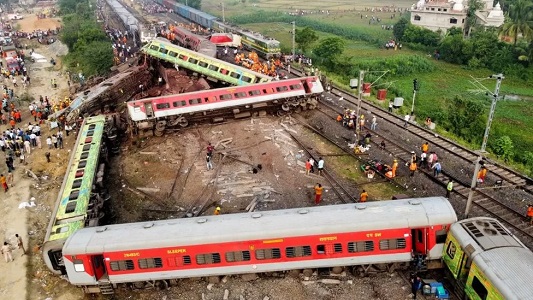
Officials say several carriages from the Coromandel Express, travelling between Kolkata (formerly Calcutta) and Chennai (formerly Madras), derailed at about 19:00 (13:30 GMT) after hitting a stationary goods train. It remains unclear how the Express ended up on the same track as the goods train.
Several of the Coromandel Express’s coaches then ended up on the opposite track. Another train travelling in the opposite direction – the Howrah Superfast Express travelling from Yesvantpur to Howrah – collided with derailed carriages.
“The Coromandel Express was supposed to travel on the main line, but a signal was given for the loop line instead, and the train rammed into a goods train already parked over there,” Mr Anand said.
“Its coaches then fell on to the tracks on either side, also derailing the Howrah Superfast Express,” he said.
Sounds of ambulance sirens have been going off every 30 minutes outside the trauma centre in the SCB hospital in the city of Cuttack – where critically injured passengers have been wheeled in.
So far, close to 200 passengers from the train accident site have been brought in, and the numbers continue to rise.
The hospital is the largest in the state of Odisha, but is still three hours’ drive from the accident site.
The hospital staff – from junior doctors to nurses and ward boys – have been lined up and waiting in groups to assist patients as they are brought in. Wards have been expanded to handle the numbers coming in.
The constant sounds of whistles and announcements by hospital authorities interrupt the chaos.
Family members of the injured are waiting anxiously outside praying for their relatives’ wellbeing. But many are still looking for their loved ones, not knowing their whereabouts.
There is a counter set up to assist people who cannot locate their family members. It is crowded, and the lists run long.
Some people met by the BBC ran from the accident site to nearby hospitals before coming to the facility in Cuttack – searching for their families who were on board the trains.
Announcing the conclusion of rescue efforts on Saturday, the railway ministry said work to restore the crash site had begun.
Survivors and eyewitnesses earlier described chaotic scenes and the heroic efforts of people from nearby villages to save trapped passengers.
Mukesh Pandit, who was trapped for half an hour before being rescued, told the BBC he heard a “thunderous sound” shortly before the carriage overturned.
“Four passengers who were travelling from my village have survived, but a lot of people are injured or still missing. A lot of people died in the coach I was travelling in,” he added.
Residents of the neighbouring villages were among the first to reach the site of the accident and start the rescue operation.
India has one of the largest train networks in the world with millions of passengers using it daily, but a lot of the railway infrastructure needs improving.
Trains can get very packed at this time of year, with a growing number of people travelling during school holidays.
Both passenger trains involved in the crash were full and had many more people on the waiting list, according to passenger lists on the Indian rail ministry website reviewed by the BBC.
India’s worst train disaster was in 1981, when an overcrowded passenger train was blown off the tracks and into a river during a cyclone in Bihar state, killing about 800 people.
At least 261 people have been killed and 650 are injured in a crash involving three trains in India’s eastern Odisha state, officials say.
One passenger train derailed and its coaches fell on to the adjacent track where they were struck by an incoming train on Friday evening. A freight train was stationary.
The death toll is expected to rise, as many are still trapped in the wreckage.
The cause of India’s worst train crash this century is not yet clear.
Officials said several carriages from the Shalimar-Chennai Coromandel Express derailed at about 19:00 (13:30 GMT) in Balasore district, hit a stationary goods train and several of its coaches ended up on the opposite track.
Another train – the Howrah Superfast Express travelling from Yesvantpur to Howrah – then hit the overturned carriages.
“The force with which the trains collided has resulted in several coaches being crushed and mangled. We are trying to cut through the wreckage to reach the passengers. We also have to be careful to not hurt those alive,” Atul Karwal, chief of the National Disaster Response Force (NDRF) told news agency ANI.
He said this was “the third deadliest crash in the history of Indian railways”.
More than 200 ambulances and hundreds of doctors, nurses and rescue personnel were sent to the scene, the state’s chief secretary Pradeep Jena said.
Sudhanshu Sarangi, director general of Odisha Fire Services, had earlier said 288 had died.
Railway Minister Ashwini Vaishnaw is at the site of the accident and Prime Minister Narendra Modi is expected to visit the injured in the hospital later on Saturday.
One male survivor said that “10 to 15 people fell on me when the accident happened and everything went haywire. I was at the bottom of the pile.
“I got hurt in my hand and also the back of my neck. When I came out, I saw someone had lost their hand, someone had lost their leg, while someone’s face was distorted,” the survivor told India’s ANI news agency.
A day of mourning has been announced in the state.
India’s deadly train crashes
June 1981: Nearly 800 people died when seven of the nine coaches of an overcrowded train fell into a river during a cyclone
August 1995: At least 350 people are killed when two trains collide 200km (125 miles) from Delhi
August 1999: Two trains collide near Kolkata (formerly Calcutta) killing at least 285 people
October 2005: 77 people are killed when a train derails in the southern state of Andhra Pradesh
November 2016: Nearly 150 people are killed and an equal number are injured when 14 carriages of the Indore-Patna Express train derail near the city of Kanpur
Residents of the neighbouring villages were among the first to reach the site of the accident and start the rescue operation.
Some surviving passengers were seen rushing in to help rescue those trapped in the wreckage.
Local bus companies were also helping to transport wounded passengers.
India has one of the largest train networks in the world with millions of passengers using it daily, but a lot of the railway infrastructure needs improving.
India’s worst train disaster was in 1981, when an overcrowded passenger train was blown off the tracks and into a river during a cyclone in Bihar state, killing at least 800 people.
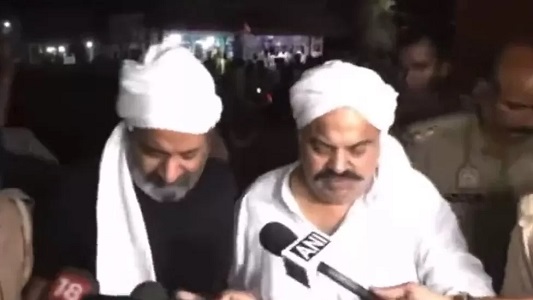
A former Indian politician convicted of kidnapping has been shot dead live on TV along with his brother.
Atiq Ahmed, who was under police escort, was talking to reporters when a gun was pulled close to his head in Prayagraj, also known as Allahabad.
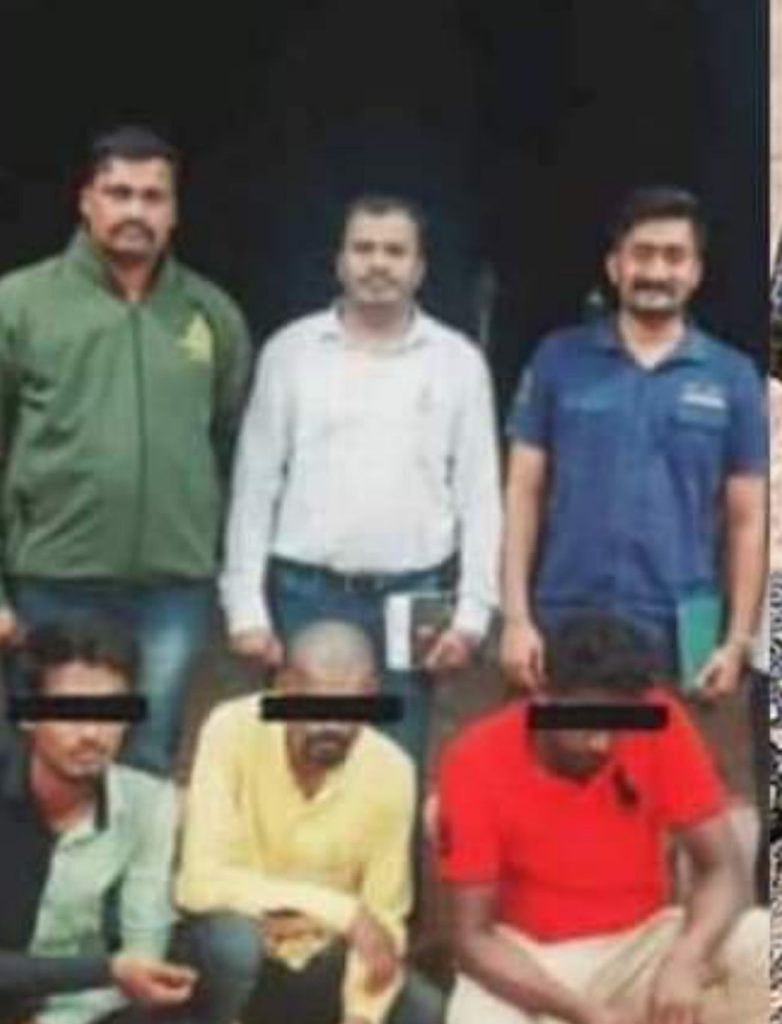
After the shots were fired on Saturday night, three men who had been posing as journalists quickly surrendered and were taken into custody.
Ahmed’s teenage son was shot dead by police days earlier.
Asad, Atiq Ahmed’s teenage son, was killed by the police on Thursday
Dozens of cases, including kidnapping, murder and extortion, were registered against Atiq Ahmed over the past two decades. A local court sentenced him and two others to life in jail in March this year in a kidnapping case.
Ahmed had previously claimed there was a threat to his own life from the police.
Video showed Ahmed and his brother, Ashraf, both in handcuffs, speaking to journalists on the way to a medical check-up at a hospital seconds before they were both shot.
In the footage, shared widely on social media and TV channels, Ahmed is asked whether he attended his son’s funeral.
His last words to camera are: “They did not take us, so we did not go.”
The three suspected assailants had arrived at the site on motorcycles, the police said. A policeman and a journalist were also injured at the scene.
A forensic team examined the spot where the Ahmed brothers were killed
Following Saturday night’s incident, Chief Minister Yogi Adityanath ordered a judicial probe into the killings and banned large gatherings in the districts of Uttar Pradesh state to ensure peace.
Experts have raised questions on how a man could be killed in front of the media and the police. BBC Hindi correspondent Anant Zanane reported from Prayagraj that the city was in a lockdown-like situation.
Who was Atiq Ahmed?
He had a long stint both in politics and with the criminal world. He was first accused in a murder case in 1979. In the next 10 years, he emerged as a person who had strong influence in the western part of Allahabad city.
He won his first election as an independent candidate and became a state lawmaker in 1989. He went on to win the seat for two consecutive terms and his fourth win came as a lawmaker from the regional Samajwadi party (SP).
In 2004, he won a seat in the federal election as an SP candidate and became an MP. Meanwhile, cases continued to be filed against him in Allahabad and other parts of the state.
Ahmed contested a few more elections in the next decade but lost all of them. In 2019, India’s top court ordered that he should be moved to a jail in Gujarat state after it emerged that he planned attacks on a businessman from a prison in Uttar Pradesh where he was being held awaiting trial in another case.
He was brought back to Prayagraj in March from Gujarat to appear in a local court as it announced his sentencing in a kidnapping case.
Ahmed was also brought to the city to be questioned in other cases. His brother Ashraf, who was in a jail in Bareilly district, was also brought to the city to be questioned.
They were both being questioned in the February murder of Umesh Pal, a key witness in the 2005 murder of Raju Pal, a lawmaker belonging to the regional Bahujan Samaj Party (BSP).
Raju Pal had defeated Ashraf in the 2004 assembly elections in Atiq Ahmed’s political stronghold.
Umesh Pal was killed in February this year when several people fired at him.
Atiq Ahmed’s teenage son Asad and few others were named as the main suspects in the Umesh Pal murder case. Asad and another man were killed by police earlier this week in what was described as a shootout.
‘Crime has reached its peak in UP’
Last month India’s Supreme Court declined to hear Ahmed’s petition in which he alleged there was a threat to his life from the police.
Uttar Pradesh is governed by the Hindu-nationalist BJP, and opposition parties criticised the killings as a security lapse.
“Crime has reached its peak in UP and the morale of the criminals is high,” Akhilesh Yadav, chief the opposition Samajwadi Party, tweeted in Hindi.
“When someone can be killed in firing openly amidst the security cordon of the police, then what about the safety of the general public. Due to this, an atmosphere of fear is being created among the public, it seems that some people are deliberately creating such an atmosphere,” he added.
More than 180 people facing various charges have been killed by police in the state in the past six years.
Rights activists accuse the police of carrying out extra-judicial killings, which the state’s government denies.
The police usually calls them “encounters” – many say these are really staged confrontations which almost invariably end with dead criminals and unscathed police.
Encounters carried out by police are – at least in part – a response to India’s grindingly slow and dysfunctional criminal justice system.
Can you write with both hands at the same time? It is called ambidexterity.
Guess what, there is a girl from India who can do just that. She is Aadi Swaroopa who holds the world record for being ambidextrous: Aadi Writes 45 words per minute.
Watch her.
Ambidexterity world record holder Aadi Swaroopa from India. She writes 45 words per minute… pic.twitter.com/1ynxIpfDJZ
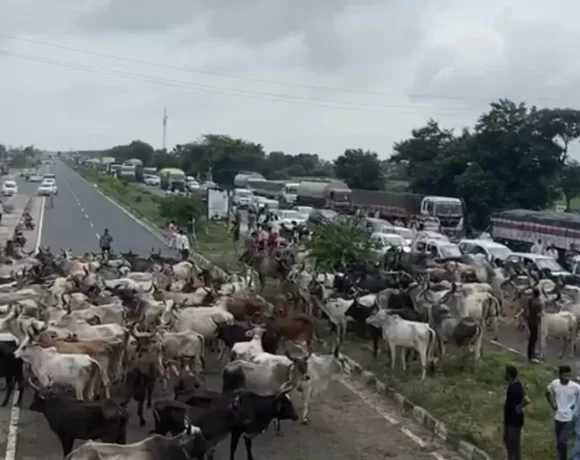
Charitable trusts, that run cattle shelters in the western Indian state of Gujarat, have set free thousands of cows in protest against the lack of promised government aid.
Videos of cows walking through government buildings have gone viral.
The report says, protesters have threatened to boycott the upcoming state election if the government fails to release funds.
Gujarat is among several Indian states reeling from a lumpy skin disease outbreak, leading to cattle losses.
The state has reported more than 5,800 cattle deaths, while nearly 170,000 are estimated to have been affected by the disease.
Cows are sacred animals for India’s majority Hindu community, and slaughtering them is illegal in 18 states, including Gujarat.
In 2017, Gujarat tightened its cow protection laws by notifying that those slaughtering a cow could be punished with a life sentence.
An unintended consequence has been a large number of cattle roaming the streets, causing traffic snarls, or landing up at shelters.
In its budget for this year, the Gujarat government had allocated 5bn rupees, $61m; £57m, to maintain shelters for cows and other old animals in the state.
Shelter managers, however, said they had not received any money under the scheme and felt “cheated” by the government.
They added that despite several representations to the government, they had not been offered any solutions.
The Indian Express reported that nearly 1,750 cowsheds run by charitable trusts, which house more than 450,000 cattle, had joined the protest.
“BJP-ruled states like Uttar Pradesh, Haryana, Madhya Pradesh, and Uttarakhand are providing support. Even Congress-ruled Rajasthan is offering 50 rupees for one cow. So why has Gujarat failed to support cows?” Vipul Mali, general secretary of the Gujarat Gau Seva Sangh – which runs cow shelters for sick cattle – was quoted by the newspaper as saying.
According to the report, in the past few days, cattle have taken over roads, local courts and government buildings in several parts of Gujarat.
In one government office, protesters showed up with cow urine and dung.
Police said they had detained 70 protesters in the districts of Banaskantha, Patan and Kutch.
The Gujarat animal husbandry minister admitted that aid had been delayed due to “administrative tangles” and promised to find a “positive solution” in a day or two.
Protesters have now threatened a wider agitation if their demands are not met by the end of the month.
BBC/Taiwo Akinola
Subscribe to our Telegram Channel and join our Whatsapp Update Group
A minor was allegedly gang-raped and set on fire by two men has died in hospital, Police told AFP Tuesday.
The 16-year-old girl belonged to Dalit, the lowest rung in the Hindu caste system who suffer disproportionately high levels of sexual violence in a country with high rates of crime against women.
Her death on Monday came less than a week after two Dalit sisters, aged 15 and 17, were found hanging from a tree after being allegedly sexually assaulted and murdered by six men.
Both incidents took place in the poor northern state of Uttar Pradesh, home to about 230 million people, where similar crimes regularly make headlines.
In the latest case, the girl from a rural area was allegedly attacked by two men and set on fire early this month.
She was shifted to a hospital in the state capital, Lucknow where she succumbed to her injuries.
“We arrested the accused within two hours of the incident being reported and assured the family of proper follow-up action against the perpetrators,” local police chief Dinesh Kumar Prabhu told AFP.
Prabhu said police had since been deployed around the girl’s house “to check any untoward incident”.
In previous cases, low-caste families have been threatened or attacked to stop them from testifying.
Activists say police often fail to take seriously accusations made by the marginalised community and that they lack recourse to legal representation.
Last year the Uttar Pradesh authorities’ swift cremation before an autopsy of a Dalit rape victim murdered by an upper-caste Hindu man triggered widespread outrage.
Nearly 32,000 cases of rape were reported in India in 2021, according to government figures, but many more are thought to go unreported.
Culled/ Titilayo Kupoliyi
Subscribe to our Telegram Channel and join our Whatsapp Update Group
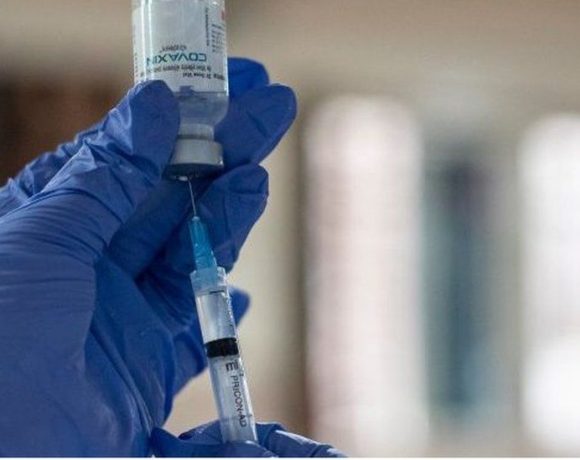
A health official is being investigated for vaccinating 30 students with a single syringe in the central Indian state of Madhya Pradesh.
The incident took place in a school in the Sagar district where children were being given Covid-19 vaccines.
India’s health ministry mandates a “one needle, one syringe, only one time” protocol for Covid-19 vaccines.
India has administered over 2.03bn Covid-19 vaccines so far.
Single-use disposable syringes are widely used in India to avoid the spread of deadly diseases like HIV. However, there have been multiple incidents in the past where a single syringe has been reused in hospitals due to a shortage of equipment.
Jitendra Rai, who was vaccinating the children, told the media that he was only given one syringe by the health department and he was just following orders.
Parents who had accompanied their children spotted the issue and reported it to the school authorities.
When state officials reached the school, Mr Rai was missing from the school and his phone was turned off.
The state’s health department has registered a case of negligence against him. Meanwhile, it has also started an inquiry against the official responsible for dispatching equipment for the vaccination drive.
A spokesperson from the opposition Congress party has demanded that the state’s health minister should resign over the incident.
India is the second country after China to have crossed the two-billion Covid vaccines mark. In July, the government announced a 75-day free Covid booster dose programme for all adults to mark India’s 75th independence anniversary.
According to India’s health ministry, 98% of adults have received at least one dose of the Covid vaccine, while 90% have been fully vaccinated.
On Wednesday, the country reported 18,313 daily cases for the past 24 hours and 57 Covid-related deaths.
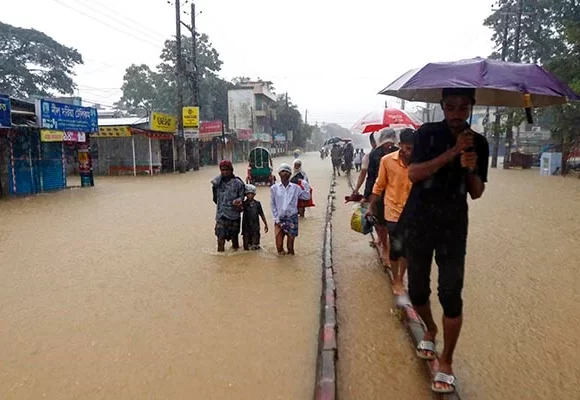
Monsoon storms in Bangladesh and India have killed at least 41 people and unleashed devastating floods that left millions of others stranded, officials said on Saturday.
Floods are a regular menace to millions of people in low-lying Bangladesh, but experts say climate change is increasing their frequency, ferocity and unpredictability.
Relentless downpours over the past week have inundated vast stretches of Bangladesh’s northeast, with troops deployed to evacuate households cut off from neighbouring communities.
Schools have been turned into relief shelters to house entire villages inundated in a matter of hours by rivers that suddenly burst their banks.
“The whole village went under water by early Friday and we all got stranded,” said Lokman, whose family lives in Companiganj village.
“After waiting a whole day on the roof of our home, a neighbour rescued us with a makeshift boat. My mother said she has never seen such floods in her entire life,” the 23-year-old added.
Asma Akter, another woman rescued from the rising waters, said her family had not been able to eat for two days.
“The water rose so quickly we couldn’t bring any of our things,” she said. “And how can you cook anything when everything is underwater?”
Lightning triggered by the storms has killed at least 21 people around the South Asian nation since Friday afternoon, police officials told AFP.
Among them were three children aged between 12 and 14 who were struck by lightning on Friday in the rural town of Nandail, said local police chief Mizanur Rahman.
Another four people died when landslides hit their hillside homes in the port city of Chittagong, police inspector Nurul Islam told AFP.
At least 16 people have been killed since Thursday in India’s remote Meghalaya, the state’s chief minister Conrad Sangma wrote on Twitter, after landslides and surging rivers that submerged roads.
Next door in Assam state, more than 1.8 million people have been affected by floods after five days of incessant downpours.
Assam chief minister Himanta Biswa Sarma told reporters he had instructed district officials to provide “all necessary help and relief” to those caught in the flooding.
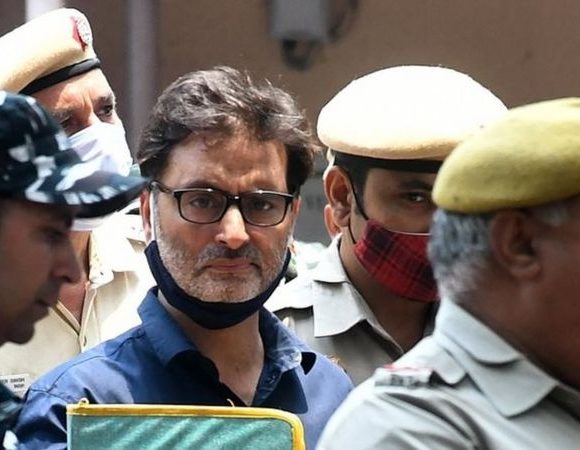
A court in India has sentenced senior Kashmiri separatist leader Yasin Malik to life imprisonment after convicting him of funding terrorism.
He was found guilty of participating in and funding terrorist acts and involvement in criminal conspiracy.
Malik told the court he gave up arms in the 1990s. He was convicted last week.
Tens of thousands of people have been killed in Muslim-majority Kashmir since an armed revolt against rule by India, which is mostly Hindu, erupted in 1989.
The court in the capital Delhi gave Malik, 56, two life sentences and five 10-year jail terms, all to be served concurrently, NDTV reported.
Shops in some areas of Srinagar, the main city in Indian-administered Kashmir, were shut and police fired tear gas to disperse stone-throwing protesters outside Malik’s residence. Mobile internet has been suspended in the region as a security precaution.
Prime Minister Shahbaz Sharif of Pakistan, which disputes India’s claim to Kashmir, called it “a black day for Indian democracy”.
“India can imprison Yasin Malik physically but it can never imprison the idea of freedom he symbolises,” he tweeted.
India’s National Investigating Agency NIA, which deals with anti-terror crimes, had demanded the death penalty for Malik, the leader of the pro-independence Jammu and Kashmiri Liberation Front (JKLF). The defence had asked for life imprisonment.
Ahead of sentencing, he was escorted into the court surrounded by security forces.
Malik was arrested shortly after the JKLF was banned in 2019.
He did not contest the charges brought against him under the stringent Unlawful Activities Prevention Act, UAPA, as well as sedition and criminal conspiracy charges.
But a statement released by the JKLF after he was convicted last week called the charges “fabricated and politically motivated”.
“If seeking azadi, freedom, is a crime, then I am ready to accept this crime and its consequences,” it quoted Malik telling the judge.
He challenged the Indian intelligence agencies to prove that he had been involved in any terror activity since then. The acts for which he was convicted took place in 2010 and 2016, prosecutors alleged.
The JKLF – which has sought independence for Kashmir from both India and neighbouring Muslim-majority Pakistan – was formed in 1977 with Amanullah Khan as its head.
He and Malik organised resistance to Indian rule with help from the then Pakistani military regime of General Zia-ul Haq.
Kashmir has been a flashpoint between the nuclear-armed neighbours for decades. Both India and Pakistan claim the entire valley, but control only parts of it.
India accuses Pakistan of backing militant groups based in Kashmir, which Pakistan denies.
It was a bomb attack by the JKLF in Srinagar on 31 July 1988 which in effect marked the start of the separatist insurgency against Indian rule in the region that has raged for more than three decades.
A couple in the north Indian state of Uttarakhand are suing their only son and his wife for not giving them a grandchild after six years of marriage.
Sanjeev and Sadhana Prasad, 61 and 57, say they used up their savings raising their son, paying for his pilot’s training as well as a lavish wedding.
They are demanding compensation worth nearly $650,000 dollars, if no grandchild is born within a year.
The highly unusual lawsuit was filed on grounds of “mental harassment”.
Mr Prasad said he had spent all his savings on his son, sending him to the US in 2006 for pilot training at a cost of $65,000.
He returned to India in 2007, but lost his job and his family had to support him financially for more than two years.
Shrey Sagar, 35, did eventually get a job as a pilot. His parents say they arranged his marriage to Shubhangi Sinha, now 31, in 2016, in the hope that they would have a “grandchild to play with” during their retirement.
The parents said, they paid for a wedding reception in a five-star hotel, a luxury car worth $80,000 and a honeymoon abroad.
“My son has been married for six years but they are still not planning a baby,” Mr Prasad said. “At least if we have a grandchild to spend time with, our pain will become bearable.”
The couple’s lawyer, AK Srivastava, said that the couple had demanded the money “because of mental cruelty”.
“It is a dream of every parent to become a grandparent. They had been waiting for years to become grandparents.”
The couple’s petition, filed in Haridwar, is expected be heard by a court on 17 May.
Millions of Indians are experiencing a brutal heat-wave that is throwing lives and livelihoods out of gear without relief in sight.
Prime Minister Narendra Modi said the temperatures are rising rapidly in the country, and rising much earlier than usual.
“The India Meteorological Department, IMD, has forecast a gradual rise in maximum temperatures by 2-4C over most parts of North-western and central India this week, with “no large change thereafter”.
While heat-waves are common in India, especially in May and June, summer began early this year with high temperatures from March itself – average maximum temperatures in the month were the highest in 122 years. Heat-waves also began setting in during the month.
The Centre for Science and Environment, a think tank, says that early heat-waves this year have affected around 15 states, including the northern state of Hi-machal Pradesh, known for its pleasant temperatures. BBC/Taiwo Akinola
Four men have been arrested for allegedly gang-raping a Bengal monitor lizard at the Sahydari Tiger Reserve in Maharashthra, India.
CCTV footage from the Maharashtra Forest Department showed the four men lurking around the forest and trespassing into the Sahyadri Tiger Reserve, which was created by the Indian government in 2008 to conserve Bengal tigers.
One of the accused’s phones was discovered to contain a video of them gang-raping the lizard.
In addition to the video of the men sexually abusing the monitor lizard, officials also found photos of various animals such as porcupines and deer on the mens’ phones.
Bengal monitor lizards can grow up to five and a half feet long and weigh almost 16 pounds. They are currently categorized as reserve species under the Wildlife Protection Act of 1972.
Forest guards initially only caught one of the accused, while the others fled. The remaining three were later found in Hativ village in the Ratnagiri district of Maharashtra. Officials said the men came to Kolhapur’s Chandoli village from Konkan to hunt.
The four hunters have been identified as Sandeep Tukram, Pawar Mangesh, Janardhan Kamtekar and Akshay Sunil.
The case was taken to the Indian Penal Court to discuss proper legal action and charges against the four men. According to the Indian Penal Code, Section 377 states that anyone who voluntarily commits intercourse with an animal “shall be punished with imprisonment for life, or with imprisonment of either description for a term which may extend to ten years, and shall also be liable to fine.”
In the later part of the eighteenth century to four decades into the nineteenth century, precisely between 1760s and 1840, the industrial revolution began in Britain.
Today, western countries top the list of the developed world.
Asia is not left behind, as China, India, Malaysia, Singapore and Indonesia have emerged as strong manufacturing hubs.
African countries including Nigeria, are lagging behind as they depend mostly on manufactured products from the industrialized nations.
It has been detrimental economically as it tilts balance of trade and value placed on currency in favour of manufacturing nations.
It is therefore high time Nigeria as a nation changed this narrative by encouraging local inventions.
Transformation of the nation from a consuming to a manufacturing one should be the wish of any Nigeria leader.
Already, there are indices to show that the dynamics could be changed going by some inventions which have emerged in the country in the past till present.
This includes the emergency blood transfusion system made by a medical doctor and retired brigadier general in the Nigerian army, Oviemo Ovadje .
Similarly, another Nigerian Saheed Adepoju is credited with the invention of Inye-1 & 2, tablet computers designed for the African market, while research into the use of wind-propelled turbines to generate electricity is credited to another citizen, Sebastine Omeh.
Recently, a 67-year-old man, Hadi Usman, invented a cooking stove that uses water and air pressure to generate fire.
According to the Gifted Gombe technician, he has been inventing products since 70s and 80s
Report on Usman attracted global attention from the US, Germany and other countries.
Regrettably at home, it has been observed over the years that most inventions and their inventors always ended up as media affairs as nothing is heard of them again after the media bliss this attitude is not healthy.
These innovations and some others within the country are evidences that given more enabling environment, citizens could transform its standard of technology to be at par with developed countries.
To compete with developed nations in technology, there is need for government to set up special funds for rewarding individuals credited with proven inventions.
Corporate bodies, philanthropists and other well-meaning persons should assist aspiring inventors who need funds to realize their dreams
in addition, it is high time universities in Nigeria translated researches into pivot for inventions.
Furthermore, besides the academic environment, those in the informal sector, especially artisans with flair for innovations deserve to be funded to bring such work to completion, as artisans were great anchors of the industrial revolution in Britain.
Government should make inventions a significant part of national award criteria to stir more enterprising Nigerians to bend into the field of inventions in order to transform the nation’s technologically and economically.