Foreign


At least 18 people are confirmed dead after torrential rains swept through villages and flooded roads in the southern Indian state of Kerala.

Officials said rescuers recovered the bodies in two of the worst-hit districts, Kottayam and Idukki, where heavy downpours triggered massive landslides.

The National Disaster Response Force and the Indian Army deployed teams to help with rescue efforts, with more people feared missing, the Press Trust of India news agency said.

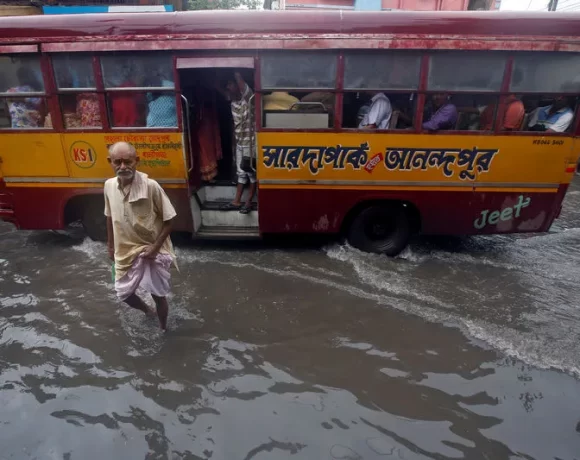
On Saturday, when the heavy rains began, TV footages showed people wading through chest-deep waters to rescue passengers from a bus that was nearly submerged by torrents flooding the roads.

The state’s Chief Minister Pinarayi Vijayan urged residents to exercise extreme caution, even though the intense rainfall had since eased. 

More than 100 relief camps had been set up, he added.

Prime Minister, Narendra Modi said he spoke to the Chief Minister and added that authorities were working to rescue those affected. 

In 2018, Kerala suffered catastrophic floods when heavy downpours during the monsoon season killed 223 people and drove hundreds of thousands from their homes.


Frcn, Abuja

News Analysis

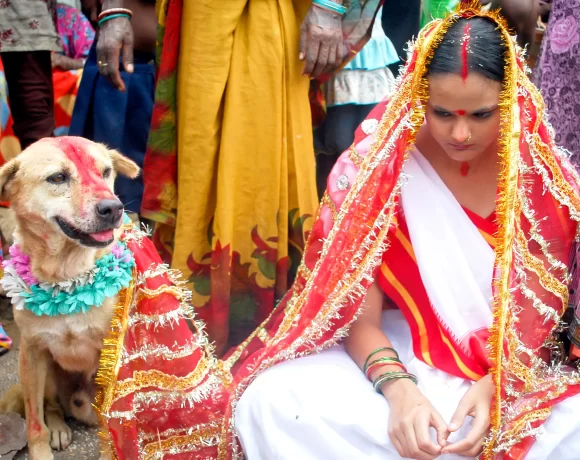
This one is not a festival, but it is no less of a bizarre ritual conducted, to this day, in many parts of India.

The more popular reason for this is that some folks are born during a particularly terrible astrological combination called Mangal Dosh.

These guys, called Mangliks, are considered bad news for whoever they marry.

So to get rid of the terrible fate that their spouses would be burdened with, they are made to marry an animal, usually a dog or a goat. Sometimes even a tree.

After a quick prayer and offerings made to the gods, the Manglik is now free to marry whosoever he or she chooses.

The marriage with animals is also done for other less common reasons, like if the girl has some facial deformation or her teeth arrive too early.

Naturally, girls draw the short end of the stick here, but these rituals are thankfully getting less common these days.

Titilayo Kupoliyi

Health

The Presidential Steering Committee on COVID-19 says, persons who have visited Brazil, India or Turkey within Fourteen (14) days preceding travel to Nigeria, shall be denied entry into Nigeria. 

This regulation, however, does not apply to passengers who transited through these countries.

Chairman of the committee and Secretary to the Government of the Federation (SGF) Mr. Boss Mustapha in a statement disclosed that, after due consideration, the validity period of pre-boarding COVID-19 PCR test for all Nigeria-bound passengers has been reduced from 96 hours to 72 hours and PCR test results older than 72 hours before departure shall not be accepted.

He adds that, any airline who fail to comply shall mandatorily pay a penalty of $3,500 (Three Thousand Five Hundred dollars) for each defaulting passenger and non-Nigerians will be denied entry and returned to the country of embarkation at cost to the Airline. 

While Nigerians and those with permanent resident permit shall undergo 7 days mandatory quarantine in a government approved facility at the point-of-entry city and at cost to the passenger. 

On false declaration, passenger(s) who provide false or misleading contact information will be liable to prosecution and person(s) who willfully disregard or refuse to comply with directions of Port-Health staff, security agencies or evade quarantine shall be prosecuted in accordance with the law.

Mr. Mustapha states that, the action is taken to continue to safeguard the health of the Nigerian population, as well as to minimise the risk of a surge in the number of COVID-19 cases in Nigeria.

He says, the Presidential Steering Committee carried out a risk assessment of countries with high incidence of cases and the assessment took into consideration the epidemiology of cases, prevalence of variants of concern and average passenger volume between Nigeria and each country amongst other indicators and of the countries assessed, this interim travel advisory applies to three (3) countries in the first instance, Brazil, India and Turkey.

Nosa Aituamen

Foreign

India’s new coronavirus cases have hit a record peak for a fifth day on Monday, according to a health ministry statement.

The new infections come as countries around the world, including the UK, Germany and the US, pledged to deploy urgent medical aid to help tackle the crisis overwhelming Indian hospitals.

The health ministry said infections in the last twenty-four hours rose to 352,991, with overcrowded hospitals in Delhi and elsewhere sending away patients after running out of supplies of medical oxygen and beds.

On Sunday, Prime Minister Narendra Modi urged all Indians to get vaccinated and exercise caution, while hospitals and doctors have put out urgent notices saying they were unable to cope with the rush of patients.

In some of the worst-hit cities, including the capital, New Delhi, corpses were being burnt in makeshift facilities offering mass services.

On Sunday, US President Joe Biden said Washington would send raw materials for vaccines, medical equipment and protective gear to India. Germany and Britain joined a mounting list of countries that have promised to send supplies.

India, with a population of 1.3 billion, has a tally of 17.31 million infections and 195,123 deaths, added to 2,812 deaths overnight, according to health ministry data.

Health experts believe the death count to be probably far higher.

FRCN, Abuja

News Analysis

India is home to plenty of strange traditions- not surprising, considering that it is a land where religion and superstition go almost hand-in-hand.

From harmless rituals to the downright dangerous, India has seen them all.

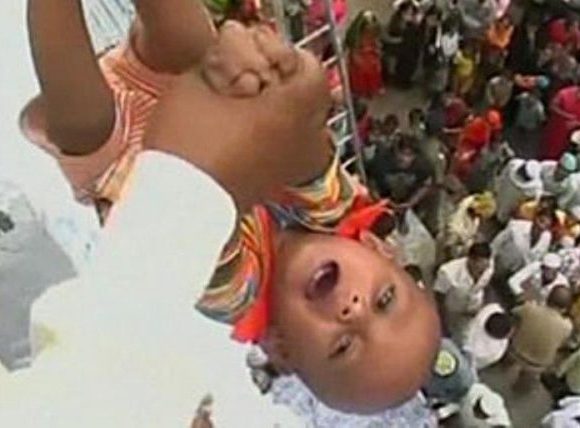
However, Karnataka (places like Nagrala village) and Maharashtra (including the areas of Solapur and Harangal) are home to a particularly bizarre ritual- tossing babies off a roof for luck.

This is a 700-year-old ritual practiced by both Hindu and Muslim families in the area. Legend has it that centuries ago, when the infant mortality rate was high, a saint advised the families of this region to demonstrate their faith in God by throwing their babies off the roof of a shrine and that God would magically produce a sheet below to catch them in.

This is still practiced in these states as a vow to toss the baby off the roof of the shrine is included in prayers requesting the blessing of pregnancy.

Once the child is born, it is taken to a Dargah or temple where the baby is held over the sheer drop of the roof by its limbs, shaken by the priest, and then dropped.

However, people seem to choose not to rely only on faith these days. As the baby is tossed off the roof by priests, a group of people wait below, holding a sheet to catch them in. On being caught safely in the blanket, the child is passed around in triumphant celebration before being returned to its parents.

There doesn’t seem to have been any damage done to the dropped infants, but this ritual is still highly questionable in this day and age.

In 2009, attempts were made by the district authorities to ban this practice. It was stopped for a while in the year 2011, but the practice was resumed in the Digambareshwara temple in the village of Nagrala in 2012.

The baby tossing ritual has been actively conducted as late as 2016.

There has also emerged footage of these rituals where the children are crying, clearly in shock after their 30-foot plunge.

In the background, the crowd is cheering, seemingly oblivious to the fact that these children have just been through a traumatic experience.

Titilayo Kupoliyi

News Analysis

There are so many bizarre cultures in the world so difficult to understand but still interesting enough to capture the interest of other people in its controversy.

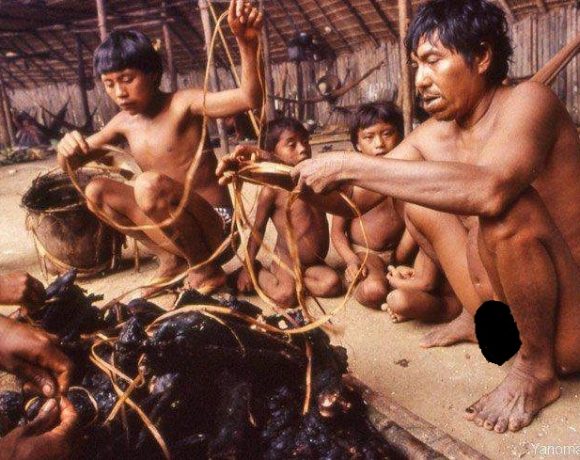
The Yanomami tribe in South America are also known as Yanam or Senema are found in Venezuela and parts of Brazil. This tribe is not easily influenced by modernization or westernisation but rather still practice their culture.
This tribe has a weird burial ritual akin to cannibalism called Endocannibalism.

Endocannibalism is the practice of eating the flesh of a dead person from the same community, tribe or society.

The Yanomami are a native tribe that believe that the soul needs to be protected after the body dies. They believe that the soul can only rest properly and make its transition only when the body has been burned and the body eaten by the living relatives.

Unlike the conventional burial ceremony of interment, this native Indian tribe burn the body of the dead person and paint their faces with the grime from the burnt body. They sing and cry to express their grief over the loss of the relative.

In the second phase of the burial, they gather the bones remaining from burning the bodies and turn them into powder mixing it with the ashes from the burnt bodies.
They mix this into banana which is used to make banana soup, a local delicacy common to this tribe and give it to everybody to eat.

They believe that completing this burial ritual is the only way the soul can attain eternal peace.
But in a case where an enemy kills the relative or village member, only the women eat the ashes and after then a form of revenge is exacted on the culprits however the ceremony is done on the same night the villagers are to revenge through perhaps a raid on the enemy territory.

Titilayo Kupoliyi

Foreign

India and China have agreed to “quickly disengage” from a standoff that has seen gunfire at a disputed border and accusations of kidnapping.

Their foreign ministers met on Thursday and said they would ease tensions.

Soldiers from both countries have periodically skirmished along the poorly demarcated border, called the Line of Actual Control.

Both sides have accused each other of straying into their territory, and the clashes have sometimes turned deadly.

In a joint statement, the neighbours said the “current situation is not in the interest of either side”.

“They agreed, therefore, that the border troops of both sides should continue their dialogue, quickly disengage, maintain proper distance and ease tensions,” said the statement, released by Indian Foreign Minister S Jaishankar and his Chinese counterpart Wang Yi.

They added that they would expedite new measures that would “maintain and enhance peace and tranquillity”, but did not explain further what these would entail.

The two countries already have an agreement which bans the use of firearms along the border.

But relations took deteriorated further in recent days, after China on Tuesday accused Indian troops of illegally crossing the border and firing “provocative” warning shots at patrolling soldiers.

India rejected the allegation, accusing Chinese border forces of firing in the air and saying it was they who had “been blatantly violating agreements”.

India’s military had a day earlier also alerted Chinese officials to reports that five Indian civilians had been kidnapped by Chinese troops from an area near the disputed border.

China later confirmed to an Indian minister that the missing civilians had been found and arrangements were being made to hand them over to Indian authorities.

In June, 20 Indian soldiers were killed in a violent skirmish with Chinese forces. Local media outlets said then that the soldiers had been “beaten to death”.

The Line of Actual Control stretches for 3,440km (2,100 miles). The presence of rivers, lakes and snowcaps mean the line can shift.

Soldiers on either side – representing two of the world’s largest armies – come face to face at many points. India has accused China of sending thousands of troops into Ladakh’s Galwan valley and says China occupies 38,000sq km (14,700sq miles) of its territory.

India and China have previously attempted to ease tensions along the border. But several rounds of talks in the last three decades have failed to resolve the disputes.

The two countries have fought only one war, in 1962, when India suffered a humiliating defeat.

BBC

News Analysis

World Population Day is celebrated on the 11th of July every year.

It aims to increase people’s awareness on various population issues such as the importance of family planning, gender equality, poverty, maternal health and human rights.

World Population Day, which seeks to focus attention on the urgency and importance of population issues, was established by the then-governing council of the United Nations Development Programme, UNDP, in 1989.

This year’s World Population Day calls for global attention to the unfinished business of the 1994 International Conference on Population and Development.

The largest countries in the world in terms of population are China and India, with both countries now having population of well over a billion.

The United States comes in third with just under 325 million residents.

According to Worldometer elaboration of the latest United Nations data, the current population of Nigeria is over two hundred and six million as of Tuesday, July 7, 2020.

The theme for this year’s celebration is to raise awareness of women’s and girls’ needs for sexual and reproductive health and vulnerabilities during the pandemic.

No doubt, the Covid-19 crisis has taken a staggering toll on people, communities and economies everywhere.

Women, who account for the largest share of front-line health workers, for example, are disproportionately exposed to the coronavirus.

As countries are on lockdown and health systems struggle to cope, sexual and reproductive health services are being sidelined and gender-based violence is on the rise.

A recent research conducted by United Nations Population Fund, UNPF, highlighted that if the lockdown continues for six months with major disruptions to health services, then forty-seven million women in low-and middle-income countries may not be able to access modern contraceptives resulting in seven million unintended pregnancies.

Also, thirty-one million additional cases of gender-based violence can also be expected, while there is a great tendency of two million cases of female genital cutting and thirteen million child marriages between 2020 and 2030.

Now is the time for the federal government to underscore the importance of accurate population data not only for development, but also for addressing the nation’s health emergencies, such as Covid-19.

The various programmes of the federal government at putting smiles on the faces of vulnerable women in the Covid-19 era should be commended and there is need to intensify efforts at letting the programmes reach every woman at the grassroots.

Governments need up-to-date knowledge of population densities in major cities, as these are locations of higher transmission of the virus.

There must be measures to address gender-based violence and child protection in Covid-19, response and recovery plans and ensure that plans are gender and age responsive.

All stakeholders including the girl and youth-focused groups should be safely and meaningfully involved in the development of plans, which will put an end to the various challenges facing women and girls.

Olaolu Fawole
Foreign Health News

An investigation has been launched after a group of migrant workers were filmed being doused in a “chemical solution” by Indian officials.

They are understood to be migrants who returned to the city of Bareilly, in the Northern state of Uttar Pradesh.

They are among millions who have returned to their home villages amidst a nationwide, three-week lockdown.

The move is supposed to stop the spread of coronavirus, but there are fears the returnees may spread the virus further.

The video, which has been viewed nearly 400,000 times after it was uploaded by a Times of India journalist – shows the group squatting on the ground while medical and fire department officials dressed in hazmat suits spray them with a “chemical solution”.

“Who are you trying to kill, Corona or humans? Migrant labourers and their families were forced to take bath in chemical solution upon their entry in Bareilly”.

Most of them are daily-wage workers who are now out of work. In the absence of money and jobs, they are desperate to reach their villages. Some found government-run buses to reach home and others just continued to walk.

BBC News

Foreign

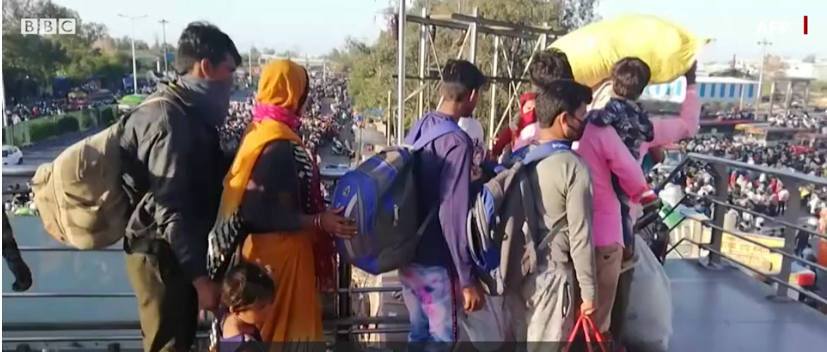
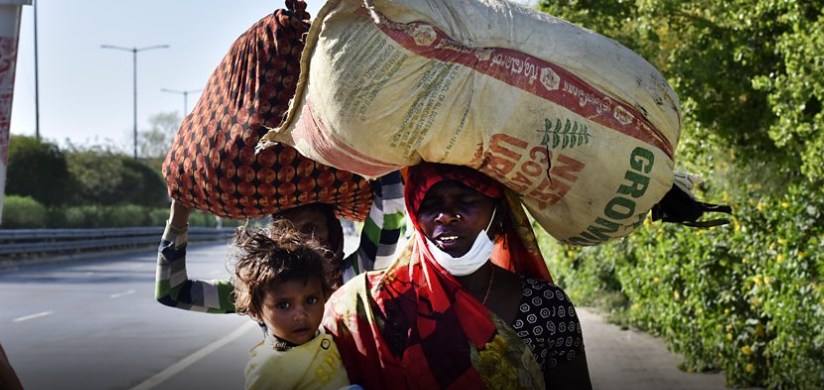
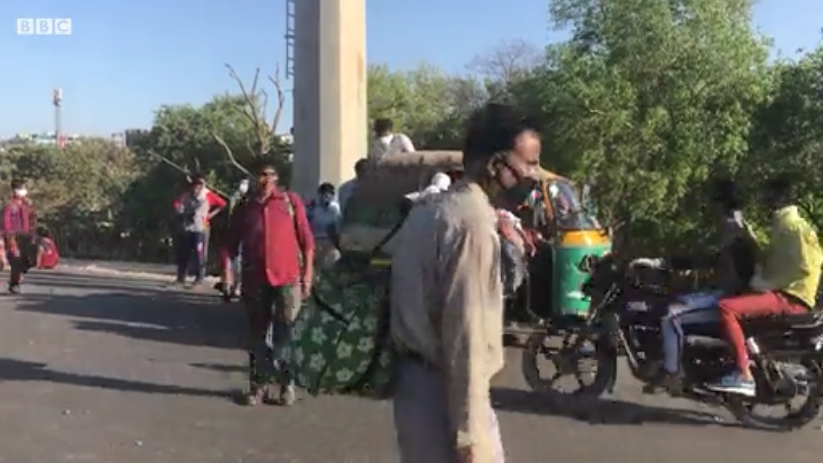
Streets around the Indian capital, Delhi, have been filled with people walking to reach their villages in neighboring states.

Most of them are daily-wage workers who are now out of work after Prime Minister Narendra Modi announced a complete lockdown of the country on the 24th of March to halt the spread of corona virus.

In the absence of money and jobs, they are desperate to reach their villages. Some found government-run buses to reach home and others just continued to walk.

BBC News