Foreign

Protesters in Iran defied a deadly government crackdown on Saturday night, taking to the streets despite reports suggesting hundreds of people have been killed or wounded by security forces in the past three days.

Verified videos and eyewitness accounts seen by the BBC appeared to show the government was ramping up its response, as it continues an overarching internet blackout.

The country’s attorney general, Mohammad Movahedi Azad, said on Saturday that anyone protesting would be considered an “enemy of God” – an offence that carries the death penalty.

Hundreds of protesters are believed to have arrested since demonstrations began more than two weeks ago.

The protests were sparked by soaring inflation, and have spread to more than 100 cities and towns across every province in Iran. Now protesters are calling for an end to the clerical rulership of Iran’s Supreme Leader Ayatollah Ali Khamenei.

Khamenei has dismissed demonstrators as a “bunch of vandals” seeking to “please” US President Donald Trump.

The Iranian government has imposed the internet shutdown in an effort to stop the protests. Iran’s data infrastructure is tightly controlled by the state and security authorities. Internet access is largely limited to a domestic intranet, with restricted links to the outside world.

Over the past few years, the government has progressively curtailed access to the global internet. However, during the current round of protests, authorities have, for the first time, not only shut down access to the worldwide internet but also severely restricted the domestic intranet.

An expert told BBC Persian that the current shutdown is more severe than that imposed during the “Women, Life, Freedom” uprising three years ago. Alireza Manafi, an internet researcher, said internet access in Iran, in any form, was now “almost completely down”.

He added the only likely way to connect to the outside world was via Starlink, but warned users to exercise caution, as such connections could potentially be traced by the government.

The BBC and most other international news organisations are also unable to report from inside Iran, making obtaining and verifying information difficult.

Nonetheless, some video footage has emerged, and the BBC has spoken to people on the ground.

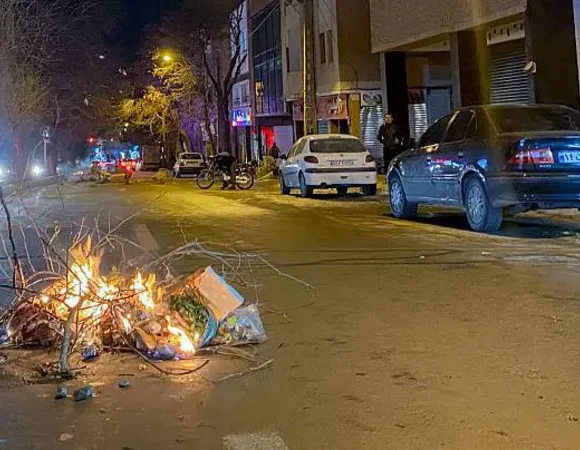
Verified video from Saturday night showed protesters taking over the streets in Tehran’s Gisha district. Several videos, verified and confirmed as recent by BBC Verify, show clashes between protesters and security forces on Vakil Abad Boulevard in Mashhad, Iran’s second largest city.

Masked protesters are seen taking cover behind wheelie bins and bonfires, while a row of security forces is seen in the distance. A vehicle that appears to be a bus is engulfed in flames.

Multiple gunshots and what sounds like banging on pots and pans can be heard as a green laser beam lights up the scene.

A figure standing on a nearby footbridge is visible in the footage and appears to fire multiple gunshots in several directions as a couple of people take cover behind a fence on the side of the boulevard.

Other videos have also emerged from the capital Tehran. One video, authenticated by BBC Verify, shows a large group of protesters and the sound of banging on pots in Punak Square in west Tehran, which has been one of the hotspots of protests this week.

Another clip, filmed in the Heravi district in north-east Tehran and confirmed by BBC Persian and BBC Verify, shows a crowd of protesters marching on a road and calling for the end of the clerical establishment.

BBC / Titilayo Kupoliyi

Follow us on Telegram and YouTube, and join our WhatsApp Update Group for more news updates.

Foreign

Vast crowds of Iranians have taken to the streets of the capital, Tehran, and several other cities, calling for an end to the Islamic Republic and in many places for the restoration of the monarchy.

Young and old, rich and poor, Iranians across the country and from all walks of life are now demonstrating their fury at the clerical establishment which has ruled them for close to half a century.

One young woman in Tehran told the BBC she was protesting because her dreams had been “stolen” and she wanted the regime to know that “we still have a voice to shout, a fist to punch them in the face”.

Another spoke of the despair and hopelessness that is driving the protests.

“We’re living in limbo,” she said. “I feel like I’m hanging in the air with neither wings to migrate nor hope to pursue my goals here. Life here has become unbearable.”

Day after day, since late December, protests in Iran have been spreading and building momentum, fuelled by deep-seated economic and political frustration.

“People are becoming bolder now,” 29-year old Sina told the BBC on Thursday by text message from the city of Karaj, west of the capital Tehran. “I went to buy some groceries and people were speaking out loud against the regime in the daylight! I was thinking that the protests will stop but it hasn’t lost its momentum.”

It is hard to know the full picture of what is taking place because independent media are not allowed to operate freely in Iran, many people are fearful to speak publicly, and now the internet has been severely restricted. The BBC spoke to people before the near blackout.

But there is no disguising the extent of discontent, and the size of some of the protests filmed and posted on social media.

Iranians have a multitude of grievances against their government – from the absence of political freedoms to corruption and the state of the economy which has resulted in crippling price rises.

The last major protests in Iran were sparked, in 2022, by the death in custody of a young woman, Mahsa Amini, who was accused of not wearing the compulsory hijab properly.

This time it was a strike by shopkeepers at Tehran’s historic grand bazaar on 28 December over the plummeting value of the Iranian currency which lit the match of a new crisis of legitimacy for the Islamic Republic.

Protests at universities followed. The institutions were swiftly ordered shut by the authorities, ostensibly because of cold weather. But by then, the spark had ignited a wider fire in the country, with clashes in many small towns and cities, particularly in the west of Iran.

Some of the chants heard on the streets over the past few days have been familiar. “Death to the Dictator” is a reference to the 86-year old Supreme Leader Ayatollah Ali Khamenei. “Azadi, Azadi”, or “Freedom, Freedom” is a common refrain.

Another popular chant: “This homeland won’t be a homeland until the mullahs are buried.”

New to these latest protests, however, is the chant: “Pahlavi will return,” a reference to Reza Pahlavi, the son of the late Shah of Iran who was overthrown in 1979. It was he who called for people to turn out on the streets on Thursday night.

The protests of the last few days have seen increasing chants for the return of the monarchy.

“Personally I think he’s the only way out of this,” 26-year old Sara from Tehran told the BBC.

Other Iranians say that they see expressions of support for the monarchy as a sign of desperation to be rid of the current regime, and a lack of alternatives.

“I’m not the biggest fan of Reza Pahlavi. But to be honest my personal opinion is not important now,” 27-year old Maryam from Tehran told the BBC. “Being and staying united is more important. It’s a different vibe from the Woman Life Freedom protests [of 2022].”

She says they were characterised by grief for Mahsa Amini.

“But people seem more angry and determined now.”

Another woman, in the western town of Ilam near the border with Iraq, described people raiding a supermarket linked to the regime, and throwing the produce away to show their disgust at the authorities.

She told the BBC she even knows young people from families affiliated with the regime who have been taking part in protests: “My friend and her three sisters, whose father is a well-known figure in the intelligence services, are joining without their father knowing.”

This is an extraordinary moment in the country. And no one knows exactly where it will lead.

BBC / Titilayo Kupoliyi

Follow us on Telegram and YouTube, and join our WhatsApp Update Group for more news updates.

Foreign

President Donald Trump said the United States will intervene if Iran shoots and kills protesters demonstrating against deteriorating economic conditions in the country.

“If Iran shots (sic) and violently kills peaceful protesters, which is their custom, the United States of America will come to their rescue. We are locked and loaded and ready to go. Thank you for your attention to this matter! President DONALD J.TRUMP,” he wrote on Truth Social on Friday.

Dozens of protesters took to the streets across several provinces of Iran this week, with some demonstrations which turned deadly.

Iranian officials issued a stern warning against US intervention in the country’s internal affairs. Ali Larijani, Iran’s national security chief, said on X that American interference would trigger “disruption across the entire region and the destruction of American interests.” Ali Shamkhani, a close adviser to Supreme Leader Ali Khamenei, declared Iran’s national security a “red line.”

“Every hand of intervention that approaches Iranian security…will be cut off with a regrettable response,” Shamkhani said on X.

At least three people were killed and 17 others injured on Thursday evening when protesters stormed a police station in the city of Azna in Iran western Lorestan province, the state-affiliated.

According to report, the protesters clashed with police, threw stones at law enforcement personnel and set cars on fire, adding that, some armed “rioters took advantage” of a protest in the city.

On Thursday morning, at least two people were killed when dozens of protesters clashed with the police in Lordegan county of the southwest Chaharmahal and Bakhtiari Province.

It remained unclear if the casualties were among law enforcement authorities or protesters.

The first known death linked to the protests occurred on Wednesday night, when one member of Iran’s Basij paramilitary force was killed, and 13 others injured in the city of Kuhdasht in Lorestan province, per state-affiliated media. Fars News Agency showed a video of a member of the police force receiving treatment after allegedly being set on fire by protesters.

The Basij is often deployed by the regime to suppress protests.

Twenty people were arrested in the protests, the prosecutor of Kuhdasht said Thursday, according to state-affiliated news agency Tasnim.

Twenty people were arrested in the protests, the prosecutor of Kuhdasht said Thursday, according to state-affiliated news agency Tasnim.

In Tehran province’s Malard county, authorities arrested 30 people for “disrupting public disorder,” according to Fars. The agency cited a county official Mansour Saleki, who said those arrested were “abusing the legal right of citizens to protest”

Despite being so far limited, the protests marked the latest chapter in the growing discontent in Iran, as a population quietly reclaimed public spaces and personal freedoms through uncoordinated acts of defiance.

Follow us on Telegram and YouTube, and join our WhatsApp Update Group for more news updates.

CNN/Taiwo Akinola          

Foreign

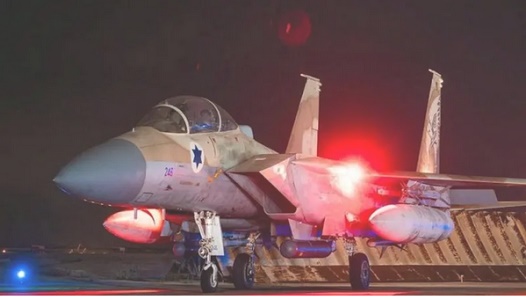
Iran has launched hundreds of aerial drones and missiles at Israel, marking a widely anticipated reprisal attack.

It is the first such direct clash between the two enemies, who have been engaged in a years-long shadow war, with Iran using proxy forces.

The Israeli military said Israel and other countries had intercepted more than 300 cruise missiles and drones, mostly outside Israeli airspace.

Israel said very little damage had been done but warned people to remain alert.

US President Joe Biden said “We helped Israel take down nearly all” of missiles and drones as he expressed strong condemnation for the attack.

“Iran and its proxies operating out of Yemen, Syria and Iraq launched an unprecedented air attack against military facilities in Israel,” he said.

Iran’s Islamic Revolution Guard Corps (IRGC) said the attack was aimed at “specific targets”.

Iran had vowed to retaliate for a strike on its consulate in Syria on 1 April which killed seven IRGC officers, including a top commander. It accused Israel of carrying out that attack, but Israel neither confirmed nor denied it.

Following the attack Israel’s Prime Minister Benjamin Netanyahu vowed “together we will win” but it is unclear what Israel’s response will be.

President Biden said he had reaffirmed “America’s ironclad commitment to the security of Israel”.

Israel Defense Forces (IDF) spokesman Rear Admiral Daniel Hagari said some Iranian missiles had hit inside Israel, causing minor damage to a military base but no casualties.

Israel’s ambulance service said a seven-year-old Bedouin girl had been injured by shrapnel from falling debris in the southern Arad region.

Mr Hagari said the widescale attack was a “major escalation” and said Israel and allies had operated at full force to defend Israel.

In a separate briefing, he said Iran had fired more than 300 projectiles at Israel overnight, 99% of which were shot down. He added that some of the launches came from Iraq and Yemen.

Israel’s Defence Minister Yoav Gallant said “very little damage was caused” but warned the “campaign is not over yet” and said Israel must “remain alert”.

Two US officials told CBS, the BBC’s US partner, that American forces had shot down several drones, but did not specify where or how they were intercepted.

The UK Ministry of Defence said RAF jets had been deployed in Iraq and Syria to intercept “any airborne attacks within range of our existing missions”.

Sirens sounded across Israel and loud explosions were heard over Jerusalem, with air defence systems shooting down objects over the city.

Iran’s IRGC – the most powerful branch of its armed forces – said it had launched the attack “in retaliation against the Zionist regime’s [Israel] repeated crimes, including the attack on the Iranian embassy’s consulate in Damascus”.

President Biden cut short a trip to Delaware to return to the White House as tensions mounted on Saturday.

After speaking to Mr Netanyahu later he said he would convene “my fellow G7 leaders to co-ordinate a united diplomatic response to Iran’s brazen attack”.

UK Prime Minister Rishi Sunak condemned Iran’s “reckless” attack, vowing that the UK would “continue to stand up for Israel’s security and that of all our regional partners”.

UN Secretary-General António Guterres issued a statement saying he “strongly condemn[ed] the serious escalation represented by the large-scale attack launched on Israel” by Iran.

He said he was calling for “an immediate cessation of these hostilities” and for all sides to exercise maximum restraint.

“Neither the region nor the world can afford another war,” he warned.

The UN Security Council will convene later for an emergency meeting over Iran’s attack on Israel, its president Vanessa Frazier said.

Earlier this week, Israel’s defence and foreign ministers warned that if Iran attacked Israel, Israel would strike back inside Iran.

Iranian Armed Forces Chief of Staff, Major General Mohammad Bagheri told state television that Iran’s response would be “much larger than tonight’s military action if Israel retaliates against Iran”, Reuters reported.

He added that the US had been warned not to back an Israeli response.

BBC/Simeon Ugbodovon

Subscribe to our Telegram and YouTube Channels and also join our Whatsapp Update Group

Foreign

The United States has restricted travel for its employees in Israel amid fears of an attack by Iran.

The US embassy said staff had been told not to travel outside the greater Jerusalem, Tel Aviv or Beersheba areas “out of an abundance of caution”.

Iran has vowed to retaliate, blaming Israel for a strike on its consulate in Syria 11 days ago, killing 13 people.

UK Foreign Secretary, Lord Cameron has phoned his Iranian counterpart to urge against further escalation.

Israel has not claimed responsibility for the consulate attack but is widely considered to have been behind it.

Iran backs Hamas, the armed Palestinian group fighting Israel in Gaza, as well as various proxy groups throughout the region, including some – such as Hezbollah in Lebanon – that frequently carry out strikes against the Israelis.

Those killed in the consulate attack included a senior commander of Iran’s elite Quds Force in Syria and Lebanon, as well as other military figures.

The attack came at a time of continuing diplomatic efforts to prevent the war in Gaza spreading across the region.

Speaking on Wednesday, US President Joe Biden warned Iran was threatening to launch a “significant attack” and vowed to offer “ironclad” support to Israel.

Israeli Prime Minister, Benjamin Netanyahu said his government was ready to meet any security challenge, warning that Israel would harm any country that caused it harm.

“We are prepared to meet all of the security needs of the State of Israel, both defensively and offensively,” he said.

The commander responsible for US operations in the Middle East, Erik Kurilla, has travelled to Israel for talks with officials on security threats.

The Pentagon said the visit had been scheduled previously but had been brought forward “due to recent developments”.

Following a call with Iranian Foreign Minister Hossein Amir-Abdollahian, Lord Cameron said he had “made clear that Iran must not draw the Middle East into a wider conflict”.

“I am deeply concerned about the potential for miscalculation leading to further violence,” he said.

US Secretary of State Antony Blinken has spoken to the foreign ministers of China, Saudi Arabia and Turkey to argue that further escalation is not in anyone’s interest.

BBC / Titilayo Kupoliyi

Subscribe to our Telegram and YouTube Channels and also join our Whatsapp Update Group

Foreign

A senior commander of an Iran-backed militia has been killed in a US drone strike in Baghdad.

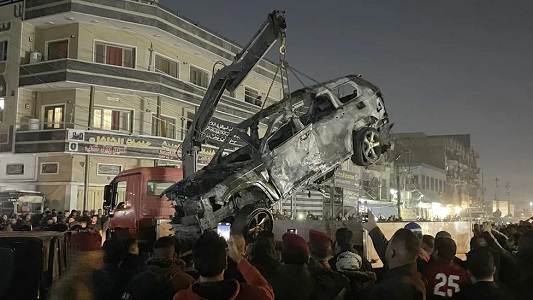
A leader of Kataib Hezbollah and two of his guards were in a vehicle when it was targeted in the east of the Iraqi capital. All three of them died.

The Pentagon said the commander was responsible for directing attacks on American forces in the region.

The US has linked the militia to a drone attack in Jordan that killed three US troops last month.

In the wake of that attack, Kataib Hezbollah said it was suspending attacks on American troops to prevent “embarrassment” to the Iraqi government.

Wednesday night’s drone raid happened in Baghdad’s Mashtal neighbourhood, sparking several loud explosions.

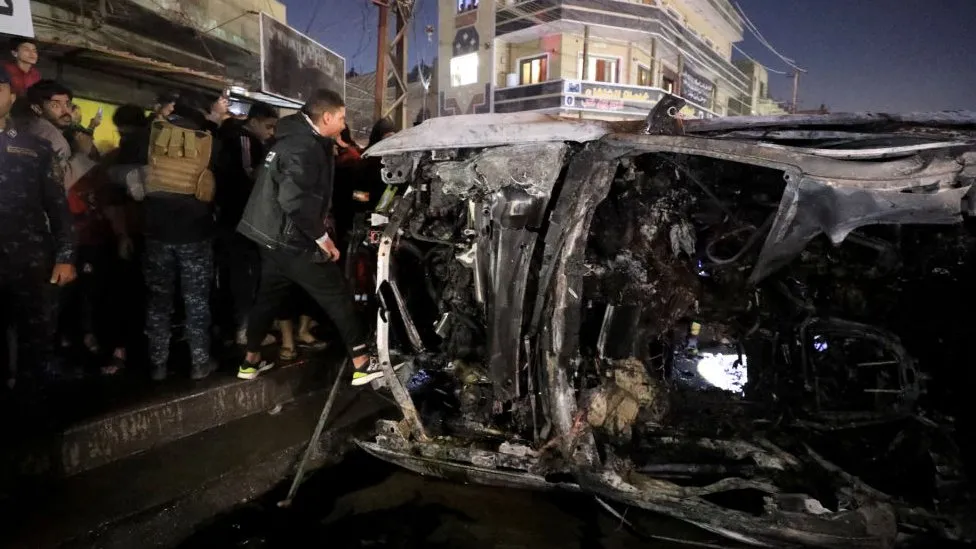
It was a precise strike on a moving vehicle in a busy street and the car was reduced to a fiery wreck.

One of the victims has been identified as Abu Baqir al-Saadi, a senior commander in Kataib Hezbollah.

US Central Command (Centcom) said the attack at 21:30 local time (18:30 GMT) had killed the “commander responsible for directly planning and participating in attacks on US forces in the region”.

“There are no indications of collateral damage or civilian casualties at this time,” the Centcom statement said.

When a BBC team reached the scene, crowds of protesters gathered chanting: “America is the biggest devil.”

There was a heavy police presence, joined by Swat teams from Iraq’s interior ministry.

The BBC team tried to get close to the burnt-out vehicle but was driven back by onlookers who said journalists were not welcome.

“You are foreigners,” one man shouted, adding “and foreigners are to blame for this”.

The raid comes days after the US launched 85 strikes in the Iraq-Syria border area in retaliation for the fatal 28 January drone attack on American troops at a base in Jordan.

President Joe Biden described last Friday’s wave of attacks as just the beginning of the US response.

The drone raid in the Iraqi capital will be seen as a major escalation.

But it was perhaps inevitable that the American strategy would include targeting not only infrastructure used by the groups, but also their senior leaders.

Shortly after Wednesday’s attack, militias in the country called for retaliation against the US.

Harakat al Nujaba – another group blamed for attacks against American troops – released a statement promising a “targeted retaliation”, adding that “these crimes will not go unpunished,” according to AFP.

On 4 January, the US launched an airstrike in Baghdad that killed a senior leader of Harakat al Nujaba.

American forces have been hit with more than 165 rocket and drone strikes since the Israel Gaza war began on 7 October.

The US has some 2,500 troops in Iraq and 900 in neighbouring Syria in a mission to combat the Islamic State terror group, says the Pentagon.

The American military has also recently launched attacks against the Iran-aligned Houthi group in Yemen, in response to attacks against commercial ships in the Red Sea.

BBC/Simeon Ugbodovon

Subscribe to our Telegram and YouTube Channels and also join our Whatsapp Update Group


Foreign

Pakistan has launched missile strikes into Iran, reportedly killing nine people, after Iran carried out strikes in Pakistan late on Tuesday.

Pakistan said its strikes had hit “terrorist hideouts” in Iran’s south-eastern Sistan-Baluchestan province.

Three women, two men and four children were killed, Iran’s state TV said.

The reciprocal air strikes come as tensions in the Middle East are high with several overlapping crises.

Israel is fighting the Palestinian group Hamas in Gaza and exchanging fire with Iran-backed Hezbollah in Lebanon, Iran-backed groups in Iraq and Syria are targeting US forces, and the US and UK have struck the Iran-backed Houthis in Yemen, who have been attacking shipping.

Pakistan and Iran have long accused each other of harbouring militant groups that carry out attacks from regions along their shared border.

On Thursday, Pakistan’s foreign ministry confirmed its strikes, which Iranian media said took place around the city of Saravan.

Pakistan said it had acted in light of “credible intelligence of impending large-scale terrorist activities” and said a number of “terrorists” were killed.

It added that it “fully respects” Iran’s “sovereignty and territorial integrity” but its action on Thursday was “a manifestation of Pakistan’s unflinching resolve to protect and defend its national security against all threats”.

Pakistan’s army said the “precision strikes” were conducted with drones, rockets and long-range missiles.

It said they were targeting “terrorist organisations”, namely the Balochistan Liberation Army and the Balochistan Liberation Front.

Both groups are part of a decades-long struggle for greater autonomy in Balochistan, a remote region in south-western Pakistan.

Pakistan had fiercely condemned Iran’s strike on Tuesday, which struck an area of Pakistan’s Balochistan province near the Iranian border and which Islamabad said killed two children.

Iran insisted its strikes were aimed only at Jaish al-Adl, an ethnic Baloch Sunni Muslim group that has carried out attacks inside Iran, and not Pakistan’s citizens.

BBC / Titilayo Kupoliyi

Subscribe to our Telegram and YouTube Channels and also join our Whatsapp Update Group

Foreign

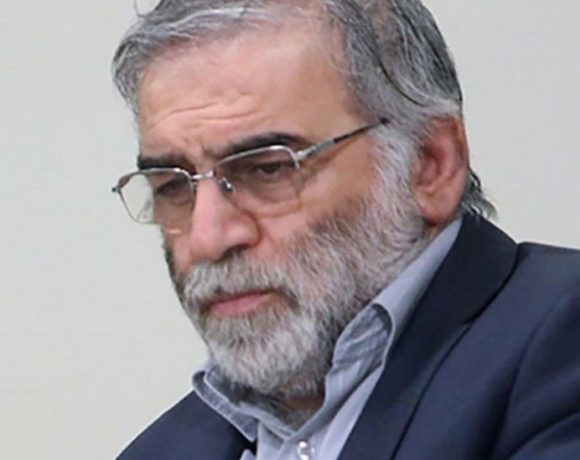
Some of the individuals involved in the assassination of Iran’s top nuclear scientist have been arrested, an Iranian parliamentary adviser has said.

Hossein Amir Abdollahian told Al-Alam TV he was unable to share the details for security reasons, but that the perpetrators would not escape justice.

He also said there was evidence proving Israeli involvement. Israel has neither confirmed nor denied responsibility.

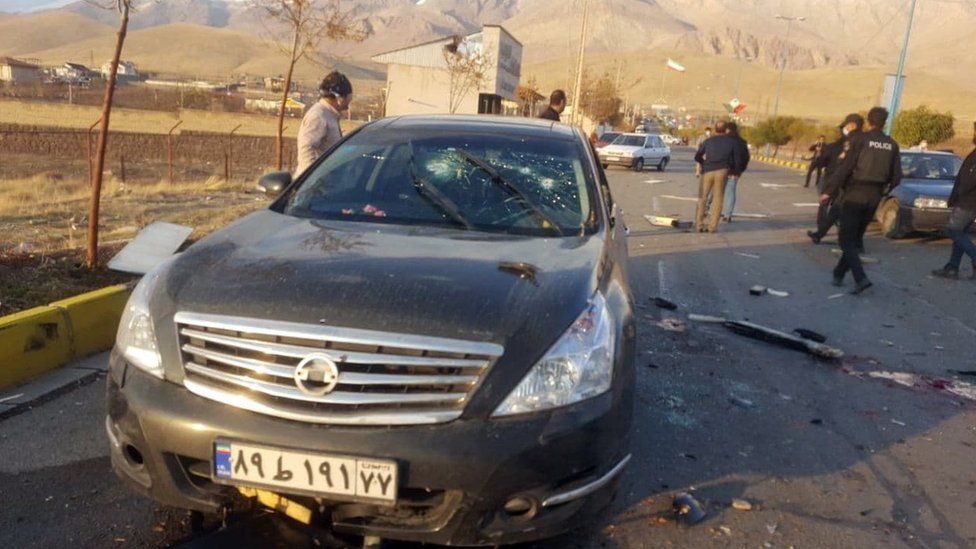
The scientist, Mohsen Fakhrizadeh, was killed near Tehran on 27 November.

The Iranian authorities have put out conflicting accounts of how he was shot dead as he travelled in a convoy through the town of Absard.

On the day of the attack, the defence ministry said there was a gunfight between Fakhrizadeh’s bodyguards and several gunmen. An Iranian report also cited witnesses as saying that “three to four” assailants had been killed.

But on Sunday, a senior Revolutionary Guards commander said a satellite-controlled machine-gun with “artificial intelligence” had fired at Fakhrizadeh’s car.

Brig-Gen Ali Fadavi told local media that the weapon, mounted in a pick-up truck, was able to “zoom in” on the scientist’s head and shoot him without hitting his wife beside him.

The claim could not be independently verified and was greeted with scepticism by experts in electronic warfare

In an interview with Al-Alam TV, Iran’s state-run Arabic-language channel, Mr Abdollahian said: “Some of the individuals involved in the execution of this assassination have been identified by our security apparatuses and even arrested.”

He also said that, in his personal opinion, there were various pieces of evidence “about those who planned and carried out the assassination that prove the Zionists [Israelis] were involved”.

“But whether the Zionists did so on their own and without the co-operation of, for example, the American [intelligence] service or another service? For sure, they could not have done so on their own,” he added, without elaborating.

The Israeli government has not commented on Iran’s assertion that it was behind the assassination, although one unnamed official told Israeli TV two days afterwards that “Fakhrizadeh’s activities had to be stopped” and that “the world is a safer place without him”.

Israeli and Western security sources say Fakhrizadeh, the head of Iran’s Organisation of Defensive Innovation and Research (SPND), was instrumental in the Iranian nuclear programme.

They believe the physics professor led “Project Amad”, a covert programme that Iran allegedly established in 1989 to carry out research on a potential nuclear bomb.

The project was shut down in 2003, according to the International Atomic Energy Agency.

However, Israeli Prime Minister Netanyahu said in 2018 that documents obtained by his country showed Fakhrizadeh had led a programme that was secretly continuing Project Amad’s work.

Iran insists its nuclear programme is entirely peaceful and that it has never sought a nuclear weapon.

BBC