Foreign

Three Lebanese journalists were killed in a targeted Israeli strike in southern Lebanon on Saturday, their employers have said.
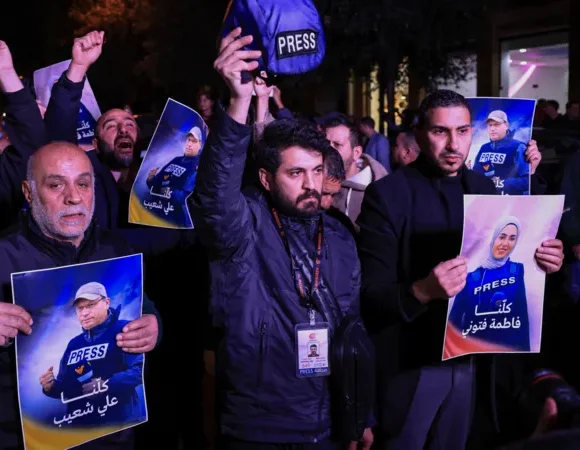
Ali Shoeib, a reporter for the Hezbollah-affiliated Al Manar TV, was killed in the town of Jezzine alongside reporter Fatima Ftouni and her brother, cameraman Mohamed Ftouni, both from the channel Al Mayadeen, according to the stations.

The strike reportedly hit the journalists’ car just before noon local time (10:00 GMT).

The Israel Defense Forces (IDF) confirmed it had killed Shoeib, describing him as a “terrorist” from Iranian-backed Hezbollah’s elite Radwan Force who had “operated for years under the guise of a journalist”.

It said he had worked to “expose the locations of IDF soldiers operating in southern Lebanon and along the border”, including during the current fighting, and had used his position “to disseminate Hezbollah propaganda materials”.

The IDF provided no evidence to support its claim that Shoeib had a military role. It did not comment on the deaths of Fatima or Mohamed Ftouni.

Hezbollah denounced the strike as the “deliberate criminal targeting of journalists”.

“The enemy’s false claims are nothing but an expression of its weakness and fragility, and a desperate attempt to evade responsibility for this crime,” the group said in a statement on Telegram.

Lebanese President Joseph Aoun described it as a “brazen crime” that broke the “most basic rules” of international law by targeting reporters, “who are ultimately civilians performing a professional duty”.

Prime Minister, Nawaf Salam likewise condemned the attack in a statement on X, branding it a “flagrant violation of international humanitarian law and a clear breach of the rules that guarantee the protection of journalists in times of war”.

Iran’s foreign minister, Abbas Araghchi said the strike was “clearly a targeted assassination” and an attempt to “silence the voices of truth-tellers”.

This is the second time Israel has been accused of targeting journalists in Lebanon since the US-Israel war against Iran began a month ago.

On 18 March, Al Manar reported its presenter Mohammad Sherri and his wife had been killed in an Israeli strike in Beirut while they were sleeping.

Responding to Saturday’s strike, the Committee to Protect Journalists said Lebanon had become “an increasingly deadly zone for journalists”.

“We have seen a disturbing pattern in this war and in the decades prior of Israel accusing journalists of being active combatants and terrorists without providing credible evidence,” the US-based organisation’s regional director Sara Qudah said.

“Journalists are not legitimate targets, regardless of the outlet they work for.”

Demonstrators gathered in Beirut late on Saturday, holding photos of those killed
More than 1,100 civilians, including 120 children and 42 paramedics, have been killed in Lebanon during the conflict so far, according to the Lebanese Ministry of Health.

More than a million people have also been displaced, worsening an existing humanitarian crisis in the country.

Many in Lebanon are worried Israel is using similar tactics it has been accused of deploying in Gaza – including the deliberate targeting of civilians, journalists and paramedics, which Israel denies.

Israel and Hezbollah had agreed a ceasefire in November 2024, under which both sides were meant to leave their positions in the south.

Progress was made, but it was partial. Israel maintained several military posts in the south and continued to carry out regular attacks on what it said were Hezbollah targets, accusing the group of trying to rearm and rebuild its presence.

After the killing of Iran’s supreme leader at the beginning of the current conflict, Hezbollah fired rockets into northern Israel in retaliation – both for his death and Israeli attacks since the ceasefire.

Israel has since escalated its operations in the region, saying its aim was to protect communities in northern Israel from attacks by Hezbollah militants.

BBC / Edited by Titilayo Kupoliyi

Follow us on Telegram and YouTube, and join our WhatsApp Update Group for more updates.

Foreign

At least 103 Palestinians have been killed in Israeli air strikes across the Gaza Strip since dawn, according to the Hamas-run Civil Defence agency.

Fifty-six people, including women and children, were killed when homes and tents sheltering displaced families were bombed overnight in the southern city of Khan Younis, the local Nasser hospital said. Local journalists said its corridors were crowded with casualties and that its mortuary was full.

A spokesman for the Civil Defence later reported deadly strikes in the northern town of Jabalia, including an attack on a health clinic and prayer hall in Jabalia refugee camp that he said killed 13 people.

There was no immediate comment from the Israeli military.

But it has been intensifying its bombing of what it has said are Hamas fighters and infrastructure ahead of a planned expansion of its ground offensive in Gaza.

It comes as US President Donald Trump visits the region and indirect negotiations on a new ceasefire and hostage release deal between Hamas and Israel continue.

The streets of Khan Younis were filled with funeral processions and grieving families on Thursday morning, following what residents said were the deadliest set of air strikes in the city since Israel resumed its offensive almost two months ago.

One video shared by a local activist showed medics laying dozens of bodies on the ground at a local cemetery. An imam stood nearby leading prayers for hundreds of mourners gathered behind him in orderly rows.

Other footage showed men carrying the bodies of two small children wrapped in blood-stained shrouds outside Nasser hospital, which published a list of the names of the 56 people who medics said were killed.

Safaa al-Bayouk, a 42-year-old mother of six, said the children were her sons Muath, who was only six weeks old, and Moataz, who was one year and four months.

“I gave them dinner and they went to sleep. It was a normal day… [then] the world turned upside down,” she told Reuters news agency.

Reem al-Zanaty, 13, said her uncle’s family, including her 12-year-old cousin Menna, were killed when their two homes were bombed.

“We didn’t feel or hear anything until we woke up with rubble on us,” she said. “The Civil Defence did not come. I will tell you honestly we pulled ourselves [out]. My father helped us.”

Medics also said local journalist Hassan Samour, who worked for Hamas-run al-Aqsa Radio, was killed along with 11 members of his family when their home in the eastern Bani Suheila neighbourhood was struck.

BBC/Adebukola Aluko

Foreign

The war in Gaza is being fought on many fronts.
One of them is aid.
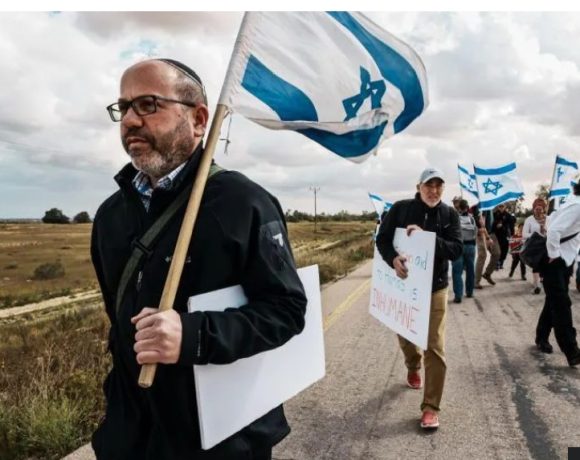
According to report, months after some Israelis started to protest against aid lorries entering Gaza at the main Kerem Shalom crossing, the battle has moved to other key junctions, where rival groups of activists do their best to block or protect aid convoys.

In recent weeks, social media has been flooded with images of aid lorries being blocked and ransacked.

Right-wing activists, including Jewish settlers living in the occupied West Bank, have uploaded dozens of videos of crowds, including some very young children, hurling food onto the ground and stamping on boxes of aid.

“It’s important to stop the aid,” one activist says. “It’s the only way we’ll win. The only way we’ll get our hostages back.”

Many argue that Gazans should receive nothing while Israeli hostages remain in captivity, and that providing aid to Gaza merely serves to prolong the war.

In one video, a group of jubilant protesters dance and celebrate on top of a looted lorry.

In another, one of the stranded lorries is ablaze.
Other videos show Israeli vigilantes stopping lorries in Jerusalem and demanding that drivers show papers proving they are not transporting aid to Gaza. Their faces are uncovered and they appear to be acting with complete impunity.

In the West Bank, at least two drivers who were not carrying goods bound for Gaza were dragged from their cabs and beaten.

Palestinian lorry drivers say they’re traumatised.
“I’m terrified to reach the crossing point,” Adel Amro told the BBC.

“I fear for my life.”

Mr Amro was carrying commercially purchased goods from the West Bank to Gaza when he was set upon. Other targeted drivers are involved in transporting aid from Jordan, which has to cross the West Bank and Israel before it reaches Gaza.
“We’re now taking side roads, far from the main routes, because we fear the aggressiveness of the settlers,” he said.

But after a series of well-documented attacks, some Israelis are fighting back.

Peace activists have taken to tracking their opponents’ movements on social media and making sure they’re present at key crossing points.

At Tarqumiya checkpoint, where lorries enter Israel from the southern West Bank, members of the group Standing Together are now mounting regular vigils.

Tarqumiya was the scene of one of the most dramatic recent attacks.

“People in Gaza are starving and aid should get to Gaza,” said Suf Patishi, one of Standing Together’s founding members.

“Israeli society should say in a loud and clear voice that we are opposed to these acts,” he said of the recent attacks on convoys.

“It’s not a lot to ask, not to die from hunger, you know.”

The group brings together Jews and Arabs from all over Israel.
For Nasser Odat, an Israeli Arab from Haifa, coming to Tarqumiya provided a welcome opportunity to feel useful, after more than seven months of helplessly watching the war in Gaza.
“I feel very empowered,” he said. “Now, finally, I have something to do to help. To help these people that are starving.”

As the peace activists sheltered from the fierce sun under palm trees at the centre of a roundabout, passing lorry drivers waved and sounded their horns in gratitude.

A small group of right-wing demonstrators arrived but were heavily outnumbered by Mr Patishi’s volunteers.

The two sides debated their differing positions in discussions that became increasingly heated.
Police officers stood nearby, ready to keep the opposing camps apart if it came to blows.

The peace activists have accused the police, under the control of National Security Minister Itamar Ben-Gvir, one of the most hardline members of Benjamin Netanyahu’s government, of doing little to stop the attacks.

They say there’s evidence that settlers are receiving help from the authorities and point to text messages in which groups organising attacks on aid lorries solicit and receive help from the police and army.

BBC/Taiwo Akinola

Foreign

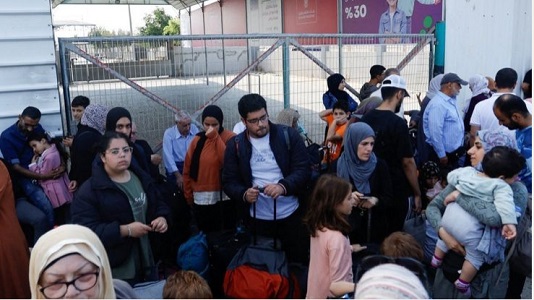
Israel appears to deny reports of a truce in southern Gaza, half an hour after security sources in Egypt told Reuters a ceasefire had been agreed to coincide with the reopening of the Rafah crossing.

A statement from Prime Minister, Benjamin Netanyahu’s office says: “There is currently no truce and humanitarian aid in Gaza in exchange for getting foreigners out.”

However, Israel’s military has announced a plan to evacuate communities in northern Israel near the border with Lebanon.

Residents of 28 communities that lie within 2 kilometres (1.24 miles) of the border will be moved “state-funded guesthouses”, the Israel Defense Forces said.

One Israeli civilian was killed in a Hezbollah missile attack on one of the villages near the border on Sunday, according to the Israeli military.

Israel has carried out overnight strikes on Lebanon, targeting military infrastructure belonging to Lebanese militant group Hezbollah. No casualties have been reported.

BBC / Titilayo Kupoliyi

Subscribe to our Telegram and YouTube Channels also join our Whatsapp Update Group