Nigeria’s democratic journey has been frequently marred by a slew of troubling events, including during the military era, dating back to the country’s independence in 1960.
Losing candidates and their supporters frequently dispute election results, and this is true at all three levels of government in our country: local council, State and parliamentary, as well as the presidential election.
Personal attacks, insults, and incitement are always amplified by the pattern of communication among political actors, their agents, spokespersons, and media consultants.
In 2014, a nongovernmental organisation established a national peace committee with the goal of removing “thuggery” from the electoral process.
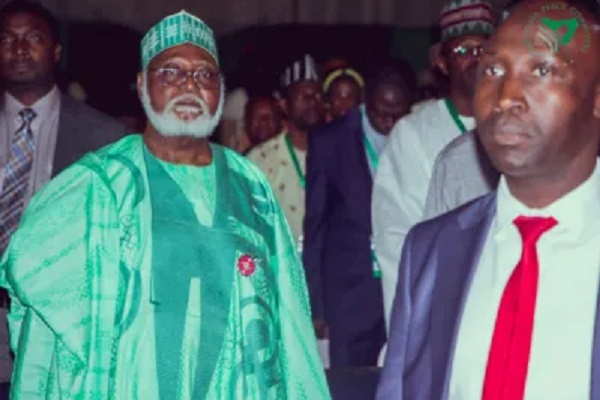
The committee was established “as a response to emerging threats occasioned by the 2015 general election,” and Abdulsalami Abubakar, a former head of state, serves as its chairman.
The 2019 peace accord document on the NPC’s website advised political parties to run issue-based campaigns at national, state, and local levels to avoid religious incitement, ethnic or tribal profiling by their agents.
It became a routine as every election year since then, a ceremony has to be held for contending parties to append their signatures to the peace document.
This strategy, which had been tried in previous elections, had varying degrees of success.
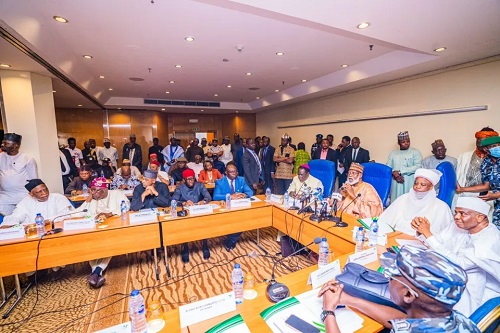
When 18 political parties signed the agreement in September 2022, it was a significant development.
Details of the national peace agreement for political actions to ensure violence-free election.
We should not forget the not-too-distant past, when the then-opposition All Progressives Congress, APC, and the then-ruling Peoples Democratic Party, PDP, fought hard and dirty in the run-up to the 2015 elections.
In their bid to win the election, they were literally at each other’s throats. It was so complex that the PDP and their supporters used all of their arsenals – campaigns of slander to destroy the image of then opposition leader and candidate of the APC, Retired General Muhammadu Buhari, to the point of portraying him as a monster, with a national television showing an advertorial of very damning, and later confirmed fake, visuals.
The APC and its supporters also ran serious advertisements demonising the then-incumbent President, Dr. Goodluck Jonathan and it was so successful that a goat and a coffin were named after him.
However, the patriotic efforts of the National Peace Committee and statesmanship dowsed the entire country’s high tension: a master stool that transformed that potential upheaval into a worldwide testimony and celebration.
Transformed that potential upheaval
Now to the present, not long after the Peace documents were signed in September 2022, gladiator supporters and spokespeople began to show clear signs of total disregard for the peace Accord that their principals and parties had just deposed to.
Politicians and their supporters have thrown caution to the wind and fired vicious jabs at each other.
As mistrust and counter-mistrust continue to illuminate the land in 2015, so also is it recurring in 2022/2023 as palpable tension continues to rise.
The APC and the PDP, two major contenders in the race, are said to have led the pack in the use of unwholesome tactics.
The Labour Party, LP’s followers have continued to drag to hell, anyone perceived to be opposed to their presidential candidate.
So far, we have seen a fake certificate scandal against Bola Tinubu, an illicit drug-related narrative with a link to Tinubu’s time in the United States, body shaming against the former Governor of Lagos State, an anti-muslim/Islam narrative against Peter Obi, and an anti-Fulani narrative against Atiku Abubakar.
Both Atiku and Tinubu are now facing allegations of fraud.
It is clear that these allegations are frequently presented as convictions. The laws are clear; no one should be misled; only a court of competent jurisdiction can declare a candidate unfit to run in an election, and not based on mere allegations or mudslinging.
This demonstrates that politicians will always go overboard in their pursuit of power if not checked.
Political analysts have been calling for the creation of the commission of an electoral offence. It is hoped that as the country makes incremental progress toward a more perfect electoral system, an Electoral Offenses Commission should be the next priority after the 2023 elections.
The National Broadcasting Commission, NBC, has made efforts to bring them back into line, but more needs to be done in this regard. They should, at the very least, ensure that the broadcast airwaves are sanitised and free of political ‘pollution’.
Parties are too carried away in their quest for power to call their supporters to order when they become ‘carried away,’ but they must find ways to rein in their candidates and members when they cross the red line.
It is important for the electorate to understand that if they continue to tow this line and do not engage these aspirants constructively, we will continue to face epileptic power supply, bad roads, a poor education system, and kidnapping, among other problems plaguing the country.
These problems know no religion, ethnicity, or skin colour; we will all face them as Nigerians.
Finally, it is now up to the electorate to identify violent, lying, hate-spreading, and desperate candidates and punish them by voting against them.
FRCN Abuja/Annabel Nwachukwu
Subscribe to our Telegram and YouTube Channels also join our Whatsapp Update Group