Human Angle

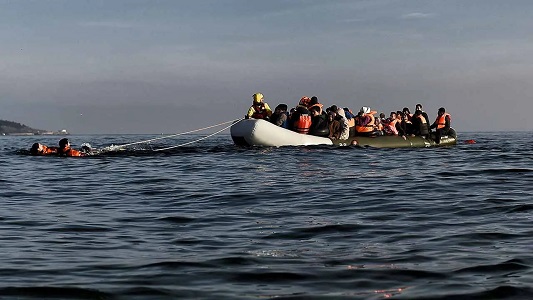
Sixty-one migrants, including women and children, from Nigeria, Gambia, and other African countries have drowned following a shipwreck off Libya, the International Organisation for Migration, IOM, a United Nations, agency has said.

The boat originally contained 86 people and left the Libyan shores from Zwara, according to IOM.

It said: “The central Mediterranean continues to be one of the world’s most dangerous migration routes.”

According to AFP, most of the victims of the latest incident were from Nigeria, Gambia, and other African countries.

The IOM said 25 people survived and were transferred to a Libyan detention centre. 

An IOM team “provided medical support” and the survivors were all in good condition, the IOM office said.

Flavio Di Giacomo, an IOM spokesperson, wrote on X that more than 2,250 people had died so far this year on the central Mediterranean migration route, a “dramatic figure, which demonstrates that unfortunately not enough is being done to save lives at sea.”

Libya and Tunisia are principal departure points for people risking dangerous sea voyages in hopes of reaching Europe, via Italy.

Drowning was the main cause of death on migration routes globally in the first half of 2023, with 2,200 recorded fatalities in the period, according to the IOM report.

The central Mediterranean route was the deadliest, accounting for a total of 1,727 deaths and disappearances along its shores in the period, the IOM report said. 

The majority of the deaths were recorded in Tunisia, followed by Libya, it said.

The figures remain an undercount, IOM said in its report. 

Sea migrant arrivals to Italy have almost doubled in 2023 compared with the same period last year, with around 140,000 people coming ashore so far. Some 91 per cent came from Tunisia, with the tiny Italian island of Lampedusa bearing the brunt of landings.

Vanguard/Simeon Ugbodovon

Subscribe to our Telegram and YouTube Channels and also join our Whatsapp Update Group 
Foreign

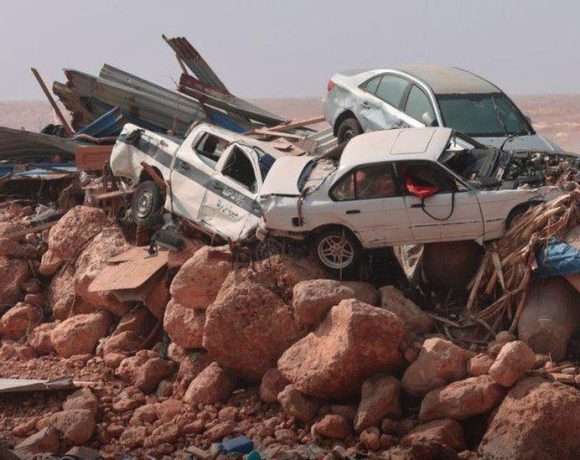
Aid teams are battling to help survivors and locate the dead five days after devastating flooding hit eastern Libya

Thousands of people were killed when two dams burst after intense rainfall from Storm Daniel, washing away whole neighbourhoods in the city of Derna.

Figures for the number of dead vary from around 6,000 to 11,000 and with thousands still listed as missing, the port city’s mayor says the total could reach 20,000

Survivors have told the BBC whole families perished together, as well as describing terrifying escapes and people being swept away in front of their eyes.

Most of the deaths could have been avoided if warnings were issued, the UN’s World Meteorological Organization says.

About 30,000 people have been left homeless, the International Organization for Migration says, with the UN’s humanitarian agency warning of the danger of disease from contaminated water

Nasir Almnsori, an engineer living in the city more than 150km from Derna, told BBC Breakfast that flood victims were washing up nearby.

Some of Almnsori’s family died in Derna, and the three that survived have made the journey to Tobruk to stay with relatives.

He says with so much of the city destroyed, there is nothing left for them in Derna.

“They have no houses there to live in, so that is why they moved to my city,” he said.

BBC / Titilayo Kupoliyi

Subscribe to our Telegram and YouTube Channels also join our Whatsapp Update Group
Foreign

Libyan Person’s Missing Authority says forty-two bodies have been found in a mass grave in the Libyan city of Sirte, an ex-stronghold of the Islamic State.

Exhumation teams unearthed “42 unidentified bodies” after following up reports of a “mass grave” at the site of a former school in Sirte, the authority said.

“DNA samples have been taken for analysis in coordination with the office of forensic medicine,” it added, without elaborating further.

Sirte, a central coastal city, was held by IS between 2015 and 2016, as it exploited the chaos engulfing much of Libya in the wake of the 2011 overthrow and killing of dictator Moamer Kadhafi in a NATO-backed uprising.

The jihadist group was dislodged by forces loyal to the then Government of National Accord in December 2016 after months of intense house-to-house fighting.

In October 2017, a grave containing the bodies of 21 Coptic Christians, executed by the jihadists two years earlier, was uncovered near the Mediterranean city.

Another mass grave with the remains of 34 Ethiopian Christians was discovered near Sirte in December 2018, more than three years after IS published a video showing its personnel executing at least 28 men described as Ethiopian Christians.

AFP/ Titilayo Kupoliyi

Subscribe to our Telegram Channel and join our Whatsapp Update Group

Foreign

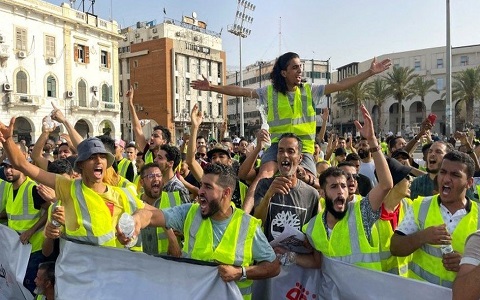
Protesters have stormed Libya’s parliament in the eastern city of Tobruk and are reported to have set fire to part of the building.

Images posted online showed thick columns of smoke as the demonstrators burned tyres outside.

There have been rallies in other Libyan cities against continuing power cuts, rising prices and political deadlock.

In the capital, Tripoli, where a rival administration holds sway, protesters called for elections.

Their demand was backed by the head of the interim unity government, Abdul Hamid Dbeibah, who said all the country’s institutions needed to be changed.

The unrest comes a day after United Nations-brokered talks in Geneva aimed at paving the way for a ballot ended with little progress.

Libya has been in chaos since the Nato-backed uprising in 2011 that ousted long-serving ruler Col Muammar Gaddafi.

The oil-rich country, a key departure point for some of the thousands of migrants travelling to Europe, once had one of the highest standards of living in Africa, with free healthcare and free education.

But the stability that led to its prosperity has been shattered and Tripoli has seen frequent fighting between rival forces.

BBC/Simeon Ugbodovon

Foreign News

Increasing numbers of African countries are confirming Coronavirus cases, prompting many to announce measures to control the spread of the virus.

Ghana is the latest nation to ban entry to foreign visitors from countries badly impacted by the disease.

Earlier, South Africa declared a state of disaster, closing its borders to foreign nationals from countries badly impacted by the disease. The ban includes China, Iran, Italy, Spain, the UK and the US.

Kenya has also imposed sweeping travel restrictions, blocking entry to all travelers coming from countries with reported cases. On Sunday, the government confirmed two more cases of Coronavirus, taking the total number to three.

Djibouti, which has no confirmed case, has suspended all international flights. Tanzania, which also has no confirmed case, has cancelled flights to India.

Morocco has also suspended all international flights from its airports. The North African state has 28 confirmed cases, including one death.

The prime minister of Libya’s internationally recognized government, Fayez Sarraj, also announced the closure of Libya’s airspace and land borders as a preventative measure starting from Monday.

In neighbouring Algeria, which has 48 Coronavirus cases, officials announced they would be suspending all flights to France as of Tuesday.

In Tunisia, Prime Minister Elyes Fakhfakh has ordered the closure of all borders and a ban on large gatherings, including congregation prayers in mosques. The country has confirmed 20 cases of the virus.

Mozambique’s President Filipe Nyusi has suspended all gatherings of 300 people or more. He has also suspended all foreign travel by state officials – including his own visits to Equatorial Guinea and Palestinian territories that were scheduled for later this month.

The virus is now confirmed to be present in at least 26 nations across the continent.

BBC NEWS