Foreign

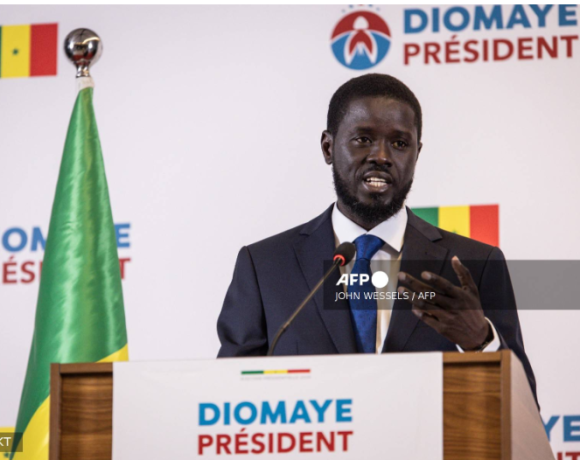
The 44-year-old opposition candidate, Bassirou Diomaye Faye, has been sworn in as the fifth Senegalese president.

He was sworn in on Tuesday as Senegal’s youngest president after sweeping to a first-round victory on a pledge of radical reform 10 days after he was released from prison.

“Before God and the Senegalese nation, I swear to faithfully fulfil the office of President of the Republic of Senegal,” the 44-year-old said before hundreds of officials and several African heads of state at an exhibition centre in the new town of Diamniadio near the capital Dakar.

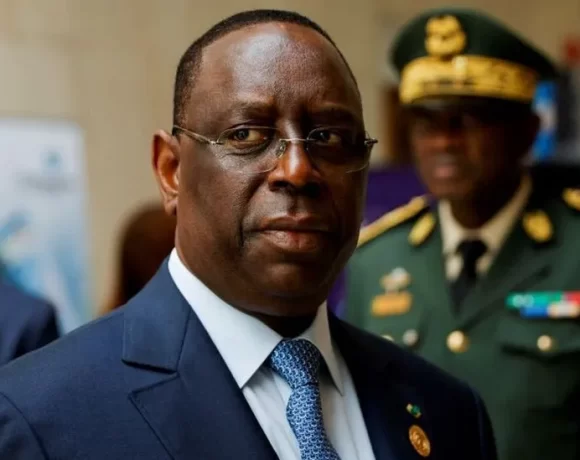
Faye took over from the immediate past president, Macky Sall in an event witnessed by African leaders in the new town of Diamniadio, near the capital Dakar.

Nigeria’s President and the Chairman of the Economic Community of West African States (ECOWAS), Bola Tinubu, was among Heads of States and Government at the event.

AFP / Titilayo Kupoliyi

Subscribe to our Telegram and YouTube Channels and also join our Whatsapp Update Group

Foreign

Senegal’s president says the delayed election to choose his successor will be held “as soon as possible” after the top court ruled that his attempt to delay it was unconstitutional.

President Macky Sall has served two terms in office.

On Thursday, the Constitutional Council annulled President Sall’s decree moving the vote to December.

It also voided the contentious bill passed by parliament which had backed the president’s decree.

The move will go some way to restoring Senegal’s reputation as a bastion of democracy in West Africa.

Ever since he announced he wanted to delay the elections two weeks ago – just hours before campaigns were meant to kick off, President Sall has been under immense pressure to reverse his decision.

Now that pressure appears to have yielded results, with a statement from the presidency saying Mr Sall will comply with the court ruling – and will also hold talks with all relevant stakeholders without delay, to hold elections as soon as possible.

The original date was 25 February – so there is not enough time to hold it then.

A new date for the elections has not yet been given, but in its ruling, the Constitutional Council said the president could not stay in power beyond the end of his term on 2 April.

The West African body, Ecowas, France and the European Union all urged Mr Sall to comply with the decision.

Senegal’s judiciary has been praised for exerting its independence, with a leading opposition figure hailing Thursday’s court ruling as “a great day for democracy”.

“We’ve been so ashamed by all this violation of the law and the constitution,” former Prime Minister Aminata Touré told the BBC’s Newsday programme.

Anta Babacar, the only female candidate, agreed.

“We are actually very, very proud of our Constitutional Council and it shows that there is at least a little bit of democracy and justice that’s left in our country,” she said.

There had been strong opposition to Mr Sall’s decision to postpone the elections until mid-December.

Protesters have taken to the streets and opposition politicians have lodged legal complaints against him.

Religious authorities and regional bodies had also called for elections to be held as soon as possible.

However, the disputes that led to the polls being postponed in the first place remain unresolved, including allegations of corruption in the Constitutional Council and objections from opposition figures who had been excluded from the candidate list published last month.

Holding the election using the disputed candidate list could spark renewed unrest and violence by supporters of those barred from contesting, in particular Ousmane Sonko, who has a large and vocal following among young Senegalese. He is currently in jail after being convicted of various offences after prosecutions, which he says are politically motivated.

Most candidates have not been campaigning since President Sall issued his decree earlier this month.

Senegal is considered one of West Africa’s more stable democracies and is the only country in the region never to have suffered a military coup.

Subscribe to our Telegram and YouTube Channels and also join our Whatsapp Update Group
Foreign

The decision to postpone this month’s elections in Senegal is against the constitution, the country’s top court has ruled.

The Constitutional Council annulled both President Macky Sall’s decree and a contentious bill passed by parliament moving the vote to December.

Widespread protests have gripped the West African country, once considered a bastion of democracy in the region.

Opposition figures said it amounted to a “constitutional coup”.

Mr Sall had announced he was pushing the election back because of concerns over the eligibility of opposition candidates.

His proposal was backed by 105 out of the 165 MPs after a fiery debate which saw police remove some opposition MPs from the chamber. A six-month postponement was originally proposed, but a last-minute amendment extended it to 10 months, meaning a new election date of 15 December.

Mr Sall had reiterated that he was not planning to run for office again. But his critics accused him of either trying to cling on to power or unfairly influencing whoever succeeds him.

Opposition candidates and lawmakers, who had filed a number of legal challenges to the bill, will feel vindicated by the court’s decision on Thursday evening.

Khalifa Sall, a leading opponent and a former mayor of the capital Dakar, who is not related to the president, had called the delay a “constitutional coup”, while Thierno Alassane Sall, another candidate, also no relation, called it “high treason”.

The court said it was “impossible” for the election to be held on the original date of 25 February – just 10 days away – but urged authorities to organise it “as soon as possible”.

Mr Sall is yet to react to the ruling. His second term of office expires on 2 April.

While the election could be held before April, the disputes that led to the polls being postponed in the first place remain unresolved, including allegations of corruption in the Constitutional Council and objections from opposition candidates who had been excluded from the candidate list published last month.

Holding the elections using the disputed candidate list could spark renewed unrest and violence by supporters of those barred from contesting, in particular Ousmane Sonko, who is hugely popular among young Senegalese.

Most candidates have not been campaigning since President Sall issued his 3 February decree, hours before campaigns were meant to kick off.

The decision comes on the same day as several opposition politicians and civil society members were released from prison, in what some in the country viewed as a move to appease public opinion.

Senegal had long been seen as one of the most stable democracies in the region. It is the only country in mainland West Africa that has never had a military coup. It has had three largely peaceful handovers of power and until earlier this month had never delayed a presidential election.

BBC/Simeon Ugbodovon

Subscribe to our Telegram and YouTube Channels and also join our Whatsapp Update Group