Foreign

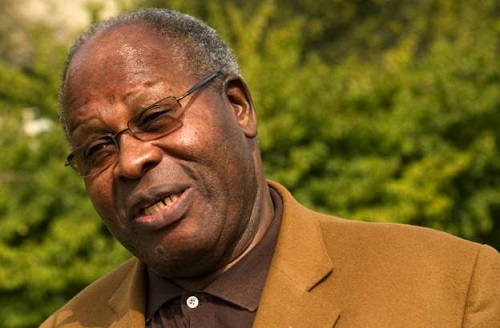
Malawi authorities have ended a corruption trial against former President Bakili Muluzi.

Mr Muluzi served two five-year terms as president between 1994 and 2004 but he was charged five years after he left office.

He and his former personal secretary, Lyness Whiskey, were charged with abuse of public funds amounting to 1.7bn kwacha ($1.7m; £1.37m).

On Monday, the Malawi High Court said it had freed Mr Muluzi from all charges following a decision by the country’s head of public prosecutions to discontinue the case.

Mr Muluzi has always protested his innocence, saying the case was political persecution by the government of his successor, Bingu Mutharika, with whom they fell out.

There had been no real progress on the case under the administrations of successive presidents who enjoyed a good relationship with Mr Muluzi.

The trial has been adjourned several times for a range of reasons including an initial prosecutor deciding to recuse himself and Mr Muluzi’s treatment for spinal problems.

BBC/Simeon Ugbodovon
Subscribe to our Telegram and YouTube Channels also join our Whatsapp

Foreign

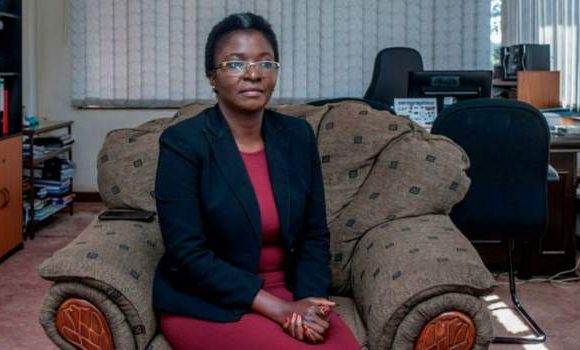
A high court in Malawi has lifted the government’s suspension of the head of the Anti-Corruption Bureau (ACB) Martha Chizuma, paving the way for her to return to work.

Ms Chizuma’s suspension was last week announced by the secretary to the president and the cabinet, Colleen Zamba.

The suspension was linked to a lawsuit against her following a leaked audio in which she allegedly made remarks suggesting that a number of senior government officials and some judicial officers were hindering the fight against corruption.

One official who felt hurt by the suggestion sued Ms Chizuma and she was interdicted on the basis of the lawsuit.

Her suspension was widely condemned by civil society organisations, the opposition and the country’s umbrella body for lawyers – the Lawyers Association of Malawi.

The lawyers’ association issued a statement saying the only person who could legally hire or fire the head of the anti-corruption body was the president.

President Lazarus Chakwera is on record as saying he will not sack Ms Chizuma describing the recording and the circulation of the audio as “corruption fighting back”.

The Malawi Law Society applied for a judicial review which the court granted late on Monday.

BBC / Titilayo Kupoliyi

Subscribe to our Telegram and YouTube Channels also join our Whatsapp Update Group

Culture

Africans are known for their strong cultural beliefs and practice, some of which can be inhuman and outright weird. The Chewa’s festival for the dead definitely marks as one of those practices that shock many.

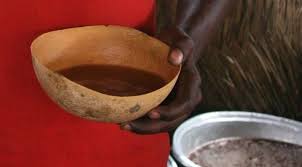
The Chewa community is a Bantu tribe mostly found in Malawi. During the burial ceremony of a tribe member, it is customary for the body of the deceased to be washed. The corpse is taken to a sacred place where the cleansing is done by slitting the throat of the dead and pouring water through the insides of the dead and extracted through the anterior region of the dead body. The water is then collected and used to prepare a meal for the whole community as they believe that the dead has been cleaned up of his or her iniquities. 

When someone dies, the whole village shows up. This is because most of the time, in the Chewa belief, death is not natural, it is usually caused by witchcraft. Since the Chewa believe that witchcraft only works on family members, those who might have killed a person would be scared to go to the funeral. It’s decreed that all family members must attend the funeral which means the whole village attends since they are generally all related.

So, since they believe that witchcraft only works on family members, then those who might have killed the person would feel too scared to attend the funeral. Thus, it is expected that all family members must attend the funeral which means the whole village since they are somewhat all related.

NET/Olaolu Fawole

Foreign

Authorities have discovered the bodies of 25 migrants in a mass grave in a forest reserve in Malawi’s northern district of Mzimba.

A statement by the Malawi police says the victims are Ethiopian nationals, males with age range between 25 and 40.

It says the cause of death is being investigated.

The BBC reports that the Police have intercepted 221 migrants in 2022, 186 of them from Ethiopia.

FRCN/Titilayo Kupoliyi

Subscribe to our Telegram Channel and join our Whatsapp Update Group

Culture

African societies have a huge number of different traditions associated with death.

Often, the difference lies in how the deceased is prepared for and sent on what has been described as the journey into the world of the ancestors.

But the bottom line is all African families try to ensure that the death is given a befitting burial.

In times past, Africans have experienced some rather weird burial traditions, with the most talked about being from the Chewa, a Bantu people of central and southern Africa and the largest ethnic group in Malawi.

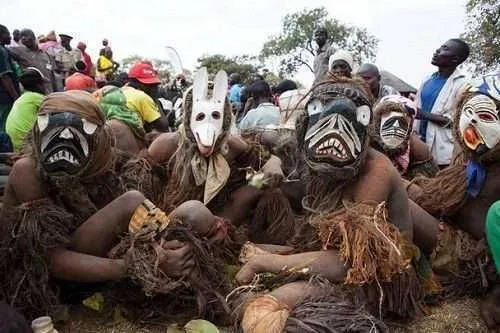
Apart from being noted for their masks and secret society group called the Nyau, the people of Chewa had a more intriguing ritual.

Historians say that it was the custom of the people that when a tribe member dies, the body is taken to a sacred place and cut open at the throat.

Water is then poured through the hole and squeezed down the stomach until it comes out through the anus.

This process is done repeatedly until the water comes out clean.

What is even more disturbing is the fact that this water is used to prepare food for the entire tribe.

Also, It was the belief that when someone dies, the whole village must show up.

This is because among the Chewa, death is not natural; it is usually caused by witchcraft.

The argument is that those who might have killed a person would be scared to go to the funeral.

Currently, Chewa with a population of about 1.5 million people has two clans – the Phiri and the Banda.

The Phiri are associated with the kings and aristocracy, while the Banda are usually healers and mystics.

Titilayo Kupoliyi