Politics

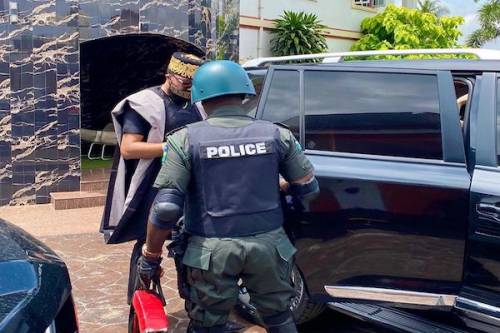
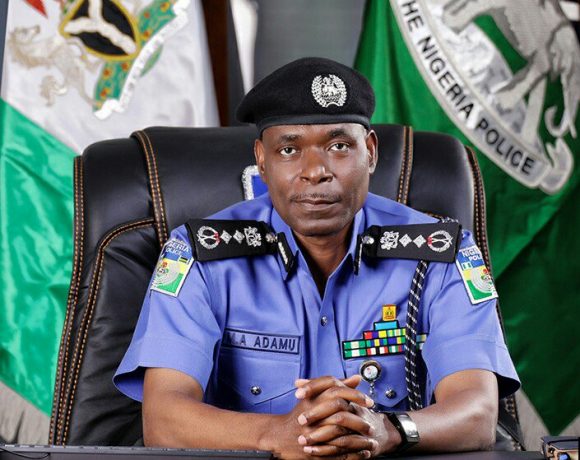
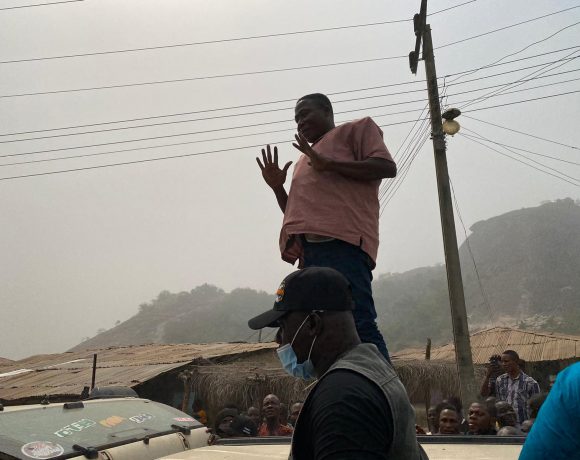
The Presidency says the Inspector-General of Police, Mohammed Adamu, has ordered the arrest of Sunday Adeyemo aka Sunday Igboho, for giving Fulani in Oyo State an ultimatum to exit the state.

The Senior Special Assistant to the President on Media and Publicity, Garba Shehu, was quoted as saying this during an interview with BBC Hausa.

According to the BBC report, Shehu said he had just got off the phone with the IG who told him that an order had been given to the Commissioner of Police in Oyo State, Ngozi Onadeko, to arrest Igboho immediately and transfer him to Abuja.

Igboho, who is the Akoni Oodua of Yoruba land and a grassroots politician, had asked herdsmen in Ibarapa Local Government Area of Oyo State to leave within seven days, blaming the leadership of the Fulani of being behind the rising insecurity in the state.

BBC

News Analysis

Recently, the Inspector-General of Police, IGP, Mohammed Adamu, ordered the withdrawal of all police officers attached to very important persons, VIPs, across the country, with immediate effect.

The IGP, however, exempted those attached to government houses, the Senate President and the Speaker House of Representatives, from the order.

The new directive came barely ten days after the police authorities disbanded the Special Anti-Robbery Squad, SARS, following the nationwide protests against the squad for its high handedness and extrajudicial killings.

Before the October 21 directive, in March 2018, former Inspector General of Police, Ibrahim Idris ordered an immediate withdrawal of all police orderlies attached to private individuals and companies.

Despite lacking adequate workforce, feeble attempts have been made to withdraw police officers from VIPs in the past by successive IGPs but was unsuccessful.

For instance, the elites believe that having a police officer around for security has become a status symbol for many of them.

Thus, granting them such privilege has left few officers for core police duties like investigations and patrols, as such, most Nigerian communities are at the mercy of criminals.

In other countries, the practice is for VIPs to retain the services of private security guards.

Since the ex-governors, former ministers, businessmen, politicians, entertainers and clerics desirous of extra protection can afford this service, they should be made to get it from private guards without putting undue pressure on the overburdened police system.

The fact that over forty percent of its officers and men are attached to VIPs and unauthorised persons, has made Nigeria grossly under-policed.

Additionally, there are several ills bedeviling the Nigeria Police Force that make it so ineffective in discharging its core duty of maintaining law and order.

The country is yet to meet up with the United Nations recommendation of one police officer for every four hundred and forty citizens ratio, this huge gap has led to increase in crime and criminal acts like armed robbery, kidnapping, gangsterism, cultism, rape and terrorism.

Insecurity has assumed monstrous dimensions around the country while Nigerians are groaning under the yoke of kidnapping and armed robbery.

This pragmatic approach of withdrawing policemen from VIPs will free more officers to face squarely the duty of protecting lives and property of all citizens.

To this end, the action would allow the Nigeria Police to discharge their civic responsibility without any form of distraction.

Rasheedah Makinde

Security

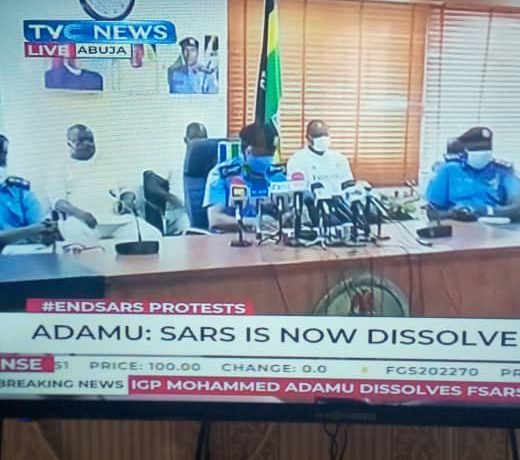
The Inspector-General of Police, IGP, Mohammed Adamu has dissolved the Special Anti-Robbery Squad, SARS, across the country.

This is contained in a Press Release made available to newsmen by the Force Public Relations Officer, Force Headquarters, Abuja, Dcp Frank Mba.

                                      Text

Ref No. CZ.5300/FPRD/FHQ/ABJ/VOL.3/30                Date: 11th October, 2020

The Director of News

…………………………….

PRESS RELEASE​

IGP DISSOLVES THE SPECIAL ANTI-ROBBERY SQUAD (SARS)

·        Emplaces other measures to protect the citizens

In the finest spirit of democratic, citizen-centred and community policing, the Inspector-General of Police, IGP M.A Adamu, NPM, mni has today, 11th October, 2020, dissolved the Special Anti-Robbery Squad (SARS) across the 36 State Police Commands and the Federal Capital Territory (FCT) where they hitherto existed.

The IGP, while noting that the dissolution of SARS is in response to the yearnings of the Nigerian people, observes that by this dissolution, all officers and men of the now defunct Special Anti-robbery Squad are being redeployed with immediate effect.

The IGP notes that the Force is not oblivious of the ever present need to combat armed robbery, kidnapping and other violent crimes in the country which was before now the core mandate of the erstwhile Squad. He assures that a new policing arrangement to address anticipated policing gaps the dissolution of SARS would cause has been evolved and shall be announced in due course.

Meanwhile, as part of measures to prevent a re-occurrence of events that gave rise to the dissolution of SARS, a Citizens’ and Strategic Stakeholders’ Forum is being formed to regularly interface with Police leadership at all levels and advise on police activities as they affect the general public.

In addition, the Force is constituting an Investigation Team which shall include Civil Society Organizations and Human Rights Bodies to work with the Police in investigating alleged cases of human rights violations. The measure, the IGP believes, will enhance transparency and accountability in police services as well as providing a system of deterrence for erring police officers whose action clearly violates the rights of the citizenry.

The IGP appreciates and commends all citizens particularly those who genuinely express their concerns for a better policing orientation in an organized, patriotic and civil manner. He reaffirms the determination of the Force to bequeath to the country a Police Force and System that is professional in service delivery and most importantly, accountable to the people.  

DCP FRANK MBA

FORCE PUBLIC RELATIONS OFFICER

FORCE HEADQUARTERS

ABUJA

Yoruba

Ogagba fun Ilese Olopa, Ogbeni Mohammed Adamu ti yan alakoso merin tuntun fun Ilese Olopa n’ipinle Ekiti, Bayelsa, Cross-River tofimo ipinle Ogun.

Ikedeyi lowa loju opo ero ayelujara abeyefo ti Ilese Olopa nileyi.

Alakoso tuntun fun Ilese Olopa n’ipinle Ekiti ni Ogbeni Mobayo Babatunde, on lo gba ipo l’owo Ogbeni Amba Asuquo to ti n’igbega si ipo igbakeji ogagba n’ilese olopa.

Alakoso n’ipinle Bayelsa ni Ogbeni Micheal Okoli, Ogbeni Abdukadir Jimoh lo wa n’ipinle Cross Rivers, nigbati Ogbeni Edward Ajogun di ipo naa mu n’ipinle Ogun.

Babatunde Salaudeen/Amos Ogunrinde

News Analysis

The Inspector General of Police, IGP, Mohammed Adamu had at different fora, announced plans by the federal government to recruit forty thousand community policing officers to compliment Nigeria Police Force in law enforcement functions.

The community policing officers also known as Special Constables, will be recruited within the communities where the applicants reside, while fifty Special Constables are to be engaged in each of the seven hundred and seventy four local government areas.

In addition, one thousand, three hundred community policing officers will be drawn from professional bodies such as the academics, road transport unions, traders associations, religions bodies, women unions, and youth organisations in order to ensure diverse representation.

According to the IGP, the implementation of the community policing strategy is expected to bridge the gap between the police and the citizens that will enhance effective and efficient law enforcement service delivery.

With the adoption of community policing, which has the backing of President Muhammadu Buhari, Nigeria would have joined nations such as United States, United Kingdom, France and India that have decentralised their security system, in which policing functions are citizen-centred and community-drive.

The recruitment of the community policing officers is a welcome development, as they will be able to protect lives and property at communities that have been isolated by police personnel.

Though, many state governors have devised ways of engaging citizens directly and indirectly to provide internal security within their states, the Inspector General of Police said the proposed establishment of community policing would not take away the powers of the Nigeria Police Force.

Some of the advantages of the community policing are that it will engender partnership, accountability and engagement.

The proposed recruitment of the forty thousand special constables would also put to an end to the insufficient methods in combating crime and social disorder in the society.

To make this work therefore, the recruitment of the special constables must be allowed to follow due process, the era of recruiting through the back door or through letters from notable politicians should not be encouraged.

The forty thousand community policing officers should be gainfully employed before they are drafted and trained as volunteers to serve in that capacity within their community.

The community policing officers should be familiar with the terrain they police. Some of those to be recruited need to be indigenes or volunteers that have resided in that particular area for a long period of time.

This will establish bonds between them and people of the communities they police.

Residents of communities should also provide support ranging from intelligence gathering to donation of facilities to the special constables.

The National Assembly should review the police act with a view to providing new legal framework that will regulate policing in a democratic dispensation.

Factors militating against police performance, which include poor resourcing, corruption, poor management and excessive executive control of the police should not be allowed to surface when community policing scheme take off.

If the nation is indeed committed to checking high rate of insecurity, every member of the society should support the realisation of community policing.

Olaolu Fawole
Security

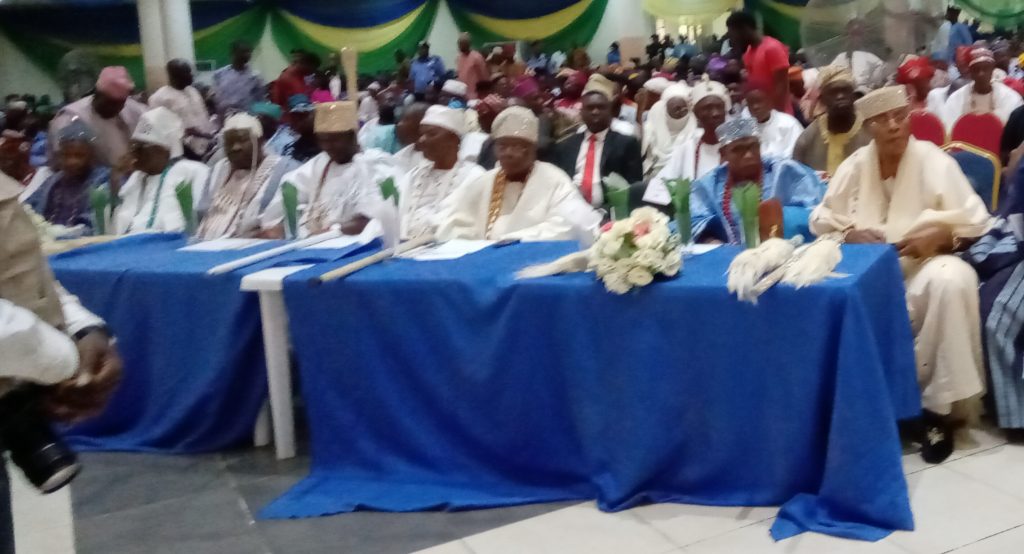
The Inspector General of Police, Mr. Mohammed Adamu says traditional rulers, head of villages and stake holders in Ondo state and other states of the federation will be involved in the recruitment of 40,000 Community police constables.

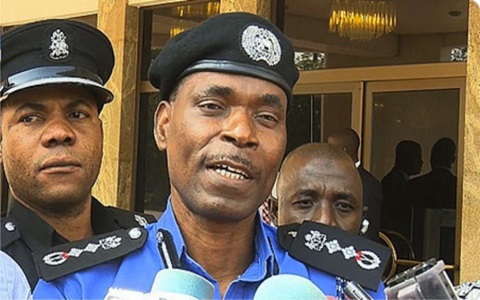
Mr. Mohammed Adamu stated this in Akure while addressing officers of the Ondo state police command as part of his tour of the southwest region in the quest to tackle insecurity.

The IGP explained that engagement of local leaders in the community policing process would make it easier for the security agencies to identify security threats and proffer local solutions to them.

He further disclosed that a Special tactical surveillance team to be headed by a Commissioner of Police was being deployed to forest and highways in the southwest region to fight kidnapping and other criminal acts.

Mr. Adamu said the Federal Government had procured special body armor and weapons to make the job of security Nigerians for policemen nationwide.

In a remark, the Commissioner of Police in Ondo state, Mr. Undie Andie said crimes rate had reduced drastically in the state with commendable efforts of his hard working men.

Leke Adegbite

Security

The Nigeria Police is to take the fight against kidnappers and bandits to the dens and hideouts of the criminals.

The Inspector General of Police, IGP, Mr. Mohammed Adamu gave the information while addressing newsmen at the Osun State Governor’s office Osogbo, shortly after a meeting with Governor Gboyega Oyetola.

Radio Nigeria correspondent, Adenitan Akinola was there.

Adenitan Akinola’s report on IGP’s visit to Osun State

Adenitan Akinola

Security

Inspector General of Police, IGP, Mr. Mohammed Adamu has reiterated the force efforts at reducing criminality through community policing.

Mr. Adamu stated this in Ibadan at the Southwest Geo-Political Zone Security Summit held in Ibadan.

The IGP who is the convener of the summit, stressed that the police had succeeded in using community policing to stabilise the public security, noting that fleets of patrol vans had been acquired and would be deployed across highways and cities in the country.

Contributing, Lagos State governor who spoke through the Deputy Governor, Dr. Obafemi Hamzat and his counterpart from Ogun state, Mr. Dapo Abiodun in a message from deputy governor, Mrs. Noimot Salako-Oyedele called for the deployment of massive technology to tackle insecurity.

Earlier, in a welcome address, Oyo state governor, Engineer Seyi Makinde noted that South-West governors were committed to safety and security in the region and Nigeria at large.

Olubadan of Ibadanland, Oba Soliu Adetunji who spoke through High Chief Lekan Balogun expressed the determination of traditional rulers to partner security agencies and to achieve a crime free society.

Iyabo Adebisi