Sport

The Super Eagles of Nigeria delivered a commanding performance on Sunday, crushing the Mambas of Mozambique 4–0 to storm into the quarter-finals of the 2025 Africa Cup of Nations, AFCON in Morocco.

Nigeria took the lead in the 20th minute thanks to a clinical finish from Ademola Lookman, who then turned provider to set up Victor Osimhen for Nigeria’s second in the 25th minute.

The Eagles maintained their dominance after the break, with Osimhen striking again in the 47th minute to stretch the lead to 3–0 and effectively seal the contest.

Akor Adams made it 4-0 in the 75th minute with his first goal of the tournament as Nigeria emphatically cruised into the quarter finals.

Earlier in the day, Egypt defeated Benin Republic 3-1 to also book their place in the quarter finals of the tournament.

The round of 16 fixtures ends today with Algeria taking on the Democratic Republic of Congo, while Burkina Faso tackles Cote d’Ivoire.

By Oluwakayode Banjo/Adetutu Adetule

Follow us on Telegram and YouTube, and join our WhatsApp Update Group for more news updates.
Foreign

The Mozambican cabinet has approved a bill proposing pay cuts for ministers, deputy ministers, state secretaries and MPs as the government grapples with a rising wage bill.

Finance and Economy Minister Max Tonela on Thursday said the proposal was also seeking to address concerns over provincial assemblies members’ salaries, which he said contradicted the principles of fair pay.

Mr Tonela said some of their salaries were significantly higher than those paid to other executives and specialised professionals.

He did not indicate the amount of the proposed cuts.

The pay cuts will not be applicable to the public servants whose salary was adjusted under the Unified Pay Scale (TSU) approved this year.

The move comes nearly two weeks after the International Monetary Fund highlighted the need for the government to reduce public wage expenditure.

The wage bill will be submitted to parliament for debate before it is passed into law.

BBC/Simeon Ugbodovon

Subscribe to our Telegram and YouTube Channels also join our Whatsapp

News

Mozambique’s former Labour Minister Maria Helena Taipo has been sentenced to 16 years in prison for corruption charges, involving the diversion of more than $1.7m (£1.4m) from government funds.

Other government officials were sentenced alongside her.

The defendants were charged with the crimes of embezzlement, breach of trust, abuse of power, economic participation in business and forgery of documents.

The crimes were committed between 2014 and 2015.

The money that was stolen was used to, among other things, purchase 50 bicycles, the construction of a house, parties and end-of-the-year hampers.

Simeon Ugbodovon

Foreign

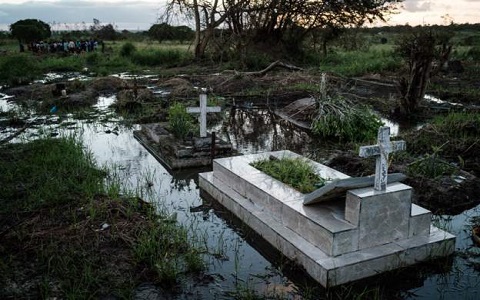
Residents of Beira city in the central Mozambican province of Sofala have called for the protection of local cemeteries amid reports of vandalism of graves.

At the Mangalane cemetery, more than 50 graves have been vandalized in the past month. The criminals are removing copper crucifixes and other metallic objects.

The traditional leader responsible for the cemetery, Fernando Jaime, said the acts of desecration have been taking place in broad daylight.

“They take crosses and other objects of dead people they find beside the grave. They put these things together and sell them for scrap,” he told local media.

Carlos Cassicussa, a resident of the Mungassa neighbourhood, said the situation was the result of a degradation of moral values.

“This behaviour is really wrong. The interior ministry should take action. They come to the cemetery even at noon,” he said.

BBC/Simeon Ugbodovon

Foreign

Mozambique is planning a new law that will regulate churches’ activities, impose taxes on them, and require them to have a minimum number of 200 signatures in order to register.

Justice, Constitutional and Religious Affairs Minister Helena Kida said a government analysis had revealed “warning signs” amid a runaway proliferation of churches.

Mozambique has a total of 900 officially registered religious denominations, but a lot more exist.

The Christian Council of Mozambique, CCM, is backing most of the provisions of the proposed law, saying it recognises that the government wants to “bring order”.

The provision to tax churches however worries the churches.

“It’s an aspect that was talked about, but we didn’t reach any consensus,” says CCM President Felicidade Chirindza, noting that churches have never been taxed.

BBC/Maxwell Oyekunle

Foreign

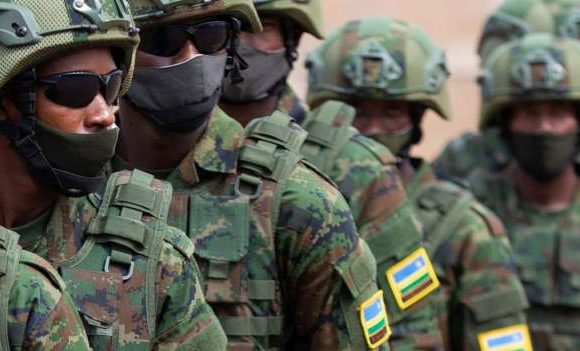
Rwanda wants additional funding to keep its troops in Mozambique’s troubled northern Cabo Delgado region where they are fighting Islamist militants.

A 1,000-strong Rwandan force was deployed to the region last year and has since recaptured many villages and towns from the militants.

Rwandan High Commissioner to Mozambique said they had asked the European Union for financial support for the troops to bring the situation in the region under control.

“We ask [for assistance from] partners like the European Union, which is considering our request, and we hope they help us. And the two countries have many friends and we believe they want to see Cabo Delgado safe and stable,” said Claude Nikobisanzwe.

He said there were visible improvements in areas recaptured by Rwandan troops.

“We have stabilised our areas like the district of Palma and Mocímboa da Praia. We are waiting for the [Mozambican] government to make a decision and see if the population can return,” said Mr Nikobisanzwe.

He said there was no deadline for Rwandan troops’ presence in the country.

BBC/Simeon Ugbodovon

Foreign

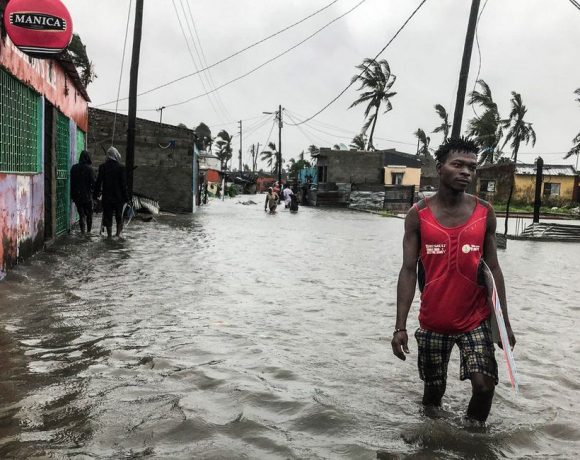
Parts of central Mozambique have been flooded after Cyclone Eloise struck near the port city of Beira with wind speeds of up to 160km/h (100mph).

Beira received 250mm (10 inches) of rain in 24 hours, according to Mozambique’s National Institute of Meteorology (INAM).

Local officials and aid agencies are assessing the scale of the damage so they can help those affected, and trying to restore power and communications, which were cut off in some areas.

Four people have been killed, according to local officials.

The cyclone has now been downgraded to a tropic storm and was forecast to be heading towards Zimbabwe and northern South Africa, which have already experienced heavy rainfall.

Chris Neeson, who works for the UN in Beira said: “It was impossible to sleep because of the noise and fear.”

“I heard so much wind and rain in the early hours of the morning. Water entered my home, as well as rocks and leaves that had flown off my neighbours’ homes. Electricity has been down from last night and we’ve been unable to make calls.

“When I went outside, there was water everywhere – up to my knees – and trees, electrical wires, roof tiles, and fences all destroyed, strewn about on the streets. Thank God it has stopped raining. I never thought I would be afraid of water, but this was horrible,” he said.

Residents of Beira, Mozambique’s second city with a population of about 500,000, are trying to clean up as best they can.

More than 1,000 houses have been totally destroyed and another 3,000 badly damaged, according to Antonio Beleza, from Mozambique’s National Institute for Disaster Management and Reduction. He said more than 160,000 people had been directly affected.

Some are salvaging what they can from their flooded homes.

Water levels were already high, even before the cyclone made landfall on Saturday.

The region is still recovering from two devastating cyclones, Idai and Kenneth, which hit in 2019, killing hundreds and forcing many thousands from their homes.

BBC

Foreign News

Increasing numbers of African countries are confirming Coronavirus cases, prompting many to announce measures to control the spread of the virus.

Ghana is the latest nation to ban entry to foreign visitors from countries badly impacted by the disease.

Earlier, South Africa declared a state of disaster, closing its borders to foreign nationals from countries badly impacted by the disease. The ban includes China, Iran, Italy, Spain, the UK and the US.

Kenya has also imposed sweeping travel restrictions, blocking entry to all travelers coming from countries with reported cases. On Sunday, the government confirmed two more cases of Coronavirus, taking the total number to three.

Djibouti, which has no confirmed case, has suspended all international flights. Tanzania, which also has no confirmed case, has cancelled flights to India.

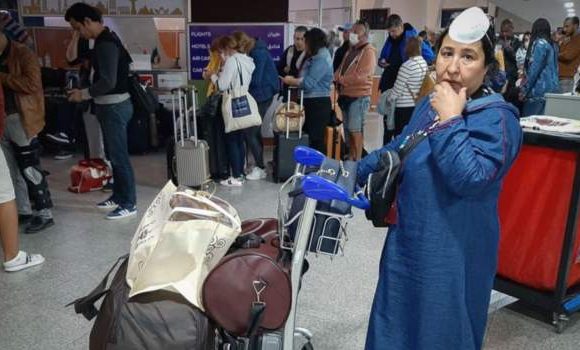
Morocco has also suspended all international flights from its airports. The North African state has 28 confirmed cases, including one death.

The prime minister of Libya’s internationally recognized government, Fayez Sarraj, also announced the closure of Libya’s airspace and land borders as a preventative measure starting from Monday.

In neighbouring Algeria, which has 48 Coronavirus cases, officials announced they would be suspending all flights to France as of Tuesday.

In Tunisia, Prime Minister Elyes Fakhfakh has ordered the closure of all borders and a ban on large gatherings, including congregation prayers in mosques. The country has confirmed 20 cases of the virus.

Mozambique’s President Filipe Nyusi has suspended all gatherings of 300 people or more. He has also suspended all foreign travel by state officials – including his own visits to Equatorial Guinea and Palestinian territories that were scheduled for later this month.

The virus is now confirmed to be present in at least 26 nations across the continent.

BBC NEWS