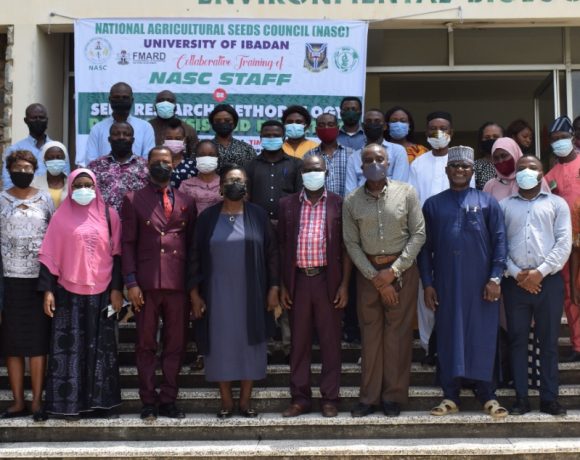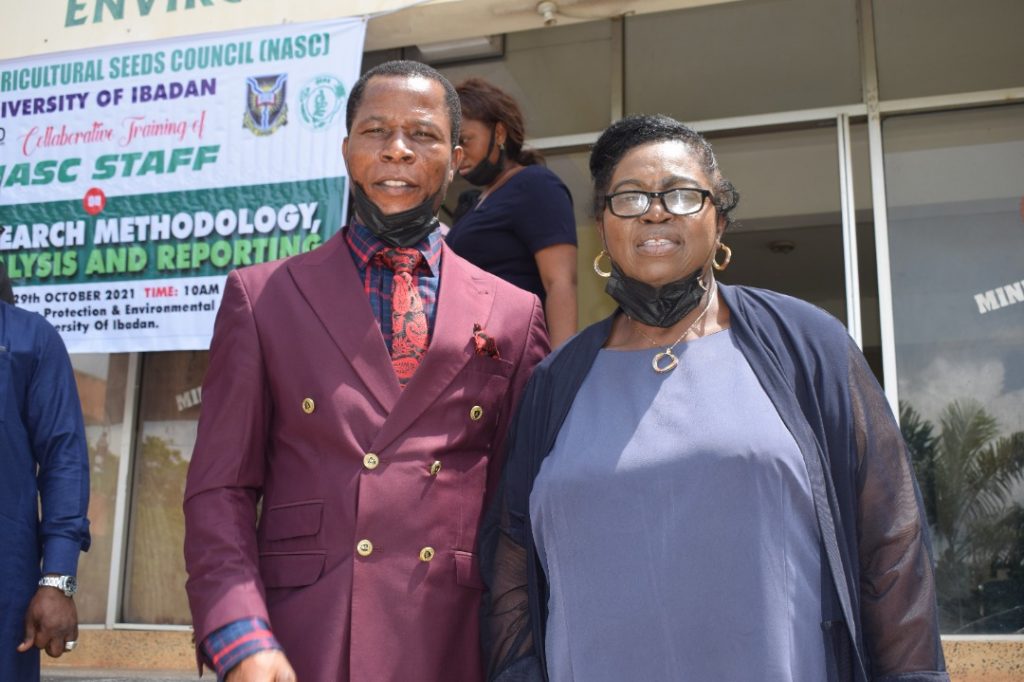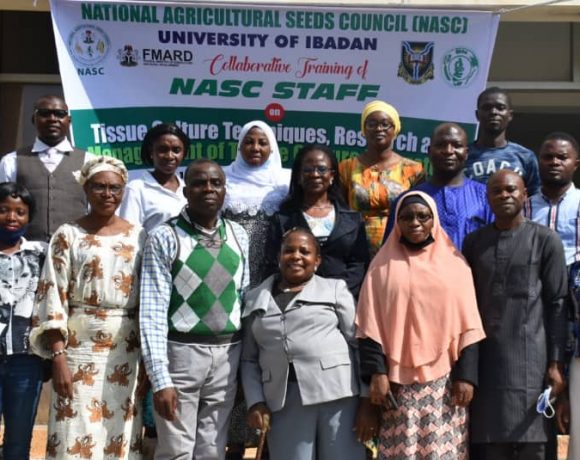
In a bid to enhance the multiplication of quality seeds, the National Agriculture Seed Council, NASC is to establish tissue culture laboratories in all the geo-political zones of the country.
The Director-General, NASC, Dr. Olusegun Ojo stated this at the formal opening of training organized in conjunction with the Department of Crop Protection and Environmental Biology, the University of Ibadan for the staff of the council.
The two-week training program centred on tissue culture techniques, research and management of tissue culture laboratories.
Dr. Ojo represented by the NASC South-West Director, Mr. Kunle Adeseko said the establishment of the tissue culture laboratory, TSL was borne out of the need to have modern seed multiplication facilities and such laboratory would also be at the zonal offices in the six geopolitical zones of the country.
“The idea of establishing TSL was because of the desire to have modern seed multiplication facilities for the proposed NASC Centre of Excellence for seed in West Africa to train seed entrepreneurs on the novel High Ratio propagation technologies developed under the YIIFSWA and BASICS projects.”
“To hit the ground running, a building was constructed at the headquarters and it is being equipped with basic laboratory equipment for the take-off of the TCL”.
Dr. Ojo explained that being a new area of speciality in the council necessitated the partnership with the Department of Crop Protection and Environmental Biology to train the newly employed staff on tissue culture techniques and management of tissue culture laboratories.
“It’s a rare privilege accorded you by the management and you are therefore enjoined to take the training seriously and pay undivided attention to the instructions by the resource persons and make it worth the while for the resources put together to organise the training”.
“The training is considered a train-the-trainers course as skills and knowledge acquired by you are expected to be stepped down to your colleagues”
Also speaking, the training facilitator, Dr. Morufat Balogun, said it was the first time NASC would train its staff on tissue culture.
“This is highly appreciated and commendable, we will give the participants the best because the department has experts who can handle the training”.
“The two-week training promises to be very rich so participants should be open and feel free to ask questions”.
Also, the UI Director of Teaching and Research Farm, Professor Andrew Omojola, who spoke on “the importance of quality seed, public and private partnerships in Agricultural Value chain”, said seeds have more value than plants or fruits.
He urged farmers to ensure that the source of the seeds they planted was guaranteed.
Professor Omojola emphasised that public-private partnership was paramount for farmers and agriculturists to make more profits and impacts.
“You cannot do it alone as far as research is concerned, so be in partnership with the right competent people and add value to your seed through packaging”.
The Head of Crop Protection and Environmental Biology Department, Professor Rasheed Awodoyin, said it was a good relationship working with NASC, especially in the area of training.
He said it was paramount to adopt the method of tissue culture in the production of seedlings.
“Tissue culture is a sure thing one must key into to meet the present demand, with tissue culture, one can produce more seedlings at any time”.
Ridwan Fasasi