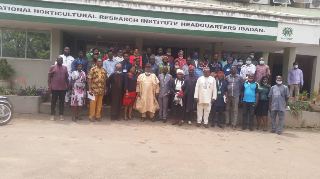
The Executive Director, National Horticultural Research Institute, NIHORT, Idi-Ishin, Jericho, Ibadan, Professor Lawal Attanda, says the institute has developed new crop varieties with high yield that can be cultivated in the southwest zone of Nigeria.
Professor Attanda stated this while receiving the management team of the Federal Radio Corporation of Nigeria, FRCN, lbadan Zonal Station on a courtesy visit to the institute.
Professor Attanda explained that food supply in the country was a product of research findings on crop production.
The NIHORT executive director said six varieties of onions have been developed recently with three varieties adaptable in the zone both in the dry and wet seasons.
Professor Attanda who said Radio was more effective in agricultural extension services, expressed readiness to partner FRCN in disseminating research information from the institute to the general public especially grassroots farmers in the SouthWest Zone.
Earlier, the Zonal Director, FRCN, Ibadan Zonal Station, Mr Olufemi Fulani, noted that NIHORT was notable in conducting research into crop varieties especially fruits thereby guaranteeing all year production of fruits and vegetables.
The FRCN Zonal Director, who explained that the Zonal station has FM stations across the Southwest states, noted that the visit was designed to seek collaboration with NIHORT to reach its target audience at the grassroots.
In the entourage of the Zonal director were the management team of FRCN, Ibadan Zonal station, comprising the Deputy Director Programmes, Reverend Niyi Dahunsi, Deputy Director Marketing, Mr Adewale Afinjuomo, a Deputy Director News and Current Affairs, Mrs Olubunmi Olalere and the Assistant Director, Corporate dLDevelopment and Communication, Mr Steve Agbaje.
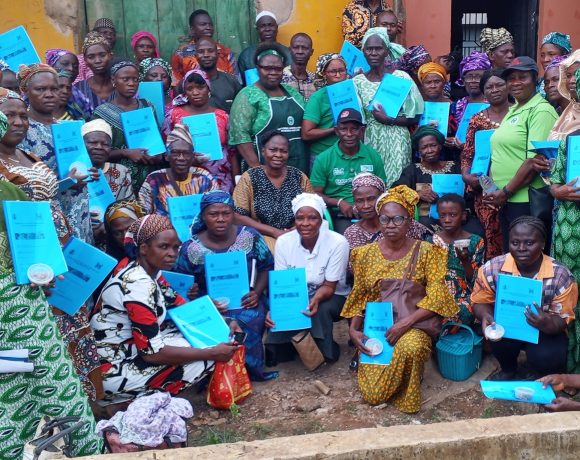
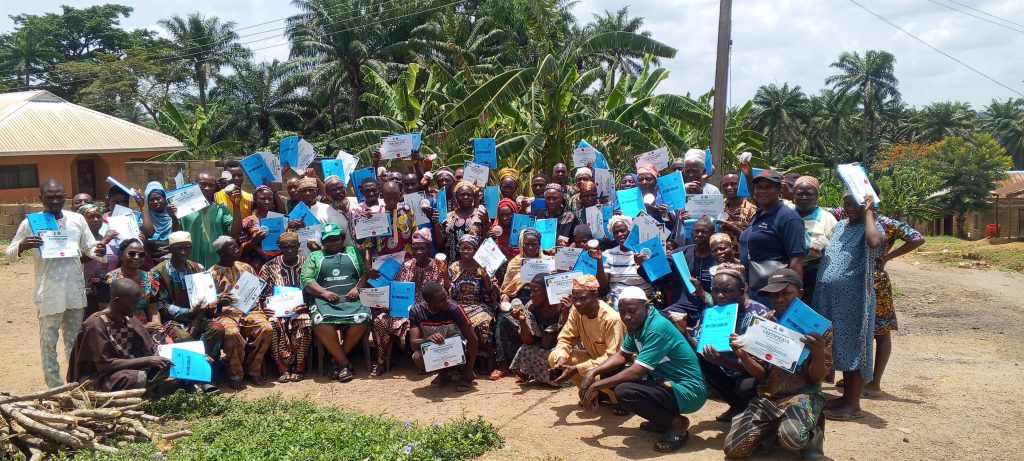
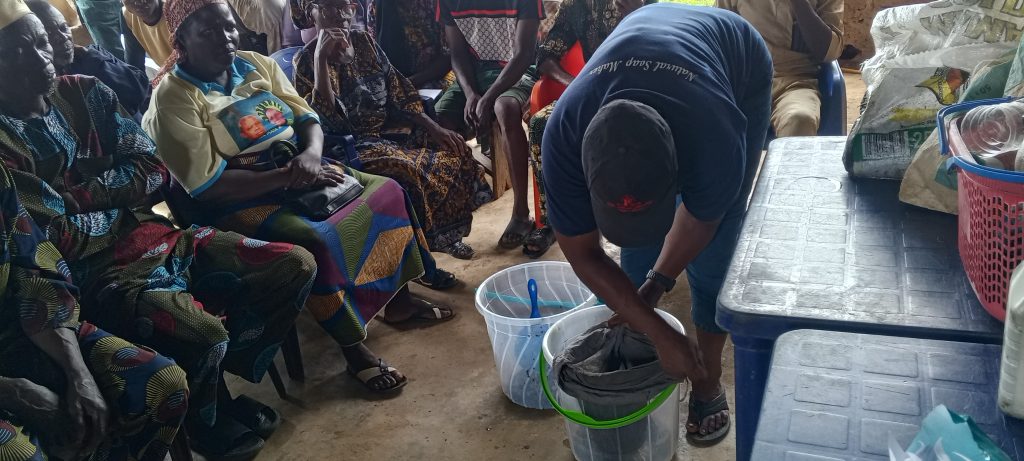
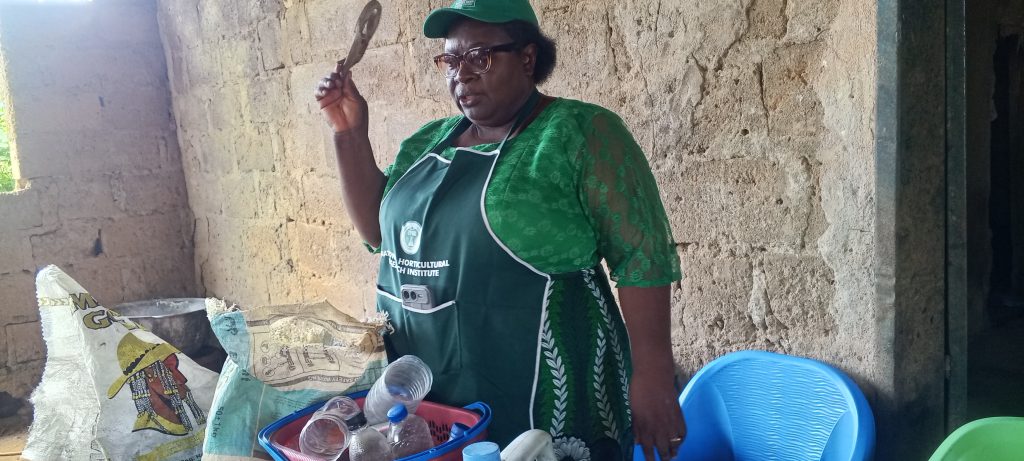
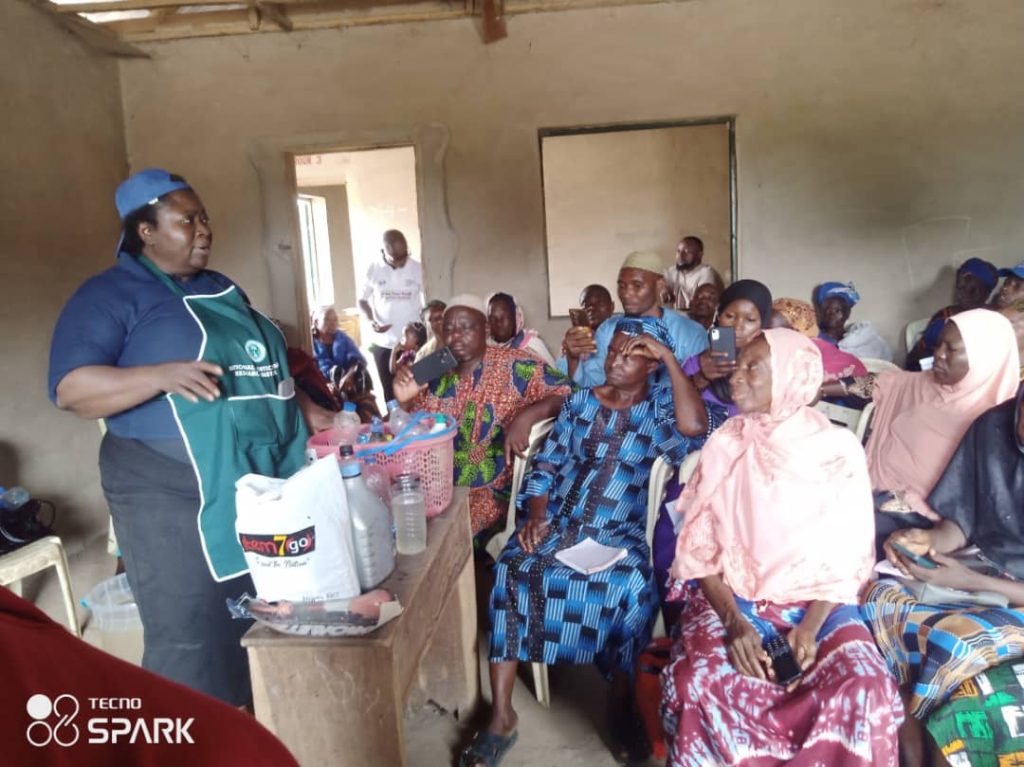
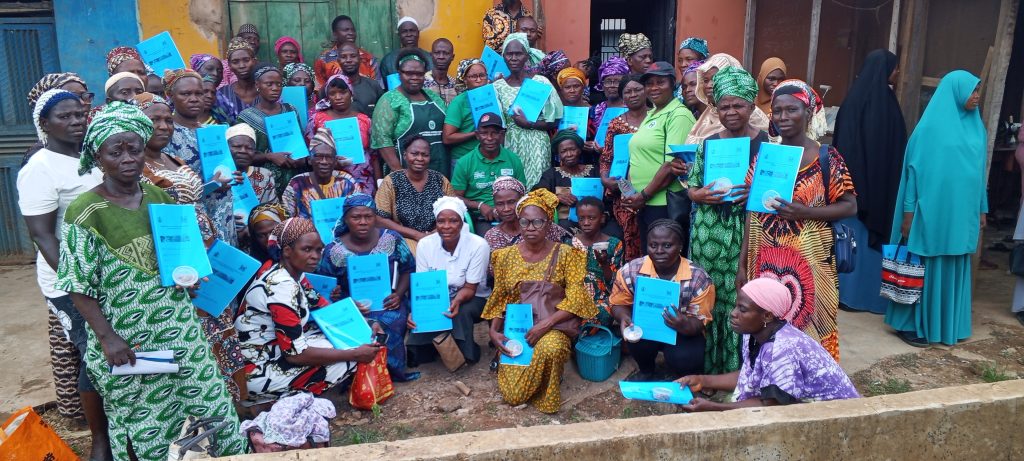
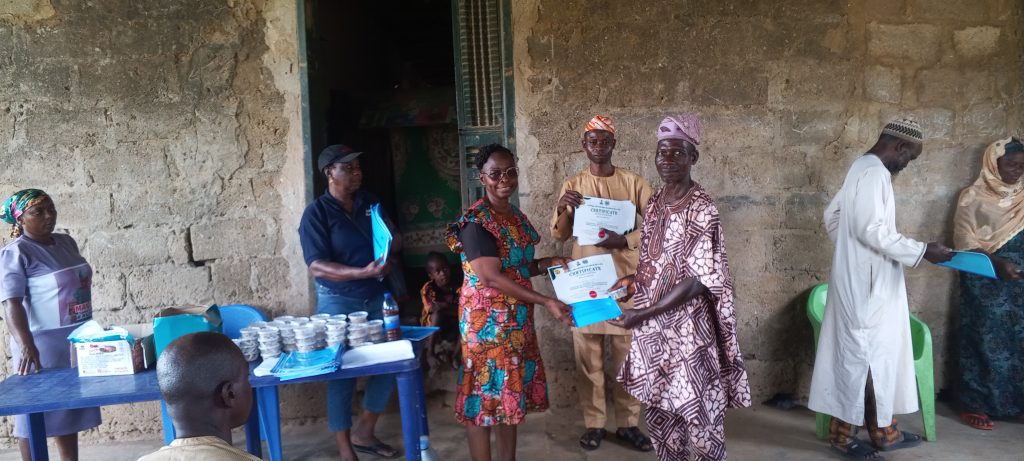
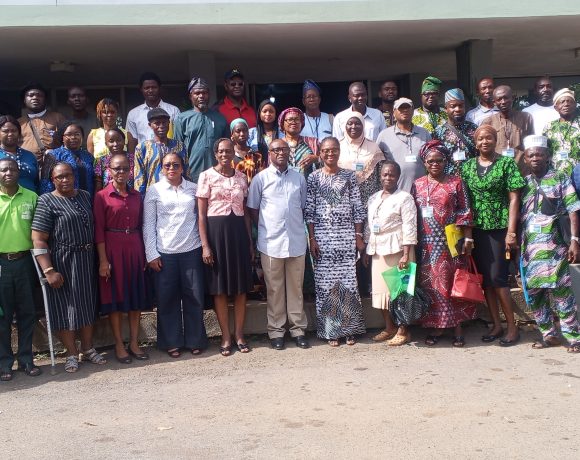
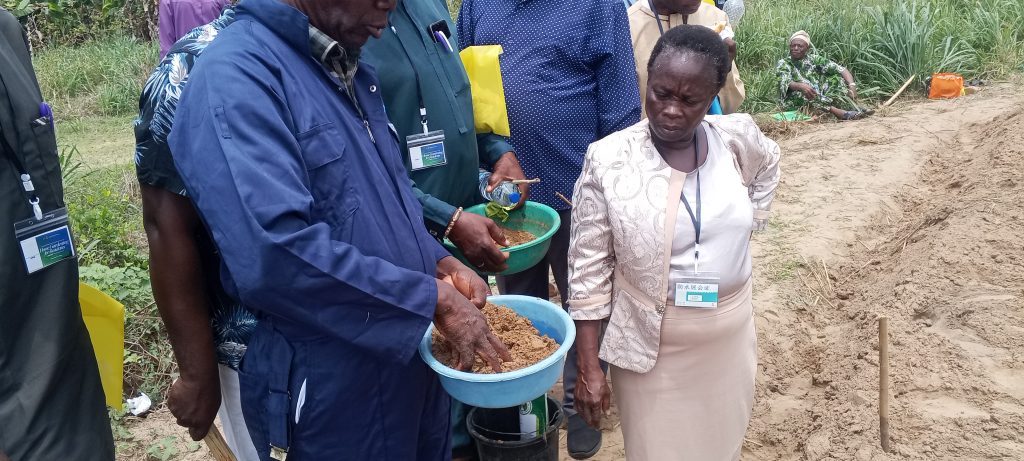
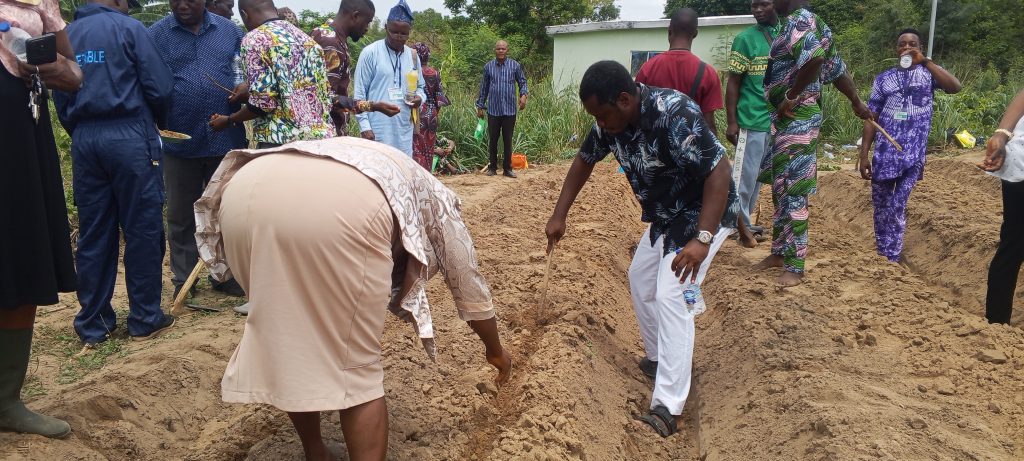
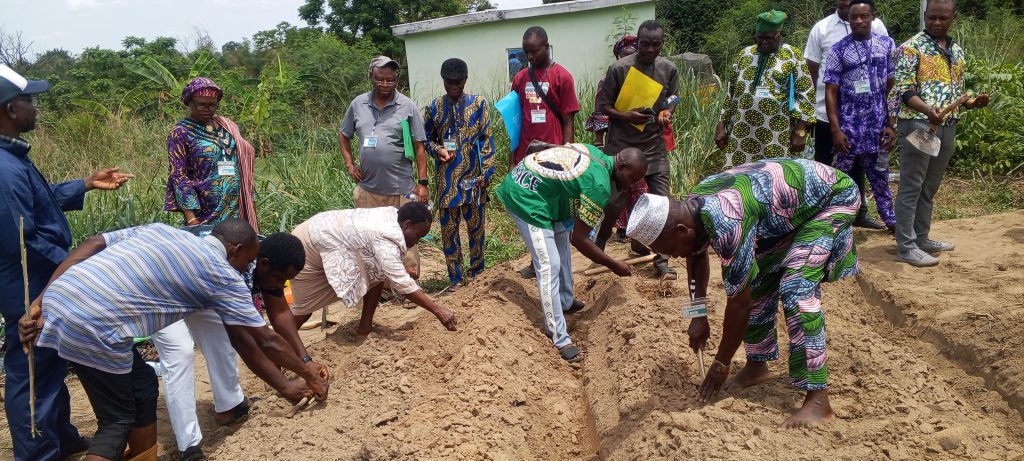
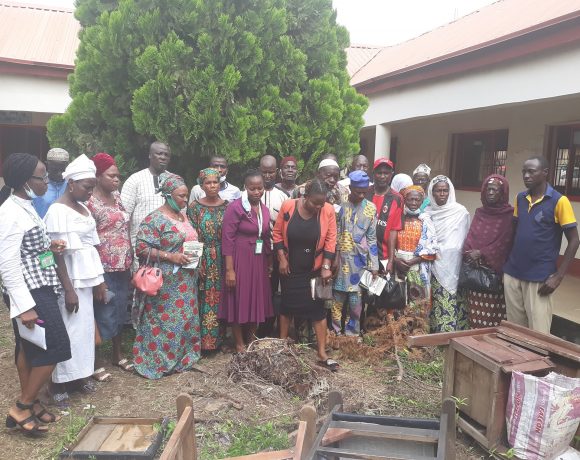
The National Horticultural Research Institute, NIHORT, has trained farmers in Osun State on converting plantain and banana waste into organic soap to promote environmental sustainability and boost income generation.
The training forms part of NIHORT’s efforts to reduce environmental degradation and support the global drive to curb ozone layer depletion.
Leaders of farmers’ groups selected participants based on residents’ responses across the benefiting communities.
At Ansaruldeen Grammar School, Atile, Ikire in Irewole Local Government Area, seventy-five residents participated, while twenty-seven farmers were trained at Esa Oke Farm Settlement in Obokun Local Government Area.
Seventy-seven participants drawn from five local government areas converged on Ile-Ife, while fifty-seven farmers attended the session in Orile Owu, Ayeda’ade Local Government Area.
Facilitators administered pre-test questionnaires before exposing participants to theoretical and practical sessions, followed by post-test assessments.
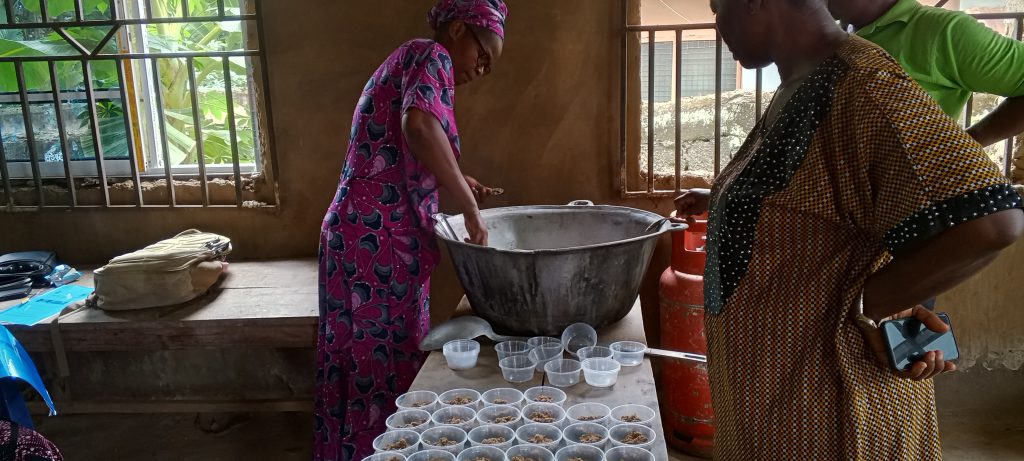
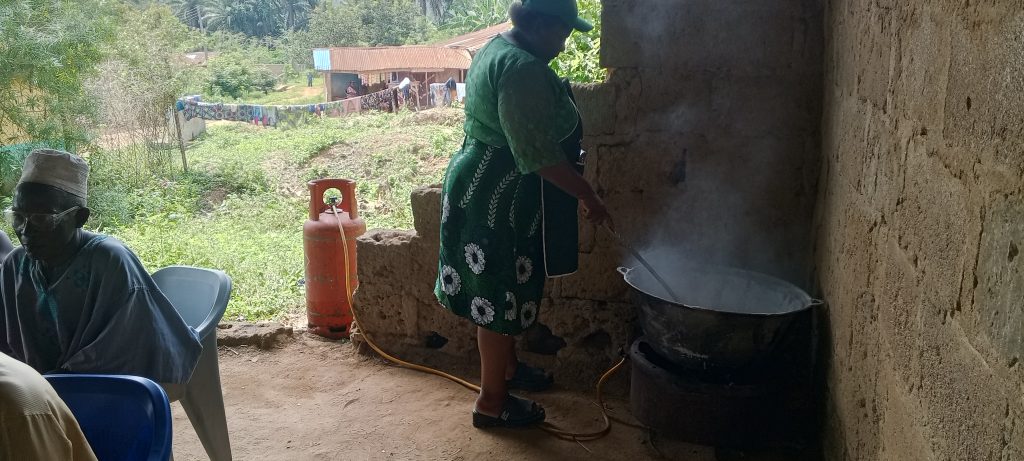
Principal Research Officer, NIHORT, Mrs Adebisi Akinrinola anchored the training on soap production using the saponification process.
The process involves burning plantain and banana stalks into potash, extracting alkali, and cooking it with oil over several hours to produce raw soap pellets, which can be processed into liquid or paste soap.
Participants in Ile-Ife, drawn from Ife-East, Ife-Central, Ife-South, Ife-North and Ife Area Office, converged on Akogun Olusidodo Compound Hall, while those in Orile Owu gathered at Ejemu Compound Hall.
In her remarks, Director of Research, NIHORT, Dr Oluyemisi Adebisi-Adelani said improper disposal of plantain and banana waste contributes to environmental challenges.
“I’m so happy. It is a thing I have been thinking, envisioning. Last year we came and we talked about our new product, natural from plantain and banana because they have a lot of wastes from ikire, Orile Owu, Ife Esa-Oke, in fact Osun State. They showed their interest and we wrote the proposal and our Executive Director, Professor Mohammed Lawal Attanda followed it up. He gave us the permission to go ahead and this day came and we are here.” “Yes! Plantain and banana waste when they are disposed it contribute to what is called green house emission which also increase the depletion of the ozone layer. So this training is very important.”
Dr Adebisi-Adelani added that the initiative would provide additional income opportunities for farmers.
“It is another source of income if they can put the training into use”.
She also disclosed that NIHORT has developed improved crop varieties, including HORTITOM 1–7 tomato varieties, HORTPLAN 1 and 2 plantain varieties, HORTBAN 1 and 2 banana varieties, and HORTIONI 1 to 6 onion varieties adapted to Nigeria’s climate.
Some beneficiaries, including Rofiat Bakare and Azeezat Aribidesi, expressed appreciation to NIHORT and pledged to apply the knowledge.
“We thanked NIHORT; in fact they taught us a lot. They taught us that in waste to wealth we can use banana and plantain wastes and make organic soap which is very good to our skin and serve as our source of income. I’m ready to make use of the training effectively to increase my source of income and to improve my own health”.
The four-day training, held from the 14th to the 17th of the month, began in Ikire and ended in Orile-Owu, with participants expressing appreciation through songs and solidarity choruses.
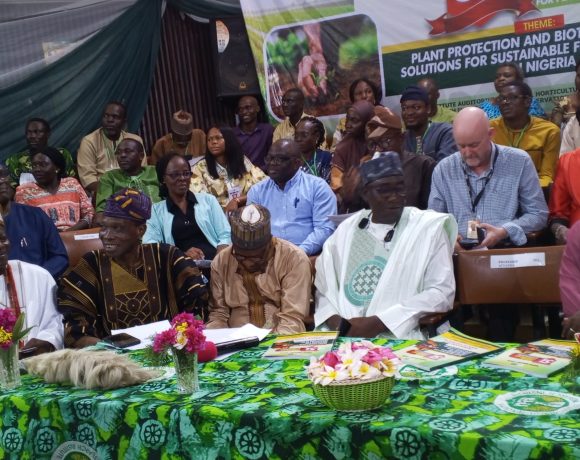
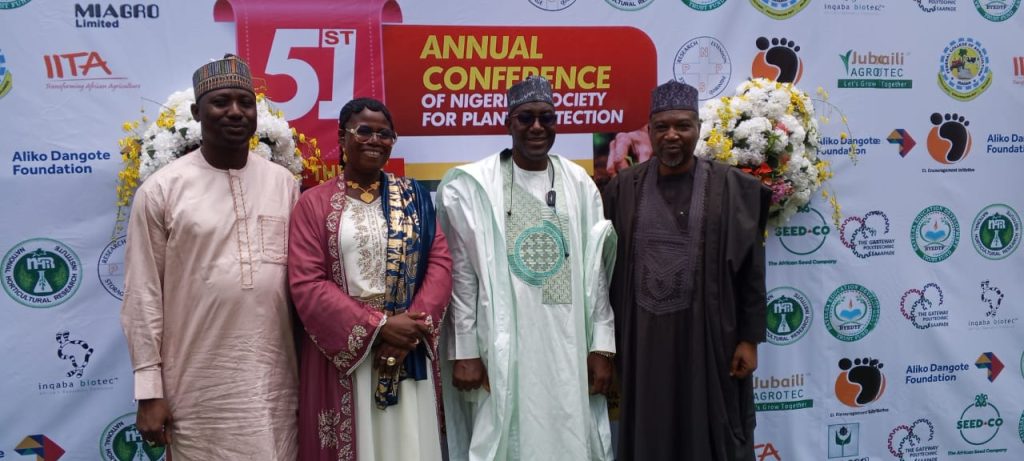
The need to tackle emerging species of crop pests and diseases as well as mitigating climate change through peer review of research findings took the centre stage at the 51st Annual conference of the Nigerian Society for Plant Protection, NSPP held at the National Horticultural Research Institute, NIHORT, Idi Ishin, Jericho, Ibadan.
With members drawn from across the globe, the society comprises of plant scientists, biotechnologists and other agricultural crop specialists with members from across the world.
0-3840×1742-0-0#
It has the mandate of researching into causes, effect, prevention and management of weather related crop pests and diseases, hence the theme of the conference: “Plant protection and Biotechnological Solutions for Sustainable Food production in Nigeria”.
In a message to the opening of conference, the Minister of state for Agriculture and Food Security, Senator Aliyu Abdullahi observed that Nigeria’s agricultural practice system was presently being challenged by climate change, new species of pests destroying crops, multiplication of pests through warm temperatures and diseases such as fungi and bacteria that accompanied normal weather condition.
He noted that such required a multifaceted approach to tackle. “Climate change is no longer a distance threat, it is here with us. We already experiencing rising temperatures, unpredictable rainfall, longer drought. Aside this is something critical. These climate shifts are changing how pest and diseases behave. Warm temperatures allow pests to reproduce faster, leading to multiple generations within a single growth session.”The Minister said.
Represented by the Executive Secretary of Agricultural Research Council of Nigeria, ARCN, Dr Abubakar Dabban, the minister listed the approach to include smart study of weather to track pests, empowerment of farmers, quick and effective approach to disease and pest control.
Others are, “dissemination of new agricultural information on new innovations to rural farmers through their local languages, exposure of farmers to new techniques of pest and disease control, adoption of Artificial intelligence, quarantine and synergy among stakeholders”.
Senator Abdullahi also said formation of integrated pest management, IPM platform in all regions of Nigeria for early data collection on emerging pest and plant diseases had become a necessity.
Addressing members of the Nigerian Society for Plant Protection, NSPP, the president of the society, Professor Abdulhameed Yusuf said achieving food security and sufficiency in the country relied on the collective responsibilities of all. “The future of Nigeria’s food security depends on our collective ability to translate research findings into practical solutions that will support farmers and strengthen our agricultural system for the benefit of our nation and our future generations”
The NSPP president maintained that the conference would enable scientists to engage in peer review of their research findings that would help food production in Nigeria.
In a keynote address on the theme of the conference, Plant protection and Biotechnological Solutions for Sustainable Food production in Nigeria, the head of the Virology and molecular diagnostic unit at the International Institute of Tropical Agriculture, IITA, Dr Lava Kumar, rated Nigeria’s agricultural productivity high when compared to other African countries.
Dr Kumar who noted that the federal government was taking numerous steps to boost food production however said lack of infrastructure and innovation were causing setbacks to the achievement of the desired food production in the country.
The Executive Director, National Horticultural Research Institute, NIHORT, Professor Lawal Atanda explained that the institute had developed numerous crop varieties and technologies to surmount emerging threats to crop production.
According to Professor Atanda, the new technologies included HORTITECH one and HORTITECH two, while new tomato varieties including HORTITOM one to HORTITOM seven had been released by the institute.
Professor Atanda also explained that the institute recently released new onion varieties such as HORT ONION one to three for dry season farming and HORT ONION four to six for wet season farming. “imported onion seed varieties led to loss by onions farmers. The institute was contacted and I know NSPP must have also been contacted. We have therefore released six varieties of onions for dry and wet season farming.”
He noted that the institute with outstations in Imo, Kano, Gombe, Benue and plateau states has mandate on research on genetic improvement, production technologies, storage,utilization, marketing of crop and ornamental plants that medicinal to humans.
Goodwill messages from the Oyo state government , Onimoji of imojiland, Oba Dominick Kola, as well as representatives of Lagos, Kwara, centred on the need for collaboration to achieve food security mandate of President Bola Tinubu’s administration.
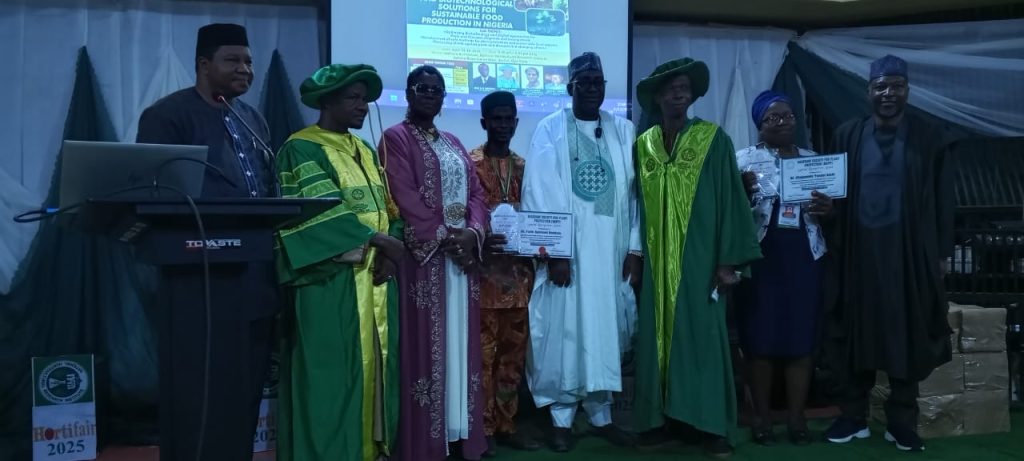
The event featured award of fellowship to distinguished members of the society including Professors BabaGana Kabir, Juliet Akinyele and Akeem Ayorinde.
The awardees according to the Chairman, NSPP Board of Trustee, Professor Babatunde Olufolaji were selected based on their immense conktributions towards the growth and development of the society
High point of the event was the launch of the society’s journal described as Nigerian Journal of Plant Protection, NJPP
To reduce the burden of the high cost of living among households in Ibadan, the Oyo State capital, the National Horticultural Research Institute, NIHORT, has trained fifty residents in its neighbourhood on ‘Home Gardening’.
The training in three segments that centred on vegetable farming methods, container gardening and health benefits of vegetables, also incorporated theoretical and practical training on land preparation, seedlings and planting techniques.
In his presentation on the agronomic technique on how to grow jute leaves (Ewedu), a Director of Research at the institute, Dr Akinfasoye Akindele, said seed varieties selection, preparation, as well as planting methods, are necessary in realizing high crop yield, in the farms.
Commenting on container gardening, the Director of Research and Community Home Gardening, Dr Olutola Oyedele, explained that damaged plastic containers, could be useful in vegetable crop production at home, to alleviate domestic food cost.
Speaking on the health benefits of vegetables, another Director of Research at the institute, Dr Funmilayo Olajide-Taiwo, said vegetables such as okro, scent leaves, bitter leaves and Ewedu, possess health benefits ranging from reducing high blood pressure, cholesterol and sugar, while boosting the human immune system, improving digestion, reducing sleep disorder as well as possessing other necessary vitamins, needed for sustainable healthy living.
Earlier, the Executive Director of NIHORT, Professor Lawal Atanda, who was represented by a Director of Research in the institute, Dr Henry Akintoye, said the training was not only meant to reduce poverty but to align with the renewed hope agenda of President Bola Tinubu’s administration.
Some of the participants including Mr Oladoyinbo Olugbenga, Mrs Idowu Ajayi and Mr Odion Peter, said the training had exposed them to new techniques of vegetable farming and pledged to replicate it in the new farming season.
The event also featured a field demonstration of the training on vegetable farming.
In line with the Federal Government’s Renew Hope Agenda, a day sensitization training on home gardening for neighbouring communities of the National Horticultural Research Institute, NIHORT has been inaugurated at the institute.
The training which drew fifty residents from NIHORT’s neighbouring communities focused on vegetable farming.
Declaring the workshop opened, the Executive Director, NIHORT, Professor Lawal Atanda said the training became imperative following the intention of the Federal Government to ensure that food sufficiency is achieved in Nigeria.
“The main message is what the president has been saying that he is committed to making all Nigerians to be food sufficient in food and nutritional intake which is passed from our ministry, Federal Ministry of Agriculture and food security through agencies under the ministry of which NIHORT is one of them”.
That is why we are working in tandem with that. That is why we said all Nigerians should know how to cultivate what they are going to eat, and it is in that regard, we are training our neighbours.
“We have been doing that across geopolitical zones. We now look inward this time around. This is the best time we can do irrigation farming and with this, people will have enabled knowledge and strategies and input to go into it because, after this training, we are going to give them some seed to start their own farming”.
Professor Atanda who urged the participants to make good use of the training said the program will benefit Nigerians saying food would be made sufficient as other neighbours of the selected beneficiaries would disseminate the knowledge to them.
“We are picking one person from each of the quarters that formed the neighbourhood of NIHORT and you should know we have a large neighbourhood. So when they get back home, they will train many people. We have quality seeds developed by our Indigenous scientists here, they will be able to share it among themselves and this will have a ripple effect.”
In her reaction, the director of research at NIHORT, who is also the coordinator of the home gardening training, Dr Olutola Oyedele said the beneficiaries were selected based on interaction with the leadership of NIHORT host communities.
“It is part of the institute’s responsibilities to the neighbours. The programme is going to be on a rolling basis in the sense that we will be taking them in batches since they are our neighbours. So, for the first batch, we are taking fifty. The next set of batches would come next year. This is December, now. We are rounding off. Fifty for a start. So it’s on a rolling basis, 50 per batch.”
“It is a continuous programme and it is one person per household, so to select that, we went into that through the various landlord associations around us, about 18 of them. So they sent us the list of interested participants. So out of that list, we are drawing them in batches. We are training them in vegetable production”.
She said fifty beneficiaries were selected to participate in the training adding that the project would be sustained with another set of fifty beneficiaries already selected for participation next year.
Some of the residents appreciated NIHORT for the gesture describing it as timely.
As part of federal government efforts towards reducing unemployment and ending food shortage in the country, twenty eight youths who had undergone nine months intensive training on vegetable farming graduated in Ibadan.
The training scheme sponsored by the Federal Ministry of Agriculture and Food Security was anchored by National Horticultural Research Institute’s training initiative tagged Horticultural Academy for Youths (HAY).
Addressing the gathering on behalf of the Federal Ministry of Agriculture and Food Security, the Executive Director, National Horticultural Research Institute, NIHORT, Dr Lawal Atanda said the programme was developed in line with the ministry’s budget earmarked for the training of youths to reduce unemployment and ensure food sufficiency.
Dr Atanda who said the youths had been trained in low land and upland farming were selected based on the local governments that are around the institute.
The NIHORT Executive Director while urging the youths to start the Agric business said NIHORT would not only be ready to offer assistance to the graduands in the next one year but would consider the youths as their adopted farmers.
In her overview of the Horticultural Academy for Youths (HAY) Programme, Coordinator of the training programme, Dr Olutola Oyedele explained that the institute under the federal government funding had earlier run the training programme across the geopolitical zones in the country.
Dr Oyedele who said as at 2019, twenty series of the training programme had so far been conducted by NIHORT targeting men, women and youth added that shift towards the youths was informed by the directive of the Executive Director last year as the farming population was aging out.
Dr Oyedele said the graduands who were the first set of the new scheme were not only given two days training in January this year but also given plots of land, six seedlings, field book, mentorship and supervision.
Representatives of Oyo state ministry of trade and investment, media establishment, National Directorate of Employment, Ibadan Chamber of Commerce and Industry as well as the National Orientation Agency, NOA said the training was timely adding that the training had broken the mismatch of skills and unemployment.
They urged the youths to work on the facilities given them by NIHORT approach them so as to access requisite facilities to upscale their business.
Two of the beneficiaries commended NIHORT for the opportunity given and pledged to replicate the training to others while also engaging in farming to contribute to food sufficiency.
Our correspondent reports that apart from two certificates and farming guide given the graduands, six out of the twenty eight graduands were given an award of excellent and unwavering performance, hardwork and a fruitful accomplishment.
Director of Research, National Horticultural Research Institute, NIHORT, Ibadan, Dr Olutola Oyedele has advised federal government to embark on massive enlightenment campaign on the need for every household to engage on home gardening.
Dr Oyedele gave the advice while speaking with Premier FM on the occasion of this year’s World Food Day, which is celebrated annually on the 16th of October.
The researcher who said the menace of food insufficiency in Nigeria was as a result of inflation, bad road network and hike in prices of production inputs, said the home gardening would allow families grow what they eat and meet their immediate food needs.
While commending the Anchor Borrowers’ Programme and other agricultural initiatives of the federal government, Dr Oyedele appealed to relevant authorities to subsidize fertilizers and other agricultural production inputs for farmers.
She said post harvest wastages of farm produce was a major challenge in Nigeria, calling for an holistic techniques to manage the losses which she said account for about sixty percent of food losses.
Dr Oyedele also advocated for low cottage processing industries in each local governments across the country where such industry would mop up wastages and process them for off season consumption.
Synergy between policy makers and researchers will help to address the needs of the citizenry.
This was the submission of a Director at the national horticultural research institute, NIHORT, Ibadan, Dr. Lawrence Olajide-Taiwo, while featuring on straight talk, an interview program on premier FM 93.5.
Dr. Olajide-Taiwo stressed that there must be a felt needs assessment, empowerment and capacity building to adequately address extreme poverty in the country.
He advised that the arms of government should collaborate to build strong structures for a sustainable economic development.
The agriculture expert, urged Nigerians to go into farming, while encouraging patronage of home made goods to force down prices of food.
Dr Olajide Taiwo advised government to periodically evaluate its social intervention programs and ensure proper implementation of agriculture policies.
He enjoined everyone to harness the nation’s potential and get engaged in efforts to reduce poverty in the country.
Federal Government has disbursed seeds and seedlings to fifty small-scale farmers in Ibadan, the Oyo state capital.
The seeds and seedlings included fifty citrus seeds, fifty sachets of Amarantus seeds and five hundred plantain suckers.
Distributing the seeds to the farmers at Ibadan North West Local Government Secretariat, Onireke, the Executive Director, National Horticultural Research Institute, NIHORT, Dr. Abayomi Olaniyan said the gesture was to cushion the effects of COVID-19 on small scale farmers.
Speaking through one of the Assistant Directors of the Institute, Dr. Adebisi Adelani, Dr. Olaniyan stated that the move would equally improve food security as well as eradicate poverty.
He assured that other small-scale farmers from other local councils and states would also benefit from the distribution of the seeds and seedlings.
Chairman, Ibadan North West Local Government, Alhaji AbdulRahmon Adepoju appealed to the beneficiaries to make judicious use of the seeds and seedlings so as to check over-dependence of food items from other states. Rotimi Famakin
Chairman governing board of the National Horticultural Research Institute, NIHORT, major General Mohammed Garba retired wants state government to provide land and mechanized equipment through the local councils for youths participation in agriculture.
Major General Garba made this known during a three day capacity building for youths and women on Platain, Banana production and value addition in collaboration with Hauge Logistics Limited held at NIHORT, Ibadan.
The governing board Chairman noted that establishment of farm settlements and irrigation would encourage prospective youth farmers to venture into agriculture.
He noted that since the coming of president Muhammadu Buhari’s administration, NIHORT has provided empowerment training to over two thousand five hundred individuals as the president had identified agriculture sector as having a high potential in job creation.
Major General Garba implored farmers and herders to live in peace for the sustainability of food production all year round.
Participants
In a welcome address, executive Director, NIHORT, Dr Abayomi Olaniyan while stressing the viability of plantain and banana urged the participants to take the training seriously for self empowerment.
Dr Olaniyan who disclosed that start up capital would be made available to the participants cautioned them to use the funds judiciously as the institute would do a follow up on their progress.
The participants who were drawn from most parts of the country expressed joy on being part of the training.
They urged the institute to make the training as frequent as possible for more youths to benefit from it.
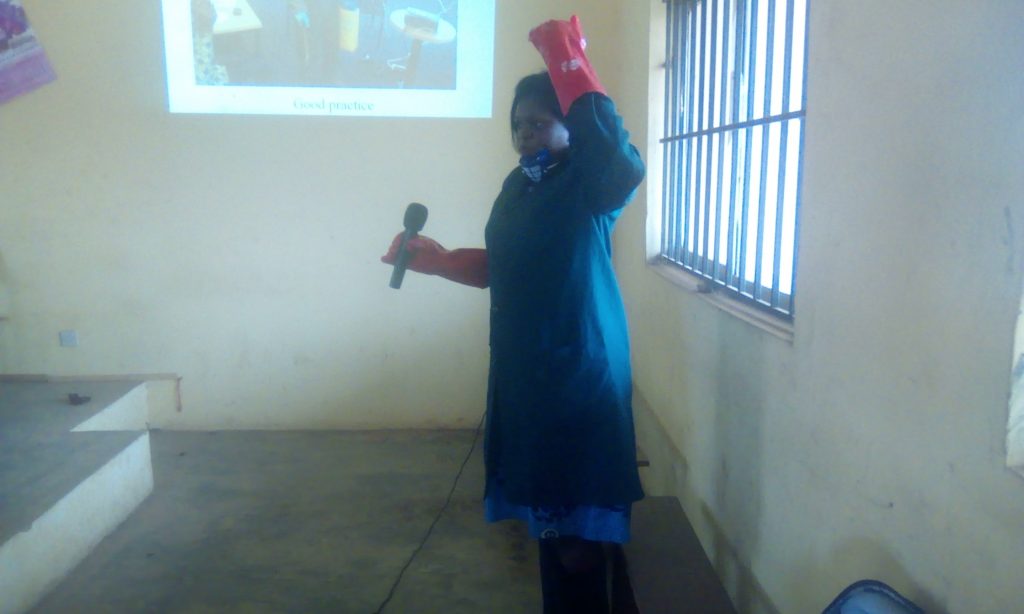
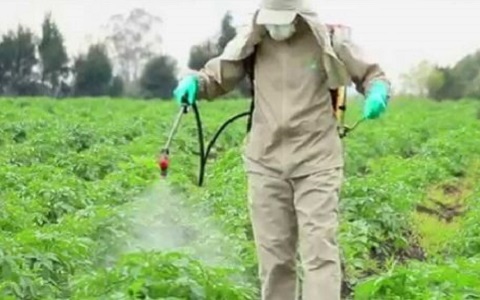
As part of efforts towards boosting crop production in Nigeria, about thirty-five farmers in Badeku Community in Ona-Ara local government have been sensitized on the safe use of agrochemicals.
The programme was organized by the National Horticultural Research
Institute, NIHORT, Ibadan.
Dr. Eniola Oyedeji during the training
In a welcome address, the head of the team, Dr. Taiwo Olajide said sensitisation was organized due to low knowledge of vegetable farmers on dangers associated with body exposure to agrochemicals.
In an interview, the guest lecturer, who is also a NIHORT research scientist in agrochemical, Dr. Eniola Oyedeji said it became imperative for farmers to protect themselves during the application of pesticides in the vegetable farms because of the long term effects on the body system.
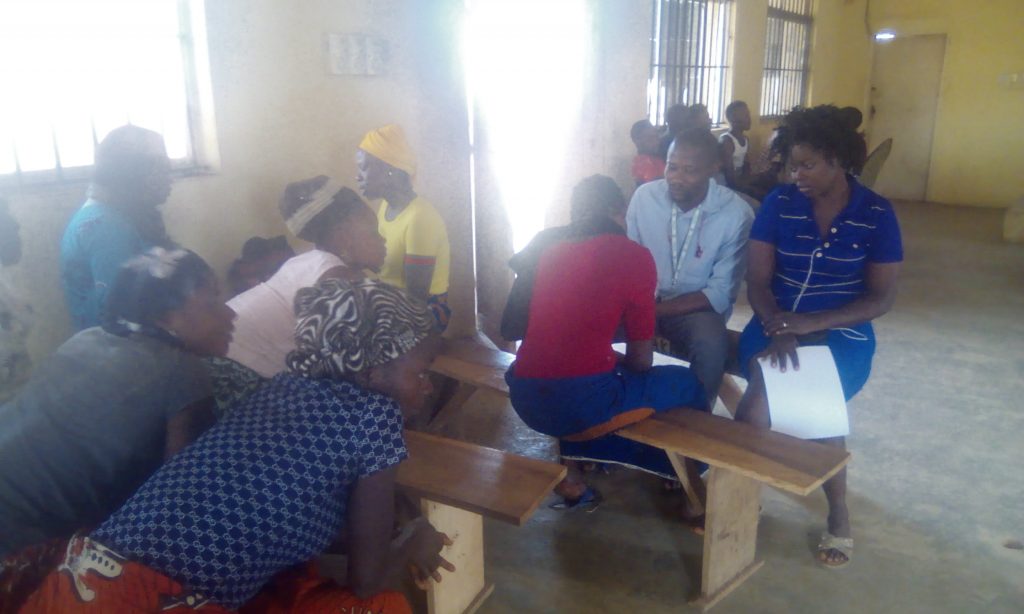
A cross-section of attendees at the training
A cross-section of attendees at the training
Some of the farmers appreciated the training describing it as an eye-opener.
Two
agricultural projects have been inaugurated to address the problem of Tomato
pests in Nigeria.
The projects sponsored by the Food and Agriculture Organization, FAO of the United Nations was executed by the National Horticultural Research Institute, NIHORT.
Radio
Nigeria correspondent, Rotimi Famakin who was at NIHORT, Idi Ishin, Ibadan
reports that the projects are aimed at providing organic and local methods of
controlling tomato pest known as “Tuta Absoluta”.