Foreign

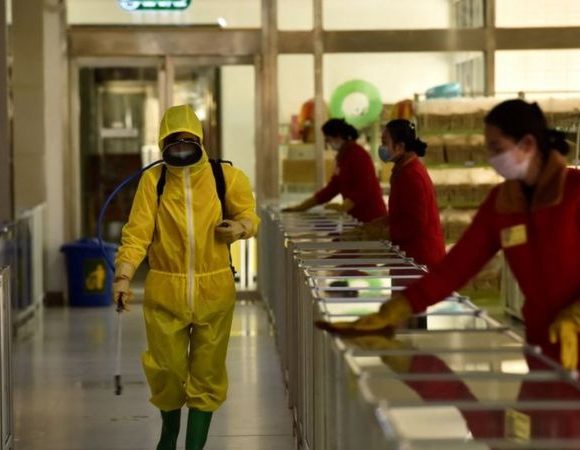
North Korea says hundreds of families had fallen ill with an unidentified intestinal disease, heaping pressure on a crumbling healthcare system already strained by COVID-19.

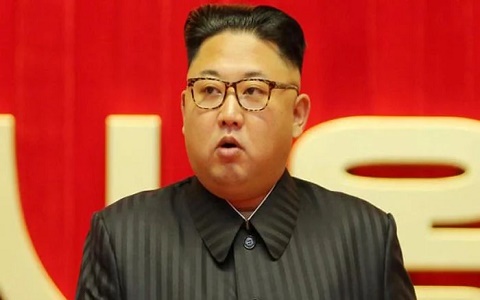
Pyongyang announced its first coronavirus cases last month and activated a “maximum emergency epidemic prevention system”, with leader Kim Jong Un putting himself front and centre of the government’s response.

The new virus was said to have torn through the unvaccinated population of 25 million, with more than 4.5 million cases of “fever” and 73 deaths to date, according to figures published by state media.

Building on the country’s woes, the official KCNA, this week, announced a new “acute enteric epidemic” in South Hwanghae province, with Kim urging officials expected to “contain the epidemic at the earliest date possible.”

In a possible sign of the seriousness of the situation, Kim Yo Jong, Kim Jong Un’s powerful sister, was one of a group of senior officials who reportedly personally donated medicine to try and help.

The medicine will be delivered to “over 800 families suffering from the acute epidemic which broke out in some areas of South Hwanghae Province,” state media KCNA reported Friday.

The figure suggests at least 1,600 people have been infected with the enteric disease.

The reports had sparked speculation that the unspecified disease may be cholera or typhoid.

If confirmed, the outbreak could worsen the country’s chronic food shortages, as South Hwanghae province is one of the North’s main agricultural regions.

Experts had warned of a major public health emergency in the North, which was said to have one of the world’s worst medical care systems, should COVID spread.

The impoverished country reportedly had poorly equipped hospitals, few intensive care units and no COVID treatment drugs nor mass testing capability.

“With the North’s much outdated medical infrastructure, an acute intestinal sickness could flare at any time,” an official from Seoul’s unification ministry said, according to Yonhap news agency.

“Seoul is willing to assist the North in handling the new outbreak should Pyongyang wish to accept it,” the official said.

South Korea previously offered to send vaccines and other medical aid to the North to help it deal with its coronavirus outbreak.

Pyongyang had, however, not officially responded.

  Punch/Titilayo Kupoliyi
Foreign

South Korea and the US launched eight missiles on Monday, in response to a volley of ballistic missiles fired by North Korea the previous day.

It comes as Pyongyang continues to escalate its missile tests.

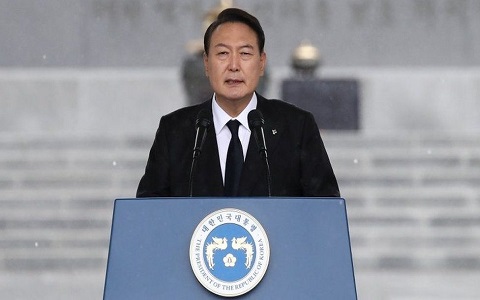
South Korea’s president Yoon Suk-yeol said his government would respond sternly to any provocation from its northern neighbour.

“We will make sure there isn’t a single crack in protecting the lives and property of our people,” he said.

Speaking at a war memorial event in Seoul, he added that North Korea’s nuclear and missile programmes “are reaching the level of threatening not only peace on the Korean Peninsula but also in Northeast Asia and the world”, according to Yonhap.

Early on Monday, hours after North Korea had fired several missiles off its east coast, the two allies launched eight surface-to-surface Army Tactical Missile Systems (ATACMS) – one from the US and seven from South Korea.

Analysts say the moves are South Korea showing off its muscle, with the aid of US weaponry.

It is the second retaliatory display from the US and South Korea in as many weeks, with a similar move made last week after Pyongyang fired a series of missiles in the immediate aftermath of US President Joe Biden’s visit to the region.

Such displays had been rare under South Korea’s previous administration.

President Yoon, who was inaugurated last month, has pledged to take a more hardline approach on North Korea.

The isolated Communist state has test-fired dozens of missiles in recent months, including an intercontinental ballistic missile for the first time in five years.

The UN prohibits North Korea from ballistic and nuclear weapons tests, and has imposed strict sanctions after previous tests.

BBC/Simeon Ugbodovon

Foreign

More than a million people have now been sickened by what Pyongyang is calling a fever.

According to North Korea state media, some 50 people have died, but it’s unclear how many of those suspected cases tested positive for Covid.

North Korea has only limited testing capacity, so few cases are confirmed.
North Koreans are likely to be especially vulnerable to the virus due to lack of vaccinations and a poor healthcare system.

A nationwide lockdown is in place in the reclusive country.

State media said Mr Kim led an emergency politburo meeting at the weekend where he accused officials of bungling the distribution of the national medicine reserves.

He ordered that the “powerful forces” of the army’s medical corps step in to “immediately stabilise the supply of medicines in Pyongyang City”.

The country announced its first confirmed Covid cases last week – although experts believe the virus has likely been circulating for some time.

Mr Kim has imposed “maximum emergency” virus controls, including lockdowns and gathering restrictions in workplaces.

The international community offered to supply North Korea with millions of AstraZeneca and Chinese-made jabs last year, but Pyongyang claimed it had controlled Covid by sealing its borders early in January 2020.

BBC/Opeyemi Olugbenga

News Analysis

Global nuclear test began in the early Mexico, when the United States of America, USA, exploded its first atomic bomb and the rat race ensued among world powers.

Between 1945 and 1996, over 2000 nuclear tests were conducted for military purposes at sixty locations worldwide.

1996 heralded the opening of a Comprehensive Nuclear Test Ban Treaty, ETBT. But it was short-lived as 10 nuclear bomb tests were carried out after the treaty.

Worried by this development, the world powers under the guidance of the United Nations came up with a treaty on the non-proliferation of nuclear weapons in January,1963                                                                                                                           

The treaty restricted nuclear bomb test to underground from earth surfaces because of its devastating effect on world population.

The recent North Korea nuclear bomb test has once again brought to the fore the delicate and hanging balance the world has found itself since the first nuclear bomb test by us in 1945.

North Korea, formerly Democratic Peoples Republic of Korea has an active history of increasingly sophisticated nuclear weapons and ballistic missile programmes and is believed to possess chemical and biological weapons.

 North Korea withdrew from the treaty on nonproliferation of nuclear weapons in January 2003 and by 2018, the leader Kim Jong-Un announced a halt to all nuclear test.

On 12th June, 2018 US President Donald Trump and North Korean leader met face to face for the first time in Singapore to work toward a complete denuclearization of the Korean peninsula. However, Kim Jong-Un resumed nuclear test in May 2019 and the latest in June 2020.

 Reacting to the unending nuclear test among world powers, a chemical engineer, Nik Dais said it had put the entire world on the brinks of extinction.

Research findings reveal that blast from nuclear test produced shock wave higher than the conventional explosives.

 Research institutions, policy making organizations, peer review journals and witness accounts have confirmed that nuclear bomb tests are damaging and injurious to human health, habitation, vegetation and weather condition including climate change.

There are evidences of this devastating effect of nuclear bomb test on eardrums, lungs, hurling people at high speed, casualties due to collapsing structures and flying debris.  

It also showed that human organs, skin, eyes and living cells could be damaged as a result of world population exposure to radiation and can even lead to death.

 It is time for the world to rise and demand a total halt to nuclear test to save humanity.

The world powers must be ready and willing to put an end to the old, but still existing cold war of military and economic rivalry among all American and Russian allies.

If there must be nuclear technology, it must be geared at developing medicine, health care delivery, agriculture, economic and peaceful purposes.

 Tayo Sanni