Foreign

French authorities have charged a 38-year-old woman in connection with a multi-million-euro theft at the Louvre Museum in Paris last month.

According to French media reports, the woman, who has not been publicly named, faces charges of complicity in organized theft and criminal conspiracy with a view to committing a crime.

A magistrate will determine whether she will be detained pending further investigation.

Police arrested the woman earlier this week alongside four other suspects.

Two male suspects arrested previously were already charged with theft and criminal conspiracy after officials said they had “partially recognized” their involvement in the heist.

The theft occurred on October 19, when jewels valued at approximately 88 million Euros were stolen from the world’s most-visited museum.

BBC/Maxwell Oyekunle

Foreign

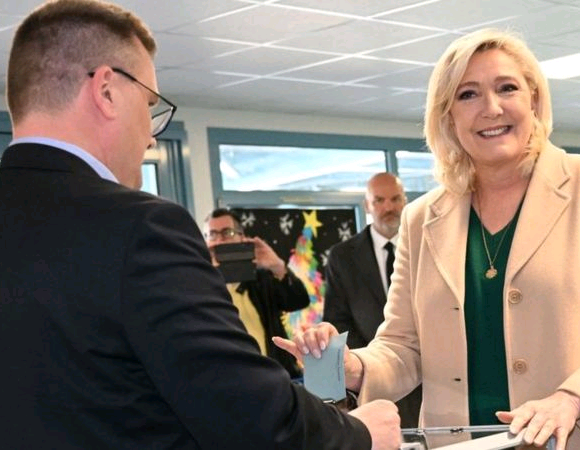
French voters are casting their ballots in the opening round of a presidential race that could become a cliffhanger.
Emmanuel Macron has a fight on his hands from far-right challenger Marine Le Pen, who has been galvanised by a slick election campaign.
Forty-nine million people are eligible to decide which two of 12 candidates should take part in the run-off vote.
But after four hours of voting, only a quarter of voters had turned out – the lowest for 20 years.
The campaign has been overshadowed first by the Covid-19 pandemic and then Russia’s invasion. The president has spent little time on the race, focusing instead on Europe’s reaction to the war in Ukraine.
However, one issue more than any other has predominated the election: the spiralling cost of living in energy bills and shopping baskets.
When he came to power with a new party in 2017, Emmanuel Macron swept away the old allegiances, and the two big parties are still nursing their wounds.
Socialist candidate Anne Hidalgo has struggled to be heard, while on the right Valérie Pécresse has failed to excite the Republicans.
Now, the main challenge to Mr Macron, 44, is coming from Ms Le Pen on the far right and Jean-Luc Mélenchon on the far left.
Some are even predicting the president could lose.
BBC

Economy

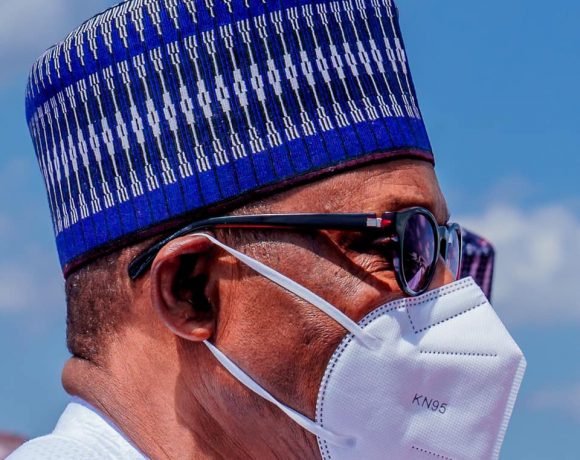
President Muhammadu Buhari today departs Abuja for Paris, France.

It is a 4-day official visit to attend the African Finance Summit, presidential aide, Bashir Ahmad wrote on Twitter.

The event will focus on reviewing Africa’s economy, following shocks from COVID-19 pandemic.

The Summit, to be hosted by President Emmanuel Macron, will draw stakeholders in the global finance institutions and Heads of Government, who will, collectively, discuss external funding and debt treatment for Africa, and private sector reforms.

During the visit, President Buhari will meet with the French President to discuss growing security threats in Sahel and Lake Chad region, political relations, economic ties, climate change and partnership in buoying the health sector, particularly in checking the spread of Covid-19, with more research and vaccines.

Turkish counterpart, Tecep Tayyep Erdoğan,

Meanwhile, President Buhari his Turkish counterpart, Tecep Tayyep Erdoğan,have spoken on telephone.

President Buhari expressed satisfaction with the existing bilateral ties between the two countries, and sought for further strengthening of their ties.

The two leaders expressed the desire for peace and stability to reign in the world, and for an end to all ongoing conflicts, as well as the Covid-19 pandemic.

Abdallah Bello

Lifestyle

In the light of the COVID-19 pandemic, the four Groups of Friends on the Safety of Journalists at UNESCO in Paris, France are calling on all states to protect journalists and media workers’ safety, safeguard a free and independent media and ensure unhindered access to information, both online and offline. 

According to a statement, by the chairs and co-chairs of the Group of Friends, a free, independent and pluralistic media play an indispensable role in informing the public during the ongoing COVID-19 crisis. 

The statement notes that everyone has the right to comprehensible, accessible, timely and reliable information concerning the nature and level of the threat COVID-19 poses to their health, allowing them to follow evidence-based guidance on how to stay safe.  

It also states that free and independent media has an important role in pushing back against disinformation by providing access to accurate, fact-based and verified information. 

The statement however expresses concern over an increase in restricting measures taken by states that disproportionately limit the right to freedom of expression and impede journalists and media workers from reporting on the COVID-19 crisis.

Internet access is essential to ensuring that information reaches those affected by the virus.

Governments should end any internet shutdowns, ensure the broadest possible access to internet services, and take steps to bridge digital divides, including the gender gap. 

The statement further says that journalists and media workers are subjected to significant physical and psychological risk by being at the frontline reporting on the COVID-19 crisis.

 It is crucial for societies and the international community as a whole that governments preserve a free, safe and enabling environment for journalists and media workers and ensure that they can report on COVID-19 and inform about responses and consequences without undue interference. 

UNESCO welcomes a range of initiatives aimed at supporting journalists’ and media workers’ safety in the light of COVID-19 undertaken by international organisations, such as UNESCO and civil society, media associations as well as social media companies. 

PR/AZIZATU