News Analysis

In this piece, Tayo Sanni writes on the way forward to the worsening electricity supply in Nigeria.

Those who bought the power holding company of Nigeria, PHCN, and turned it into Electricity Distribution Companies owe Nigerians one vital explanation.

They must tell the people what has happened with the discos since the ownership changed hand.

Yes, this has become imperative because the cry of ‘give us electricity’, ‘restore power supply’, we are tired of darkness’ and ‘where is electricity‘ are some of the popular slogans in the mouth of Nigerians.

Successive Governments in Nigeria have spent billions of naira to fix the power sector without any tangible result.

Up to this moment, in almost all parts of Nigeria, supply of electricity is epileptic and nothing to write home about darkness pervades everywhere.

Lack of regular electricity supply has brought sadness to millions of Nigerians and paralysed socio economic activities.

While some countries like Ghana are giving good testimony about constant supply of electricity, it is not the same in Nigeria.

Yet, electricity distribution companies keep bringing crazy and highly inflated bills every month for services not provided to the consumers.

It is a shame that Nigerians still live in darkness in the 21st century.

Yet, year in, year out, the Federal Government increased electricity tariff making Nigerians pay more for the inefficiency of some stakeholders in the power sector.

To this end, efforts should be concentrated to improve power supply and save Nigerians from total darkness.

Nigerians felt highly relieved with the privatisation of the energy sector not knowing that unending agony and lamentation over poor electricity supply had just begun.

This is quite unfortunate Nigerians deserve right to be served well.

As citizens, they should have equal access to power like citizens of other countries.

Corruption in the power sector which has been a clog in the wheel of progress should be tackled for a stable electricity supply in the country.

Nigerians are yet to adequately benefit from the democratic dispensation, especially in the power sector which is key to industrialization.

If the Federal Government fixes the country’s electricity problem, seventy-five percent of unemployed graduates will have jobs and become employers of labour.

Solar energy as an alternative source of electricity should also be pursued vigorously and made available to people at affordable price. 
News Analysis

Those who brought the Power Holding Company of Nigeria, PHCN, and turned it into electricity distribution companies owe Nigerians one vital explanation.

They must tell the people what has happened with the discos since the ownership changed hands.

Yes, this has become imperative because the cry of ‘give us electricity’, ‘restore power supply’, ‘we are tired of darkness’ and ‘where is electricity‘ are some of the popular slogans in the mouth of Nigerians.

Successive governments in Nigeria have spent billions of naira to fix the power sector without any tangible result.

Up to this moment, in almost all parts of Nigeria, supply of electricity is epileptic and nothing to write home about.

Lack of regular electricity supply has brought sadness to millions of Nigerians and paralysed socioeconomic activities.

While some countries like Ghana are giving good testimony about constant supply of electricity, it is not the same in Nigeria.

Yet, electricity distribution companies keep bringing crazy and highly inflated bills every month for services not provided to the consumers.

Yet, year in, year out, the federal government is fond of increasing electricity tariff making Nigerians pay more for the inefficiency of some stakeholders in the power sector.

Recently, the Nigerian Electricity Regulatory Commission, NERC, hinted at another hike in electricity tariff to commence in July this year.

This is uncalled for as additional hike on Nigerians who have been traumatised by lack of electricity for so long.

Efforts should rather be concentrated to improve power supply and save Nigerians from total darkness.

Nigerians felt highly relieved with the privatisation of the energy sector not knowing that unending agony and lamentation over poor electricity supply had just begun.

This is quite unfortunate.

Nigerians deserve the right to be served well.

As citizens, they should have equal access to power like citizens of other countries.

Corruption in the power sector which has been a clog in the wheel of progress should be tackled for a stable electricity supply in the country.

Nigerians are yet to adequately benefit from democratic dispensation, especially the power sector which is key to industrialization.

If the federal government fixes the country’s electricity problem, seventy-five percent of unemployed graduates will have jobs and become employers of labour.

Solar energy as an alternative source of electricity should be pursued vigorously and made available to the people at an affordable price. 

Tayo Sanni

News Analysis

Those who brought the power holding company of Nigeria, PHCN, and turned it into electricity distribution companies owe Nigerians one vital explanation.

They must tell the people what has happened with the discos since the ownership changed hand.

Yes, this has become imperative because the cry of ‘give us electricity’, ‘restore power supply’, we are tired of darkness’ and ‘where is electricity‘ are some of the popular slogans in the mouth of Nigerians.

Successive governments in Nigeria have spent billions of Naira to fix the power sector without any tangible result.

Up to this moment, in almost all parts of Nigeria, supply of electricity is epileptic and nothing to write home about.

Lack of regular electricity supply has brought sadness to millions of Nigerians and paralysed socio economic activities.

While some countries like Ghana are giving good testimony about constant supply of electricity, it is not the same in Nigeria.

Yet, electricity distribution companies keep bringing exhorbitant and highly inflated bills every month for services not provided to the consumers.

It is a shame that Nigerians still live in darkness in the 21st century.

Still, year in, year out, the federal government is fond of increasing electricity tariff making Nigerians pay more for the inefficiency of some stakeholders in the power sector.

Recently, the Nigerian electricity regulatory commission hinted of another hike in electricity tariff to commence in July this year.

This is uncalled for as additional hike in electricity tariff will increase the burden on Nigerians who have been traumatised by lack of electricity for so long.

Efforts should rather be concentrated to improve power supply and save Nigerians from total darkness and continuous payment for electricity not provided.

Nigerians felt highly relieved with the privatisation of the energy sector not knowing that unending agony and lamentation over poor electricity supply had just begun.

This is quite unfortunate as Nigerians deserve right to be served well.

As Nigerians, they should have equal access to power like citizens of other countries.

Corruption in the power sector which has been a clog in the wheel of progress should be tackled for a stable electricity supply in the country.

Nigerians are yet to adequately benefit from democratic dispensation, especially the power sector which is key to industrialization.

If the federal government fixes the country’s electricity problem, seventy-five percent of unemployed graduates will have jobs and become employers of labour.

Solar energy as an alternative source of electricity should be pursued vigorously and make available to the people at affordable price. 

Tayo Sanni

Energy

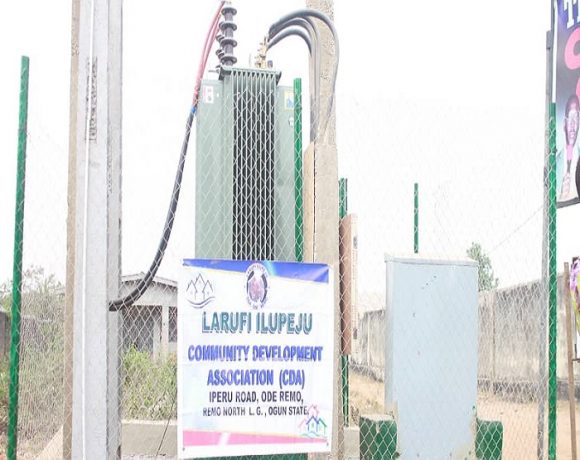
Ogun State Government in collaboration with the World Bank has reconnected Larufi community in Remo North Local Government Area of the state to the national grid after about 20 years blackout. 

The community was provided with a 500KVA transformer through the State Community and Social Development Agency, CSDA, saddled with the responsibility of for implementing various World Bank assisted rural development projects in the state. 

Speaking at the palace of the traditional ruler in charge of the community, the Alaye Ode of Ode-Remo, Oba Amidu Osho, head of the CSDA team, Mr. Tunde Falola commended the members of the Community Project Management Committee for executing quality projects and advised them to pay more attention to monitoring and maintenance of the facilities. 

Also, the Secretary of the Community Project Management Committee, Mr. Adeoye Adefarasin, said the committee had also embarked on the construction of access reinforced concrete culverts and grading of roads in the area in the bid to boost the socio-economic status of the community. 

Addressing the team, the Alaye Ode of Ode Remo, Oba Amidu Osho explained that the community had suffered great neglect and lack of basic necessities such as electrification and motorable roads for so long to the extent that they refused to believe that the government would fulfill the promise of providing the transformer. 

The monarch, who expressed gratitude to the government and the development partners for changing the fortunes of the community, also maintained that the electrification project would reduce the activities of miscreants and suspected armed robbers tormenting the neighborhood.

Oluremi Olugbenro 

News Analysis

The privatisation of the power sector was launched in early 2011 and the Bureau of Public Enterprises, BPE, was saddled with the responsibility of carrying out the exercise.

The privatisation of Power Holding Company of Nigeria, PHCN, was intended to address three principal things.

These were introduction of the discipline of the private sector and improve access to private sector capital, allowing prices to become cost-reflective and therefore sustainable in the long-term without subsidies, and reducing losses from power transmitted and distributed in the system.

Also, the privatisation was intended to attract further private investment into the transmission and distribution systems.

However, the design and implementation of the privatisation process suffered from a number of weaknesses.

Many of these weaknesses were procedural and stemmed from practical difficulties in implementing the envisaged privatisation programme.

In fact, Nigeria is losing twenty-nine billion US dollars annually as a result of poor power supply despite the privatisation of the sector.

Nigerians have always been confronted with epileptic power supply and this has adverse effects on the economy.

According to the Manufacturers Association of Nigeria, forty percent of the cost of production goes into the provision of electricity and worst hit have been the Small and Medium Enterprises, SMEs.

Many companies have folded up, as they could not afford the cost of running on diesel-powered generators, which have become the main source of power supply.

A 2019 survey shows that Nigerians spent about twelve billion US dollars a year to keep about twenty-two million generators running.

There has been massive loss of jobs and a high unemployment rate, which have been aggravated by the Covid-19 pandemic.

Government’s moves to put an end to epileptic power supply through privatisation of the power sector have failed to produce the needed results, as the expected succour for Nigerians is not forthcoming.

No doubt, the process of the privatisation of the power sector did not follow due process.

All that the power sector needed was massive capital from experienced investors in the power industry, but this was not so.

It was alleged that some Nigerians bought the firms and did not pump enough funds to upgrade the companies.

Nigeria’s power generation capacity has moved from about five thousand megawatts before the privatisation to around twelve thousand megawatts, while South Africa boasts a generation capacity of over fifty-two thousand megawatts.

Out of Nigeria’s twelve thousand megawatts, only between three thousand to five thousand megawatts can be delivered.

This is as a result of the national grid which is getting older.

It is commendable that the government has brought Siemens, a recognised global player, into the power sector, while the World Bank’s injection of seven hundred and fifty million US dollars to improve the reliability of electricity supply is also a right step in the right direction.

Despite these, the privatisation of the nation’s power sector should be reviewed.

The electricity distribution networks that deliver power from transmission networks to industrial, commercial and domestic customers are financially weak, managerially inept and technically incompetent.

The five year-year performance agreement, which was due for review in December last year has to be revisited.

The power sector should come back stronger through the provision of more electricity as there is no better time for that than now that the country is faced with economic crisis as a result of the Covid-19 pandemic.

Olaolu Fawole