Power

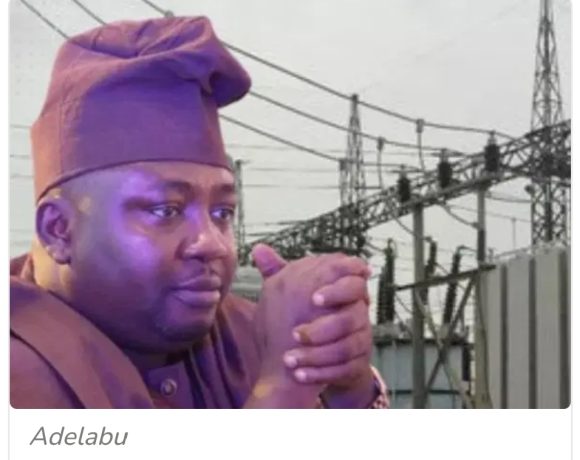
Minister of Power, Mr Adebayo Adelabu, has apologised to Nigerians over the prolonged and severe electricity outages recorded in recent weeks, acknowledging the strain the situation has placed on households and key sectors of the economy.

Speaking at a press briefing in Abuja on Tuesday, the minister admitted that the ongoing blackout has worsened living conditions, particularly during the intense dry-season heat.
“I want to apologise to Nigerians, officially now, coming from me as the Minister of Power, for this temporary issue that is leading to hardship being experienced, especially during this dry season, where there is so much heat everywhere,” Adelabu said.

“Businesses are being affected, schools have been affected, and industries have been affected. It is not our wish to find ourselves in this situation, but it is due to some factors that are actually beyond our control.”

Despite the disruptions, the Minister assured citizens that the situation would soon improve, offering a clear timeline for restoration of better power supply.

“I can tell you, with the committee that we have set up, and commitments from gas suppliers, and the timeline for repair of the gas pipelines, two weeks from now, we should start seeing improvements in supply. Two weeks,” Adelabu said.

He explained that authorities already have projections for the completion of critical repairs, including those involving facilities operated by Seplat Energy, which are expected to restore gas supply to electricity-generating plants.

According to the minister, a dedicated committee has been set up to ensure gas producers meet their domestic supply commitments—an issue that has long limited power generation in the country.

“We already have a committee that is working on this to track compliance with the domestic supply obligations of these gas companies to our power plants,” he said, noting that improved payment structures would also encourage suppliers to deliver more gas.

Nigeria’s electricity sector, which relies heavily on gas-powered plants, has faced setbacks due to supply disruptions, pipeline maintenance issues, and financial constraints affecting operators.

Mr Adelabu acknowledged these systemic challenges but stressed that efforts were ongoing to stabilise the grid and restore consistent supply.

He also reaffirmed the Federal Government’s target to increase electricity output to 6,000 megawatts before the end of 2026, describing the current crisis as a temporary setback in a broader reform plan.

“Power generation will improve, transmission will improve, distribution will improve, and that 6,000 megawatts will be achieved before the end of this year, and Nigerians will be better for it,” he assured.

Adelabu added that the government’s aims were not only to recover lost ground but to exceed previous performance levels.
“If we could provide such service in 2025, this is 2026, we are willing to do more, to even do better,” Adelabu said.

Vanguard /Taiwo Akinola
News

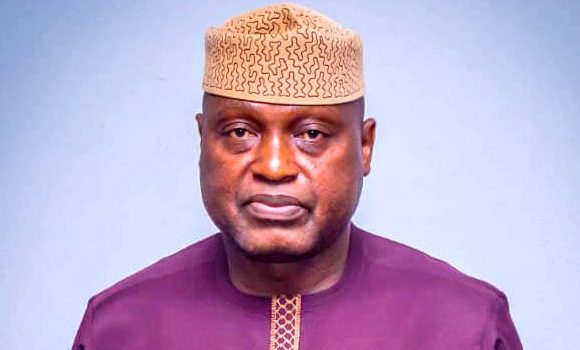
Governor Biodun Oyebanji of Ekiti State, has disclosed that the state will be powered through the 3.5MW Independent Power Plant Project in September to drive economic growth.

Oyebanji said this in Omuo-Ekiti, headquarters of Ekiti East Local government Area while giving an account of stewardship at a stakeholders’ engagement program to mark his 300 days in office.

He noted that the 3.5MW Independent Power Plant project is 90 percent completed to supply light to government offices and tertiary institutions in Ado Ekiti and suburbs, saying this would rectify the epileptic power supply being experienced in some sections of the state.

His words: “We are reconnecting Ikogosi, Erijiyan, and Ikogosi Resort Centre back to the national grid to enhance the state tourism corridor. We need N1 billion to reconnect Ayekire, Ekiti East Local governments, and their LCDAs after 10 years of darkness as well as the Agriculture Processing Zone at Ikole back to the national grid.

“We have installed solar lights at the Atikankan area of Ado Ekiti to light up the area and checkmate criminals who were using the spot as a criminal hideout. This government has extended the 33KV at Omisanjana Transmission Substation to Baptist High School and connection of Ilawe 33KV line with Erinjiyan-Ikogosi.”

Vanguard/Taiwo Akinola

Subscribe to our Telegram and YouTube Channels also join our Whatsapp Update Group

Power

Power supply will drop by 50 megawatts on Wednesday.

The Transmission Company of Nigeria, in a statement on Monday, said the drop would be as a result of planned annual “preventive maintenance” on the line bay at Lekki Transmission Substation in Lagos.

During the maintenance period, about 50MW will be interrupted, affecting power supply to Lekki phase 1, Oniru, Elegushi, Waterfront, Igbo Efon and Twenty-first Century Estate in Lagos state.

“TCN regrets all inconvenience this might cause electricity consumers in the affected area,” the statement said.

The announcement came on the heels of a promise by the Nigerian electricity Regulatory Commission to deliver at least 5000MW of electricity to Nigerians starting from July 1.

Report showed that peak generation as of 3:24 PM on Monday was put at 3, 967MW, while the lowest generation was 3, 539MW, according to statistics from the Nigerian Electricity System Operator, NESO.

The NERC had responded to a widespread public clamour following consistent system collapsing of the power grid, over four incidents recorded so far this year.
According to the commission, all hands are on deck to ensure boost in power generation and supply to electricity consumers, adding that all stakeholders, including gas firms had signed binding contracts to the effect.

“Although there have been contracts in the past, they were not binding and the parties could decide not to honour them. But with the new agreement, we would make sure no party defaults once the contracts are signed. Whoever defaults will be held responsible and will be sanctioned”, NERC Chairman, Garba Sanusi had said during a media parley in Lagos.

However, a metering expert, Sesan Okunade, said  that power generation was not what Nigeria should be battling to solve at the moment.

“We have generated more than this before that have been sold to neighboring countries. Our problem is transmission and the Disco whose infrastructure is not capable of withholding the supply if more power is transmitted from the Genco. Some of the reasons for system collapse is the excess kilowatt not being collected by Disco due the technical and commercial loss.”

He said NERC should mandate the Disco on good connection policy devoid of the curweb currently in the network so that energy will be well accounted for; adding that this will assist in knowing if more is to be transmitted to such Disco.

“Good connection policy and investment in transformers to replace the obsolete one will assist in what is being generated to be effectively received by Discos”, he added.

Experts say Nigeria needs at least 30, 000MW to attain power sufficiency.

National President, Electricity Consumers Association of Nigeria, Barrister Chijioke James, questioned why NERC should still set a target of 5000MW when Nigerian consumers were told years ago that the generation capacity was over 6000MW.

“We are therefore surprised that in 2022 NERC is promising delivery of 5000MW.

This does not give consumers confidence that the current situation will change for the better soonest”, he said.

Punch /Taiwo Akinola

News Analysis

In this piece, Tayo Sanni writes on the way forward to the worsening electricity supply in Nigeria.

Those who bought the power holding company of Nigeria, PHCN, and turned it into Electricity Distribution Companies owe Nigerians one vital explanation.

They must tell the people what has happened with the discos since the ownership changed hand.

Yes, this has become imperative because the cry of ‘give us electricity’, ‘restore power supply’, we are tired of darkness’ and ‘where is electricity‘ are some of the popular slogans in the mouth of Nigerians.

Successive Governments in Nigeria have spent billions of naira to fix the power sector without any tangible result.

Up to this moment, in almost all parts of Nigeria, supply of electricity is epileptic and nothing to write home about darkness pervades everywhere.

Lack of regular electricity supply has brought sadness to millions of Nigerians and paralysed socio economic activities.

While some countries like Ghana are giving good testimony about constant supply of electricity, it is not the same in Nigeria.

Yet, electricity distribution companies keep bringing crazy and highly inflated bills every month for services not provided to the consumers.

It is a shame that Nigerians still live in darkness in the 21st century.

Yet, year in, year out, the Federal Government increased electricity tariff making Nigerians pay more for the inefficiency of some stakeholders in the power sector.

To this end, efforts should be concentrated to improve power supply and save Nigerians from total darkness.

Nigerians felt highly relieved with the privatisation of the energy sector not knowing that unending agony and lamentation over poor electricity supply had just begun.

This is quite unfortunate Nigerians deserve right to be served well.

As citizens, they should have equal access to power like citizens of other countries.

Corruption in the power sector which has been a clog in the wheel of progress should be tackled for a stable electricity supply in the country.

Nigerians are yet to adequately benefit from the democratic dispensation, especially in the power sector which is key to industrialization.

If the Federal Government fixes the country’s electricity problem, seventy-five percent of unemployed graduates will have jobs and become employers of labour.

Solar energy as an alternative source of electricity should also be pursued vigorously and made available to people at affordable price.