Lifestyle

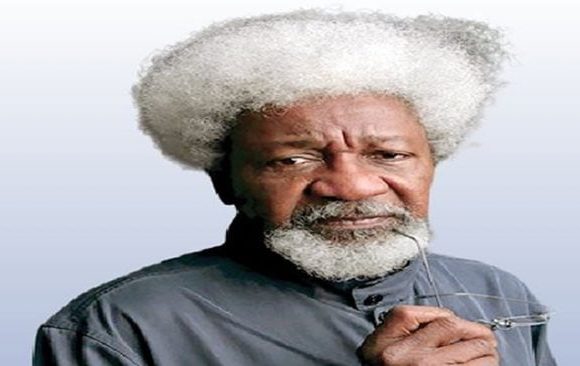
Nobel laureate, Professor Wole Soyinka, on Tuesday announced that the United States of America has revoked his visa, making his entry into the country impossible for now.

Soyinka disclosed this during a media parley held at Kongi’s Harvest Gallery, Freedom Park, Lagos Island, saying he was unaware of any wrongdoing that could have warranted the revocation.

“It is necessary for me to hold this conference so that people in the United States who are expecting me for this event or that event do not waste their time.

“I have no visa; I am banned, obviously, from the United States. And if you want to see me, you know where to find me,” he told journalists.

The reason for the visa revocation remains unclear, as Soyinka himself said he was still in the dark about it.

In recent times, the US government has taken steps to curb the influx of migrants into the country.

According to Soyinka, the US Consulate informed him of the revocation in a letter dated October 23, 2025.

“This letter serves as official notification by the United States Consulate General in Lagos that the nonimmigrant visa listed below has been revoked pursuant to the authority contained in U.S. Department of State regulations,” part of the letter, shown to our correspondent by Soyinka, read.

The letter was issued by the NIV Section of the Consulate.

The Nobel Laureate expressed confusion over the development, saying, “I’m still looking into my past history… I don’t have any past criminal record or even a felony or misdemeanour to qualify for the revocation.

“I’ve started looking back, have I ever misbehaved toward the United States of America? Do I have a history? Have I been convicted? Have I gone against the law anywhere?”

PM News had earlier reported on September 10, 2025, that Soyinka said he would not honour an invitation by the US Consulate in Nigeria for a visa re-interview, which was scheduled for Thursday, September 11.

He made this known in an interview with the medium while reacting to the recent invitation sent by the American Consulate to Nigerians holding B1/B2 visas, asking them to appear for what it called a “visa interview.”

Soyinka’s visa is classified as B1/B2—a temporary, non-immigrant visa for travel to the United States for business (B-1) or tourism (B-2).

“I would like to begin by stressing the fact that, for me, this is not a personal issue. I have no idea how you got to know. By the way, I also received the letter, which at first I thought was fake. I thought it came from scammers who prey on those eager to get visas elsewhere, promising to deliver them for a certain amount. I thought they had simply picked my name among others, knowing there was a list of invitees.

“So, at first, I thought it was advance-fee fraud because I had never received that kind of letter from that or any other embassy. I even thought that maybe AI had been generating generic letters. It was very strange.

“So, by the time I came to terms with the fact that the letter was genuine, my mind went to my relationship with individual ambassadors, Consuls General, and Cultural Attachés. As you know, it has always been a courteous relationship,” Soyinka told PM News in September.

Punch/Olaolu Fawole

Subscribe to our Telegram and YouTube Channels, and also join our WhatsApp Update Group.
News Analysis

The unabated incidence and unrelenting activities of secret cults in the Nigerian educational institutions and the society at large have wrought incalculable havoc on the lives and psyche of Nigerians.

As at 1999, over fifty six secret cults existed in the one hundred and thirty three higher institutions of learning in the country.

They were fast penetrating the nation’s secondary and even primary schools as well people outside the education walls.

Secret cults or secret societies are organisations in which members are usually bound by an oath of secrecy.

These often require elaborate form of initiation and ritual, use of symbols, password and handshakes as a means of recognition among members.

Mainly, they operate in the confines of Nigerian institutions where they have been alleged of being behind violence and sometime harassment of lecturers for different reasons.

However, the confraternity system in Nigeria was not so violent when it was started way back in 1952, during the last years of British colonial rule by a set of young idealistic men.

It began at the University of Ibadan when the Nobel Laureate, Professor Wole Soyinka led the National Association of Seadogs.

These secret societies were later banned in Nigeria when they became notorious with thousands of members arrested and prosecuted over the years.

Nevertheless, they continue to operate, especially off campus enjoying the followership of people who have never been to university and increasingly involving themselves in criminal activities.

For example, in Lagos State several cases of cultists clashes have been recorded where many lives were lost and property running to millions of naira destroyed.

In Rivers State, particularly the oil hub Port Harcourt, cults have been known to recruit teenagers into street gangs that serve as a training ground for membership drive.

Last year April, residents of Lagos and neighbouring Ogun states resolved to forming vigilante groups as reports spread that hundreds of gangster belonging to cult groups such as One Million Boys and Awawa Boys were disturbing the peaceful coexistence of the environment.

Despite all these, there were increase reports on social and traditional media where gangs attack people for reasons best known to them, almost on a daily basis.

To curb this menace, security agencies must come up with strong and anti cultism strategies that would make cultism a thing of the past in society.

All authorities concerned in the nation’s higher institutions should map out strategies of preventing cult members from carrying out membership drive on campuses.

To achieve success in this regard, parents must work closely with the institutions through constant monitoring and supervision of their wards.

More importantly, counselling services in tertiary institutions should be taken seriously as counselors have a major role to play towards implementing programmes for the reduction of cultism in schools.

The role of religious and moral lessons cannot be over-emphasized as they are vital to moulding of the youths who are proverbial leaders of tomorrow in the society.

Mass media print, electronic and online need to embark on regular sensitization and awareness campaign on the dangers of cultism and its effect on development.

Above all, the government at all levels should find a way of empowering uneducated and unemployed youths roaming the streets to prevent them from ending up in practicing cultism all in the name of searching for daily bread.

A stitch in time they say saves nine.

Rasheedah Makinde

Lifestyle

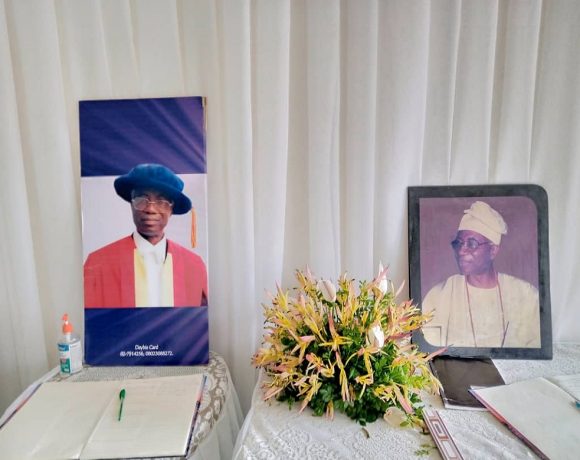
Outpouring of tributes have continued for late Professor Oladipo Akinkugbe, who passed on Monday

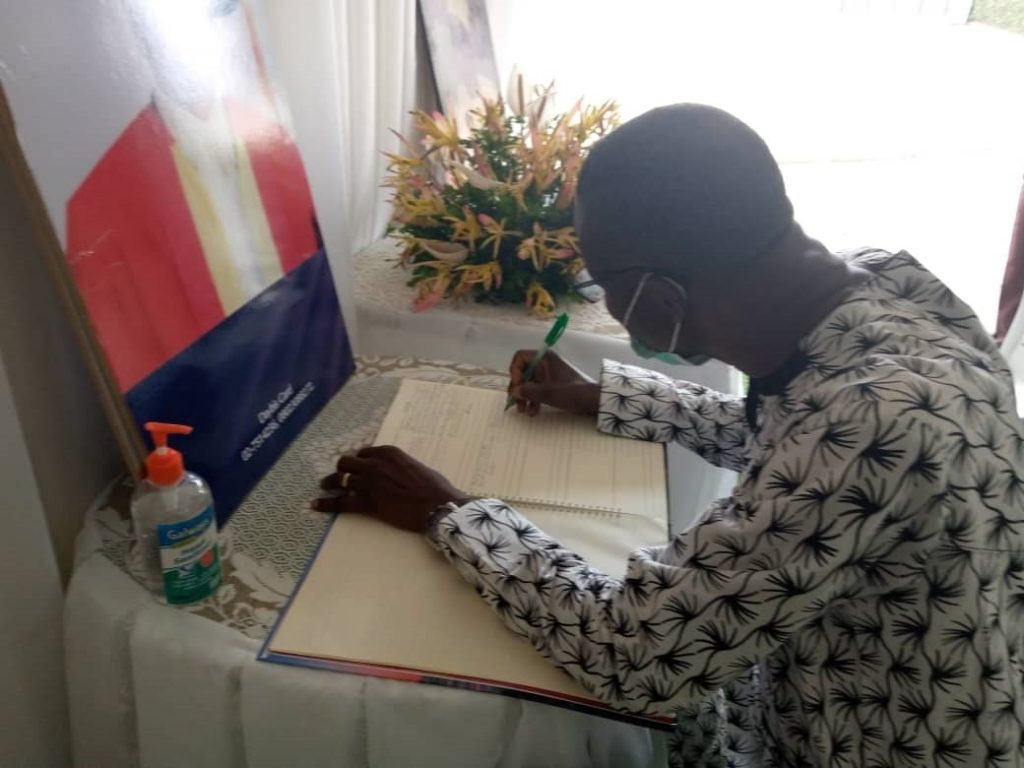
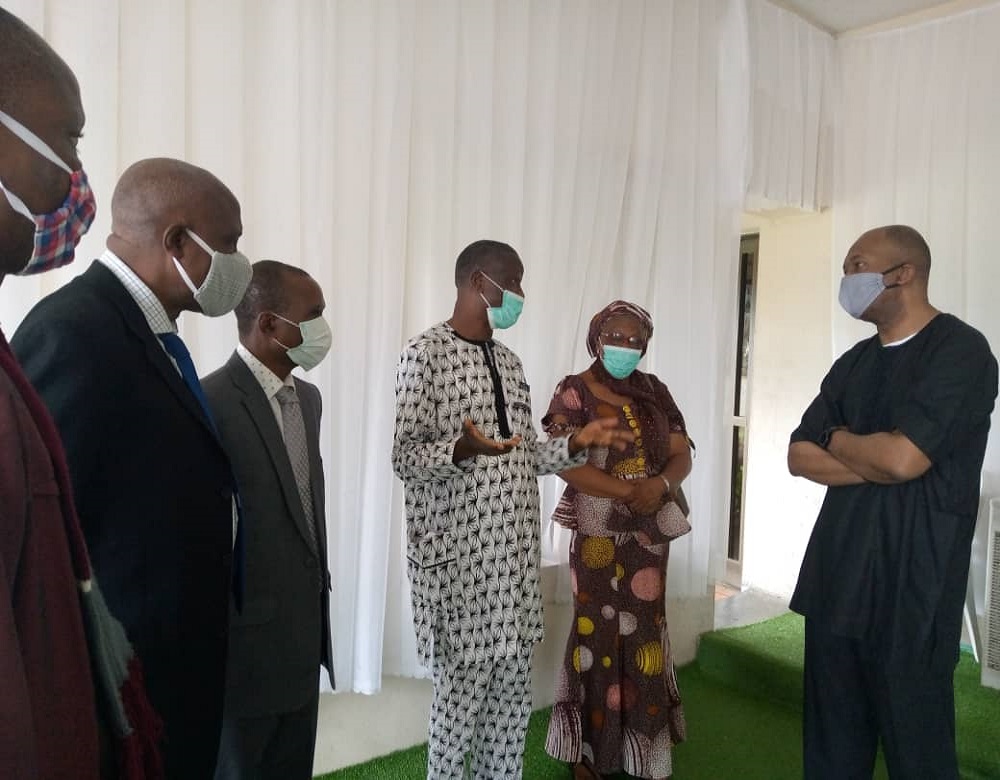
Health correspondent Anthonia Akanji, who visited the residence of the Akinkugbe’s at Iyaganku, Ibadan reports that notable Nigerians have been calling to pay respect to the late Icon.

One of the early callers was General Overseer, Christ Life Church, Bishop Wale Oke who described Prof. Akinkugbe as a godly man, who lived an exceptional fruitful life.

Nobel Laureate, Professor Wole Soyinka, who declined comment wrote “Dipo, you and l still have unfinished business, prepare your gloves”

An in-law to the deceased from Ijebu Oru, Otunba Adetoun Oduwole, said Baba would be greatly missed, being a nice and caring man.

All visitors at the residence of the deceased complied with the Covid-19 protocols of hand washing, and social distancing.

Anthonia Akanji