Education

By Oluwatosin Ighoteguono

The Ondo State Government has announced that it will mark the 2026 International Mother Language Day, also known as “Asa Day,” on Monday, February 23, 2026, in all public and private schools across the state.

The Director of School Services, Ministry of Education, Science, and Technology, Mrs Olubunmi Ilori, said in a circular issued by Bisi Lawani to schools that the global observance traditionally holds on February 21 but falls on a Saturday this year, prompting the state to shift its official celebration to Monday, February 23.

She directed all principals, head teachers, students, and education stakeholders to participate fully in the exercise and instructed attendees to appear in their traditional cultural attire to commemorate the day.

The ministry stated that compliance with the government-approved date for Asa Day is mandatory for all educational institutions in the state.

The annual observance of International Mother Language Day was established by UNESCO to promote linguistic diversity, safeguard indigenous languages, and celebrate cultural heritage worldwide.

The 2026 theme is “Preservation, Promotion, and Intergenerational Transmission of Indigenous Languages as Instruments for Cultural Identity and Sustainable Development.”

Edited by Maxwell Oyekunle

Follow us on Telegram and YouTube, and join our WhatsApp Update Group for more updates.
Economy Technology

Participants at a Science, Technology and Innovation Management Forum have identified innovation as the major key to the long-term growth of the economy.

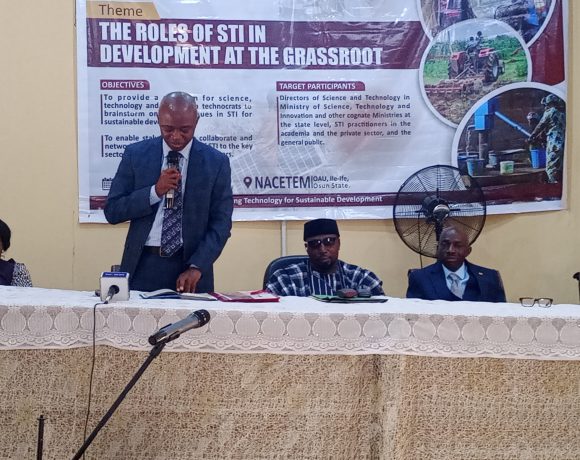
They stated this at a 2-day Science, Technology and Innovation Management Forum organised by the National Center for Technology Management, NACETEM, Obafemi Awolowo University, OAU, Ile-Ife, Osun State.

The forum with the theme, “The Role of STI in Development at the Grassroots Level”, was organised to enable stakeholders to collaborate and network the deployment of Science, Technology and Innovation to the key sectors of the economy.

The participants drawn from the relevant sectors who described the forum as apt noted that innovation held the key to the present and future growth of developing countries.

The participants, including Mr Saka Waheed from a Non-Governmental Organisation and Miss Abisola Ariwodola from State Ministry of information and Civic Orientation, said the forum has enlightened them on the need to educate rural dwellers on technology and innovation for development

In his opening remark, the Chairman, Governing Board of NACETEM, Sir Haastrup Olatunji maintained that any nation that relegated science, technology and innovation to the background in its developmental agenda would be left behind.

Sir Olatunji also pointed out that in a society where the most vulnerable were not attended to, there was a likelihood of most of them embracing vices for survival at the detriment of the citizens.

“Everyone, including the ones at the lowest rung of the ladder, must be carried along and integrated into the scheme of development. Hence, the need to begin to engage with the critical stakeholders in the grassroots development on the significance of STI in development, particularly at the local level”.

Earlier, the Overseeing Director General and Chief Executive Officer, NACETEM, OAU, Dr John Onimakinde, said that there was a vacuum to be filled in the deployment of Science, Technology and Innovation at the grassroots, hence the need to mobilize the people through education, empowerment and enlightenment.

 “For a long time, attention has always been on Urban development at the expense if rural development. This has led to issues such as Rural-Urban migration, poverty, neglect, diseases, among others which have continued to stunt growth and development at the grassroots level, thereby making rural dwellers extremely vulnerable”.

Dr Onimakinde further enumerated the roles of science, technology and innovation to include wealth creation, an improvement on quality of life, economic development and societal transformation.

Funmi Adekoya

Subscribe to our Telegram and YouTube Channels also join our Whatsapp Update Group

Education

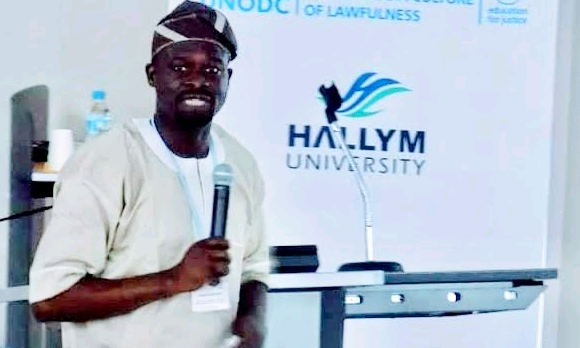
Oludayo Tade, a criminologist and sociologist who teaches at the University of Ibadan, has won the 2021 Science Communication Award.

A statement on Wednesday in Ibadan said the Conversation Africa, a research-based communication outfit based in South Africa, presented the award.

The award is the Conversation Africa’s second annual West Africa Science Communication Awards, an event that honours researchers and partner universities based on the number of contributions and readership generated by their research.

Mr Tade, who had won the inaugural award in 2020 for making the highest contributions to science communications, also retained the same position in 2021.

In the statement, Adejuwon Soyinka, the West Africa regional editor of Conversation Africa, explained that the organisation was already in partnership with 73 institutions.

Mr Soyinka added that the organisation had embarked on training to ensure that research findings are communicated to policy actors and non-academic audiences to impact society beyond the academic community.

“Our mission is to mainstream the voices of scientists and support science communication activities. We do this by working with academics and researchers, who themselves write and provide fact/evidence/research-based analytical articles on various societal issues and articles about their research findings as well,” said Mr Soyinka.

Also, the duo of Feyisitan Ijimakinwa and Janet Ogundairo won the most read article from the University of Ibadan.

The statement further disclosed that Lanre Ikuteyijo and Akin Akinyemi of the Obafemi Awolowo University, Ile-Ife in Osun, were awarded the most contribution and most-read piece, respectively.

Scholars from the University of Lagos, Federal University Oye-Ekiti, University of Ghana Legon and the University of Cape Coast were also awarded.

Peoples Gazette

Education

Oyo State government has expressed its determination to focus on building infrastructures across public schools in the state and renovate dilapidated structures.

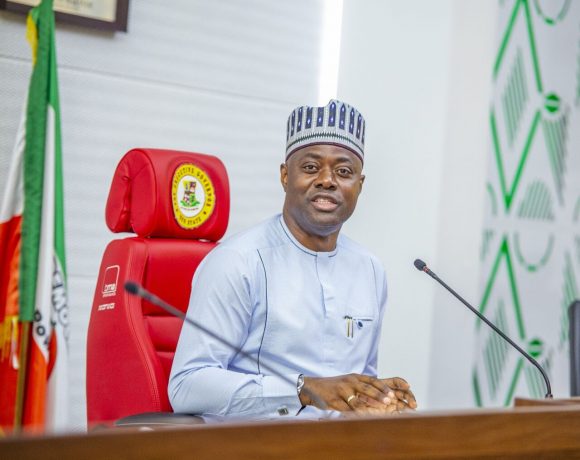
Governor Seyi Makinde stated this during a symbolic presentation of free exercise books to students of selected secondary schools in the state. 

He urged stakeholders in the education sector to shun politics and complement government’s effort at ensuring a secured and guaranteed future for students in the state.

Governor Makinde noted that a portion of the school grant has been signed off for payment for effective running of public schools in the state with a promise that government would not relent in providing necessary funding to the state’s education sector.

Earlier, the Commissioner for Education, Science, and Technology, Mr. Olasunkanmi Olaleye said the gesture was part of the government’s free education policy noting that about 2.7 million exercise books would be freely distributed across schools.

Iyabo Adebisi