Education

By Patience Olumati (Abuja)

The Federal Government has suspended the evaluation and accreditation of degree certificates from Benin and Togo Republics.

This is pending the outcome of an investigation that would involve the Ministry of Foreign Affairs and the two countries as well the Department of State Security Services and the National Youths Service Corps.

A statement from the Federal Ministry of Education and signed by Mrs. Augustina Obilor-Duru for Director Press and Public Relations on Tuesday, 2nd January, 2024
explains that the suspension is coming on the heels of a recent online publication of how an undercover reporter bagged a degree at a Cotonou university in 6 weeks and participated in the NYSC scheme.
It says the Federal Ministry of Education vehemently decries such acts and has also commenced internal administrative processes to determine the culpability or otherwise of her staff for which appropriate Public Service Rules would be applied.

According to the statement,the ministry will continue to review its strategy to block any loopholes, processes and procedures.

It states that the Ministry has been contending with the problem including illegal institutions located abroad or at home preying on unsuspecting, innocent Nigerians and some desperate Nigerians who deliberately patronize such outlets.

The statement assures Nigerians and the general public of putting in place mechanisms to sanitise the education sector.

Edited by Olaolu Fawole

Foreign

Seven children are reported to have been killed by an improvised bomb explosion in Togo.

Witnesses said they were woken by a loud blast late on Saturday in the Savanes region in the north of the country.

“An investigation is ongoing to determine the circumstances of this explosion and identify the perpetrators,” the army is quoted as saying in a statement on Sunday.

Islamist militants linked to Islamic State and al-Qaeda have attacked numerous targets in a string of countries in the Sahel.

The Togolese army has been on high alert following the country’s first deadly militant attack in May when eight soldiers were killed near the border with Burkina Faso.

Togo last month declared a state of emergency in its northern region following the attack.

BBC/Simeon Ugbodovon

Foreign

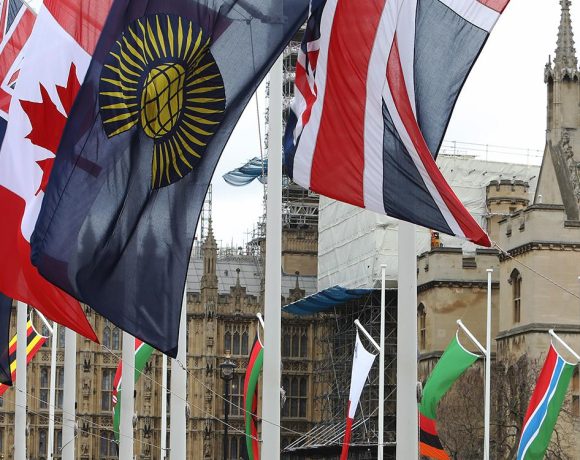
Gabon and Togo joined the Commonwealth on Saturday, becoming the latest nations with no historic ties to Britain to enter the English-speaking club headed by Queen Elizabeth II.

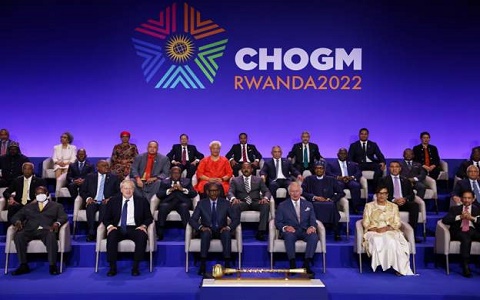
The 54-nation group of mostly former British colonies accepted Togo and Gabon’s application for membership on the final day of its leadership summit in Rwanda.

While speaking at the closing press conference of the summit, Rwandan President Paul Kagame said, “We have admitted Gabon and Togo as new members, and we all welcome them to the Commonwealth family”.

The French-speaking West African states are the first new members to join the Commonwealth since Rwanda in 2009.

Togo’s Foreign Minister Robert Dussey said membership opened the door to 2.5 billion consumers in the Commonwealth realm and offered new education opportunities for his countrymen.

Togo’s membership is motivated by the desire to expand its diplomatic, political, and economic network… as well as to get closer to the English-speaking world,” he told newsmen.

Mr Dussey added that this move also allowed the small and developing nation of 8.5 million to redefine bilateral relations with the UK outside the European Union in the aftermath of Brexit.

Togolese political scientist Mohamed Madi Djabakate said the move would prove popular as French influence in Togo was often blamed for its economic woes.

Gabonese President Ali Bongo said his country was “making history” by joining the group.

Sixty-two years after its Independence, our country is getting ready to breakthrough with a new chapter,” Bongo said in a statement on Twitter.

Their admission is a boon for the Commonwealth at a time of renewed discussion over its relevance and purpose.

British Prime Minister Boris Johnson said the interest from new members proved the organisation was alive and well.

But it could also raise questions about the Commonwealth’s espoused commitment to good governance and democracy as fundamental values of its charter.

Oil-rich Gabon, a former French colony, has been ruled by the Bongo family for 55 years.

Togo, a former German then French colony, has also been under dynastic rule for more than half a century.

Born out of the British Empire, the Commonwealth represents one-third of humanity and spans nations across Africa, Asia, Europe and the Americas.

It would be recalled that Mozambique — a former Portuguese colony — became the first Commonwealth member without historic links to Britain when it joined in 1995.

Punch/Maxwell Oyekunle

Foreign

Former French colonies Gabon and Togo are set to become the latest countries to join the Commonwealth, which is made up of 54 nations most of which were once part of the British Empire.

They will be the first new members in more than a decade – the last one being Rwanda, which joined in 2009.

Rwanda is currently hosting the biennial meeting of heads of Commonwealth states.

Mozambique, which also did not have links to the British Empire, joined in 1995.

Togo’s Foreign Minister Robert Dussey said French-speaking Togo’s inclusion into the Commonwealth would “help it develop closer ties with English-speaking countries, opening up new horizons outside of France’s sphere of influence in West Africa.”

Since joining in 2009, Rwanda has praised the Commonwealth for helping the country with election support, combatting corruption and creating a stronger judicial system.

Togo and Gabon are expected to be admitted later on Friday.

BBC/Simeon Ugbodovon