Education

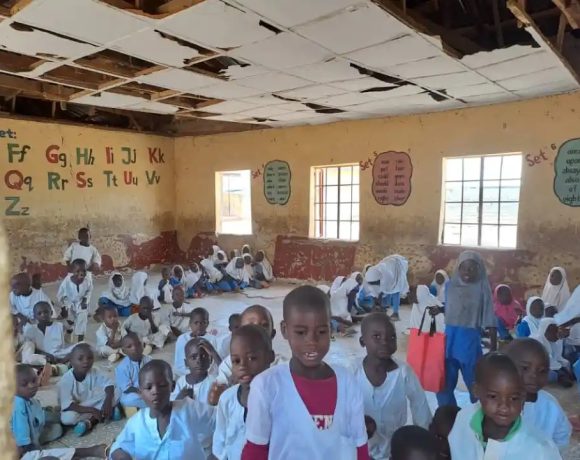
The United Nations Children’s Fund, UNICEF, says 85 per cent of Nigerian children between the ages of 1 and 14 experience violent discipline in schools, with nearly 1 in 3 children experiencing severe physical punishment.

UNICEF Chief of Education, Saadhna Panday-Soobrayan, stated this in Abuja on Tuesday, at a two-day National Awareness Creation Meeting on Ending Corporal Punishment in schools, organised by the Teachers Registration Council of Nigeria, TRCN, in collaboration with  UNICEF. 

Panday-Soobrayan described the discussion on ending corporal punishment in schools as “difficult and heart-breaking,” stating however that the presence of participants at the meeting was a testament to Nigeria’s determination to uphold every child’s right to safety, well-being, and quality, inclusive education.

“Yesterday we confronted the harrowing reality that 85% of children between the ages of 1 and 14 in Nigeria experience violent discipline, with nearly 1 in 3 children experiencing severe physical punishment. This is a staggering statistic, one that demands urgent action and is indicative of a crisis!

“Much of this violent discipline takes place in the form of corporal punishment in the very institutions that are entrusted to keep children safe, develop respect for human rights and prepare them for life in a society that promotes understanding peace, and conflict resolution through dialogue,” she said.

According to her, the persistence of these practices contradicts Nigeria’s National Policy on Safety, Security, and Violence-Free Schools, which commits to zero-tolerance of any threat to the security of life and property in schools.

Panday-Soobrayan also noted that the practice is “stalling Nigeria’s progress toward SDG 3 to ensure good health and well-being, SDG 4 on equitable and inclusive quality education and target 16.2 (to end abuse, exploitation, trafficking and all forms of violence against and torture of children).”

Also speaking, the Minister of Education, Mallam Adamu Adamu, represented by Hajia Binta Abdulkadir, endorsed the action plan and roadmap for ending corporal punishment in schools in line with the Child’s Rights Act passed into law in 2003, protecting children’s right to a life free of violence.

Adamu noted that globally, there is evidence indicating that corporal punishment in schools has impacted negatively attendance and learning outcomes.

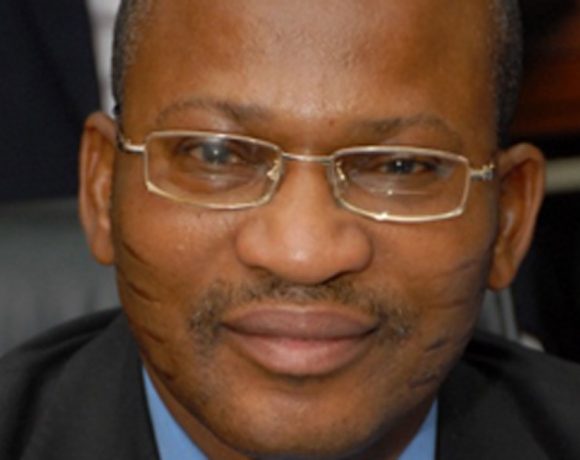
Earlier, the Registrar of TRCN, Prof Josiah Ajiboye, said Globally, there is a paradigm shift from corporal punishment in schools because of its effect on pupils, adding that practice has been proven to be ineffective, dangerous, and an unacceptable method of controlling and maintaining behaviour and discipline.

Ajiboye said corporal punishment brings negative rather than positive consequences in the whole process of teaching and learning.

On his part, the World Bank Senior Education Specialist, Prof Tunde Adekola, said the global bank believes there is a correlation between learning poverty and corporal punishment while stressing the urgency of implementing the action plan against corporal punishment in schools.

FRCN Abuja/Adetutu Adetule

Subscribe to our Telegram channel

News

A member of the Oyo State House of Assembly, OYHA, Mrs. Olawunmi Oladeji has stressed the need for women to be more involved in vying for elective positions.

She gave the advice in Ogbomoso after receiving an award of excellence as a performing lawmaker in the Oyo State House of Assembly by an indigenous association in Ogbomoso land, “Ogbomoso Valiant Club”.

Mrs. Oladeji who is the only female lawmaker in the 9th Assembly of Oyo State, representing Ogbomoso North State Constituency said women should not be discouraged from vying for elective positions but should prioritize interest in mentorship.

She said her articulate activities at both the 8th and 9th assemblies, especially on motions and bills sponsored on the floor have attracted commendations from her constituency and members of the public.

Mrs. Oladeji said, “If you have to go through the motions moved by me in the OYHA, starting from the 8th assembly to 9th assembly, almost everything revolves around Ogbomoso, women, and children”. 

“There was a motion I moved that is now in use in the state, which was the review of maternity leave from three months to six months. Our nursing mothers are presently enjoying it”.

The two-term lawmaker assured residents of the state of her commitment to championing the course of women and children in Ogbomoso south and the state in general.

Mrs. Oladeji was presented with the award alongside other eminent sons of Ogbomoso land, including the Registrar, Teachers Registration Council of Nigeria, TRCN, Professor Olusegun Ajiboye, and Oyo State Commissioner for Justice, Professor Oyelowo Oyewo.

Mosope Kehinde

News

The Registrar, Chief Executive of Teachers Registration Council of Nigeria, Professor Josiah Ajiboye, has advocated for a higher standard living for teachers, to meet up with the international standards.

While featuring on The Stage, a personality interview programme on Premier FM 93.5, Ibadan, Professor Ajiboye said outside Nigeria, especially in countries like Finland and Germany, teachers are more highly paid than other professions as they are the best brains the country could boast of.

Professor Ajiboye noted that, if maximum attention was given to the needs of teachers, it would yield a positive impact on both the teachers and the students.

The Registrar Chief Executive of TRCN, however, said that only professional teachers should be strictly taken into the teaching sector for a better teaching standard.

Taiwo Akinola

Education

The Teachers Registration Council of Nigeria, TRCN, says it will commence the final documentation of teachers’ credentials in public and private primary and secondary schools nationwide from Monday 9th of March to Tuesday 17th of March, 2020.

The Leader of TRCN Monitoring Team on Documentation of Teachers Credentials in Delta State, Professor Emperor Kpangban, made this known in Asaba, while briefing journalists on preparations for the nine days screening of educators in the basic education facilities.

Professor Kpangban urged heads of schools to ensure teachers in their institutions were available for the exercise with their necessary professional qualifications.

Also, the Coordinator Delta State Chapter of the Teachers Registration Council of Nigeria, Mr Lazarus Eze, in a remark explained the TRCN was committed to rid Nigerian schools of unqualified teachers to ensure a bright educational foundation for students in primary and secondary schools in the country.

He added that qualified teachers who are yet to register with the council should take advantage of the final window for the documentation of qualified teachers nationwide.

Oghenero Eghweree