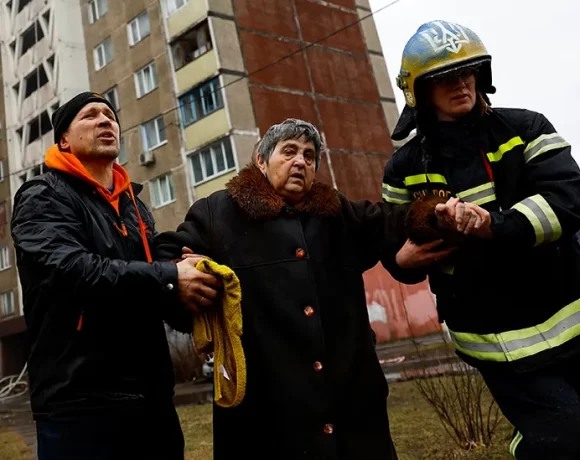
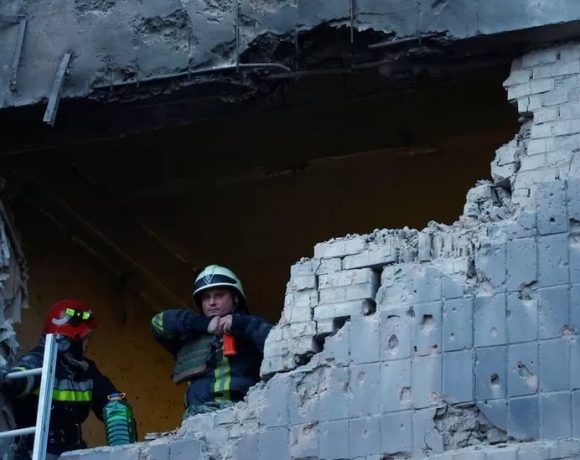
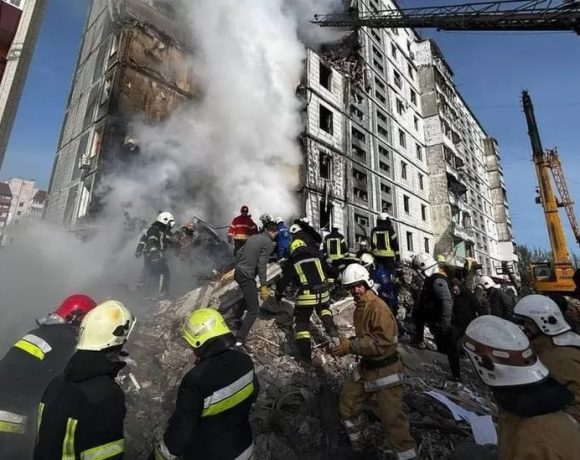
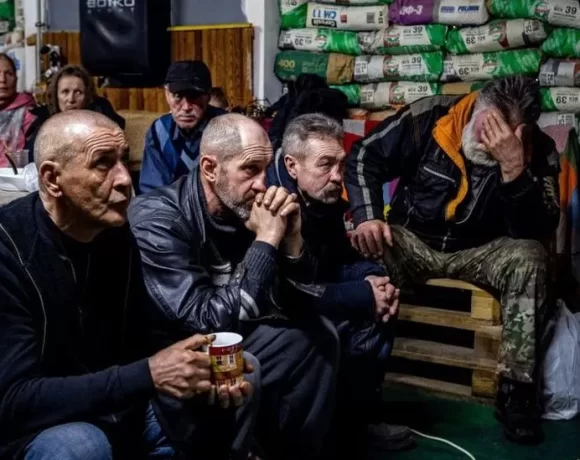
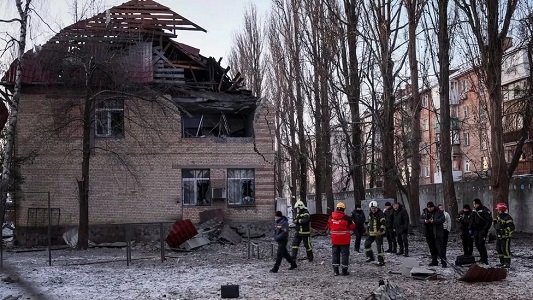
Russian missile strikes hit Kyiv and other cities on Wednesday morning, causing at least three deaths and 11 injuries, Ukrainian authorities reported.
President Volodymyr Zelensky said two persons were killed in Kyiv and 10 others were wounded.
A man was also killed in the southern city of Mykolaiv, officials said.
The whole country was put under air alert and attacks were reported as far west as Lviv, near the Polish border.
Kyiv Mayor Vitali Klitschko said a downed Russian missile damaged power lines and some households in the capital were without electricity.
Ukraine’s commander-in-chief Valerii Zaluzhnyi said Russia had fired 64 missiles and drones, of which 44 were intercepted. According to the Ukrainian air force, Russian cruise missiles were detected above the western regions of Lviv, Ternopil and Ivano-Frankivsk.
In Mykolaiv, one person who was taken to hospital later died of his injuries, the city’s mayor Oleksandr Senkevich said.
Others were treated at the scene after the attack, which damaged homes and disrupted gas and water supplies, he added.
Explosions were also heard in Kharkiv, with some damage to infrastructure reported by military authorities.
Ukraine has come under frequent air attack since Russia invaded on 24 February 2022. Russian forces regularly use different types of weapons in their attacks, including drones and missiles.
The general in charge of Ukraine’s stuttering counter-offensive in the south has said Russian defenses are making it difficult for military equipment, including Western tanks and armored vehicles, to move forward.
Gen Oleksandr Tarnavskyi says his forces are struggling to overcome multi-layered minefields and fortified defensive lines.
“That is why most of the tasks have to be performed by troops.”
He says Russia’s military has displayed “professional qualities” by preventing Ukrainian forces from “advancing quickly”.
“I don’t underestimate the enemy,” he adds.
Latest unconfirmed reports from the US suggest the main thrust of the counter-offensive has begun. The Institute for the Study of War says Ukrainian forces appear to have broken through “certain pre-prepared Russian defensive positions”.
But so far there’s little evidence that Western-supplied tanks and armored vehicles have been able to tip the balance decisively in Ukraine’s favor.
Several Leopard tanks and US Bradley fighting vehicles were damaged or destroyed in the first days of the offensive, near the city of Orikhiv.
Ukraine’s 47th Brigade, which had largely been trained and equipped by the West to try to break through Russian lines, was soon stopped in its tracks by mines and then targeted by artillery.
Russia released multiple videos of the incident claiming Ukraine’s offensive had already failed. In reality, it was an early setback rather than a decisive blow.
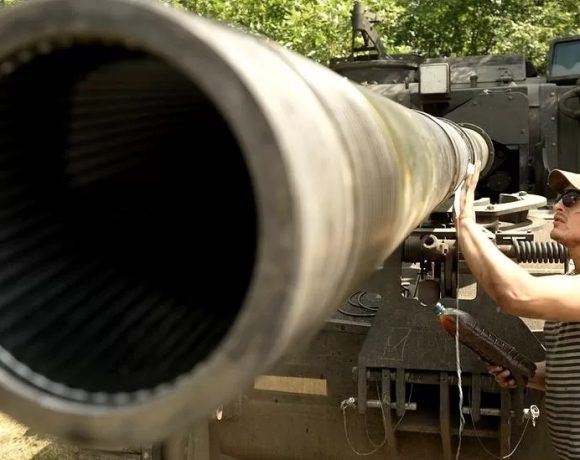
We visited the same brigade’s outdoor workshop, hidden in a forest behind the front line, where they are now trying to repair more than a dozen armored vehicles most of them US Bradleys.
They first arrived unscathed but now bear the scars of battle. Broken tracks and buckled wheels – the tell-tale signs that several have hit Russian mines.
Serhii, one of the engineers, says: “The faster we can repair them, the faster we can get them back to the front line to save someone’s life.”
But he also admits that some are beyond repair and will have to be either scavenged for spare parts or “returned to our partners” to be rebuilt.
While Western armor has provided Ukrainian troops with better protection, it has not been able to punch through the rows of Russian mines – one of the biggest barriers to Ukraine’s advance.
Traveling the southern front we also saw British-supplied Mastiff armored vehicles damaged and destroyed.
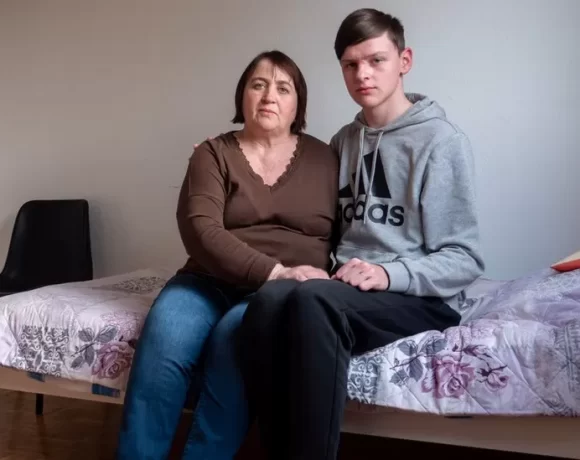
A 15-year-old Sasha Kraynyuk has studied the photograph handed to him by Ukrainian investigators, as he recognised the boy dressed in Russian military uniform immediately.
The teenager sitting at a school desk has the Z-mark of Russia’s war emblazoned on his right sleeve, coloured in the red, white and blue of the Russian flag.
But the boy’s name is Artem, and he’s Ukrainian.
Sasha and Artem were among 13 children taken from their own school in Kupyansk, north-eastern Ukraine last September by armed Russian soldiers in balaclavas. Ushered onto a bus with shouts of “Quickly!”, they then disappeared for weeks without trace.
When the children, who all have special educational needs, were finally allowed to call home, it was from much deeper inside Russian-occupied territory.
To get them back, their relatives were forced to make gruelling journeys across thousands of miles into the country that has declared war on them.
Only eight of the children have been returned from Perevalsk so far and Artem was one of the last, collected by his mother just this spring.
When I reached the school’s director by phone, she saw no problem with dressing Ukrainian children in the uniform of an invading army.
“So what?” Tatyana Semyonova retorted. “What can I do? What’s it to do with me?”
I countered that the Z symbolised the war against the children’s own country. “So what?” the director demanded again. “What kind of a question is that? No-one is forcing them.”
Russia has carried out a new massive drone attack on Ukraine’s capital Kyiv.
Kyiv’s mayor Vitaliy Klitschko said a man died when drone wreckage fell near a petrol station. A woman was injured.
Overall, Russia launched a record 54 so-called kamikaze drones on Ukrainian targets, 52 of which were shot down, Ukraine’s Air Force reported.
Russia which launched its full-scale invasion in February 2022 has stepped up its attacks on Kyiv, seeking to overwhelm the capital’s defenses.
At least two high-rise buildings in different districts of the capital caught fire after being hit by falling drone fragments.
Kyiv officials also reported that warehouses in the southern Holosiyivsky district had been set ablaze.
More than 40 drones were downed over the capital overnight, Ukrainian officials said. This information has not been independently verified.
But President Volodymyr Zelensky praised the air defence and rescue services, saying: “You look up to destroy enemy missiles, aircraft, helicopters, and drones. Every time you shoot down enemy drones and missiles, lives are saved… you are heroes!”
Kyiv resident Anastasiia said that she was asleep at home when she was woken up by the sound of a drone flying “very close” to her window.
“I then saw a big flash of light inside the flat. At first it was yellow, then bright orange and then blinding white. It was so bright that I could not see anything in the flat,” she told the BBC, adding that it wall went “very quiet” during the flashes and that the sound of the explosions came “two or three seconds after the flash. It was very loud, like thunder.”
“Those two or three seconds felt like a very long time,” she said. “The bright light was transformed into total darkness. I wanted to check if there was any damage. I could not understand what happened. I was in shock so I did not feel scared. I could not understand if I and my flat were OK.”
Some officials accused Russia of targeting Kyiv deliberately as residents prepared to celebrate Kyiv Day the anniversary of the city’s foundation more than 1,500 years ago and a popular holiday before the war.
Earlier on Sunday, air raid alerts were activated in 12 regions of Ukraine, from Volyn in the north-west to Dnipropetrovsk in the south-east. There were also reports of explosions in the city of Zhytomyr, west of Kyiv.
In its recent attacks, Russia has been using so-called kamikaze drones as well as a range of cruise and ballistic missiles. The frequency of the Russian attacks on Kyiv and elsewhere has been increasing as Ukraine steps up its preparations for a counter-offensive.
Oleksiy Danilov, secretary of the powerful National Security and Defence Council of Ukraine, said an assault to retake territory from President Vladimir Putin’s occupying forces could begin “tomorrow, the day after tomorrow or in a week”.
BBC/Adebukola Aluko Subscribe to our Telegram and YouTube Channels also join our Whatsapp
A wave of Russian air strikes on cities across Ukraine, including Kyiv, has left at least 19 people dead.
Seventeen people including a child were killed in an attack that hit a block of flats in the central city of Uman, officials said.
Also, a woman and her three-year-old daughter were killed in the city of Dnipro, according to the local mayor.
The Russian defense ministry said its military had targeted Ukrainian army reserve units with the strikes.
According to reports, Russia was aiming for the reserve units and used high-precision weapons on Friday.
Ukrainian President Volodymyr Zelensky said the apartment block was among 10 residential buildings that were damaged in Uman.
The state rescue service said the child killed in the city was born in 2013 and another 11 people needed hospital treatment.
Mr Zelensky said the attacks showed further international action needed to be taken against Russia.
“Evil can be stopped by weapons our defenders are doing it. And it can be stopped by sanctions global sanctions must be enhanced,” he said in a tweet.
The head of the Kyiv city military administration said it was the first Russian missile attack on the capital in 51 days.
There are no immediate reports of civilian casualties in the capital.
Twenty-one out of 23 missiles and two attack drones were shot down by Ukraine’s air defense system, officials said in a post on the messaging service Telegram.
The Russian-installed mayor of Donetsk said seven people were killed in the separatist-run city when Ukrainian artillery shells hit a minibus. BBC News has been unable to immediately verify the claim.
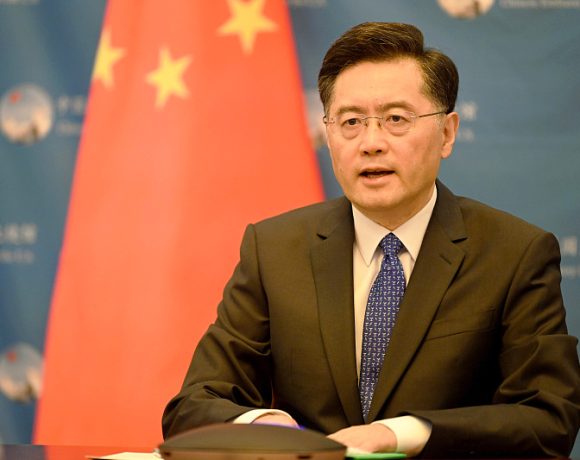
China’s Foreign Minister Qin Gang has called for peace talks on the war in Ukraine to be promptly resumed, as he blamed an “invisible hand” for the protraction and escalation of the year-old conflict.
Qin said the process of peace talks should begin as soon as possible and the legitimate security concerns of all parties should be respected.
He described the conflict in Ukraine, which began with a Russian invasion on February 24, 2022, as “an eruption of the problems built up in the security governance of Europe.”
The Foreign minister said efforts for peace talks have been repeatedly undermined.
“There seems to be an invisible hand, pushing for the protraction and escalation of the conflict and using the Ukraine crisis to serve a certain geopolitical agenda.
“The crisis in Ukraine has come to a critical juncture. Either hostility stops and peace is restored, and the process of political settlement begins, or more fuel is added to the flames and the crisis further expands and spirals out of control,” he said.
China recently presented a so-called position paper about its stance on the war, but the paper was largely met with disappointment and scepticism.
Experts said the paper did not propose any new initiatives for a peace settlement.
Qin disclosed China did not provide weapons to Russia amid the conflict, adding that Beijing did not create nor was party to the crisis.
“Why on earth blame sanctions and threats against China?
“This is absolutely unacceptable,” he said responding to information cited by Washington last month suggesting that Beijing could provide “lethal support” to Moscow a claim Beijing had already rejected and warnings from the U.S. and Europe to China not to send weapons to Russia.
The situation in the city of Bakhmut, on the eastern frontline, is becoming “more and more difficult”, Ukraine’s President Volodymyr Zelensky has said.
Russian forces have been trying to take the city for over six months.
“The enemy is constantly destroying everything that can be used to protect our positions”, Mr Zelensky stated.
The Ukrainian leader’s remarks came as US Treasury Secretary Janet Yellen warned China against arming Russia during a visit to Kyiv on Monday.
Some of the fiercest fighting to take place since Russia invaded Ukraine just over a year ago has taken place in Bakhmut, in Ukraine’s Donetsk region, part of which is under the control of Russia and its separatist allies.
Recently efforts by Russian forces to capture the industrial city have intensified, with its troops gaining ground.
The separatist leader of the self-proclaimed Donetsk People’s Republic, Denis Pushilin, said “practically all roads” into the city were “under Russian fire control”.
And the commander of Ukraine’s ground forces, Col Gen Oleksandr Syrskyi, said the situation around Bakhmut was “extremely tense”.
“Despite significant losses, the enemy threw in the most prepared assault units of Wagner, who are trying to break through the defences of our troops and surround the city,” Gen Syrskyi said.
Speaking about the situation in his nightly address, President Zelensky said managing to gain a foothold in Bakhmut and ensuring its defence were being heavily compromised by Russia’s renewed onslaught.
He was “grateful to each and every person who is heroically holding” the area.
President Zelensky also called once again for modern combat aircraft to be sent so that “the entire territory of our country” can be defended from “Russian terror”.
Explosions were heard in the centre of the Ukrainian capital Kyiv early on Wednesday.
Vitali Klitschko said blasts rocked the central Shevchenkivskyi district and emergency services had been dispatched.
According to Kyiv Governor Oleksiy Kuleba, Air defense systems are at work, as BBC reporters heard loud explosions shortly after the air raid siren sounded. Russia has repeatedly targeted Ukrainian energy infrastructure since October with missiles and drones.
President Volodymyr Zelensky said Ukrainian forces had shot down 13 Iranian-made Shahed drones, which he said amounted to all those launched by Russia early on Wednesday.
Kyiv city’s military administration said a drone fragment had hit an administrative building in the city centre and four residential buildings. But a spokesperson for the city emergency services told Ukrainian media that no victims had been reported in the strike.
He said: “The air defense system is operating. It’s important now to stay in shelters and safe places. Russia is continuing its energy terror against our country. But we are getting stronger daily.”
Ukraine has accused Iran of supplying Russia with “kamikaze” drones used in deadly attacks on 17 October, which Tehran initially denied.
Iran later admitted sending Moscow a limited number of drones “many months” before the war.
In response, Ukraine’s President Volodymyr Zelensky said this was a lie and that many more Iranian drones were being used.
Russia has been targeting Ukraine’s energy grid in recent months in a bid to demoralize its population.
Global leaders have said the strikes civilians infrastructure amount to a war crime, but last week, Russian President Vladimir Putin defended the attacks and said they were in response to blast on the Russian bridge to annexed Crimea on 8 October.
The strikes come amid reports that the US is preparing to arm Ukraine with its state-of-the-art Patriot air defense system. Senior defense officials told the Reuters news agency that the announcement could come as soon as Thursday.
The system is among the most advanced in the world and is usually in short supply. Due to its long-range capability it could potentially shoot down Russian missiles and drones before they come within range of Ukrainian cities.
But unlike Ukraine’s existing air defense systems, Patriot systems require large crews to operate them, and it could take several months to train Kyiv’s forces to use it effectively.
Russia would likely view any attempt to arm Ukraine with Patriot defenses as an escalation. Former president Dmitry Medvedev – who is now deputy chairman of the national security council – warned against the move last month.
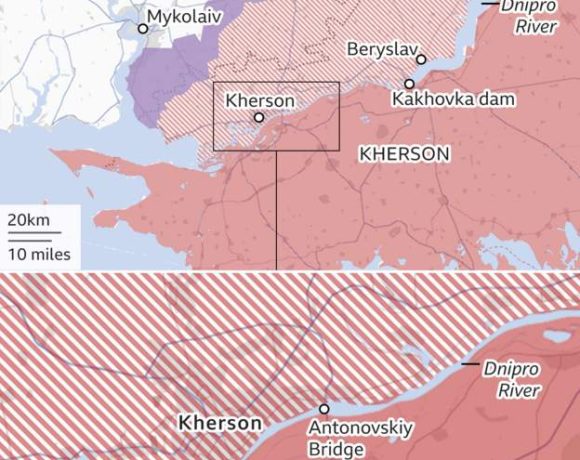
Russia says it is withdrawing its military from Kherson – the only regional capital it has captured since the invasion began
The decision is a significant blow for Russia and means its forces will pull out entirely from the western bank of the Dnipro river
Moscow’s commander in Ukraine, General Sergei Surovikin, said it wasn’t possible to continue supplying the southern city
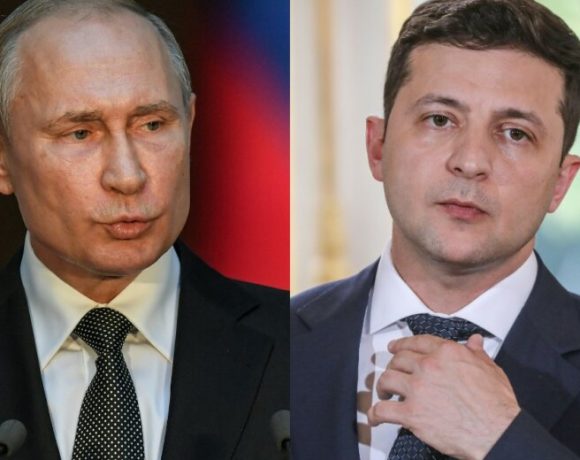
Ukraine’s President Volodymyr Zelensky says his country is moving “very carefully” in response to the announcement
Similarly, Ukrainian military commander-in-chief Valeriy Zaluzhny says he cannot confirm or deny the Russian pullout but he has said his forces have made big gains in the past 24 hours.
This morning they claimed a significant victory, announcing they had recaptured the key town of Snihurivka 50km to the north of Kherson city.
US President, Joe Biden said the decision to withdraw from Kherson shows Russia’s military has “some real problems”
The US estimates that around 100,000 Russian and 100,000 Ukrainian soldiers have been killed or injured since the war began
Meanwhile, Russian officials have said President Putin will not take up Indonesia’s invitation to attend next week’s gathering of G20 leaders
BBC/ Oluwayemisi Owonikoko
Subscribe to our Telegram Channel and join our Whatsapp Update Group
Russian forces have launched fresh attacks in the Kyiv region with Iranian-made “kamikaze drones”, Ukrainian officials say.
Critical infrastructure facilities in Makariv, a small town west of Kyiv, were destroyed after the area was struck by three drones on Thursday.
“There was an overnight drones bombardment by invaders on the Makariv community,” Andriy Nebytov, head of the Kyiv region police, said on Telegram.
He said no casualties had been reported so far.
Kyrylo Tymoshenko, the deputy head of Volodymyr Zelensky’s presidential office, explained that the attack took place by “kamikaze drones on critical infrastructure facilities”.
Ukraine has reported a series of Russian strikes with Iranian-made Shahed-136 drones in recent weeks but Iran had denies supplying the drones to Russia, while the Kremlin has not commented.
In the south, six kamikaze drones were shot down overnight, according to the general staff of the Ukrainian armed forces.
In the meantime, Russia’s Vladimir Putin is expected to meet Turkey’s President Erdogan on the sidelines of a summit in Kazakhstan later
Kremlin officials say Erdogan is likely to “officially” offer to mediate peace talks between Russia and Ukraine
Meanwhile, Ukraine’s Nato-led allies announce deliveries of advanced air defence weapons to Kyiv, hailed by Ukraine as “historic”
BBC/Oluwayemisi Owonikoko
Subscribe to our Telegram Channel and join our Whatsapp Update Group
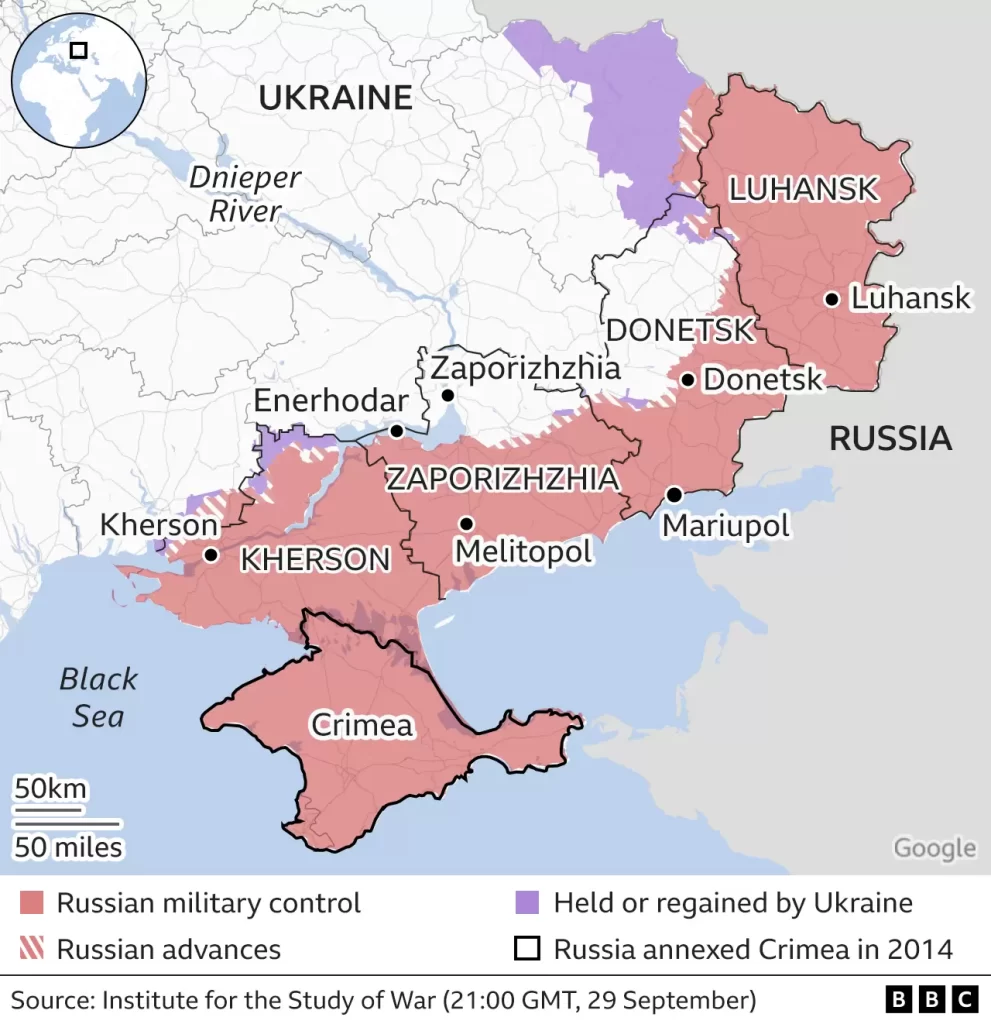
President Joe Biden has warned Russia that the United States will not be intimidated by reckless threats after Vladimir Putin declared the annexation of four occupied regions of Ukraine.
On Friday, President Putin appeared to make a veiled threat to use nuclear weapons to defend those regions.
He said they would “forever” be Russian – but Ukraine vowed to liberate them.
Nato chief Jens Stoltenberg said the Russian move was “the most serious escalation since the start of the war”.
In a speech in Moscow, the Russian leader claimed citizens in Ukraine’s eastern Donetsk and Luhansk regions, as well as in Kherson and Zaporizhzhia in the south had voted to be “with their people, their motherland”.
He was referring to so-called referendums held in the regions in recent days, but Ukraine and Western governments have condemned the votes as a sham.
Much of Mr Putin’s speech was used to rail at the West.
He said the US had created a “precedent” by using nuclear weapons against Japan at the end of World War Two, in an apparent threat.
Mr Putin last week said his country had “various weapons of destruction” and would “use all the means available to us”, adding: “I’m not bluffing.”
The Kremlin has made clear that any attack on the regions claimed by Russia would be seen as an attack on Russian soil, signalling an escalation in the war.
Russia does not fully control any of the four regions, and in his speech Mr Putin did not clear define the borders.
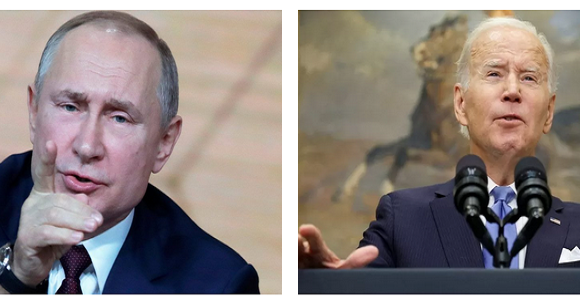
President Biden called out his Russian counterpart’s “reckless words and threats”, but added that Mr Putin was “not going to scare us”.
“America and its allies are not going to be intimidated,” President Biden said at the White House.
He then addressed the Russian president directly, pointing his finger into the camera.
“America’s fully prepared, with our Nato allies, to defend every single inch of Nato territory,” he said, in reference to the Western security bloc.
“Mr Putin, don’t misunderstand what I’m saying: every inch.”
Shortly after, Mr Biden’s top national security official said while there was a chance of Moscow resorting to nuclear weapons, there did not appear to be an imminent threat.
Ukraine launched a new, fast-track bid to join Nato soon after Mr Putin’s speech.
After a crisis meeting of Ukraine’s National Security and Defence Council, President Volodymyr Zelensky said Kyiv had long been a “de facto” member of the security bloc and accused Moscow of redrawing borders “using murder, blackmail, mistreatment and lies”.
Mr Zelensky vowed to liberate all Ukrainian territories, including Crimea – Ukraine’s southern peninsula annexed by Russia in 2014. And he also ruled out any further negotiations with Mr Putin.
Meanwhile, Mr Stoltenberg of Nato was reluctant to be drawn on the bid, saying the decision rested with the bloc’s 30 members.
The alliance’s members “do not and will not” recognise any of the annexed territories as part of Russia, Mr Stoltenberg told reporters, accusing Mr Putin of “irresponsible nuclear sabre-rattling”.
He called the annexation a “pivotal moment” in the war.
EU Commission President Ursula von der Leyen said “the illegal annexation proclaimed by Putin won’t change anything”.
“All territories illegally occupied by Russian invaders are Ukrainian land and will always be part of this sovereign nation.”
Turkey described the Russian move as a “grave violation” of international law.
South Korea said it did not recognise the attempted annexations, adding that Ukraine’s sovereignty, territorial security and independence must be protected.
As Mr Putin spoke in Moscow, 750km (466 miles) to the south, his forces were being surrounded by Ukrainian troops in Lyman, a strategically important town in the eastern region of Donetsk.
Ukraine’s military has been keen to conceal the pace of its troops’ advance in the area, but one video on social media appeared to show Kyiv’s forces in the centre of Yampil, just 16km (9 miles) southeast of Lyman.
And late on Friday night, Kyiv’s defence ministry said it had taken the village of Drobysheve, 8km (4 miles) north-west of Lyman.
Elsewhere, Ukraine reported on Saturday morning that the director of Zaporizhzhia’s nuclear power plant – Europe’s biggest – has been detained by Russians and taken “in an unknown direction”. Russia occupied the plant shortly after launching its invasion on 24 February.
This comes just hours after Ukraine accused Russia of killing 30 people in a rocket strike on a civilian convoy in the city of Zaporizhzhia.
Russia blamed Ukraine for that attack – one of the deadliest in recent weeks.
In another development on Friday, Russia vetoed a UN Security Council resolution which would have condemned its annexation of the four occupied regions. Moscow’s ambassador, Vasily Nebenzia, complained that it was unprecedented to seek the condemnation of a permanent member of the body.
While the Kremlin’s blocking of the motion was anticipated, both India and China abstained.
BBC/Simeon Ugbodvon
Subscribe to our Telegram Channel and join our Whatsapp Update Group
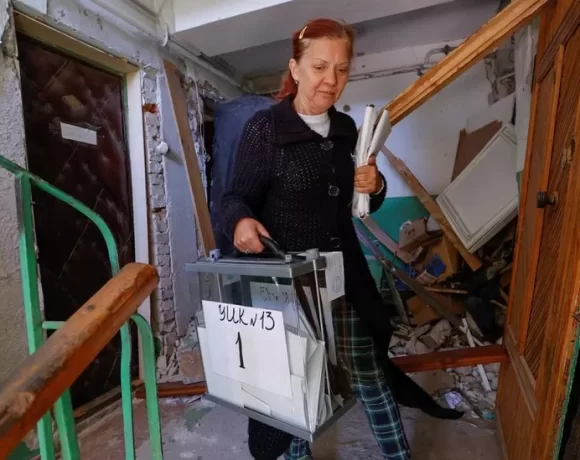
Tuesday is the final day of a ballot for Russian-held regions of Ukraine which the government in Kyiv and its Western allies dismiss as a sham.
According to the report, nearly four million people from the eastern regions of Donetsk and Luhansk, and the southern regions of Kherson and Zaporizhzhia, are being asked to attend polling stations and vote in so-called referendums on joining Russia.
This follows four days of early voting during which allegations of intimidation multiplied as election officials went house to house accompanied by armed guards.
The votes, called with just a few days’ notice, serve a deadly serious purpose as they will be used by the Kremlin to legitimize its invasion aims.
If Russia absorbs these regions, making up about 15% of Ukraine’s territory, it could take the war to a new and more dangerous level, with Moscow portraying any attempt by Ukraine to regain them as an attack on its sovereign territory.
There is now speculation that Russian President Vladimir Putin may announce the four regions’ annexation in a speech to a joint session of Russia’s parliament on Friday.
In March 2014 he announced that Ukraine’s Crimea Peninsula had been annexed just a few days after a likewise unrecognized referendum was held.
BBC/Taiwo Akinola
Subscribe to our Telegram Channel and join our Whatsapp Update Group
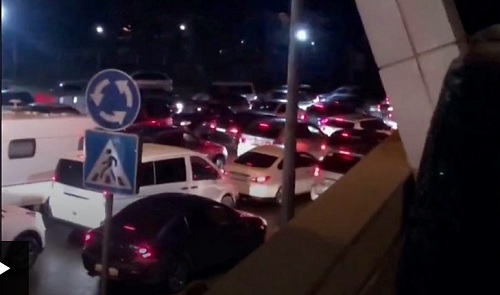
Russian men are attempting to leave the country to avoid a military call-up for the Ukraine war.
Queues have formed at border crossings since President Vladimir Putin announced a partial military mobilisation on Wednesday, which could see 300,000 people summoned to fight.
The Kremlin says reports of fighting-age men fleeing are exaggerated.
But on the border with Georgia, miles-long queues of vehicles have formed including men trying to escape the war.
Some of those heading into the neighbouring country have used bicycles to bypass lines of cars and evade a ban on crossing on foot.
One of these men, who did not want to be named, told the BBC’s Nina Akhmeteli that he had waited since 09:00 local time (05:00 GMT) on Thursday and managed to cross over late that evening.
Another man reported a 12-hour wait, citing the partial mobilisation as a reason for leaving Russia to continue his studies.
Georgia is one of the few neighbouring countries where Russians can enter without needing to apply for a visa. Finland, which shares a 1,300km (800 miles) border with Russia, does require a visa for travel, and also reported an increase in traffic overnight – but said it was at a manageable level.
Other destinations reachable by air – such as Istanbul, Belgrade or Dubai – have seen ticket prices skyrocket immediately after the military call-up was announced, with some destinations sold out completely. Turkish media have reported a large spike in one-way ticket sales while remaining flights to non-visa destinations can cost thousands of euros.
Germany’s interior minister signalled on Thursday that Russians fleeing the draft would be welcome in her country.
Nancy Faeser said deserters threatened by “severe repression” would receive protection on a case-by-case basis, following security checks. Lithuania, Latvia, Estonia and the Czech Republic struck a different tone, saying they would not offer fleeing Russians refuge.
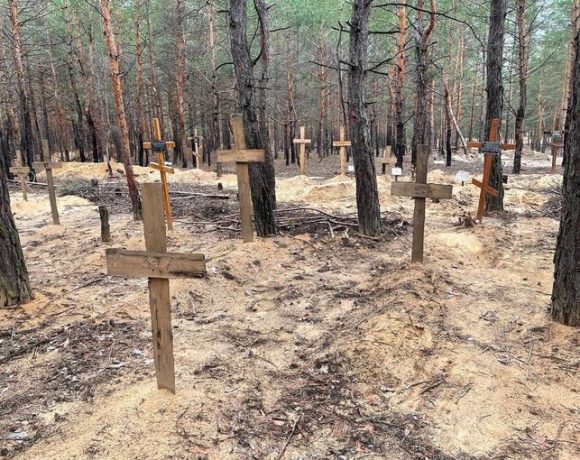
Ukraine says it has evidence of a mass grave in Izyum, the northeastern city recently freed from Russian occupation.
Regional police head Volodymyr Tymoshko told newsmen that more than 400 bodies were thought to have been buried there.
“Russia leaves death everywhere,” President Volodymyr Zelensky said, mentioning other reported mass graves found after Russian troops’ withdrawal.
It is not yet clear what happened to the victims, but some accounts have suggested many may have died from bombing and a lack of access to healthcare.
There are also signs that some of the graves could belong to Ukrainian soldiers.
Mr Tymoshko said exhumations would begin on Friday to get a clearer picture of the number of victims in the city, which was under Russian occupation for more than five months.
And in his address late on Thursday, President Zelensky said more “clear, verified information” would be presented on Friday to Ukrainian and foreign journalists.
“We want the world to know what is really happening and what the Russian occupation has led to. Bucha, Mariupol, now, unfortunately, Izyum,” he said.
The Ukrainian leader was referring to alleged mass graves found this spring in Bucha, near the capital Kyiv, and also near Mariupol – the key south-eastern Ukrainian port now occupied by Russian troops.
Andriy Yermak, the head of President Zelensky’s office, tweeted a photo of the alleged mass grave, also saying that more information was expected on Friday.
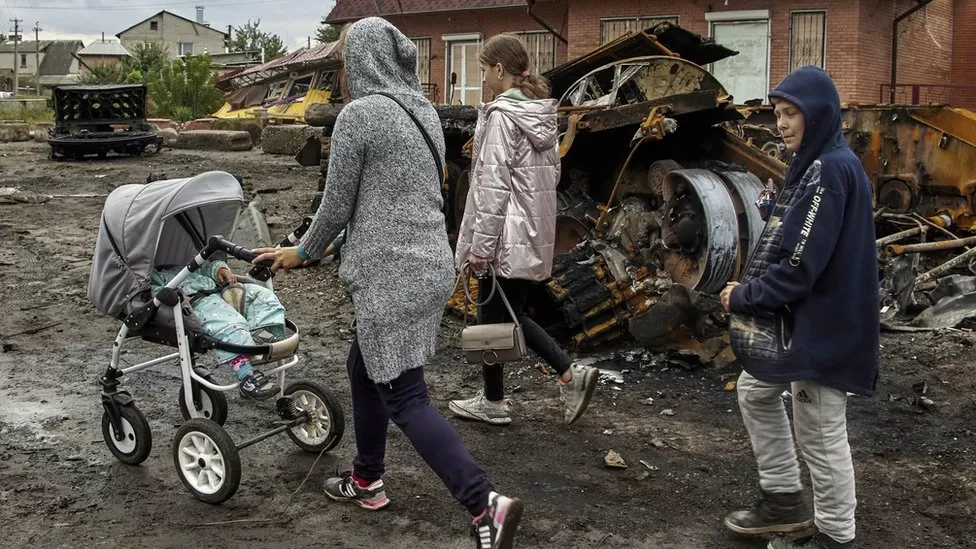
Much of Izyum lies in ruins, with one local politician telling reporters that up to 80 per cent of the town’s infrastructure is already destroyed, and bodies are still being discovered in the rubbles.
Izyum and a number of other cities in the Kharkiv region were liberated earlier this month during a swift Ukrainian counter-offensive that appeared to have surprised Russian troops and left them unprepared to defend their positions.
Ukraine says it has identified more than 21,000 possible war crimes – including killing civilians and rape – committed by Russian troops since President Vladimir Putin ordered a full-scale invasion of the country on 24 February.
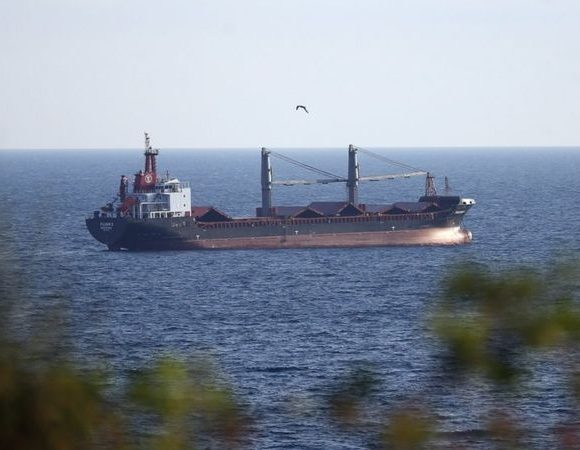
Four more ships carrying grain and sunflower oil have left Ukraine ports via a safe maritime corridor.
According to report, millions of tonnes of grain have been stuck in Ukraine due to Russian blockades, leading to shortages and higher food prices in other countries.
But last week the first ship left Ukraine’s ports since February.
The latest ships to set sail are bound for Turkey where they’ll be inspected as part of a deal reached with Russia and the United Nations.
They left on Sunday from the ports of Odesa and Chornomorsk, and will all travel through the Bosphorus strait.
After the inspections, two are then scheduled to dock in Turkey, while the others are headed for Italy and China.
Another empty ship arrived in Chornomorsk on Sunday afternoon, ready to be loaded with grain for export.
Under a deal brokered by Turkey and the UN last month, Russia agreed not to target ships which were in transit, while Ukraine said it would guide vessels through mined waters.
The deal, set to last 120 days, can be renewed if both sides agree.
The complex arrangement seems to be working, at least for now.
The success of this deal, a rare diplomatic breakthrough in this five-month-old conflict, is vital for Ukraine – and the rest of the world.
Twenty million tonnes of grain are stuck in the country, as a result of the blockade imposed by Russia on Ukrainian ports. If the deal holds, Ukraine expects to export up to three million tonnes of grain per month.
Ukrainian authorities say there are good signs that the grain exports are safe, and have urged companies to return to the country’s ports. The hope is that the exports will help ease the global food crisis while bringing in much needed foreign currency.
But fears persist. Ukraine’s President Volodymyr Zelensky welcomed the resumption of exports, but said security concerns remained.
The first ship to leave Ukraine last week – the Razoni – departed Odesa carrying 27,000 tonnes of corn bound for the Lebanese port of Tripoli.
However officials have said it will not dock in Tripoli on Sunday as planned.
The Ukrainian embassy in Lebanon told Reuters news agency on Sunday that the ship was “delayed”, with no details on the cause or an updated arrival date.
A Joint Coordination Centre which was set up to oversee the exports said the Razoni’s voyage would be a trial run, with its experience used to fine-tune procedures for the following voyages.
Foreign Minister Sergei Lavrov says, Russia’s military focus in Ukraine is no longer “only” the east of the country.
In an interview with Russian state media, he implied Moscow’s strategy had changed after the West supplied Ukraine with longer-range weapons.
He explained that, Russia would now have to push Ukrainian forces further from the front line to ensure its own security.
According to report, US had earlier accused Russia of preparing to annex parts of Ukraine.
Russia invaded Ukraine in February, claiming falsely that Russian-speakers in Ukraine’s eastern Donbas region had suffered a genocide and needed to be liberated.
Five months on, Russia has occupied parts of the east and south of the country, but it failed in its original aim of capturing Kyiv and has since claimed its main objective was the liberation of Donbas.
Since February, the West has supplied Ukraine with increasingly powerful weapons to use in its defence against Russian forces.
Mr Lavrov says that he had forced Russia to expand its objectives further.
“We cannot allow the part of Ukraine controlled by [Ukrainian President Volodymyr] Zelensky… to possess weapons that would pose a direct threat to our territory,” Mr Lavrov said in the interview with Margarita Simonyan – a well-known commentator on Russian TV and editor-in-chief of broadcaster RT.
“The geography is different now,” he said, naming the southern Kherson and Zaporizhzhia regions as Russia’s latest objectives. Moscow’s forces already occupy parts of both regions.
Mr Lavrov specifically referred to the Himars longer-range rocket system – supplied only recently by the US – with which Ukraine has had some success.
For two days running Ukrainian forces have used Himars to hit a key, strategic bridge in occupied Kherson, reports say. The Antonivskyi bridge is one of two bridges that Russia relies on to supply areas it has captured on the west bank of the Dnipro river, including Kherson city.
The Russian foreign minister described the West’s actions in giving weapons to Ukraine as an “impotent anger” and a “desire to make things worse”.
The US will increase its military presence across Europe as Nato agreed a “fundamental shift” in its response to Russia’s invasion of Ukraine.
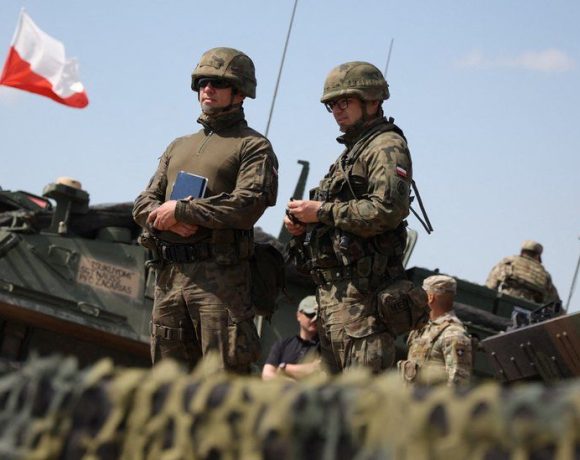
A permanent Army Headquarters will be created in Poland, while new US warships will go to Spain, fighter jets to the UK and ground troops to Romania.
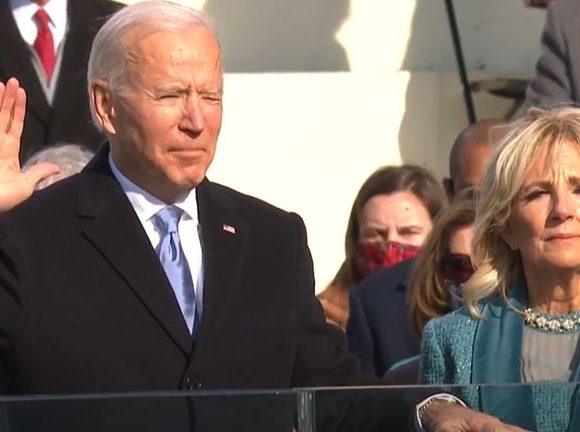
Mr Biden said Nato was “needed now more than it has ever been”.
According to Nato head, Jens Stoltenberg the alliance is having its biggest overhaul since the Cold War.
The new plan in response to Russia’s invasion will mean more than 300,000 troops at high readiness next year, up from the current level of 40,000.
Mr Biden told a summit in Madrid that Nato would be “strengthened in all directions across every domain land, air and sea”.
The UK’s Ministry of Defence (MoD) has also said it is significantly increasing the availability of forces to Nato’s collective defence, with more warships, fighter jets and land forces on standby, although the MoD said it would not give details on numbers as they are “militarily sensitive”.
The US announcement sees it shore up its presence across the continent but particularly in eastern Europe where the new permanent headquarters for its 5th Army Corps will be based.
Mr Biden repeated the alliance’s commitment to “defend every inch” of its territory, saying: “We mean it when we say an attack against one is an attack against all.”
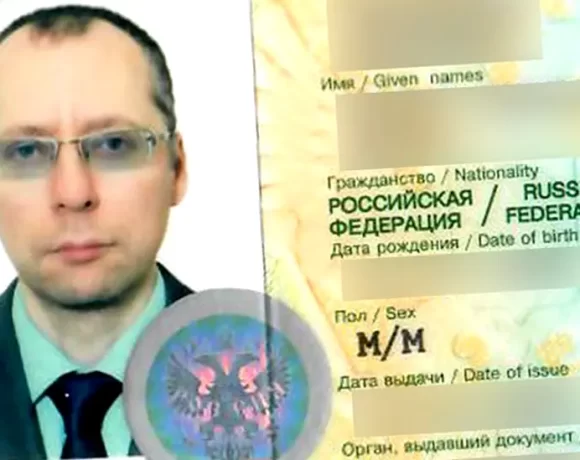
A Russian diplomat has quit his job in protest at the “bloody, witless” war “unleashed by Putin against Ukraine”.
Boris Bondarev, whose LinkedIn says he worked at the Russian mission to the UN in Geneva, told the BBC he knew his decision to speak out may mean the Kremlin now considers him a traitor.
But he stood by his statement which described the war as “a crime against the Ukrainian people” and “the people of Russia”.
Moscow has not yet commented on the resignation.
Russia has cracked down on those who are critical of or veer from the official narrative surrounding the war, which it refers to only as “a special military operation”.
In the letter posted on social media and shared with fellow diplomats, Mr Bondarev explained he had chosen to end his 20-year career in the service because he could no “longer share in this bloody, witless and absolutely needless ignominy”.
“Those who conceived of this war want only one thing – to stay in power forever,” he wrote.
“To achieve that, they are willing to sacrifice as many lives as it takes,” he continued. “Thousands of Russians and Ukrainians have already died just for this.”
The letter does not hold back over his former employer either, accusing Russia’s Foreign Ministry of being more interested in “lies and hatred” than diplomacy.
Speaking to the BBC, Mr Bondarev said he had “not seen any alternative” than to resign: “I don’t think it will change a lot, frankly, but I think it may be one little brick into the bigger wall which would eventually be built.”
Mr Bondarev revealed that the invasion had initially been met by colleagues with “happiness, delight, euphoria” at the fact Russia had “taken some radical steps”.
“Now they’re less happy with that, because we’re facing some problems, with the economy first of all,” he told the BBC. “But I don’t see that many of them would repent and change their views.
“They may become a little bit less radical, less aggressive quite a bit. But not peaceful,” he said.
In contrast, Mr Bondarev said in his open letter he had “never been so ashamed of my country” as he was on 24 February, the day the invasion began.
It is unclear if he is the first diplomat to resign from the mission, although no one else has spoken out publicly.
The US President, Joe Biden, says, Sweden and Finland have the full total backing of the country in their decision to apply for Nato membership.
Report says, both countries submitted their applications to be part of the Western defence alliance this week, marking a major shift in European geopolitics.
To join the alliance, the two nations need the support of all 30 Nato member states.
But the move by the Nordic nations has been opposed by Turkey.
Speaking alongside Swedish Prime Minister Magdalena Andersson and Finnish Prime Minister Sauli Niinisto at the White House on Thursday, Mr Biden called Sweden and Finland’s applications “a watershed moment in European security”.
New members joining Nato is not a threat to any nation,” he said. The president added that having two new members in the “high north” would “enhance the security of our allies and deepen our security co-operation across the board”.
Russia has repeatedly said it sees Nato as a threat and has warned of “consequences” if the block proceeds with its expansion plans.
Turkey has accused both Sweden and Finland of hosting suspected militants from the Kurdistan Workers’ Party, a group it views as a terrorist organisation.
However, both Nato Secretary-General Jens Stoltenberg and British Defence Minister Ben Wallace have expressed confidence that these concerns will eventually be addressed.
Mr Biden’s comments came as the US Senate voted to approve a new $40bn (£32bn) bill to provide military and humanitarian aid to Ukraine. It is the biggest emergency aid package so far for Ukraine.
The bill – which was passed by the House of Representatives with broad bipartisan support on 10 May – was expected to be passed earlier this week, but was blocked by Kentucky Republican Rand Paul over a dispute about spending oversight.
But the Republican’s Senate leader Mitch McConnell dismissed these concerns and told reporters that Congress had a “moral responsibility” to support “a sovereign democracy’s self-defence”.
“Anyone concerned about the cost of supporting a Ukrainian victory should consider the much larger cost should Ukraine lose,” Mr McConnell said
It would be recalled that, Defence Secretary Lloyd Austin and Secretary of State Antony Blinken urged Congress to approve the package and warned that the US military only had enough funds to send weapons to Kyiv until 19 May.
Ukraine’s President Volodymyr Zelensky praised the aid package as “a significant US contribution to the restoration of peace and security in Ukraine, Europe and the world”.
The package brings the total US aid delivered to Ukraine to more than $50bn, including $6bn for security assistance such as training, equipment, weapons and support.
Another $8.7bn will be allocated to replenish stocks of US equipment already sent to Ukraine.
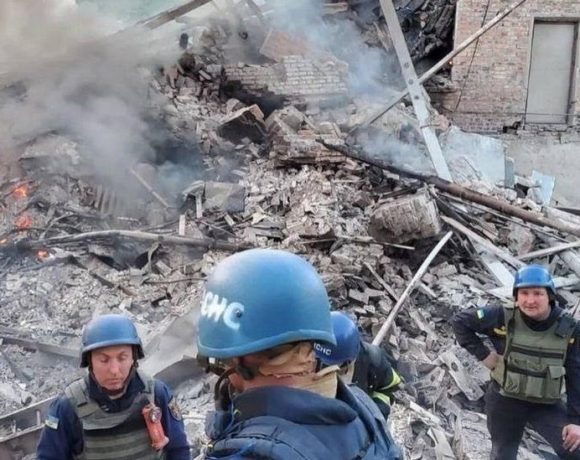
Dozens of people are feared dead after a bomb hit a school in east Ukraine, where government forces are battling Russian troops and separatists.
Luhansk region’s governor, Serhiy Gaidai, confirmed two deaths, saying 60 people were feared dead under the rubble of the school in Bilohorivka.
About 90 people had been sheltering in the building and 30 were rescued, seven of them wounded, he added.
Mr Gaidai said a Russian plane had dropped the bomb on Saturday.
His accusation could not be verified independently and there was no immediate response from Russia.
Luhansk has seen fierce combat as Russian troops and separatist fighters seek to surround government forces, just over two months since the start of the Russian invasion.
The blast brought down the building which caught fire and it took firefighters three hours to extinguish the blaze, according to the governor, writing on Telegram.
He said almost the entire village had been sheltering in the basement of the school.
The final death toll would only be known when the rubble had been cleared, the governor said.
Since the invasion began on 24 February, the UN has recorded at least 2,345 civilian deaths and 2,919 injured in Ukraine, the High Commissioner for Human Rights said in an update last month. Thousands of combatants are also believed to have been killed or injured on both sides.
More than 12 million people are said to have fled their homes since the conflict began, with 5.7 million leaving for neighbouring countries and another 6.5 million people thought to be displaced inside the war-torn country itself.
Much of Luhansk, which is part of the Donbas region, has been under the control of the separatists for the past eight years.
Dozens of civilians have been evacuated from Mariupol to both Russia-controlled and Ukraine-controlled territory after weeks under siege.
According to report, some have left the Azovstal steelworks, the last holdout of Ukrainian troops in the strategically significant city.
Russia said dozens of civilians have arrived in a village it controls.
Ukrainian President Volodymyr Zelensky said a large group is also on its way to Zaporizhzhia, which Ukraine maintains control of.
“The first group of about 100 people is already heading to the controlled area,” he tweeted. “Tomorrow [Monday} we’ll meet them in Zaporizhzhia. Grateful to our team! Now they, together with UN, are working on the evacuation of other civilians from the plant”.
The United Nations confirmed that a “safe passage operation” had begun to evacuate the citizens on Saturday, and that it was involved alongside the Red Cross.
The evacuation convoy arrived on Saturday morning, the UN said – but did not give details on where people were being taken or how many had left, saying that sharing details could jeopardise the safety of the operation.
Reuters footage from the complex show civilians – mainly women and children – being helped to walk over piles of rubble, and boarding a bus with missing windows.
One woman with a six-month-old baby said they had been trapped in the steelworks for two months. Another, older woman says they were running out of food.
Ukrainian officials said Russian shelling resumed on the steel plant after Sunday’s brief ceasefire.
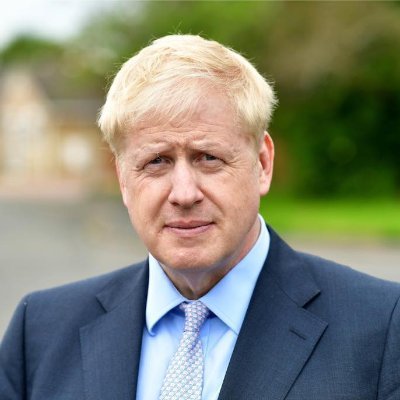
Russia has banned Prime Minister Boris Johnson and other senior ministers from entering Russia over the UK’s “hostile” stance on the war in Ukraine.
Foreign Secretary Liz Truss, Defence Secretary Ben Wallace and 10 other senior politicians – mostly members of the Cabinet – have also been barred.
Moscow said the decision had been made in retaliation to the UK’s sanctions against it since it invaded Ukraine.
In March, Moscow imposed a similar ban against US President Joe Biden.
Russia’s foreign ministry said: “London’s unbridled information and political campaign aimed at isolating Russia internationally, creating conditions for containing our country and strangling the domestic economy” were responsible for its decision.
It added: “In essence, the British leadership is deliberately aggravating the situation around Ukraine, pumping the Kyiv regime with lethal weapons and coordinating similar efforts on the part of NATO.”
It would be recalled that earlier in the week the UK and US governments had announced further sanctions on Russia.
The sanctions included financial measures designed to damage Russia’s economy and penalise President Putin, high-ranking officials, and people who have benefited from his regime.
Chairman, Nigerians in Diaspora Commission, NiDCOM, Mrs. Abike Dabiri-Erewa says some Nigerian students who fled War torn Ukraine to neighboring countries of Poland and Hungary are now in detention.
A development she said was unacceptable by the Federal Government.
She made this known in Abuja at the commencement of a two day Psychosocial Trauma Clinic For Ukraine returnees organized by the National Commission For Refugees Migrants and Internally Displaced Persons, Nigerians in Diaspora Commission and Project Victory Call Initiative, PVC Naija.
Mrs Dabiri-Erewa explained that the psychosocial support programme would be extended to other parts of the country for all returnees who are in need of the service.
The Federal Commissioner National Commission for Refugees Migrants and Internally Displaced Persons Hajiya Imaan Suleiman Ibrahim said the commission would provide it offices across the country for the psychosocial support to get to those who needed them.
The Student Union President of Nigerian Students In Ukraine Fehintola Moses appreciated the Federal Government especially the minister of Foreign Affairs Mr. Geoffrey Onyeama who he said personally reached out to him, the chairman of NiDCOM Mrs Abike Dabiri-Erewa and the National refugees commission for their efforts in ensuring that Nigerian students were safely evacuated back home.
Mr. Fehintola who narrated his experience during the Ukraine war, appeal to the Federal Government for more interventions for them to continue with their studies.
He appealed to Nigerians to embrace peace and to say no war.
The convener Project Victory Call Initiative PVC, volunteers for the programme, Dr. Bolaji Akinyemi said four psychologists were mobilized from sokoto and Plateau states for the first phase of the programme.
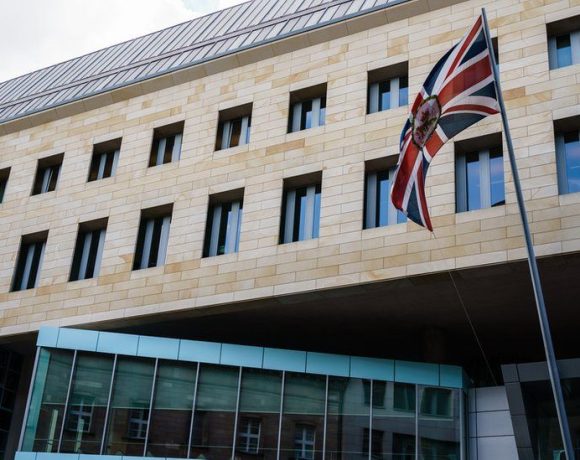
A security guard at the British embassy in Berlin suspected of spying for Russia has been extradited to appear in court charged with nine offences under the Official Secrets Act.
David Ballantyne Smith, 57, is due to appear at Westminster Magistrates’ Court on Thursday.
The UK national was arrested by German police on 10 August.
The offences are alleged to have happened between October 2020 and August 2021.
Mr Smith, who had been living in Potsdam, in Germany, was flown back to the UK on Wednesday ahead of his appearance at Westminster Magistrates’ Court.
The Metropolitan Police said the nine charges related to the collection and communication of information useful to the Russian state.
Nick Price, head of the special crime and counter-terrorism division of the Crown Prosecution Service (CPS), said Mr Smith was accused of seven offences of collecting information with the intent of sending it to the Russian authorities, one of attempting communication and one of providing information to a person he believed was a member of the Russian authorities.
He said the CPS had worked closely with its German counterparts to bring Mr Smith back to the UK after obtaining an extradition warrant.
Air Peace and Max Air may begin the evacuation of Nigerians from Ukraine on Wednesday, the Federal Government has announced.
The Minister of Foreign Affairs, Geoffrey Onyeama, stated this on Monday during a meeting with the Speaker of the House of Representatives, Femi Gbajabiamila.
Onyeama said the evacuation will be done following the approval of President Muhammadu Buhari.
With Ukraine still at war with Russia and a no-fly zone effective across the country, the evacuation is expected to take place from neighbouring countries.
Earlier on Monday, the Ministry of Foreign Affairs said hundreds of Nigerians have been received in Poland, Hungary and Romania by Nigerian embassies in those countries.
Nigerians have continued to flee Ukraine after Russia invaded the East European nation last week.
Talks commenced between both parties on Monday but fighting has continued in Ukrainian cities.
Many Nigerian students in Ukraine have called for help in leaving the conflict hotspot.
The nation’s embassy in Ukraine initially asked citizens to take responsibility for their own security but have since reversed course.
On Monday, the Ministry of Foreign Affairs said 130 Nigerians have been received by the country’s embassy in Romania.
In a statement, the ministry explained that it has also provided accommodation for them while arrangements are being made to take them back home.
“Also, officials at Budapest, Hungary have received and accommodated 74 Nigerians safely, where they are being documented for subsequent travel arrangements back to Nigeria,” the statement, signed by the ministry’s Permanent Secretary, Ambassador Gabriel Aduda, read.
According to him, another batch of about 200 Nigerians is expected in Budapest later in the day. He also said 52 persons have been received in Warsaw, Poland. Of the number, 23 are being processed at the Polish Government Reception Point at Hala Kijowska.
“The camp is well organised with beds and beddings, food, heating, clothing, and medicals for evacuees,” the statement added.
“We assure Nigerians that all hands are on deck and arrangements are being put in place to effectively evacuate our citizens, in safety and dignity.”
The Federal Government’s recent move was a sequel to the Russian invasion of Ukraine about five days ago. On Sunday, the ministry said the Hungarian and Romanian governments have approved visa-free access to Nigerians coming from the Eastern European nation.
“For now, movement to the Hungarian Zahony border and Romanian Suceava, Tulcea, Satu Mare County & Maramures borders is advised, as they have approved visa-free access to all Nigerians coming from Ukraine and arrangements for accommodation and feeding before evacuation is arranged,” Aduda said.