Education

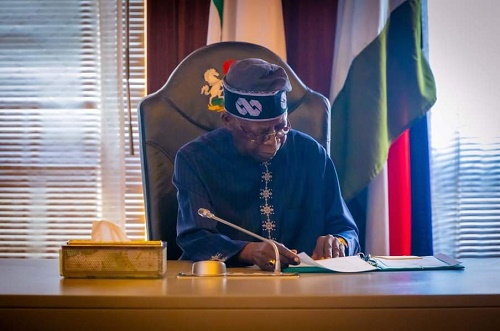
President Bola Tinubu has approved the appointments of at least 555 persons to serve as Pro-chancellors/Chairmen and members of Governing Boards of 111 Federal universities, Polytechnics and Colleges of Education.

This followed Tinubu’s assent to a list of nominees selected by the Ministry of Education.

An advertorial by the Education Ministry showed the appointment of a chairperson and four members for each of the institutions.

It was signed by the ministry’s Permanent Secretary, Mrs. Didi Esther Walson-Jack.

“The inauguration and retreat for the Governing Councils will take place on Thursday, May 30 and Friday, May 31, 2024, at the National Universities Commission, 26 Aguiyi Ironsi Street, Maitama, Abuja. Both events will commence at 9:00am daily,” said Walson-Jack.

When contacted for confirmation, the Presidency said the list emanated from the Ministry of Education.

“This is from the Federal Ministry of Education…they make the nominations and forward them to the President to sign. But they are at liberty to release it from their end,” the President’s Special Adviser on Information and Strategy, Bayo Onanuga, told our correspondent on Saturday.

The appointments come days after the Academic Staff Union of Universities had threatened to embark on another strike, potentially disrupting the academic calendar and causing further setbacks in the country’s higher education sector.

The Union, on Tuesday, decried the failure of the Federal Government to appoint Governing Councils for federal universities.

The Union also faulted what it described as the nonchalant attitude of the President Bola Tinubu-led administration to matters about academics in Federal universities.

The body of academics, during a briefing at the University of Abuja, also faulted the 35 per cent salary increment for professors and the 25 per cent salary increment for other academics in the university system.

Punch/ Adebukola Aluko

Subscribe to our Telegram and YouTube Channels and also join our Whatsapp Update Group
Education

Federal Executive Council, FEC, has approved the establishment of 37 new universities across the country.

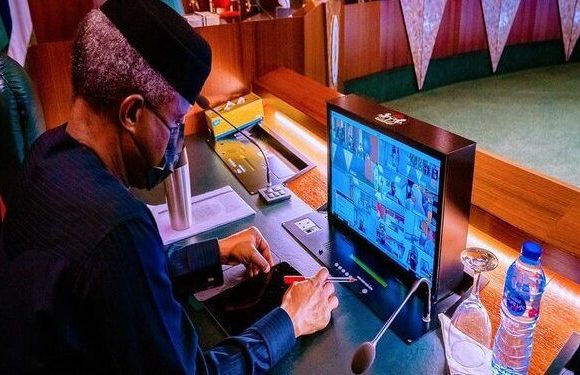
Briefing State House Correspondents after the extraordinary meeting presided over by Vice President, Professor Yemi Osinbajo at the Presidential Villa Abuja, the Minister of Education, Adamu Adamu said the approval followed a memo presented to FEC by the ministry.

He said the approval became imperative based on the importance of Education to the economic development of the country.

FEC also approved the Universal Implementation of the Employee Compensation Act, ECA, 2010.

The Minister of Labour and Employment, Dr Chris Ngige said the law was operated by the Nigeria Social Insurance Trust Fund, NSITF, noting that it was a replacement of the old Employee Compensation Act that was known as “Workmen Compensation.”

According to him, the Council approved it for universal implementation, meaning that apart from the private sector, which is already implementing, the public sector, which comprises the federal, state, and local governments, will adopt it for the protection of their workers.

On the warning strike threatened by the Nigerian Association of Resident Doctors, Dr. Chris Ngige said it was unnecessary since the government was already engaged with the Nigerian Medical Association, their umbrella body.

FRCN Abuja/Adetutu Adetule

Subscribe to our Telegram and YouTube Channels also join our Whatsapp

Education

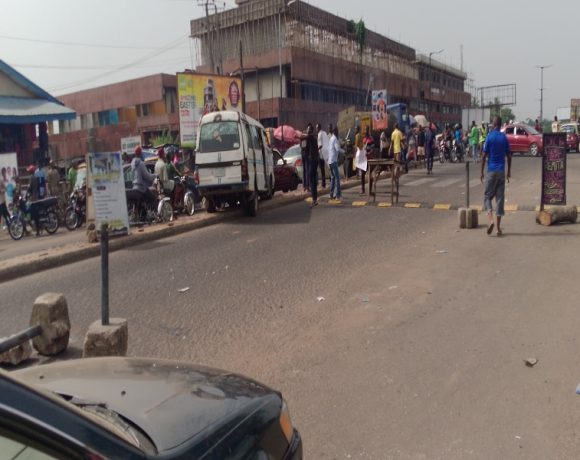
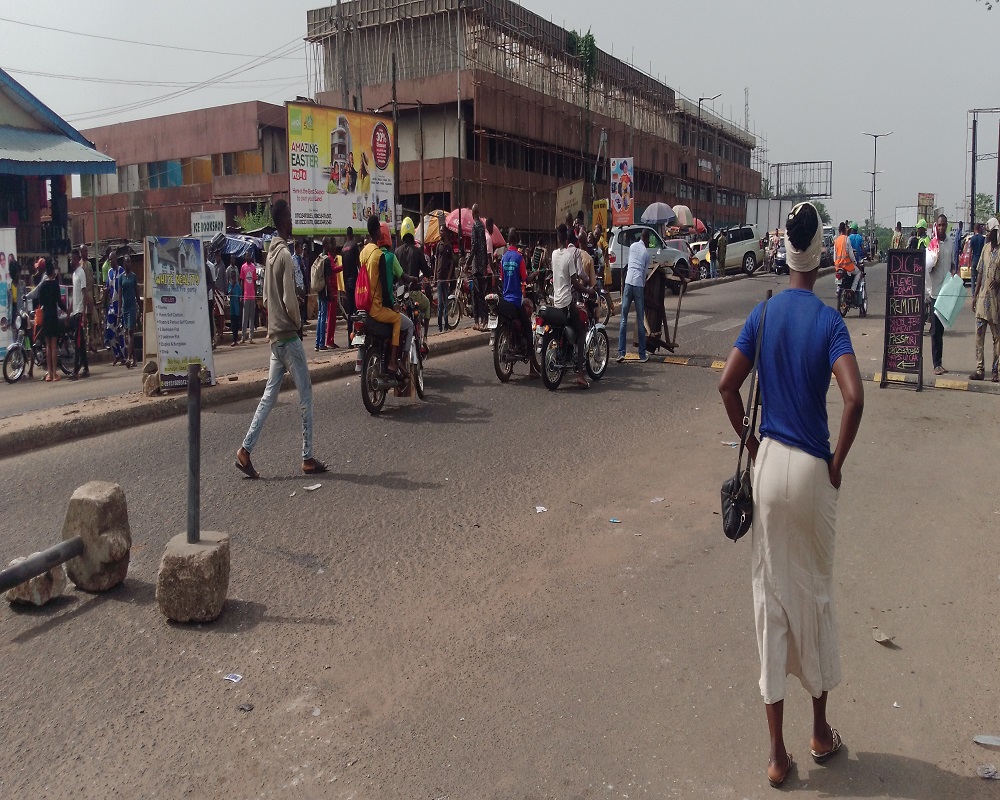
Students of the University of Ibadan have continued their protest with the blockage of the Sango-Ojoo, Bodija road axis.
 

The students were protesting the unresolved issues between the Academic Staff Union of universities, ASUU, and the Federal Government leading to the closure of federal universities in the country three months ago.
 

Speaking with Radio Nigeria, one of the leaders of the protesting student, a 200 Level student in the Department of Sociology, Mr. Solomon Emiola, said Federal Government has shown a lackadaisical attitude towards the demands of their lecturers, saying the strike had affected their study duration in the university.

“We are tired. We have stayed at home for over three months at home doing nothing. We are tired of this protracted ASUU strike that has gone on for over 85 days. we are doing nothing at home”

Mr. Emiola said various avenues for peaceful dialogue had been engaged with Federal Government in a bid toward finding an amicable resolution to the crises.

 He said the protest would be sustained until the demands of the striking lecturers were met.

The protest almost turned violent yesterday when a military van arrived at the scene and forced its way through the protesters.

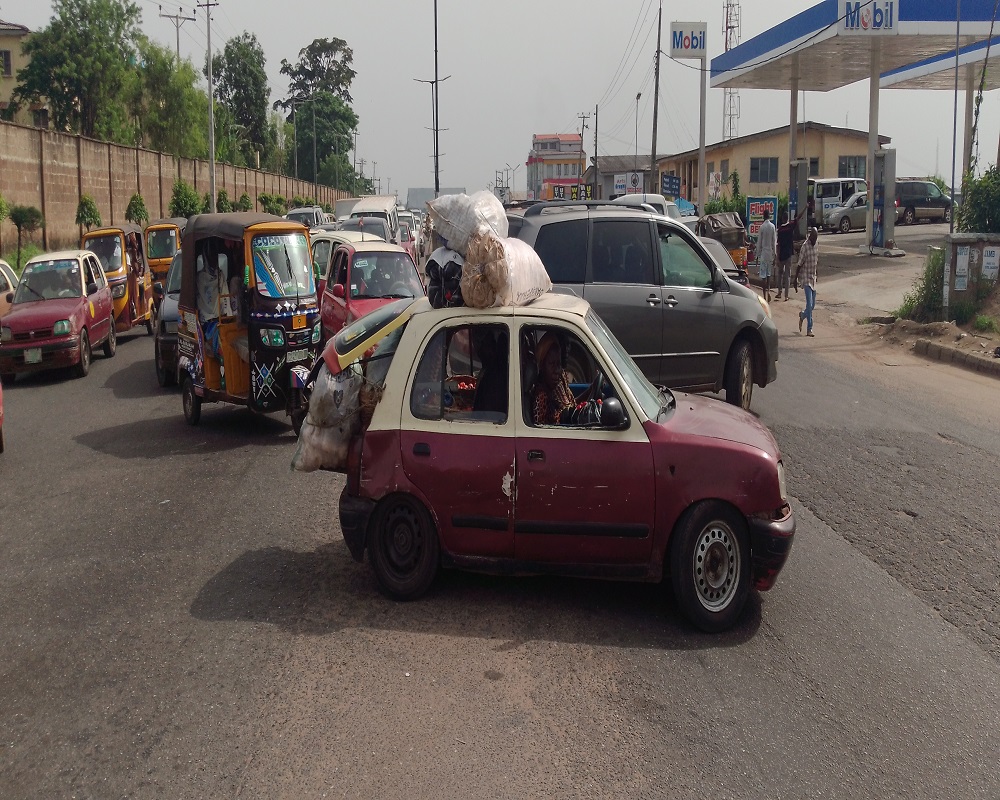
The blockage of the highway by the student had not only led to many passengers being stranded but also built heavy traffic within Orogun and Agbowo communities as motorists explored alternative routes within the neigbouring communities

Rotimi Famakin

News Analysis

2020 would ever remain indelible in the mind of Nigerian Universities Students for a long time to come as they spent most part of the year at home.

The long spell was the consequence of an intractable dispute between the Federal Government and Academic Staff Union of Nigerian Universities, ASUU, between March and December.

ASUU and Federal Government had spent the period squabbling on existing unfulfilled agreements, and issue of enrolment into IPPIS payroll, which ASUU declined, insisting instead that the government implement the union’s locally-developed University Transparency Account System, UTAS.

The duration of the 2020 standoff between ASUU and the Federal Gvernment was the longest in the history of industrial dispute between the two sides.

An analysis of strikes in the nation’s ivory towers since the advent of democratic governance shows that lecturers had down tools on fifteen occasions, tallying to a period of fifty months, or four years and two months altogether.

However, last year’s strike situation was further compounded by the coronavirus outbreak, which would have brought an enforced stay-at-home even if ASUU and government had resolved their dispute through dialogue.

be that as it may, it is a great relief that both government and ASUU sheath swords on December 24 last year, and the latter agreed to get back to classes yesterday  going by the directive of the National Universities Commission, NUC.

The present pact as stated by ASUU National President, Dr. Biodun Ogunyemi that both parties had signed a memorandum of understanding on  how to expedite action on the test processes for deployment of UTAS, must be sustained as academic activities commence..

It is not an understatement to say Nigerian education remains poorly funded, falling below the United Nations Educational, Scientific and Cultural Organization’s, UNESCO, recommendation of fifteen percent to twenty percent of annual budgets for education.

As things stand now, with ASUU calling off its strike, undergraduates have nine months extension to the duration of their courses while some Universities are yet to hold post UTME for 2019/2020 session.

In the same vein, candidates, who passed Unified Tertiary Matriculation Examination, UTME, conducted by the Joint Admission Matriculation Board, Jamb, are also waiting in the wings.

In view of this, it becomes imperative for ASUU and Federal Government to work assiduously to ensure the success of the renegotiation exercise.

As the saying goes that it is the grass that bears the brunt when two elephants tango, government and ASUU should give all it takes to ensure that students and parents are not subjected to another trauma of strike this academic session.

Where expectations remain to be fully met within the timeline set in the existing pact, such should be resolved with mutual understanding and patience, while government on its part should sufficiently exhibit openness to win the trust of ASUU.

Similarly, the Federal Government should give all it takes to resolve the agitations of the Non-Academic Staff Union of Universities, NASU, and Senior Staff Union of Universities, SSANU, as their body language poise for eventual full blown industrial action.

State Governments across the country should also avoid actions that could trigger industrial actions by tertiary institutions in their domains while staff in the ivory towers should explore all avenues for dialogue.

The education sector cannot afford more seasons of protracted strikes as it amounts to mortgaging the future of the students, and by extension clogging the nation’s wheel of progress.

Simeon Ugbodovon

Education

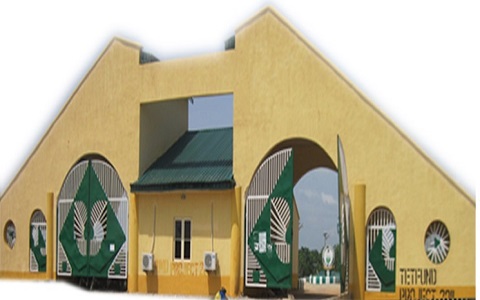
President Muhammadu Buhari has challenged Universities in Nigeria to play leading role in proffering solution to social, economic and security problems across the country.

President Buhari gave the challenge at the second combined convocation ceremony of the Federal University Oye Ekiti, FUOYE.

Radio Nigeria correspondent Oriola Afolabi brings the details.

Oriola Afolabi’s report on 2019 Combined Convocation of FUOYE

Oriola Afolabi