Lifestyle

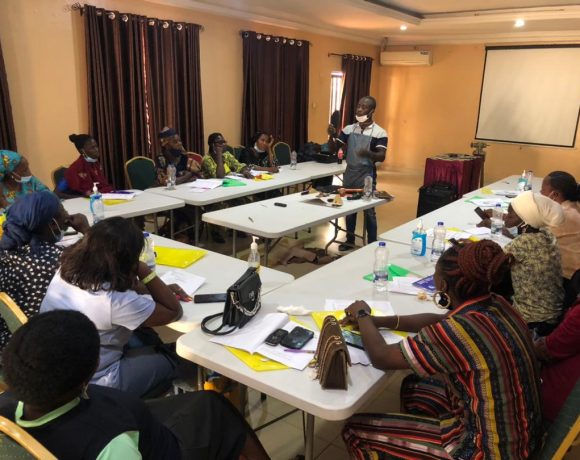
In its bid to further inform and educate citizens, the UNPF in collaboration with Oyo State Ministry of Justice and Centre for Population and Reproductive Health organised a one day sensitization workshop on Violence against persons Prohibition Law for Civil Society and Religious organisation at the Development Support Centre, Iyaganku, on the 21st of December, 2021.


In her welcome address, Mrs. Tolu Babawarun, Senior Project Coordinator at the Centre for Population and Reproductive Health, said at the end of the workshop, participants should be able go home with the knowledge that is needed to not only understand violence in its entirety but also to better understand how to seek help and the option that are available. She said the participants are keys to identification, provision and getting Justice for survivors.

She also said the participants are expected to pass down the knowledge gained during the workshop.


The lecturer at the workshop, Mrs. Modupe Awosenusi speaks on the need for people to be aware of the laws that govern the Violence Against Persons Prohibition Act of Nigeria.

The facilitator urged participants to take the provisions of the Act to the grassroots to sensitize individuals, friends, family and other members of the community on the need to know about the ACT.


Participants said they were happy to be involved in the workshop.
Mrs. Olufunke Hamilton from the Women Wing of the Christian Association of Nigeria, Oyo State affirmed the importance of one knowing his or her right and when they are being infringed upon.

Mrs. Hamilton said she could confidently be a voice for people whode rights are being violated.


Also, Pastor Ojetunde Abraham Mojisola, President of All Nigeria Confederation of Principal of Secondary Schools, (ANCOPS), Oyo State, asserted that saving the lives of women and girls translate to the protection of the future of any country.


He also affirmed that participating in the workshop was an eye opener, according to him, having an understanding of the ACT is key to upholding the rule of law.


He promised to pass the knowledge acquired from the workshop to his fellow colleague in ANCOPSS.

Olumide Ogunbiyi

Health

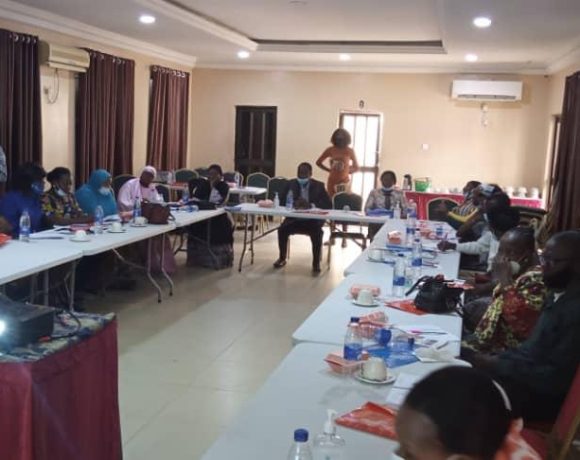
A two day workshop on the need to sensitize Judges and Magistrates in Oyo State in the implementation of the Violence against Person Prohibition law organized by the Centre for Population and Reproductive Health and UNPF in collaboration with Oyo State Judiciary came up at the Kakanfo Inn.


Speaking after the workshop, the Deputy Chief Registrar, Family Court of Oyo State Judiciary, Mrs. Durosharo Tijani stated that she attended the workshop in her capacity to assist in the reduction or total elimination of crime against persons, both in Oyo State and Nigeria, by extension.


According to the Deputy Chief Registrar, who had been involved in similar workshops, where issues of violence against people were treated and condemned in its entirety, reducing or completely eradicating violence against persons in Nigeria is key to the growth and development of the country.


She tasked stakeholders on the need to ensure adequate compensation for victims of violence in Nigeria through the law.


While fielding questions from journalists after the workshop, the Deputy Chief Registrar, who was impressed by the physical presence of a survivor of violence, who narrated his ordeal after suffering from violent acts in the state, appealed to people who have suffered similar fates to come out and express their feeling. Mrs. Tijani, who was confident that the workshop would galvanize people, who have been abused in one way or the other to speak up against such acts, would surely be confident to reach out to the family court for necessary protection under the law when their rights are being violated.


Mrs. Tijani who called for the setting up of special courts to thrash issues of violence against persons in Oyo State, just as it obtains in Lagos State, said it would be a win – win situation for all and sundry.


The Deputy Chief Registrar enjoined organizers of the workshop to excercise due diligence in collaborating with the police and other security personnel, saddled with investigation, in order for them to do a thorough job before coming to the court which is seen as the last hope of the common man to file proceedings and seek redress.


If the courts are approached, Mrs. Tijani assured that justice would be served to protect the mental capacity of victims of violence while also protecting the sanctity of the Nigerian court.
Olumide Ogunbiyi

Lifestyle

The United Nations Population Fund (UNPF) and the Centre for Population and Reproductive Health (CPRH) in collaboration with Oyo State Ministry of Health and Ministry Of Women Affairs and Social Inclusion organised a 3-day training workshop on how to produce Hair cream, moisturizers, slippers, fix nails and many more for survivors of Gender based violence (GBV) and Female Genital Mutilation (FGM) in order to imbibe the knowledge and abilities to create their own source of income and be self reliant.


Mrs Tolu Babawarun, Senior Project Coordinator, CPRH, said they realise that most of the survivors don’t have tangible means of livelihood to support themselves, and so the workshop envisioned to train and give skills to survivors of GBV and FGM to ensure are able to stand on their feet financially and sustain themselves, this is to help them to relieve the issues they face and not to be vulnerable again.


Folashade Bello, a participant at the training said she was very happy to be part of the workshop.

She affirmed that, the moment she set up her own business and start making money, she will be able to contribute to the growth and development of her family and the society at large.

She was also grateful to the organiser of the training, UNPF and CPRH as well as Oyo State Ministry of Health and Ministry of Women Affairs and social inclusion.

Olumide Ogunbiyi

News Analysis

Recently, the National Population Commission, NPC, predicted that the continued closure of schools across the country due to coronavirus might lead to an increase in teenage pregnancy, abortion and the number of early school dropout.

The acting Executive Chairman of the NPC, Dr Tayo Oyetunji, said there had been a noticeable increase in gender-based violence ranging from rape to physical and emotional assaults on girls.

Although, the country conducted its last population census in 2006, the 2006 population and housing census put the nation’s population at one hundred and forty million and since then, estimates had been used to update the country’s growing population every year.

In the 2018 Nigerian Demographic and Health Survey that was conducted by the NPC in conjunction with the Federal Ministry of Health, World Health Organisation, WHO and the United Nations Population Fund, UNPF, among others, which was released last year, reveals a troubling trend which must be checked.

An astronomical increase in population could deepen poverty, escalate violence and worsen unemployment.

According to the survey, Nigeria is estimated to be two hundred and six million people with the birth rate put at five point three children per woman with Katsina state having the highest at seven point three children per woman.

The survey found that forty-four percent of teenage girls with no education have begun childbearing, while only one percent of teenage girls with more than secondary school education have given birth.

While Lagos has the lowest rate of teenage pregnancy at just one percent while Bauchi has the highest at forty-one percent.

According to the United Nations Sexual and Reproductive Health Agency UNFPA’S “World Population Report 2020”, thirty-three thousand Nigerian girls under the age of eighteen will be forced into marriage, usually to much older men.

One in five females married today in Nigeria is underage.

About nineteen percent of women between fifteen and nineteen years have begun child bearing while about fourteen percent would have given birth and four percent are pregnant with their first child.

It is common knowledge that the more educated a woman is, the fewer children she will bear.

It is pertinent therefore to increase the enrolment of girl child in primary and secondary schools especially in the most vulnerable areas.

Unfortunately, about eleven northern states are yet to domesticate the Child Rights Act despite its obvious benefits for children which include being unable to get married till the age of eighteen as girls stay longer in school.

Sadly, Nigeria has not been able to address the root causes of population explosion, which include polygamy, child marriage and low prevalence of contraception.

For instance, a motion moved by a federal lawmaker in the Eighth National Assembly to implement effective population management policy degenerated into a religious debate and failed to achieve its intended outcome. 

To mitigate the effect of increasing population therefore, Nigeria’s modern contraceptive prevalence rate of twelve per cent for married women and twenty-eight percent for sexually active unmarried women is still too low and needs to be scaled up. 

Saudi Arabia, one of the world’s most conservative countries, has placed a ban on marriage of persons below the age of eighteen.

State governments must also stop the practice of spending public funds in sponsoring mass weddings.

Addressing birth rates through a mix of women empowerment, education opportunities, birth control clinics and public enlightenment will make a difference.

Fawzeeyah Kasheem

News Analysis

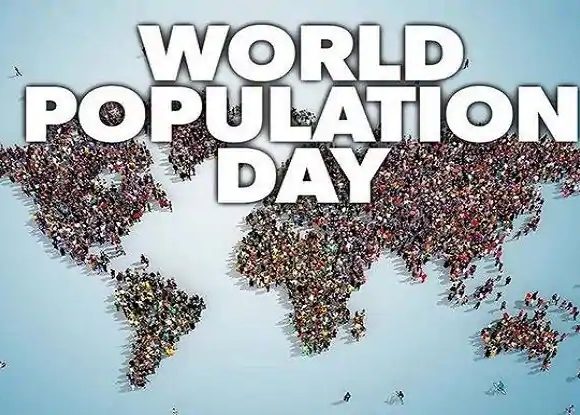
World Population Day is celebrated on the 11th of July every year.

It aims to increase people’s awareness on various population issues such as the importance of family planning, gender equality, poverty, maternal health and human rights.

World Population Day, which seeks to focus attention on the urgency and importance of population issues, was established by the then-governing council of the United Nations Development Programme, UNDP, in 1989.

This year’s World Population Day calls for global attention to the unfinished business of the 1994 International Conference on Population and Development.

The largest countries in the world in terms of population are China and India, with both countries now having population of well over a billion.

The United States comes in third with just under 325 million residents.

According to Worldometer elaboration of the latest United Nations data, the current population of Nigeria is over two hundred and six million as of Tuesday, July 7, 2020.

The theme for this year’s celebration is to raise awareness of women’s and girls’ needs for sexual and reproductive health and vulnerabilities during the pandemic.

No doubt, the Covid-19 crisis has taken a staggering toll on people, communities and economies everywhere.

Women, who account for the largest share of front-line health workers, for example, are disproportionately exposed to the coronavirus.

As countries are on lockdown and health systems struggle to cope, sexual and reproductive health services are being sidelined and gender-based violence is on the rise.

A recent research conducted by United Nations Population Fund, UNPF, highlighted that if the lockdown continues for six months with major disruptions to health services, then forty-seven million women in low-and middle-income countries may not be able to access modern contraceptives resulting in seven million unintended pregnancies.

Also, thirty-one million additional cases of gender-based violence can also be expected, while there is a great tendency of two million cases of female genital cutting and thirteen million child marriages between 2020 and 2030.

Now is the time for the federal government to underscore the importance of accurate population data not only for development, but also for addressing the nation’s health emergencies, such as Covid-19.

The various programmes of the federal government at putting smiles on the faces of vulnerable women in the Covid-19 era should be commended and there is need to intensify efforts at letting the programmes reach every woman at the grassroots.

Governments need up-to-date knowledge of population densities in major cities, as these are locations of higher transmission of the virus.

There must be measures to address gender-based violence and child protection in Covid-19, response and recovery plans and ensure that plans are gender and age responsive.

All stakeholders including the girl and youth-focused groups should be safely and meaningfully involved in the development of plans, which will put an end to the various challenges facing women and girls.

Olaolu Fawole