Human Angle

By Oghenero Eghweree

The Delta State Child’s Rights Implementation Committee says the body will partner with the state government and relevant stakeholders towards achieving its mandate of promoting the enforcement of laws aimed at protecting children and adolescents from violence and abuse.

This was part of resolutions reached in Asaba, the state capital follow a meeting of members of the committee, which include representatives of the clergy, the media, and the ministries of justice, health and education.

The Chairman of the Committee and Permanent Secretary, Delta State Ministry of Women Affairs Mrs. Kevwe Agas, noted the Child’s Right Advocacy committee will also solicit the support of traditional institutions to strengthen the protection of children at the community level.

The Chairman announced that plans have been perfected to replicate the Child Rights Implementation Committee in all twenty five local government areas of the state.

Members of the Child’s Rights Implementation Committee also decried the rise in moral decadence among children in some basic schools, stressing the group will embark on sensitization visit to schools aimed at reversing the trend.

Subscribe to our Telegram and YouTube Channels also join our Whatsapp Update Group


Feature

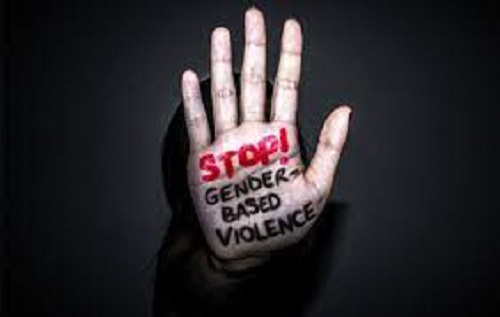
Funmi Adekoya in this piece examines sexual and gender-based violence and Child Early and Forced Marriage as social menace that require concerted efforts to checkmate

Sexual and Gender-Based Violence, SGBV, is any harmful act perpetrated against a person’s will, and that is based on socially ascribed differences between male and female.

These include rape, domestic violence, sexual exploitation, trafficking in persons and harmful traditional practices.

According to data from the Nigerian National Population Commission, NPC, Gender Based Violence, experienced by Nigerian women throughout their lifetime, from either their present husband, is put at 19% for demonstrative or emotional violence, 14% for physical violence, and 5% for sexual abuse.

Also, data on different forms of violence against women submitted by United Nations (UN) human rights bodies shows that 22.3% women experience Lifetime Physical and/or Sexual Intimate Partner Violence, while 13.8% experience Physical and/or Sexual Intimate Partner Violence in the last 12 months. The record also indicates that Child Marriage is 43.4%, Female Genital Mutilation/Cutting is 19.5%.

Ending Sexual and Gender-Based Violence (SGBV) and Child Early and Forced Marriage (CEFM) are complex and multifaceted tasks that require collective efforts from individuals, communities, governments, and organizations.

However, identifying and addressing the underlying factors that contribute to SGBV such as poverty, unequal power dynamics, and lack of access to resources and education, is key to mobilizing communities to actively address SGBV by organizing workshops, discussion forums, and events focused on raising awareness and promoting collective responsibility.

Little wonder experts on Sexual and Gender Based Violence and Child Early and Forced Marriage are calling for collaborative effort to identify best practices and evidence-based approaches.

According to the Coordinator, Care-Fronting Nigeria, Dr. Maji Peterx, government at all levels should ensure implementation of policies against Sexual and Gender Based Violence.

He advocated fostering international cooperation to combat cross-border Sexual and Gender Based Violence, human trafficking, and other forms of violence that impact vulnerable populations.

“What we are looking at is the mobilization of critical mass of people to buy into the idea that we are all in this together, the issue of Child Early and Forced Marriage (CEFM) and Sexual and Gender Based Violence (SGBV) is not a one-man thing, it is an everybody thing.”

Dr. Peterx emphasized the need to enact comprehensive laws and initiate policies that address SGBV including laws against domestic violence, rape, and sexual harassment, and particularly enforcing the laws, while the legal system should also be sensitive to the needs of survivors and perpetrators are held accountable.

He called for policy formulation towards achieving gender equality in all aspects of life including education, employment, decision-making roles; challenging and dismantling patriarchal systems that perpetuate violence and discrimination

“Promote gender equality by engaging men and boys in discussions about challenging harmful masculinity, stereotypes and promoting healthy, respectful attitudes towards women and girls. Encourage male allies to speak out against SGBV and take an active role in creating safe communities.”

Dr. Peterx said the media had key role to play through reportage of SGBV cases while avoiding sensationalism and victim-blaming narratives, and as well utilizing media platforms to raise awareness and promote positive messages about respect, consent, and equality, which is very important.

“We must capitalize on the power of the media to give us this narrative that would raise awareness and consciousness. We the Civil Society must design a pattern for advocacy to get more people to understand our advocacy, so that they will know that if we don’t deal with SGBV and CEFMit, they will deal with us. We can therefore all work together to bring an end to it.”

Dr. Peterx added “I think many at times, government look for short time solution to a long time problem. We need bills and policies to ensure that gender issue is a structural and systemic issue, so that when government is making policies, it would be a law that protects the lives of all.

“Although, government is signatory to Act, international convention, do they implement and enforce? That is why we want government to see to the implementation of treaty they are signatory to.”

While corroborating the opinion of Dr. Peterx, Program Manager, International Federation of Women Lawyers, FIDA Nigeria, Mr. Fikih Obaro highlighted some keys steps to end Sexual and Gender Based Violence, Child Early and Forced Marriage.

“I think what is critical is behavioural change. Behavioural change is key towards ensuring that we have effective solution on SGBV and CEFM, and what that means is, basically we need to go back to the root, we need to go back to the community, we need to sensitize person, we need to provide avenue where people can change their behaviour from being perpetrator or being abusive to being supporters structurally for survivors of Gender Based violence.

“So sensitisation is key to behavioural change, advocacy is key towards achieving behavioural change. There has to be concerted advocacy from the grassroots down to upper echelons towards ensuring that we have a society that responds positively to Sexual and Gender Based Violence”.

Mr. Obaro called for provision of accessible and survivor-centered support services including counseling, medical care, legal aid, and safe shelter for survivors of SGBV, with survivors encouraged to come forward by reducing stigma, victim-blaming, and ensuring their safety during the reporting and investigation process.

“In terms of reintegration of survivors back to the society, Obaro said it is key that Nigeria has a victim protection approach and victim protection system whereby survivors of Sexual and Gender Based Violence are being reintegrated back into the society without fear of stigmatisation.”

“We need to create safe homes, we need to create effective shelter, we need to create safe avenues so that they can have succour an enabling environment for them to be empowered and be gradually reintegrated back to the society “.

In his own contribution, Program Coordinator, Child and Youth Protection Foundation, Mr. Olatosimi Kolawole called on civil society organizations to collaborate with government in the implementation and monitoring of policies on Sexual and Gender Based violence.

“The first thing we need to do as CSO is to recognize that government have policies that addresses the issue of Sexual and Gender Based Violence, understand the provision of these policies and understand that we need to start engaging with government to have a budget head for the implementation.”

“Implementation is vital, and I know that CSOs can push for the implementation of these policies and monitoring the implementation of the policies. When this is done we will see that government policies are actually speaking to the yearning and aspirations of the people.”

Mr. Kolawole said CSOs should regularly evaluate the effectiveness of SGBV prevention and response initiatives and make necessary adjustments based on feedback and data.

“Remember, ending SGBV is an ongoing process that requires each person’s actions, no matter how small, to contribute to a safer and more equitable world.”

Subscribe to our Telegram and YouTube Channels also join our Whatsapp Update Group
Opinion

On the 28th, of last month, the gong of electioneering was struck across the nation as stipulated by the Independent National Electoral Commission, INEC.

The commission had said the campaign for presidential and national assembly elections should commence that day while that of governorship and state houses of the assembly was to begin on October 12, this year.

Already political gladiators are on the track of events with familiarization visits, and pasting of posters to signal their ambitions to vie for various seats of governance.

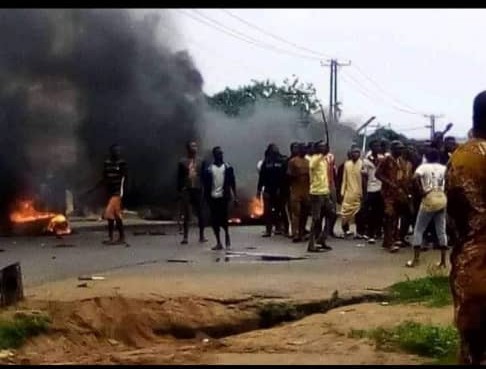
However, events of the past had shown that hardly was there electioneering in the history of the nation without pockets of violence.

There had been reports of political trains of parties clashing during campaigns while political thugs unleash terror on members of opposition parties in defence of their own party.

Many Nigerians who were quietly going about their lawful businesses had also fallen victim to political campaign violence, with records of loss of lives and property.

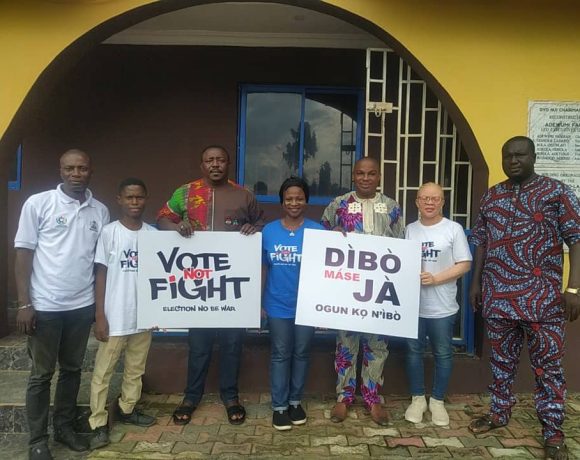
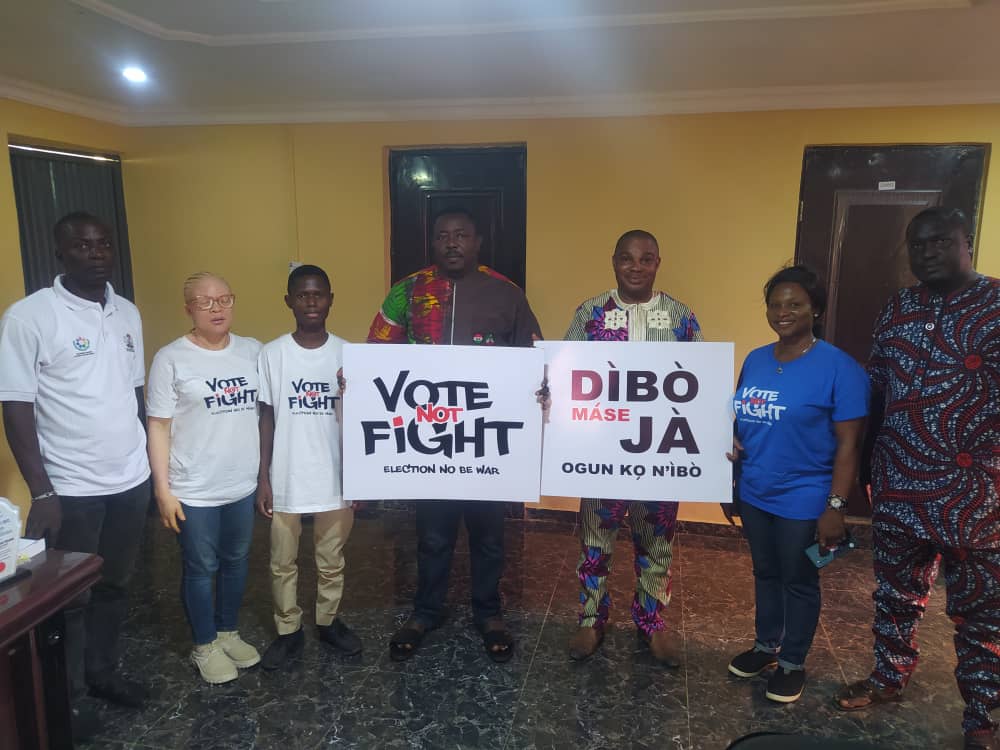
An advocacy visit to the NUJ Chairman Oyo state Council by the Oyo state Vote, not Fight Campaign Team.

For instance, during campaigns ahead of the Osun state governorship election, a couple of months back, there were instances of attacks on the convoy of a sitting governor, and that of a minister in the same state. 

Also in Ekiti, during the governorship election;     

Despite great logistical organization and peaceful voting, the campaign period was marked by turbulence and several notable interparty clashes. 

Civil society and election observer groups concentrated on instances of vote-buying along the highly successful election administration by INEC which resulted in smooth voting, direct online transmission of results, and one of the earliest winner declarations in recent Nigerian history as the result was announced on night of the election.

At this juncture, it should be noted that political violence is nothing but a great threat to public peace and there is no justification for such.

Hence, it is expected that as candidates and their party agents begin to move around cities, nooks and crannies of the country to seek the support of the people it should be done in a peaceful manner. 

They should abide by laid down principles and the peace pact signed on behalf of their parties in a bid to realize their aspirations.

Relevant agencies, non-governmental organizations, stakeholders, and individuals should collaborate with security operatives in protecting lives and property during campaigns. 

Above all, there can never be peace in an atmosphere of violence and rancour, all Nigerians especially political parties should embrace peace as this watchword at this time.

Write-up:  

Taiwo Akinola

Subscribe to our Telegram Channel and join our Whatsapp Update Group

 

Religion

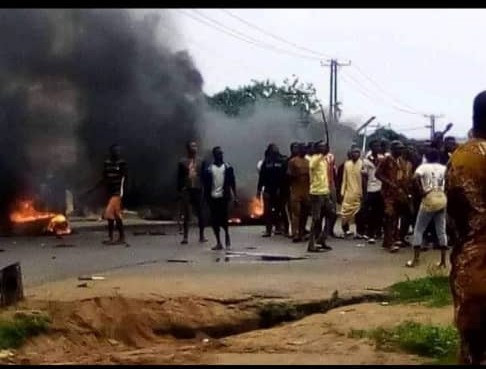
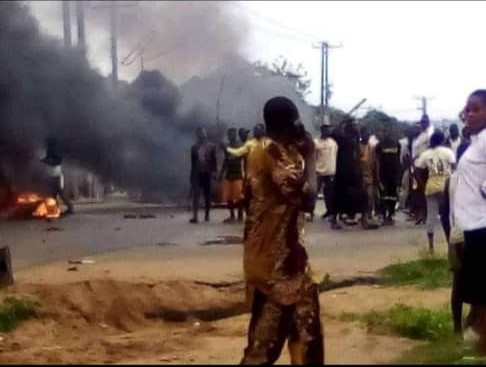
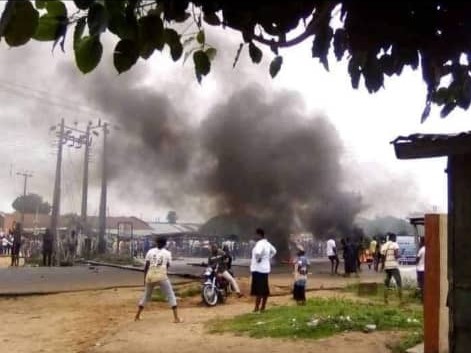
The presiding Bishop, Victory International Church, Rehoboth Cathedral, Ibadan bishop Taiwo Adelakun has appealed to Nigerians to shun the acts of violence presently being experienced in some parts of the country to allow peace to reign.


Bishop adelakun who made the appeal in an interview with Radio Nigeria said it was unfortunate that the peaceful protest which initially was to demand reformation in the police force and change for a new Nigeria turned violent.


The cleric said for the country to surmount her challenges, it has become necessary for government to embark on sincere reformation in all sectors, be more accountable and reduce the cost of governance that will make politics less attractive.


While advocating for state police for effective policing, Bishop Adelakun called for full investigation into the lekki toll plaza shootings and make culprits face the full wrath of law within short time.


Bishop Adelakun urged journalists to be professional in their reportage to avoid inciting stories.


He reminded people on the seat of power that power belongs to the people and everyone will give account of his stewardship on judgement day.


Mosope Kehinde

Crime

A group, the International Lawyers Assisting Workers network, ILAW (Nigeria), has called on Federal Government to speedily ratify the International Labour Organisation (ILO) Convention on violence and harassment in the workplace.

ILAW, which made the call in a press release, said the country would make its mark in history by promptly ratifying ILO Convention No. 190.

                           FULL TEXT

ILAW (NIGERIA) CALLS ON THE FEDERAL GOVERNMENT TO RATIFY ILO CONVENTION NO. 190 ON VIOLENCE AND HARASSMENT TO COMMEMORATE INTERNATIONAL DAY FOR THE ELIMINATION OF SEXUAL VIOLENCE IN CONFLICT

The International Lawyers Assisting Workers network (Nigeria Chapter) identifies with organized labour in Nigeria in calling on the Federal Government to speedily ratify the International Labour Organisation (ILO) Convention No. 190 on Violence and Harassment in the world of work as one of the most effective ways to mark this year’s International day for the elimination of sexual violence in conflict.

Nigeria would be making history if the ILO Convention No. 190 is promptly ratified. An adopted ILO Convention comes into force twelve months after ratification by two member States. Convention 190 was adopted in June 2019. In January this year, Uruguay became the first country to ratify and as at today, it remains the only country that has ratified the Convention. Ratification by Nigeria would make Nigeria the 2nd ratifying country and it would enable the Convention to come into force, twelve months after. Is Nigeria ready to make history and be counted among ILO member States that set the pace for establishing a framework for human progress and scoring victory for humanity on an international basis? This is the critical historical challenge that ratification or non-ratification of Convention 190 poses to the current Federal Government of Nigeria.

In the context of the combined provisions of Article 19(5) of the ILO Constitution and Section 254C(2) of the Constitution of the Federal Republic of Nigeria, ratification of an ILO Convention is an executive function, which excludes the prescribed legislative role of the National Assembly under Section 12(1) of the 1999 Constitution. By Article 19(5) of the ILO Constitution, an adopted Convention is to be brought “before the authority or authorities within whose competence the matter lies, for the enactment of legislation or other action”. In other words, depending on the legal framework in individual countries, ratification may involve domestic legislation or, alternatively, “other action” by the Executive arm of Government. Under Section 12(1) of the Constitution, international treaties require domestication before they can be acted upon or enforced. However, Section 254C(2) of the Constitution has made an exception for ILO Conventions by excluding the requirement of prior enactment into law before they can be enforced, provided they are ratified by “other action” of the Executive.

The National Industrial Court of Nigeria (NICN) has given judicial approval to the provisions of Section 254C(2) of the Constitution, which has neither been challenged nor set aside on appeal. This was in a Judgment involving Aero Contractors Co. of Nigeria Limited v. NAAPE, delivered by His Lordship Hon. Justice B. B. Kanyip, PhD, on 4th February 2014, as he then was. His Lordship is now the President of the NICN.

In Aero Contractors Co. of Nigeria Limited v. National Association of Aircrafts Pilots and Engineers (NAAPE) & ors [2014] 42 NLLR (Pt. 133) 664 NIC (Suit No. NICN/LA/120/2013), the Court held that ratified Conventions do not require prior domestication under section 12(1), CFRN, 1999 before being enforced. In the words of the Court:

“The thing with section 12 of the 1999 Constitution, as amended, is that a treaty as such shall not have the force of law in Nigeria unless such treaty has been enacted into law by the National Assembly and that law has been ratified by a majority of all Houses of Assembly in the country.

Now section 254C of the 1999 Constitution, as inserted by the Constitution (Third Alteration) Act 2010, deals with the jurisdiction of this Court. Its relevant provisions for present purposes are subsections (1)(f) and (h), and (2), which provide as follows:

….

‘(2) Notwithstanding anything to the contrary in this Constitution, the National Industrial Court shall have the jurisdiction and power to deal with any matter connected with or pertaining to the application of any international convention, treaty or protocol of which Nigeria has ratified to labour, employment, workplace, industrial relations or matters connected therewith’.

… 

There are two ways of approaching the issue at hand. The first is the question whether the Constitution (Third Alteration) Act 2010, which inserted section 254C(1)(f) and (h) and especially (2) is not the domestication demanded by 12 of the 1999 Constitution itself. I think it is. The Constitution (Third Alteration) Act 2010 amended the 1999 Constitution. Before it was passed and assented to by the President of the country, it was sent to all the “Houses of Assembly in the Federation” and was ratified by majority of the Houses of Assembly, hence the alteration of the 1999 Constitution itself. This effectively means that the requirements of section 12 of the 1999 Constitution were and have been met when section 254C(1)(f) and (h) and (2) was enacted as per the Constitution (Third Alteration) Act 2010.

Even if the first approach were not to be the case, the second approach at treating the issue is that both subsections (1) and (2) of section 254C of the 1999 Constitution, as amended, commence with the word “Notwithstanding”. In subsection (1) it is “Notwithstanding the provisions of sections 251, 257, 272 and anything contained in this Constitution…” and in subsection (2), it is “Notwithstanding anything to the contrary in this Constitution….” Section 12 qualifies as both “anything contained in this Constitution” in subsection (1) and “anything to the contrary in this Constitution” of subsection (2). The use of the word ‘notwithstanding’ in any statutory instrument has been judicially considered by the Supreme Court. In Peter Obi v. INEC & ors [2007] 11 NWLR (Pt. 1046) 565 at 636 – 634 per Aderemi, JSC, the Supreme Court cited NDIC v. Okem Ltd and anor [2004] 10 NWLR (Pt. 880) 107 at 182/182 with approval where it held as follows –

When the term “notwithstanding” is used in a section of a statute it is meant to exclude an impinging or impending effect of any other provision of the statute or other subordinate legislation so that the said section may fulfill itself.

In like manner the use of the word ‘notwithstanding’ in section 254C(1)(f) and (h) and (2) of the 1999 Constitution, as amended, is meant to exclude the impending effect of section 12 or any other section of the 1999 Constitution. It follows that as used in section 254C(1)(f) and (h) and (2) of the 1999 Constitution, as amended, no provision of the Constitution shall be capable of undermining the said section 254C(1)(f) and (h) and (2); and I so find and hold.

So, whichever of the two approaches is adopted (or even if both approaches are adopted), I have no hesitation whatsoever in finding and holding that this Court has the jurisdiction and power to apply “any international convention, treaty or protocol of which Nigeria has ratified”; and ILO Conventions 87 and 98 and the ILO jurisprudence that goes with them can be so applied in view of their ratification by Nigeria.”

On account of the foregoing judicial pronouncement, ILAW (Nigeria) urges the Federal Government to ratify ILO Convention No. 190, by Executive action, without any further delay.

Benefits of ratification 

The Violence and Harassment Convention No.190 and the accompanied Recommendation No. 206 are the first international standards, which seek to protect the right of everyone to a world of work free from violence and harassment. The Convention recognizes that behaviours that subject the other person to violence and harassment constitute human rights violation issues. It thus provides a framework to prevent, remedy and eliminate violence and harassment in the world of work, including gender-based violence and harassment. 

The Convention defines “violence and harassment” in the world of work as “…a range of unacceptable behaviours and practices, or threats thereof, whether a single occurrence or repeated, that aim at, result in, or are likely to result in physical, psychological, sexual or economic harm, and includes gender-based violence and harassment”. [Article 1(1)(a)]. The Convention thus protects against abuses such as sexual harassment, rape, physical abuse, verbal abuse, bullying, mobbing, threats, stalking, and so on.

The Convention protects everyone who works, irrespective of gender (male or female) or contractual status, i.e. worker or employer:

“This Convention protects workers and other persons in the world of work … as well as persons working irrespective of their contractual status, persons in training, including interns and apprentices, workers whose employment has been terminated, volunteers, jobseekers and job applicants, and individuals exercising the authority, duties or responsibilities of an employer” [Article 2(1)].

Indeed, the scope of coverage includes all sectors of the economy, private and public, formal or informal, urban and rural areas, in physical or virtual work settings, including work related internet communications.

Given the phenomenally rising rate of conflicts, crises, violence, multiple forms of socioeconomic and political tensions, Boko Haram insurgency, abuses in Internally Displaced Persons (IDP) camps, wanton and arbitrary police killings, and particularly the alarming incidents of rape and killing of rape victims, the most auspicious time to ratify Convention 190 is now.

Femi Aborisade, Esq.

For and on behalf of ILAW (Nigeria)

19/6/2020