By Moses Morenikeji
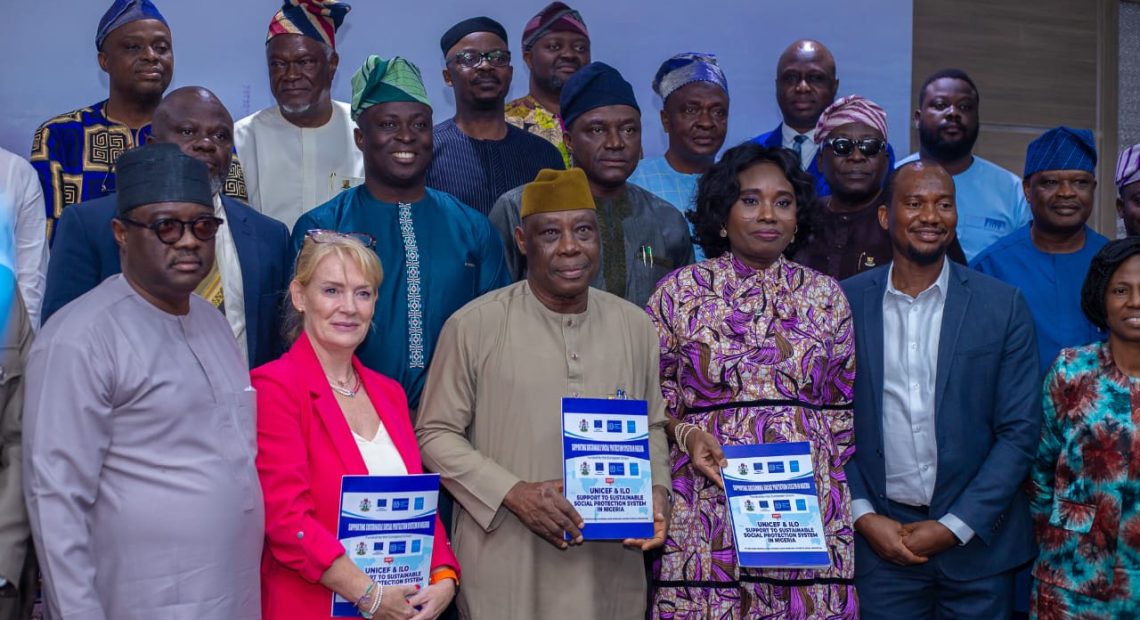
The Acting Governor of Oyo State, Barr. Adebayo Lawal has launched the Sustainable Social Protection Programme in Nigeria (SUSI), calling it a bold step to entrench social inclusion and sustainable development across the state and beyond.
The initiative, launched at Executive Council Chambers of the Governor’s Office, was designed to promote social inclusion, strengthen human capital and advance sustainable development, both within the state and across the country.
The Acting Governor stated that the state had made social protection a cornerstone of its development agenda, especially during the COVID-19 pandemic, through robust programmes which enabled the state to cushion the impact of the crisis by expanding healthcare coverage and registering over 24,000 households under the State Operation Coordinating Unit (SOCU).
He noted that measures have been put in place to fight poverty and support livelihoods, which include the distribution of food packages to more than 200,000 vulnerable households, loans worth ₦500 million to small businesses, ₦1 billion grants to boost food security, and the introduction of 46 subsidized buses to reduce transportation costs.
Barrister lawal further stressed the need for a comprehensive legal framework to strengthen and sustain social protection efforts in the state.
He emphasized that with the support from partners such as the European Union, UNICEF and the International Labour Organization, the state government plans to institutionalize these policies, enhance coordination among ministries,Oyo agencies and deepen social inclusion.
In a remark, the UNICEF Chief, Lagos Office, Celine Lafoucriere, described social protection as a lifeline rather than a luxury.
He commended the state government for the remarkable steps taken so far, saying the Social Protection Policies represent hope and a pathway for ensuring that children and other vulnerable populations in the state are cared for and protected.
The launch also featured a field trip to Oke-suna, Odo-Oba in Ibadan South East local government area of the state, where some vulnerable people already captured in the social protection register had interactions with the UNICEF team, the media and government officials.