Lake Natron located in the northern part of Tanzania is a beautiful yet deadly place that turns animals to stone (smithsonianmag)
This is not due to any mysterious spell. It is simply because of the salt and high alkaline pH in the water.
The water’s pH has been measured as high as 10.5 - nearly as high as ammonia( a colourless inorganic gas that is irritating to the skin, eyes, nose, throat, and lungs).
The presence of these elements causes calcification (the accumulation of calcium salts in body tissue) to occur whenever animals touch the water and their bodies turn to stone.
However, a few creatures do manage to survive these harsh waters.
These animals include a single fish species (Alcolapia latilabris), some algae and a colony of flamingos that feed on the algae and breeds on the shore.
Since 1956, Nigeria aviation industry has experienced major air crashes, mostly involving passenger planes.
These include, Sosoliso, Dana, Aviation Development Company, ADC, EAS, Bellview and Okada Airline crashes among others.
On September, 27th 1992, the military system in Nigeria recorded its first major air mishap when the Nigeria force inaf jet c.130 crashed in Ejigbo, near Lagos after departing the Muritala Muhammed international airport killing around two hundred military personnel.
Again on September 17th 2006, twelve Nigerian military personnel, mostly high ranking officers were killed in a plane crash in Benue state.
To reduce the trend, former president Olusegun Obasanjo embarked on recapitalisation policy of the airlines while many aircrafts found to constitute threat to the public were grounded.
Frequent aircraft mishaps had thrown the entire country into periods of unpalatable mourning, wailing and gnashing of teeth whenever they occurred.
There was a moment of recipe, but it was not yet Uhuru from air accidents as the nation’s air space was poised to record more calamities.
The recent air tragedies in the country were recorded within a space of four months and they involved three Nigerian air force jet leading to death of military personnel.
On 22nd February 2021, a Nigeria air force jet, king air 350, crashed near the Nnamdi Azikwe international airport killing seven officers including the crew members.
Also in April, a Nigerian Air Force, NAF, alpha jet on combat duty in the Boko Haram ravaged Borno state in the north east of Nigeria disappeared and has been without trace since two crew members were said to be on board and are still missing.
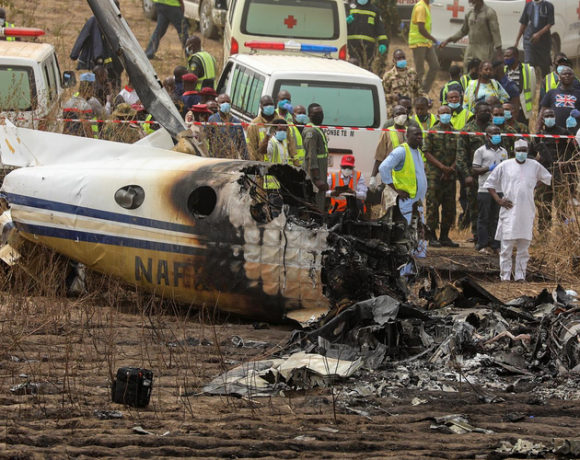
The latest is the 21th, May NAF beech craft king air b 350 aircraft that killed eleven military personnel including the Chief of Army staff, COAS, General Ibrahim Attahiru who was on official trip to Kaduna state.
The plane crash landed near Kaduna airport due to bad weather as the initial report on the tragedy indicated.
The crash was a fatal blow to the nation especially the fight against terrorism, banditry and kidnapping that have been on the prowl for sometimes.
It is heartwarming that the experts at the Aviation Investigation Bureau, AIB, have taken over the investigation into the crash with a view to ascertaining the cause or causes of the incident.
However, for a nation that is prone to air mishaps, aviation authorities must make sure that Nigeria does not become a dumping ground for all sorts of outdated aircrafts that obviously pose dangers to the safety of air travel.
It is important for the country to improve on its disaster preparedness, coordination and management at the major international airports for a safer airspace.
The adhoc and standing committees carrying out oversight functions in the aviation industry should intensify their supervision, especially in the area of timely release of budgetary allocation.
There is the urgent need for the authorities of the Nigerian military to immediately overhaul its fleet with a view to grounding all obsolete and out of form aircraft that could do more havoc on its personnel.
It must raise the bar on the issue of standard, compliance and safety of all aircrafts in its fleet and take regular maintenance more seriously.
This will go a long way to ensuring a safe sky for jets in order to avoid crashes and untimely death.
When you hear about big butts in Colombia, the first thing that comes to mind probably aren’t ants.
Big butt ants are a regional delicacy in the Santander region of Colombia.
The hormigas culonas, a.k.a hormigas santandereanas are pregnant leaf cutter ants that are collected by hand during the Spring mating season.
They are then roasted and lightly salted to make a tasty snack.
Nice and crunchy, they have a sort of earthy and irony taste.
They are actually packed with protein, and locals laud them for having aphrodisiac qualities.
Hormigas culonas ants can be bought in small bags of a handful ranging up to large jars at corner stores and shops in the Santander region.
People take them as a snack like peanuts.
The best places to find hormigas culonas are in Barichara, San Gil, or Bucaramanga, however, street vendors can be found in other places in Colombia, including Cartagena.
They are best enjoyed when they are fresh between the months of March-May, though, one often find them the rest of the year as well.
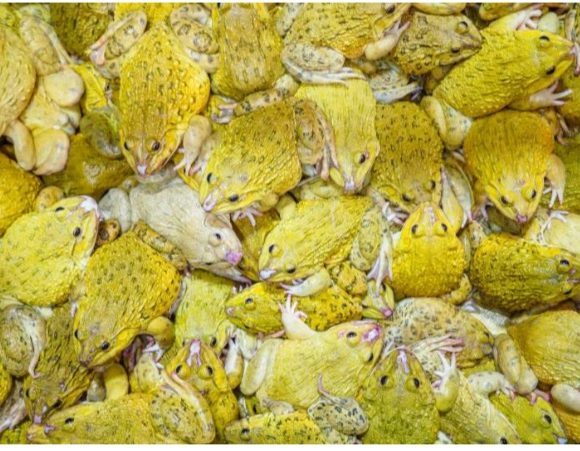
Globally, 100 million frogs are taken out of the wild for use as food each year. The French are by far the biggest consumers popular in purist Gallic gastronomes, known locally as grenouilles or cuisses de grenouilles. United States of America is the second largest importer, especially in the south of the country. Although, frog legs are common in French cuisine, it is a delicacy in many parts of the world not limited to Thailand, China, the Caribbean, Indonesia, and sporadically throughout Europe and the United States. Frogs are raised commercially in certain countries, such as Vietnam. It is said to be rich in protein, omega-3 fatty acids, vitamin A and potassium. Resembling tiny, skinny and elongated poultry legs, frog legs are most often served grilled, boiled, or fried. The taste and flavour can be described as a weird mix between chicken and fish with a texture that is similar to chicken wings. Traditionally, frog legs are served sautéed in garlic butter sauce as an appetizer and entrée. It can also be grilled or deep fried. As a cold-blooded animal, the heat or salt from cooking can cause the fresh frog legs to twitch. Also, the global appetite for frog legs is now threatening the dwindling frog population. So much so that many countries have placed a ban on the farming, hunting, and collection of indigenous frogs.
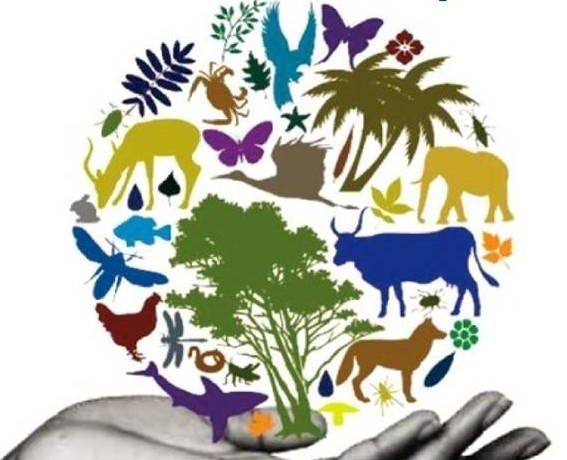
Biodiversity which refers to the variety of plant and animal life in the world or in a particular habitat is important to humans for ecological life support.
Biodiversity is the variability among living organisms from all sources, including terrestrial, marine, and other aquatic ecosystems.
It gives a functioning ecosystem that provides oxygen, clean air and water, pest control, waste and water treatment as well as supports larger number of plant species and greater variety of crops.
There are three main types of biodiversity which includes; species, genetic and ecological diversity.
Every ecosystem contains a unique collection of species, all interacting with each other.
Therefore, biodiversity also boosts ecosystem productivity where each species, no matter how small has important roles to play.
A healthy biodiversity provides a number of natural resources for everyone, which includes ecosystem services, biological resources and social benefits.
Biological diversity resources are the pillars upon which civilization is built. For instance fish provide twenty percent of animal protein to about three million people globally.
Furthermore, over eighty percent of human diet is provided by plants.
This is evident as report shows that over eighty percent of people living in rural areas in developing countries rely on traditional plant-based medicines for basic health care.
Though, there is growing recognition that biological diversity is a global asset of tremendous value to future generations, yet the number of species is being significantly reduced by certain human activities like degradation, fragmentation of habitats, pollution, exploitation and introduction of alien species.
Also, loss of diversity threatens all, including people’s health. It has been proven that biodiversity loss could expand diseases transmitted from animals to animals.
On the other hand, if biodiversity is intact, it offers excellent tools to fight against pandemic like those caused by corona virus.
Due to the importance of biodiversity and its preservation to human existence, the United Nations set aside every 22nd of May as the international day for biological diversity to increase understanding and awareness of diversity issues.
This year’s theme is we’re part of the solution which emphasises that the solution is in nature which serves as a reminder that biodiversity remains the solution to several sustainable challenges.
It behoves every individual to play his or her role in conserving biodiversity for a healthy society.
The government both at the federal and local levels should put in place functional legislation that protects natural habitats.
While creation of national parks as well as provision of modern equipment in the parks for effectiveness should be looked into.
Above all, use of alternative energy sources and nature or sustainable products will reduce effects of climate which is a way of conserving biodiversity.
Recently, the former Catholic Archbishop of Abuja, Cardinal John Onaiyekan provided Iftar, the evening meal for some Muslim faithful in Abuja and broke Ramadan fast with them.
The tradition is not only limited to the Catholics as other denominations have embraced such acts.
In fact, some Christians, especially in the Southwest where hardly would there be a family without the trace of both religions have turned it to a habit to fast wholly or partly in the month of Ramadan as a form of solidarity to their Muslim friends and relatives.
It is also on record that some Muslims have joined their Christian counterparts during their festivals.
Specifically, last year December, members of Islamic Movement of Nigeria, Nasarawa State Branch visited Evangelical Reformed Church of Christ, Lafia to celebrate the birth of Jesus Christ with them.
Report also has it that till date at the University Of Lagos Central Mosque, the Muslim community offers their parking space for Christians to park their vehicles on Sundays for service while the same gesture is reciprocated on Fridays by the church management for their Muslim brothers.
Minister of Information and Culture, Alhaji Lai Mohammed has recently stated that for almost 25 years he has been living in the GRA, Ikeja, Lagos, during the annual Eid-ul-fitri and Eid-ul-kabir open prayers, the Muslims make use of the compound of Archbishop Vining Memorial Church belonging to the Anglican Communion.
He said there was a particular year that the prayer fell on a Sunday when the venue would be used for the usual church service, the Muslim agreed that they should come very early to pray, surprisingly, the management of the church rescheduled their own service to noon when the Muslims would have been through and would have left the place.
All those instances no doubt are examples of religious tolerance which are highly commendable and deserved to be emulated.
However, there is still a long way to go as elements of religious intolerance are still in the blood of many Nigerians which have been responsible for many violence that have led to loss of innocent lives and destruction of countless property.
Factors responsible for such violence include illiteracy, hate messages, extremism, hatred for other religion and politicians who weaponise religion for political as well as economic gains.
Religious intolerance usually originates from the perceived superiority of one religion over the others.
Each religion in its mission may wish every Nigerian citizen, in fact all humanity to be its member, but the reality is that even during the days of prophets, there were dissidents.
No religion should see itself as being superior as there is only one goal, but there are various paths to such a goal.
The Catholics confirmed this as they do not believe that there is only one path to paradise.
Apart from ensuring fair treatment to the two main religions by government at all levels, it is also important that Nigeria Inter-Religious Council, NIREC is strengthened while such council should be domesticated at both the states and local governments to be agents of preaching religious tolerance and to as well regularly address religious issues that may lead to agitation.
An inter-religious tolerance media programme tagged “Abrahamic Mission” which is been aired on Nigeria Television Authority, NTA’s network on Fridays with a repeat edition on Sundays where Islamic and Christian leaders dialogue on issues of common interests from the two scriptures is a very laudable programme which has re-orientated a lot of people that both religions are almost the same in terms of belief and morals.
Federal Radio Corporation of Nigeria, FRCN, also deserves commendation as it has adopted the programme as it joins NTA on Sundays to relay “Abrahamic Mission” on its network at 5pm.
Similar programmes should be introduced by both public and private broadcasting stations at the states’ levels as this would give better understanding to religious adherents that both Christianity and Islam have their roots from prophet Abraham also known as Ibrahim, which the two religions described as the father of faith.
The media needs to exhibit professionalism and ensure fairness and prioritize national interest in religious reportage as it has contributed a lot to religious intolerance in the country.
Students from their tender age should be exposed to the basic tenets of the two major religions to deepen their knowledge and understanding as this would be a guiding principle at the later stages of their lives.
It is a fact that both religions preach love and peace.
It should therefore be noted that tolerance among religious faiths is a major factor in achieving peaceful coexistence which is a catalyst for national security.
It’s also essential that Nigerians understand the fact that they stand to gain more when they live in peace and respect one another’s religion.
Nigerians are far from religious tolerance exhibited in the developed world.
The ultimate, therefore, hopefully is when the level of religious tolerance of Nigerians gets to that of Western and Asian world where a Baptist College in a Christian-dominated Australia could change its dress code to accommodate just one hijab student and the government of Muslim populated Indonesia because of a student too could review its law to allow Christians not to wear anything on their heads to schools.
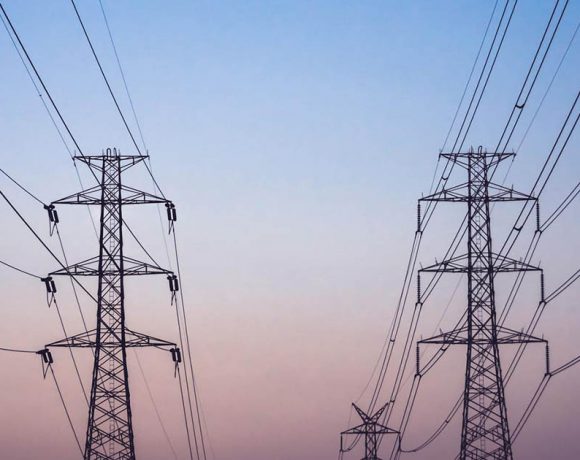
Those who brought the Power Holding Company of Nigeria, PHCN, and turned it into electricity distribution companies owe Nigerians one vital explanation.
They must tell the people what has happened with the discos since the ownership changed hands.
Yes, this has become imperative because the cry of ‘give us electricity’, ‘restore power supply’, ‘we are tired of darkness’ and ‘where is electricity‘ are some of the popular slogans in the mouth of Nigerians.
Successive governments in Nigeria have spent billions of naira to fix the power sector without any tangible result.
Up to this moment, in almost all parts of Nigeria, supply of electricity is epileptic and nothing to write home about.
Lack of regular electricity supply has brought sadness to millions of Nigerians and paralysed socioeconomic activities.
While some countries like Ghana are giving good testimony about constant supply of electricity, it is not the same in Nigeria.
Yet, electricity distribution companies keep bringing crazy and highly inflated bills every month for services not provided to the consumers.
Yet, year in, year out, the federal government is fond of increasing electricity tariff making Nigerians pay more for the inefficiency of some stakeholders in the power sector.
Recently, the Nigerian Electricity Regulatory Commission, NERC, hinted at another hike in electricity tariff to commence in July this year.
This is uncalled for as additional hike on Nigerians who have been traumatised by lack of electricity for so long.
Efforts should rather be concentrated to improve power supply and save Nigerians from total darkness.
Nigerians felt highly relieved with the privatisation of the energy sector not knowing that unending agony and lamentation over poor electricity supply had just begun.
This is quite unfortunate.
Nigerians deserve the right to be served well.
As citizens, they should have equal access to power like citizens of other countries.
Corruption in the power sector which has been a clog in the wheel of progress should be tackled for a stable electricity supply in the country.
Nigerians are yet to adequately benefit from democratic dispensation, especially the power sector which is key to industrialization.
If the federal government fixes the country’s electricity problem, seventy-five percent of unemployed graduates will have jobs and become employers of labour.
Solar energy as an alternative source of electricity should be pursued vigorously and made available to the people at an affordable price.
The security challenges bedeviling the country have continued to gender nuances of reactions in the polity.
Where there have been expressions of concerns, there have also been outright criticism of government handling of the situation.
The security cauldron has also been steaming waves of sentiments, spurious claims, and agitations in public domain.
While government’s response at its flanks could be lauded, some of these have shown failure to take criticisms in good faith.
However, recently, an elder statesman was credited with a comment asking President Muhammadu Buhari to resign and hand over to the military.
Unequivocally, the comment is retrogressive and to all intent undesirable.
It amounts to a furthering of the cloud of anarchy swarming over the country.
Military incursion into the nation’s political landscape, it had been variously acknowledged, accounted for the country’s weak political structure.
Little wonder the innuendo nascent is used in describing democracy in Nigeria despite sixty years of nationhood.
An invite to the military to assume the rein of governance, thus constitutes an attempt to roll back the little gains of the last decades.
Undeniably, Nigerian political class could be likened to the leopard that cannot change its spot.
Glaringly, ineptitude, corruption still run riot in governance from 1999 till date as was the case in 1983 when the military shoved aside the civilian administration.
This, however does not make the military establishment saints in matters of crass sleaze, the escapade of General Sanni Abacha cannot be quickly forgotten.
Those muting the idea of military regime again in Nigeria in the twenty first century world, seem not to feel the pulse of world rightly, no matter the current crisis in the country.
The international community considers military regime as aberration to the norms of governance.
Civil populace in countries worldwide are also averse to rule via the barrel of the gun and decrees.
In chad, for example, protests have greeted the assumption of general Mahamat Deby into power in place of his father Idris derby who died while fighting rebels.
Same for Myanmar, where coup leader General Min Aung Hlaing is being told in strong terms by the citizens that the juntas have no place in governance in their society.
Similarly, last year, African Union and ECOWAS made it known to Colonel Assimi Goita that military rule is anathema on the continent.
Mali’s military bowed to pressure as AU and ECOWAS were prepared to ostracize the country further.
It is noteworthy that the military establishment in Nigeria has distanced itself from the call, with the defence headquarters charging officers to stick to their constitutional role.
Rather than mute the idea of the military stepping in to take the rein of governance, what should occupy the minds of all and sundry is about how the nation can collectively weather the current storms of security breaches.
And the present administration should take the lead by outrightly displaying the will to address security concerns which has lead to the emergence of regional security outfits.
Government should be seen reining in all non-state actors threatening national cohesion without pandering to any tribal whim.
And for the opposition, they should not see the current security challenges as opportunity for pull down syndrome, but rather they should collaborate with government for a way out of the quagmire.
Those who brought the power holding company of Nigeria, PHCN, and turned it into electricity distribution companies owe Nigerians one vital explanation.
They must tell the people what has happened with the discos since the ownership changed hand.
Yes, this has become imperative because the cry of ‘give us electricity’, ‘restore power supply’, we are tired of darkness’ and ‘where is electricity‘ are some of the popular slogans in the mouth of Nigerians.
Successive governments in Nigeria have spent billions of Naira to fix the power sector without any tangible result.
Up to this moment, in almost all parts of Nigeria, supply of electricity is epileptic and nothing to write home about.
Lack of regular electricity supply has brought sadness to millions of Nigerians and paralysed socio economic activities.
While some countries like Ghana are giving good testimony about constant supply of electricity, it is not the same in Nigeria.
Yet, electricity distribution companies keep bringing exhorbitant and highly inflated bills every month for services not provided to the consumers.
It is a shame that Nigerians still live in darkness in the 21st century.
Still, year in, year out, the federal government is fond of increasing electricity tariff making Nigerians pay more for the inefficiency of some stakeholders in the power sector.
Recently, the Nigerian electricity regulatory commission hinted of another hike in electricity tariff to commence in July this year.
This is uncalled for as additional hike in electricity tariff will increase the burden on Nigerians who have been traumatised by lack of electricity for so long.
Efforts should rather be concentrated to improve power supply and save Nigerians from total darkness and continuous payment for electricity not provided.
Nigerians felt highly relieved with the privatisation of the energy sector not knowing that unending agony and lamentation over poor electricity supply had just begun.
This is quite unfortunate as Nigerians deserve right to be served well.
As Nigerians, they should have equal access to power like citizens of other countries.
Corruption in the power sector which has been a clog in the wheel of progress should be tackled for a stable electricity supply in the country.
Nigerians are yet to adequately benefit from democratic dispensation, especially the power sector which is key to industrialization.
If the federal government fixes the country’s electricity problem, seventy-five percent of unemployed graduates will have jobs and become employers of labour.
Solar energy as an alternative source of electricity should be pursued vigorously and make available to the people at affordable price.
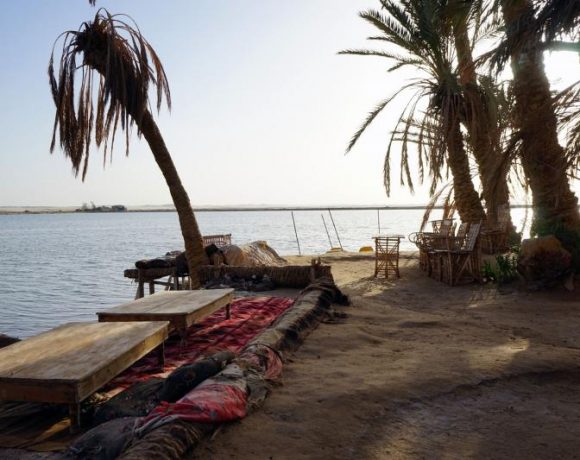
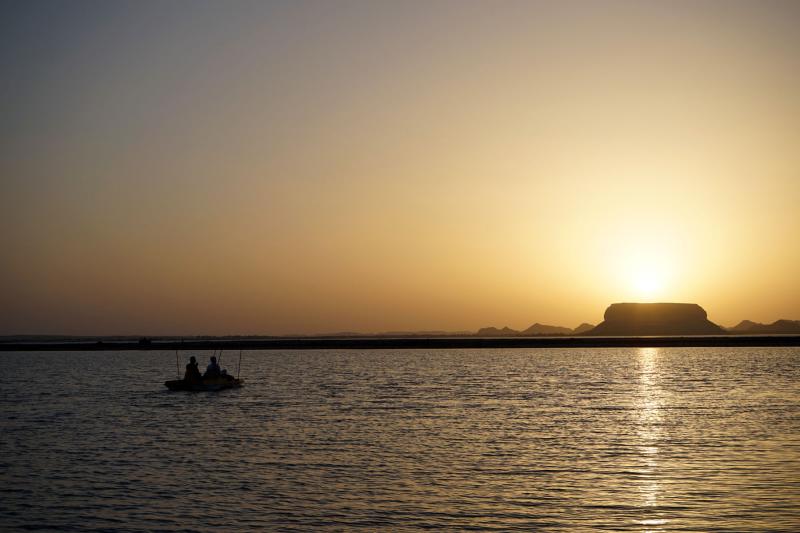
At first sight, the place seems to be a mirage of the crystal waters of any paradise beach but it is the Zeitoun Lake, the biggest salt lake in the Siwa Oasis.
The area, 50km from the Libyan border, has been isolated for centuries.
Even since it opened to tourism in the 1980s, it remained outside the major destinations in Egypt, which helped to maintain its fragile and distinguished ecosystem.
The combination of low annual rainfall and high rates of evaporation in the oasis results in lakes with unique water parameters and characterised by hyper-salinity.
Siwa lakes are considered to have healing properties for sinus, skin and eye conditions, which, added to the relaxing experience they offer because of its insulated location, have allowed the oasis to being promoted as a medical and recreational destination.
According to Director of Tourism in the Siwa Oasis, Mahdi Hwieti, “The salt lakes started to be visited [for medical purposes] about three years ago,” “Locals used to go there to wash the bodies of the children with problems in the skin, although some do it just for fun.”
Along with Zeitoun Lake, another significant salt lake in the oasis is Maraqi Lake, which is also known as Siwa or Fatnas Lake, on the western side of the oasis covering 5,300 hectares and which has the highest salt concentration. Aghormy Lake, between Zeitoun and Maraqi, has an area of 8,100 hectares and is used by local companies for health treatments.
“I came back [from Aghormy] care-free and relaxed. It fully changes you, from top to bottom,” said a tourist who had been in the lake for treatment and who preferred not to give his name. “I deeply benefited from it and the people who were with me out there could tell the same.”
Compared to the Dead Sea bordered by Israel and Jordan, which is one of the main tourist destinations of those two countries and draws large numbers of international visitors, the salt lakes in Siwa have remained largely in the margins of the tourist attractions. The fact they are rarely visited is what some argue makes them unique.
“I have visited the Dead Sea and I prefer these ones to the one in Jordan,” said Hwieti, “[because] the Dead Sea is overcrowded and the water is not as clear, crystal and clean as it is here.”
Tourism at the Siwa salt lakes is still at an early stage, as indicated by the few studies about them, relative lack of promotion, the absence of initiatives to produce items such as health and beauty products and the few visitors they receive, which, Hwieti said, amounts to about 10,000 Egyptians and some 500 foreigners a year.
That situation has kept these lakes largely pure, which, Hwieti said, creates great opportunities. “We have big hopes that the situation will get better, even if it is slowly,” he said. “There is a need to promote.”
Far from being the first destination of medical tourism in Siwa, the salt lakes have just added to the offer of this type of tourism in the oasis.
In 2017, the Siwa Oasis was recognised as a global destination for medical and environmental tourism by the Matrouh Governor Alaa Abu Zaid.
Among the most well-known options are the “sun baths” organised from June through August near Dakrur Mountain.
Residents say the sand of this area can be used to treat medical conditions such as rheumatism and problems in the knees, the back and the skin.
“Our grandfathers used to use the sand to treat many medical cases and, when we saw its benefits, we started to gain more and more experience and tried to use it more widely,” said Sherif El Sanusy, director of one company offering sun baths.
Neither he nor Hwieti could detail the healing properties of the sand but El Sanusy said they “have inherited from our predecessors the regulation of the sun baths as practised by the Siwa society.”
Along with the sun baths, the hot springs of the oasis are used for therapeutic treatments, since its water is said to have the properties to treat diseases ranging from psoriasis, rheumatism, digestive system diseases and joint inflammation.
Among all, the most famous hot spring is Kegar Well, whose waters reach 67 degrees Celsius and whose minerals are said to be similar to those found in Karlovy Vary, in the Czech Republic, which also has numerous hot springs.
The unabated incidence and unrelenting activities of secret cults in the Nigerian educational institutions and the society at large have wrought incalculable havoc on the lives and psyche of Nigerians.
As at 1999, over fifty six secret cults existed in the one hundred and thirty three higher institutions of learning in the country.
They were fast penetrating the nation’s secondary and even primary schools as well people outside the education walls.
Secret cults or secret societies are organisations in which members are usually bound by an oath of secrecy.
These often require elaborate form of initiation and ritual, use of symbols, password and handshakes as a means of recognition among members.
Mainly, they operate in the confines of Nigerian institutions where they have been alleged of being behind violence and sometime harassment of lecturers for different reasons.
However, the confraternity system in Nigeria was not so violent when it was started way back in 1952, during the last years of British colonial rule by a set of young idealistic men.
It began at the University of Ibadan when the Nobel Laureate, Professor Wole Soyinka led the National Association of Seadogs.
These secret societies were later banned in Nigeria when they became notorious with thousands of members arrested and prosecuted over the years.
Nevertheless, they continue to operate, especially off campus enjoying the followership of people who have never been to university and increasingly involving themselves in criminal activities.
For example, in Lagos State several cases of cultists clashes have been recorded where many lives were lost and property running to millions of naira destroyed.
In Rivers State, particularly the oil hub Port Harcourt, cults have been known to recruit teenagers into street gangs that serve as a training ground for membership drive.
Last year April, residents of Lagos and neighbouring Ogun states resolved to forming vigilante groups as reports spread that hundreds of gangster belonging to cult groups such as One Million Boys and Awawa Boys were disturbing the peaceful coexistence of the environment.
Despite all these, there were increase reports on social and traditional media where gangs attack people for reasons best known to them, almost on a daily basis.
To curb this menace, security agencies must come up with strong and anti cultism strategies that would make cultism a thing of the past in society.
All authorities concerned in the nation’s higher institutions should map out strategies of preventing cult members from carrying out membership drive on campuses.
To achieve success in this regard, parents must work closely with the institutions through constant monitoring and supervision of their wards.
More importantly, counselling services in tertiary institutions should be taken seriously as counselors have a major role to play towards implementing programmes for the reduction of cultism in schools.
The role of religious and moral lessons cannot be over-emphasized as they are vital to moulding of the youths who are proverbial leaders of tomorrow in the society.
Mass media print, electronic and online need to embark on regular sensitization and awareness campaign on the dangers of cultism and its effect on development.
Above all, the government at all levels should find a way of empowering uneducated and unemployed youths roaming the streets to prevent them from ending up in practicing cultism all in the name of searching for daily bread.
Recently, registrar of Joint Admission Matriculations Board, JAMB, Professor Ishaq Oloyede, said the board introduced the use of National Identity Number, NIN, for the registration of the 2021 Unified Tertiary Matriculation Examination, UTME, to checkmate examination malpractices.
Professor Oloyede explained that the directive for the use of NIN as a prerequisite for registration was from the minister of education, saying the motive was also for security reasons.
In giving the directive to make NIN a condition for registration, the supervising ministry, the Federal Ministry of Education, and its minister, Adamu Adamu had ordered JAMB to liaise with National Identity Management Commission, NIMC, to actualise the policy.
It is worth recalling that JAMB had attempted to start the implementation of NIN requirement last year but had to postpone it owing to technical hitches.
National Identity Management Company has not taken care of these hitches going by the process of obtaining NIN from the agency.
An attempt by NIMC to decentralize some of the processes, which shows long queues at the centres is a pointer to the fact that a hitch free process is not yet in place, and is bound to compound the stress of registration.
For instance, the process ought to be decentralized that students would be able to obtain their NIN in the school premises.
Until the country gets to that point, making NIN compulsory for jamb registration should be taken with caution.
According to the JAMB’s head of press and public relations, Dr Fabian Benjamin, about one point nine million students registered for the examination last year, which is the highest registration in the history of the board.
With this statistics, it is obvious that there will be an increase in the number this year as majority of the candidates are just attaining the age where they can apply for NIN.
This implies is that a larger percentage of the candidates will have to go through the stress of obtaining the NIN within the time frame set by jamb.
One of the benefits that the NIN registration has is that it will get more Nigerians registered when all logistics are put in place for a hitch free process.
Over the years, the rigorous process of registration coupled with allegation of extortion by the officials, have been the bane of the agency. .
The decision by JAMB to link its examination with the NIN should be suspended until the conditions for obtaining it is improved.
Furthermore, many of these candidates may not be able to meet the deadline to obtain their NIN and register for JAMB which will deny the students their right to education.
Being at the NIN registration centres in this period of Covid-19 pandemic will go against the protocols put in place by those in charge of managing the pandemic, hence policies that will encourage the gatherings of large crowds ought to be discouraged at this time.
JAMB should look for other means of tackling malpractices for now and concentrate on its core mandate which is to ensure a stress-free process of organising examination into higher institutions for the growing youth population.
If you find yourself eating a whole fish in China, you might feel the urge to turn it over to get to the meat on the other side.
But we will warn you right now, don’t do it.
To turn a fish over, that means you have to turn the bones over, which symbolizes turning your back on someone or becoming a traitor.
It is also a no according to an old fishing superstition, which says that doing so could cause a boat to capsize. Whatever particular superstition your hosts may subscribe to, turning your fish over is generally frowned upon, so avoid it if you can. To get at the meat on the other side of the fish, just have patience and eat straight through it. Less efficient, sure, but you will draw fewer judgmental looks.
In Some Nigerian Cultures, children are served meals before the adults. However, reverse is the case in South Korea.
No one is permitted to take a bite until the oldest person has started eating, a custom that’s viewed as a sign of great respect. It is also polite to wait for the oldest person to sit down before taking your own seat. Yeah, there’s a lot riding on the oldest person in the room, so you’d better hope they are hungry.
We all know a loud eater. They are that person who we try not to sit next to when they are eating spaghetti, because we will hear that annoying slurping sound all night.
Well, in Japan, that sound is not annoying, it is a sign that the eater is thoroughly enjoying their meal.
In addition to being a signal of respect, slurping is also believed to improve the flavour of noodles and allows you to enjoy hot food more quickly. Coating the noodles in saliva cools them down, meaning you don’t have to wait as long before you can dive in.
So, if you are in Japan, there is no need to delicately twirl your noodles on a spoon or cut them into fragments, Slurp away.
As part of a democratic setting, the judiciary in the realm of conflict resolution plays a significant role in ensuring that individual rights which are enshrined in the constitution are well protected and the rule of law is religiously adhered to
As the 3rd arm of government judiciary has an indispensable role as the unbiased interpreter of the law
The roles of judges are tied to a set of characteristics and values that are essential for judicial function
These attributes are not limited to judges alone, it is also applicable to their supporting staffs, who assist them in the dispensation of justice
In any democratic settings, the principle of separation of power where the allocation of government authority to separate institution in government limits arbitrary excesses by any arm of government
The primary goal of separation of powers is to enable the three arms of government to be functionally independent of each other.
In the appointment of judges at the federal and state level, the executive arm of government is saddled with this function based on the recommendations of the National Judicial Council, NJC, subject to the confirmation of the senate and House of Representatives.
This has made the executive to have so much power and influence on the judiciary as the judiciary looks up to the executive for financial obligations.
According to a maxim, he who plays the piper dictates the tune hence the need for the judiciary to be financially independent.
Unfortunately over the years, state judiciaries have relied on the executive for their funding.
Section 120 subjection 3 of the 1999 constitution {as amended} acknowledges the importance of financial autonomy for each arm of government
Equally section 121 subsection3 of the constitution states that any amount standing to the credit of state house of assembly and the judiciary in the consolidated revenue fund of the states shall be paid directly to the heads of the courts
In spites of these constitution provisions, state judiciary in the country have continued to be financially dependent on the executive making them to be at the whims and caprices of the executive
Regrettably, lack of financial autonomy on state judiciaries has made it difficult for judges at state high courts to be independent and impartial, especially in cases where the executive has a vested interest
It came as a succour when president Muhammahu Buhari on the 22nd of May, 2020 signed into law , the executive order no.1 of 2020 for the implementation of financial autonomy for state legislature and state judiciary
The implication of this is that the judicial arm of government across the 36 states in Nigeria will now receive their financial allocations from the consolidated revenue fund without recourse to the executive.
With this executive order, order 10, it is with dismay that the implementation of this law has become a mirage, which propelled the judiciary staff of Nigeria, JUSUN, to commence an indefinite nationwide strike on the 6th of April calling for the implementation of the executive order 10 by the state government.
Corroborating the struggle of JUSUN, the Chief Justice of Nigeria, Justice Tanko Muhammed said the decision by court workers nationwide to press for financial autonomy for the judiciary was justified.
On the 20th of April a meeting was scheduled to hold between the minister of labour and employment, Chris Ngige and representatives of JUSUN where the representatives of the union walked out.
Landing their voice of support for financial autonomy, the Nigerian bar association also staged a peaceful protest in all states of the federation to back the implementation of financial autonomy for state judiciary.
For JUSUN, no retreat, no surrender as the industrial action is a weapon of negotiation to press home their demand
However, the effect of the strike is taking its toll on suspects who ordinarily should not spend more than 48 hours in custody
The strike has prevented the police and other law enforcement agencies from arranging suspects in courts which has overcrowded the cells.
All judicial activities have been paralyzed, even as legal practitioners whose source of livelihood has been tampered with are lamenting bitterly
The ball is now in the court of state governments’.
The Nigeria governors forum should make it a matter of urgency to deliberate and implement the financial autonomy of the judiciary as signed into law
Furthermore, when financial autonomy is eventually, implemented heads of courts should not be the accounting officer to prevent corruption and financial recklessness.
Upon acceding to the demands of JUSUN, the state government should inaugurate a judiciary fund management board that will be saddled with the responsibility of ensuring accountability with funds.
Incessant strikes especially within the educational sector are one of the many travesties of social order in Nigeria.
Education is key to human development and growth of the society.
When there is a disruption or break down in the normal course of academic calendar in tertiary institutions, the effect on societal goals and expectations can better be imagined than experienced.
It would be recalled that for nine solid months members of the academic staff union of universities, ASUU, were on total strike to press home their demand for more funding to university education and better conditions of service.
The long drawn strike that unduly kept away students from their academic pursuit almost a year and with its attendant negative consequences was recently suspended by ASUU.
Now, the polytechnic community owned by the governments through the tax payers money is in the eye of the storm as the centre can no longer hold and things seem to have fallen apart.
It is a little over a month that members of the academic staff union of polytechnic, ASUP, have been on strike to press home their demand bothering on adequate funding and improved condition of service.
A recent meeting by relevant authorities to resolve the lingering crisis and allow normalcy to return to the polytechnic campuses was deadlocked.
Sadly, the elected representatives of the people in the national assembly have not taken any decisive position on the matter.
Philosophers have said it times without number that an idle mind is the devils workshop.
In this time of insecurity that is being witnessed inform of banditry, kidnapping, rape and cultism, keeping the students idle at home is injurious to the health of the nation in the fight against unrest and social upheavals.
The federal government must quickly move to resolve the on –going ASUP strike amicably.
President Muhammadu Buhari need to display the zeal to bring the strike to an end and not wait until ASUP grievances drag for long like that of ASUU.
As the factory for manufacturing technical manpower for the nation’s industrial growth, the polytechnics must be rescued from total collapse through adequate funding and provision of enabling environment for learning to thrive.
The national assembly should immediately direct the hierarchy of the federal ministry of education to deepen dialogue with the leadership of ASUP to resolve the crisis once and for all.
Also, the minister of labour and productivity, Dr Chris Ngige must devise a means of proactive engagement with ASUP leadership rather than making provocative utterances and issuing threats which can be counter-productive to the efforts being made to end the strike.
All relevant stakeholders in the education sector should also prevail on the federal government to meaningfully engage ASUP without further delay so that the students can go back to school.
India is home to plenty of strange traditions- not surprising, considering that it is a land where religion and superstition go almost hand-in-hand.
From harmless rituals to the downright dangerous, India has seen them all.
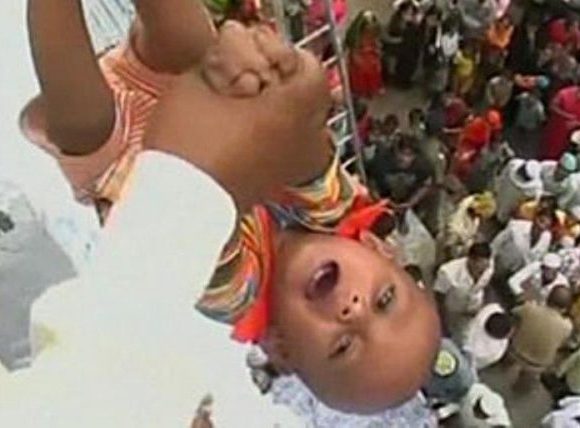
However, Karnataka (places like Nagrala village) and Maharashtra (including the areas of Solapur and Harangal) are home to a particularly bizarre ritual- tossing babies off a roof for luck.
This is a 700-year-old ritual practiced by both Hindu and Muslim families in the area. Legend has it that centuries ago, when the infant mortality rate was high, a saint advised the families of this region to demonstrate their faith in God by throwing their babies off the roof of a shrine and that God would magically produce a sheet below to catch them in.
This is still practiced in these states as a vow to toss the baby off the roof of the shrine is included in prayers requesting the blessing of pregnancy.
Once the child is born, it is taken to a Dargah or temple where the baby is held over the sheer drop of the roof by its limbs, shaken by the priest, and then dropped.
However, people seem to choose not to rely only on faith these days. As the baby is tossed off the roof by priests, a group of people wait below, holding a sheet to catch them in. On being caught safely in the blanket, the child is passed around in triumphant celebration before being returned to its parents.
There doesn’t seem to have been any damage done to the dropped infants, but this ritual is still highly questionable in this day and age.
In 2009, attempts were made by the district authorities to ban this practice. It was stopped for a while in the year 2011, but the practice was resumed in the Digambareshwara temple in the village of Nagrala in 2012.
The baby tossing ritual has been actively conducted as late as 2016.
There has also emerged footage of these rituals where the children are crying, clearly in shock after their 30-foot plunge.
In the background, the crowd is cheering, seemingly oblivious to the fact that these children have just been through a traumatic experience.
Malaria is a life threatening disease caused by parasites that are transmitted to people through the bites of infected female anopheles mosquitoes.
The scourge is said to account for tens of thousands’ of deaths annually.
For example, according to the World Health Oraganisation, W.H.O report, four hundred and nine thousand died of the disease in 2019 with another estimated two hundred and twenty nine million cases of malaria worldwide.
Malaria is the 3rd leading cause of death for children under five years worldwide, after pneumonia and diarrhea.
It causes severe flu-like symptoms such as high fever, vomiting and muscle pain.
It is however preventable and curable but if left untreated can quickly develop into life threatening conditions such as organ failure, often leading to death.
It is a major public health problem in Nigeria where it accounts for more cases and deaths than any other country.
According to the Nigeria malaria fact sheet, there are estimated 100 million malaria cases with over 300,000 deaths per year, while malaria also contributes to an estimated 11 percent of maternal mortality.
World Health Organisation report indicates that most cases of malaria occur in Sub-Saharan African, South East Asia, Western Pacific, Eastern Mediterranean, and the Americas are most at risk.
It is instructive to note that contracting malaria is often a function failure on the part of people to adhere to rules of hygiene, especially in relation to the environment.
Anopheles mosquitoes are known to lay their eggs in water and these eventually hatch into larvae and later adult mosquitoes.
Quite unhygienic practices of people provide the breeding ground for this growth, and these occur as a result of allowing stagnant waters around homes, unclear drainages, leaving around disused cans, bowls, where water settles.
Grasses left un-weeded and un-cleared bushes are also fertile ground for growth of mosquitoes.
Over the years, there have been concerted efforts to educate people on avoidance these unhygienic practices including other malaria eradication measure such as the use of insecticide treated net and inside residual spraying.
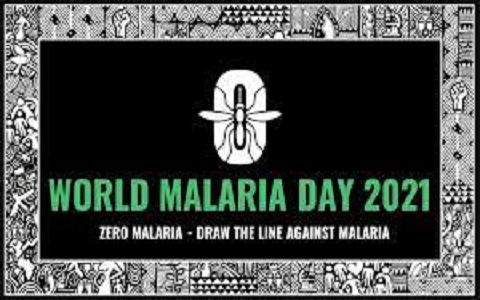
Hence, World Malaria Day which takes place on the 25th of April each year, is an internationally recognized day to raise awareness about malaria prevention and highlighting the global efforts to control malaria and celebrating the gains that have been made so far.
This year’s theme which is ‘Zero Malaria-Draw the Line Against Malaria’ is to highlight successes of countries in the fight against malaria, inspire a new group of countries that have the potential to eliminate the disease by 2025 and demonstrate that zero malaria is within the reach of all countries.
According to the World Health Organisation in 2018, twenty seven countries worldwide reported fewer than 100 cases of malaria and are on track to become malaria free over the next few years.
In 2018, Uganda reported 1.5 million fewer cases compared to the year before while india reported 2.6million fewer case over the same time period.
In 2020, it was reported that 1.5 million cases and 7.6 million deaths have been averted in the last two decades due to the global response and control of the disease.
Nigeria has also not lagged behind in the crusade to stem the tide of deaths from malaria.
Despite this achievement, government would still have to do more to ensure the number of Nigerians subjected to the scourge of malaria is drastically reduced.
Above all, militating elements such as lack of political will, drug resistance, poor funding and global warming should be tackled with a complete integration of people, resources and policy to achieve the desire target of a malaria free society.
Books are very significant materials as they are banks of knowledge.
From centuries, books have been instrument for passing across knowledge, documenting facts and records.
Over the years, they have been part of the engine of development in societies.
It is in recognition of the key role that books play that United Nations Educational, Scientific And Cultural Organization, UNESCO, earmarked April 23 every year as the World Book Day to promote the joy of books and the art of reading.
The day is celebrated to provide people with many ideas and plans to make them aware of the situation and environment.
The day thus provides platform for stakeholders of the literary world including authors, publishers, teachers, librarians, public and private institutions, humanitarian NGOs and the mass media to come together to promote literacy and help everyone get access to educational resources.
During covid 19 lockdown, books have proved to be powerful tools to combat isolation, reinforce ties between people, and expand their horizons, while stimulating their minds and creativity.
Research shows that regular reading improves brain connectivity, increases vocabulary and comprehension, aids in sleep readiness. Reduces stress, lowers blood pressure and heart rate, fights depression symptoms and prevents cognitive decline.
Reading books benefits both physical and mental health, and those benefits can last a lifetime. They begin in early childhood and continue through the senior years.
This is why it is essential for parent to get their children to cultivate reading habit, and should start early, by reading to their kids.
Since books are crucial to education and schooling, it is essential that government strengthen the approach that supports the delivery of basic education services by addressing key issues in the management, sustainability and oversight of basic education.
Government should also address educational shortcomings.
Furthermore government, teachers and the communities need to create enabling environment in which an effective learning environment can be nurtured.
Media organizations must produce an interesting reading programme that would help people to cultivate the habit of reading.
Key education stakeholders in the country including the Federal Ministry of Education should see reading as a variable tool that could make Nigeria great.
Nigeria should continue to collaborate with the international organizations to provide technical oversight on education systems and policies to support high quality reading programming across the country.
It is pertinent for book publishers to challenge themselves in making the cover attractive as a good cover can make or break a title.
A major challenge in book writing and publishing is piracy, there is the need for relevant authorities to optimally fight against piracy and protect the interest of the authors.
Above all, Nigeria Copyright Commission, NCC, should sanction anyone that violates the agency rules and regulations to assure the publishers of protection of their property rights, as it is done in developed countries. .
The theme for this year’s celebration is ideas, activities, slogan and essay and is in response to the coronavirus pandemic, encouraging children to share a story with those that they live with.
The death of a loved one can be a traumatic experience, causes emotional pain and suffering.
However, in some cultures the loss can result in physical pain as well.
Certain cultures believe this physical representation of emotional pain is essential to the grieving process.
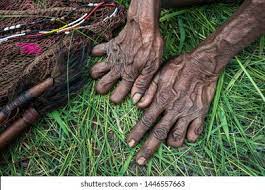
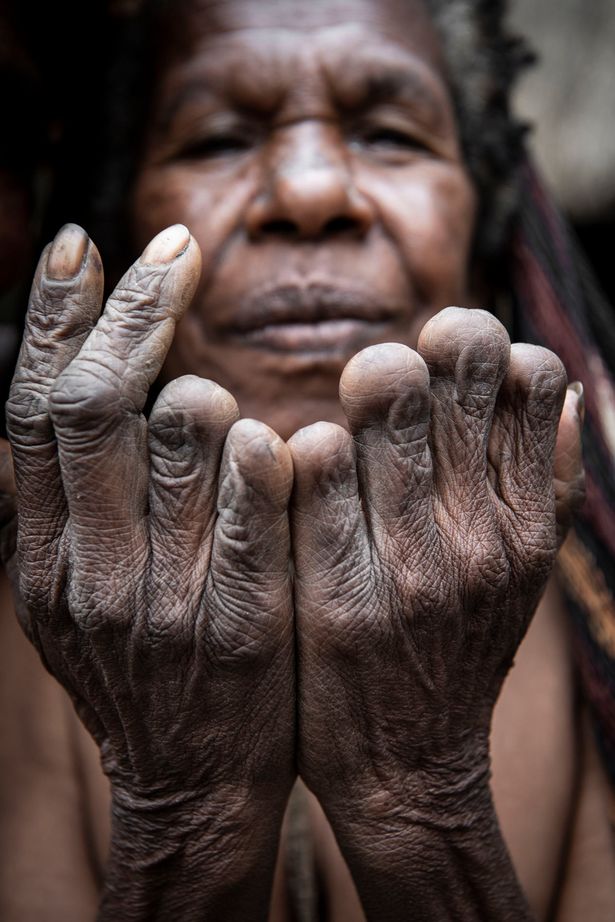
This can be seen in the Dani tribe in Papua, New Guinea. Some tribe members have cut off the top of their finger upon attending a funeral.
This ritual is specific to the woman population of the Dani tribe.
A woman will cut off the top of her finger if she loses a family member or child. The practice was done to both gratify and drive away the spirits, while also providing a way to use physical pain as an expression of sorrow and suffering.
The Dani tribe members have the religious belief that if the deceased were a powerful person while living, their essence would remain in the village in lingering spiritual turmoil.
The practice is performed by first tying a string tightly around the upper half of the finger for about 30 minutes.
This allows the finger to become numb for a “near” painless removal. The finger is removed by using an axe and the open sore is cauterized both to prevent bleeding and to form new-calloused fingers.
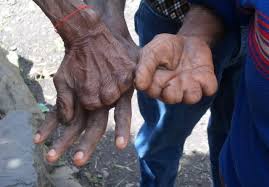
The left over piece of finger is dried and then either burned to ashes or stored in a special place. This ritual is now banned in New Guinea, but the practice can still be seen in some of the older women of the community who have mutilated fingertips.
Also, there have been reports of mothers biting off the tips of their babies’ fingers as part of another ritual.
It is believed that if a mother bit her child’s fingers, it would make the child live longer as they would be different from the others.
Recently, the report of the unlawful incarceration of a twenty-three year-old Nigerian, Itunu Babalola in ivory coast became prominent on the social media.
Itunu, a trader based in Bondoukou, Cote d’ivoire, was sentenced to twenty years in prison after a burglary in her apartment which she reported to the local police was turned against her.
A theft case of item worth three hundred thousand naira was twisted against Itunu by the authorities as a case of human-trafficking because she refused the terms of settlement proposed by them.
Her hope for fairness at the temple of justice was dashed when the judge gave her twenty year jail term, contrary to equity, natural justice and good conscience.
The officials of the Nigerian mission in Abidjan when contacted to provide assistance on the matter allegedly asked for four hundred thousand naira to get her a passport before anything could be done.
Experts say the services expected to be provided to citizens by their country’s embassy include the provision of travel documents; advice and support in the case of an accident, serious illness, or death; advice and support to victims of serious crime overseas, and arranging for next-of-kin to be informed, and visitation contact with incarcerated nationals.
Regrettably, Babalola’s fundamental rights to fair hearing and legal representation were denied all through the period of the prosecution.
These miscarriage of justice negate the provisions of the African charter on human and peoples’ rights, which Nigeria and Ivory Coast are signatories to.
In article 2, the charter states that, “every individual shall be entitled to the enjoyment of the rights and freedoms recognised and guaranteed in the present charter without distinction of any kind such as race, ethnic group, colour, sex, language, religion, political or any other opinion, national and social origin, fortune, birth or any status.”
No Nigerian citizen should be allowed to suffer the indignity of paying the price for an offence they never committed in a foreign land.
It is heartwarming that Nigerians in diaspora commission is looking into the matter to bring succour to the young lady.
According to the Chairman of the Commission, Abike Dabiri plans are underway to engage the services of a legal luminary to prove the innocence of Itunu Babalola at the court of appeal after the accused had spent two years out of a twenty year jail term for an offence she did not commit.”
This should be followed up diligently with the seriousness it deserves.
it is also worthy of note that the commission is compiling a detailed list of Nigerians wrongfully arrested and incarcerated abroad with a view to releasing them from captivity .
In addition, the foreign affairs ministry should be alive to its responsibility of always protecting Nigerians from such unpleasant ordeals while abroad.
It is essential that the ministry investigate the negligence of the Nigerian mission in Abidjan as well as the alleged money collected from her.
Nigeria to so many people is still a land of opportunity, to the citizens that have positive vibes but if it is necessary for Nigerians to leave the country, then it becomes important to obey the rules and regulations guiding their place of residence
There are so many bizarre cultures in the world so difficult to understand but still interesting enough to capture the interest of other people in its controversy.
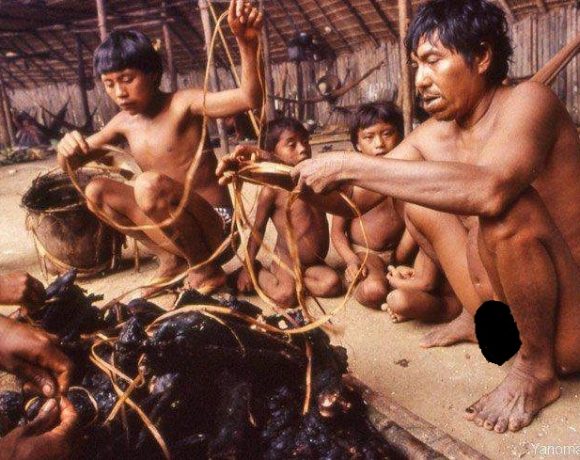
The Yanomami tribe in South America are also known as Yanam or Senema are found in Venezuela and parts of Brazil. This tribe is not easily influenced by modernization or westernisation but rather still practice their culture. This tribe has a weird burial ritual akin to cannibalism called Endocannibalism.
Endocannibalism is the practice of eating the flesh of a dead person from the same community, tribe or society.
The Yanomami are a native tribe that believe that the soul needs to be protected after the body dies. They believe that the soul can only rest properly and make its transition only when the body has been burned and the body eaten by the living relatives.
Unlike the conventional burial ceremony of interment, this native Indian tribe burn the body of the dead person and paint their faces with the grime from the burnt body. They sing and cry to express their grief over the loss of the relative.
In the second phase of the burial, they gather the bones remaining from burning the bodies and turn them into powder mixing it with the ashes from the burnt bodies. They mix this into banana which is used to make banana soup, a local delicacy common to this tribe and give it to everybody to eat.
They believe that completing this burial ritual is the only way the soul can attain eternal peace. But in a case where an enemy kills the relative or village member, only the women eat the ashes and after then a form of revenge is exacted on the culprits however the ceremony is done on the same night the villagers are to revenge through perhaps a raid on the enemy territory.
Insurance is an arrangement by which a company, individuals or the state undertakes to provide a guaranty of compensation for specified loss, damage, illness or death in return for payment of a specified premium.
The world is full of uncertainties and risk as individuals, families, business, properties and assets are exposed to different types and levels of risks.
These include risk of losses of life, health, assets and property.
Though, it is not always possible to prevent unwanted events from occurring, world financial system has developed schemes to mitigate individuals and businesses against such losses by compensating them with financial resources.
Insurance is a financial packaging that reduces or eliminates the cost of loss or effect of loss caused by different types of risks.
Apart from protecting individuals and businesses from many kinds of potential risks, the insurance sector contributes significantly to the general economic growth of the nation by providing stability to the functioning of businesses and generating long term financial resources for the industrial projects.
Among other things, insurance sector also encourages the virtue of saving among individuals and generates employment for millions of people.
Insurance provides an ideal risk mitigation mechanism against events that can potentially cause financial distress to individual and businesses.
For instance, with medical inflation growing at approximately fifteen percent per annum, according to national health insurance scheme, it would ensure financial security for the family and create easy access to health care delivery.
Incase of business insurance, financial compensation is provided against financial loss due to fire, theft, mishap and other accidents,
Also, insurance sector generates funds by way of premium from millions of policy holders, due to the long term nature of these funds, these are invested in building long term infrastructural assets such as roads, ports, power plants and dams that are significant to nation building.
Employment opportunities are increased by big investment leading to capital formation in the economy.
The insurance sector makes a significant impact on the overall economy by mobilising domestic savings, turned accumulated capital into productive investment, enables mitigation of losses, financial stability and promotes trade and commerce activities into productive investments.
Above all aforementioned, individual, group, and family should key into insurance policy as it reduces social burden.
People should know that insurance policy is a contract used to indemnify individuals and organisations for covered losses.
Nigerians should tap from goodies of insurance as it provides a source of investment funds and also reduce the burden of uncompensated accident victims and the uncertainty of society
Government at all levels should support individuals, groups and organisations by providing them with mechanisms and facilities that would be attractive enough for people to key in to the policy.
It is imperative for the insurance companies to be fair in discharging their duties to their clients when fire accident or death occurred by paying their benefits without delay.
This will build the people’s trust and confidence in insurance policy.
A group of missionaries recently stayed two days at a village in the heart of Ibadan, the Oyo State capital
The major purpose of their visitation was evangelism. Whether they succeeded in winning souls or not is not the issue here.
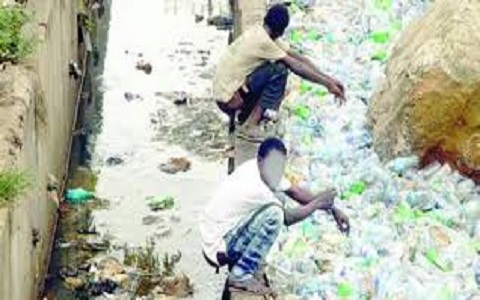
The issue is what they found out in that village, which is open defecation.
One of the evangelists, Simeon Akagbosu said that throughout their two day stay in the village, everyboby did shot put’ without batting an eyelid after answering the call of nature.
According to evangelist Akagbosu, the most worrisome is that neighbours called out one another in the early morning to do open defecation in nearby bushes and uncompleted structure.
This is a tale of woe and a reawakening to the campaign against open defecation in Nigeria.
The Nigeria elites are always ready and eager to condemn and castigate open defecation by the people whether they are ignorant or illiterate.
That is good, because what is bad is bad, but the question is, what role should the government play to eradicate this century old shameful habit?
India has indices comparable to that of Nigeria but it has taken steps by creating toilet access for its over one billion people.
India opened a bank account for every adult who does not already have toilets to do so.
Is there any other better way to take dividends of democracy to the door steps of the poor other than this, especially in the fight against open defecation and its attendant health hazards to the larger public?
Governments at all levels have done well by providing public conveniences for the people but in most cases these facilities are restricted to the state capitals.
Nigeria may not have the capacity to meet the standards in Europe, America, Saudi Arabia or Dubai but all hands must be on deck to provide toilet facilities for the people across board.
To prevent epidemic diseases is better than cure.
The provision of basic amenities like public toilets free of charge to the people to catapult Nigeria to greatness should not be overshadowed by private takeover of the common patrimony through collusion by the people in their hearts.
The campaign against open defecation must be resuscitated in homes, schools, churches, mosques and shrines all over the country as the government cannot do it alone.
It is a thing of shame that people still do open defecation with glee in Nigeria in the 21stcentury
This is a sad angle to a rather potentially great African giant.
Hemophilia is an inherited disease in which the blood does not clot properly due to a defect in a gene that controls the production of a clotting factor.
This condition is caused by mutation or change in one of the genes that provides instructions for making clotting possible.
There are three types of hemophilia, type A, B and C
When bleeding occurs in the joints, it can cause progressive damage and pain.
If the bleeding is in the head, it can lead to seizures and paralysis.
Bleeding becomes fatal if it cannot be stopped, especially when it takes place in the brain or another vital organ.
Observance of World Hemophilia Day started in 1989 by World Federation of Hemophilia, WFH, and it chose 17th of April as day to bring the community together in honour of the founder, Frank Schnabel’s birthday.
The international campaign also highlights the importance of taking coordinated and converted actions to achieve FWH’s vision of treatment for all, focusing on the entire bleeding disorders community.
Moreover, through this avenue people with bleeding disorders could identify and connect with others thereby creating a social support group for them.
More importantly, the day helps to galvanize action to achieve global alliance for progress which was developed to improve diagnosis and treatment of people with bleeding disorders.
This will go a long way in closing the gap between developed and developing countries.
Statistics show that approximately four hundred thousand people worldwide are affected by hemophilia with not less than one hundred thousand cases in Nigeria.
In view of the foregoing, it is important to give attention to people in this condition considering the challenges the present Covid-19 pandemic may be causing for them.
The theme for this year’s observance, “Adapting to Change” is apt therefore to encourage them to look into ways to make life safer in their daily activities.
Though medical diagnosis is required to identify the condition, symptoms may include joint pains, swellings, unexplained bleeding and blood in the urine or stool.
At this juncture, it must be emphasized that there are treatment options available for these class of people but so far there is no cure, it is therefore a lifelong disorder.
Taking responsibility for their lives is the only way to stay safe hence hemophiliacs should not engage in strenuous or dangerous activities.
Since healthier bodies bleed less, they should embrace healthy lifestyles which includes intake of foods rich in vitamin C such as green and red peppers, kiwi and strawberry,
They should avoid eating sweetened foods, fried and baked foods, full fat dairy products and heavy sauces.
Above all, having hemophilia is not the end of life, adopting positive approach to life and adapting to changes will help prolong life.
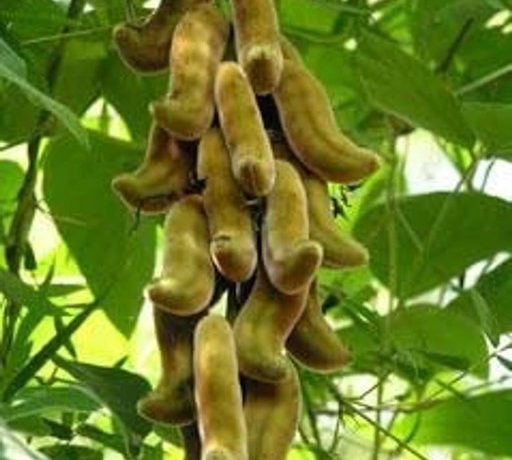
Velvet bean, also referred to as mucuna prurien, is an exotic legume having lengthy clusters of purplish flowers and densely hair pods.
It is an annual climbing shrub having long vines with a length of over 15 meters.
Velvet beans are recognized by the multitude of common names like atmagupta, kiwanch, alkushi, cowitch, cowhage, picapica, kapicachu, and yerepe.
Long used in traditional Asian and African practices, velvet bean (Mucuna pruriens) is believed to exert extraordinary effects in humans.
It contains a naturally occurring precursor to dopamine, which is a “happy hormone” that plays an important role in cognitive function, emotion, and mood.
The beans are grown in southern United States, Africa, India and also the West Indies for green manure and grazing.
Velvet bean belongs to a group of plants known as adaptogens, which are non-toxic herbs thought to support various physiological processes.
They’re also utilized as ornamentals.
They’ve been utilized in Indian Ayurvedic medicine since a long time to deal with worms, dysentery, diarrhea, snake bites, sexual debility, cough, tuberculosis, impotence, rheumatic disorders, muscular pain, sterility, gout, menstrual disorders, diabetes, and cancer.
In traditional Ayurveda, velvet bean is used holistically for the body and mind. Taken as an herbal supplement, it may promote focus, relaxation, and a good mood.
Velvet bean bears white, lavender, or purple flowers and develops seed pods up to 15cm long with 3 to 6 seeds per pod. The pods are covered in orange, bristle-like hairs that cause severe itch if they come into contact with skin; this is why the plant also has the nickname “cowitch”.