Energy

Federal government has announced the restructuring of five electricity distribution companies, also known as DISCOs.

This was contained in a statement jointly signed on Tuesday by the Executive Chairman of the Nigerian Electricity Regulatory Commission (NERC), Sanusi Garba, and Director-General of the Bureau of Public Enterprises (BPE), Alex Okoh.

According to them, the affected companies are Kano Electricity Distribution Company (KEDCO), Ibadan Electricity Distribution Company (IBEDC), Benin Electricity Distribution Company (BEDC), Kaduna Electric, and Port Harcourt Electricity Distribution Company (PHED).

Garba and Okoh explained that the announcement followed Fidelity Bank’s activation of the call on the collaterised shares of KEDCO, BDEC, and Kaduna Electric over their inability to repay loans obtained to pay for assets acquired in the 2013 privatisation exercise.

They added that the Asset Management Corporation of Nigeria (AMCON) would be a placeholder board for IBEDC, while the PHED undergoes restructuring to prevent its imminent insolvency.

The NREC and BPE chiefs said the new boards for the affected discos have been approved and the bureau was collaborating with Central Bank of Nigeria (CBN) and Ministry of Power to ensure no service disruptions during the transition.

Read the statement announcing the restructuring below:

Today we were informed by Fidelity Bank that it has activated the call on the collateralized shares of Kano, Benin, and Kaduna (Fidelity and AFREXIM) DISCOs and that they have initiated action to take over the Boards of these DISCOs and exercise the rights on the shares.

Fidelity Bank’s action is a contractual and commercial intervention and is between the Core Investors in the DISCOs and the lender. BPE is involved because of the 40% shareholding of Government in the DISCOs. Fidelity Bank has informed us that the new Board members of the affected DISCOs will be as follows:

– Kano DISCO:

Hasan Tukur (Chairman),

Nelson Ahaneku (Member)

Rabiu Suleiman (Member)

– Benin DISCO:

KC Akuma (Chairman)

Adeola Ijose (Member)

Charles Onwera (Member)

– Kaduna DISCO:

Abbas Jega (Chairman)

Ameenu Abubakar (Member)

Marlene Ngoyi (Member)

BPE has nominated Bashir Gwandu (Kano), Yomi Adeyemi (Benin), and Umar Abdullahi (Kaduna) as independent Directors to represent Government’s 40% interest in the three DISCOs respectively, during this transition.

We are engaging with the Central Bank of Nigeria (as the banking sector regulator) to ensure an orderly transition and to ensure that Fidelity Bank does not hold the DISCOs’ shares in perpetuity.

It is envisaged that the majority interest in the entities would be sold to capable private sector investors willing and able to re-capitalize and manage the entities efficiently.

We have also received assurances that Fidelity Bank will participate fully in all the ongoing market initiatives aimed at improving the sector (e.g. National Mass Metering Program).

In the interim, NERC and BPE met on an Emergency Basis and activated the Business Continuity Process andand have appointed interim Managing Directors in the affected DISCOs.

Kano Disco – Ahmad Dangana
Benin Disco – Henry Ajagbawa
Kaduna Disco – Yusuf Usman Yahaya
Also, with the takeover of Ibadan DISCO by AMCON, BPE has obtained approval from NERC to appoint Kingsley Achife as interim Managing Director.

In a temporary capacity the leadership of AMCON will be a placeholder Board for the Ibadan franchise (Ahmed Kuru – Chair, Eberechukwu Uneze – Member, Aminu Ismail – Member). Oluwaseyi Akinwale will represent the interest of Government on the Board alongside the DG of BPE.

Lastly, we are re-structuring the Management and Board of Port Harcourt DISCO to forestall the imminent insolvency of the entity.

As a condition for support to the entity to meet its market obligations, Iboroma Akpana will take over as the Chairman of the Board. Emmanuel Okotete, Eyo Ekpo, Ismaila Shuaibu and the DG of BPE will form the interim Board. Benson Uwheru will take over as the Managing Director of PHEDC as part of the changes.

Government will support the activation of Emergency funds through the Nigerian Electricity Market Stabilization Facility to support the entity while it goes through restructuring and repositioning to serve the citizens of the franchise area better.

We are working with the Minister of Power to ensure no service disruptions during these transitions. We remain committed to supporting the Nigerian Electricity Supply Industry to serve Nigerians better.

Tribune Online / Titilayo Kupoliyi
Energy

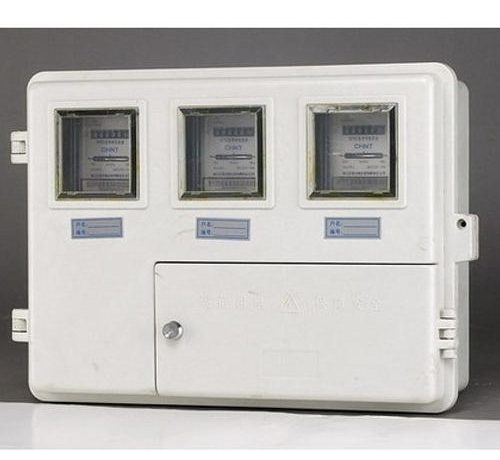
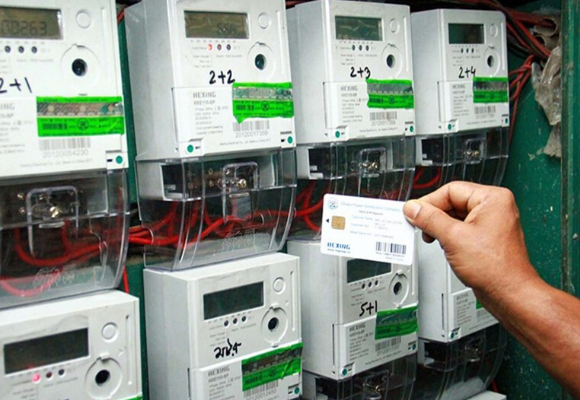
As part of measures to drive reforms in the power sector, the federal government introduced mass metering policy.

The thrust of the decision is to ensure electricity distribution companies, DISCOs, provide meters to all consumers in the country.

Radio Nigeria correspondent Olukemi Akintunde examines the implementation of the policy by the DISCOs in Oyo state.

In August this year, President Muhammadu Buhari gave marching orders to electricity operators to ensure that households across the federation were metered.

Investigations by Radio Nigeria revealed however that the implementation of the policy was yet kick off in Oyo State.

According to the Regional Communication Officer, Ibadan Electricity Distribution Company, IBEDC, Mrs Regina Samuel-Adelokun, mass metering was yet to come into effect in Oyo State as the company had not received the meters for distribution.

Mrs Samuel-Adelokun who noted that the process had just begun nationwide, appealed to residents of the state to be patient, assuring that the entire distribution process would be consumer friendly.

The IBEDC Regional Communication Officer said the pace of the distribution process depended much on the federal government, which is the driver of the policy.

Mrs Regina added that there was at the moment no blueprint or communication on modalities as to whether consumers would pay for the meters or otherwise

A resident of Ibadan, Mr Olawoyin Ademola, who explained that he was at the IBEDC headquarters to ascertain if mass metering had taken off, said he was informed that the policy was yet to commence in Oyo State.

Mr Ademola added that he was also told that IBEDC payment portal was not opened when he sought to pay for the meter he registered for in March this year.

Commenting on the development, an economist, Mr Micheal Abegunde commended the federal government for initiating the mass metering policy, noting that it would help address the issue of estimated billing and leakages arising from unscrupulous connections.

Mr Abegunde therefore urged the government to expedite action on the distribution in Oyo State to residents.

Olukemi Akintunde

Yoruba

Egbe awon osise leka to n pese ina oba lorile ede Nigeria NUEE, ti sekilo fun ile ise ton pin ina oba nile Nigeria, DISCOS, lori bibenu ate lu terutomo lorile ede Nigeira.

Akowe Apapo fegbe ohun Ogbeni Joe Ajero, sekilo be nilu Eko, pelu alaye pe awon omo ileyi ko lee maa sanwo ina oba tiko se deede.

Okoju oro si ile ise to n pinna oba lori aifikun aayan re, leyi ton fi gbogbo igba da ina oba tiwon takoto siwon pada latowo awon ile ise to n pese ina oba ohun nile Nigeria.

O fikun oro re pe aikoju osunwon won to, lon sokunfa eru tinbe lorun ero ton pinna eyi toto was Asorun, jakejado ileyi toti baje tiwon ko si paaro re. Aminat Ajibike/Elizabeth Idogbe

News Analysis

Electricity distribution companies, DISCOs, across the country this month implemented a new tariff regime.

This was as a result of the Nigerian Electricity Regulatory Commission’s, NERC, directive that DISCOs is to maintain a four naira tariff for all customers consuming less than fifty kilowatt of energy per month.

Under the new regime, consumers will now pay sixty-six naira per kilowatt unit of energy consumed in an hour.

Before now consumers were paying thirty naira, twenty three kobo per kilowatt.

President Muhammadu Buhari had emphasised that the review must translate to improved service delivery while poor and vulnerable Nigerians should not pay more in all cases.

Also, the president had ordered mass metering in the country to put an end to estimated billing which had been exorbitant and unbearable for Nigerians.

As expected, the hike in electricity tariff has been generating protests from all over the country.

Among the group that protested are National Association of Nigerian Students, workers, and different civil society groups.

The protesters condemned the policy as they believed the policy will bring untold hardship to the citizens.

Both Nigeria Labour Congress and Trades Union Congress accused the Federal Government of being hard on Nigerians.

President, Nigeria Labour Congress, Mr. Ayuba Wabba, noted that government was taking Nigerians for granted, describing the action as most insensitive and outrageous to the citizens who are currently bearing heavy burden of the covid-19 pandemic.

Also, President, Trades Union Congress, Mr. Quadri Olaleye, stated that increasing electricity bills at a time people were losing jobs and when businesses were adversely affected by Covid-19 was uncalled for.

It is disheartening that most Nigerians are not enjoying twenty four hour electricity supply, especially in the Southwest Nigeria after the fire incident that gutted the Transmission Company of Nigeria, TCN, office which supplies Oyo metropolis and parts of Ogun and Lagos states.

DISCOs should perform optimally by ensuring that the billing is commensurate with energy being supplied to the consumers.

It is obvious that Nigerians need power for the socioeconomic development of the society.

The multi-year tariff order (MYTO) was introduced to take care of different people but the structure seems to have failed. 

Therefore, the sector needs to be revamped to accommodate serious investors to move it forward.

States should also take step through legislation in removing generation of power from the exclusive list so as to generate and distribute power to its residents.

It is hoped that the Federal Government will listen to the yearnings of the people by reversing the new electricity tariff to the old one to make life bearable for the citizens.

Titilayo Kupoliyi

Energy

*Directs nationwide mass metering

Details below in NERC STATEMENT

NIGERIAN ELECTRICITY REGULATORY COMMISSION PRESS RELEASE: NERC COMMITTED TO PROTECTING CUSTOMERS.

In response to media reports that there is an increase in tariffs for Nigerians, NERC wishes to clarify that tariff reviews going forward will only follow service-based principles.

Under these service-based principles DISCOs will only be able to review tariff rates for customers when they consult with customers, commit to increasing the number of hours of supply per day and quality of service.

In all cases poor and vulnerable Nigerians will not experience any increase. In line with these expectations, DISCOs are directed to engage with their customers on a Service Based Tariff structure.

Under the Service Based Tariff Structure, DISCOs can only review tariffs for customers under the following conditions:

Customers are consulted and communicated a guaranteed level of electricity service by the DISCOs based on hours of supply.

Customers are metered

No estimated billing through the strict enforcement of the capping regulation. This means that unmetered customers will not experience any cost increase beyond what is chargeable to metered customers in the same area.

Even under the above conditions, there will be no change in tariff for the most vulnerable as tariffs for those consuming 50KW or less remain frozen. Customers receiving less than 12 hours of supply will also not experience any change in tariffs.

In addition, the President has directed that there should be a nationwide mass-metering program in an effort by the Federal Government to put a stop to estimated and arbitrary billing for electricity. He has also approved a waiver of the import levy on meters, so that those that do not have meters can be supplied as early as possible at reasonable costs.

The general public and all stakeholders in the power sector are by this statement urged to disregard any reports of an arbitrary tariff increase affecting Nigerians.

James. A. Momoh

Chairman,

Nigerian Electricity Regulatory Commission