The Network of Africa Women Journalists also known as Les Panafricaines held her annual forum in Casablanca, Morocco on the 6th and 7th March 2020 to discuss the issues affecting Africa.
The theme for the 2020 was ‘Climate Emergency; African Media, Agents of change’.
The network was birthed in 2017 by Radio 2M, with its headquarters in Casablanca, Morocco. It is a network that aims to promote greater responsibilities on African media in the treatment of key issues of interest to public opinion on the continent as well as to be genuine platform for debate and advocacy. At its premiere convocation in 2017, the forum brought together more than 100 women journalists which include editors, reporters and producers from Television, Radio and Print media across Africa.
They came from 27 French speaking African countries to discuss the effect of migration as it affects Africa as a continent. This was created just shortly after Morocco’s return to the African Union and when UN came up with the theme ‘Women in a changing world of work’.
The 2nd edition of the Les Panafricaines forum took place in Casablanca on the 26th and 27th October, 2018. It brought together over 200 female journalists from 54 African countries to deliberate on the issue of migration and how it affects Africans.
The 2020 edition, which is the third, brought together 300 African women journalists from all over the African countries to trash the challenges of climate change and to be seen as media concern across African nations. The theme was “Climate Emergency; African Media, Agents of change’’.
The forum described climate emergency as a situation that needs urgent action required to reduce or halt climate change to avoid potentially irreversible environmental damage resulting from it.
Climate change on the other hand is a long term change in the average weather patterns that have come to define earth’s local, regional and global climates. These changes have a broad range of observed effects that are synonymous with the term. The media as the agents of change have a great role in the coverage of events in African countries primarily from in house journalists in their employ or African news organizations.
Being an agent of change is trying in one’s own way to make a difference {positively} in the world for it to be a much better place. We can discuss the power of one person to starting a movement and how it leads to power of many people making a change.
The choice of climate emergency as the main theme confirms the major role of the media to forming and raising awareness in Africa. For Les Panafricaines, the challenge today is to make a paradigm shift on the continental level to develop a common vision and above all to change the perception linked to the realities of the continent.
At the opening ceremony, the General Manager of 2M, Salim Cheik, expressed his joy and pride to meet with female journalists again for the 3rd edition of the forum.
Les Panafricaines was initiated by 2M and carried out by Radio 2M through its gender and diversity committee, Cheik spelt out the three strategic plans for 2M, which according to him are;
• The deserved valorization of Morocco and of African continent
• The enhancement of women and
• The protection of the environment.
Cheik said these were the three core values of the 2M media and they are independent and parcel of deep civic commitment.
In an address the chief editor of Radio 2M, Fathia Elaouni, explained that climate change was chosen because it appeared the earth faced quite a lot of problems, pointing out that African countries are being threatened hence the need for journalists to sensitize citizens on the bright side and not just the dark side of issues.
This, she said necessitated the invitation of Women journalists from 54 African countries to talk about climate change and the Panafricaines needed to be the voice of Africa.
The conference showcased various workshops such as;
• Succeeding in Africa’s energy transition issues and challenges.
• Challenges of sustainable management of water resources.
• Sustainable Agriculture; A green economy for Africa.
• Health impact of climate change; which strategy to adopt.
• What sustainable development for African cities?
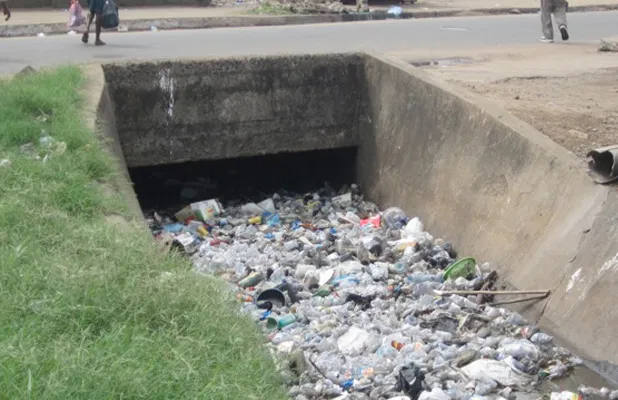
• Waste management, a decisive lever in the fight against climate change.
• In the adaptation of climate change, the media can be agents of change.
The health impact of climate change was keenly discussed with an expert in charge of the topic in the person of Rachid Wahabi who is the head of the Environmental Health Division at the ministry of health.
He is also a member of the WHO network “Chemical Health Risk Assessors”. He emphasized the need for women journalists to create awareness on diseases associated with climate change and how such diseases had affected African people.
The medical expert advised health policymakers to initiate policies and create awareness for the people to start to fight these diseases from the scratch. He said there should be synergy between policymakers and the media for easy understanding to confront the problem headlong.“We must also establish dialogue, that is, exchange information to accomplish one’s mission so as to inform one’s audience. A cross-relationship should be in a place where they are aware that there are deliberations in the national and international levels”.
On deaths caused by Climate change, the medical practitioner linked most African deaths to climate change saying health authorities should prevent catastrophes by being in line with the dynamics of the diseases and decrease in temperature.
According to him, quality Health infrastructures should be put in place to prepare health authorities to be able to handle and control diseases. The dynamics of diseases should be studied by health institutions. Wahabi called on Ministers of health across the continent to evaluate the causes and effects of diseases in future due to the rise in temperature.
“The link between cholera and climate change for example makes infrastructure vulnerable if the system is not well prepared in terms of closing and leakages and diseases will penetrate the water. Cholera can be fought against if there is no penetration of water. Pipeline should be checked from time to time, this is because epidemic diseases usually come in if there is no proper water system”.
The conference featured election by the Network of women journalists electronically to set priorities for the 2020 action plan. They voted for 3 media agents of change which has 24% of votes followed by the health impact of climate change with 13% votes, sustainable development in African cities 10%, Africa’s energy transition 8% and sustainable agriculture 8% votes.
In a Closing remark, a member of the permanent committee of the forum Samira Sitail commended the success of the conference saying we as members of civil society are obliged to succeed where political organizations have failed. ‘’We are all different and at the same time all alike.
As women journalists, we face same problems and difficulties. We also share the same energy and the same will to move Africa forward. Let’s be united, a union that will make us strong’’. She appreciated the African Women Journalists from 54 African countries who attended the forum calling them to learn more about the damages done to our countries by climate change and to use our media strength to propagate messages that will be of benefit to the people.
She admonished journalists to do away with fake news and begin to dish out real-life situations in a way that will bring stability to the countries.’’ Les Panafricaines forum is determined to be the force that would promote credible news for Africa and the world at large’’.
Team Nigeria at Mediouna
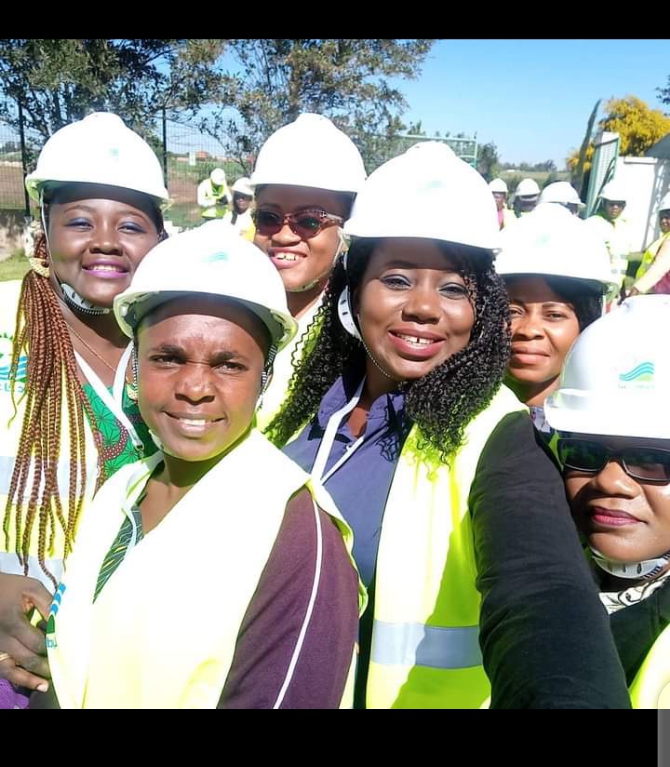
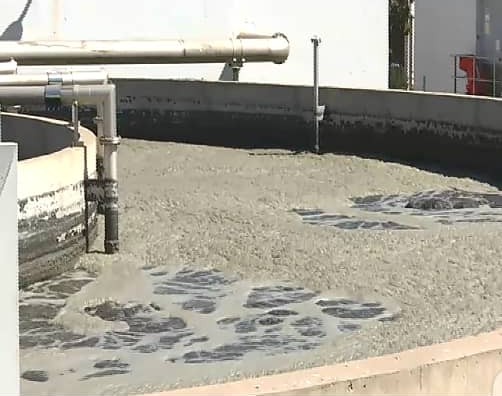
Earlier, the team went on a visit to Mediouna Water Waste Treatment Plant and its experimental area of urban agriculture.
We saw a garden where vegetables and other crops were planted. Interestingly, the vegetables are a product of garden waste and they survive from waste-treated water which is only suitable for planting alone and not for drinking.
They have plants like red potatoes, spinach and carrots. The vegetables are planted depending on the season.
The experiment started during winter period in 2017 and the garden came alive on the 8th of October 2019. From the look of things, one could tell that the experiments were yielding good results. The purpose of this experiment was to avoid the use of chemicals and pesticides.
Addressing the participants, Hajar Nourredine, an environmental scientist explained the issues faced in Casablanca in terms of water usage and wastewater management.
She said Casablanca is one of the megacities of Africa and it is the prominent city in Morocco with 5million inhabitants and this engages a lot of wastewater management issues.
The waste treatment plant of Mediouna according to her is one of the best solutions, not just to treat water but to recycle and reuse it for agriculture. ‘’Casablanca, being a big city surrounded with agricultural areas has limited water to use in agriculture, so the Mediouna station helps to produce treated water to boost the agricultural activities. Other things that affect the city in terms of climate factor are disparity of natural resources, waste management and temperature’’.
Oghogho Odubanjo