Governance

By Nafiu Busari

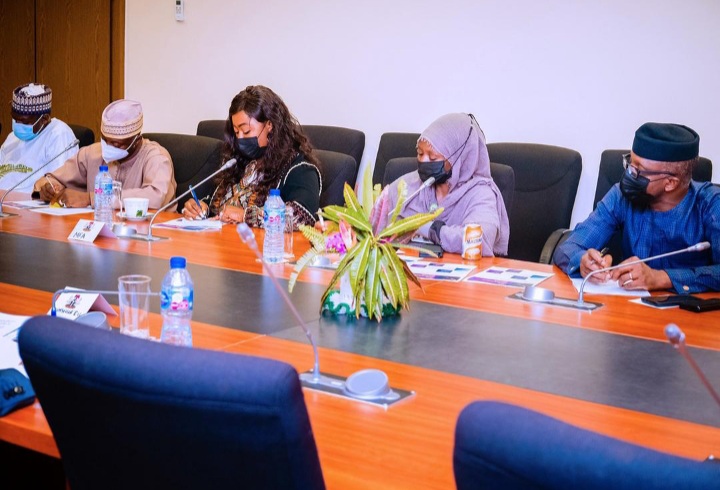
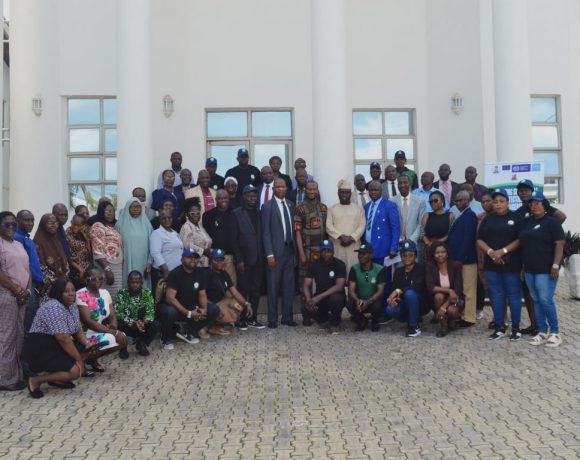
The Oyo State Government has begun the pilot phase of using Multidimensional Poverty Indicators to expand the state’s Social Register under the EU-funded SUSI Project implemented with the International Labour Organization (ILO) and UNICEF.

Commissioner for Budget and Economic Planning, Professor Musbau Babatunde, announced this while opening a State Technical Consultation Meeting with Ministries, Departments and Agencies and the Social Protection Technical Working Group.
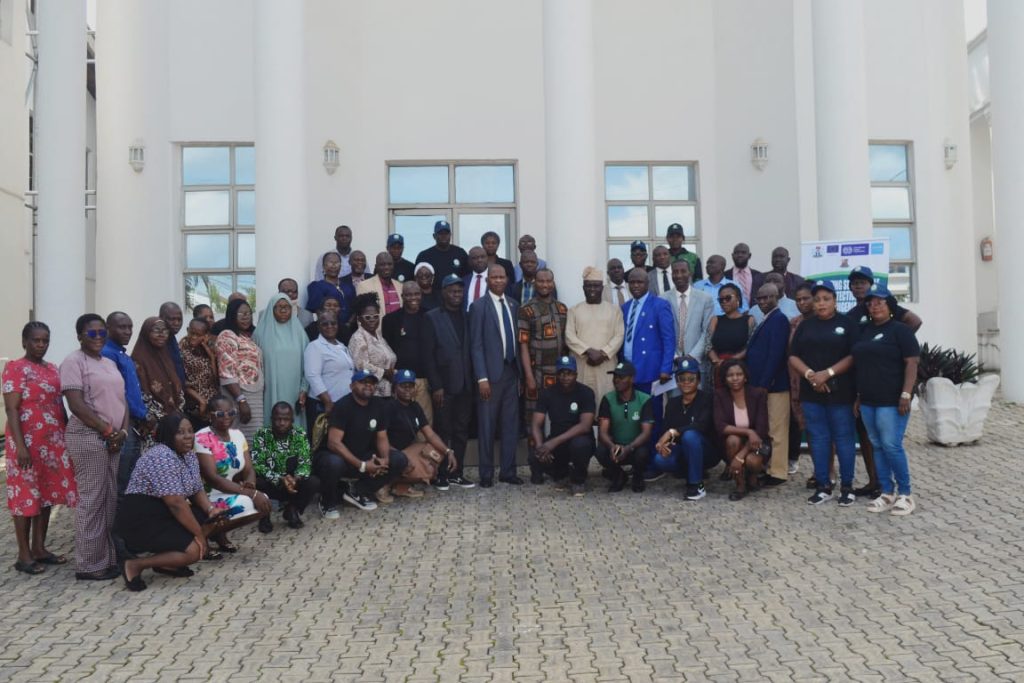
Professor Babatunde said the meeting aims to strengthen coordination and improve the delivery of social protection programmes targeted at poor and vulnerable households.

He stressed that social protection is multidimensional and requires strong collaboration among all MDAs to ensure inclusiveness and sustainability.

He added that poverty-measurement criteria, budget allocation for the poor, and equitable resource distribution must be clearly defined and applied across all sectors.

The commissioner said Oyo State’s inclusion in the EU-SUSI Project represents another milestone in Governor Seyi Makinde’s commitment to sustainable development and human capital growth.

He reaffirmed the administration’s commitment to data-driven, transparent social protection initiatives that “leave no one behind.”

Earlier, Permanent Secretary of the Ministry of Budget and Economic Planning, Mr Tunde Ayanleke, thanked UNICEF for its continuous support and commended Governor Makinde for approving a household survey that will strengthen data-driven planning and policy implementation.

State Coordinator of the Oyo State Operation Coordinating Unit (OYOSOCU), Mr Ismail Salami, said poverty in Nigeria should not be measured solely by monetary indicators.

He explained that the meeting was convened to agree on additional indicators that will make poverty measurement in Oyo State more accurate and inclusive.

Mr Salami said the programme aims to create a shock-responsive register that improves preparedness for future social and economic challenges.

He noted that the pilot phase is being implemented in four states — Oyo, Abia, Benue, and Sokoto — with ten local government areas selected in Oyo State.

Social Policy and Programme Manager at UNICEF Lagos Office, Mr Muhammad Okorie, said the European Union is the main sponsor of the Sustainable Social Protection Programme implemented through UNICEF in the four states.

He added that Oyo State is pioneering a new approach to social protection using Multidimensional Poverty Indicators for more targeted interventions.

Follow us on Telegram and YouTube, and join our WhatsApp Update Group for more news updates.
Foreign

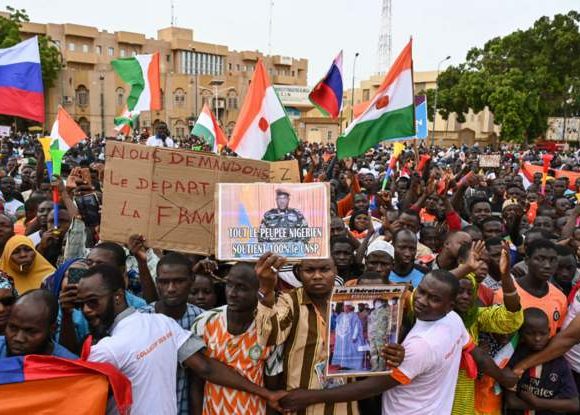
The European Union has begun steps to impose sanctions on members of Niger’s military junta, three months after they took power in a coup.

The EU Council announced on Monday that it had “adopted a framework” that will allow it to impose sanctions on “individuals and entities responsible for actions that threaten the peace, stability and security of Niger”.

The council also said that the sanctions will apply to individuals who undermine Niger’s constitutional order, democracy or rule of law, as well as individuals who commit human rights violations or abuses.

The sanctions will include travel bans, asset freezes and bans on the provision of funds to sanctioned individuals.

“With today’s decision, the EU strengthens its support to (West African bloc) Ecowas’ efforts and sends a clear message: military coups bear costs,” EU foreign policy chief Josep Borrell said.

The EU, however, said that it would allow humanitarian exemptions to asset freeze measures.

The European move follows the imposition of sanctions on Niger by Ecowas and the suspension of aid by the US government.

BBC / Titilayo Kupoliyi

Subscribe to our Telegram and YouTube Channels also join our Whatsapp Update Group

Security

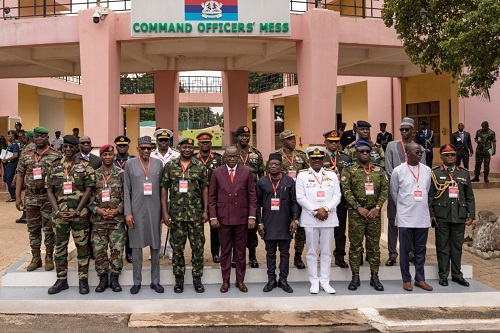
The Economic Community of West African States, ECOWAS, said yesterday in Accra, Ghana, that it will not hesitate to invade Niger Republic, if all efforts to reverse the coup in the country fail.

This came as the German government said it is in support of sanctions imposed on the military junta in the country by the European Union, EU.

It will be recalled that ECOWAS Heads of State and Government had at its second extraordinary summit in Abuja last week, activated its standing force should the junta in Niger refuse to restore to power ousted president of the country, Mohamed Bazoum.

The threat came as defence chiefs of member states met in the Ghanaian capital to strategise on the next line of action on Niger and discuss details of the standby force. The meeting continues today.
“Let no one be in doubt that if everything else fails, the valiant forces of West Africa…are ready to answer to the call of duty.

“By all means available, constitutional order will be restored in the country,” ECOWAS Commissioner for Political Affairs, Peace and Security, Abdel-Fatau Musah, said.

He listed past ECOWAS deployments in Sierra Leone, Liberia and elsewhere as examples of readiness for military action.

Musah rejected the accusation that ECOWAS is being manipulated by France or any other outside power.
“What they forget is that ECOWAS is a rules-based organisation. We have our protocols, we have our norms and we are ready to protect them.

“That’s why the Heads of State are saying if push comes to shove, we are going into Niger with our own contingents, own equipment and our own resources to make sure we restore constitutional order. If other democracy-loving partners want to support us, they are welcome,” he said.

‘Cat and mouse game in Niger’

Musah accused the Niger coup leaders of “playing cat-and-mouse” with ECOWAS by refusing to meet with its envoys and seeking justifications for their takeover of power.

He said most of the bloc’s 15 member states are prepared to participate in the standby force that could intervene in Niger, noting, however, that the exceptions are those also under military rule, including Mali, Burkina Faso, Guinea and tiny Cape Verde.

He criticised the junta’s announcement that it had elements to put Bazoum, who is being detained, on trial for treason.

The United Nations, European Union and ECOWAS have all expressed concern over the conditions of his detention.

“The irony of it is that somebody who is in a hostage situation himself…is being charged with treason. When he committed that high treason is everybody’s guess,” Musah said.

Niger has strategic importance beyond West Africa because of its role as a hub for foreign troops involved in the fight against Islamist insurgents in the Sahel region and its uranium and oil reserves.

Western countries fear the junta could follow the lead of neighbouring Mali, where the military government threw out French troops and instead invited in mercenaries from Russia’s Wagner group, which has welcomed the coup in Niger.

There had been very stout opposition from both individuals and groups, especially in Northern Nigeria, against military invasion of Niger Republic.

Aside from opposition from such groups as the National Supreme Council for Islaimc Affairs, NSCIA, Jama’atu Nasril Islam, JNI, Northern Elders Forum, NEF, to military operations in Niger, the Christian Association of Nigeria, CAN, and Catholic Bishops Conference of Nigeria, CBCN, have also kicked against it.

In Niger’s capital, Niamey, where large crowds have taken part in protests against ECOWAS and in favour of the coup leaders, residents have also rejected the idea of an outside intervention to reinstate the elected president and civilian government.

“I’m not afraid because I know our armed forces are well prepared to deal with any eventuality. ECOWAS is manipulated by foreign powers. When we see the reactions of France since the coup and especially the harshness of ECOWAS I can only think that these are coordinated actions between France and ECOWAS,” said radio technician Omar Yaye.

However, France, Niger’s former colonial ruler, has denied the junta’s accusation that it is seeking to destabilise the country or that it had violated its airspace, insisting on supporting ECOWAS efforts to restore constitutional order.

Vanguard/Simeon Ugbodovon

Subscribe to our Telegram and YouTube Channels also join our Whatsapp Update Group

Foreign

The European Union, in a statement on Saturday, said it would not recognise Niger’s putschists who seized power last week and that it was suspending security cooperation with the jihadist-hit country.

The presidential guard had detained democratically elected President Mohamed Bazoum and confined him to his official residence in the capital, Niamey, on Wednesday, in the latest coup to strike Africa’s Sahel region.

“The European Union does not recognise and will not recognise the authorities from the putsch in Niger,” the bloc’s chief diplomat, Josep Borrell, said in a statement.

“All cooperation in the security field is suspended indefinitely with immediate effect,” in addition to the end to budgetary aid, he added.

Bazoum “remains the only legitimate president of Niger,” the statement said, calling for his immediate release and holding the coup leaders to account for the safety of him and his family.

Borrell said the EU was ready to support future decisions taken by West Africa’s regional bloc, “including the adoption of sanctions”.

Meanwhile, a human rights organisation under the aegis of Citizens Action for Good Governance, on Saturday, called on leaders of the Economic Community of West African States and the international community to impose targeted sanctions on the leaders of the recent military coup in Niger Republic.

While condemning the coup d’etat carried out by the military in the Republic of Niger, the organisation described it as an attempt to subvert democracy and the rule of law.

The National Coordinator of CAGG, Mallam Nazir Galadanchi, at a press conference in Abuja, applauded the steps taken so far by the Chairman of the ECOWAS Authority of Heads of State and Government, President Bola Tinubu.

He said, “This coup d’etat is an affront to the existing democracy in the country because President Mohammed Bazoum who has been held by troops from the presidential guard since early on Wednesday was duly elected and recognised by the international community, and whoever that topples his government forcefully is an enemy of the people and democracy.

“We at CAGG stand with the people of Niger Republic and demand that President Mohamed Bazoum be released immediately along with his family and calls for the immediate restoration of democracy in Niger Republic.

“Furthermore, CAGG calls on the international community to impose targeted sanctions on individuals and entities involved in the coup to demonstrate the collective commitment to protect democracy and deter any future attempts to undermine it.”

Meanwhile, the Foundation for Peace Professionals also known as PeacePro also condemned the latest coup in the Niger Republic.

The group, in a statement by its Executive Director, Mr Abdulrazaq Hamzat, said the coup and the initial public excitement it generated in the country might be a temporary feeling.

Hamzat maintained that while a military coup is condemnable, the constituted civil authorities in the continent must demonstrate the capacity to protect the human and territorial integrity of the continent.

The group also urged the African Union and ECOWAS to make it a mission to end the presence of foreign military forces in the continent within the next 24 months.

The military in Niger sacked the civilian government of President Mohammed Bazoum who was elected in 2021 in the first civilian handover of power.

Punch/Simeon Ugbodovon

Subscribe to our Telegram and YouTube Channels also join our Whatsapp Update Group


Foreign

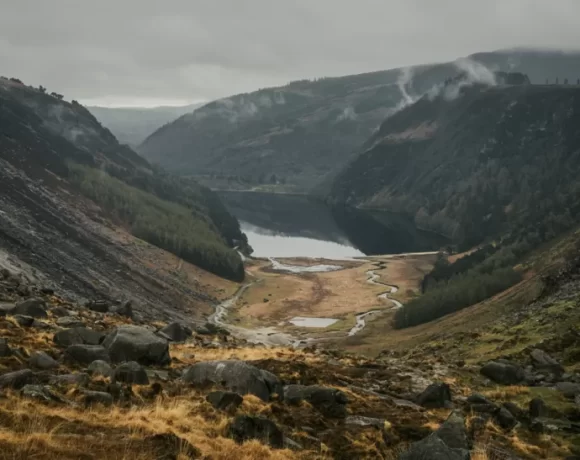
The European Court of Justice has ruled that the Republic of Ireland broke EU nature laws by failing to protect hundreds of sites.

The long-running case was brought forward by the European Commission in relation to the implementation of the EU Habitats Directive.

The court found that the Irish government had failed to designate Special Areas of Conservation for 217 of 423 sites across the country.

The government also neglected to set “site-specific detailed conservation objectives” at 140 sites.

The court awarded the costs of the case against the Irish government but the issue of fines was not determined.

The Habitats Directive, external aims to protect over a thousand species of animal and fauna and 230 characteristic habitat types.

The overall objective is to ensure that those species and habitats are maintained or restored to a favourable conservation status within the EU.

The Irish Wildlife Trust (IWT) said the ruling was a “damning finding against Ireland” that comes as no surprise.

The IWT’s campaign officer Pádraic Fogarty said it was not seeing changes where it mattered despite some positive initiatives.

“We have whole sectors whose ecological footprints are out of control, particularly agriculture but also forestry, fishing and peat extraction,” he said.

Irish Heritage Minister Malcolm Noonan said he recognised the importance of the judgement and was examining it with the National Parks and Wildlife Service and in consultation with the attorney general.

“It is important to note that the court’s findings refer to the position in January 2019,” he said.

“This government has made very considerable progress in recent years,” he added.

“I am confident that we will respond to this judgement swiftly with positive and constructive actions in order to bring Ireland into full compliance.”

Subscribe to our Telegram and YouTube Channels also join our Whatsapp Update Group

BBC/Taiwo Akinola

Foreign

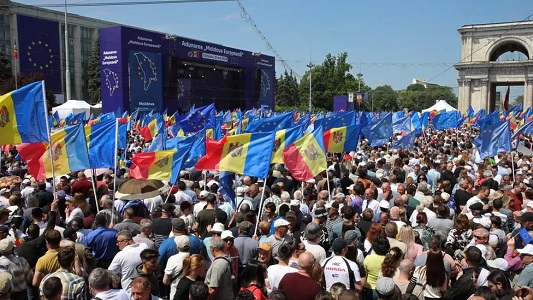
A huge pro-EU rally has taken place in Moldova’s capital Chisinau, organised by the country’s President Maia Sandu.

An estimated 75,000 people turned out to support Moldova’s push to join the European Union.

Her pro-Western government has accused Russia of stoking tensions by supporting Moldova’s pro-Russian opposition Sor party. Moscow denies meddling in the country’s affairs.

Ms Sandu told demonstrators her country no longer wanted to be an outlier.

“We don’t want to be on the outskirts of Europe anymore,” she said, pledging that Moldova would become a European Union member nation by 2030.

Moldova also “does not want to be blackmailed by the Kremlin,” she told the rally, where crowds waved EU flags and chanted pro-European slogans.

In February, Ms Sandu accused Russia of plotting to use foreign “saboteurs” to overthrow her government, saying the plot would involve “protests by the so-called opposition”, aiming to “overthrow the constitutional order”.

Russia’s foreign ministry dismissed the accusations, branding them “completely unfounded and unsubstantiated”.

Moldova, a former Soviet republic which has a population of about 2.6 million, applied last year to join the EU and in June 2022 became a candidate country, alongside Ukraine.

Russia’s invasion of Ukraine has accelerated both countries’ attempts to join the 27-nation bloc – not least because of the protection it offers against any Russian threat.

Moldova has been badly affected by the war, with Russian missiles reported to have crossed into Moldovan airspace on their way to Ukraine, on multiple occasions.

The country, which sits between Ukraine and Romania, is also dependant on Russian gas – something Moscow exploited last year by cutting its supply to Moldova by half.

This sparked protests over the rising price of gas and electricity, which contributed to the resignation of Moldova’s former prime minister Natalia Gavrilita earlier this year.

At the rally on Sunday, European Parliament President Roberta Metsola addressed the crowds, praising them for defying Russian threats to come out in their thousands.

She told the BBC the EU would welcome Moldova “with open arms and open hearts” and that a “Europe with Moldova can be stronger”.

She added that the Moldovan government was “slowly implementing reforms” that the EU wants in place before accession negotiations begin – which include amendments to the justice system and a commitment to “fight corruption at all levels”.

“We’re very impressed, frankly speaking, by the progress so far,” Ms Metsola said.

Analysis by the Pew Research Centre think-tank shows that current EU members were granted candidacy status, on average, 3.5 years after applying.

Ukraine and Moldova’s applications were approved much faster than that, taking less than four months, but it could still take some time for them to get full member status.

BBC/Simeon Ugbodovon

Subscribe to our Telegram and YouTube Channels also join our Whatsapp

Politics

BY OLAITAN OYE-ADEITAN

It’s a defining moment in the history of Nigeria as citizens anticipate who their next leaders would be in the next four years.

But one thing appears paramount, a desired change in all spheres of economic life which requires active voices.

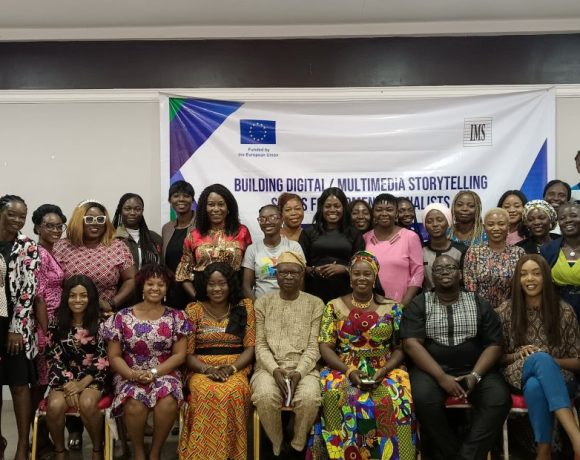
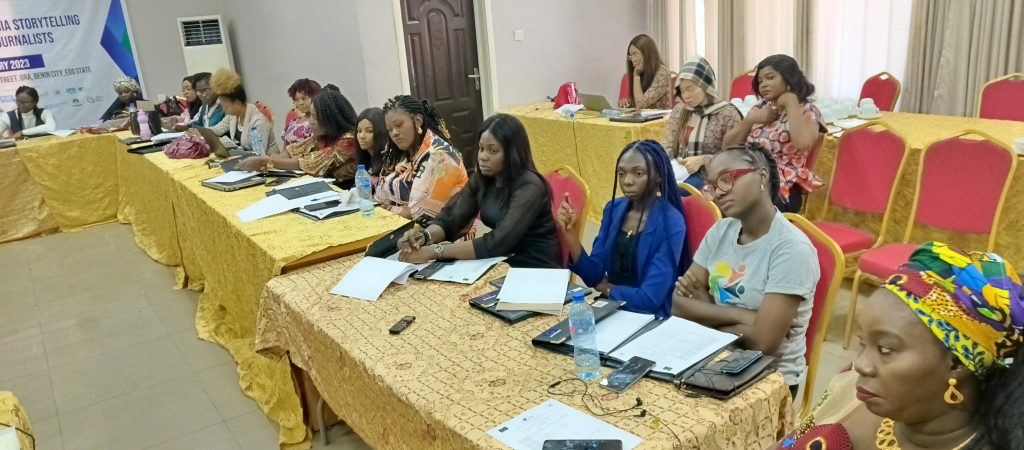
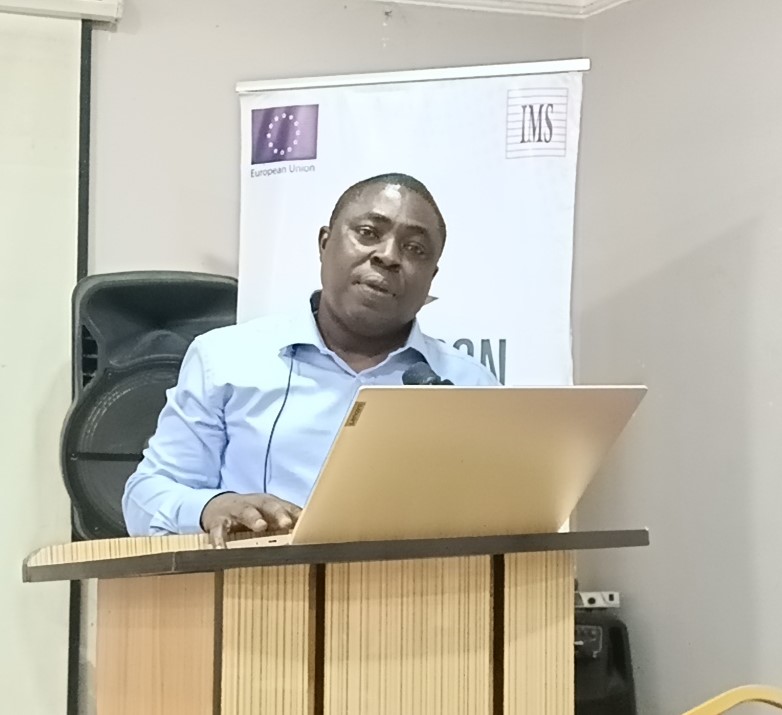
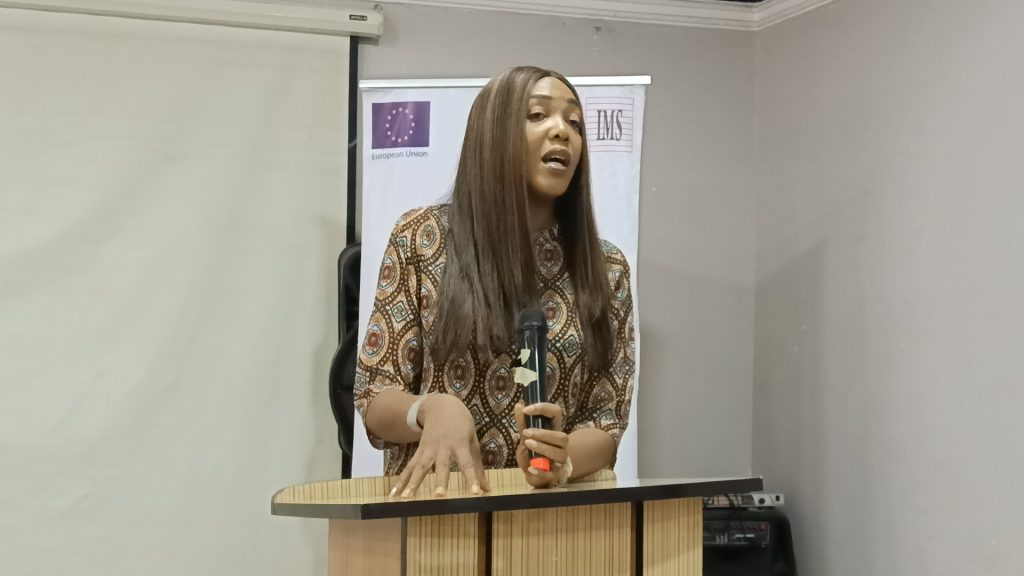
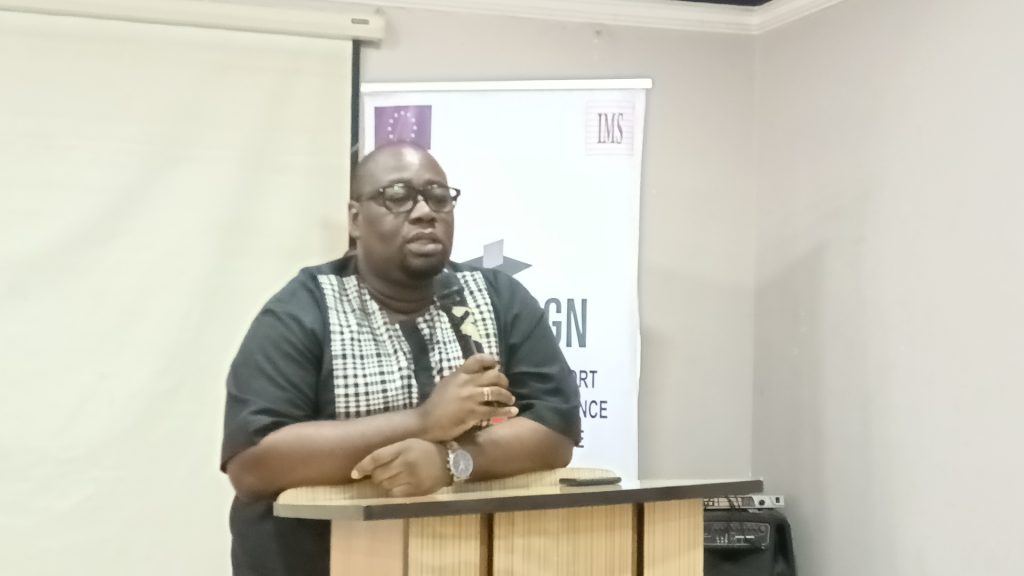
One of the initiatives put in place by the Institute for Media and Society, IMS in achieving this goal is to build the capacity of female Journalists, especially in digital multimedia storytelling skills to be able to participate effectively in the coverage of electoral processes.

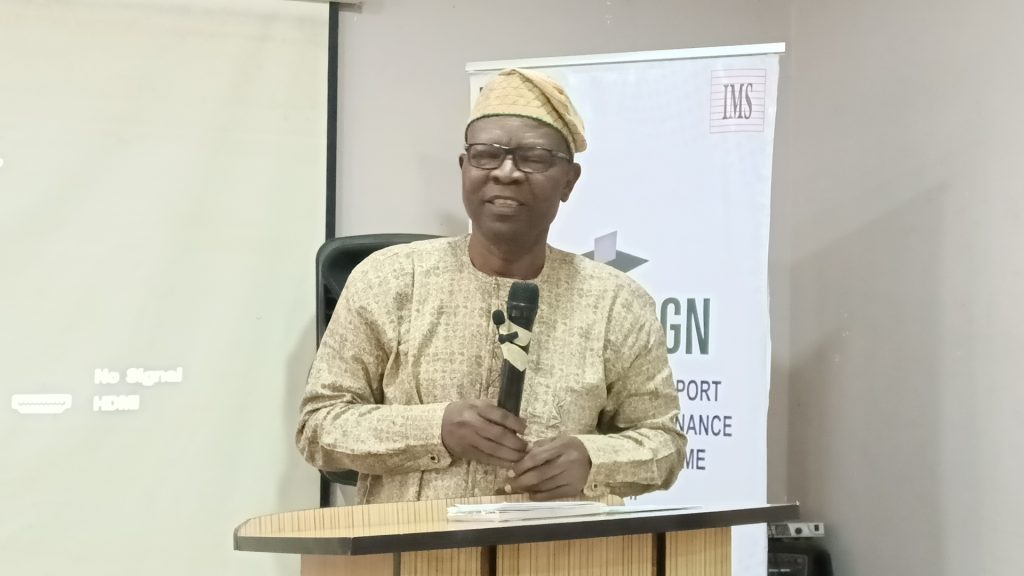
Hence the workshop organised by IMS for female journalists in Nigeria as explained by the Executive Director, IMS, Dr Akin Akingbulu  “We have seen from our engagement and research that women journalists have not been participating as actively as they should in the coverage of the electoral process. One of the reasons behind it is that they also do not have sufficient skills, especially in the digital era that is essential in the coverage of the electoral process”, Dr Akingbulu said.

Dr Akingbulu pointed out that enhanced capacity would produce enhanced professionalism.

Project Manager, IMS, Mr Timothy Bamidele explained that the programme was to ensure inclusive, pluralistic and all stakeholders participatory democracy as the 2023 elections draw nearer.

“This is in fulfilment of the European Union’s vision in ensuring that good governance is entrenched in Nigerian.

One of the overall objectives is to deepen inclusion, especially for groups whose voices have not been amplified. Women, youths have been captured so that in all areas of professional development, women should be able to have the voice and contribute their own quota to national development”, Mr Bamidele added.

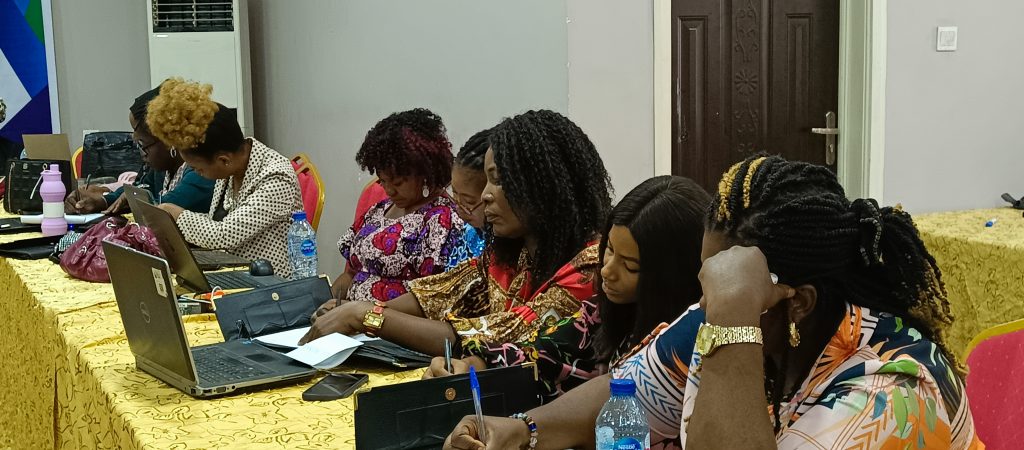
Participants were taken through impactful and engaging training sessions on digital multimedia storytelling by versatile facilitators, Ehi Ohiani and Cyril Usifo.

Technical Sessions With Ehi

Listening to this tall fair in complexion lady was really captivating.

She combines beauty with brains, dishing out digital methods of telling the public stories in a more interesting manner that would help them to make informed decisions, keep the government on their toes and engender positive change in Nigeria.

Mrs Ehi equally demonstrated ways of handling facilities such as the camera to have excellent images while stressing the need for journalists to uphold integrity in all they do.

Time With Cyril

Technical Sessions with Cyril were quite illuminating and interesting.

With the practical demonstration, he opened the eyes of the female journalists to various social media and publishing tools that would assist them in their productions.

Cyril Usifo hammered on the need for women to extend their passion to creating content that would meet the core needs of the audience.

Mr Network

Mr Network was one character some participants could not wait to lay ambush for as it kept evading being caught during an aspect of the workshop.

Participants however attested to the fact that the training would spur them to make significant impacts in their profession.

Olaitan Oye-Adeitan

Subscribe to our Telegram and YouTubeChannels also join our Whatsapp Update Group

Foreign

The EU says, leaks in two major gas pipelines from Russia to Europe have been  caused by sabotage – but stopped short of directly accusing Russia.

According to report, European Commission head Ursula von der Leyen said deliberate disruption would meet the “strongest possible response”. Meanwhile, the EU has previously accused Russia of using gas supplies as a weapon against the West over its support for Ukraine.

But Kremlin spokesman Dmitry Peskov dismissed accusations of sabotage as “predictable, stupid and absurd”.

The US Secretary of State Antony Blinken said he thought the leaks would “not have a significant impact on Europe’s energy resilience”. Neither pipeline is transporting gas at the moment, although they both contain gas.

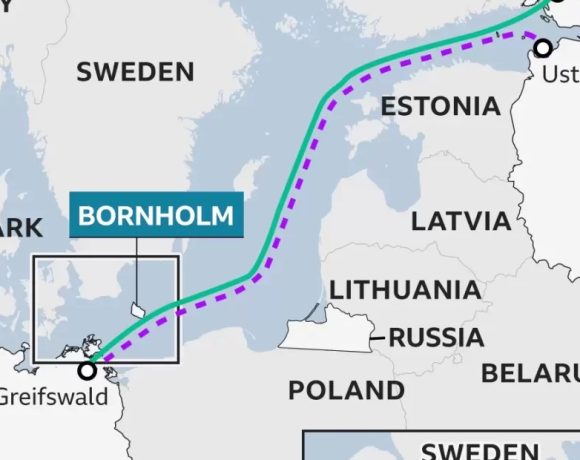
The operators of Nord Stream 2 warned of a loss of pressure in the pipeline on Monday afternoon. That led to Danish authorities saying ships should avoid the area near the island of Bornholm.

Then on Tuesday, the operator of Nord Stream 1 said the undersea lines had simultaneously sustained “unprecedented” damage in one day.

The Nord Stream 1 pipeline – which consists of two parallel branches – has not transported any gas since August when Russia closed it down, saying it needed maintenance.

It stretches 745 miles, 1,200km, under the Baltic Sea from the Russian coast near St Petersburg to north-eastern Germany.

Its twin pipeline, Nord Stream 2, was halted after Russia invaded Ukraine in February.

Mike Fulwood, a senior research fellow at the independent Oxford Institute for Energy Studies told the BBC sabotage was, indeed, the most likely cause of the leaks.

“To rupture an offshore pipeline is a rare occurrence, so three in 18 hours would be a big coincidence,” he said.

If the sabotage was indeed committed by Russia, this was a “bizarre” move, he said, as it had already shut supplies off.

He estimated that repairs could take between three and six months, as the damaged sections would need to be replaced. Similar damage to a different pipeline in the past took nine months.

Dmitry Peskov said he was “extremely concerned” about the leaks, adding that the possibility of a deliberate attack could not be ruled out.

Greenpeace raised concerns over the leaks, saying they could have the same detrimental impact on the environment as 30 million tonnes of carbon dioxide.

But the German environment ministry said the leaks would not pose a significant threat to marine life.

BBC/Taiwo Akinola


Subscribe to our Telegram Channel and join our Whatsapp Update Group

Foreign

The European Commission has given more details on how it plans to end Europe’s dependence on Russian fossil fuels.

Russia supplies 40% of the EU’s natural gas and 27% of its imported oil. The EU sends the country roughly €400 billion a year in return.
According to report, now, the EU plans to speed up its shift to green energy but says it must also invest in pipelines in other countries.

It has been accused of helping fund the war in Ukraine through its use of Russian energy.

Rising energy costs have also put financial pressure on consumers and businesses in Europe now facing higher bills.

The updated proposals outline not just how the EU plans to negotiate both the immediate gas crisis, but also deliver on promises to completely wean itself off Russian energy by 2030.

The strategy focuses on three key topic areas. Improving energy efficiency, expanding the use of renewable energy and securing non-Russian suppliers of oil and gas.

“We are taking our ambition to yet another level,” European Commission President Ursula von der Leyen said as she presented the update at a briefing in Brussels, Belgium.
The REPowerEU plan is estimated to cost €210 billion, £178 billion, over the next five years.

BBC/Taiwo Akinola

Foreign

The EU is expected to outline fresh sanctions against Russia later today, including a plan for potentially phasing out Russian oil.

This is a big move given how many member states are reliant on this source. Overall, the bloc relies on Russia for 26% of its oil imports.

They’ve already paid more than £47 billion euros ($47.43bn) to Russia for the country’s gas and oil since the war began.

Germany has indicated that it would be able to manage without Russian oil by the end of 2022. EU nations have been tussling this week on how to wind down their dependence on Russia.

But some nations – like Hungary and Slovakia – are much more heavily exposed to Russian oil and gas. Hungary, especially, has opposed stronger energy sanctions against Russia.

BBC/Taiwo Akinola

Foreign

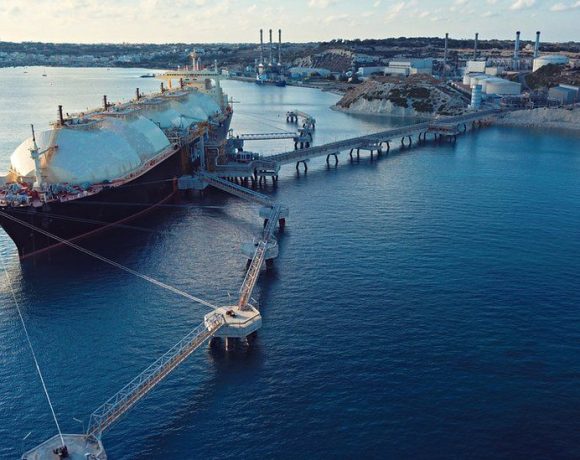
The US and the EU have announced a major deal on liquified natural gas, in an attempt to reduce Europe’s reliance on Russian energy.

The agreement will see the US provide the EU with at least 15 billion additional cubic metres of fuel – known as LNG – by the end of the year.

The bloc has already said it will cut Russian gas use in response to Russia’s invasion of Ukraine.

Russia currently supplies about 40% of the EU’s gas needs.

Cutting reliance will mean increasing imports and generating more renewable energy.

The longer-term aim is to ensure, until at least 2030, about 50 billion cubic metres per year of US gas, up from last year’s 22 billion cubic metres.

The deal was announced on Friday during a three-day visit by US President Joe Biden to Brussels.

Mr Biden and European Commission President Ursula von der Leyen discussed Russia’s invasion of Ukraine and offered fresh support to Kyiv.

“Putin is using Russia’s energy resources to coerce and manipulate its neighbours,” Mr Biden said to reporters in Brussels. “He’s used the profits to drive his war machine.”

He said the long term benefits of the deal would outweigh the short term pain that reducing Russian gas supplies would cause.

“I know that eliminating Russian gas will have costs for Europe, but it’s not only the right thing to do from a moral standpoint, but it’s also going to put us on a much stronger strategic footing.”

President von der Leyen said: “We want, as Europeans, to diversify away from Russia towards suppliers that we trust that our friends and that are reliable.”

She pointed out that the target 50 billion cubic metres per year “is replacing one-third already of the Russian gas going to Europe today. So we are right on track now to diversify away from Russian gas.”

BBC

Economy

It is a relief that the European Union (EU) supports the view canvassed by Nigeria that gas be considered a transition fuel as the global community moves towards net-zero emissions targets.

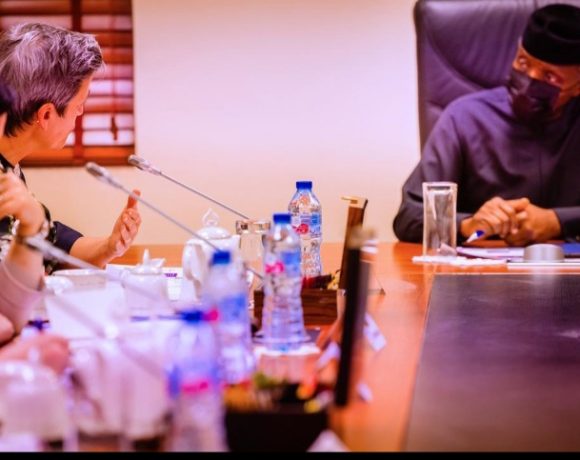
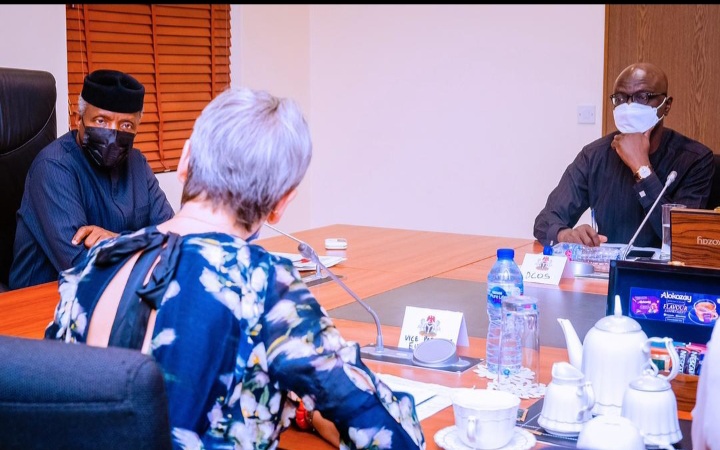
Nigeria’s Vice President Yemi Osinbajo, SAN, said this while receiving at the Presidential Villa last night, a delegation of the European Commission led by its Executive Vice-President, Margrethe Vestager, who is currently on a visit to the country.

According to Prof. Osinbajo, “we are relieved to hear of the EU’s support on gas as a transition fuel. It’s some bit of relief.” Nigeria has been in the forefront of the international advocacy on the issue and the Vice President has spoken and written about it in different international forums.

Issues discussed at the meeting included the use of Digital Technology, Trade and Investment. The importance of the energy relationship between Nigeria and the EU also featured, while a consideration of all options for increased supply of Liquified Natural Gas (LNG) from Nigeria to the EU was agreed to, following a request from the EU.

A technical meeting on this will be convened shortly.

The European Commission’s Executive VP informed Prof. Osinbajo on the announcement by President of the Commission, Ursula von der Leyen, of a Global Gateway Africa-Europe Investment Package worth €150 billion.

In that context, she announced an EU-Nigeria Digital Economy Package of at least €820 million until 2024. The package will help enhance secure connectivity, digitalise public services, support entrepreneurship and build digital skills, while developing a human-centric, democratic governance framework for technology.

Welcoming on the EU Digital Economy support, which the Vice President Osinbajo described as impressive, he noted that the use of Digital Technology is crucial in Nigeria’s recently released National Development Plan.

Finally, the importance of a renewed Nigeria-EU partnership was noted during the meeting, including expectations for a successful EU-AU (European Union – African Union) Summit in Brussels later this week, specifically on the 17th-18th of February.

Laolu Akande,
Senior Special Assistant to the President on Media & Publicity,
Office of the Vice President.
14th February 2022.

Agriculture

Ogun State Government in collaboration with GIZ, European Union, has embarked on training of youths and women in cultivating tomato, chili pepper and its value-chains.

Flagging-off the training at Eweje Farm Institute, Odeda, Wife of the State Governor, Mrs. Bamidele Abiodun explained that, the exercise was aimed at empowering three thousand smallholder farmers, towards increased productivity, such as linkages with inputs, credits, markets, job creation and food security, which was in line with the present administration’s goal on job creation and food sufficiency.

Mrs. Abiodun encouraged the participants to explore the insights gained at the training, towards best agricultural practices, assuring that government would not relent at empowering youths and women in various agricultural opportunities. 

Commissioner for Agriculture, Dr. Adeola Odedina, noted that Ogun and Lagos States had early in the year launched Nigeria Competitiveness Project aimed at assisting farmers in cultivating tomato and pepper. 

Dr Odedina described the Farm Institute as an ideal training centre where farmers would be groomed on modern and mechanised agricultural practices.

Speaking on behalf of the participants, Alhaja Hairat Ogunmoye, who lauded the initiative, appealed to government to sustain the training to enable farmers in other parts of the state to benefit and become financially stable.

Olusegun Folarin

Environment

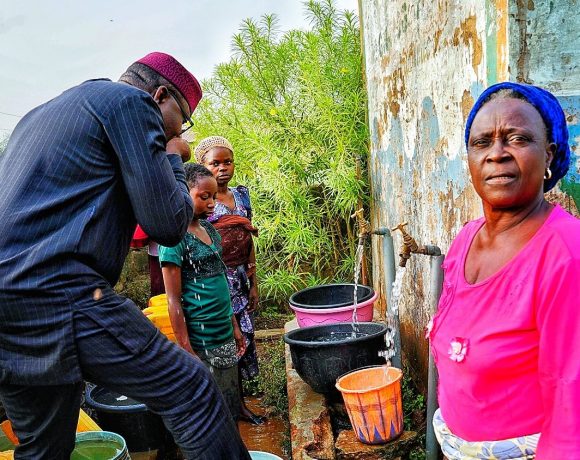
The European Union has concluded arrangement to partner Ekiti State government to improve citizens’ access to potable water with affordable and sustainable commercialisation policy in the Water Sanitation and Hygiene Sector.

Policy Expert of European Union in Ekiti State, Mr. Alaba Ogunsajo, stated this at a forum for stakeholders in the Water, Sanitation, and Hygiene (WASH) sector on commercialization and regularization of water services in the state.

Radio Nigeria’s Tope Bamidele has the rest of the story.

Tope Bamidele