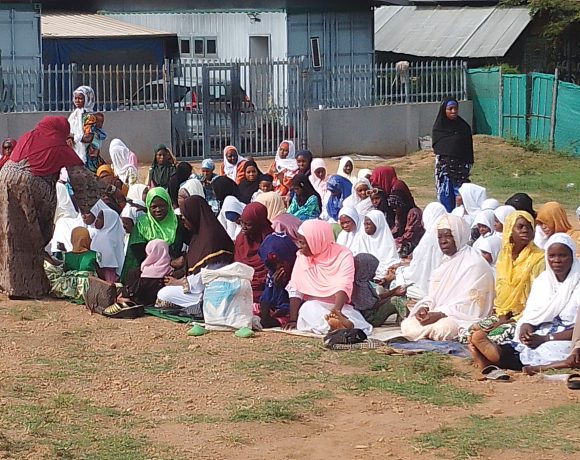
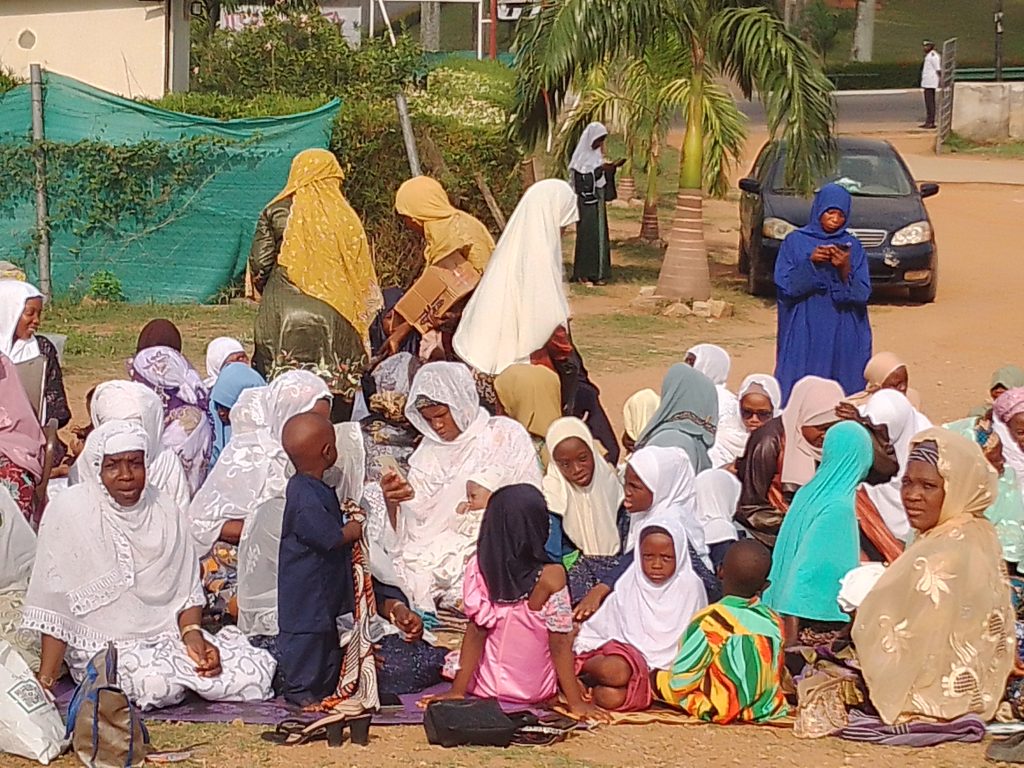
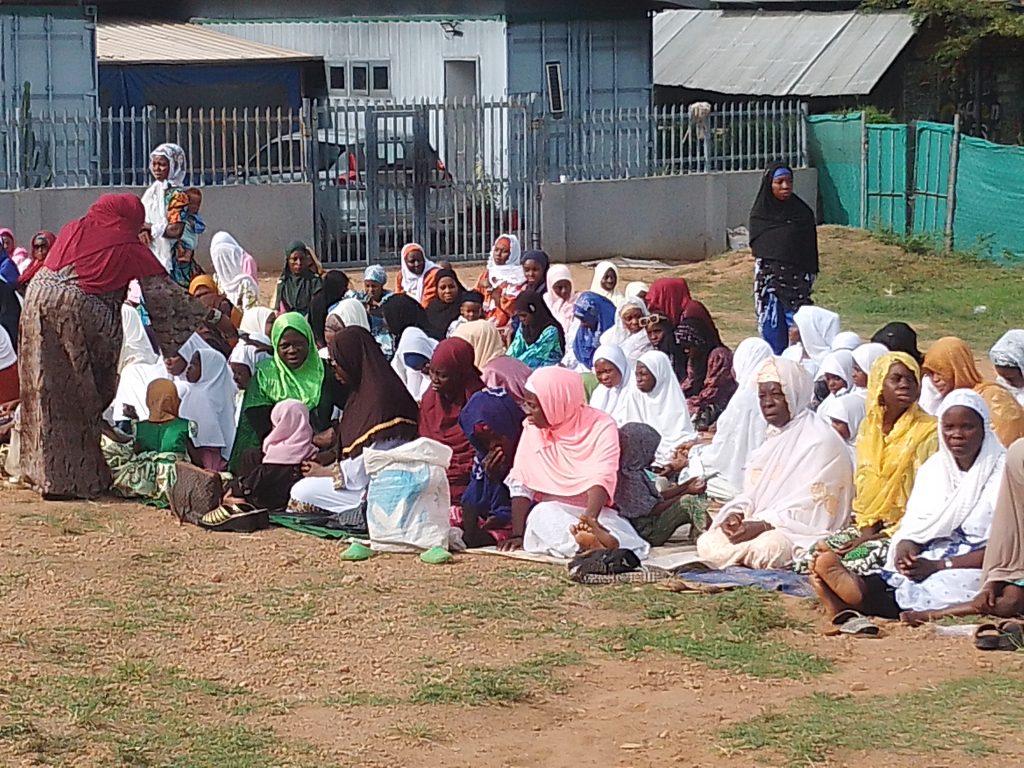
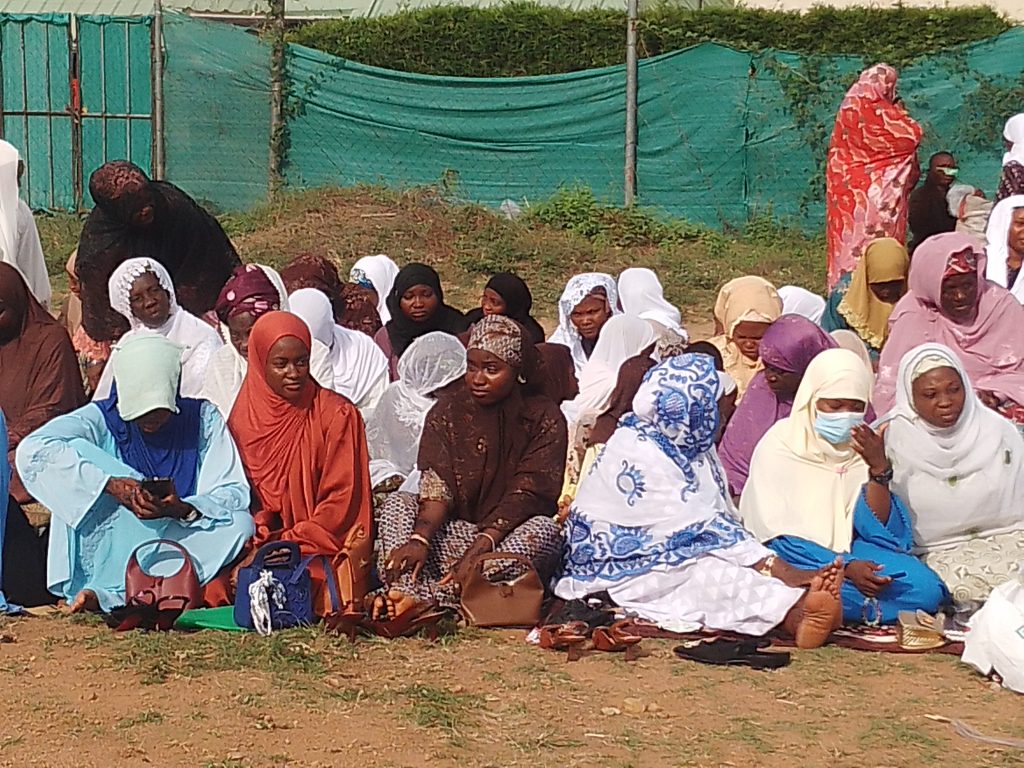
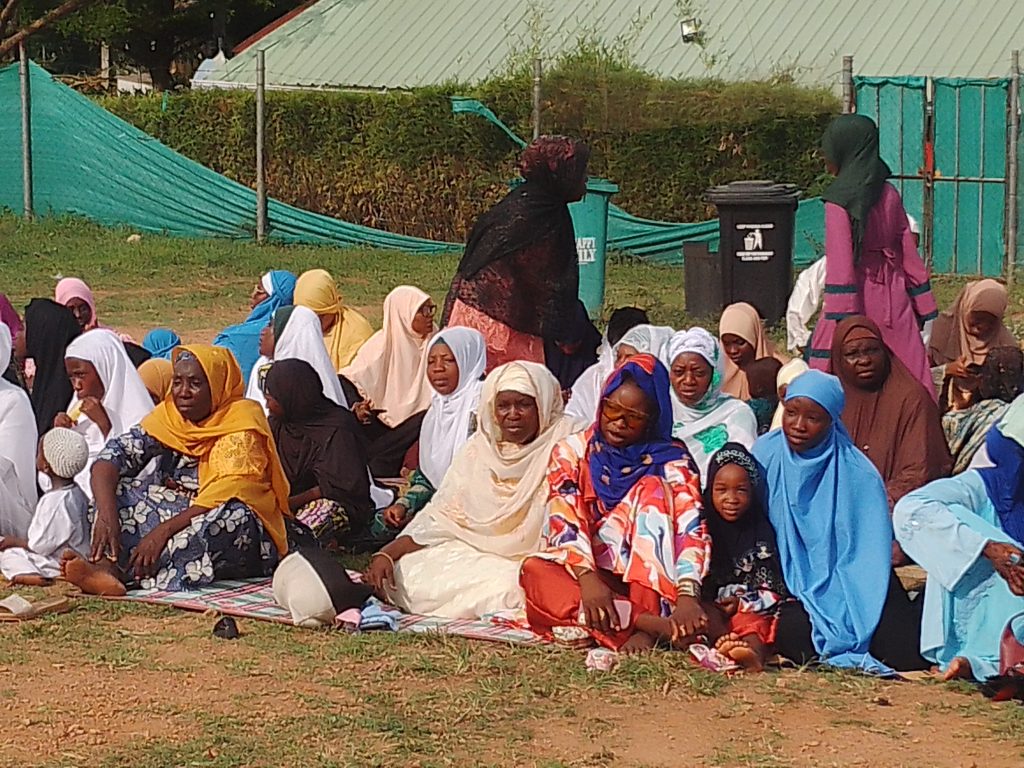
Muslim faithful in Ibadan on Friday converged on various prayer grounds to observe Eid-el-Fitr prayers, marking the end of the annual Ramadan fast.
A Radio Nigeria correspondent reports that worshippers turned out in large numbers, dressed in colourful attire, to celebrate the occasion.
At the Jiboye area of Ibadan, Oyo State capital, the Chief Imam of Ojerinde Central Mosque, Alhaji Abdulkabir Akorede, emphasized the need to sustain the values of Ramadan to promote global tolerance and peaceful coexistence.
Addressing the congregation, Alhaji Akorede said adherence to the teachings of Ramadan would guide nations in making the right decisions and help prevent conflicts.
He stressed the importance of empathy, self-restraint, and kindness, noting that such virtues attract divine blessings.
The Chief Imam also cautioned against the pursuit of wealth through unethical means, emphasizing that true prosperity comes only from Allah.
Some Muslim faithful who spoke with Radio Nigeria expressed gratitude to Allah for witnessing this year’s Eid-el-Fitr, noting that prevailing economic challenges would not dampen their celebration.
They appealed to the government to prioritize citizens’ welfare as a pathway to achieving a crime-free society.
Radio Nigeria observed that movement across the city was relatively low, attributed to the high cost of transportation fares.
Photos from the Ahmmadiyy Muslim Jamm’at Eld-el-Fitri Praying Ground
The Muslim congregation on the Ahmmadiyy Muslim Jamm’at’s Eld-el-Fitri Praying Ground at the International Institute of Tropical Agriculture, IITA, Police Post, Idi-Ose, Moniya, Ibadan.
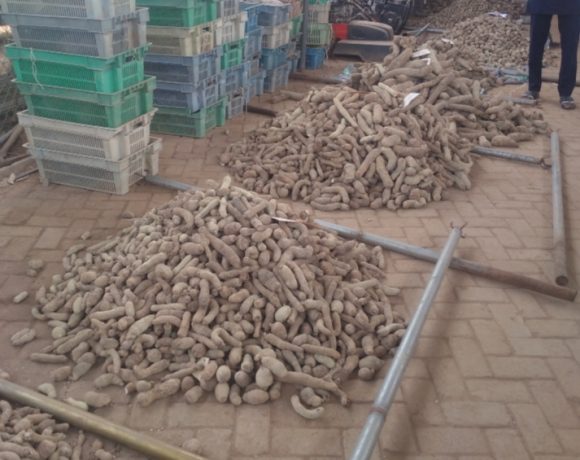
Agricultural scientists have developed an improved method of generating seed yam to make planting yams easier and more commercially available.
This new breed of seed yam is known as minituber.
This discovery is a collective effort of a group of seed scientists known as Programme for Seed System Innovation for Vegetatively Propagated Crops in Africa, PROSSIVA, led by International Institute of Tropical Agriculture, IITA and complemented by other national partners.
As explained by the yam component lead in the project, Professor Morufat Balogun, the mini tuber when experimented generated high volume of seeds in the nursery and field environment which was ten times what the traditional method would produce using the same land area.
Professor Morufat Balogun said the traditional mode of yam planting had too numerous impediments in achieving the mass production of yam
including slow propagation ratio of seed yam resulting in harvest of contaminated tubers with some becoming rotten shortly after harvest.
“Yes the three objectives have been achieved. They have seen their own milking method and the improved methods. Their milking method is ratio one to two and the improved method is ratio one to one hundred. They have chosen the mini tuber which is “chinchin” mini tuber. So we will pursue the different model”
Professor Balogun advised government to partner PROSSIVA for enhanced yam production as a way to achieve food sufficiency.
In their separate presentations, Drs Delphine Amah, PROSSIVA Co-Lead, Dr Beatrice Aighewi, Temi Adegoroye of SAHEL consulting, Djana Mignouna and Lava Kumar who were representative of various yam component specialities in PROSSIVA took turns to address seed yam production including agronomic and quality management including viruses and other diseases affecting yams as well as business aspects and logistics in the monitoring and delivery of seed yam to target farmers.
Also, the Director of Seed Coordination and Management Services, National Agricultural Seed Council, Mr. Ebiarede Zidafamor, advised farmers to register with appropriate authorities in order to become seed entrepreneurs.
He also urged them to approach appropriate seed companies to obtain mother plants for improved seed production.
“we (NASC) need to know that the materials you are going to use as a producer or even before you become one of us, the seed must be a released variety and it must at least be quality materials that have been accepted as generic and must have undertaken to our seed certification. To be a registered seed entrepreneur the following steps must have been undertaken, you put in an application that you want to be an entrepreneur with the following attachment. The attachment would be the registration with the Corporate Affairs Commission, writing in the certificate that says the article of association that says you want to go into seed production, packaging and marketing.
” The next step would be for the council to now review all that you have submitted. So if you have done this, then we issue you the form and the committee to scrutinize your application and if passed you are granted approval to become a seed entrepreneur. Before we give you certificate again too, we come for facility inspection to make sure you are right on ground. Thereafter you are recommended to the body and you are approved”
The Vegetative seed specialist of IITA-GOSeed, Dr Mercy Diebiru-Ojo, explained that early generation seed yam production pathways could lead to income generation.
“what this project want to do is to make sure we want to have seed companies or seed producers who are producing Vegetation crops so that high quality seeds will get to the farmers. The farmers are within our communities. But this planting materials are perishable, so there is no better way to make the seed available than to have it where it is grown. That is why we talked about decentralized seed entrepreneurs”
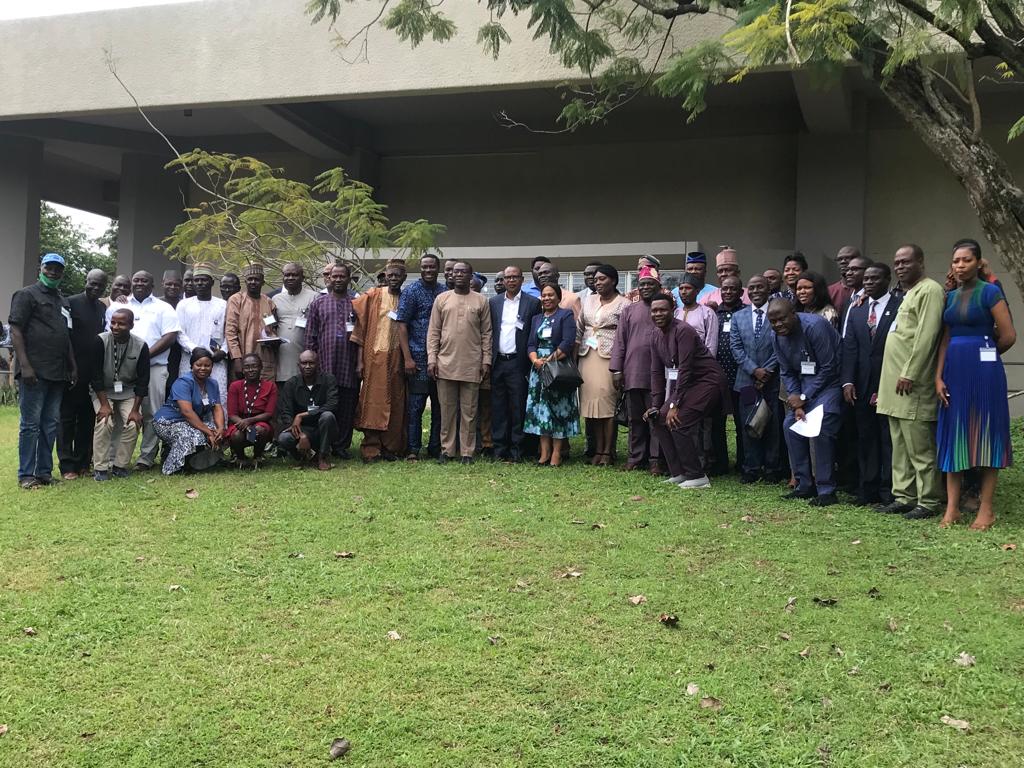
Aside farmers from registered associations in some local governments, young farmers’ and agricultural students from the Department of Crop Protection and Environmental Biology at the University of Ibadan participated in the workshop.
The women, who constituted half of the participants, expressed their willingness to engage in seed yam entrepreneurship alongside their male counterparts producing food yams.
“Today’s programme is a very good one and I really enjoyed it. As a farmer, we need to get the clean seed to plant. It shows that we took can start seed yam entrepreneur”
“This programme is very fantastic and I will follow it immediately the rain starts to fall.”
The new improved seed yam production by PROSSIVA began six months ago with planting of leaf bud cutting identified as vine cutting and mini tuber which were harvested three months and five months after.
Oyo State governor, Engineer Seyi Makinde has reiterated his commitment to making the state a modern agribusiness hub in Sub-Saharan Africa, just as he promised to give more support to farmers and improve infrastructure and security with a view to attracting large investments in agriculture to the state.
He stated this in his opening remark at an event themed, “Agribusiness for Food Security Initiative”, held at the International Institute of Tropical Agriculture, (IITA), Ibadan.
Governor Makinde noted that his government remained resolute in bringing prosperity to the state and would continue to support youths.
The governor said in his Roadmap for Accelerated Development, that he had thought of how to take the people from poverty to prosperity, noting that given the state’s comparative advantage of arable land, it was clear that embracing agriculture was the way to go, but it was also obvious that using the old method of farming would not produce the desired result.
He said, “We are a state that was doing poorly on economic indices. The internally generated revenue was low for a state that has a rich history of economic development and we are close to the nation’s commercial capital. Lagos is not far from here. Every month, they do an IGR of about N65bn and here, when we came in, it was N1.8bn but we have now managed to push it close to N4bn.
So, in terms of where we want to be, we have not scratched the surface yet.
“So, we had to find a way to stimulate the economy quickly. Our comparative advantage is the arable land. If we are to achieve accelerated development, we have to build our economy around this advantage. The 11 local government areas in Ibadan are double the size of the whole of Lagos State. So, it was a no-brainer that we have to leverage agriculture and agribusiness, but we are not content with practicing agriculture like it was done in the past.
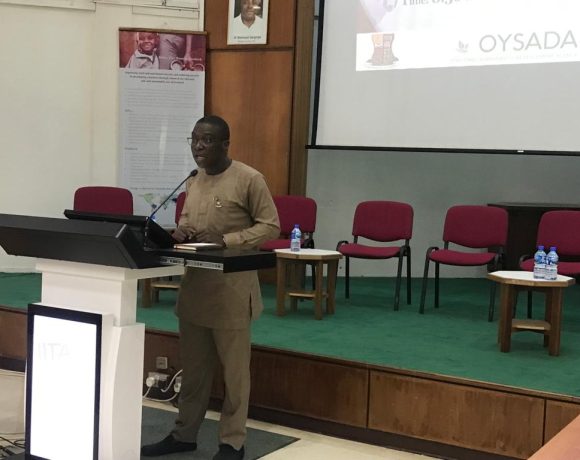
“We need an economic solution driven by data. We need an achievable strategy powered in a new way of thinking about agriculture. One of the platforms set up to drive the new way of thinking about agriculture was the Oyo State Agribusiness Development Agency (OYSADA), headed by Dr Debo Akande.
“So, I will also say that Dr Akande has been instrumental in pushing the new way of practising agriculture in Oyo State and I can tell the whole world that this is yielding dividends. To achieve this, we will focus on partnerships to drive agribusiness, working with the private sector and development organisations.”
Governor Makinde said for Oyo State to become a modern agribusiness hub in Sub-Saharan Africa would require the attraction of large investments in agriculture, adding that to attract the kind of investments needed by the state; it would need to provide adequate infrastructure and security.
He said though the state on his watch had done so well with the provision of infrastructure and security, it would still do more to buoy investors’ confidence.
Talking about the Fasola Industrial Hub, the governor said developing it had provided the state a learning opportunity that would come handy as the state embarks on building Eruwa and Akufo industrial hubs.
The governor lauded the IITA for helping the state with high-quality seeds which are propelling increased productivity in the state.
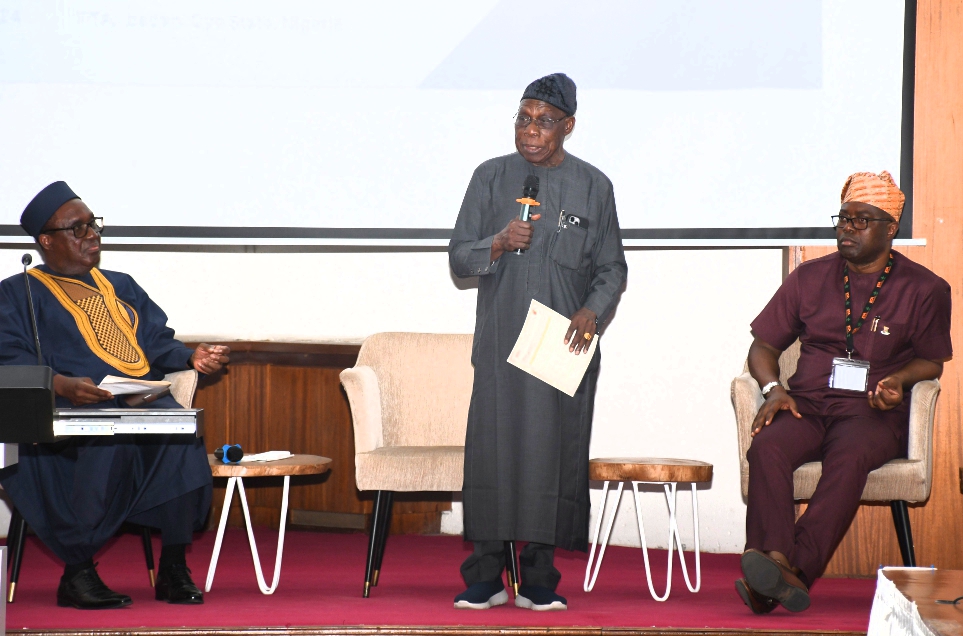
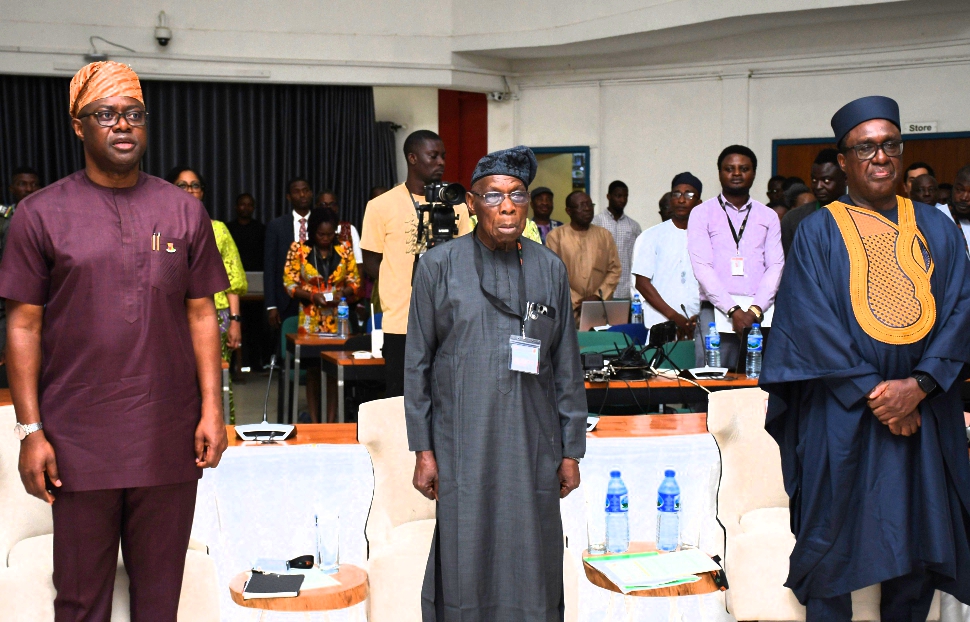
In a keynote address, a former President of Nigeria, who is also an Honorary Ambassador of IITA, Chief Olusegun Obasanjo, said agribusiness would play a vital role in the future of the country.
Chief Obasanjo said that the federal government should not be directly involved in agribusiness since the states have the landmass, resources, manpower, innovations and the infrastructure to develop holistic strategies for food security.
He commended the efforts of women in agribusiness and also encouraged them to do more as food security and food nutrition would go a long way in providing more employment, boost the foreign exchange, and increase in internally generated revenue.
Earlier in his welcome address, the Africa Continental Director CGIAR/ Director General IITA, Dr Simeon Ehui, said the forum was aimed at addressing pressing issues on food security and to drive positive changes by leveraging major stakeholders to ensure a sustainable future for the present and next generation.
Some beneficiaries of Oyo State Youth Entrepreneurship in Agribusiness Project (YEAP), Ibukunoluwa Tubi and Dolapo Opekun, lauded the initiative which has brought hope to youths. They also thanked Governor Makinde for empowering and supporting youths.
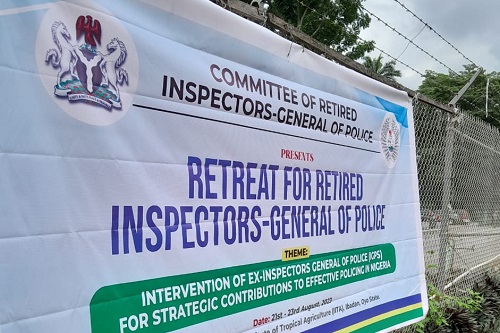
Former Inspectors General of Police in Nigeria have arrived for a two-day Retreat which opens tomorrow, Tuesday, August 22nd 2023.
The event holds at the International Institute of Tropical Agriculture IITA, Ibadan Oyo State.
Already in town for the Retreat are the Chairman of the Committee of Retired Inspectors General of Police, Alhaji Aliyu Atta, GCON; Ogbonnaya Onovo, CFR, Hafix Ringim, CFR, Dr. Solomon Arase, CFR, Chairman Police Service Commission and Ibrahim Kpotun Idris CFR.
Others such as Dr. Mike Okiro, CFR, Sunday Ehindero, CFR and the acting Inspector General of Police, Dr. Olukayode Egbetokun are being expected. The National Security Adviser, AIG Nuhu Ribadu rtd is also expected to attend the Retreat.
The other members of the Committee that are outside jurisdiction have also confirmed their participation via zoom.
According to a release signed by the Secretariat Committee of ex-IGPs 2023 Retreat, Ikechukwu Ani, the Retreat has as theme: ‘Intervention of Ex-Inspectors General of Police for Strategic Contribution to Effective Policing in Nigeria’.
Several topical papers will be presented at the Retreat such as Current State of Police Preparedness, Issues, Challenges and Prospects and Strategic Actions and Steps towards Restoring NPF’s Primacy in Internal Security Architecture of Nigeria.
There will also be a discussion and experience-sharing session on the imperativeness of employing the experiential knowledge of the retired IGPs in the effective management of internal security in Nigeria.
Alhaji Aliyu Attah GCON, retired Inspector General of Police and Chairman of the Committee said the ex- Inspectors General of Police have a lot to offer the nation in the search for solutions to the persisting and ravaging security crisis in the country.
He said the Retreat would afford the ex-IGPs the opportunity to examine and proffer solutions using their varied experiences while in service.
Oyo State Governor, Engineer Seyi Makinde says his administration will continue to collaborate with development partners and the private sector to promote economic growth.
The governor, who stated this while receiving the British Deputy High Commissioner, Ben Llewellyn -Jones, who paid him a courtesy visit at the Governor’s Office, Agodi, Ibadan said his government alone cannot develop the state’s economy.
Governor Makinde expressed happiness at having a sit down with representatives of the British Government to discuss opportunities with development partners and the private sector.
Earlier, the British Deputy High Commissioner, Ben Llewellyn-Jones told the governor that the essence of the meeting was to talk about some areas his country and Oyo State could collaborate for development.
He said: “Thank you your Excellency for making time to see me. I know how busy you are. “It is my sixth year in Nigeria and third year in Lagos. My role is to promote UK trade, investment and economic growth across Nigeria. “I have come to see your Excellency to talk about some of the possibilities here in Oyo State.”
He also said that his team will be meeting British Companies as well as officials of the International Institute for Tropical Agriculture (IITA) and will also spend some time to discuss partnerships with the University of Ibadan.
As the population of Nigeria continues to improve, participants at a one-day workshop have identified tax reduction, livestock census, capacity building, and adequate security as panaceas to improve livestock development in the country.
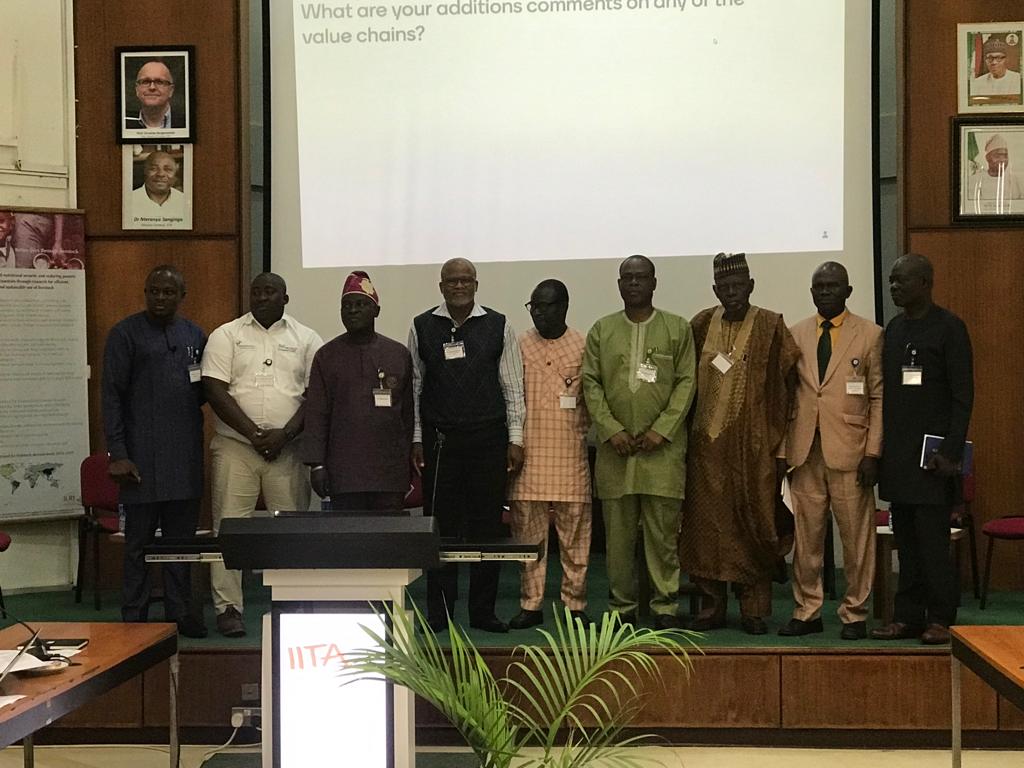
They took the position at a conference organized by the Oyo state Agricultural Development Agency, OYSADA with the theme: Developing Evidence-based plans, policies and investment options in the livestock sector held at the International Institute of Tropical Agriculture, IITA, Ibadan.
The participants decried a situation whereby the country imported livestock from neighbouring states to feed its people called for commercial livestock production.
A lecturer at the Department of Animal Science, University of Ibadan, Professor Olugbenga Ogunwole and a general manager of a diary-producing company, Adekunle Olayiwola lamented the totality of various levies charged at different levels of government, saying overtaxing of food items would unnecessarily push up the cost.
Professor Olugbenga and Mr Adekunle also stressed the need for finance and data for proper planning, and good roads and urged the government to bring in extension officers for the improved livestock sector.
Speaking at the forum, Director General Oyo State Agricultural Development Agency, Dr Debo Akande said the programme was put together to design a strategic plan for Oyo state to improve its livestock sector.
Dr Akande hinted that the action and direction of the present government are yielding results as statistics recently released by NASE, indicated that between 2019-2020, the crop production is higher than what has been doing since 2013 while the size of the land the state is cultivating for five crops cumulatively has grown by 40 acres of land.
Earlier, the Deputy Director General, IITA, Dr Ken Dashiell represented by Sore Zaina described the conference as timely in view of population growth, calling on the government to put Infrastructure in place and the right technology for the livestock sector to meet the needs of the people.
The programme which had in attendance academia, livestock farmers, investors, researchers, policymakers, Miyetti Allah association provided an opportunity for stakeholders to rub minds together and fashion out ways for better livestock production.
Nidi igbiyanju ati mu agbega ba ipese isu lopo yanturu , ile ise ton risi idagbasoke ise agbe nile olooru, IITA ti se agbekale ona igbalode fun ipese eebu isu ti kokoro ko ni le je .
aseyori yi lo jeyo latara akanse ise ti won da pe ni agbega isu fun ipawo wole ati ipese ounje lopo yanturu lapa iwo oorun ile africa eyi ti won da peni
lasiko eto naa to waye nilu ibadan , oludari ileese agbe IITA fekun iwo oorun ile africa, ojogbon Micheal abberton salaye wi pe akanse ise naa lo wa fun ati koju ipenija awon agbe widi ati ri ojulowo eebu isu gbin.
o wa ro gbogbo awon toro naa gberu pe ki won je ki awon agbe maa ri eebu isu lorowoto won.
lara ohun ti waye nibi eto naa ni fifa eebu isu to din e ni egberun meje kilo, to je orisi meji le awon agbe lowo fun gbingbin.
In a bid to boost production of yam, the International Institute of Tropical Agriculture, IITA has developed a technology driven high quality seed yam free of pests and other diseases.
The breakthrough was the product of the flagship project tagged ” Yam Improvement for income and food security in West Africa, YIIFSWA.
At a programme in Ibadan, Director, IITA -West Africa, Professor Michael Abberton, said the YIIFSWA project meant to solve the challenges of farmers’ inaccessibility to quality seed yam as well as unavailability of such seed was a success.
He urged GoSeed, a unit of IITA business incubation platform and other relevant agencies to establish good mechanism by which farmers could get access to clean yam of good varieties.
Speaking while handing over of 6,952.2kg of early generation seed yam of two varieties, Asiedu and Kpamyo to GoSeed for mass production for farmers, a Tissue Culture Specialist with IITA, Professor Morufat Balogun said the seed yam was equivalent to 463,480 unit of 15 grams minisett, adding that “it is almost four times of the agreement signed with GoSeed”.
According to Professor Balogun, breeders would also be distributed to the YIISFWA’s private seed companies partners, to cushion GoSeed production for this season, that’s with the total six thousand units of mini-tuber.
“Now, GoSeed is approved by the National Agricultural Seed Council to be producing early generation seed, which include the breeder seed and the foundation seed.
“So, growers will produce certified seeds from the foundation seed which the farmers will now use to produce yams that we can eat”.
“On top of that we have been training GoSeed two staff in the last one year, taken them through all the novel propagation technologies.
Also, Dr Beatrice Aighewi, YIISFWA II Seed System Specialist, at the event, spoke on the status of YIISFWA II novel propagation technologies and commercialisation of formal seed yam system .
On yam production constraints, Dr. Aighewi identified scarcity of high-quality seed yam of released varieties as the foremost constraint.
He said: “Traditionally, farmers recycle seed tubers by saving at least 30 per cent of their produce to plant during the following cropping season.
“These seed tubers are often infested with pests and pathogens such as nematodes, viruses, fungi and bacteria, that affect the quality of the seed and yields.”
According to Dr. Aighewi, to address the challenge of unavailability to quality seed yam, the flagship project, YIISFWA, has developed and validated tools and technologies to produce seed yam for the establishment of market-oriented seed systems, that ensure the sustainable supply of quality seed yam in Ghana and Nigeria.
“Some notable research achievements include: Development of pathogens-elimination system, using meristem tissue culture techniques combined with heat therapy is one of the notable research achievements of YIISFWA.
“This method gets rid of viruses and endophytes from nucleus stock plantlets.”
Another YIIFSWA Seed System Specialist, Dr Lava Kumar said the high ratio propagation technologies for rapid multiplication of high-quality early generation seed were being used to produce mother plants (breeder seed) for foundation seed yam production.
He noted that the YIISFWA project had successfully promoted and introduced the high ratio propagation technologies for seed yam production in Nigeria and Ghana.
Experts and other key stakeholders in agriculture and food sector have identified African Yam Bean, AYB as a food security crop with numerous benefits and capable of tackling malnutrition in the country.
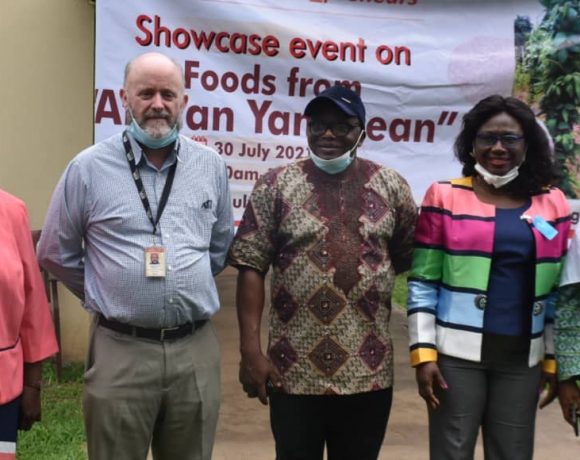
They made this known at University of Ibadan during the showcase of event on foods from African Yam Beans.
According to Dr Sarafat Tijani of the Peas’n Chips Entrepreneurs Project Stakeholder Networking, AYB provides excellent source of protein, especially for vegans and vegetarians.
He said the crop could prevent diabetics, obesity and cancer because it’s rich in flavonoid and antioxidant that prevents cancer.
Also speaking, the Dean, Faculty of Agriculture, University of Ibadan, Professor Stella Odebode, said AYB has lots of potential in promoting food security in Africa and should be promoted.
She explained that the crop is unique and the development could help to promote food and nutrition security in the country.
Similarly, The Project Research Co-investigator IITA/UI, Dr Morufat Balogun, said AYB is a drought tolerant crop in which the bean and tubers are edible and increases food diversity.
Dr Balogun who is a Geneticist explained that the crop was resilience because it could stand extreme weather conditions while improving soil fertility emphasized that the crop could be used to alleviate malnutrition during food scarcity.
She said the essence of the workshop was to brainstorm on ways the AYB value chains could be explored to maximise its potential.
Also, a Food Processor and Nutrition Specialist in UI, Mrs Abiodun Adesina, said she made different delicacy from the AYB which included moimoi, bean cakes (Akara) and bean porridge (Adalu).
Similarly, a Farmer who planted AYB, Mr Moses Kolawole, said it was a good source of food and income for his family.
Also, another farmer, Mr Idowu Kazeem, said the AYB could mitigate climate change if it’s intercropped with other crops, adding that it improved soil fertility.
Stakeholders who tasted the products made from the AYB confirmed its uniqueness and urged the government and other interested parties to promote the production as well as processing of the crop.
In a communiqué earlier issued after a stakeholders’ Prioritization Workshop on African Yam Bean held at the International Institute of Tropical Agriculture, IITA, Ibadan, it advocates the development of improved varieties through the creation of AYB breeding programmes in relevant research institutes to speed up its adoption.
The communiqué notes that the challenge of cultivating AYB as an intercrop with yam could be overcome by developing non-climbing varieties while the low awareness and acceptability of AYB compared to other commercial legumes could be tackled by organizing sensitization and promotional programmes for stakeholders in food industries.
It notes that since it is recognized that farmers are disadvantaged in planting AYB because of the absence of improved varieties stressing that the development of a formal seed system for AYB should be considered as a top priority.
The communiqué also identified lack of protection of AYB against pests and diseases as a potential threat to its production and calls on government to encourage and invest on promoting agronomists and plant health specialists to conduct more research on the crop.
It acknowledges that available technical and indigenous knowledge about AYB is a strength that encourages its adoption as a food security crop, government should establish innovative and versatile extension platforms to promote linkage between research and users.
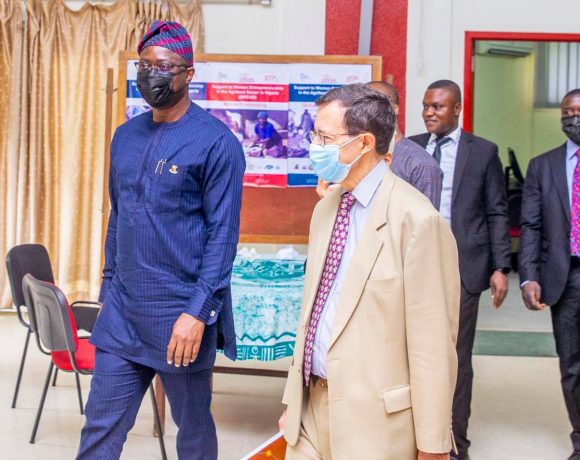
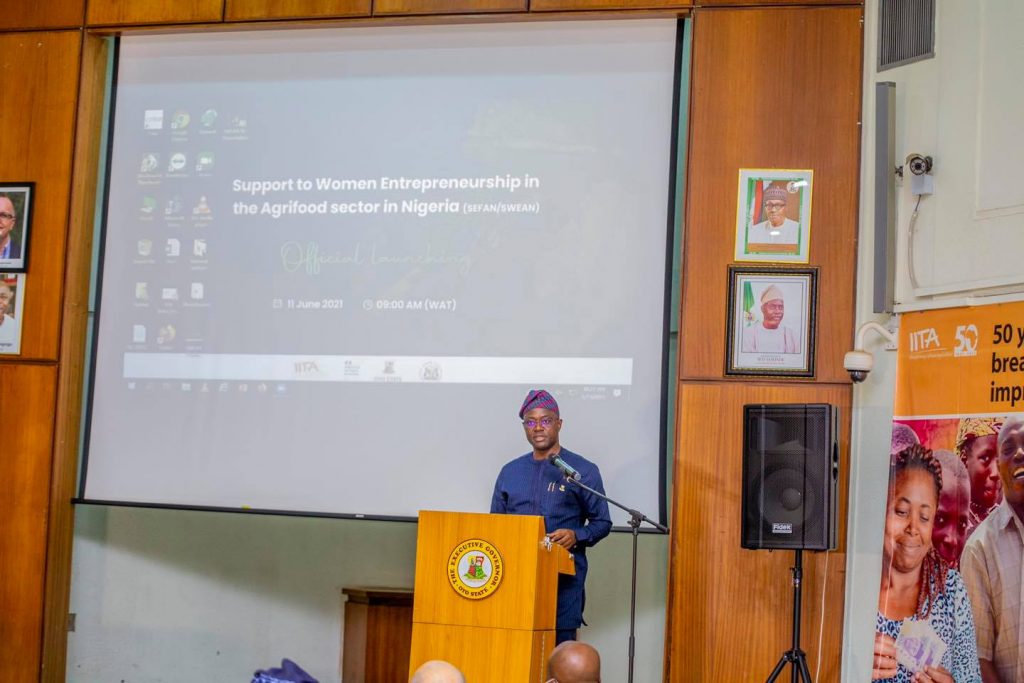
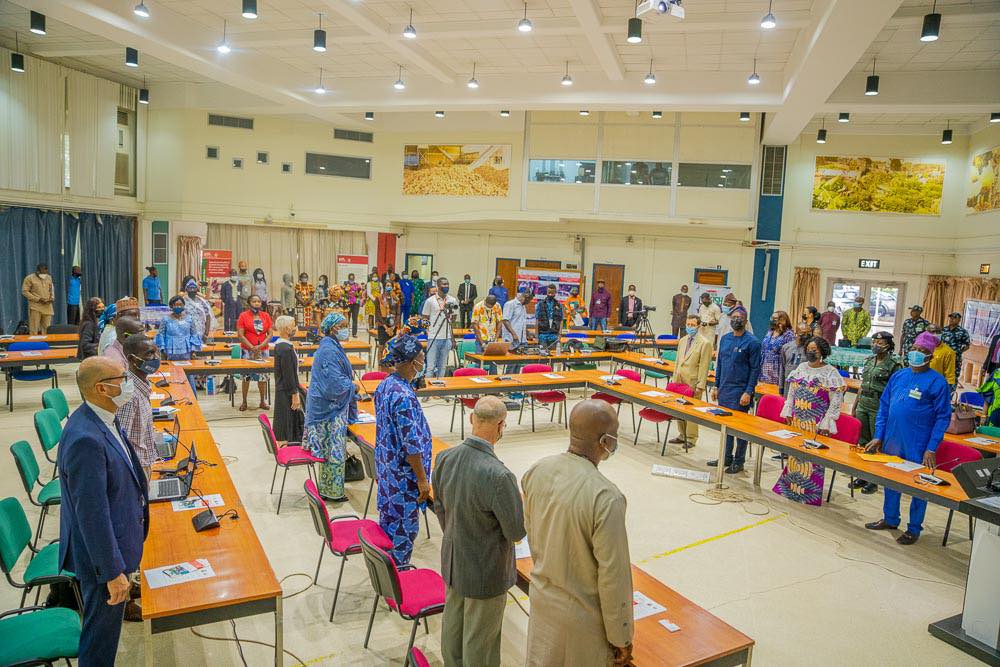
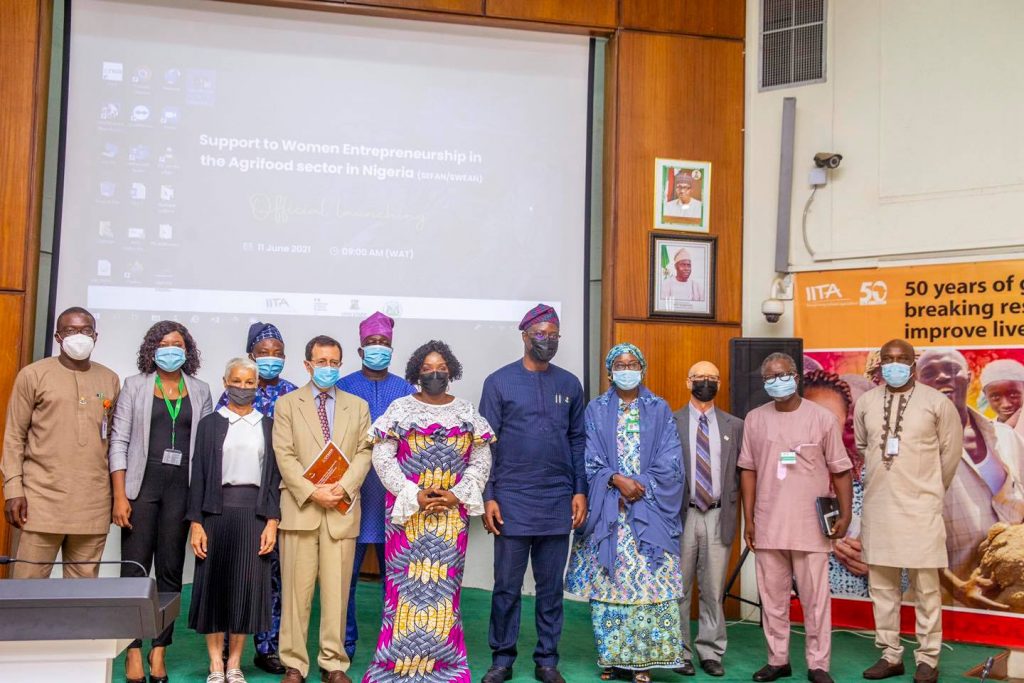
Oyo State Governor, Engineer Seyi Makinde has expressed happiness over the inclusion of 1,300 women in the state, who are to benefit from the Support to Women Entrepreneurship in the Agri-food sector in Nigeria SEFAN/SWEAN programme.
The governor, while speaking at the official launch of the training programme at International Institute of Tropical Agriculture, IITA, Ibadan stated that the relationship between Oyo State and the French Government always brings about development.
Engineer Makinde equally appreciated the French Government for its part in the Rural Access and Agricultural Marketing Project (RAAMP), noting that the state has mapped out the roads that would get the interventions.
He maintained that the plan of the government is to complete 200km of access roads in Oyo State before the end of 2021 remained on course.
Governor Makinde maintained that the relationship between the state and the French Government has been bringing about development, especially in the area of collaboration in the agriculture sector.
The governor asked for more interventions for the state, pledging that any investment made in the state would go directly to the people just as he noted that the state government’s collaboration with the International Institute of Tropical Agriculture, IITA, on the Start Them Early Program (STEP has begun to yield positive results.
Earlier, the Commissioner for Agriculture and Rural Development, Mr Jacob Ojemuyiwa, said Oyo and Kaduna States are the only two states selected for the SEFAN/SWEAN programme, which he described as a great opportunity for women.
The gradual transition into extinction of one of the Africa’s nutritional delicacy, African Yam Beans, known as “Ewa Otili” among the Yorubas have become a great concern to stakeholders in the agricultural sector.
At a day stakeholders privatization workshop on African Yam Beans held in Ibadan, participants frowned at the way Nigerians abandoned the planting and consumption of Ewa Otili which was attributed to its neglect by policy makers, researchers and farmers.
Some of the participants, who were mostly farmers and agricultural extension workers, advised experts to urgently harness the crop to address the problem of malnutrition in the country.
They said despite the nutritional value and uniqueness of African Yam beans, its challenges at every stage of the value chain have continued to outweigh its benefits as a result of poor awareness, less research and low acceptability by young farmers.
The representative from the Federal Ministry of Agriculture, Mrs Adeyemi Abdulateef and Mr Kehinde Bamigbola from Osun State Agricultural Development Programme said AYB is a multi-purpose food crop which can also be produced into snack and baby foods if properly harnessed.
In an address, a co-investigator on African Yam Beans, Dr Morufat Balogun said, the idea was to improve the adoption of AYB as a food crop as part of efforts aimed at improving food security in Africa.
Dr Balogun said the survey and suggestions gathered on the crop would be communicated to policy makers for possible investment in value chain development.
Earlier, while declaring the workshop open, West Africa Director, IITA, Ibadan, Professor Michael Abberton urged participants to intensify awareness campaign on the crop.
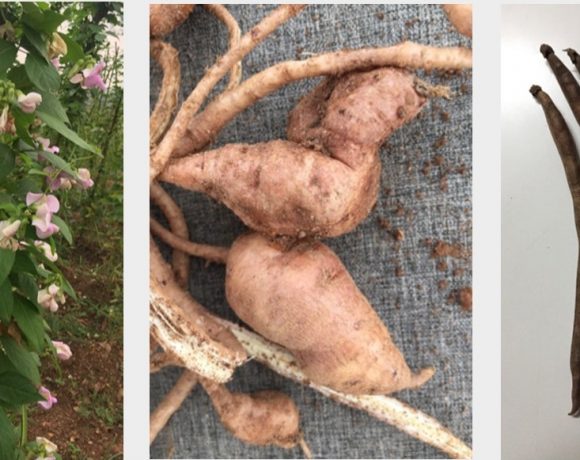
African Yam beans is special food crop that grows the tuber and beans parts at the same time.
Governors elected on Peoples’ Democratic Party, PDP, platform have called on President Muhammad Buhari to immediately send an Executive Bill to the National Assembly to amend the Nigerian Constitution to devolve more powers to the states with respect to security arrangements.
This was part of the resolutions of the PDP governors at a meeting held at the Conference Center of the International Institute of Tropical Agriculture, IITA, Ibadan to review the state of the nation.
Reading the communique, the chairman of the PDP Governors’ Forum and the Sokoto State governor, Alhaji Aminu Tambuwal said the bill culminating in some form of State Policing and the general security architecture when passed into law would address the security challenges facing the nation.
The PDP Governors’ Forum also urged President Buhari to summon an immediate meeting of the Nigerian Police Council, which comprises Mr. President and all State Governors and other critical stakeholders to evolve and implement strategies to combat the present threats to the nation’s union, especially with respect to policing.
The meeting supported the earlier position taken by the Nigeria Governors’ Forum, Northern Governors’ Forum and recently by the Southern Governors’ Forum to adopt ranching as the most viable solution to the herders/farmers clashes in Nigeria, the restructuring of the Nigerian federation to devolve more powers and functions to the states.
The PDP governors therefore enjoined Nigerians to work together to achieve peace and harmony with one another, devoid of discrimination based on ethnicity, religion and other cleavages.
The governors who attended the meeting are Udom Emmanuel, Akwa Ibom State, Senator Douye Diri, Bayelsa State, Samuel Ortom, Benue State, Dr. Ifeanyi Okowa, Delta State, Ifeanyi Ugwuanyi, Enugu State and Nyesom Wike, Rivers State.
Others are the host governor, Seyi Makinde, Oyo State, Ahmadu Umaru Fintiri, Adamawa State, Godwin Obaseki, Edo State, Bala Mohammed, Bauchi State, while the Zamfara State governor, Bello Matawalle was represented by Deputy Governor, Mahdi Mohd.
Governor Darius Isiaku of Taraba State and his counterpart from Cross Rivers, Ben Ayade were absent at the meeting.
Oyo State Governor, Engineer Seyi Makinde has called on stakeholders in Agro-business to partner with the government for the economic development of the state.
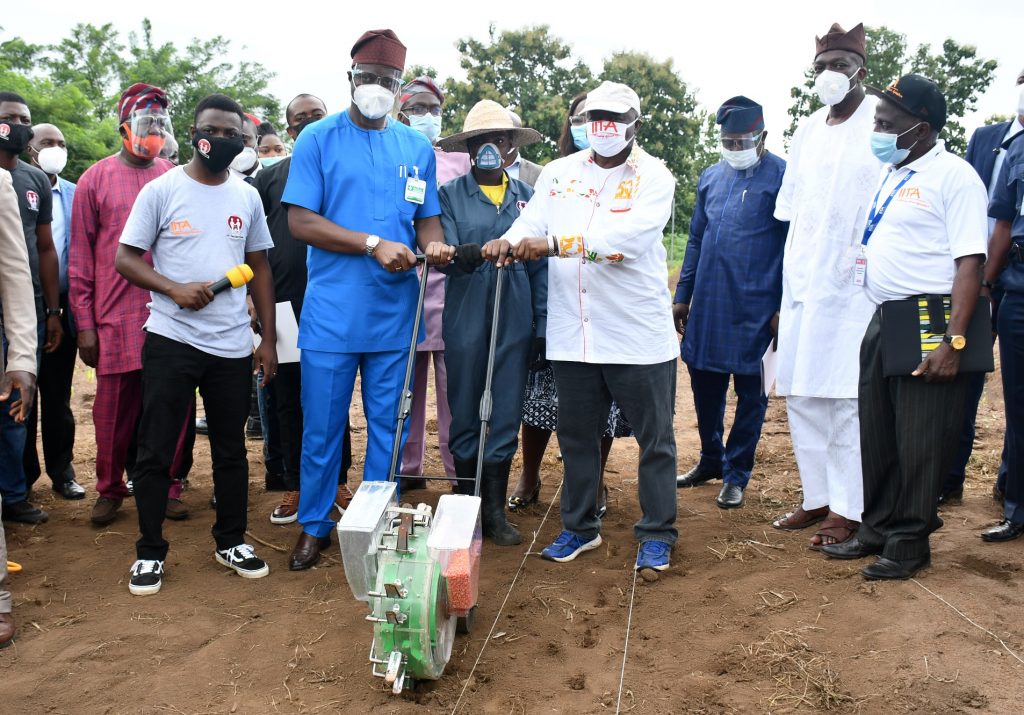
He made the call during the launch of an agricultural initiative in partnership with IITA tagged: Start Them Early Program (STEP) and inauguration of STEP Agro-business Facility at Fasola Grammar School, Fasola in Oyo.
Governor Makinde explained that the STEP initiatives, which is a “catch them young” model is to encourage the teaching of Agro-business to the younger generation to be self-reliant.
The Governor noted that provision would be made in the 2020 budget to accommodate the funding of similar projects in each of the geopolitical zones of the state i to stem rural -urban migration
Earlier in a welcome remark, the Coordinator, Technologies for African Agricultural Transformation, IITA, Dr Chrysantus Akem stressed that the programme aimed at ensuring the training of Agro-business in all secondary schools in Oyo State would acquaint them with modern agricultural technology, including production and value addition.
Highlight of the event was the tour of school farms, agric product exhibition stand and Agro-business building in company of the Secretary to the state government, Mrs Olubanwo Adeosun, Chief of Staff, Chief Bisi Ilaka and the Director General, IITA Dr. Nteranya Sanginga
Oyo state Governor, Engineer Seyi Makinde says his administration will work with rural farmers to increase produce and livestock so as to boost food security in the state.
He stated this while declaring open a two day retreat for his cabinet members at the International Institute of Tropical Agriculture (IITA) Ibadan.
Governor Makinde explained that plans were already in top gear to make farming attractive through provision of necessary capital, machinery and required incentives to reposition the agricultural sector.
The governor who noted that he had received economic reports from Oyo Ile Investors’ Forum, a non-governmental organization said the state Commissioner for Commerce, Mr. Adeniyi Adebisi, would soon draw up implementation strategies to open up the state to investors.
The retreat tagged “Taking Oyo State from Poverty to Prosperity” had in attendance top government functionaries in attendance including wives of the governor and his deputy, Mrs. Ominini Makinde and Dr. Bola Agboola.