Foreign

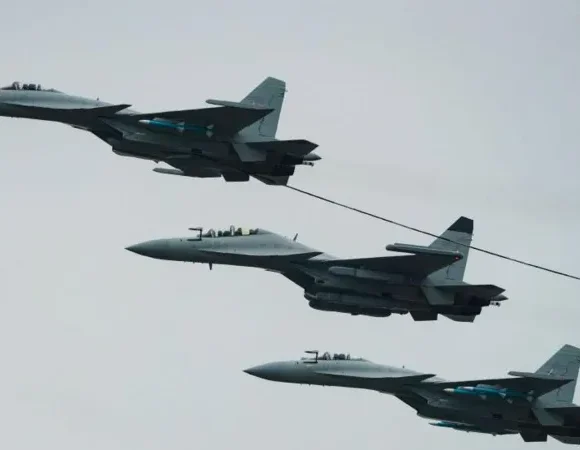
Japan has protested after Chinese fighter jets locked radars on Japanese aircraft as tensions between the two nations worsened.

Locking radar onto an aircraft is considered a threat because it can signal a potential attack. Japan said there were two such incidents Saturday off its southern Okinawa islands.

Japan said it scrambled fighter jets in response to the Chinese J-15 fighter jets, while Beijing accused Tokyo of “harassing” its forces during a training exercise. No injuries or damage were reported.

Diplomatic ties between Japan and China have spiralled since last month, after Japanese Prime Minister, Sanae Takaichi suggested that Tokyo could take military action if Beijing attacked Taiwan.

Beijing views self-governed Taiwan as part of its territory and has not ruled out the use of force to “reunite” with it.

Both sides have since engaged in increasingly hostile rhetoric towards each other, with the widening rift affecting daily life for citizens in both countries.

Last week, China and Japan’s coast guards gave conflicting accounts of a confrontation near disputed islands in the East China Sea.

A Japanese defence ministry official said the intention of the Chinese J-15 jets was “unclear”, but added that there was “no need” to lock on to the Japanese planes if their intention was to locate other aircraft.

The J-15 jets, which were launched from China’s Liaoning aircraft carrier, first locked its radar on Japanese jets at 16:32 local time on Saturday (07:32 GMT) and again at around 18:37.

The official added that the Japanese aircraft “did not do anything that could be considered a provocation”.

“It is extremely regrettable. Japan has strongly protested to the Chinese side, and we firmly requested measures to prevent recurrence,” Takaichi told reporters Sunday in Wajima, Ishikawa prefecture.

“We will respond calmly and resolutely,” she said.

The Chinese navy however said Japan’s claim was “completely inconsistent with the facts” and told Tokyo to “immediately stop slandering and smearing”. It added that its training exercise in the area had been previously announced.

This comes two weeks after Japan scrambled aircraft when a suspected Chinese drone was detected off Yonaguni, island near Taiwan. Tokyo has said it is planning to deploy missiles from Yonaguni in a move that has angered Beijing.

A month of heightened tensions have seen China ask its citizens to avoid travelling to Japan.

China has also banned the importation of seafood from Japan and suspended the screening of popular Japanese films.

BBC / Titilayo Kupoliyi

Follow us on Telegram and YouTube, and join our WhatsApp Update Group for more news updates.

Foreign

The Japanese government plans to recruit hunters to cull bears, as anxiety grows in the country over a sharp rise in bear attacks.

The environment ministry said on Thursday that it would set aside funds to hire licenced hunters and other personnel to tackle bears that have been wandering into residential areas and attacking people.

The move is among measures proposed on Thursday, after the country held a high-level meeting to address the country’s growing bear problem.

Twelve people have died in bear attacks this year, the highest the country has recorded since it started tracking cases in the 2000s.

They include a man who had been delivering newspapers in Hokkaido and a 67-year-old man found dead in his garden in Iwate.

The government, which have described bears as a serious threat to public safety, is also considering allowing police officers to shoot bears with their rifles. Officials have until mid-November to finalise the slate of counter-measures to the rising bear attacks.

Bears have been spotted breaking into supermarkets and high schools, and attacking residents going about their daily lives.

There are two types of bears in Japan: the Japanese black bear and the larger, typically more aggressive, brown bear found on the island of Hokkaido.

More than 100 people have been injured by bears this year, including at least one foreigner who was attacked near a bus-stop at a popular tourist site.

The problem is especially pronounced in Akita prefecture, home to large mountain ranges in northern Japan, which have the highest number of casualties.

Authorities announced this week that Japan’s self-defence forces would be deployed help the Akita government capture and repel bears.

“The lives and livelihoods of people are under threat,” defence minister Shinjiro Koizumi said on Tuesday, Kyodo reported.

Under current laws the troops are prohibited from shooting bears but they can help bear hunters with trapping and transporting dead bears.

Akita governor Kenta Suzuki said that the people tackling the bear problem on the ground have become “exhausted”.

Japan’s hunters are ageing, and their numbers are declining in line with the dwindling popularity of hunting the mammal, once sought-after for their fur and bile.

This has left populations more vulnerable to attacks as bears increasingly wander into human habitats. Experts say the scarcity of beech nuts because of climate change could be driving hungry animals into people’s residences.

Declining populations in residential areas have also been cited as a factor.

In September, Japan relaxed its gun rules to make it easier for people to shoot bears in residential areas.

BBC / Titilayo Kupoliyi

Subscribe to our Telegram and YouTube Channels, and also join our WhatsApp Update Group.

Foreign

A man has been sentenced to 10 years in prison for the attempted murder of Japan’s former prime minister Fumio Kishida in 2023.

Ryuji Kimura, 25, hurled a pipe bomb at Kishida as the country’s leader approached a crowd for a speech during an election event in the city of Wakayama.

Although Kishida was unharmed, the explosion of the homemade device caused minor injuries to a police officer and a member of the public.

The attack shocked Japan as it came less than a year after former Prime Minister Shinzo Abe was shot dead at an outdoor election campaign event.

Kimura, who was sentenced on Wednesday, claimed during questioning that his intention was not to kill Kishida but to object to the country’s election age regulation which prevented him from getting into politics.

The minimum age to become a member of parliament in Japan is 25 for the House of Representatives and 30 for the House of Councillors.

Kimura further added that he threw the bomb to bring attention to a civil lawsuit he filed in 2022, claiming the age restriction was unconstitutional, which was dismissed.

Kimura’s defence argued he should not face a charge of attempted murder, as he did not expect the bomb to cause injuries, and that a three-year prison sentence would be reasonable given the extent of those injuries.

The court stated, however, that the explosives were powerful enough to cause fatal damage.

When handing down the ruling, presiding Judge Keiko Fukushima noted that “targeting a serving prime minister caused significant anxiety to society as a whole.”

In addition to the attempted murder charge, Kimura was also found guilty of violating explosives regulations and firearms control laws.

His 10-year sentence is five years less than what prosecutors had sought.

While violent attacks are rare in Japan, anxiety around politicians’ security has surged in the wake of Abe’s assassination in 2022.

The attempted attack on Kishida, which came less than a year later, raised questions as to why there was not a tighter security presence around the country’s leader at that time.

BBC/ Oluwayemisi Owonikoko

Subscribe to our Telegram and YouTube Channels and also join our Whatsapp Update Group

Foreign

Japanese laws making it easier for the country to deport failed asylum seekers took effect Monday, with campaigners warning that the new system will put lives at risk.

The world’s fourth-largest economy has long been criticised for the low number of asylum applications it accepts.

Last year refugee status was granted to a record 303 people, mostly from Afghanistan.

Now the government can deport asylum seekers rejected three times, under immigration law changes enacted last year.

Previously, those seeking refugee status had been able to stay in the country while they appealed decisions, regardless of the number of attempts made.

The revised law is “meant to swiftly deport those without permission to stay, and help reduce long-term detentions”, justice minister Ryuji Koizumi said in May.

“Those who need protection will be protected, while those who violate the rules will be dealt with sternly,” he added.

Critics have raised concerns over the transparency of Japan’s screening process, warning that the new rules could heighten the risk of applicants facing persecution after repatriation.

“We’re strongly concerned that the enforcement of this law will allow refugees who have fled to Japan to be deported, and endanger their lives and safety,” the Japan Association for Refugees said on social media platform X.

The group called for a “fair” system to be established instead that “protects asylum seekers in Japan according to the international standards”.

As of May, more than 2,000 Ukrainians were living in Japan under a special framework that recognises them as “evacuees”.

Subscribe to our Telegram and YouTube Channels and also join our Whatsapp Update Group

Sport

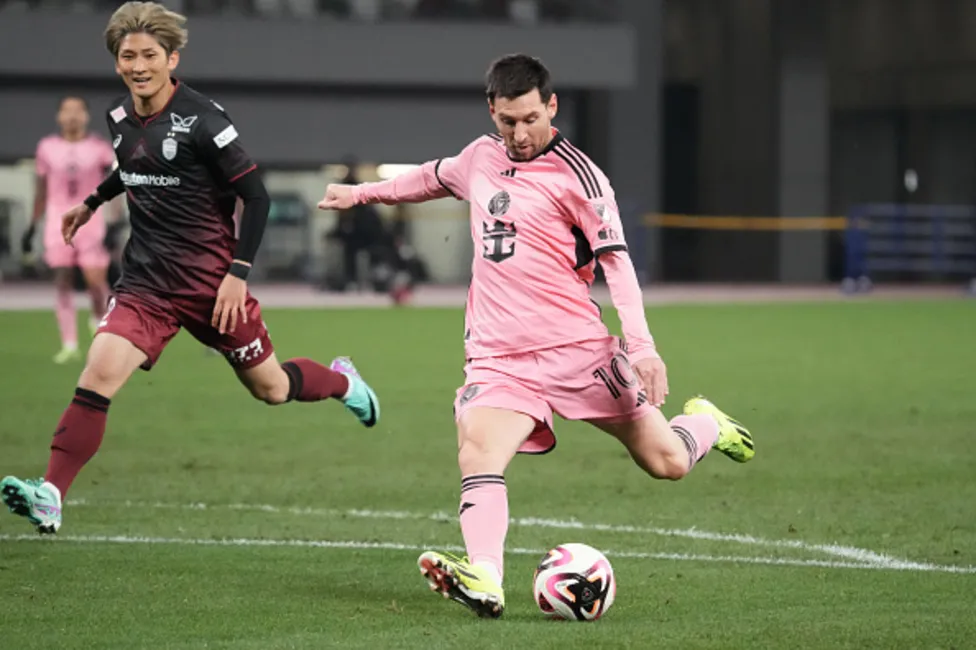
Lionel Messi played in a Japan friendly after missing a match in Hong Kong, leaving Chinese fans seething and sparking conspiracy theories.

State media outlet Global Times accused Messi and his club Inter Miami of “political motives” with the aim to “embarrass” Hong Kong.

Messi remained on the bench throughout Sunday’s match in the Chinese Special Administrative Region, citing injury.

He played in Tokyo on Wednesday, leading some fans to question his condition.

Some 38,000 fans at the Hong Kong Stadium booed and demanded refunds when Inter Miami co-owner David Beckham addressed the crowd at the end of Sunday’s match. They had paid up to HK$4,880 (£494; $624) to watch the 36-year-old Argentine superstar.

Just last year, Messi received a rock star welcome in Beijing when he played for his country in a friendly against Australia. Some 68,000 fans paid up to $680 for the chance to see him in action. He is also a spokesperson for big Chinese brands such as Huawei, Chery, Tencent, Mengniu, Chishui River Wine and J&T Express.

Kevin Yeung, Hong Kong’s secretary for culture, sports and tourism, said government officials were repeatedly told that Messi would play. But with 10 minutes left in the match, they were informed that a hamstring adductor injury would prevent him from playing.

“We immediately requested them to explore other remedies, such as Messi appearing on the field to interact with his fans and receiving the trophy,” Yeung said.

“Unfortunately, as you all see, this did not work out.”

The territory’s chief executive John Lee said he was extremely disappointed by Messi’s absence and called for an explanation from match organisers.

Other officials like Hong Kong lawmaker Regina Ip also reacted with fury, claiming that “Hong Kong people hate Messi, Inter-Miami, and the black hand behind them” for the “deliberate and calculated snub”.

“Messi should never be allowed to return to Hong Kong. His lies and hypocrisy are disgusting,” she added.

Match organiser Tatler Asia said in a statement that Messi had been contracted to play, unless injured. It added that it was withdrawing its application for a HK$16m government grant. The match had been designated as a major sporting event, which enabled the organisers to tap government funding.

On the same day as the Japan friendly, Messi said on the Chinese social media network Weibo that he “regretted” being unable to play in Hong Kong due to a “swollen and painful” groin injury. “I hope that one day we will have the opportunity to come back and give our best to our fans and friends in Hong Kong,” he added.

The post has attracted some 142,000 comments. While some were supportive, many reacted angrily, with some calling the Argentine a “conman” and “garbage”. Others accused the Argentine of only wanting to make money off Chinese fans while pandering to the Japanese.

“No need to apologise, just don’t come to China again. Just because you play football well does not mean you are a good person,” one netizen said.

BBC/Simeon Ugbodovon

Subscribe to our Telegram and YouTube Channels and also join our Whatsapp Update Group

Foreign

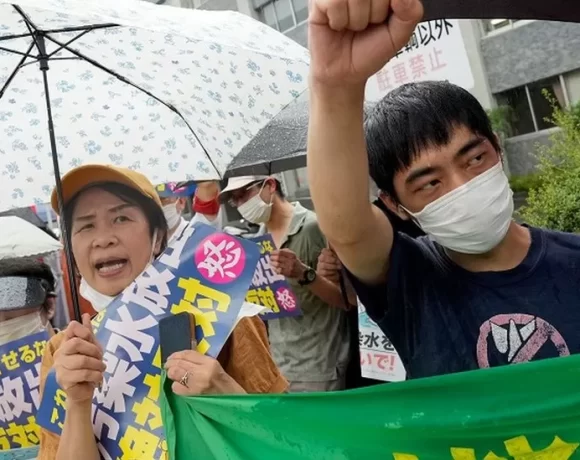
Japan will start releasing treated radioactive water from the tsunami-hit Fukushima nuclear plant into the Pacific Ocean on Thursday, despite opposition from its neighbors.

The decision comes weeks after the UN’s nuclear watchdog approved the plan.

Some 1.34 million tonnes of water – enough to fill 500 Olympic-size pools – have accumulated since the 2011 tsunami destroyed the plant.

The water will be released over 30 years after being filtered and diluted.

Authorities will request for the plant’s operator to “promptly prepare” for the disposal to start on 24 August if weather and sea conditions are appropriate, Japan’s Prime Minister Fumio Kishida said on Tuesday after a Cabinet meeting.

Mr. Kishida had visited the plant on Sunday, prompting speculation the release was imminent.

The government has said that releasing the water is a necessary step in the lengthy and costly process of decommissioning the plant, which sits on the country’s east coast, about 220km (137 miles) northeast of the capital Tokyo.

Japan has been collecting and storing the contaminated water in tanks for more than a decade, but space is running out.

In 2011, a tsunami triggered by a magnitude 9.0 earthquake flooded three reactors of the Fukushima Daiichi Nuclear Power Plant. The event is regarded as the world’s worst nuclear disaster since Chornobyl.

Shortly after, authorities set up an exclusion zone which continued to be expanded as radiation leaked from the plant, forcing more than 150,000 people to evacuate from the area.

BBC/Taiwo Akinola

Subscribe to our Telegram and YouTube Channels also join our Whatsapp Update Group

Feature

By Titilayo Kupoliyi

What would be your response if someone slaps you, not because you offended the person but all because you wanted to purchase something on sale?

I guess quite a lot of you out there will not take it; rowdy scenes and fisticuffs might follow flared up tempers!

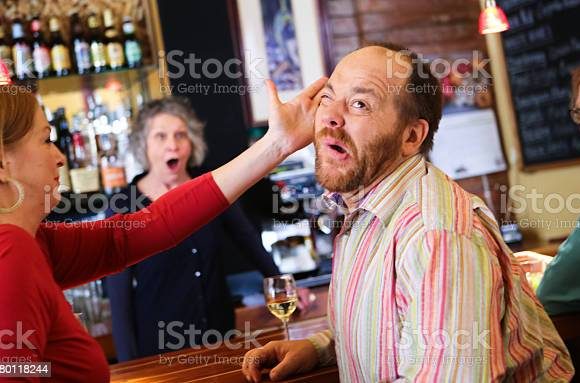
But that is the culture in Japan, and ironically, you even pay for the slap!

There are some izakaya-Japanese bar which offer you a slap service by almost all cases a female waitress (young female). 

Price varies from 300JPR – 500JPY and at some places you can select which staff to slap you for 100JPY on the top.

Where can you get this service if you may be into it? And a simple question is why the slap being a thing in Japan?

 Why slapping is so popular/accepted in Japan

One perspective had been that a face-slap was a very common way of punishment at schools in Japan till 90s, especially in 70s and 80s. If you studied in a school in Japan, you witnessed some of your classmates hit by teachers of course for doing something very bad.

You also notice many of the TV drams based on school life in Japan during that era cannot be aired basically because of many scenes of physical punishments therein. 

We know these punishments were/still are actually common in many countries though.

Good or bad, this way, many are used to the concept of “slap” even if not to being slapped.

Another perspective: this should have come from the Antonio Inoki – a Japanese professional wrestler who recently passed away (1943-2022).

Many believed that his slap could give them power and luck and many asked him to slap them.

This made a slapping-as-service normal in Japan. And this was combined by a slightly kinky demand from men wanting to be slapped by women such as a SM club in Japan. We consider this slap service at bar in Japan a mini-version of S and M club service.

Another reason is of course, you get attention on SNS for such a post. Some friends overseas even sent us the posts of slaps at bar in Japan.

onegai-kaeru.jp

Subscribe to our Telegram and YouTube Channels also join our Whatsapp Update Group

Foreign

Two Japanese soldiers have been killed and another injured after a new recruit opened fire at a military training range in central Japan.

According to police, an 18-year-old trainee was detained on the spot and arrested on suspicion of attempted murder.

They alleged the male shooter fired eight times at instructors during a shooting drill in Gifu on Wednesday.

The authorities said A 25-year-old man was among those killed, as details about the other victims, in their 20s and 50s, are not yet known. But they were all instructors at the facility.

No civilians were involved, Japan’s Ground Self-Defence Force said.

They said the shooting had occurred during a live-fire training for new members and potential candidates. The suspect had joined the force in April.

Several soldiers were seen hugging each other and crying outside the range after the shooting, a resident told local media.

The resident added that he had never seen a similar incident in his decades of living in the area.

Live-fire and explosive training drills were suspended across the country after attack, said the chief of Japan’s Self-Defence Forces.

Gun violence remains extremely rare in Japan, but there have been some notable incidents in the past year.

Former Prime Minister Shinzo Abe was gunned down at a political rally by a protester last July. Abe was Japan’s longest-serving prime minister and his death profoundly shocked the country.

Japan was again rattled in April when Prime Minister Fumio Kishida escaped unharmed after having a smoke bomb thrown at his campaign event.

And in May, a Japanese man killed four people, including two police officers, in an hours-long knife and shooting rampage in the Nagano region.

On Wednesday, pictures on Japanese media showed police and emergency vehicles blocking off roads around the training facility in Gifu city.

Japan’s Chief Cabinet Secretary Matsuno Hirokazu said he was aware of the shooting, and said the incident was still under investigation.

Japan has strict gun ownership rules, and only allows civilians to own hunting rifles and airguns. People have to undergo a strict exam and mental health tests in order to buy a gun in Japan.

BBC/Taiwo Akinola

Subscribe to our Telegram and YouTube Channels also join our Whatsapp

Foreign

Prosecutors in Osaka have indicted a man for murdering a female acquaintance with thallium, which was used as rat poison.

Kazuki Miyamoto, 37, is accused of killing 21-year-old university student Hinako Hamano last October by lacing her drink with thallium.

Thallium was also recently found in his female relative, who has been in a coma since 2020, local media reported citing sources.

Just 1g of it could kill an adult.

According to the report, police have not found a motive, nor how he had laid hands on the poison. The suspect was arrested on 3 March in Kyoto.

Thallium is a soft metal which dissolves in water and has no taste or smell- making it hard to detect outside a laboratory setting.

Mr Miyamoto, a real estate agent, is believed to have administered thallium to Ms Hamano sometime around 11 and 12 October when he visited her flat in Kyoto.

He had told police the two were dining out on the night of 11 October before heading to Ms Hamano’s home for drinks, the Japan Times said, citing investigators.

According to Mr Miyamoto, Ms Hamano experienced severe coughing fits. He then contacted her family, who took her to a hospital the next day.

Hamano died on 15 October of severe respiratory failure – thallium was found in her vomit and urine, the Asahi Shimbun reported.

Police suspect that Mr Miyamoto had spiked Ms Hamano’s drink when they were alone at her flat. While analyzing Mr Miyamoto’s smartphone, police found internet searches for thallium from before the time Ms Hamano was hospitalized.

Local media reported that Hamano first met Mr Miyamoto through a part-time job. In addition to his real estate business, Mr Miyamoto also runs an entertainment-related business involving maikos or apprentice geishas.

“Miyamoto and Hamano sometimes wined and dined together, and they appeared happy in each other’s company,” said the Asahi Shimbun, quoting acquaintances.

A female relative of Mr Miyamoto’s, who was hospitalized in Kyoto since July 2020 and is now unconscious, was also found to have ingested thallium. The Mainichi reported that this relative is in her 60s and had suddenly collapsed around the summer of 2020.

The substance is strictly regulated in Japan. In most cases, researchers or companies buy it from specialist businesses.

In 2015, a female university student in Nagoya was convicted of attempting to murder two classmates with thallium while she was in high school.

The same chemical had been used in lethal doses by the Islamic State group on its prisoners.

Some countries, like the US, have banned it.

BBC/Taiwo Akinola

Subscribe to our Telegram and YouTube Channels also join our Whatsapp Update Group

Foreign

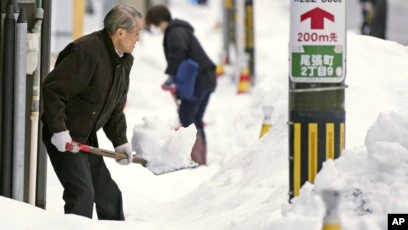
Japanese officials say heavy snowfall across large parts of Japan has killed 17 people over the last 10 days, with thousands of homes suffering power outages.

Much of the country’s west coast as well as the northern region of Hokkaido has seen persistent heavy snow in recent days.

Some areas have seen almost a metre of snowfall in 24 hours, including the town of Oguni in the northeastern Yamagata region, local media said.

Japan’s weather agency has warned residents in the affected regions to avoid travel where possible after cars got stuck on roads in heavy snow.

Government officials said Monday that 17 people have been killed and dozens more injured in the snow since December 17.

National broadcaster NHK reported the dead included a man who fell from a roof while clearing snow and a woman found dead of suspected carbon monoxide poisoning in a car.

In Hokkaido, tens of thousands of homes have lost electricity in recent days as the snow brought down power lines, though most connections have now been restored.

The heavy snowfall is expected to ease from Monday.

Snow is capable of wreaking havoc on human existence. In 2021, Texas witnessed severe damage on infrastructure.

This year, Nervous Texans are preparing for a freezing blast of Arctic air but it is not predicted to be a repeat of the disastrous winter storm that struck the state in 2021, crippling large parts of the state’s power infrastructure and killing scores of people, The Guardian reported.

Residents had been warned to brace for extremely cold weather and to stock up on essentials like bottled water and non-perishable foods in case of power outages and food supply chain issues like those experienced during winter storm Uri in February 2021, when millions of Texans were left without power and 246 people died.

But experts think this storm will not hit Texas quite as hard.

AFP / Titilayo Kupoliyi

Subscribe to our Telegram and YouTube Channels also join our Whatsapp Update Group

Foreign

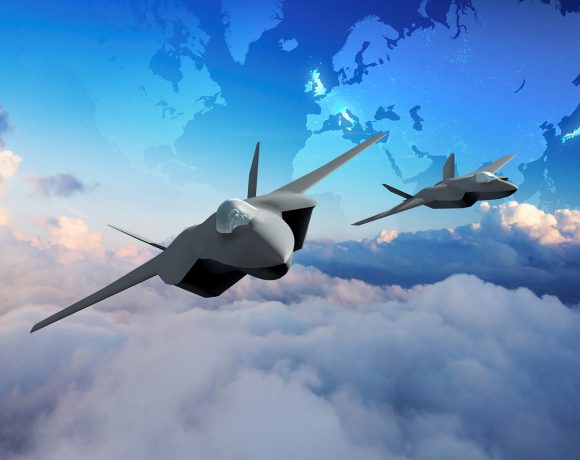
Japan, Britain and Italy say they would jointly develop a next-generation fighter jet in a project that held scope for future cooperation with allies including the United States.

The new jet, to be ready by 2035, is expected to merge the nations’ current research into cutting-edge air combat technology, from stealth capacity to high-tech sensors.

In a joint statement, the three countries said the “ambitious endeavour” would “accelerate our advanced military capability and technological advantage” at a time when “threats and aggression are increasing” worldwide.

Their announcement was accompanied by a set of images showing an artist’s impression of the sleek new jets flying past Mount Fuji and over London and Rome.

They did not give a cost estimate, but the three countries were already pouring billions of dollars into fighter jet development, efforts that would come together under the joint project, called the Global Combat Air Programme.

“We share (an) ambition for this aircraft to be the centrepiece of a wider combat air system that will function across multiple domains,” the statement said.

That includes “future interoperability with the United States, with the North Atlantic Treaty Organisation and with our partners” in Europe, Asia and worldwide, it explained.

The US Department of Defence said it supported the project in a separate joint statement with Japan’s defence ministry.

“We have begun important collaboration through a series of discussions on autonomous systems capabilities, which could complement Japan’s next fighter program among other platforms,” the US-Japan statement said.

Britain had already been working with Italy on a future fighter jet project called Tempest, launched to great fanfare in 2018.

The objective was to develop by 2035 a twin-engined stealth aircraft that could be operated manned or unmanned, could not be detected by radar and would boast features such as laser-directed weapons and a virtual cockpit.

AFP / Titilayo Kupoliyi 

Subscribe to our Telegram and YouTube Channels also join our Whatsapp Update Group

Foreign

A Japanese man has set himself on fire reportedly to protest a state funeral for ex-Prime Minister Shinzo Abe, who was assassinated in July.

Hundreds of foreign dignitaries are expected to attend the funeral on 27 September.

On Wednesday, witnesses called police after spotting a man on fire near the prime minister’s office in Tokyo.

According to local media, officers put out the blaze, and took the still-conscious man to the hospital, The extent of his injuries and his current condition is unknown.

Japanese media reports say the man is believed to be in his 70s.

The government is yet to comment on the protest. But public opposition to the holding of the state funeral has intensified in recent months, with polls showing a majority of voters unhappy with the expenditure.

Abe was shot dead on 8 July, aged 67, at a campaign rally for his political party. The killing of Japan’s longest-serving prime minister was condemned internationally and shocked Japan, a country with a minimal record of political violence and gun crime.

But state funerals are not an established practice in Japan, and protesters say they resent the use of public funds on the event that is projected to cost about 1.65bn yen (£10.1m; $11.4m).

One of the country’s main opposition parties, the Constitutional Democratic Party, has also said its lawmakers won’t participate in next week’s ceremony.

Many in Japan are commenting on how the mood around Abe’s state funeral contrasts starkly with the affection shown at the Queen’s state funeral in the UK.

Surveys show a majority of Japanese are against the event. Aside from the amount of taxpayers’ money being spent, the guestlist – which reportedly includes representatives from the Burmese junta – is raising eyebrows.

Others say that Prime Minister Fumio Kishida is failing to address Abe’s and senior ruling party politicians’ links to the controversial Unification Church, and this is increasing opposition.

Adding to the sour mood, a film about Abe’s murder – produced by a former member of the terror group the Japanese Red Army – will be shown next week, with critics saying it romanticises the killing.

linePolice are yet to confirm details of the protest on Tuesday, but local media reported the man had voiced his opposition to the funeral to a nearby officer before setting himself alight.

Handwritten notes were also found around him expressing the same message, local media reported.

Criticism of the state funeral has also increased as more politicians in Japan’s parliament have been found to have connections with a controversial church.

The man charged with killing Abe said he had targeted the former prime minister for his connections to the Unification Church, which he said had bankrupted his family.

BBC/Taiwo Akinola

Foreign

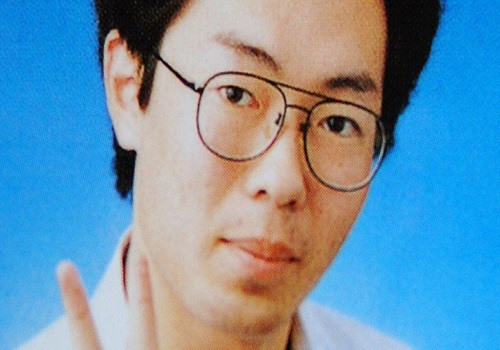
Japan has executed a 39-year-old man who killed seven people in Tokyo in 2008 during a stabbing rampage.

Tomohiro Kato committed one of the most shocking mass murders in the country’s recent history.

He was 25 when he drove a truck into a lunchtime crowd of pedestrians at Akihabara shopping district, killing three people.

He then stabbed passers-by with a dagger, killing four and wounding eight.

He was apprehended by police at the scene and later admitted his crimes in his trial, saying he had been angered by online bullying.

The crime sparked much debate in Japanese society at the time over random killings, online influence and the failures in mental health support for young people. Laws on knife ownership were also tightened in response.

On Tuesday, eight years after Kato was sentenced to death, the government confirmed it had ordered his execution.

“The case has been fully tried in the courts and the courts’ final conclusion was the death sentence… I have taken the greatest care possible in considering this case,” Justice Minister Yoshihisa Furukawa said at a press conference.

Kato was hanged in the Tokyo Detention Centre. He lost his challenge to commute the sentence in Japan’s top court in 2015.

Kato told police at the time of his arrest: “I came to Akihabara to kill people. It didn’t matter who I’d kill.”

Kato was born into a wealthy family and graduated from a top high school. But he failed his university entrance exams and struggled to maintain steady employment afterwards.

During his trial, prosecutors also painted a picture of a troubled young man, who had posted several times in online forums about his anger and alienation from society.

Prosecutors said Kato was particularly demoralised after a woman he was chatting with online stopped emailing him. On his way into the city the day of the attack, he’d declared his intention to carry out mass murder.

The Tokyo District Court which sentenced him in 2011 said his brutal crime had not indicated “a shred of humanity”.

Japan remains one of the few developed countries that still use the death penalty despite criticism from international and local human rights groups.

It hanged three people last December. Kato’s case is the country’s first execution this year.

More than 100 prisoners remain on death row.

Mr Furukawa defended his country’s use of capital punishment on Tuesday saying: “Since there is no end to heinous crimes, I regret death penalties remain necessary. Therefore abolishing the penalty is not appropriate.”

Japan resumed executions when Prime Minister Fumio Kishida came to power in late 2021. Before that, the country had not carried out any executions for two years.

BBC/Simeon Ugbodovon

Foreign

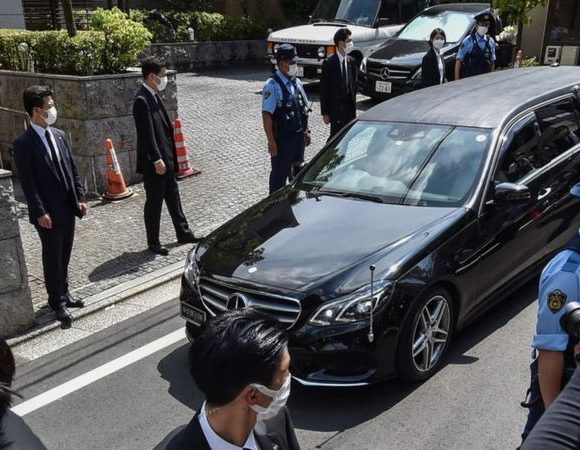
Japanese police have admitted there were flaws in the security for former Japanese Prime Minister Shinzo Abe, who was shot dead in the southern city of Nara on Friday.

“It is undeniable that there were problems in the security,” said Nara police chief Tomoaki Onizuka.

A gunman opened fire on Abe at a political campaign event – a crime that has profoundly shocked Japan.

Sunday’s elections for the upper house are going ahead as planned.

Voting began at 07:00 local time, 22:00GMT, just two days after Abe’s assassination.

Analysts suggest his killing could boost support for the governing Liberal Democratic Party, LDP , for which Abe was a leading and hugely influential figure.

Elections for Japan’s less-powerful upper house of parliament are typically seen as a referendum on the current government.

Campaigning continued on Saturday with tighter than usual security.

Police say the suspect, named as Tetsuya Yamagami, 41, held a grudge against a “specific organisation”.

Japanese media quote sources close to the investigation, who say Yamagami believed Abe to be linked to a religious group which, Yamagami alleged, had ruined his mother financially.

The suspect has admitted shooting Abe with a homemade gun, according to police.

“The urgent matter is for us to conduct a thorough investigation to clarify what happened,” police chief Onizuka said, without specifying where he saw failings. He was on the verge of tears, addressing journalists.

Yamagami told police he had served in Japan’s navy, the Maritime Self-Defense Force, for three years. More recently, he had worked at a factory in western Japan.

Abe was Japan’s longest-serving prime minister and died aged 67. He was campaigning for the LDP in the run-up to upper house parliamentary elections on Sunday.

Current Prime Minister Fumio Kishida, also an LDP member, said he was “simply speechless”, vowing that Japan’s democracy would “never yield to violence”.

He said the election campaign would continue on Saturday with tightened security, with Sunday’s vote still set to go ahead.

Gun violence is extremely rare in Japan, where handguns are banned and incidences of political violence are almost unheard of.

Police are investigating why Abe was targeted and whether his killer acted alone.

Abe was giving a speech on behalf of a political candidate at a road junction when he was shot from behind. Photos show the suspect standing close to Abe moments beforehand.

Witnesses described seeing a man carrying a large gun moving within a few metres of Abe and firing twice. The former prime minister fell to the ground as bystanders screamed in shock and disbelief.


BBC /Taiwo Akinola

Health

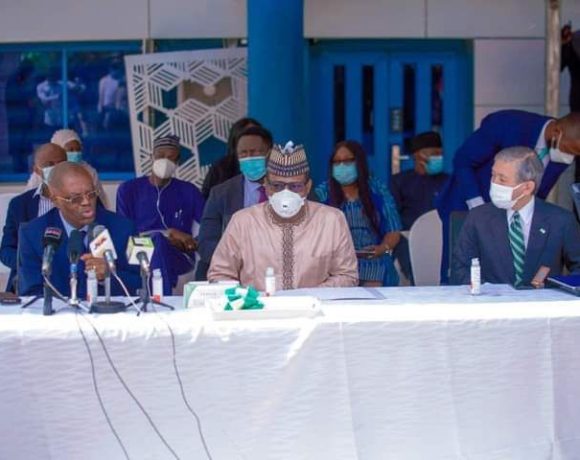
Japanese government has donated over 859,600 doses of AstraZeneca Covid-19 Vaccine and 175 Solar Direct Drive Refrigerators to the Federal government.

The country made the donation to the National Primary Healthcare Development, NPHCDA in Abuja

It’s been One year since the 1st arrival of covid19 vaccine to Nigeria, which was met with a lot of uncertainty and misconceptions.

However with the solidarity around the world, vaccines are now readily available as the nation has received a lot of donations from other countries and development partners.

Donating over 800k doses of AstraZeneca Covid-19 Vaccine and 175 Solar Direct Drive Refrigerators, Japanese ambassador to Nigeria, Mr Matsunaga kazuyoshi said this was the third Japanese vaccine to African region.

The ambassador explained that the peculiarity of power supply in Nigeria which could affect the storage of vaccines engineered the supply of refrigerators to help the proper storage system of vaccine

The Executive Director NPHCDA, Dr Faisal Shuaib who received the item Said it would boost the bilateral relationship between Nigeria and Japan.

He thanked the government ofJapan for the support, stating that the refrigerators would help Keep the vaccines potent for childhood immunization.

The world health organization, country representative, Dr Kazadi Mulombo Congratulated Nigeria for the scale up of vaccination to 200k doses daily aimed at reaching the 70% target of its population by June.

NANCY ANIKAEZIE

News Analysis

If you find yourself eating a whole fish in China, you might feel the urge to turn it over to get to the meat on the other side.

But we will warn you right now, don’t do it.

To turn a fish over, that means you have to turn the bones over, which symbolizes turning your back on someone or becoming a traitor.

It is also a no according to an old fishing superstition, which says that doing so could cause a boat to capsize. Whatever particular superstition your hosts may subscribe to, turning your fish over is generally frowned upon, so avoid it if you can. To get at the meat on the other side of the fish, just have patience and eat straight through it. Less efficient, sure, but you will draw fewer judgmental looks.

In Some Nigerian Cultures, children are served meals before the adults.  However, reverse is the case in South Korea.

No one is permitted to take a bite until the oldest person has started eating, a custom that’s viewed as a sign of great respect. It is also polite to wait for the oldest person to sit down before taking your own seat. Yeah, there’s a lot riding on the oldest person in the room, so you’d better hope they are hungry.

We all know a loud eater. They are that person who we try not to sit next to when they are eating spaghetti, because we will hear that annoying slurping sound all night.

Well, in Japan, that sound is not annoying, it is a sign that the eater is thoroughly enjoying their meal.

In addition to being a signal of respect, slurping is also believed to improve the flavour of noodles and allows you to enjoy hot food more quickly. Coating the noodles in saliva cools them down, meaning you don’t have to wait as long before you can dive in.

So, if you are in Japan, there is no need to delicately twirl your noodles on a spoon or cut them into fragments, Slurp away.

Titilayo Kupoliyi

Foreign

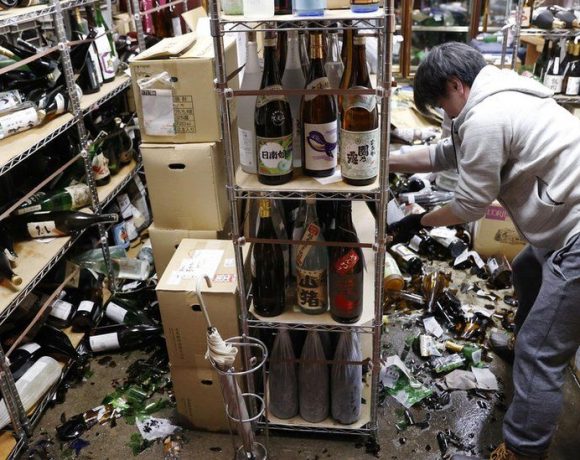
A strong earthquake struck off the coast of Fukushima, Japan, on Saturday, just weeks before the 10-year anniversary of the deadly 2011 tsunami.

The 7.3-magnitude quake was felt strongly in Tokyo, but a tsunami warning has not been issued.

There are reports of about 50 people injured, officials say, and almost one million homes are without power.

The quake struck near the epicentre of a 2011 earthquake which triggered a tsunami and killed over 18,000 people.

That tsunami caused a nuclear accident at the Fukushima Daiichi Nuclear Power Plant – the world’s most severe nuclear accident since the Chernobyl disaster in 1986.

Japan’s meteorological agency (JMA) said Saturday’s earthquake was believed to be an aftershock of the massive 2011 quake. Aftershocks after a large earthquake can continue over a period of many years.

Saturday’s quake hit at 23:08 local time (14:08 GMT) at a depth of 60km (37 miles) in the Pacific, off Japan’s eastern coast, JMA said. Aftershocks have continued to hit the region since.

Chief Cabinet Secretary Katsunobu Kato told reporters that evaluations were under way, including of the region’s nuclear plants.

“Casualties and structural damage are being assessed,” he told a press conference, but added that parts of the high-speed bullet train network had been suspended because of power outages.

“Surveys are being done at Fukushima Daiichi nuclear pant… We have received reports that Onagawa nuclear plant and Fukushima Daichi nuclear plant are not showing any abnormality.”

Fukushima nuclear plant operator Tepco also tweeted that there were “currently no abnormalities” found at its plants.

Despite reassurances from officials, many residents on the coast are evacuating their homes and heading for higher ground, Japanese news agency Kyodo reports.

“”Even if people say we don’t need to worry about a tsunami, I won’t buy it,” one 50-year-old man told the publication. “I learned from my bitter experience 10 years ago, and that’s why I evacuated.”

BBC


Sport

Canada and Australia have pulled out of the 2020 Summer Olympic Games over concerns for athletes’ safety with the outbreak of Coronavirus across the globe.

The International Olympic Committee, IOC, has been in consultation with Japan about possibly postponing the Games, which is scheduled to start in July.

However, host nation Japan is adamant the Games will go on as scheduled much to the consternation of many countries and athletes, who have criticized the Asian country.

Canada followed up the announcement of withdrawing from the games with a tweet on Sunday:

Meanwhile, the Australian Olympic Committee said it was clear the Games would not be held in July, as Japan has recorded 1046 cases with 41 confirmed deaths.

Olaolu Fawole

Health

The Japanese government is to support the Nigeria Centre for Disease Control (NCDC) with funds towards addressing the current health challenges in the country

The Japanese Ambassador to Nigeria, Mr Kikuta Yutaka, stated this at this year’s Japan International Cooperation Agency (JICA) Day in Abuja.

Mr Kikuta Yutaka said the Japanese government would continue to strengthen her bilateral ties with Nigeria through collaboration in the area of Technology, Agriculture, Education among other areas to improve the economy of the country.

The ambassador, who was represented at the occasion by the Japanese head of Mission to Nigeria, Mr Shinozawa Takayuki, said with the recent agreement to support Nigeria Centre for Disease Control, it would go along way in improving the nation’s health sector.

The Minister of State for Environment, Mrs Sharon Ikeazo, represented by the Permanent Secretary in the Ministry, Dr Bakari Wandiga, said the ministry would continue to engage with the Japanese government in addressing environmental pollution.

The National President of Japan International Cooperation Agency (JICA) Alumni Association of Nigeria, Mr Ahmed Agberankhe, described effective management of waste disposal and self-hygiene as a way of guarding against infectious diseases.

Mr Agbarenkhe said JICA would continue to promote programmes that will improve the lives of ordinary Nigerians.

Tanimu Salihu

Health

The Chairman, Nigeria Medical Association, NMA, Oyo State, Dr Akin Sodipo has urged members of the public to remain calm but maintain basic personal hygiene practices as the first case of COVID 19 also known as Coronavirus is recorded.

The case was of an Italian citizen who was in Nigeria for a brief business visit but fell ill and was taken to Lagos State Biosecurity Facilities for isolation and testing.

Dr Sodipo in an Interview with Radio Nigeria advised people to wash their hands with soap and water, use alcohol-based sanitizer, and avoid crowded places while people coughing or sneezing should stay indoors until they are better.

He urged medical practitioners and other health workers to be vigilant at this point and adopt safety measures such as wearing of face masks and gloves and prompt isolation of patients with symptoms of the disease to prevent spread.

Dr Sodipo assured residents that no case of COVID 19 has been confirmed in Oyo state but that the government was intensifying efforts to contain any outbreak of the virus.

Globally, more than eighty thousand people in about fifty countries have been infected while up to two thousand eight hundred have died.

Many countries are taking actions to prevent spread.

For instance, China, Hong Kong, Japan and Iraq have ordered schools closed while Saudi Arabia has halted travel to Mecca and Medina for this year’s Humrah.

Back home in Nigeria, a multi-sectoral Coronavirus preparedness group led by Nigeria Center for Disease Control, NCDC, has activated its operations centre which will work closely with Lagos State health authorities to respond quickly to any case.

Anthonia Akanji