Sport

By Olukayode Banjo

The Terenga Lions of Senegal became the first country to secure a place in the quarter finals of the 2025 African Cup of Nations, AFCON, in Morocco with a comeback win over the Jediane Falcons of Sudan last Saturday.

Sudan had taken a shock lead in the first Round of 16 fixtures thanks to a Abdallah Yunis strike.

However, Pape Gueye equalised for Senegal in the 29th minute before scoring his second in first half stoppage time to give his country a 2-1 lead at the break.

Ibrahim Mbaye made it 3-1 in the 77th minute to complete the turn around for Senegal and send them to the quarter finals.

In the second round of 16 fixtures yesterday, 10-man Mali sent Tunisia packing after winning 3-2 on penalties to join Senegal in the quarter finals.

Firas Chaouat thought he had sent Tunisia to the quarter finals when he scored in the 88th minute, only for  Lassine Sinayoko to convert from the spot in the 96th minute to make it 1-1 and drag the game to extra time.

After 120 minutes of play with nothing to separate both teams, it went to penalty shoot out and Mali came out on top to set up a quarter final clash with Senegal.

Foreign

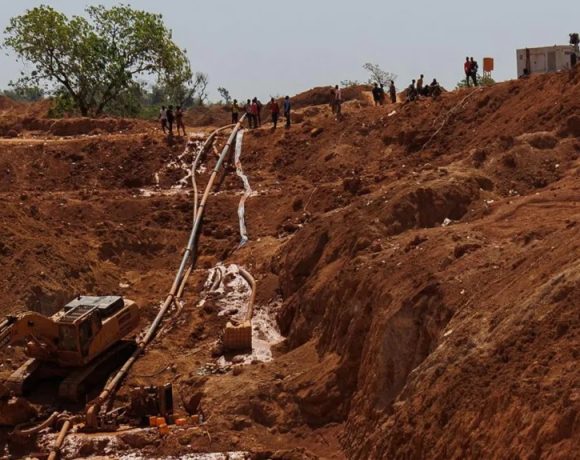
More than 40 people, mostly women, were killed after an illegal gold mine collapsed in Mali on Saturday.

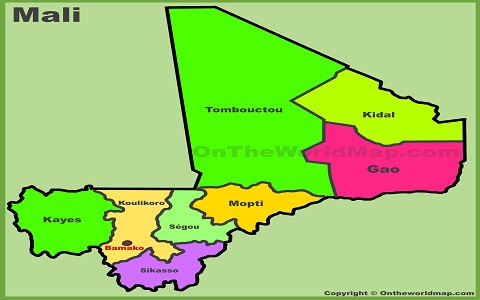
The collapse took place near Kéniéba, in Mali’s western, gold-rich Kayes region.

The victims had climbed into open-pit areas left by industrial miners to look for scraps of gold when the earth around them caved in, a gold miner’s union leader told Reuters.

This is Mali’s second deadly mining accident in three weeks, after at least 10 people were killed when a mining tunnel flooded late in January.

Reports of the exact number who died in Saturday’s accident are conflicting.

A local police source told the AFP news agency that 48 people were killed in the collapse, while the head of an industry union told Reuters there were 43 victims.

“Some of the victims fell into the water. Among them was a woman with her baby on her back,” the local police source told AFP.

Mali is one of the biggest gold producers in the world. Accidents are common in the country as much mining activity is unregulated, with miners using unsafe methods to dig for gold.

Just over a year ago, at least 40 people were killed after a tunnel collapsed in a mine

A spokesperson from the country’s mines ministry confirmed to Reuters that the accident had taken place between the towns of Kéniéba and Dabia, but declined to give further details.

Ministry teams are drawing up a report at the scene, Reuters reports.

The collapse on Saturday occurred at an abandoned site formerly operated by a Chinese company, according to AFP.

Beijing is heavily invested in developing Mali’s mining industries, with the approval of its government.

Mali is currently engaged in a dispute over revenue sharing with one of the largest mining companies in the country, the Canadian firm Barrick.

Last month, the Malian government seized gold bars worth $245m (£194m) from Barrick and issued an arrest warrant for its CEO, Mark Bristow.

Mr Bristow said he had “no doubt” the conflict would be resolved in an interview with Bloomberg this week.

BBC/Adebukola Aluko

Foreign

The military junta in Mali says it will postpone the presidential election that had been scheduled for February

A government spokesman, Col Abdoulaye Maiga, said a new date would be announced and that parliamentary polls would be held separately.

He said the delay was due to “technical reasons” including issues linked to the adoption of a new constitution and a review of the electoral laws.

Civil society groups and the opposition have expressed their disappointment following this announcement.

The elections were intended to return Mali to constitutional rule after military coups in 2020 and 2021.

The junta had initially proposed the elections to be held in 2026, then revised it to 2025 and finally moving it to February 2024 after pressure from the West African bloc Ecowas.

BBC / Titilayo Kupoliyi

Subscribe to our Telegram and YouTube Channels also join our Whatsapp Update Group

Foreign

The military government in Mali has adopted a new constitution that enhances the powers of the president and the armed forces.

It also creates a senate and demotes French from an official to a working language.

Mali has been ruled by a junta since 2020.

The opposition movement has denounced the reforms, which the electoral commission says were backed by 97% of votes cast in last month’s referendum.

The official body said turnout was 38%.

Critics fear these changes make it easier for generals to break their promise of handing power back to civilian leaders after a presidential election in February 2024.

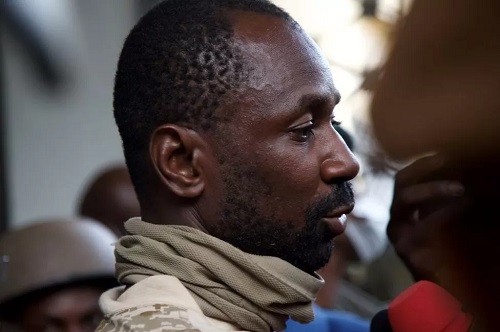
The new constitution means Interim President Col Assimi Goïta can now dictate government policy and has the power to dissolve parliament.

A legal case to have the referendum results annulled, because the vote was not held in all parts of Mali, was rejected by the constitutional court.

“Numerous irregularities” and “violations of the law” also meant the referendum result should be thrown out, according to Mali’s opposition movement – made up of political parties and civil society organisations.

It has been labelled “a plot on democracy” by Ismaël Sacko – the leader of the Social Democratic Party which was last month dissolved by the junta. He told Mali’s judiciary “to get its act together”, AFP reports.

There was huge popular support for the military junta when it seized power after mass protests against then-President Ibrahim Boubacar Keïta three years ago. People were fed up with economic uncertainty, a disputed election and chronic insecurity.

Since then, data suggests Mali’s military government has made little progress in its fightback against Islamists who control parts of the country.

But the government says the new constitution will stop the spread of the 11-year jihadist insurgency.

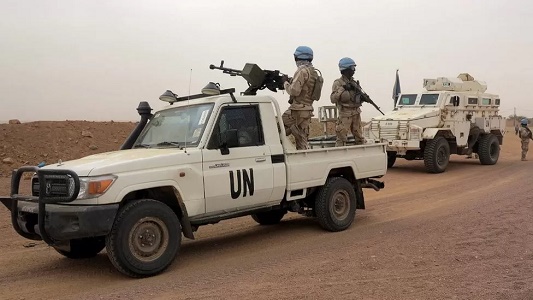
Mali recently decided to kick out all 12,000 UN peacekeepers in the country and is thought to employ 1,000 Russian mercenaries from the Wagner group for security back-up.

France’s soldiers were ordered to leave last year and there has been rising resentment of the former colonial power and its present-day relationship with Mali, and West Africa more broadly.

BBC/Simeon Ugbodovon

Subscribe to our Telegram and YouTube Channels also join our Whatsapp Update Group

Foreign

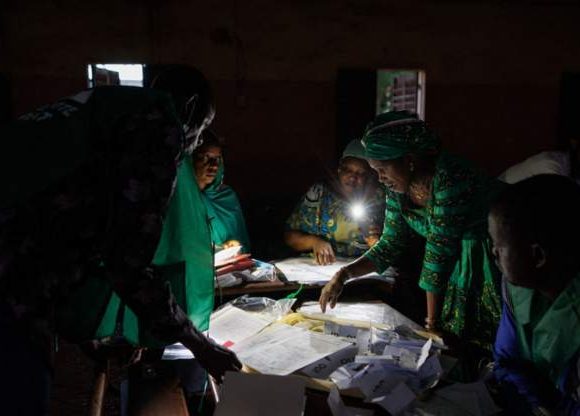
Votes are being counted in Mali, following a referendum on a new constitution that maps out the process of returning the country to democratic civilian rule.

The military leaders who seized power in 2021 have said they will hand over to an elected government next year.

The revised constitution includes a new second parliamentary chamber to increase representation across Mali.

Critics say it will leave the president with too much power – and that the military should not have a role in the redrafting of the constitution.

Provisional results will be available on Tuesday.

Subscribe to our Telegram and YouTube Channels also join our Whatsapp Update Group

Foreign

Mali’s foreign minister has called on the UN to withdraw its peacekeeping force from his country “without delay”.

Abdoulaye Diop accused the force, Minusma, of having “become a part of the problem in fuelling intercommunal tensions”. He was addressing the UN Security Council.

Minusma has more than 13,000 troops. Its decade-old mission has failed to stop the spread of jihadist violence.

Russian Wagner mercenaries are now assisting Mali’s military rulers.

Western officials have accused Wagner of human rights abuses in Ukraine and parts of Africa, and last month the US announced sanctions on Ivan Maslov, whom it described as Wagner’s top official in Mali.

Wagner has not commented on the Western allegations and its activities in Mali and other parts of Africa remain shrouded in secrecy.

Minister Diop’s criticism of Minusma followed earlier Malian objections to France’s long-standing involvement in Mali. The alliance with France, the former colonial power, collapsed last year.

Mr Diop spoke of a “crisis of confidence between the Malian authorities and Minusma” and said “the Malian government asks for the withdrawal without delay of Minusma”.

Minusma’s mandate is due to end on 29 June, but UN chief Antonio Guterres has recommended that the mission be reconfigured to focus on a few limited priorities.

The UN currently lists military contingents from Chad, Bangladesh and Egypt as the biggest in the force.

When asked about Mr Diop’s remarks on Friday the UN special envoy to Mali, El-Ghassim Wane, said “we stand to be guided by whatever decision the [Security] Council may take”.

But he added that without the host country’s consent “operating in a specific country would be extremely challenging, if not impossible”.

A report by the UN high commissioner for human rights accused the Malian armed forces and “foreign security personnel” of having killed more than 500 people during an operation in the village of Moura, in central Mali, in March last year. The governments of Mali and Russia both condemned that report.

BBC/Simeon Ugbodovon

Subscribe to our Telegram and YouTube Channels also join our Whatsapp Update Group

Lifestyle

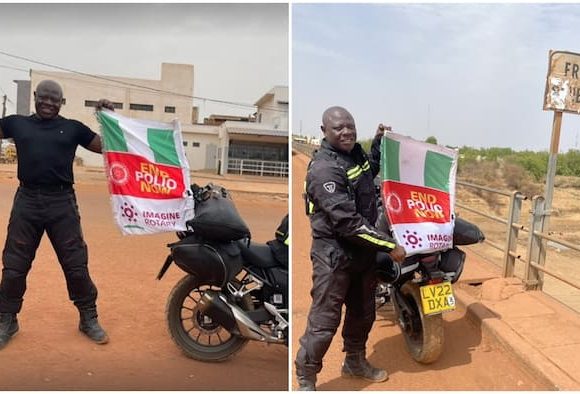
It appears clearly that Kunle Adeyanju, the courageous Nigerian biker who is riding from London to Lagos is gradually but steadily getting home.

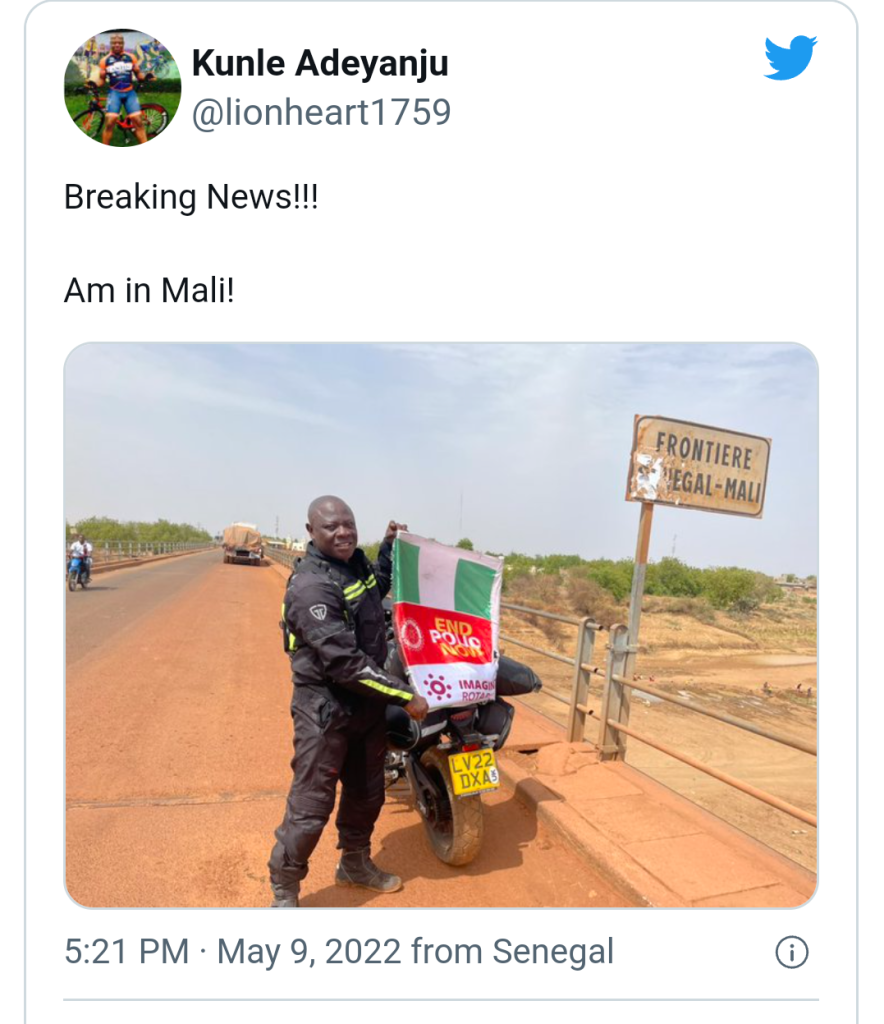
He has crossed from Senegal to Mali from where he shared a photo standing close to a signpost that proved his presence in the West African country.

After taking a long rest in Senegal, Kunle set out again for the remaining part of the journey which has attracted huge attention.

He also used the period of rest in Senegal to service his bike called Eagle and to change the engine oil which he said was dark due to the rigours of the journey.

Sharing his latest milestone on Twitter, Kunle wrote: “Breaking News!!! I’m in Mali!”

Kunle Adeyanju was hosted in Senegal by the Nigerian ambassador to that country, Ibrahim Lamuwa.

Kunle was also hosted by the Nigerian and Yoruba communities in Senegal.

This was after he crossed from Mauritania. He rested in Senegal for four days.

Legit/Olaolu Fawole

Foreign

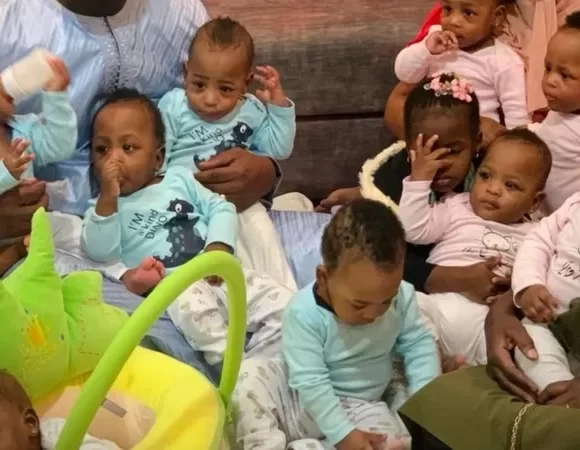
The world’s only nonuplets – nine babies born at the same time – are “in perfect health” as they celebrate their first birthday, their father has told the BBC.

“They are all crawling now. Some are sitting up and can even walk if they hold on to something,” said Abdelkader Arby, an officer in the Malian army.

The babies broke the Guinness World Record for the most children delivered in a single birth to survive.

Their father hinted that they are still in the care of the clinic in Morocco where they were born.

He said their mother Halima Cissé, 26, was also doing well.

Ahead of their birth on 4 May 2021 Cissé was flown to Morocco by the Malian government for specialist care as multiple births are risky and mothers with more than four foetuses at a time are advised to terminate in some countries where abortion is legal.

There are also risks the babies could develop health problems due to their premature birth, such as sepsis and cerebral palsy.

Mrs Cissé and the children are currently living in what their father described as a “medicalised flat” that belongs to the owners of the Ain Borja clinic in Casablanca where the babies were born.

Arby said It’s not easy but it’s great. “Even if it’s tiring at times, when you look at all the babies in perfect health,  we’re relieved. We forget everything,” he said.

The father who  just returned to Morocco for the first time in six months, along with their elder daughter, Souda, aged three.

Noted that he’s overwhelmed to be reunited with all my family – my wife, the children.

He explained that they just have a small birthday celebration with the nurses and a few people from their apartment building.

“Nothing is better than the first year. We will remember this great moment forever.”

According to the Malian Health Minister, Fanta Siby, the babies – five girls and four boys – were born at 30 weeks and  weighed between 500g and 1kg.

Their boys are called Mohammed VI, Oumar, Elhadji, Bah, while the girls are named Kadidia, Fatouma, Hawa, Adama and Oumou.

Each one has a unique personality, their father said.

“They all have different characters. Some are quiet, while other make more noise and cry a lot. Some want to be picked up all the time. They are all very different, which is entirely normal.”

Mr Arby appreciated the Malian government for its help.

“The Malian state has put everything in place for the care and treatment of the nine babies and their mother. It’s not at all easy, but it’s beautiful and something that is comforting,” he said.

They have not yet been to Mali, but they are already very popular in the country, their father said.

“Everyone is very keen to see the babies with their own eyes – their family, friends, our home village, the whole country.”

BBC/ Oluwayemisi Owonikoko

Foreign

The UN has expressed concern that Malian authorities have denied its human rights investigators access to a village where hundreds of people were killed.

“We are extremely concerned that Malian authorities have still not granted UN human rights investigators access”, a statement by the UN Human Rights Office

said.

It says “time is of essence to ensure accountability and prompt, effective justice for victims”, noting that it first sought access to the site of the killings on 1 April.

Malian troops and their Russian collaborators are accused of carrying out a massacre of civilians during an operation against militants last month.

At least 300 people are believed to have been executed during the 27-31 March raid in the village of Moura, which is in Mali’s central Mopti region.

The killings sparked calls by the Human Rights Watch, the US, the European Union and the UN for an independent investigation into the matter.

The Malian army insists that those killed were jihadist fighters and the allegation of a massacre is an attempt to tarnish its image.

A Russian foreign ministry spokeswoman said this had been a successful operation by Mali’s army alone.

The Mali junta denies that mercenaries from Russia’s Wagner group are helping it fight the insurgents.

The country has been battling a decade-long insurgency that has affected millions of people, and has also engulfed other countries in the region.

BBC

Mali is Preventing Access to Killings Site – UN

The UN has expressed concern that Malian authorities have denied its human rights investigators access to a village where hundreds of people were killed.

“We are extremely concerned that Malian authorities have still not granted UN human rights investigators access”, a statement by the UN Human Rights Office

said.

It says “time is of essence to ensure accountability and prompt, effective justice for victims”, noting that it first sought access to the site of the killings on 1 April.

Malian troops and their Russian collaborators are accused of carrying out a massacre of civilians during an operation against militants last month.

At least 300 people are believed to have been executed during the 27-31 March raid in the village of Moura, which is in Mali’s central Mopti region.

The killings sparked calls by the Human Rights Watch, the US, the European Union and the UN for an independent investigation into the matter.

The Malian army insists that those killed were jihadist fighters and the allegation of a massacre is an attempt to tarnish its image.

A Russian foreign ministry spokeswoman said this had been a successful operation by Mali’s army alone.

The Mali junta denies that mercenaries from Russia’s Wagner group are helping it fight the insurgents.

The country has been battling a decade-long insurgency that has affected millions of people, and has also engulfed other countries in the region.

BBC

Foreign Politics

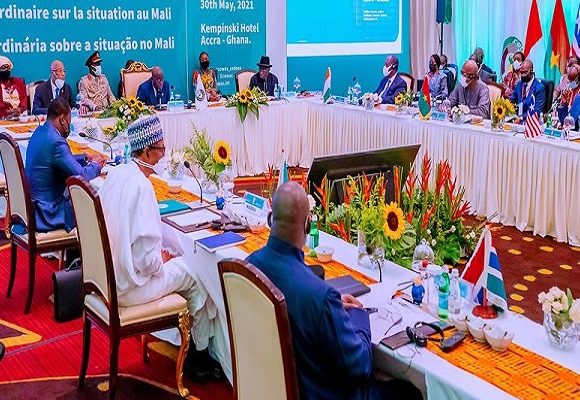
West African regional bloc ECOWAS on Sunday suspended Mali’s membership in response to last week’s coup and urged authorities to adhere to a timetable for a return to democracy.

This was the decision after the Leaders of the 15-member Economic Community of West African States held an emergency summit in Ghana, the capital of Accra due to the military’s ouster of a president and prime minister for the second time in nine months.

In a communique after the summit, ECOWAS said Mali’s membership in the bloc was suspended with immediate effect.

Ghana’s Foreign Minister Shirley Ayorkor Botchway said Mali’s suspension from ECOWAS takes immediate effect until the deadline of the end of February 2022”, when the country’s interim leaders are supposed to hand over to a democratically elected government.

ECOWAS said a new civilian prime minister should be nominated and a new inclusive government formed to proceed with the transition programme.

According to the communique, ” The leaders announced 27th February 2022 for the presidential election and should be absolutely maintained”.

There was no immediate response from Coloniel Goita, who was present at the summit.

Goita, a 38-year-old special forces commander, was one of several colonels who overthrew President Ibrahim Boubacar Keita, last year.

He ordered the arrests of the interim President Bah Ndaw and Prime Minister Moctar Ouane last Monday before they resigned on Wednesday and eventually released.

FRCN

Foreign

A 25-year-old Malian woman has given birth to nine babies – two more than doctors had detected during scans.

Halima Cisse gave birth to the nonuplets in Morocco. Mali’s government flew her there for specialist care.

“I’m very happy,” her husband told the BBC. “My wife and the babies [five girls and four boys] are doing well.”

A woman who had eight babies in the US in 2009 holds the Guinness World Record for the most children delivered at a single birth to survive.

Two sets of nonuplets have previously been recorded – one born to a woman in Australia in 1971 and another to a woman in Malaysia in 1999 – but none of the babies survived more than a few days.

World record holder Nadya Suleman’s octuplets have grown up and are now 12 years old. She conceived them through in vitro fertilisation.

Fanta Siby, Mali’s health minister, congratulated the medical teams in both countries for the “happy outcome”.

Ms Cisse’s pregnancy became a subject of fascination in Mali – even when it was thought she was only carrying septuplets, the Reuters news agency reports.

Doctors in the West African nation had been concerned for her welfare and the chances of the babies’ survival – so the government intervened.

After a two-week stay in a hospital in Mali’s capital, Bamako, the decision had been made to move Ms Cisse to Morocco on 30 March, Dr Siby said.

After five weeks at the Moroccan clinic, she had given birth by Caesarean section on Tuesday, the minister said.

Her husband Adjudant Kader Arby is still in Mali with the couple’s older daughter, but he says he has been in constant touch with his wife in Morocco and says he is not worried about the family’s future.

“God gave us these children. He is the one to decide what will happen to them. I’m not worried about that. When the almighty does something, he knows why,” he told BBC Afrique.

He says the family has been overwhelmed by the support they have received.

“Everybody called me! Everybody called! The Malian authorities called expressing their joy. I thank them… Even the president called me.”

The mother and her new nine babies are expected to return home in several weeks.

BBC

Foreign

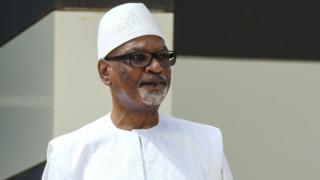
West African leaders have called for the ousted President of Mali, Ibrahim Boubacar Keïta, to be reinstated.

The Economic Community of West African States (Ecowas) said it would send envoys to ensure the return of constitutional order.

This comes after the UN’s Security Council called for the immediate release of all government officials.

The leaders of Tuesday’s coup say elections will be held in what they describe as a reasonable time.

They have also promised to respect international agreements on fighting jihadists.

There is an increased military presence outside government ministries in the capital, Bamako, but shops and businesses have been open.

Mali, a vast country stretching into the Sahara Desert, is among the poorest in the world and has experienced several military takeovers. It is currently battling to contain a wave of jihadist attacks and ethnic violence.

Mr Keïta won a second term in elections in 2018, but since June has faced huge street protests over corruption, mismanagement of the economy and disputed legislative elections.

There has also been anger among troops about pay and the conflict with jihadists.

“We have decided to immediately send a high-level delegation in order to ensure the immediate return of constitutional order,” the 15-member Ecowas said at the end of a video summit.

“We call for the restoration of President Ibrahim Boubacar Keïta as president,” it said in a closing statement read by the President of Niger, Mahamadou Issoufou.

“Mali is in a critical situation, with serious risks that a collapse of the state and institutions leads to reversals in the fight against terrorism and organised crime, with every consequence for all our community.”

Nigerian President Muhammadu Buhari said in a statement that Mali had “descended into political chaos” with “potential tragic consequences to Mali and the sub-region”.

Culled from BBC

Foreign

Mali’s President Ibrahim Boubacar Keïta has been arrested by mutinying soldiers, a government spokesman has confirmed to the BBC.

Prime Minister Boubou Cissé has also been arrested, despite earlier appeals for “brotherly dialogue”.

The apparent coup attempt in the West African nation began with gunfire at a key military camp near the capital, Bamako, on Tuesday morning.

In the city young men set a government-owned building on fire.

The arrest of President Keïta and his prime minister has sparked widespread international condemnation.

It came hours after disgruntled junior officers detained commanders and took control of the Kati camp, about 15km (nine miles) from Bamako.

The unrest coincides with calls for more protests to demand that the president resign.

What do we know about the mutiny?

It is led by Col Malick Diaw – deputy head of the Kati camp – and another commander, Gen Sadio Camara, BBC Afrique’s Abdoul Ba in Bamako reports.

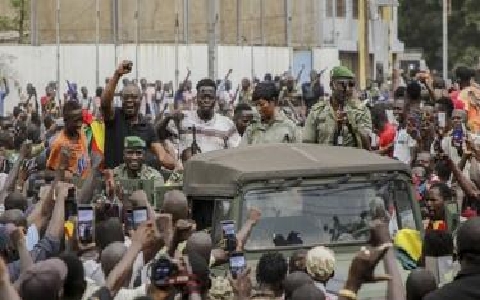
After taking over the camp, the mutineers marched on the capital, where they were cheered by crowds who had gathered to demand President Keïtas’s resignation.

In the afternoon they stormed his residence and arrested the president and his prime minister – who were both there.

The number soldiers taking part in the mutiny is unclear – as are their demands. Some reports say it was fuelled by a pay dispute.

Kati camp was also the focus of a mutiny in 2012 by soldiers angry at the inability of the senior commanders to stop jihadists and Tuareg rebels taking control of northern Mali.

Footage from AFP news agency showed a building owned by the justice ministry in Bamako ablaze on Tuesday.

BBC News

Crime

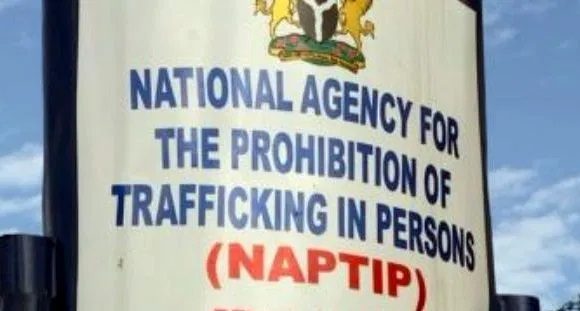
The National Agency for the Prohibition of Trafficking in Persons, NAPTIP, has secured the conviction of one Mr Samuel Ofor, who was put behind bars for his role in the attempted trafficking of 19-year-old Cynthia Ode, to Mali.

The accused was arrested at the Seme border in June 2017, after successfully procuring travel documents for the victim, with the aim to lure her into prostitution abroad.

Delivering the judgment at the Federal High Court siting in Asaba, the Delta State capital, Justice Toyin Adegoke, sentenced the accused to five years imprisonment without the option of fine for his role in the attempted trafficking of the victim away from Nigeria, and an additional seven year term for procuring travel documents with the intention to lure her into prostitution.

Responding to the judgment, the Prosecuting Council for NAPTIP, Mrs. Victoria Oburoh, expressed delight over the sentencing, saying it was a proof of the agency’s commitment to maintain the fight against human trafficking in Nigeria.

Mrs, Oburoh added that the public should be their brother’s keeper and support NAPTIP with useful information that could lead to similar arrests and convictions.

 Oghenero/Asaba

Foreign

Mali President Ibrahim Boubacar Keïta has announced the dissolution of the constitutional court in an attempt to calm unrest that saw four people killed in street protests on Friday.

The president said he would not tolerate such violence.

The court has been at the centre of controversy after it overturned provisional results for parliamentary elections in March.

There are growing calls for President Keïta to resign.

Opponents are unhappy with his handling of Mali’s long-running jihadist conflict, an economic crisis and the disputed elections.

A new opposition coalition led by the conservative Imam, Mahmoud Dicko, has been insisting on further reforms after rejecting earlier concessions from the Malian president, including the formation of a unity government.

President Keïta also suggested that he could agree to re-run some of the disputed parliamentary elections, which is one of the protesters’ demands. This was recommended last month by the West African regional bloc, Ecowas.

Four people died in Friday’s protest in the capital Bamako, authorities say.

Speaking earlier on Saturday, Prime Minister Boubou Cissé said he and the president were open to talks and promised to form an inclusive government “very quickly”.

“I will put in place a government with the aim of being open to address the challenges of the moment,” he told Radio France International.

But this came as the opposition coalition said security forces detained two of the protest leaders, Choguel Kokala Maïga and Mountaga Tall. Another protest leader, Issa Kaou Djim, was arrested on Friday.

In addition, security forces “came and attacked and ransacked our headquarters”, opposition coalition spokesman Nouhoum Togo said.

On Saturday evening, correspondents described the capital as tense with protesters blocking several roads with barricades. However, numbers were down on Friday’s protests, which forced the state broadcaster off the air.

BBC

Foreign

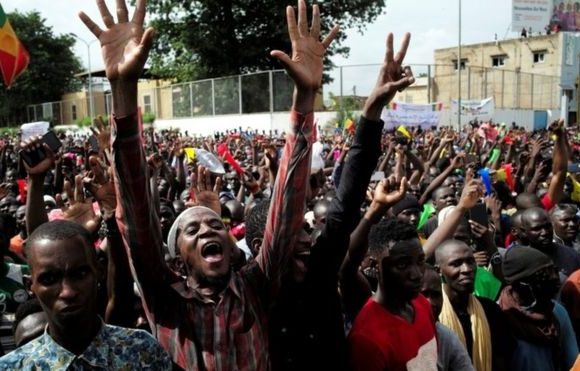
Protesters in Mali have forced the state broadcaster off air during large demonstrations in the capital Bamako.

Police have fired shots and used tear gas to disperse the demonstrators – some of whom were trying to break into the national assembly.

This is the third rally in a month demanding that President Ibrahim Boubakar Keita stand down.

There is discontent over a long-running jihadist conflict, an economic crisis and disputed legislative elections.

A new opposition coalition led by the conservative Imam, Mahmoud Dicko, this week said it had dropped its demand for President Keita to step down.

But it is still insisting on further reforms after rejecting concessions from the Malian president including the formation of a unity government.

Many thousands of protestors have been out on the streets of Bamako, the BBC’s Africa regional editor Will Ross reports.

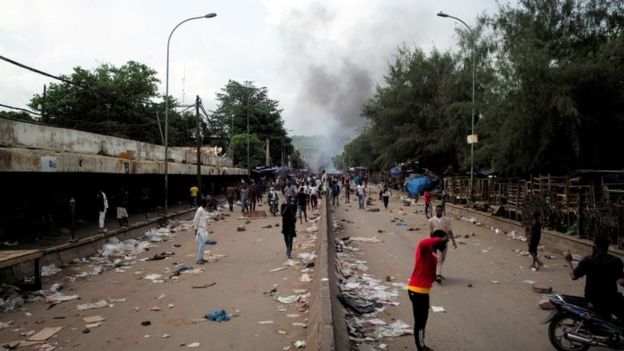
Some of them briefly made it into the building of the national broadcaster, ORTM, which was then forced off-air. Roads were blocked with burning barricades.

BBC

Some looting has taken place and there are reports of young men trying to break into the national assembly.

Two sources told the Reuters news agency that at least one person was killed outside the assembly.

This demonstration is the third since June.

Protests started after the opposition coalition rejected concessions from President Keita designed to end a political stand-off over a disputed legislative election in March.

The opposition this week said the movement had dropped its demand for President Ibrahim Boubakar Keita to step down. But it still called this protest because it wants more reforms.

Keita secured a second five-year term in 2018 but he has faced increased opposition over a rise in jihadist violence and an economic crisis.

Malians will hope this instability does not play into the hands of the jihadists who are behind the escalating violence in the north and centre of the country.

BBC