Governance

In a letter to the Senate on Tuesday, President Bola Tinubu requested the confirmation of 19 candidates for National Population Commission (NPC) commissioners.

The President of the Senate, Godswill Akpabio, read out the letter on the floor during plenary in Abuja.

The nominees:

The President also asked the red chamber to confirm the nomination of Bashir Indabawa (North-West), Enorense Amadasu (South-South) and Babajide Fasina (South-West) as NPC commissioners.

The Senate led by Senator Godswill Akpabio referred the nomination to the National Identity Management Commission (NIMC) to report back in two weeks.

Hadiza Abdulrahman

Subscribe to our Telegram and YouTube Channels and also join our Whatsapp Update Group 

Politics

The 2023 Population and Housing Census is critical to development and new data plan requirements for the revised National Policy on Education for sustainable development.

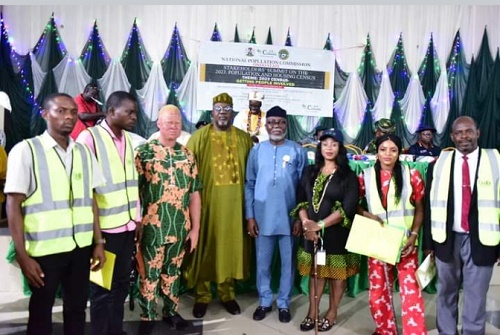
Ondo State Deputy Governor, Lucky Ayedatiwa stated this at the stakeholders’ summit for the 2023 census with the theme “Getting the People Involved ” organised by the National Population Commission, NPC, Ondo State held in Akure.

Mr Ayedatiwa pointed out that the census required the commitment of all citizens of Ondo State for accurate data collation to tackle insecurity through technology.

He said the census was unique considering the fact that NPC was deploying technology for the 2023 census.

Earlier, the Federal Commissioner, NPC, Ondo State, Prince Oladiran Iyantan highlighted the objectives of the summit to include insight into the imperatives, methodology, and timelines as well as promotion of robust national conversation on the processes and procedures for the 2023 census 

Prince Iyantan added that the stakeholders’ engagement was also aimed at ensuring an acceptable and credible digitalised census.

In their goodwill messages, stakeholders from the clusters of persons with disability, the Trade Union Congress, the Academia, the Youth Vanguard, market women representatives as well as the traditional council enjoined the people of Ondo State to participate actively in the exercise come 2023.

They emphasised the need for the Commission to ensure that every interest group was covered in the census with proper arrangement for internet services in rural areas and farmsteads where network services might pose a challenge.

During the technical session, NPC Census Manager, Dr Inuwa Bakari and Mrs Geraldine Arukwe gave an assurance to Nigerians that the Commission would ensure accurate data collection that would boost and promote the goals of the sustainable development plans.

Olufisoye Adenitan

Subscribe to our Telegram Channel and join our Whatsapp Update Group

Economy

Oyo State government has urged the National Population Commission, NPC, to be thorough, factual and realistic in the conduct of next year’s population and housing census.

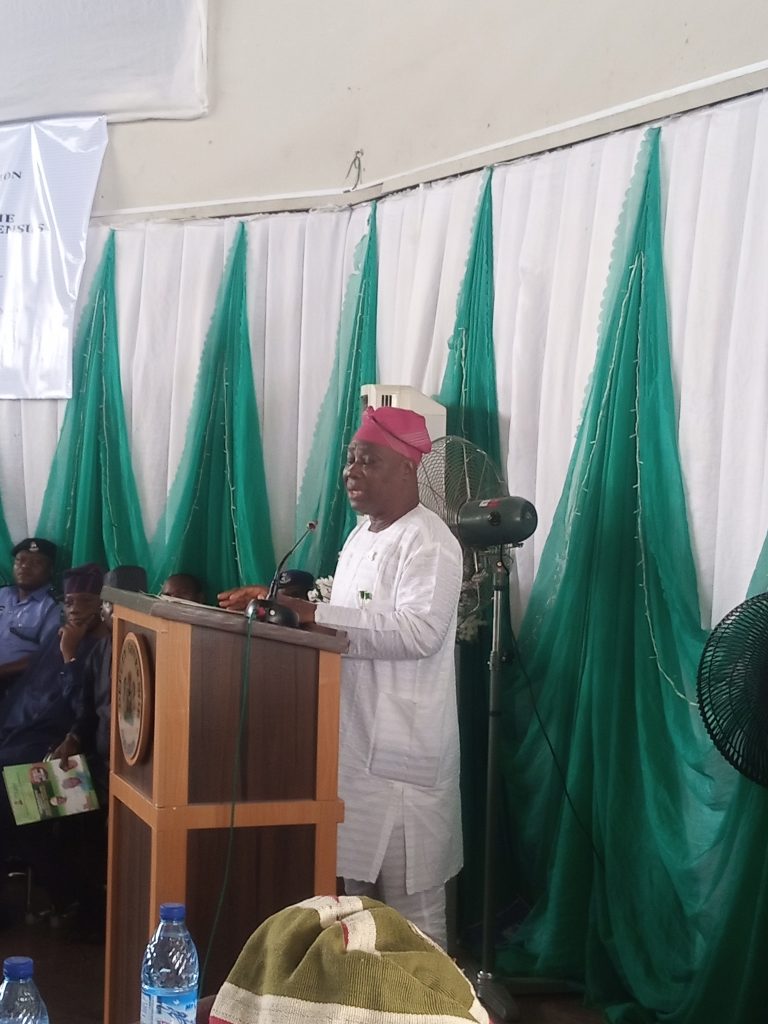
Governor Seyi Makinde stated this during the stakeholders’ summit organized by the NPC to sensitize the public, with the theme, “Getting the people involved In the 2023 Census”, held in Ibadan.

Represented by the Deputy Governor of Oyo State, Mr Bayo Lawal, Governor Makinde, without mincing words, said Oyo State was marginalized in previous census exercises, urging the population commission to ascertain the actual population of the state and the nation at large.

He pledged the support of the state government towards ensuring a reliable census.

In his remarks, NPC Federal Commissioner in Oyo State, Dr Eyitayo Oyetunji asked the state government to constitute a committee to collaborate with the commission for the successful conduct of the 2023 population and housing census.

Speaking on the imperatives for the 2023 population and housing census, Commissioner for Budget and Economic Planning, Professor Tunji Babatunde, emphasized that the census would be beneficial to the state as it was currently working on a 20-year development agenda.

In their goodwill messages, the Olugbon of Orile-Igbon, Oba Francis Alao and Okere of Saki, Oba Kalid Olabisi reiterated the need for the NPC to improve on its logistics to avoid political colouration and ensure that the census figures are not manipulated.

The monarchs charged Nigerians to wake up, be vigilant and participate in the census processes.

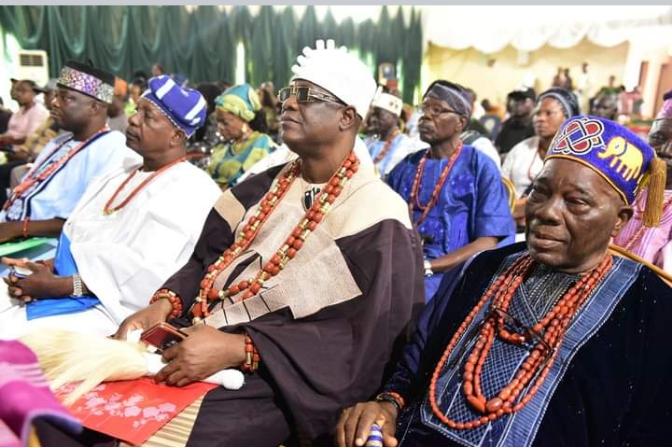
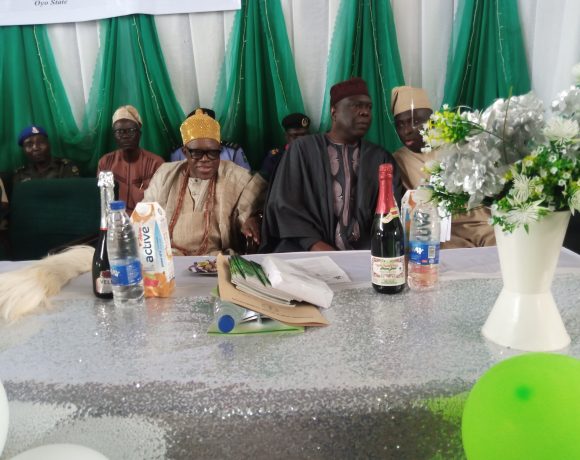
Royal fathers, among whom was the Olubadan of Ibadan, Oba Lekan Balogun, local government chairmen, top political functionaries religious leaders, and representatives of various interest groups attended the summit.

Blessing Okareh

Subscribe to our Telegram Channel and join our Whatsapp Update Group

News

The National Population Commission, NPC says next year’s head count and housing census will be done with the use of technology to check falsifications and alterations of data.

The Chairman, National Population Commission, Alhaji Nasir Kwarra stated this during an advocacy to Governor Kayode Fayemi and traditional institutions in Ekiti State.

Alhaji kwarra explained that the commission had among other things completed the enumeration area demarcation of 772 local governments while the pre test exercise for the May 2022 population census has commenced.

He solicited the support of the state government to ensure that the next year’s census was successful.

Alhaji Kwarra equally pleaded with the Governor to mobilize other State Chief Executives under the Nigeria Governors’ Forum to provide a conducive environment that would make the commision got accurate data of the people to ensure societal development.

In a response Governor Kayode Fayemi described census as an important aspect of development and gave an assurance of government’s readiness to partner NPC to achieve the goal.

The Governor suggested that national census should be carried out in Nigeria every two years to get accurate data base of Nigerian citizens.

Earlier during a meeting with the Ekiti State Council of Traditional Rulers, the NPC Chairman promised to continue to work with monarchs with the hope of getting the necessary advices and suggestions that would help the commision deliver on its mandate.

Also the NPC Federal Commissioner in charge of Ekiti, Mr Ayodeji Ajayi commended the monarchs for the huge support given to the commission’s officials during the EAD exercise, and called on them not to relent in order to achieve desired results.

In a separate remark, the Chairman Ekiti State Council of Traditional Rulers who is the Onisan of Isan Ekiti, Oba Gabriel Adejuwon, the Ewi of Ado Ekiti, Oba Adeyemo Adejugbe and Onise of Odo-Oro Ekiti, Oba Adebayo Jemilehin stressed the need for NPC to address all boundary issues before the exercise to avert communal clashes.

On the entourage of the NPC Chairman were the Commissioners in charge of Osun, Ogun, Lagos, Oyo, Ondo States among and other officials.

Oluwaseyi Akanbi

Politics

Traditional Rulers in Oyo State want all border disputes before settled before the next census to ensure accurate data in the country.

The traditional rulers stated this while speaking at the flag of phase eleven of Enumeration Area Demarcation in preparation for the next Census in Nigeria organized by National Population Commission, NPC. 

Some of the traditional rulers who made the observation noted that if the disputes were not resolved it would affect the outcome of the census. 

The Onigboho of Igboho, Oba John Oyetola said part of his town should be cleared before the census so that the area would not be counted as part of Osun State. 

Other monarchs at the event also called on National Population Commission to ensure breakdown of the census results for traditional rulers to know the actual number of people in their domain. 

Responding, the Oyo State Federal Commissioner, National Population Commission, Dr Eyitayo Oyetunji the commission would still conduct the exercise and wait till when all disputes were resolved before allocating the number to the right place.

Sunday Ogunyemi

News

The National Population Commission, NPC, in Ogun State has kicked off the Enumeration Area Demarcation programme in Remo North and Ikenne local government areas of the state.

The Federal Commissioner of NPC in the state, Mrs Oluseyi Aderinokun at the launch of the exercise in Iperu, explained that the process was to delineate the entire land area of the state into small geographical units ahead of the national population census in the country.

Mrs. Aderinokun himted that the units comprised specified number of persons and households which a team of enumerators could cover during a census.

She explained that the success of credible and accurate census depend on the quality of enumeration area demarcation

The Federal commissioner stated that the demarcation exercise was the determinant of the population of any locality, local government or state and called on the state government and the people of the state to join hands with NPC in achieving a reliable for the next population and housing census.

The Ogun State Deputy Governor, Mrs Noimot Salako-Oyedele in a remark noted that the enumeration area demarcation was not about taxation but about allocation of resources and assured that the state government would cooperate with the commission for the success of the programme.

Wale Oluokun

News Analysis

Recently, the National Population Commission, NPC, predicted that the continued closure of schools across the country due to coronavirus might lead to an increase in teenage pregnancy, abortion and the number of early school dropout.

The acting Executive Chairman of the NPC, Dr Tayo Oyetunji, said there had been a noticeable increase in gender-based violence ranging from rape to physical and emotional assaults on girls.

Although, the country conducted its last population census in 2006, the 2006 population and housing census put the nation’s population at one hundred and forty million and since then, estimates had been used to update the country’s growing population every year.

In the 2018 Nigerian Demographic and Health Survey that was conducted by the NPC in conjunction with the Federal Ministry of Health, World Health Organisation, WHO and the United Nations Population Fund, UNPF, among others, which was released last year, reveals a troubling trend which must be checked.

An astronomical increase in population could deepen poverty, escalate violence and worsen unemployment.

According to the survey, Nigeria is estimated to be two hundred and six million people with the birth rate put at five point three children per woman with Katsina state having the highest at seven point three children per woman.

The survey found that forty-four percent of teenage girls with no education have begun childbearing, while only one percent of teenage girls with more than secondary school education have given birth.

While Lagos has the lowest rate of teenage pregnancy at just one percent while Bauchi has the highest at forty-one percent.

According to the United Nations Sexual and Reproductive Health Agency UNFPA’S “World Population Report 2020”, thirty-three thousand Nigerian girls under the age of eighteen will be forced into marriage, usually to much older men.

One in five females married today in Nigeria is underage.

About nineteen percent of women between fifteen and nineteen years have begun child bearing while about fourteen percent would have given birth and four percent are pregnant with their first child.

It is common knowledge that the more educated a woman is, the fewer children she will bear.

It is pertinent therefore to increase the enrolment of girl child in primary and secondary schools especially in the most vulnerable areas.

Unfortunately, about eleven northern states are yet to domesticate the Child Rights Act despite its obvious benefits for children which include being unable to get married till the age of eighteen as girls stay longer in school.

Sadly, Nigeria has not been able to address the root causes of population explosion, which include polygamy, child marriage and low prevalence of contraception.

For instance, a motion moved by a federal lawmaker in the Eighth National Assembly to implement effective population management policy degenerated into a religious debate and failed to achieve its intended outcome. 

To mitigate the effect of increasing population therefore, Nigeria’s modern contraceptive prevalence rate of twelve per cent for married women and twenty-eight percent for sexually active unmarried women is still too low and needs to be scaled up. 

Saudi Arabia, one of the world’s most conservative countries, has placed a ban on marriage of persons below the age of eighteen.

State governments must also stop the practice of spending public funds in sponsoring mass weddings.

Addressing birth rates through a mix of women empowerment, education opportunities, birth control clinics and public enlightenment will make a difference.

Fawzeeyah Kasheem

Lifestyle

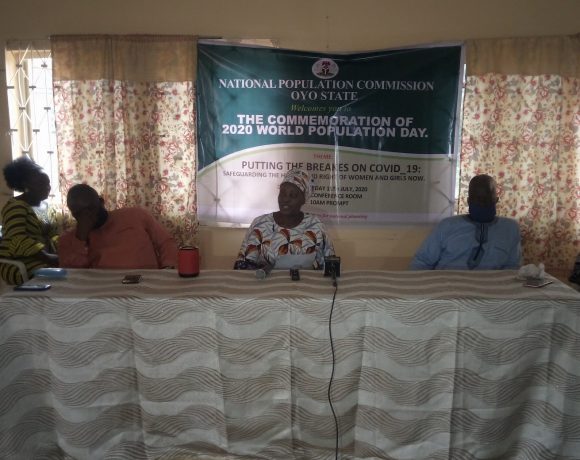
Acting chairman, National Population Commission, NPC, Dr Eyitayo Oyetunji says the President Muhammadu Buhari’s administration has initiated programmes and policies aimed at defying practices that negate the rights of women and the girl-child. 

Dr Oyetunji made this known in Ibadan at a press conference to commemorate this year’s World Population Day, with the theme “Putting the break to Covid 19: safeguarding the health and rights of women and girls now”. 

Dr Oyetunji who spoke through the Oyo State Director of the commission, Mrs Omolara Adeyinka said government is aware of the effect of Covid-19 on women and girls, and has approved economic stimulus package of 2.3 trillion naira for both the formal and informal sector, and has initiated an educational programme to reduce out-of-school children.

He said the effect of limited access to commodities occasioned by the pandemic is increasing the level of sexually transmitted diseases due to unprotected sex, unsafe abortion and unwanted pregnancies among women. 

The NPC boss explained that the commission will continue to collaborate with development partners and MDA’s to generate data meant to address cases of women’s health, nutrition and sexual harassment through survey and research.

Dr Oyetunji said arrangement had been concluded to begin digitization of vital events with procurement of computers for the seven hundred and seventy four local government areas of the country, expected to take off in the last quarter of this year.

Mosope Kehinde