Politics

The House of Representatives has asked the Minister of Niger Delta Affairs, Senator Godswill Akpabio, to publish, within 48 hours, members of the 9th National Assembly who got sixty percent of contracts from the Niger Delta Development Commission (NDDC).

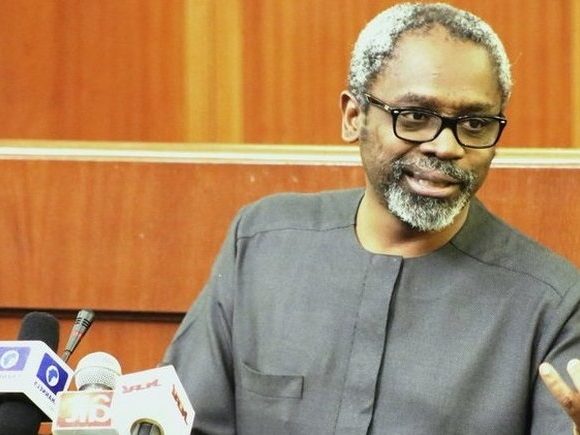
Ruling on a matter of privileges brought by Minority leader, Mr Ndudi Elumelu, the Speaker Mr Femi Gbajabiamila said the Minister, who alleged 60 percent of contracts from the NDDC were given to members of the National Assembly, should publish the benefiting lawmakers, especially members of the 9th Assembly.

He further said the names of their companies and the contracts they got should be published or face the wrath of the House.

Although he said his initial reaction was to have a good laugh when the Minister made the allegations, he realised it infringes on the integrity of the House.

The Speaker stated that the Minister owes it a duty to himself, the House Committee on Niger Delta, the people of Niger Delta and Nigerians to publish the names of lawmakers who got contracts from the NDDC.

Ibrahim Shehu

Politics

The Acting Managing Director of the Niger Delta Development Commission (NDDC) Kemerbrandikumo Pondei has fainted at the ongoing investigation by the House of Representatives Committee on NDDC on financial malfeasance in the Commission.

Prof Pondei, who was responding to questions by the lawmakers over expenses made out of the budget, suddenly laid his head on the table and was panting for air.

The Managing Director was taken out of the venue of the probe for medical attention at the time of this report.

The probe was suspended for thirty minutes.

Meanwhile, protesters have stormed the main entrance of the National Assembly, NASS, Abuja ahead of the commencement of the probe.

The protesters were in two groups and armed with various placards

While one group was supporting the Minister of the Niger Delta Ministry Affairs, Senator Godwin Akpabio and the Interim Management Committee, IMC of the NDDC, the other group was armed with various placards calling for the immediate sack of the Minister and the IMC of the Commission over alleged financial misappropriation

However, the combined team of security Agencies comprising, the personnel of the Nigeria Police Force, Department of State Services DSS, Civil Defence Corps and the Sergeant- at- Arms mounted tight security within and around the National Assembly Complex

It was also observed that more security personnel, patrol vehicles and Armoured Personnel Carrier, APC were brought from the Federal Capital Territory, FCT Abuja Police Command for reinforcement.

Ibrahim Shehu

Yoruba

Àarẹ Muhammadu Buhari ti fèsì lórí ìwádi owó tó tó ogójì billiọnu naira tí àjọ tó wà fún ìdàgbàsókè agbègbè Niger Delta NDDC, èyítí ó ti ńfa awuyewuye láàrin ilé ìgbìmọ̀ asòfin àpapọ̀ àti àwọn adelé alásẹ àjọ náà.

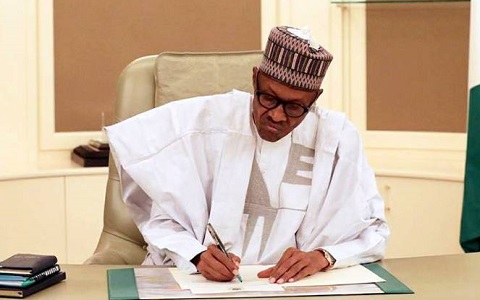
Àarẹ Buhari ti wá pàsẹ kí isẹ́ ìwádi tó yá ní kọ́nmọ́kánmọ́ ó bẹ̀rẹ̀ lórí isẹ́ àwọn ìgbìmọ̀ alásẹ àjọ náà.

Ó ní ó yẹkí ìgbésẹ̀ tó gúnmọ́ wà láàrin àwọn agbófinró, àwọn àjọ tó ńse ìwádi àti ilé ìgbìmọ̀ asòfin àpapọ̀ láti léè tètè mọ àwọn ìsòro tó ńdí ìsowó síse ìgbìmọ̀ náà lọ́wọ́ àti àwọn oun tí ó ńdí ìlọsíwájú agbègbè Niger Delta lọ́wọ́.

Àarẹ Buhari ẹnití ó jẹ́jẹ láti fìyà tó tọ́ jẹ ẹnikẹ́ni tí aje ìwà ìbàjẹ́ á sí mọ́ lórí, wá jẹ́jẹ ìpinu rẹ̀ làti túsu désàlẹ̀ ìkòkò lórí ọ̀rọ̀ tó ńjà rànyìrànyí ọ̀ún.

Yẹmisi Dada

News Analysis

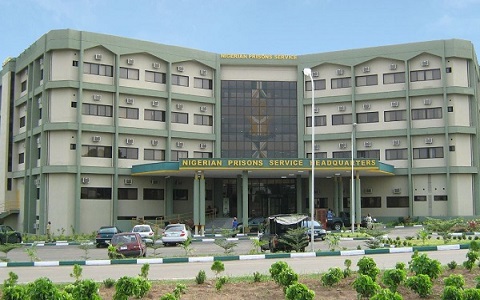
President Muhammadu Buhari recently signed into lawthe Nigerian Correctional Service Bill.

The act changes the name of the Nigerian Prisons Service, NPS, to Nigerian Correctional Service.

Senior Special Assistant on National Assembly Matters, Senator Ita Enang noted that the Nigeria Correctional Service is made up of two faculties, the custodial and non-custodial service.

The non-custodial service was intended to be a place of reformation and that the person sentenced under this will not stay in custody but will have remediation.

The presidential aide noted that the non-custodial faculty of the correctional service is responsible for the administration of non-custodial measures, in form of community service, probation, parole, restorative justice measures and such other measures as a court of competent jurisdiction may order.

He disclosed that the restorative justice measure approved in the act includes victim-offender mediation, family group conferencing, community mediation and other conciliatory measures as may be deemed necessary pretrial, trial during imprisonment or even post-imprisonment stages.

The bill was first presented and read in the senate in January 2008 by a former senator and current chairman of the Niger Delta Development Commission, NDDC, Victor Ndoma-Egba, in the sixth assembly.

Mr. Ndoma-Egba said the bill was aimed at addressing fundamental lapses inherent in the Prisons Act and a review of the act was necessary to put in place a framework for the rehabilitation and transformation of inmates and address the issue of inadequate funding of prisons.

The act is expected to reduce congestion of prisons across the nation.

Though, some analysts have described the move as putting the “cart before the horse” saying the bill on the total reform of the Nigerian Prison, which would see to proper reorganisation and rearrangement should have been signed.

They emphasised that the present state of prisons all over the country urgently requires quick intervention and attention from the government beyond change in name.

On the whole, it must be emphasised that the neglect on the part of government, coupled with high level corruption among prison officials have rendered prisons across the country ineffective to correct social vices and to a large extent constitute serious danger to the society.

Instead of rehabilitating offenders and reintegrating them into the society for better living the reverse is the case.

It is imperative therefore that the federal government set up a virile committee, which should comprise of professionals and experts who understand modern prison arrangement.

Also, urgent infrastructural intervention is needed in all the prison across the country for the purpose of de-congestion, and provision of comprehensive vocational programmes to empower inmates and prepare them for life after prison should be prioritised.

Most importantly, social engagement in the area of skills acquisition and robust reorientation programmes would go a long way to reintegrate inmates back into the society.

Titilayo Kupoliyi