Foreign

Russian  President, Vladimir Putin says, the country will send nuclear capable short-range missile systems to its ally Belarus in the coming months.

He said Iskander-M systems “can fire ballistic and cruise missiles, both conventional and nuclear types”.

The systems have a range of up to 500km (310 miles).

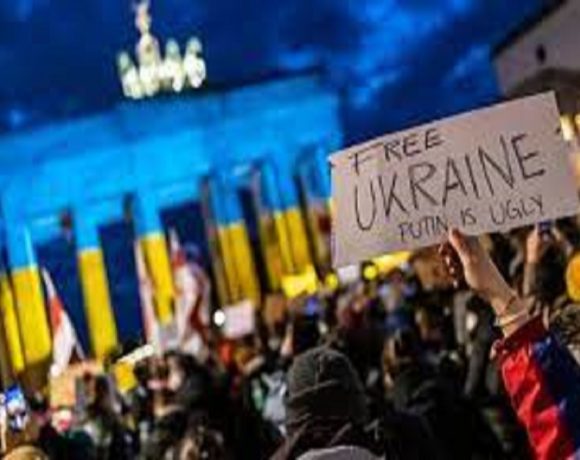
Report says, tensions between Russia and the West have escalated, following President Putin’s decision to invade Ukraine on 24 February.

Mr Putin has made several references to nuclear weapons since then, which some have interpreted as a warning to Western countries not to intervene.

Speaking in St Petersburg, Mr Putin said Russia would help to modify Belarusian SU-25 warplanes so that they could carry nuclear weapons, in response to a query from Mr Lukashenko.

Meanwhile several explosions were reported in Kyiv on Sunday morning, the city’s Mayor Vitali Klitschko said.

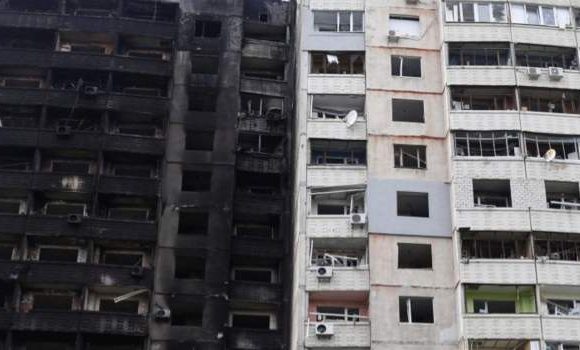
“Ambulances and rescuers are on site. In two buildings, the rescue and evacuation of residents is under way,” he added.

According to report, a residential complex in the city had been hit.

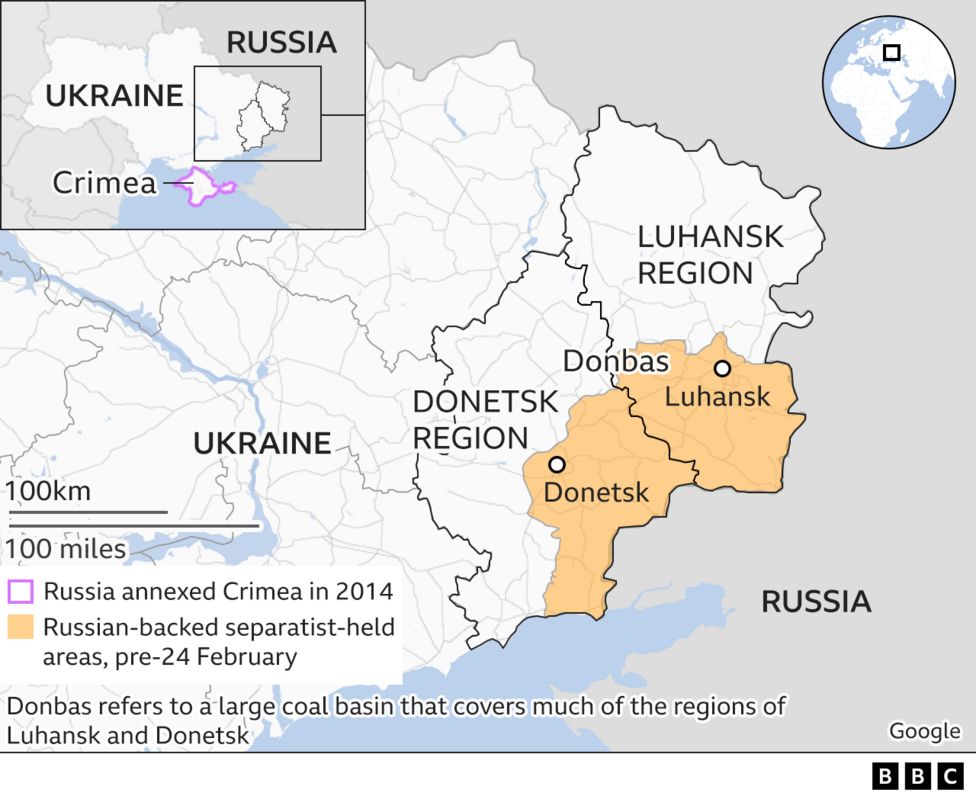
Taking the city means Russia now controls nearly all of Luhansk region and much of neighbouring Donetsk – the two regions that form the vast industrial Donbas.

In his video address late on Saturday, Ukrainian President Volodymyr Zelensky pledged to take back “all our cities” occupied by Russia.

But he said the war with Russia had entered an emotionally difficult stage and he did not know how many more blows and losses there would be.

On Friday night Russia launched a barrage of missiles at targets in the north and west of Ukraine. At least three people were killed and more may be buried under rubble in the town of Sarny west of Kyiv, a local official said.

Some of the rockets were fired from Belarus, Ukraine said. Belarus has provided logistical support to Russia but its army is not officially taking part in the conflict.

Ukraine’s intelligence service said the missile strikes were part of Kremlin efforts to draw Belarus into the war.

Russia’s capture of Severodonetsk comes ahead of a week of Western diplomacy, with US President Joe Biden flying to Germany for a G7 summit followed by Nato talks.

In recent months, the Western alliance has shown signs of strain and fatigue but on Saturday UK Prime Minister Boris Johnson said Ukraine could win its battle with Russia.

“Now is not the time to give up on Ukraine,” he said.

On Sunday Indonesian President Joko Widodo, who is due to attend the G7, said he would urge the Ukrainian and Russian leaders to restart dialogue.

“War has to stop and global food chains need to be reactivated,” he said.

At Saturday’s televised meeting with his Belarusian counterpart Alexander Lukashenko in St Petersburg, Mr Putin said: “We have made a decision: within the next few months we will hand over to Belarus the Iskander-M tactical missile systems.”

He said all the details of the transfer would be worked out by the ministries of defence of the two countries.

Iskander missiles have already been deployed in Kaliningrad, a small Russian Baltic exclave between Nato members Lithuania and Poland.

The Belarusian leader said Lithuania’s move was “a sort of declaration of war” and “unacceptable”.

Steel and some other Russian goods come under the EU sanctions imposed over Russia’s invasion of Ukraine. Lithuania says its measures affect only 1% of the normal Russian goods transit on the route, dismissing Russian talk of a “blockade” of Kaliningrad.

BBC /Taiwo Akinola

Foreign

The West must prepare to continue supporting Ukraine in a war lasting for years, Nato’s chief has warned.

Secretary-General Jens Stoltenberg said the costs of war were high, but the price of letting Moscow achieve its military goals was even greater.

UK Prime Minister Boris Johnson has also warned of a longer-term conflict.

And in a stark warning, the newly appointed head of the British Army said the UK and allies needed to be capable of winning a ground war with Russia.

Gen Sir Patrick Sanders, who started the job last week, said in an internal message seen by the BBC: “Russia’s invasion of Ukraine underlines our core purpose – to protect the UK and to be ready to fight and win wars on land – and reinforces the requirement to deter Russian aggression with the threat of force.”

Mr Stoltenberg and Mr Johnson said sending more weapons would make a victory for Ukraine more likely.

“We must prepare for the fact that it could take years. We must not let up in supporting Ukraine,” the Nato chief said in an interview with German newspaper Bild.

“Even if the costs are high, not only for military support, also because of rising energy and food prices.”

The Western military alliance chief said that supplying Ukraine with more modern weapons would increase its chances of being able to liberate the country’s eastern Donbas region, much of which is currently under Russian control.

For the last few months Russian and Ukrainian forces have battled for control of territory in the country’s east – with Moscow making slow advances in recent weeks.

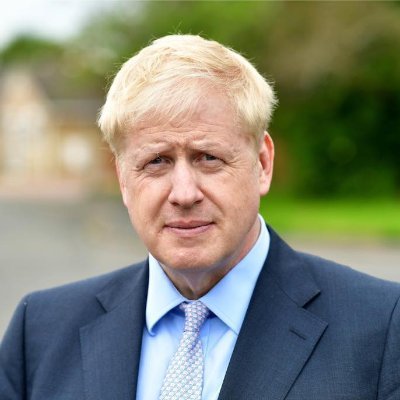
Writing in the Sunday Times, British Prime Minister Boris Johnson accused Russia’s Vladimir Putin of resorting to a “campaign of attrition” and “trying to grind down Ukraine by sheer brutality.”

“I’m afraid we need to steel ourselves for a long war,” he wrote. “Time is the vital factor. Everything will depend on whether Ukraine can strengthen its ability to defend its soil faster than Russia can renew its capacity to attack.”

The prime minister, who visited Ukraine’s capital on Friday, said supplies of weapons, equipment, ammunition, and training to Kyiv needed to outpace Moscow’s efforts to rearm itself.

BBC /Simeon Ugbodovon

Foreign

President Joe Biden says the United States, US, will send Ukraine more advanced rocket systems to help it defend itself.

Mr Biden said the lethal aid would strengthen Ukraine’s negotiating position against Russia and make a diplomatic solution more likely.

The US president said: “That is why I’ve decided that we will provide the Ukrainians with more advanced rocket systems and munitions that will enable them to more precisely strike key targets on the battlefield in Ukraine.”

The weapons, long requested by Ukraine, are to help it strike enemy forces more precisely from a longer distance.

Until now, the US had refused the request out of fear the weapons could be used against targets in Russia.

The Russian government said it viewed the latest US weapons package to Ukraine including the new systems “extremely negatively”.

Separately, the German government has promised to send an air defense system to Ukraine.

German Chancellor Olaf Scholz told Members of Parliament that the IRIS-T system was the most modern Germany possessed and would enable Ukraine to defend an entire city against Russian air attacks.

He added that he would provide tracking radar capable of detecting enemy artillery, and multiple rocket launchers.

Analysts say the move is a fine balancing act for Mr Biden.

As providing more powerful weapons could provoke a reaction from Russia, risking direct conflict between the US and its Nato allies and Russia.

BBC/Maxwell Oyekunle

Foreign

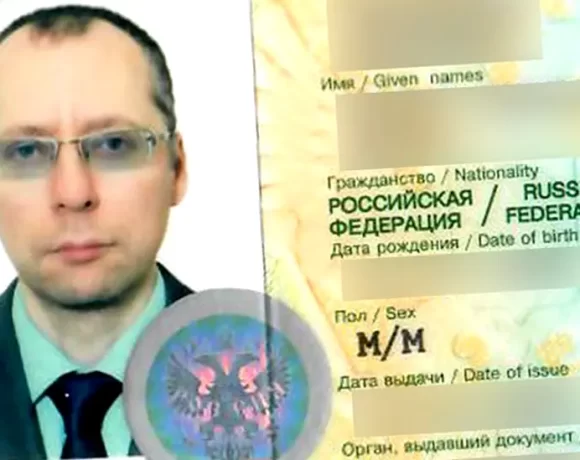
A Russian diplomat has quit his job in protest at the “bloody, witless” war “unleashed by Putin against Ukraine”.

Boris Bondarev, whose LinkedIn says he worked at the Russian mission to the UN in Geneva, told the BBC he knew his decision to speak out may mean the Kremlin now considers him a traitor.

But he stood by his statement which described the war as “a crime against the Ukrainian people” and “the people of Russia”.

Moscow has not yet commented on the resignation.

Russia has cracked down on those who are critical of or veer from the official narrative surrounding the war, which it refers to only as “a special military operation”.

In the letter posted on social media and shared with fellow diplomats, Mr Bondarev explained he had chosen to end his 20-year career in the service because he could no “longer share in this bloody, witless and absolutely needless ignominy”.

“Those who conceived of this war want only one thing – to stay in power forever,” he wrote.

“To achieve that, they are willing to sacrifice as many lives as it takes,” he continued. “Thousands of Russians and Ukrainians have already died just for this.”

The letter does not hold back over his former employer either, accusing Russia’s Foreign Ministry of being more interested in “lies and hatred” than diplomacy.

Speaking to the BBC, Mr Bondarev said he had “not seen any alternative” than to resign: “I don’t think it will change a lot, frankly, but I think it may be one little brick into the bigger wall which would eventually be built.”

Mr Bondarev revealed that the invasion had initially been met by colleagues with “happiness, delight, euphoria” at the fact Russia had “taken some radical steps”.

“Now they’re less happy with that, because we’re facing some problems, with the economy first of all,” he told the BBC. “But I don’t see that many of them would repent and change their views.

“They may become a little bit less radical, less aggressive quite a bit. But not peaceful,” he said.

In contrast, Mr Bondarev said in his open letter he had “never been so ashamed of my country” as he was on 24 February, the day the invasion began.

It is unclear if he is the first diplomat to resign from the mission, although no one else has spoken out publicly.

Vanguard/Oluwayemisi Owonikoko

Foreign

The latest agency reports lend some credence to the claim, with a spokesman for the Ukrainian General Staff quoted by AFP as saying that in the region, the “enemy’s main efforts are focused on ensuring the withdrawal of its units from the city of Kharkiv”.

Reuters journalists say the north-eastern city has been quiet for about two weeks.

Moscow is still reported to be bombarding nearby areas, however – including Dergachi, some 10km north of Kharkiv – and late on Friday, reports in the Russian media said Russian forces had hit an arms depot in the region.

Capturing Kharkiv was a key Russian objective, and the city was heavily shelled during the invasion, leading to hundreds of civilians being killed. In his latest video address, President Volodymyr Zelensky said Ukraine’s forces were doing everything possible to liberate the country.

Meanwhile, the head of Ukraine’s military intelligence has said the war with Russia will reach a turning point in mid-August and is likely to be over by the end of the year.

In an interview with Sky News, Major General Kyrylo Budanov said that “the breaking point will be in the second part of August” and “most of the active combat actions will have finished by the end of this year.”

“As a result, we will renew Ukrainian power in all our territories that we have lost including Donbas and the Crimea.”

He added that Russia losing the war will lead to a coup against Russian President Vladimir Putin, which he claimed was already underway. The BBC has not verified this claim.

He also claimed that President Putin was in a “very bad psychological and physical condition and he is very sick.” Such a claim has not been substantiated.

BBC/Simeon Ugbodovon

Foreign

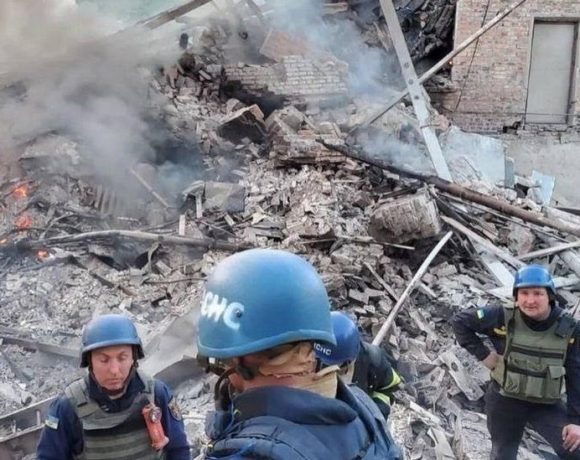
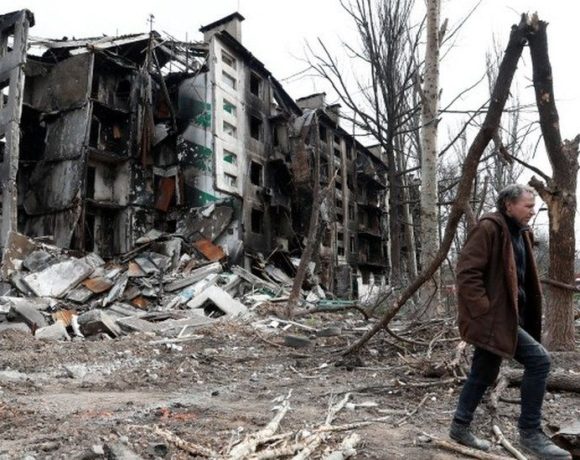
Dozens of people are feared dead after a bomb hit a school in east Ukraine, where government forces are battling Russian troops and separatists.

Luhansk region’s governor, Serhiy Gaidai, confirmed two deaths, saying 60 people were feared dead under the rubble of the school in Bilohorivka.

About 90 people had been sheltering in the building and 30 were rescued, seven of them wounded, he added.

Mr Gaidai said a Russian plane had dropped the bomb on Saturday.

His accusation could not be verified independently and there was no immediate response from Russia.

Luhansk has seen fierce combat as Russian troops and separatist fighters seek to surround government forces, just over two months since the start of the Russian invasion.

Bilohorivka is close to the government-held city of Severodonetsk, where heavy fighting was reported in the suburbs on Saturday.

The blast brought down the building which caught fire and it took firefighters three hours to extinguish the blaze, according to the governor, writing on Telegram.

He said almost the entire village had been sheltering in the basement of the school.

The final death toll would only be known when the rubble had been cleared, the governor said.

Since the invasion began on 24 February, the UN has recorded at least 2,345 civilian deaths and 2,919 injured in Ukraine, the High Commissioner for Human Rights said in an update last month. Thousands of combatants are also believed to have been killed or injured on both sides.

More than 12 million people are said to have fled their homes since the conflict began, with 5.7 million leaving for neighbouring countries and another 6.5 million people thought to be displaced inside the war-torn country itself.

Much of Luhansk, which is part of the Donbas region, has been under the control of the separatists for the past eight years.

BBC/Simeon Ugbodovon

Foreign

The EU is expected to outline fresh sanctions against Russia later today, including a plan for potentially phasing out Russian oil.

This is a big move given how many member states are reliant on this source. Overall, the bloc relies on Russia for 26% of its oil imports.

They’ve already paid more than £47 billion euros ($47.43bn) to Russia for the country’s gas and oil since the war began.

Germany has indicated that it would be able to manage without Russian oil by the end of 2022. EU nations have been tussling this week on how to wind down their dependence on Russia.

But some nations – like Hungary and Slovakia – are much more heavily exposed to Russian oil and gas. Hungary, especially, has opposed stronger energy sanctions against Russia.

BBC/Taiwo Akinola

Economy

Foreign Minister Annalena Baerbock says  Germany will end oil imports by the end of the year, with gas following.

Ukraine’s president Volodymyr Zelensky has criticised Germany for failing to curb Russian energy imports.

He described energy payments as “blood money”.

Proceeds from the sale of Russian oil and gas amount to around $1bn, £770m, a day, undermining international efforts to put economic pressure on President Vladimir Putin to end the war.

The US has already banned Russian oil imports and the UK plans to phase them out by the end of the year.

But according to report, European Union Countries are more heavily dependent on Russian energy, with Germany currently buying around 25% of its oil and 40% of its gas from Russia.

Mr Lindner told the newsmen that his country was working to implement an embargo on Russian energy but that he preferred using sanctions.

He said a sudden halt to Russian energy imports could see the physical shutdown of German producers such as manufacturers and carmakers.

Mr Lindner insisted that any calculation on Vladimir Putin’s part that Germany would continue to rely on Russian energy was “wrong”.
“In the end, we don’t want to have any further business with Putin,” he said.

Earlier this week, German economic institutes warned that immediately halting Russian imports would spark a sharp recession in Europe’s biggest economy by 2023.

However his stance was at odds with statements made by Germany’s foreign minister, Ms Baerbock, who is Green Party co-leader.

Ms Baerbock said Germany would halve Russian oil imports by the summer and eliminate them altogether by the end of the year, to be followed quickly by a reduction in Russian gas imports.

Germany’s finance minister was keen to sound tough on Russia and appears acutely aware of the criticism levelled at his country for dragging its feet over a full energy embargo on the Kremlin.

His basic message was – it is coming, but not quite yet, because it is impossible to enact immediately and would probably lead to shutdowns of large swathes of the German economy.

Mr Lindner said Germany would move as fast as possible, but did not confirm that would be within a year.

In Berlin this issue appears to be putting some stress on the three-party governing coalition.

Mr Lindner leads the free market FDP, not the normal bedfellows for the Social Democrats and Greens.

Meanwhile Green Party leader Annalena Baerbock, also the foreign minister, said dependence on Russian oil would definitely finish by the end of the year. The Chancellery under Olaf Scholz appears to be the most cautious on this issue.

BBC /Taiwo Akinola

Foreign

Ukraine’s President Volodymyr Zelensky has said Russia has launched an assault to seize the eastern Donbas region.

Moscow bombarded cities with rocket and artillery fire on Monday and in a video address Mr Zelensky said that the battle “for the Donbas has begun”.

Ukraine’s top security official, Oleksiy Danilov, said that Russia tried to break through the Ukrainian front lines in the region.

The offensive has been long-expected after Russia failed to seize Kyiv.

Russia initially appeared to want to capture major Ukrainian cities and topple the government.

But after facing stiff resistance, Russian defence officials said that its main objectives in the “first stage of the operation” had been “generally accomplished” and its forces were moved from areas around the capital.

They announced plans to redirect the focus of the invasion towards the “liberation” of the Russian speaking Donbas region.

Russia’s President Vladimir Putin has portrayed the invasion as an attempt to demilitarise and “denazify” Ukraine, something Ukraine and its allies dismiss as a ruse for an unprovoked attack.

Throughout Monday, Russia unleashed a barrage of rocket and artillery fire on a number of eastern areas, with eight civilians killed in the city of Kreminna in Luhansk and in the Donetsk area.

Seven people were killed and eleven more were injured in four Russian strikes in western Lviv, a city that has largely been spared the attacks seen elsewhere in Ukraine.

The governor of the Luhansk region said the situation was “hell”, with constant fighting being reported in some cities.

In Ukraine’s second city of Kharkiv, the regional governor said evacuations of civilians were taking place in areas where intense clashes are expected.

Russian defence officials said it its forces had hit hundreds of military targets in Ukraine on Sunday night, including 16 military facilities in the Kharkiv, Zaporizhzhia, Donetsk and Dnipropetrovsk regions, as well as a port in Mykolayiv in the south and east of Ukraine.

Speaking in a video message on Monday night, Mr Zelensky said that he and his forces “will defend ourselves” and pledged “not give up anything Ukrainian”.

“A very large part of the entire Russian army is now focused on this offensive,” he added, but said that Ukraine’s forces will fight on “no matter how many Russian troops are driven there, we will fight”.

Moscow claimed last month that it controlled 93% of Luhansk and 54% of Donetsk and its forces are expected to try and encircle the remaining Ukrainian troops in the region.

But they face a protracted fight with some of Kyiv’s most battle-hardened troops. Ukraine is believed to have between 40-50,000 soldiers in the Donbas, many of whom have spent years fighting against Russian-backed separatists forces in the region.

Mr Zelensky’s chief of staff, Andriy Yermak, said the assault marked “the second phase of the war” and assured Ukrainians that their forces could hold off the offensive.

“Believe in our army, it is very strong,” he said.

The change in Russia’s objectives was set out by President Vladimir Putin during a speech last week, where he announced that his aim was “to help the people who live in the Donbas, who feel their unbreakable bond with Russia”.

The Pentagon’s press secretary, John Kirby, cautioned Russia could be “setting the conditions for future offensive operations” and officials in Kyiv warned that the new Russian offensive does not mean that Moscow has ended its attacks on other parts of Ukraine.

“Putin hasn’t removed the goal to destroy us as a state and our political leadership,” Mr Danilov said in an interview with Ukrainian TV.

Russia continues to target the south-eastern city of Mariupol, which would allow its troops to complete a land bridge between the occupied Crimean peninsula and forces in separatist-held regions of eastern Ukraine.

Officials in Kyiv claimed Russian war planes were preparing to drop five-tonne bombs on the Azovstal plant where the final Ukrainian holdouts are sheltering.

BBC/Simeon Ugbodovon

Foreign

Defenders of the besieged city of Mariupol will fight to the end against Russian forces, Ukrainian Prime Minister Denys Shmyhal says.

The port city has not fallen despite an ultimatum from Moscow to remaining fighters to give up, he said.

Ukraine’s Foreign Minister Dmytro Kuleba said Russia has chosen to raze Mariupol to the ground.

Local officials said Russian forces have announced they will stop anyone from entering or leaving the city.

Capturing the whole of the city is seen as a major strategic prize for Russia, leaving it in control of a vast swathe of southern and eastern Ukraine.

An advisor to the mayor of Mariupol said residents would be forced to queue for a pass to enable them to move between districts and some could have their phones confiscated or be taken against their will to Russia.

In an interview with the US network ABC, Mr Shmyhal said a Russian deadline for Ukrainian forces in Mariupol to surrender by Sunday had been ignored.

“The city still has not fallen,” he said. “There is still our military forces, our soldiers, so they will fight until the end. And as for now, they still are in Mariupol.”

Russia’s military says it controls almost all of Mariupol, while Ukraine’s Azov Battalion is still holding out in Azovstal, a huge steelworks overlooking the Azov Sea.

Justin Crump, a military expert at security consultancy Sybilline, told the BBC there could be 500-800 Ukrainian troops holding out in the city.

“[The steelworks] have nuclear bunkers, tunnels, it’s built to survive a nuclear conflict – they are really well set for defence,” he said.

“They have had more than 50 days to fortify it and build escape routes,” Mr Crump added. “I suspect that unless they are wiped out they’ll be there a long time. It’s credible there would be guerrilla resistance.”

Ukraine has demanded that Russian forces open humanitarian corridors from Mariupol to allow civilians and wounded Ukrainian troops to leave, but no large-scale evacuations have taken place for several weeks.

The situation for civilians in the city is desperate, with homes destroyed and widespread water shortages.

As Mariupol defenders continue to hold out, Ukrainian officials still deny any possibility of territorial concessions to Russia.

In an interview broadcast on Sunday by CNN, President Volodymyr Zelensky brushed aside the idea of letting Moscow take over parts of eastern Ukraine to stop the conflict.

“Ukraine and its people are clear. We have no claim to anyone else’s territories but we are not going to give up ours,” he said.

Meanwhile, authorities in the western city of Lviv said six people were killed in rocket strikes on Monday morning.

It is not yet clear what the strikes were targeting. In recent weeks, Russia has focused its offensive on eastern Ukraine.

In other developments:

  • Ukraine says five people died after Russia shelled Kharkiv on Sunday, and another two were killed in the town of Zolote in the Luhansk region, where residents have been told to leave
  • In Mykolaiv in the south – where fighters have been holding off a Russian advance on the port of Odesa – the governor said there had been continuous rocket attacks
  • Russian and Belarusian lorries are queuing to return home via the Polish-Belarusian border after an EU deadline banning them from its territory passed
  • Russian officials confirmed the death of Major-General Vladimir Frolov, deputy commander of the 8th Army, the latest of several senior officers to die in the conflict
  • In his Easter Sunday address, Pope Francis called for peace in Ukraine, saying “the flexing of muscle while people are suffering” had to end

              BBC/Simeon Ugbodovon

Foreign

Russia has banned Prime Minister Boris Johnson and other senior ministers from entering Russia over the UK’s “hostile” stance on the war in Ukraine.

Foreign Secretary Liz Truss, Defence Secretary Ben Wallace and 10 other senior politicians – mostly members of the Cabinet – have also been barred.

Moscow said the decision had been made in retaliation to the UK’s sanctions against it since it invaded Ukraine.

In March, Moscow imposed a similar ban against US President Joe Biden.

Russia’s foreign ministry said: “London’s unbridled information and political campaign aimed at isolating Russia internationally, creating conditions for containing our country and strangling the domestic economy” were responsible for its decision.

It added: “In essence, the British leadership is deliberately aggravating the situation around Ukraine, pumping the Kyiv regime with lethal weapons and coordinating similar efforts on the part of NATO.”

It would be recalled that earlier in the week the UK and US governments had announced further sanctions on Russia.

The sanctions included financial measures designed to damage Russia’s economy and penalise President Putin, high-ranking officials, and people who have benefited from his regime.

BBC/ Oluwayemisi Owonikoko

Foreign

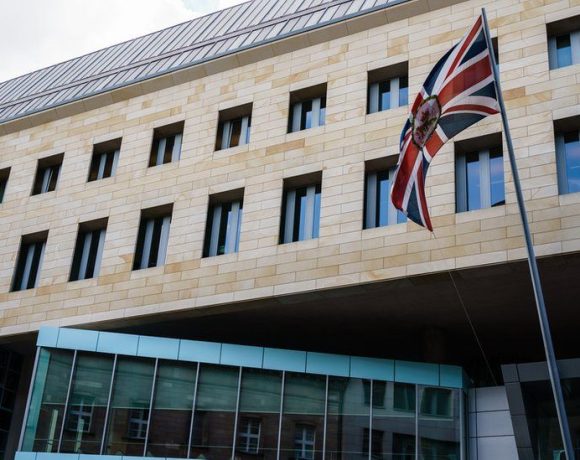
A security guard at the British embassy in Berlin suspected of spying for Russia has been extradited to appear in court charged with nine offences under the Official Secrets Act.

David Ballantyne Smith, 57, is due to appear at Westminster Magistrates’ Court on Thursday.

The UK national was arrested by German police on 10 August.

The offences are alleged to have happened between October 2020 and August 2021.

Mr Smith, who had been living in Potsdam, in Germany, was flown back to the UK on Wednesday ahead of his appearance at Westminster Magistrates’ Court.

The Metropolitan Police said the nine charges related to the collection and communication of information useful to the Russian state.

Nick Price, head of the special crime and counter-terrorism division of the Crown Prosecution Service (CPS), said Mr Smith was accused of seven offences of collecting information with the intent of sending it to the Russian authorities, one of attempting communication and one of providing information to a person he believed was a member of the Russian authorities.

He said the CPS had worked closely with its German counterparts to bring Mr Smith back to the UK after obtaining an extradition warrant.

BBC

News Analysis

On January 20, 2021, baton changed hands in Washington, Trump gave way to Biden, after the horror of the January 6 Capital riot.

Over a year after, Biden finds himself marshalling Europe to confront what the North Atlantic Treaty Organisation, NATO, 30 nations body has tagged Putin war against Ukraine.

And Biden has not spared words dubbing Vladimir Putin a ‘war criminal’, with the White House saying POTUS spoke from his heart, which Moscow deemed unforgivable rhetoric.

Biden was not yet done with the diatribe, hitting the Russian hegemony with a sledgehammer,  describing Putin as a butcher, a man who cannot remain in power.

To the Kremlin, this was a faux pas, it is doubtful if Ukrainians in Warsaw, where Biden slammed Putin, shared the same view.

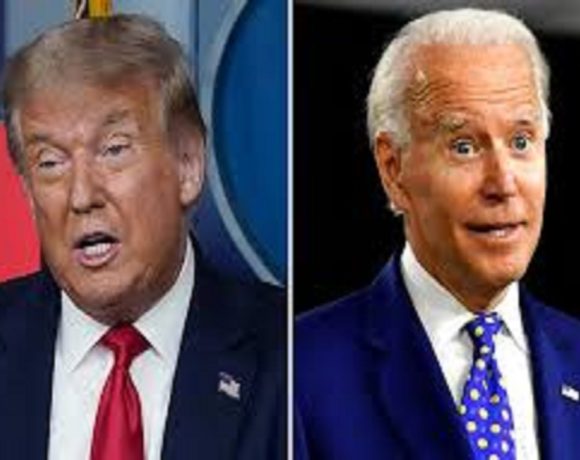
While Biden had taken some sharp swipes at Putin, his predecessor, not ready to be outdone, had also gone public. Speaking at Republican Annual Convention, CPAC, Trump lavished praise on Putin, calling him smart, a comment which left the United States and NATO leaders stupefied, considering the carnage being caused by the invasion ordered by Putin on Ukraine.

That was in the early days of the invasion, Donald Trump was to deliver another salvo in March when he told conservative radio hosts, Buck Sexton and Clay Travis, ‘Putin is a genius’. Key Republican figure, Lindsay Graham must have been horrified by the comment, calling it a mistake.

Beyond the verbal rhetoric of the two POTUS, glazing the issue in a larger context, flip back the years to Trump’s presidency, should the scenario playing out in Ukraine had erupted while Trump was in office, what would have been his response?

Let’s do a check on Trump’s time in office. In 2019, Trump withheld $250 million in military aid to Ukraine. Days later, Trump held a phone call with Ukrainian President Volodymyr Zelensky, during which he asked Zelensky to work with Rudy Giuliani and U.S. Attorney General William Barr to investigate former Vice President Joe Biden and his son Hunter (American Progress Organisation).

According to The Washington Post, the State Department learned that the Trump administration intended to withhold military aid from Ukraine a few days before Trump’s phone call with Zelensky, with Ukraine embroiled in a simmering war with Russian proxies.

Given such a scenario then, would Trump have stood up to Putin, or left Ukraine to stew in the cauldron of the present situation?

Trump’s presidency was characterized by a frosty relationship with Europe sparked mainly by his America First approach, which heckled the values-based transatlantic relationship between the United States and Europe.

Would NATO have been able to forge a united front against Putin amidst the scepticism with which Europe looked at United States commitment to sustaining the solid cohesion of the alliance?

During his presidential campaign, President Trump had called the alliance ‘obsolete’ and there was also the issue of NATO’s 2 per cent ofGDP target for defence spending.

Was there any possibility of Trump jettisoning his cosying up to Putin and muster Europe to fend off Putin’s aggression in the face of worldwide opprobrium in the face of Putin’s action?

For the United States intelligence community, time with Trump was not that rosy, as the nation’s chief security officer often rubbished Intel reports that pointed the way to Russia.

To Trump, such was nothing but balderdash, especially in the light of the controversies surrounding Moscow’s interference in 2016 presidential election.

Obviously, morale would be low in such circumstances in the US Intel community, and there would be scepticism and apprehension among officials when it comes to approaching Trump with a credible Intel report.

It left many wondering if Trump was not playing Man Friday to Putin. When intelligence agencies or advisors fear homing truth to leadership, it carries with it potential danger for any nation: Vladimir Putin is faced with such a situation, at the moment.

According to the United Kingdom’s director of intelligence agencies, GCHQ, Jeremy Flemming, in a prepared speech to the Australian National University in Canberra, Putin’s advisors fear telling the truth about Ukraine’s war plan. Flemming described the invasion as massively misjudged. (India Today)

US intelligence had equally made a similar assessment, indicating that Putin was being misinformed by his advisors about the progress of the Russian operation.

It all boils down to the fear factor!. And the casualties on the Russian side speaks volume, with between 7,000 and 15,000 deaths, besides armoured tanks, jets and warplanes downed in Ukraine, though Moscow only claims just over a thousand deaths.

Would Trump have decided to take on Putin decisively going by his comment that he once told the Russian strongman that he would bomb Moscow, and he would have sent US nuclear submarine into Russia’s coast amidst the ongoing crisis?

Give it to him Trump could be brash. For example, he warned the US was targeting 52 Iranian sites and will strike very fast and very hard if Tehran attacked Americans or US assets.

His remarks followed the US assassination of Qasem Soleimani, a top Iranian general, in a drone strike.

Was it likely that Putin would have trodden cautiously, knowing that Trump could at times be unpredictable, especially with his America first and Make America great vision, and thus sees Putin’s action as undermining?

Or perhaps, the current bi-partisan support coupled with the swell of public opinion, global rage, and angst against China for tacit support of Putin, could have propelled Trump to take on Putin, thus healing the frosty relationship with Europe.

Joe Biden has succeeded in doing just that, declaring America is back as he has rallied Europe to toe the same path against Putin, something the Russian strongman could have gambled on, thinking EU countries that depend on Moscow’s energy might not be willing to risk economic backlash, should the tap from the Kremlin cease flowing.

Germany has put the Nordstream 2 project with Moscow on hold, European countries dependent on Russia’s crude are fast thinking about alternatives to aborting reliance.

Putin is no stranger to Biden, as the US President has been in the corridor of power for a number of years, especially during his time as vice president, during Barrack Obama’s presidency.

According to CNN’s Edward-Isaac Dovere, Joe Biden sees foreign relations as being about relationships, and he has been developing the one with Vladimir Putin for two decades.

Biden warned that Putin had dreams of rebuilding an authoritarian empire going all the way back to his days as a senator in Delaware and that he knew that Putin did not want him to win.

However, Biden has declined to accede to Ukraine’s demand for fighter jets and a no-fly zone to counter Russia’s air superiority, which had resulted in the massive destruction of infrastructure in Ukraine.

NATO countries are largely on the same page with Washington on this to avoid direct confrontation between NATO and Putin, who had threatened to go nuclear.

Obviously, NATO in this wise wants to avoid catastrophic human causalities such as was witnessed in the First and Second World wars, rather than out of fear of taking on Putin: after all, NATO has countries with nukes.

 Would Trump have consented totally to such restraints if he felt Putin was feeling too big to be handled by a resurged NATO?

Simeon Ugbodovon

Foreign

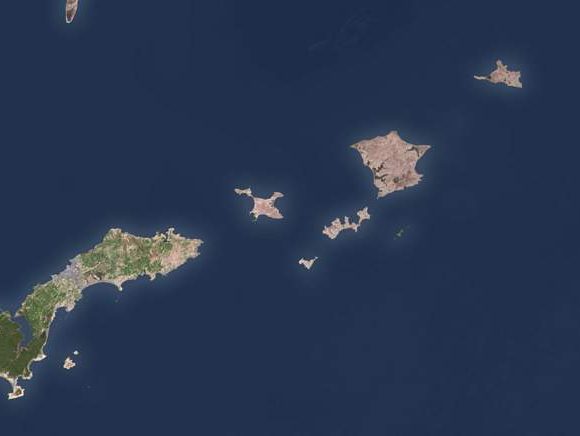
Russia has said it is conducting drills on islands that are contested by Japan, days after withdrawing from peace talks in response to Toky’s decision to impose sanctions on Russia for its invasion of Ukraine.

Four islands – which Russia calls the Southern Kurils and Japan calls the Northern Territories – are the subject of a more than 70-year-old dispute between the two nations.

Because of the dispute, Russia and Japan have not yet signed a peace treaty to end World War II.

Earlier this week, Russia said it was withdrawing from negotiations with Japan aimed at signing that treaty, because of Tokyo’s tough stance against Moscow’s invasion of Ukraine.

And now, Russia’s Eastern Military District says it will conduct military drills on the islands with more than 3,000 troops and hundreds of pieces of army equipment.

Japan had earlier condemned Russia for withdrawing from the peace talks and for halting joint economic projects in relation to the islands.

BBC

Foreign

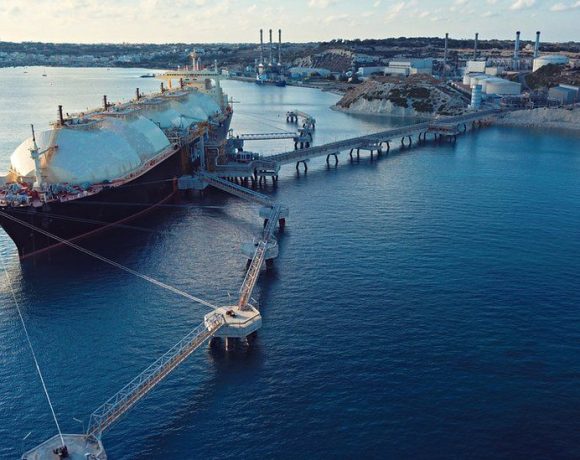
The US and the EU have announced a major deal on liquified natural gas, in an attempt to reduce Europe’s reliance on Russian energy.

The agreement will see the US provide the EU with at least 15 billion additional cubic metres of fuel – known as LNG – by the end of the year.

The bloc has already said it will cut Russian gas use in response to Russia’s invasion of Ukraine.

Russia currently supplies about 40% of the EU’s gas needs.

Cutting reliance will mean increasing imports and generating more renewable energy.

The longer-term aim is to ensure, until at least 2030, about 50 billion cubic metres per year of US gas, up from last year’s 22 billion cubic metres.

The deal was announced on Friday during a three-day visit by US President Joe Biden to Brussels.

Mr Biden and European Commission President Ursula von der Leyen discussed Russia’s invasion of Ukraine and offered fresh support to Kyiv.

“Putin is using Russia’s energy resources to coerce and manipulate its neighbours,” Mr Biden said to reporters in Brussels. “He’s used the profits to drive his war machine.”

He said the long term benefits of the deal would outweigh the short term pain that reducing Russian gas supplies would cause.

“I know that eliminating Russian gas will have costs for Europe, but it’s not only the right thing to do from a moral standpoint, but it’s also going to put us on a much stronger strategic footing.”

President von der Leyen said: “We want, as Europeans, to diversify away from Russia towards suppliers that we trust that our friends and that are reliable.”

She pointed out that the target 50 billion cubic metres per year “is replacing one-third already of the Russian gas going to Europe today. So we are right on track now to diversify away from Russian gas.”

BBC

Foreign

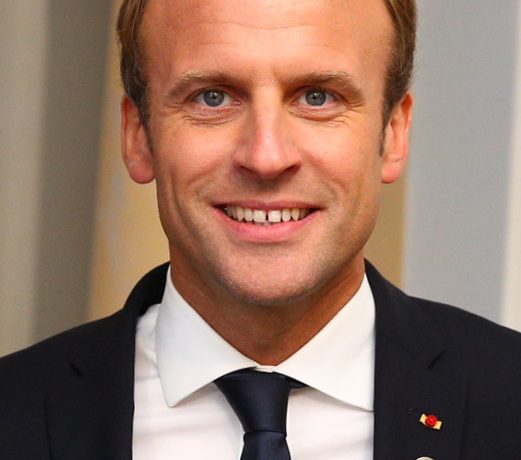
In a bid to avert a feared Russian invasion of Ukraine, French President, Emmanuel Macron will meet Russian President, Vladimir Putin, in Moscow on Monday afternoon.

The French leader said the meeting was aimed at dialoguing with Russia to reduce escalating tension.

Macron had said “it is essential to prevent a degradation of the situation” and that it is legitimate for Russia to raise security concerns.

“The geopolitical objective of Russia today is clearly not Ukraine, but to clarify the rules of cohabitation with NATO and the EU,” Macron said on Sunday.

France has played a central role in attempting to mediate between Kyiv and Moscow in the past. Alongside Germany.

 It helped broker a 2015 peace deal for Eastern Ukraine to end hostilities between Ukrainian forces and Russian-backed separatists that erupted the previous year following Moscow’s annexation of the Crimean Peninsula.

.Putin and his officials have urged France, Germany and other Western allies to encourage Ukraine to fulfill its obligations under the 2015 agreement, which envisaged a broad autonomy for the rebel-held east and a sweeping amnesty for the separatists.

The agreement stipulated that only after those conditions are met would Ukraine be able to restore control of its border with Russia in rebel regions.

But many in Ukraine see the Minsk deal as a betrayal of national interests and authorities have strongly warned the West against pressuring Kyiv to implement the agreement amid the current tensions.

 Mnt/ Jeffery Ahonmisin

Health

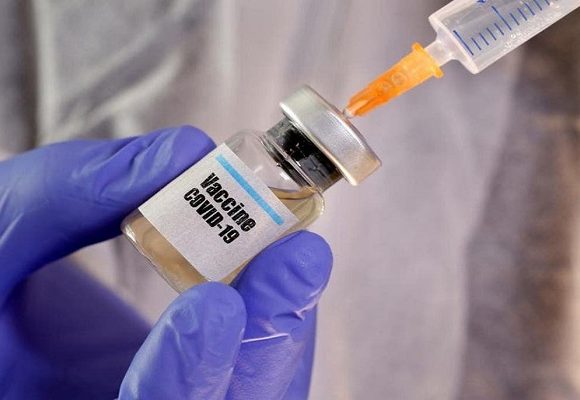
Russia has reported 9,977 new COVID-19 infections over the past twenty-four hours.

The government coronavirus task force reported on Tuesday that the tally included 3,817 cases in the capital, Moscow.

This brings the official national infection tally to 5,145,843.

The task force also said 379 people had died of coronavirus-related causes in the last twenty-four hours, pushing the death toll to 124,496.

On Friday, Russia’s statistics service, which keeps its own records, said around 270,000 people had died from COVID-19 and related causes from April 2020 to April 2021.

Russia is the 6th country worst-hit by the deadly respiratory disease globally, behind the US, India, Brazil, Mexico and the UK.

FRCN, Abuja

Foreign

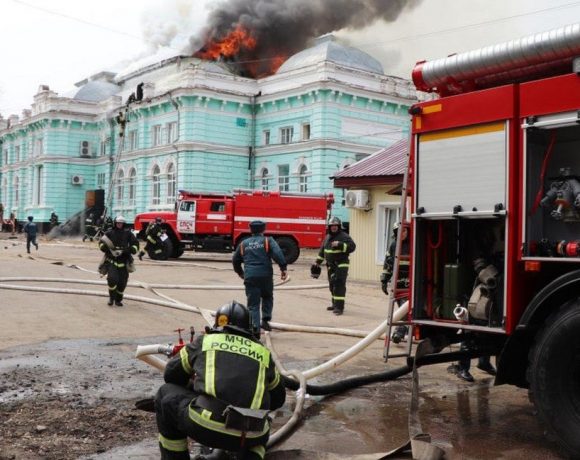
A medical team at a Russian hospital successfully completed open-heart surgery on a patient while firefighters battled to contain a serious blaze engulfing the old building’s roof.

More than 120 people were evacuated and no injuries reported at the hospital in Blagoveshchensk in the far east.

The surgery continued thanks to an emergency electricity cable run into the ground-floor operating theatre as fans kept the smoke out.

The heart patient was evacuated later.

Lead surgeon Valentin Filatov said his team “had to save this person and we did everything”. Eight doctors and nurses were involved in the two-hour operation, which started just before the fire broke out.

Russia’s emergencies ministry said the hospital was built in 1907 in the tsarist era, and the blaze “spread like lightning through the wooden ceilings”. A short circuit is thought to have sparked the fire.

Medic Antonina Smolina said “there was no panic” among the hospital staff.

Amur regional governor Vasily Orlov praised the surgical team’s professionalism and the firefighters for putting out the blaze. They are now in line for awards.

It is the only hospital in the region with a specialist cardiological unit.

BBC

Sport

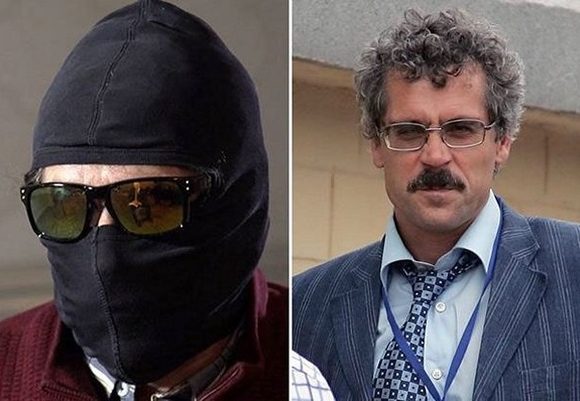
Former doping mastermind-turned-whistleblower, Grigory Rodchenkov has said that no Russian athletes should be allowed to take part in the postponed Tokyo Olympics next year.

Rodchenkov told newmen that Russia had not changed despite being banned from all major sporting events for four years last December for manipulating laboratory data.

The World Anti-Doping Agency (Wada) has ruled that Russian athletes who prove they are clean will be able to compete in Japan under a neutral flag.

Russia has repeatedly denied the allegations, and claimed the unprecedented four-year sanction was unfair and politically motivated.

Meanwhile, the appeal against a punishment that rules it out of both the Tokyo Games and the 2022 football World Cup will be heard by the Court of Arbitration for Sport (CAS) in November.

Olaolu Fawole

Security

Ijoba apapo ti seleri lati raa awon nkan ijagun tofimo awon oko oju ofurufu tiwon nlo fun ijagun lati ile Russia nidi gbigbogunti igbesimomi ati iwa odaran nile yi.

Olubadamoran pataki saare foro iroyin ati ibaraalusoro, Malam Garba Shehu lo so eyi di mimo ninu atejade kan.

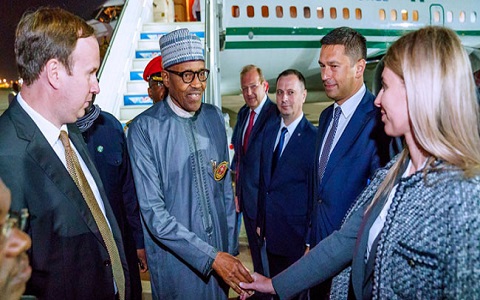
Olubadamoran pataki ohun to k’owo rin pelu aare losi ile Russia sope awon adari ile yi yoo so asoyepo lori eto abo pelu aare ile Russia, Vladimir Putin nibi ipade apero ile Russia ati orileede Nigeria.

Gege bi Malam Shehu se wi, awon orileede mejeji yoo fenu oro ko lori ona lati seranlowo fun ile Nigeria lona ati fopinsi iwa igbesunmomi lawon apa ibikan lorileede yi.

Oluwayemisi Dada/Kemi Ogunkola